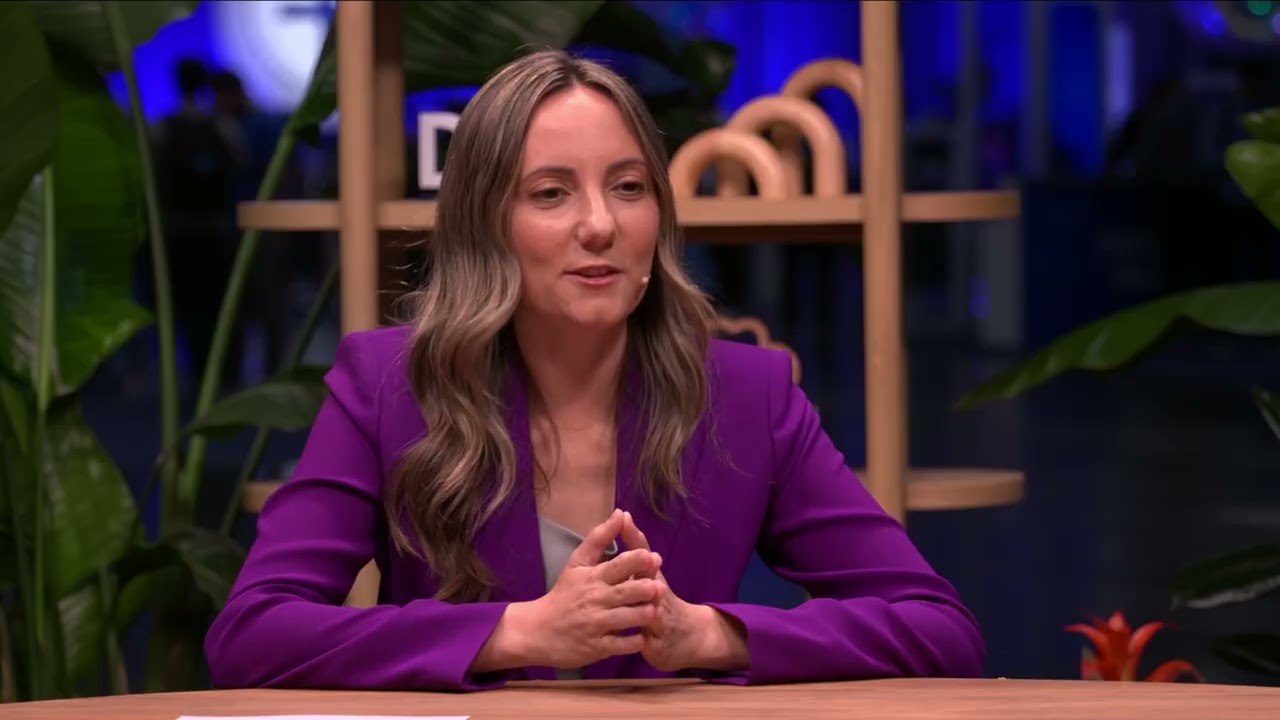
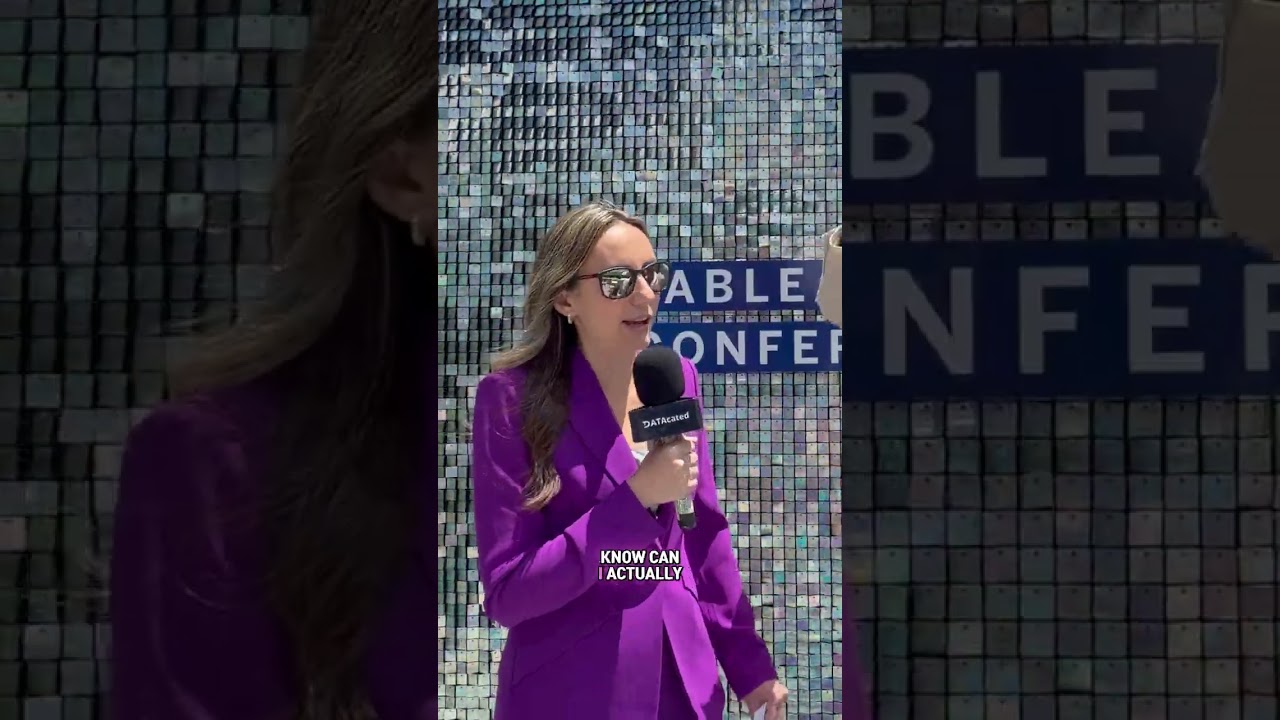
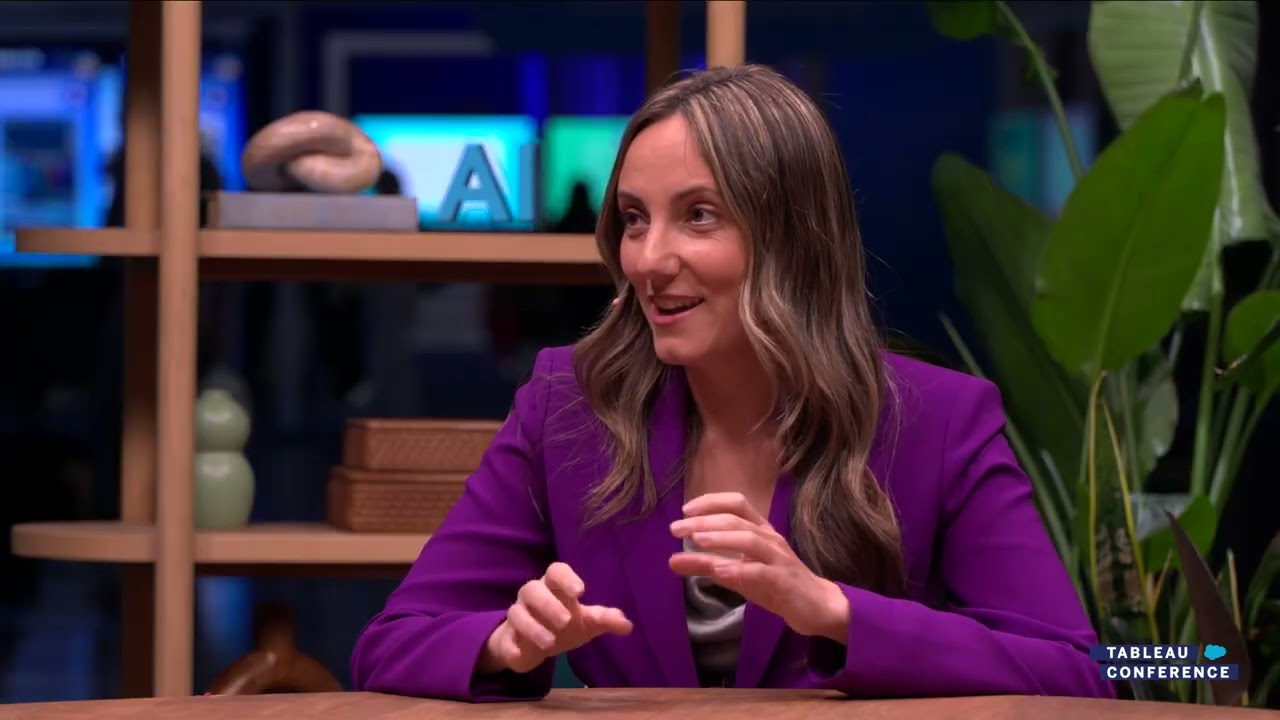
Rekha Srivatsan, CMO of Tableau and I had a chance to speak at #TC26 #sponsored
We talked about how Tableau is now the " Agentic Analytics Platform", how the data analyst role is evolving into a knowledge architect, and more.
Watch the full video here and let us know what you think in the comments.
Salesforce - thanks for hosting! #SalesforcePartner
Оглавление (2 сегментов)
Segment 1 (00:00 - 05:00)
Hello everybody. This is Kate Tashjian from Dedicated. We're in San Diego at the Tableau Conference 2026. It is actually my first time at a Tableau Conference, so I'm really excited to sit down here with Reena, the Chief Marketing Officer of Tableau. Hello, and such a pleasure to chat with you here. — Well, thank you. First of all, welcome to Tableau Conference. This is our second year doing it in San Diego, and it's been a lot of fun. So, welcome. Thank you so much. It's beautiful, and the event just has so much energy. We just came out of the keynote, Reena, and I wanted to get into some of the bigger announcements. You know, so much was announced we could spend 5 hours talking about it, but I wanted to ask you what really stood out for you the most? Absolutely. So, I want to start off by saying this. You know, Tableau has been a leader for visualizations for over 20 years. And the mission was always the same. It was help people see and understand data. What we did this year was take it one step further to help people see, understand, and act on data. And our innovations were to match to that. So, number one was bringing agentic analytics across the portfolio. We announced agentic analytics with next class PC, and people love it. People are using it a lot, but the number one question has been, "How do I get that? I'm a desktop user. I'm a server user. I'm a cloud user. How do I get this? " So, we've decided to give it to them to all of them. So, Tableau agentic analytics is across the entire portfolio. That's number one. Number two, I would say is, you know, how do we take this data? How do you bring that as knowledge? Because that's being created by the community, but that's knowledge is what adds that context. And how do you embed that into the flow of work? Whether you're working on Slack or Teams or ChatGPT or Open AI Cloud, like you name it, any surface, how do you bring the knowledge into that to power your decisions is the second one. And then the third one is, you know, candidly, data fam is critical to everything we do here on Tableau. Like as you can see, it's everything is data fam. So, the reality is their roles, as in all of our roles, are also changing with AI. So, how does that evolve? What should that look like? Where do they go from here? So, we spend some time talking to them about that. So, that I would say at a high level are our biggest announcements this year. And I heard the crowd really cheering hard for when you said the Analytic Analytics platform is available to all everywhere. — Yes. — went wild. Like for real. — I mean, that's the best part of our job, you know? Like you hear from the community, we hear asks, we get feedback, and it's so funny because the first time that I joined the Tableau team I didn't realize how integral to shaping the strategy of the product was part of Data Fam. So, we actually include them in our road map sessions. We include them into our feedback session. So, what you see from an innovation standpoint is not just from the Tableau team. It's actually with Data Fam. So, that by itself is it's really special. And tell my audience, who's in the Data Fam? So, anyone who's ever attended a Tableau user group, anyone who's ever submitted a viz. Uh we have different uh you know, groups within the Data Fam community. So, you have visionaries, you have ambassadors, um Hall of Famers as we highlighted in the keynote. So, anyone who loves Tableau you're Data Fam. Okay, amazing. So, I wanted to get a better understanding of you know, Salesforce is sort of the umbrella across all of this. And then we have Data 360 and we have Agent Force and we have Tableau next and we have all of these products. How does that all tie together? Absolutely. So, if you think about it, for any organization, um we the problem is getting access to data. So, you bring Data 360 into the mix with zero copy, you can keep your data wherever it is, whether that's you know, Snowflake or Databricks or wherever it is, you can keep your data there. But, with zero copy, we are able to pull in that data, integrate it into your workplace. So, that's how Data 360 brings together. Then you have analytics, Tableau, on top of it where you can do either in the embedded in the flow of work or you can go build it outside like you have that. And then number three, if you think about the MuleSoft lens, you have the governance aspect of it. You have the data governance piece. And then you bring in Informatica, which is our brand new acquisition, and that together to all four of these products bring the trusted enterprise context to organizations. So, this is the data foundation for agentic enterprise with Data 360, with Tableau, with MuleSoft, and with Informatica, and that becomes the foundation. So, that's the That's what we're going for, and we are seeing people use that and understand that so dramatically different. And the good news is you don't have to move your data. You can bring it along wherever you are. So, that is the foundation. Yeah, absolutely. And you know, in the keynote we also talked about how data is no longer king, right? Now we need knowledge, we need context on top of data because agents can see the data, but they can't really act on it until they have enough concept Well, they can act on it, but we don't want them to act on it without context. Yes. Um and then there was a statistic thrown out that 33 million semantic models have been built by the data fam. Talk to me agents about that, and what what's the benefit of this? Absolutely. So, I think
Segment 2 (05:00 - 08:00)
I I talked about this in the keynote, too. We have access to all these data tools, like our AI tools. We have Slack, Teams, ChatGPT, Open AI, you name it, you have it. You ask it a question. 99. 9% of the time, the same question will get different answers from all these tools. As a human, we have the comprehension reasoning capabilities, and we are able to distinguish between what's right, what's wrong. Great. Now, if you were to put this on agents, where which is in the agentic era, they don't have that reasoning, and you don't want them to act or decide based on that data if it's not right. So, that's where we have our knowledge engine. So, because of the data fam, we have, you know, 5 million plus users across the globe, and they with, you know, structured, unstructured, creating metrics, creating dashboards, creating pub visors, We have created this knowledge engine together with 33 million semantic models, which is the world's largest semantic model, by the way. — Wow. And that is what's powering Tableau. So, it's able to give you the trusted context because it's based on your data. Very cool. — I think is a big competitive advantage for us. Yeah, absolutely. And just one final question for you. — Yes. Data analysts all over the world are wondering, "What's going to happen to me? Is my job going away? " And I see Tableau is positioning this where, "No, your jobs are not going to a go away, but you are going to change into maybe knowledge architects. " is what I'm hearing. — Yes. Talk about that. What are some of the skills required? What advice do you have for data analysts who are you know, either at the Tableau conference watching this live or just following the trends, what can they actually do to make sure that they don't get left behind? It's a great question and one that drives our strategy end-to-end, too, because you know, in many organizations, most organizations, you have a business leader and you have multiple leaders with one analyst, you know, that would look at their data and give you answers. — Yeah. So, if let's say, if you know, three or four asks come their way, it's still one analyst dealing with that. So, there is a stat of like, you know, 10 leaders to one analyst. So, the the workload for analysts has become compounded. Mhm. So, you have that aspect from a problem for the data analyst. So, they have the problem of not knowing, you know, which one to act on and how quickly they can act on. Their work is just massive. So, with AI, we are able to streamline that job. So, what happens is if you're able to do automate some of those tasks, the data analyst now has the opportunity to be a lot more strategic. And if you have the knowledge, you're able to get to the decision much faster. You're able to give the leader what they're asking for much quicker, even before they know they need it. So, that's I think the crux of how their role is evolving. We're calling it knowledge architect or decisions architect or agent — name, by the way. It's a good name. We don't know exactly what that name is going to be, but we do know that their roles have become much more strategic than the tactical aspect of it, which is a good thing for a data analyst. Okay, well, that's good news for you data analyst out there. And thank you so much for watching. Raika, your time. Thank you, Kate. Welcome again. Thank you.