The CRO Role Is Evolving. Are You on the Right Path?
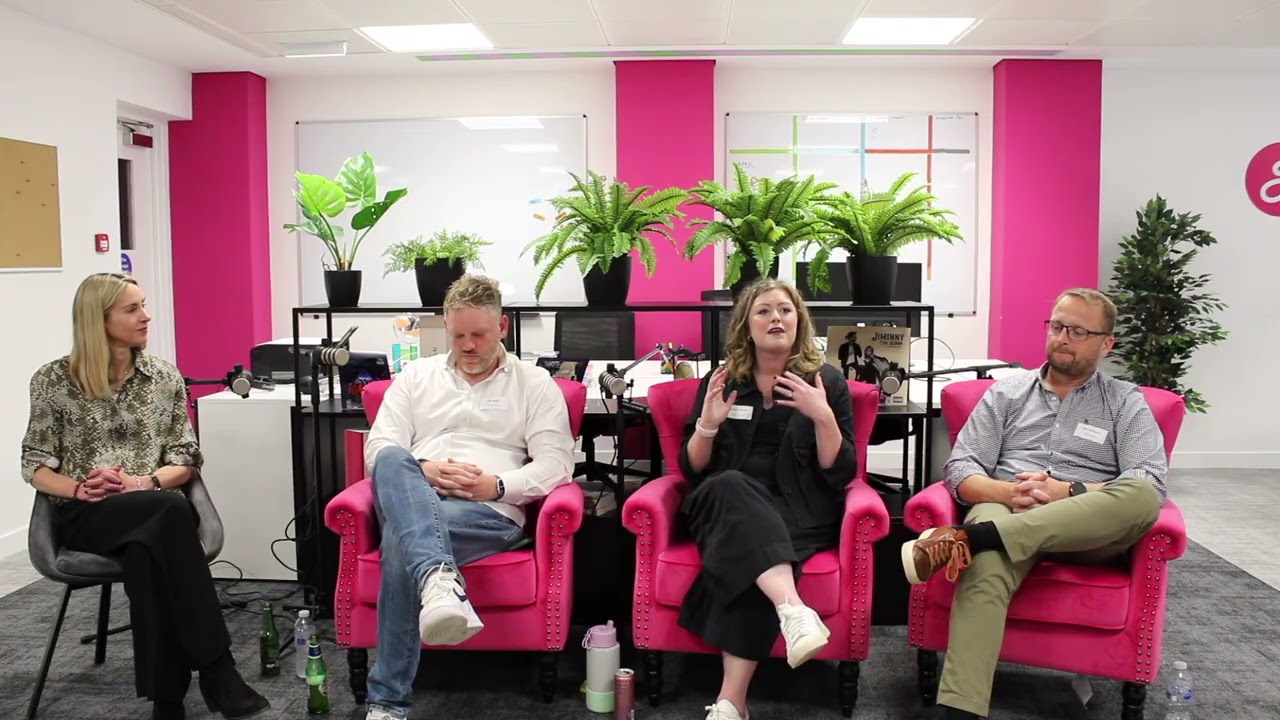
Jiminny & Pavilion co-hosted an exclusive live panel event for senior revenue leaders, over drinks, food, and great conversation - exploring what it really takes to step into and thrive in the CRO seat today.
Gone are the days of a single, linear path. Today’s top revenue leaders are emerging from RevOps, Marketing, Customer Success, and of course, traditional sales.
Hosted by: Nicola Anderson (CMO & Pavilion Chapter Head)
Featuring:
Hannah Garner, CRO at Arctic Shores
Phillip Raby, CRO at Mediarithmics
Neil Mullane, CRO at Thirdfort
Оглавление (12 сегментов)
Segment 1 (00:00 - 05:00)
on path to CRO. I'm Nicola, co-chapter head of London Pavilion and I also have the delight of running the scale sessions podcast with Tom Lavy. So we have left you little postcards if you want to check it out. So that's Tom and me speaking to some amazing female revenue leaders and there are some quite fabulous stories. So I highly recommend a listen. So today I get the delight of nosing into three rather fabulous CRO's path to the top and we're going to be talking about challenges, opportunities, lesson learned and surprises on the way. But before we start, I would love to know from our audience, any of you already CRO's? Okay. Right. Might be asking you a couple of questions or chew there. And any aspiring CRO's here? Yeah. — Okay. Right. So, no pressure on you three, but we're hoping for lots and lots of advice. Um, we're going to chat for about 30 40 minutes and then we'll make sure there's lots of time for questions. So, please do get them lined up. So, over to the panel. A few quick intros. Phil, let's start with you. — Thank you. So, I'm Phil Rabby. I'm the CRO of Mediathmics. Uh, Mediathmics is a customer data platform. Contextually what that means is we help media owners, broadcasters, retailers make better sense of their customer data, activate their customer data from a marketing and advertising point of view. So in the across Europe, we work with Channel 4, UK TV. Uh we're a French business, so we work all the French broadcasters like TF1 and Canal Plus and uh France television as well and some of the bigger uh retailers in France. Um as a business, we're series B. Uh we've raised 20 million. Um so not a lot of money. Uh we're profitable and somewhere uh between 10 to 15 in ARR as well. — Great. Awesome. Hi everyone. I'm Hannah. Really good to meet you. Um I am the CRO at Arctic Shores which is a taskbased psychometric assessment uh business in the HR tech space. Um the business was really born out of the idea that most people are so much more than what their CV will tell us they are. If you think about the best hire you've ever made or the best person you've ever worked with, it's rarely that they had the perfect skill set coming into the role, it's normally that they had really great learning agility. They were really adaptable. They're great problem solvers. We're essentially helping companies enrich their data set with that information during the hiring process. Um, we work with a whole host of different businesses from hiring Amazon graduates to Williams F1 engineers, nuclear scientists, and train drivers. So, very um Love that. — Neil. — Yes. Hi everyone. I'm Neil Malain. I'm CRO at Third. We are a legal tech business. So, we work with uh lawyers and property agents and protect them with their compliance burden, especially through the property buying process. If any of you have bought or sold a property in the last couple of years, you may well have used our app to do your ID verification. Um, and we automate that whole process. We also have recently acquired a tenant referencing business called Home People and we're integrating that into the business. So that's more on the letting side of things. Um we are about 12 million pounds of ARR now and um similar series A backed BC backed um and growing pretty quickly. So — thank you. Well, I'd love to hear a little bit more about each of your journeys to the CRO role. Um, Phil Medorithmics, which I just learned, by the way, is named after the Urithmics. So, that's how to remember it. Um, so Phil, you started off actually in the business as a GM and then you went up into CRO. So, tell us a little bit about your journey. — Yeah, so I' I've been in I guess digital and media for the last 20 years. Um, I started a Microsoft, so everybody knows Microsoft. um uh when it was a big advertising business in the UK and um kicked around a couple businesses. Um uh after that uh affiliate then moved on to Critio which was a big um French um uh unicorn um started that business when it was 400 uh and left and it was three 3,000 people. So uh huge scale which was fun. Uh the current business I'm in at the moment is actually French. So I've been working for the French for 10 years now. So uh they keep on dragging me in. um um and lots of time in Paris. But yes, I started Medorithmics um actually from a consultancy point of view. Um so uh in the middle of co I started uh working with them on a two-day a week basis for 3 months helping them with their uh their sales strategy which you know we were saying before is a really good way uh to look behind the curtain from a culture point of view uh before committing to a long-term um role. Um luckily after 3 months they brought me on as the general manager international. So I came on board um to lead uh the international charge when we started the business. Uh it was about 5 million in ARR. Uh very few international clients as well. Um and really only French-based and very French
Segment 2 (05:00 - 10:00)
ccentric as well. Um and then 2 years into that role I transitioned into the CRO role uh looking after pretty much everything commercial in the business. um sales, upsell, marketing um and pre-sales as well. So that's broadly been the journey from my point of view. — Was there already a CRO in place or was this a new role for the business as well? — There was a CRO in place from zero to about 7 million in ARR and then from 7 million the board wanted to make a change. — I see. And they looked at Did you put yourself forward or did they come to — No, I didn't put myself forward. No. and said, "Right, — how did you feel when they came to you about that opportunity? " — Um, happy and daunting. — Yeah, it's I mean, we're going to get into it, but it's very different just looking after a sales org and then starting to look after every um go to market function in the business when it comes to commercial. So, pretty daunting, — but you knew quite a lot already from your consulting work. So, — Exactly. Yeah. — Yeah. That's a good way in. And then Hannah, very different route for you because you were actually VP of marketing and then promoted to CRO in January. So 6 months in. Congratulations. — Thank you. Uh yes, so I count myself as a kind of baby CRO in comparison to uh you both who are probably proper official CRO. So the journey is still quite fresh for me. Um I yeah so I guess my career path has been like slightly unconventional um in that I uh spent six years working for an edtech business um which is part of the blend venture portfolio if anyone is familiar with it. um started as marketing manager and was promoted to CMO within about four years. Um what is quite unusual about um the Blenham Chot venture portfolio is that they are very hands-on and they are essentially uh looking for people within their businesses who are high potential who have good ideas who could be future CEOs. So actually kind of if you get identified as high potential early on in your time in that business then you're kind of constantly on some kind of career development program and they're trying to teach you kind of how they like to do scaling and how they like people within their businesses to do scaling too. So actually as a learning curve for me it was brilliant because I was getting kind of a mini very practical MBA the whole time um I was there. So I was able to develop quite a lot of skills in you know strategy, financial fluency, get a really good grounding in all of the different gotom market functions as well as all of the different business areas as well. Um while I was at that business I ran marketing but I also actually ran a learning design team as well. So we were developing change management programs for um you know Barclays legal in general your big old school companies who need a lot of help with uh things like leadership development. Um, so again was kind of not exactly a pure CMO role. Although actually a lot of the skills for how do you design learning programs and how do you develop behavior change are actually not that dissimilar to how do you build an audience and how do you win people over to your point of view and you know get them into a buying cycle and that kind of thing. So that was already kind of semi unconventional. Um I then moved to Arctic Shores about um two years ago actually on a referral from a former boss of mine who was doing some consulting for them. Um he said, "Oh, they're looking for a VP of marketing. I think they're a great business. The role designed to turn into a CFO role within about 18 months, but really they don't want to bring a brand new person into the leadership team, which I think is not um entirely unusual um without kind of meeting them and building relationships and really stress testing their capability. Um but and also I was kind of happy to get roll my sleeves up, get stuck in. They actually kind of wanted someone quite hands-on for that role. Um and then uh towards the end of last year actually the business went through a little bit of a leadership transition. So we had um we the business was run by a founder CEO who actually decided um maybe it's time to hand over the reigns and take on a slightly different role doing more founder sales, more in market. Um and so my boss who was the chief growth officer but essentially CRO moved into the CEO role and I was asked if I would take on the CRA role at the same time which was never in my game plan. — Ah so you never thought about going into — genuinely never even considered it at all. It was yeah not part of the plan. — And what areas do you cover? — So I cover marketing, sales and customer success. Yeah. So full go to market. — And how big is the team? — Uh not huge actually. So we are 3 and a half million ARR. So again like relatively early on in our journey. Um and the revenue team is about 12 people. — Right. How is yours? — The uh organizations 100 um across four markets and revenue teams 15. — Right. — Yeah. — Okay. Neil, you took your first CRO role at Third Forge. — So tell us a little bit about how you got that. Uh, well, I actually started
Segment 3 (10:00 - 15:00)
out in travel originally just selling round the world tickets for a student travel company, — which is my favorite SCA travel. Love it. — No longer here. — I'm sad about that. — Yeah. Uh, and ended up moving into uh retail banking on the business banking side at a major bank. Did a few years there, ran some scale teams there across big regions. uh and then uh got asked by an ex-colague of mine to go and work for a company called Funding Circle. Um and started and moved from a team of 300 people that I had at Barclays to running a small broker commercial broke finance broker team of about 10 um and ended up being head of sales, VP of sales there as we went through an IPO. Um which was absolutely an unbelievable experience. um really thoroughly enjoyed that and that was my first for into tech. Uh from there I moved um I wanted something more and there wasn't really anything more that I could get out of funding circle uh and I'd done business lending for a long time. Um and I got approached to uh work for a company called Dex or when I joined they were called Receipt Bank and they rebranded uh and I did two years there as the UK general manager. Um, I also looked after South Africa for a small amount of time, but unfortunately that my job was to run down the office there, which wasn't pleasant. And I never actually even got to do the visit out there either, which I was very disappointed about, but there you go. Um, and did a couple of years there. What's really interest what I found there as the UK GM which was quite difficult was the seauite was based in the UK and that actually was quite hard because quite often things would go on around the GM with the seauite and they would be involved uh and it got quite frustrating um so you know quite often the product team would go to my boss the CRO and say hey we want to do this and we're going to do it in the UK he come to me I go that's a stupid idea why are we doing it why didn't they come and talk to me first. Um, and so but I thoroughly enjoyed my time there. That was my and I got approached by third for who were looking for their first CRO. Um, uh, the two founders, Ollie and Jack. Ollie looked after the commercial side. Jack looks after the product side. And so Ollie was doing the hiring. He's like, I don't think I've done as much as I can on the commercial side. And I think he does himself a disservice. Yeah. He was not did not have a sales background, but he kind of got it. He just didn't have the processes and structures. Um, and he was unbelievably and it still is unbelievable with clients and knows the market inside out. And um, I took the role there two and a half years ago. So I'm past the average tenure of 17 months. — As are you. Well done. — Yeah. Little celebration on that day. I was um, and I've loved it. Um and at the moment um so we I look after marketing, sales, customer success and customer support cuz we have a lot of support to help you through the app journey. Uh and now I look after the home people acquisition and I am currently account exec product manager. I'm not product manager. We've got product manager now. Uh but I've been doing that alongside um as we pulled the business in because they didn't have a sales team whatsoever. So, but that's been fascinating for me because I've learned a huge amount in the last 5 months, but I'm quite tired. — So, how big's the team that you have and how big should it be? — We It's third floor is about 120 people and in the commercial function there is now about 70. — Wow. — But 20 of those are analysts that sit on the home people side and 25 are customer support execs. So the actual sales team is quite small — and if we get to it I can talk a little bit more about that but we have deliberately kept it small and I've made some changes to do that to run it as efficiently as possible mean. — Yeah. — And so you've gone from travel to third. — Has there been one pivotal moment in your career — it's really put you on this trajectory? Uh well the pivotal moment was when I got the call out of the blue to leave Barclays and but the pivotal moment was actually the person I who called me to go and move over there's a guy called Luke Just brilliant leader he was a peer of mine at Barclays he ran property while I run a a business division um and I helped Luke at different points with I was a performance manager so I helped him with some of the performance management the pipeline management things that he was very strong on the technical property side of things and just need you know so I provided a bit of advice and support and so when it came to him wanting that similar role at funding circle he rang me up and it was the I mean I think the people at Barclays thought I was
Segment 4 (15:00 - 20:00)
absolutely mental um but it was the best move I've ever made in my life — did you know immediately like I need to do this or were there a lot of lists written about proto There was a bit of nervousness cuz you like I looked at my team at Barclays and I went if I stay here for another two years I'm here for another 20. Like my the average tenure of my team was about 24 years. — Um and they were a great team. They didn't like me when I left cuz Barclays then restructured the region and blah blah. — Um and so but that wasn't my fault. I got the opportunity and it was the right move for me to make because to be honest like I enjoyed my time at Barclay so I got a lot out of it but I was stagnating and there wasn't a lot more for me to do there and so it was the right time and it enabled me to be much more creative and see more of what I do on a day dayto-day basis how much that impacts the business overall and that was what I was kind of craving. What a change though from bar to funding. Like just the pace must have been insane. — It was like you went from like 4% growth — which by the way inflation was 2% at the time% of it. Thank you very much. Um to like 60 to 100% growth. Um and it was that was fantastic. the two parts like at Barclays I was given the re one of the moments when I knew I was leaving was they rolled out this thing as a regional manager that was called the regional empowerment um model I was given all my data and they said tell us what you want tell me how many sales reps you want where you want them what industries you want them in all of that sort of thing so I did all that spent two weeks on it put it into the center and they came back and they said that was a brilliant pitch of what you wanted here's what you get and it was what I had already minus 10% right That's it, right? Uh and then on my in my first month at Funny Circle, I got asked pull together what I wanted to do with the broker team, put it together and said, "Look, this is what I need. This is what this is the investment I need over the next two years. " And within an hour, I had it approved and I was ready to go. — And then did you have to deal with your own shock of like, "Oh my god, I've actually got it. " — Well, not only that, I then realized I had to do a lot of it. People do me to do it for me. But that was the fun bit. I had a really good team of people who were just so enthusiastic to grow. It's great. — Wonderful. Hannah, what about you? Was there one pivotal moment for you? — Oh, it's a good question. I think one of the pivotal moments for me actually was um when I was in was not necessarily related to CRA ro they obviously being asked to do it was quite pivotal in itself. Um, in the last business I was in, it was, you know, I think like lots of businesses when you get to a point when you're kind of venture and the board are very involved in the business, we were kind of in that mode. And actually, I was finding it kind of increasingly difficult to actually just get my job done, do the things I felt like were the right thing. And it felt a bit like a kind of crazy battle. And I think I was very in my head about it, thinking, "Oh, maybe I'm just not cut out for this. Maybe I'm not resilient enough. " And I had a conversation um with a former boss who'd also worked in the portfolio who kind of said to me, you know, not all companies are like this and that you can leave. Um, and I just had this moment where actually I kind of sense checked myself, sense checked my imposter syndrome, thought a bit about like, well, what would what advice would I be giving someone else if they were describing the situation that I'm in right now and I probably would be telling them it's probably time to go and think about um something new. And I think that was kind of a pivotal moment for me mindset wise in actually thinking, do you know what? or whatever job I'm in, I'm obviously going to give it my best shot. But actually, if the conditions aren't right, there probably is going to be a time when actually I need to be prepared to say, I'm going to I'm going to go now. — What wonderful advice. Are you still in touch? Cuz she must be so proud to see where you got to now. — Yeah. — She can say it's all my all down to me. — Yeah. Yeah, definitely. — And then what about you, Bill? — Um I I'll give two because they're the same company if that's okay. Yeah, they kind of lead one into another. But I mentioned Critio before, so I'm not sure if anybody knows Critio, but they were — uh did you — ago? Snapfish. — Ah, yeah. Okay, fine. Um, so as I said, getting in was a pivotal moment in the first instance because as I said, it was 400 people when I joined. And when I started the business, we were having meetings where we were talking about growth and it was like 300% growth, 400% growth year on year. And it was just, you know, every year we were having these discussions. It was just ridiculous. Um and as I said it went from 400 to 3,000 people in the space of 3 years. We IPOed 2 billion2 billion or2 billion uh e whatever it was. Um so that was kind of number one. And number two was uh within that role I uh started
Segment 5 (20:00 - 25:00)
the role as an AE uh and then two years into the role I was there for five I took on my first leadership role. taking over enterprise sales um for the UK. Uh and it was it that role kind of came up again through kind of opportunity through chaos cuz my boss at the time was also kind of pushed cuz we had a new MD come in and he wanted a new uh new team. So um and hopefully obviously I was you know good enough for the role as well when I got that role. But those are probably the two piv p pivotal moments of my career. Yeah. Wow. And was when you were in AE, were you doing any level of enterprise sales or was it relatively SMB? — Only enterprise. So, Critio was split uh two ways. It was enterprise um which was basically the top I don't know 100 brands per market across retail and travel, — right? — And mid-market was basically everything below that, — right? — And then eventually they moved all the mid-market teams out to Barcelona. Um which was I guess good for the people that got to go to Barcelona. They're all typically 22 to 26 year olds. So, — great ride. — Yeah. — And when you went from your um GM role into the CRO, what was the biggest surprise for you? — Um probably so in the GM role, it was very much led around sales um from a management point of view and moving into the CRO role, it was looking after every commercial function. So, um, account management and pre-sales and, um, probably the biggest surprise is the context shifting on a daily basis. It's, uh, you're having a conversation with marketing is very different because you're having a conversation around awareness and driving MQLs and SQLs and you have a conversation with the sales team and it's a very different conversation you have having it about very specific details about a deal and account plans and so on and so forth. and it's you're kind of shifting from this me and then you're maybe having a conversation with a board member as well on the same day. Uh that was probably the biggest surprise in the role. — Any tips on how you deal with that? — Uh left hand work life balance. Yeah. Do stuff outside of work as well. — Hannah, what about you? What was the biggest surprise for you? I think actually it was kind of a pleasant surprise um for me which I definitely relate to the context switching being quite a challenge. Um one of the things that um I observed is that actually a lot of challenges or a lot of problems in the way that you set up a team are often people problems and they are operating problems. And actually they come down to things like do we have a good strategy? Is the team clear on the plan? Do we have the right level of discipline around um the things that we know we should be doing and are we following the processes and or actually is this problem like a really big problem or because it feels big and it feels stressful to you or actually is it a fundamental problem and do we need to go and figure that out get our heads together with the product team. All those things are true in marketing and sales and they're also true in customer success. And so actually, while there were some things that did feel like a bigger shift and kind of newer learnings, actually the fundamentals I think are true of any role when you get to a senior level. — So it didn't feel quite as daunting as you thought it would. — Uh I wouldn't say that, but yeah, I felt like I could add value straight away, I guess. — And then what about you, Neil? — Uh decisions. I think the biggest thing that uh like you as you're kind of moving roles and thinking about it, it's you're like, "Okay, yeah, great. I I want to be a CRO. I want to have more influence on the business. I want to move into that position. Then when you get there, you're like every single day it's a thousand decisions. Um and it's making quick decisions as well. And uh I think Phil mentioned the word or I can't remember whether you Hannah mentioned imposter syndrome. It imposter syndrome is there every single day. Believe me. Um I'm still trying to work out whether people realize I'm making up. We all are, right? Um, and but you know, you've got whether and it links to Phil's whether it's a rep coming to you asking you about pricing on a deal, whether it's a board member who wants to know why a number isn't moving in that right the right direction or not and what you're doing about it. There it's just a constant day of decisions and I kind of get home at the end of the the day and um I cook at home as well and but my wife will say, "What do you want for dinner? " And I'm like, I don't get the design. — It's like, please just take that decision away from me. — I think there's a lot of agreement going, — but and actually, I had my uh my 13-year-old son came in for a it was a day at work that he had to do as part of his uh for his school. And he came in and he kind of said to me, he's like, "So basically like Ollie Ollie's the big
Segment 6 (25:00 - 30:00)
boss, but you have to make all these decisions every day and I was like, "Yeah. " And it's like, "That's why I'm tired. " And he came in and saw and he saw how like in the meetings and he was bored out of his mind, by the way. Absolutely mind. But he saw the amount of decisions that you have to make and where that kind of comes from. And it's a lot of meetings and it's just trying to find that time for yourself to breathe for a moment. — So, does he now make your decisions for you at home, your son? — They both do. They have done for a long time. And so in your time as Sierra, two and a half years as it say, — what's been the biggest learning you've had? — Oh. Um — I always love a good mistake or up basically. Um I think I think it's uh knowing and this is I'm this is something else for you know it's knowing when to get involved and when not I spend a you spend a lot of your time thinking right okay this needs me to get into it and actually my team can handle that they can manage that they can do — all that they need to do and it's just because naturally at like at funding circle I did a load of stuff. You got really heavily involved and as you move up it's remembering you don't have to do that and you've got a team of people who can do it and that's what they want to do. Um and I think that is a that was a that took a lot of learning for me to know okay I don't need to I've got a head of marketing sales but the head of marketing knows that he knows more about marketing than I do. So I'm like, you go do it. And and I think it's just remembering that really. — Yeah. I was chatting to a CRO just before I came here and he said exactly the same. He said, I didn't think I was a control freak until I got from a good CRO and I was like, oh my god, it's so hard to let go and to delegate even though I know it's the right thing to do. Actually today I had one where we're doing something with our partnership program and for the first time I sat there for where I haven't and I deliberately said to a team of three people are looking I said here's what I want you to do here's here are the guard rails for it and that's what I've learned over time give them the guard rails to then go and deliver for me and I know that the person looking after it will come back with a great plan and tell me okay this is what because not only that I want I've said I on a recommendation then I don't have to make the decision as well. — Ah yes, delegating the decisions. Absolutely. — Hannah, what's been your biggest lesson learned? — Um I think so I guess coming back to the decision-m um point that Neil made. I think in my first 3 months I massively burnt myself out. I think I maybe sensing a theme here. Um I felt like uh there were suddenly so many decisions to make. So many of them felt like quite new decisions that actually are kind of, you know, the theory of what good sales looks like and customer success, but actually the day-to-day reality of having to make decisions about things you've never really had before is feels like quite a big shift. Um, and it took a few months of me feeling like, oh god, I've got to sense check every decision that I'm making with the CEO to sense check, does this feel like the right thing? And then I kind of had a holiday, went on holiday, had a moment of being like, I can't keep doing this like in this way. Yeah. And I spoke to some peers like went for some went for coffees with some few a few people. And I kind of realized that I just need to make some decisions and be comfortable that they might not be the right decisions. And if they're not the right decisions, that's fine. But it's better than me feeling constantly I have to be doing the perfect job. And actually for me I think I'd you know I'd been asked to take on this role which wasn't a role that I had set out to do but actually I'd been in the business for 18 months. I had you know really good relationships with the CEO and the founder and I had good kind of trust with the team as well and actually I kind of you know I was put realized I was putting all this pressure on myself to make perfect decisions that no one else was putting on me and actually they were quite prepared for me to you know have a go and see what happened and obviously be sensible and you know there's obviously your revolving door decisions that you can move back from and then there's your closed door decisions which are really big decisions which actually you want to like as a leadership team. But I think one of the biggest lessons for me was actually just got to crack on and know that I'm not going to be perfect — and be a bit nicer to yourself. myself. Yeah. — Yeah. Does that resonate with you? — Yeah, sure. Yeah. — And what would you say to add to the decisions and being nicer to yourself? — I think learning um it's related to the CRO role, but it's also related to leadership. When I first took my first leadership role at Critio, I if I kind of look back on it, you know, one of the things I take from that is I probably didn't surround myself with people or a network that had done the role
Segment 7 (30:00 - 35:00)
before. Um, you know, gone through the same challenges, um, encountered the same situations and there wasn't anything like Pavilion 10, 15 years ago as well. Um, so now we're lucky that we haven't. — Yes. Um so what I would um you know recommend of anybody going into a CRO role or anything in terms of leadership is just to have a very good support network around you I guess in terms of again those people that can kind of lead you through um they're all common challenges right we sit we sit and have these breakfast and lunches with pavilion and everybody has the same challenge issue that they're going on maybe just at different stages as well so that's probably one of my biggest learnings of surrounding yourself with mentors And they can also help you make some of those decisions. — Exactly. — A bonus. — Yeah. — So Hannah, 6 months in, what would you say are the top three most important skills for an aspiring CRO? — Really good question. Um I think I actually think and I've been thinking quite a lot about this. I think it comes back to the ethos of the business that I work for right now. You think about your skills in any role. hard skills. So your knowledge of sales specifically or your knowledge of customer success marketing, those are skills that you can learn and that are going to you know what good looks like is going to change all the time. You're going to have to be constantly refreshing your skills anyway. And so actually the most important skills I think are the more kind of fundamentals or in my experience so far which are things like your ability to learn your learning agility, your ability to think really critically and actually look at a hard problem and figure out how to solve it and figure out who you need to bring in to solve the problem. You don't have to solve the problem yourself. How do you win over the team? How do you influence? It's those kinds of, you know, the softer skills really. And then I think also your like self-efficacy. So your self-awareness, your ability to reflect, your ability to be quite resilient and have good bounceback ability. It's all those kinds of things I think actually that are, you know, true of any um seuite leader to be honest, but I think definitely true of the CRO role. You know, I would love uh to have more deeper subject matter expertise in all three of the disciplines, but I feel like I'm learning that. But the thing that I keep coming back to and actually one of the reasons that I felt like I could take on the role after some pep talks from some friends and family and mentors was like I know I can figure out stuff that's hard and I've figured out hard problems in the past and I know I can go and learn and speak to people and I'll get there eventually. I don't have to have all the answers right now. And so I think actually thinking more about their transferable skills are the ones that will I think stand you in goodstead. — And you can't have all the answers. It's new stuff anyway. — Um anything you'd like to add Neil? Uh I think uh the kind of linked to a few things that we said the being able to communicate at so many different levels throughout is really is a really interesting is a really important skill like uh if you're speaking to a board member they do not care whether Tommy has been out sick for two weeks or not. They care about and the reasons why you might be where you are. they care about hard and fast what's their investment going to do and where are they versus Tommy who cares about whether you care about him being out sick or or whatever. Um and he's not just been out on a night out or something like that. Uh it so you have to think about those and you know I I'm literally talking to a support agent whose first job is and how do you connect with them? Um I think Hannah picked up on a couple of you. Resilience. Um and then the final one is like is empathy I think is — so important. I have worked for and with so many leaders who lack empathy that it that I run away as soon as I see that. And I think it's so important especially for understanding what's going on in someone's world and why they are. I think it's really important. — Yeah. especially when you're working with so many different levels. — 100%. Yeah. — Any you want to add on? — Uh, so I completely agree on the communication thing. Um, and also analytical as well, but also being able to, it's not just about being able to pull numbers and being good at math. It's about being able to look at numbers and actually tell a narrative from numbers. — Uh, because a narrative in one board pack might be very different to a board pack 6 months down the road, but with similar numbers. Um, that's really key. And then the other one is um attention to detail which should be obvious but um you can't really make any mistakes when you send board packs to uh board members especially from a numbers point of view and you know it has to be completely
Segment 8 (35:00 - 40:00)
aligned across the C team as well. Um and you can get yourself into some pretty tricky situations by having incorrect figures uh in board packs — and they have such eagle eyes they spot them immediately. — I mean they are bean counters VCs right? So Yeah, we had a horrific one I was telling these guys where the revenue team reported different numbers to our CFO. That did not go very well. — Don't ask me why we didn't check. Gives me goosebumps. Um, so there was actually a CRO dinner last night with Pavilion and of course one of the hottest topics was AI. So it would be remiss of me not to bring this up today. So I would love to hear how you are thinking about AI in your go to market motion. I'm going to start with you Bill. — Um, I think probably in the really obvious places. um marketing so uh using AI for content creation uh you know that could be written it could be uh image and video as well um also from an SDR point of view we don't actually have SDRs in mediaithmics um but from a prospecting point of view using AI to build um outreach emails is obviously very obvious but it's a direction that we've gone in uh most recently and then the other one is around technology and go to market tools as well you know most of these tools have I guess AI built into them. Uh we would use a business in France called Clap which I mean there are tons of these businesses right kind of track calls and kind of pull it into um you know a summary uh based off the back of that call and then pump it into your hopspot and these all kind of cut corners. Uh so those are the main areas that we've used and we're still in the early stages of figuring out um where AI from an application point of view can actually help us rather than just using AI for the sake of using AI. — Yeah. So valuable Hannah. — Yeah. Um not to repeat what you've just said. So lots of similar things. Um I think we are early on in our um AI journey as everyone. — As is everyone. Yeah. Probably not as far along as I would like. That's action. — Yeah. Um, but I think actually a lot of the AI use for me is around the culture of empowering the team to make sure they are being really curious and they're thinking really hard about actually, you know, do you um do you need to spend this manual time on doing this thing that you're doing or is there a better way to do it? Is there different tooling that could support you in doing it? That kind of thing. Um we are you know actually quite a few of my team are building custom GPTs to help them with things like outreach or actually even for you know checking deals against jolt effect like that kind of thing using it a lot for training decks and that kind of thing. So again I guess to build on some of the use cases that you've said those are a few different things that we're doing. Um I also actually did an exercise recently to really look at our whole um go to market function and look at actually where are the opportunities for using AI and actually do we even have the skill set um in the team to think really strategically about um where we could actually add value and I think I'm a big believer that actually you know even if you've got AI tools to enhance your productivity and make you more effective if you have a bad strategy and you don't have the good go to market fundamentals funamentals in place, you're kind of just optimizing a broken funnel. Um, and I think we're in a pretty good space where we've got some of the fundamentals um right now, but actually there's a few things that we are thinking about in terms of actually shifting from kind of outbound and inbound being quite separate towards more of an allbound motion. Um, and actually when I was looking across the team, I was thinking, you know, I've got really strong brand and content team. But I don't have really amazing demand genen technical team and also actually outbound don't have a super experienced outbound leader. I'm a big believer that you know you create jobs based on competencies not based on job titles. Um and I also actually uh this is a new reflection on something that I had not realized but I was at a breakfast event this morning um for a group of chief people officers thinking about kind of future of work and what does AI mean for the people function and talent function and it was really interesting actually that they were talking a lot about how you know you might have uh teams who are uh dabbling around the edges but actually if you're an operational leader if you're a head of sales or customer success to actually really experiment and think really hard about where you can learn or where you can use these new tools. It's really hard to carve enough space out to do the proper creative quality thinking. And so um one of the reflections I realized as what I've done is I'm actually hiring for a head of go to market at the moment who will look across all three functions and think about both how do we bring pipeline generation together from um marketing and sales a lot more tightly um but also where across the whole three teams can we optimize can we be more productive can we use AI to get efficiency gains um as well so I'm hiring for it at the moment I'll let you know how it goes and we'll see how we go
Segment 9 (40:00 - 45:00)
— and interesting because you're really giving your team permission to experiment to see what you can find. — Um, fairly similar I think. Uh, I actually went to my uh revenue teams and said, "How are you using it? " And I was quite surprised with how much came back. — Quite a lot. Positive. Yeah. Um, and look, we have tools uh we have called uh transcription tools uh and coaching tools. Not Jiminy, sorry. Um, apologies. Um but and it's amazing the amount of AI that's being used in those. Um so we have all of that. Um from an SDI from an AE perspective actually one of my team basically said look the biggest investment you can give us is how do I stop spending 2 hours of research to make three calls. I want to make 20 calls after 20 minutes of research. So that's something that we are looking at the moment. How do we kind of how do we do that? Uh, and the dinner I was at last night that Nicola referenced, you know, you got people using uh different um tools, one of them was Dust where they built their own AI agents uh to do call coaching uh in the- moment coaching and send it out based on their framework, their really specific framework. And that kind of thing has has worked for me personally. I mean, I look, I spend most of my day using chat GPT. Um, now I don't send an email to a client unless I've put it through chat GPT. I delete the double hyphens, right? And there's a couple of other bits as well. Um, and I've learned myself to become really good with prompts and that's what well, sorry, really good based on where I was before. Um but like when we did the acquisition of home people I knew nothing about uh a very specific part of the letings market called build to rent and uh I uh used uh part of chat GPT part of the deep research for it to do a huge amount of research on what's the market size who are the main players where do I go to find them what do I do um and I put that a huge amount into deep research to pull out a full I basically got it to pull out full go to market for me. I did it and I'm like that is amazing and I used it. I put it into notion which we use. I sent it to my boss and I said look what I've produced and he came straight back. He went there's no way you produce that without AI cuz I can see your grammar in there saying but that saved me probably about two weeks work. — Took me half a day. — Right. That is the difference that you can get and I think that's where it can help you as go to market leaders especially when you've got things like that are going on to really help you — and it can also decide what you want for dinner. — Yes, that is true. Yeah. — Give it to us. — So, we're going to have a quick fire round and then we're going to come to you for Q& A. So, question number one to you, Phil. What is one book podcast you would recommend to our audience for aspiring heroes? It's less about being ti or anything like that. It's just more business. It's anything to do with Scott Galloway. — I love him. G. — Yeah, it's good. He lives in London now. — I know. — Yeah. — I'm trying to stalk him, but not love him. He's so funny. — Yeah. — Um I read a book recently called 4,000 Weeks by Oliver Burkeman, which is about like how do you manage your time? How do you put work and life into perspective? I think um to your point Phil like you are context switching all the time. You could be do you could never stop working at all doing this job or any job and I has been a game changer for me reading that. — Yeah, that's a great one. — Um I came I came with one but I've got another one that came from last night if that's right. — I will go to booksswise uh anything by Patrick Lenion, the five dysfunctions of a team. Very important very good grounding. Um this the second one which I listened to this morning and it was from about six weeks ago and it's the I think it's the Pavilion Topline podcast. It was uh Kevin Dorsey and Kyle Norton talking about AI — best hour in a bit I've listened to everyone's listened to it. — We can send this round afterwards — but very good very useful. — Staying with you Neil most overrated and underrated trait in a CRO. uh most overrated trait that you need to know everything about each individual part of your like I know nothing about marketing really realistically coming in um you don't need to know that uh under I will go back to empathy I don't think people realize how important it is — um that's quite hard because I was going to say that — um I think um overrated I think I always used to think that you know people doing C CRA jobs you have to be super charismatic and be able to really own
Segment 10 (45:00 - 50:00)
the room and that kind of thing. I think that's probably bit overrated think you can be yourself be competent and that's probably enough. Um and underrated I think is just having no ego and being completely prepared to just say put your hands up say you got it wrong. — Any you want to add? um be being super aggressive or a super aggressive seller overrated. — Um cuz you have to think about the short term and the long term in a CRO role. Uh so more strategically. So that's probably the most overrated thing I think. — And then underrated um m maybe having a good understanding of the whole customer journey rather than just thinking about sales. — Yeah, really good advice. Um, before we go to Q& A, one last question. What's one takeaway for our audience? We'll start with you. — Great piece of advice. — Uh, it's hard. — What do you really want to do? — It's really hard. Yeah. Yeah. It's hard. — Yeah. — Be resilient. — But, but yeah, but it's rewarding as well. — Okay. — So, I had a question. It's kind of back of what you said. So I think you're absolutely right in terms of those skills being the most important, the soft skills, but then for someone trying to break into that CRO the first time and maybe they're at a big company or whatever and they don't have direct exposure to people that can put them on that path. How do they get that across to people? Because a lot of people look at CVs which have hard experience, maybe they're going up against other people who have been CRO already. How does someone who's going to be a first-time CRO get that they've got a lot of those skills across um to potential hirers? — What's your role at the moment? — Uh I head up solution launches for go to market but for FIS so it's like 70,000 employees. — I wish there was a really easy answer to the question. Um and there was also um a pavilion panel a few weeks ago wasn't there about like transitions in the seauite and into different roles. — And actually I think I was quite s I was pleasantly surpris well kind of pleasantly surprised because it made me feel a bit better. But I think actually a lot of people who've made those transitions have done it from within an existing business. So, I think if I was going to give any advice, it would be think really carefully about the next business you go to work for and make sure it's one that really values kind of potential and there are different paths of a progression and there's different exposure to different um people and different teams. Um I think picking a business with the right CEO who really values those things is really important. Um and then I think it's about just making it known that actually you've got an ambition in this direction and there are any stretch projects you could get involved in. And actually I think also um doing things without having permission or being asked to do them. So actually one thing that was quite interesting for me is I had ended up kind of organically getting quite involved in a few projects around sales. So things like we need to figure out we need to change our pricing. Pricing is not working. you need to go figure out pricing. And actually VP of sales at the time was stretched super thin, wasn't quite able to think big picture enough about it. And so I was like, okay, well, I'll help. Let's figure it out. We did a similar thing where actually our um you know, our close rates were much lower than we really wanted. And so again, I kind of was like, okay, well, I think I have got some ideas around why this might be, so let's go figure it out. And actually I think just getting involved in those things and offering to help and doing it to be helpful rather than to get noticed I think was something that really um was valuable for me in probably in hindsight building relationships with other people in the sea suite and kind of showing that maybe I have got some of the transferable skills that was such a common theme in all of our sessions and the podcast all the female revenues said that was one thing that really helped them go on that journey was getting involved and picking up the projects that no one else wanted to do but they needed to be done just putting themselves forward. — Yeah. — Anything you want to add or — completely agree. I mean, I've only ever been promoted, I guess, in businesses that I've already been there. I think going up from the outside super difficult. — Yeah. — Super difficult. — And build out your network as well. — Really important to surround yourself with lots of people in those positions who can give you advice and mentorship as well. — Did you have a question? — Yeah. So, as a CRO, I know you're accountable to the number, right? Um, coming back to your earlier comment around kind of control freak, I understand why that can happen sometimes. The question is, how do you communicate bad news to your leadership team to the board? Um, because sometimes you miss, right? How do you guys go about communicating that especially it's really difficult to um because you know no one wants to hear bad news. So, how do you guys do that? — Uh, as soon as it's happening. — Yeah. I mean, so I bought cadences every 2 months um which is nice. it's not
Segment 11 (50:00 - 55:00)
that regular. Um, but we're always speaking to the board in between anyway. So, by the time we get to the board meeting, they already know if we've missed what we're going to say or if we've exceeded say. Um, so it's just constant communication with um, uh, the board and if there is bad news, we my business is only enterprise, so if we don't work on a lot of deals and if deals fall out, it can have a big impact. So, um, I guess quick communication and why basically — don't do that horrible shock every two months. — Yeah. the — tips. I think that I think that's spot on. I think uh the transparency is so important, but telling I know I said earlier on they don't care about the smaller details, but they want to know the narrative and how it relates to the numbers. Like I can sit there and we had a great first quarter for example on new business, but if I know my pipeline is shot because we've emptied it, I'll tell them — I'll tell them that that's I'll tell them that's a risk and it's about how you position that with them. — But they also they it's also balancing that with making sure you're positive and bullish around things. But you know, it's always that piece like uh Phil was making the point earlier on about the amount of growth that they're after. There are times where you have to go actually no that's not possible. And it's really important that you set the expectations out as early as possible. I'd say your first couple of board meetings are really important because that's when you get to say here's what I've seen to begin with — and here so that you set the scene as to where you can go with it. — Off the back of that, Neil, so obviously you're starting a new CRO. You want to make an impression. You want to give confidence to the board that you're the right hire. How do you make sure you don't sound like a people pleaser? Well, I did by actually being that honest at the start. Like I went in and my first board meeting I was asked for my early impressions and I laid out the problems at the start and I my challenge there was I had Ollie on the side of me who'd been the head running the commercial team but we had a conversation beforehand and I said look you know these are the problems I'm going to talk about them. — Okay. — Um and then that one that buys you time. Okay. So that gives you the ability to to get involved and fix some of those things, but you've just got to make sure you're then able to show the progress from there. — I um had some really good advice when I was in a uh in the CMO role from one of the CEOs I worked for who I remember, you know, writing a board pack. The news that we were conveying was not necessarily positive. We weren't where we wanted to be. And actually, he said to me, you know, your job is to tell the board what's happening. It's not to sell to the board. like they're there to help you run the business and be responsible and actually I think Sam Jacobs in one of the podcast says you know your job is to be an objective analyst and it is to run towards bad news and actually that's something I've really embedded with the team and actually I think that's can be one of the biggest watch outs as well is actually if teams if your team end up freaking out that if they tell you something bad is going to happen then it's going to come back to bite them actually you want them to tell you something bad is going to happen way before it shows up in the numbers so you can have the conversation with the board and then I think it's about um as you've both said going in and saying this is what's going to happen and this is the plan detail. I think they don't necessarily always care about the detail if it's just dayto-day but they probably going wrong and they want to have confidence that you know the detail and that you're on it. So I think got to rip the band-aid off. I think we've got time for one more question. We got a couple. — Yeah, sorry. Um, so I'm VP of revenue in a small startup. So we're like two, three years old founder business. The positive is like my founder is commercially minded, not productled. So it's positive, but there is also some negative, but everyone have already been saying that commercially was better than product. But anyway, um, it's fresh from literally this morning. is great. It g me a lot of leeway in term of sales strategy. He's the next Microsoft dude. It's like as I said commercially minded. Sometimes he will have a thought overnight or over a previous conversation and we'll place a meeting like we had this morning and ultimately like started to layer a new process related to sales uh including like admin and elements that is moreing than anything else for me and I don't really see the value for the team to leverage that. It's sporadic but it's at that moment where on top of that I stopped vaping and I don't know how to communicate like shall I communicate that how do I but the more important it's like to the point earlier like I'm not I do not have necessarily a huge network of people in the same situation that I am so when I'm facing those things with my founder it's more about how do I communicate that decision just made inarily is going
Segment 12 (55:00 - 55:00)
to impact me my job and potentially the team and and provide the wrong like next step for the next few weeks coming. So if you have any experience there on how to handle that — cos will always be helicopters though, right? — Pretty much. — Okay. So — yeah, I mean mine mine's a he gives me lots of leeway, but he's a helicopter still. — So he'll he'll go away for the weekend and come back with a great idea. — Standard. — It's normal. — Yeah. or when they go and meet with other founders. Oh, there's absolutely different completely different market. — I went to a conference like