math explainers made this summer that I really think you're going to enjoy. This entry, from a channel called Paralogical, opens by asking why the light reflected at the bottom of a mug seems to form this characteristic cardioid shape. The core mathematical idea that this video teaches is that of envelopes, which in short is a way to describe one curve using a family of other curves, and what really makes the video special is not just how clearly he explains that subject, but how tangible and well-chosen the examples are, all delivered with a tone that's just plain friendly and enjoyable to listen to. The key formula he builds up to is really well motivated, and one of those things that would not be obvious if you just saw it out of context, and he gives the tools for any curious viewer to pause and work through for themselves a more detailed understanding, while still leaving room for someone watching to get the general idea and the core points without necessarily being bogged down into that algebra. On the topic of fun ways that light gets redirected, another one of my picks is an absolutely mind-blowing piece of engineering wizardry. This one is a blog post written by Matt Ferraro, where he explains how he made this acrylic square. It might look innocent at first, like nothing more than a transparent square, maybe suspiciously wavy, but when you look at its shadow you can see that it's been carefully crafted to redirect light in such a way as to form a highly deliberate image. The post walks through all of the math and the algorithms involved in pulling this off, including certain false starts in the discovery process, which I love, and the author skillfully draws the reader's attention to which details are important and deserve more of your focus, and which ones are more side notes and minutiae. I found myself a little surprised about what parts of the process turned out to be hard and which ones were easy, and by the end the whole task felt a lot less mysterious while still commanding no shortage of respect for the fact that someone was actually able to pull it off. The next pick that I have on my list here, I'll feel a little torn about, I wouldn't be surprised if many of you have already seen this video, it's called The Beauty of Bézier Curves by Freya Homare. Given the spirit of the contest, which is to encourage people to share their knowledge without necessarily getting intimidated by a need for high production quality, you know, focus on the quality of the lesson more so than the medium used to express it, this video was so beautifully produced I almost felt like choosing it risked sending the wrong message. Also, part of the goal here is to shine a light on comparatively unknown creators, and by the time I was watching this one it had around 400,000 views. But the thing is, Freya's video really is a fantastic piece of exposition, and it would be a little bit silly of me to fault it for also being beautiful and evidently also being appreciated by many people in both respects. I do want to be clear, the reason that I'm choosing it is not because of the smooth graphics, it's that here we have someone who uses a certain mathematical tool regularly in her work, and she has the ability to clearly motivate why you should care too, and to go into the details of how it works, the many different facets of how she uses it, how she thinks about it, and what makes it visually great is not so much the smoothness of the graphics or the aesthetic appeal, it's that they're clean and to the point, serving to aid what's the core value in the whole piece, a series of well-chosen intuitions and applications of a topic in math that deserves to be known by more people. After that one I really did think that with my other picks I could help direct the audience of this channel to some excellent lessons that you might not have seen yet, like with the next one I chose. When I saw it, it had a couple hundred views and I really loved it and I was excited to share it with you all. But then it looks like the internet kind of beat me to it, this thing is quickly going on a million views, well deserved by the way. If you haven't seen it, it really is delightful. It's not a traditional math lesson in the sense of explaining some topic that you might need to learn for a course, or even one that exists in a clear field for that matter, but it absolutely captures the spirit of mathematical discovery. The question posed in the video seems a little bit silly at first, which is what's the most complicated passcode for those sorts of swipey pattern passcodes that some phones have. The video opens by making that question rigorous, giving it a solid definition, and then proceeds with a really engaging story of problem solving that involves very real math lessons along the way, things about number theory, about induction, about generalizing a result even after you've solved a sub problem, definitely take a look. The final pick I have on my list here, which again is in no particular order, is one that multiple different guest judges singled out as being especially good, and also easily underappreciated. The video describes a really clever and memorable proof of this cute fact from geometry known as Pick's theorem. And more than that, the author has some really nice thoughts about the role of different kinds of proofs in math, thoughts which more students, and for that matter more teachers, would really benefit from hearing and thinking about. It's no fancier than it needs to be, but the core idea is just so good that, to me at least, the video has a lot more staying power than many of the professionally produced educational videos that I've seen from established channels out there.
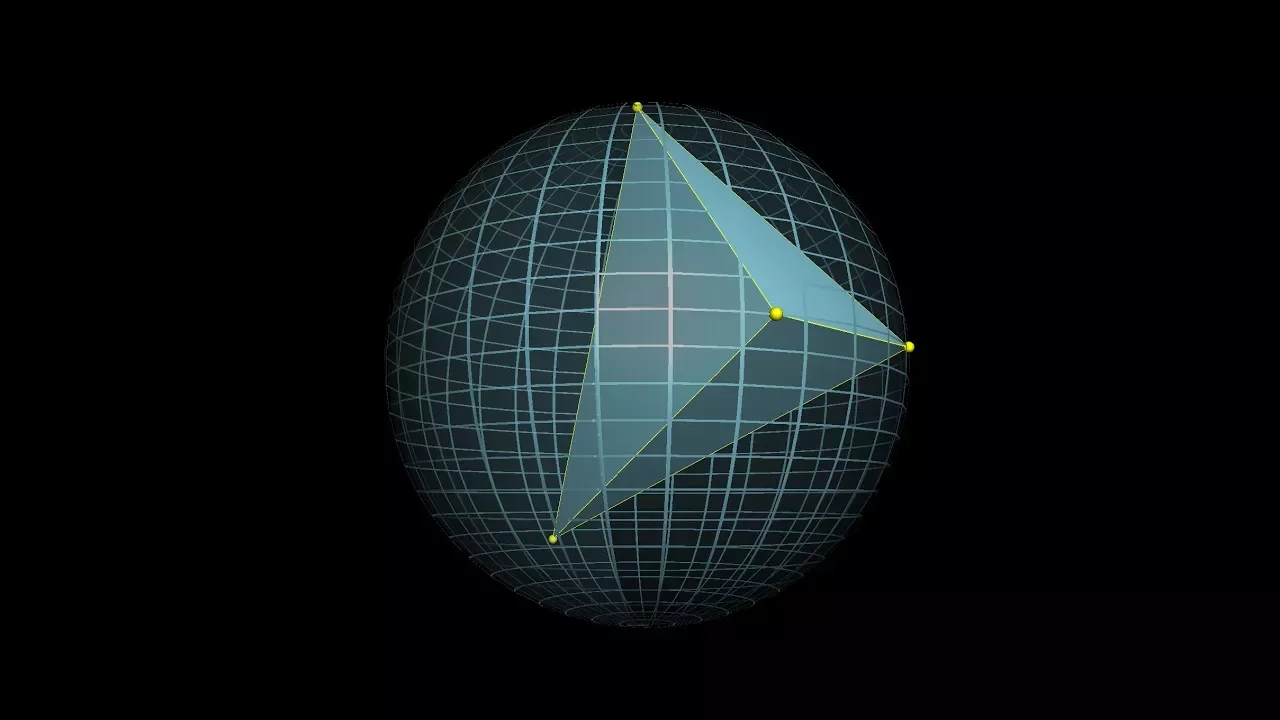
So there you go, those are my five picks for this summer of Math Exposition. But the thing is, if you had seen the submissions that I have seen, you would agree that choosing just five winners is ridiculous, to the point of absurdity. Again, you know, the point is not the winners, the event is about encouraging people to follow through with projects, things about Math Exposition they might have been thinking about doing, all of that. But just reiterating that point feels a little bit hollow, because there are at least, I don't know, twenty in here where I feel like it is a genuine crime not to have chosen them. And, well you know, it's my contest, my rules, so if you'll indulge me, let me quickly tell you about some others that I just loved. One that I think viewers of this channel would especially enjoy is almost an hour. It's about Durock's belt trick by Noah Miller. In a recent event that I was doing with Stephen Strogatz for the MoMath Museum, we had a call that was ostensibly meant to prepare for that event, but instead we spent much of it just both gushing over how much we liked this one particular video. Any of you who have flirted with this topic will probably know how tricky it can be to understand the link between points on a 4D sphere and rotations in 3D space, and why any of that has to do with quantum mechanics, but this animated hour-long lecture does a really good job laying out the full story. Another one which is long but good is about the unsolvability of the quintic by Carl Turner. For me it was a bit b I'm not seeing it because when I did, I was actively working on a video that was not just about the same theorem, but about the same comparatively esoteric proof that it describes there. I thought the video did such a wonderful job, I just kind of set aside the project. I'll still probably cover it at some point, but now I'm motivated to do it in a different way, but in the meantime, any of you curious about why quintic polynomials are in a certain sense unsolvable will absolutely love this video. So many entries here were just really solid explainers, plain and simple. This includes the best overview I've seen of the two-envelope problem, a great explanation for how fonts get turned into pixels, a wonderful article on spinners, a comic style blog post about E, a video about an ancient Babylonian algorithm for multiplying numbers, which has unexpected usefulness for certain programming tasks. There were a number of videos in Chinese on the site Bilibili, including one I really liked about a fundamental theorem for symmetric polynomials, perfectly understandable with the English subtitles. And one absolutely fantastic video in here was about lemur factor stencils, which I had never heard of, and I learned a ton watching this and found it absolutely fascinating. Many of the entries I saw had excellent aha moments, like this one here, with a mildly clickbaity title about a graph that will blow your mind, but the thing is, at least in my experience, that title is 100% accurate. There's a video explaining why pi shows up in the Buffon needle problem with a really elegant shift in perspective, and what I especially appreciate is that the author also has an appendix video going through some of the more technical details not covered in the main video. A few entries were highly interesting if for no other reason just from a technological standpoint alone, including a very well-executed interactive video by Rob Schlubb, which let me tell you is not easy to pull off, as well as a great interactive article introducing complex numbers and the fundamental theorem of algebra on the site Trina. And then some of the entries, setting aside all the explanatory value, were just plain beautiful. Like if I had a category here for greatest style, I think my pick would be this one about recreating curves from a children's toy. But setting aside style or the core point of all of this, which is the explanatory quality, there's one feature of online explainers that can easily be underappreciated, which is the role of narrative and storylines. And a couple entries I think did a great job exemplifying that component. This includes not one but two entries on this game called Hackenbush, a story about how a lights-out puzzle can lead you to Gaussian elimination, a nice exploration of the most efficient way to choose a random point in a circle uniformly, a great puzzle about tiles, which carries with it explanations of core facts from Fibonacci numbers, and one really nicely done video about why the Sierpinski triangle shows up in three seemingly completely unrelated contexts. Again, the list goes on for quite a while. As I look at some of these now, I'm really pleased to see that a lot of them have picked up some traction on YouTube, but there still remain many which are very underappreciated. I highly encourage you to go to the playlist including all the video submissions and to check out the blog post featuring all other submissions. As you look at that playlist, I would not read into the order of it too much, it was generated programmatically, but I did try to go through and curate the first few ones with videos that I think you might especially like. Honestly though, you can happily scroll down that playlist and find hidden gems all throughout. Like really, go check it out right now. If you do, I can almost guarantee that you have hours of edification waiting ahead of you, not to mention hours of just pure delight. Thanks again to everyone who participated. Let me just say one more time, I really was blown away by the quality here.