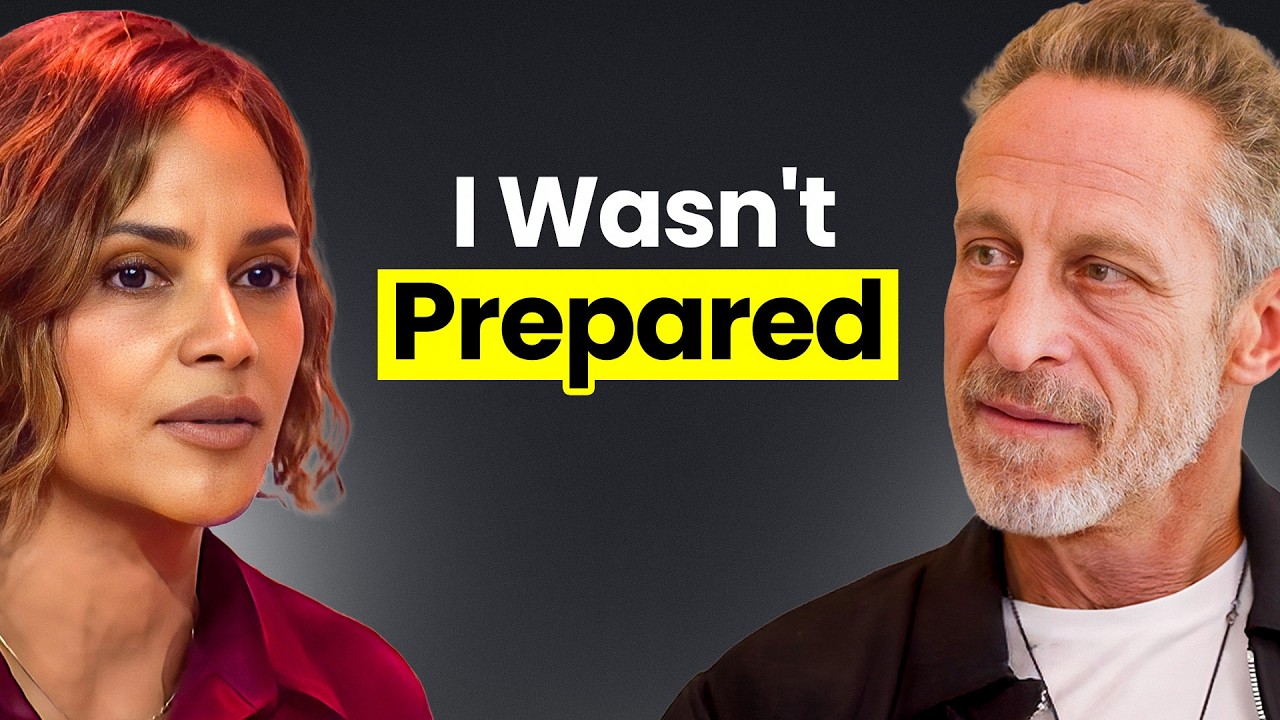
In this exclusive interview of The Dr. Hyman Show, I am joined by global icon Sir David Beckham and former Mayo Clinic physician Dr. Dawn Mussallem to deconstruct the science of longevity. David reveals the "hidden" struggle of his post-retirement health decline and how he reclaimed his vitality by treating his 50-year-old self with the same world-class discipline he used as an elite athlete.
The real measure of health isn’t what you can achieve in your 20s—it’s the resilience you build today to ensure your body supports you at 80. Most of us treat health as a short-term game of "fixing what’s broken," but what if you could engineer your biology for a future of elite performance, regardless of your starting point?
Dr. Mussallem brings a perspective that can only be described as miraculous: surviving stage IV cancer and a heart transplant, only to run a marathon just one year later. Her story is a masterclass in post-traumatic growth and a testament to how the "pillars of lifestyle medicine" can help the body flourish even after massive medical adversity.
What You’ll Learn in This Episode:
The "Retirement Trap": Why David Beckham’s body "fell apart" when he stopped moving, and the non-negotiable habit he uses to stay elite at 50.
The 80-Year-Old Vision: How to shift your mindset from "feeling good now" to "staying strong at 80".
The Titan Gene & Heart Health: The shocking science of how chemotherapy impacts the heart and the "ultimate longevity hack" discovered through transplant recovery.
The 4 AM Advantage: Why Dr. Mussallem prioritizes "quiet time" and movement as the foundation for metabolic recovery.
The "Simplicity Filter": How to cut through supplement confusion and why nutrient gaps affect 90% of the population.
Nature as Medicine: Why beekeeping, gardening, and walking barefoot are essential, not optional, for long-term well-being.
The "Crap Food" Myth: How David maintained an elite 20-year career despite a childhood diet of pie and mash
View Show Notes From This Episode
https://drhyman.com/blogs/content/podcast-ep1117
Get Free Weekly Health Tips from Dr. Hyman
https://drhyman.com/pages/picks?utm_campaign=shownotes&utm_medium=banner&utm_source=podcast
Sign Up for Dr. Hyman’s Weekly Longevity Journal
https://drhyman.com/pages/longevity?utm_campaign=shownotes&utm_medium=banner&utm_source=podcast
Join the 10-Day Detox to Reset Your Health
https://drhyman.com/pages/10-day-detox
Join the Hyman Hive for Expert Support and Real Results
https://drhyman.com/pages/hyman-hive
This episode is brought to you by Maui Nui, Made In Cookware, Timeline, Seed, Sunlighten and BON CHARGE.
Learn more about the health benefits of venison and how to get yours, head over to https://mauinuivenison.com/hyman.
Head to https://madeincookware.com and use the code DRHYMAN for 10% off your order.
Receive 35% off a subscription at https://timeline.com/drhyman.
Go to https://seed.com/hyman and use code 20HYMAN to get 20% off your first month.
Visit https://sunlighten.com and use code HYMAN to save up to $1400.
Upgrade your routine. Head to https://boncharge.com/hyman and use code HYMAN for 15% off.
(0:00) Introduction and health challenges of Sir David Beckham and Dr. Dawn Mussallem
(1:07) David Beckham's health routine and Dr. Hyman's message
(2:10) Sports nutrition evolution and Beckham's dietary habits
(10:11) Life after sports: Beckham's health regimen and Mussallem's survival story
(25:12) The significance of sleep, nutrition, and supplements
(30:00) A glimpse into Sir David Beckham's daily life
(37:38) Balancing diet, lifestyle, and sleep; Beckham's farm life
(40:25) Outro and sponsor message
(41:22) Dr. Mussallem's routine and Mayo Clinic's wellness initiatives
(44:55) Essential health habits and favorite foods
(47:32) Recovery strategies and the role of anti-inflammatory diets
(51:35) Health practices and personal definitions of health in their fifties
(55:55) Closing remarks and gratitude
#Longevity #DavidBeckham #HealthOptimization #DrMarkHyman #Resilience #WellnessJourney #podcast #exclusiveinterview
Оглавление (13 сегментов)
Introduction and health challenges of Sir David Beckham and Dr. Dawn Mussallem
When I retired, I thought that my body needed to just recover, and I stopped working out. My body fell apart. I'm aging exactly the same as everybody else's aging. It's really about how I wanna feel when I'm 80 years old, not right now. Let's switch over you, Don, because your story is quite amazing. It's more than quite amazing. It was just a few weeks into medical school that I was diagnosed with stage four cancer, and they said you have three months to live and you'll never be able to have children. Ultimately, I had a heart transplant. You were the first one to run a marathon within a year of having a heart transplant. When I took my first step, I thought, I think I made a big mistake. I was so decompensated. My calf muscles were literally indented. I had a three person assist and a rolling walker. David Beckham is a global icon whose name is synonymous with elite performance. Over a twenty year career at the highest level of professional football, he redefined what longevity looks like for an athlete. Now at 50, he is applying that same world class discipline to a new mission. Joining him is doctor Don Musselum, previously a Mayo Clinic physician who survived stage four breast cancer and a heart transplant only to run a marathon one year later. Together, they are stripping away the confusion of the wellness industry to reveal what it actually takes to stay elite at any age.
David Beckham's health routine and Dr. Hyman's message
So kinda walk us through a day in the life of David Beckham in terms of your health routine. I still want to live and feel like an athlete. Every part of my life, I treat as if I'm still playing. I think you should have him talk about his time in nature with his farm. This cockroach is the most handsome cockroach you'll ever see. So how do you define health now for yourself? Hey, it's Doctor. Hyman. I'm so excited to share this episode with you today, but before we dive in, I want to get your help. Please take a minute to hit that subscribe button, whether you're watching here on YouTube or listening on your favorite podcast platform. It truly means the world to me, and it helps my team and I bring you this podcast every single week. Plus, I don't want you to miss a thing. So thanks so much for being part of this community and I'm glad you're here. David, Don, welcome to the podcast. Thank you very much. Well, it's so great to have you both here. You both have health journeys and stories to tell. You as an athlete, you as a survivor of breast cancer and a heart transplant. And also, about how the average person can learn from the things that you've learned in ways that are remarkable. Both of your stories are extraordinary.
Sports nutrition evolution and Beckham's dietary habits
You know, one, you as an elite athlete who's learned how to take care of his health from the beginning and then continually improving even at this age. I think you look better now than you did in pictures when you were, like, 20. You now you sound like my wife. She says the same thing to me all the time, and I don't believe her. So You were kind of a scrotty little kid, though. I saw those pictures. That's very true. And, you know, you came back from two impossible things, which is stage four breast cancer and a heart transplant, and you look fabulous and glowing. So everybody's gonna wanna know what have you both done. David, let's start with you. You obviously, everybody knows who you are. You're an elite athlete. You're a football player, or as we say here, soccer player. And you we're chatting earlier. You're saying you've always been sort of paying attention your health, but you kinda also grew up on crap food, like pie and mash and sushi and chips in the, you know, East End Of London. And, like, it wasn't a thing, and, you know, you would go to Cheesecake Factory when you were playing. They'd get your pregame meals, and they give you a few bucks from the team to play. Tell us about how you've kind of thought about your own health as a player. Because, you know, most athletes when we're chatting about this don't pay much attention to what they're eating. You know, some high performance Olympians obviously do, but the average people in Major League sports, you know, football players, basketball players, soccer players, baseball players, or other football players Yeah. Football, you know, don't really pay attention. They're eating crap, and I've seen it. I we were chatting. I've seen, you know, what players eat and, you know, friends that own basketball teams or football teams, and I'll go in after the game. Like, they're just eating, like, fried chicken and pizza and pasta and, you know, crap and burgers and hot dogs. And I'm like, if you have a, you know, million dollar racehorse, you're not gonna feed it McDonald's and Coke and fries and a milkshake for a pregame Kentucky Derby meal. Right? It's funny you say that though because, you know, being an owner of a team, you know, I want my players to be healthy, I want them to be doing the right things, eating the right things, drinking the same things or the right things. And each player has to be treated differently. I learned that when I was playing in AC Milan, you know, each player was treated differently after a game. You'd go and get you know, you go and have a blood test that tell you exactly how you how much you've run, what you need to do in the next few games. So, you know, every every player gets treated differently these days. It wasn't the same when I was playing. But I walked into our locker room, you know, last season a couple of times and players are eating pizza. Yeah. And I'm like, is this the right thing? And they're like, well, players just want something something. They don't want something healthy. that's that good for you. They just want something. And pizza is the the kind of food of choice on most of the players and that's right after the game. But going back to my upbringing Yeah. You know, I grew up in the East End Of London. My mom was an amazing cook. You know, my dad worked from 6AM till 9PM every single day. So my mom was the one that was home looking after me and my two sisters. Now, my mom, like I said, she without knowing prepared me for my career. Yes, we ate fish and chips. Yes, we ate pie and mash. But that was really a kind of a treat at the weekend or a Friday night. I don't know if you know that, but on a Friday night, it's tradition that you have fish and chips. Yeah. And I always used to go on a Sunday morning with my grandma and my granddad, not my granddad because he was working, but my grandma and we'd always go to our local pie mash. But what is pie mash for Americans? Because I don't Okay. So pie mash I'll explain it. So pie mash is it's like a mincemeat pie. Yeah. It's a very basic mincemeat pie with pastry and then you have a mashed potato, but it's not your whipped creamy, you know, milky mashed potato. It is a mashed potato that is just mashed it's just potatoes and salt. Yeah. And then here's the part where everyone goes, ugh. That's so bad. It's called liquor it's a kind of gravy, but it's made out of stewed eels and parsley. And it's mixed together and it's this green sauce that is Eel like the lizard. I mean, that Yeah. Like a snake thing. And then you pile like pepper and salt and like chili vinegar, which is it's my favorite meal. That was that would be my last meal. That's amazing. So in all honesty, you know, those were treats. So we understood that those are treats. But during the week, actually, and the night before I would play on a Sunday morning, my mom would always make me like a piece of steak or a piece of grilled chicken and pasta. So that really prepared me for, you know, probably gave me the longevity in my career, you know, from a really early age, I was eating good things. You know, I might have the odd pie mash, fish and chips, but majority of the time I was eating good things. So that really has completely changed now, you know, in the world of football or soccer, completely changed, know, the scientific part of, you know, eating and looking after yourself and wellness now has completely gone, you know, full circle in all honesty because like I said, when I was when I first joined Manchester United, we at lunch times, we used to have steak and chips or pie and chips, baked beans, and for dessert, we'd have a chocolate pudding and chocolate custard every single day. Yeah. Every single day. There's no vegetables in there? No vegetables. I mean, when you got beans on your plate and chips, you know, we were, like, not worried about the vegetables. And the fact that I then continued I went on and played till I was 38 years old. So I my I had a long career. What's the average football players? At that time, it was probably 32, 34 if you were lucky. Yeah. But nowadays, obviously, with all the science that's in with the teams now and the players, their longevity of their careers now is going some players are playing till 38, 40, 41, 40. So players are longing their careers because of what they're doing to their bodies now. And did you change over time in terms of what you were doing to maintain your health as you're playing? No. I was pretty I was honestly pretty consistent. You know, a lot of players obviously had to change because, you know, I've not talked about, you know, going for a pint, you know, on a Wednesday or a Thursday afternoon. You know, play I didn't used to do that, but players used to do that. You know, before a game on a Saturday, they would go and have 10 pints in the pub on a Wednesday or a Thursday before a game. Wow. You know, so Okay. Lot of pints. But that I'm I'm about thirty, forty years ago. I'm not talking about ten years ago. I'm talking about that time. So it was a different and players were still performing. If I have quartz of beer, I'd be like on the floor. I know. But that's really how I was able to you know, I did adjust. Of course, I adjusted because I had to, but I was pretty consistent through my whole career. You know, players used to go away after the end of the season, come back and they would be heavy, you know, and I was never like that. You know, throughout the summer, I always looked after myself. I never over ate, I never drank, I was never a big drinker in all honesty anyway. So I was able to go away for four or five weeks in the summer, eat what I wanted, but I always looked after myself. You trained. You know, the the coach would always turn around to us and say, take four weeks or just take two weeks and do nothing. I never did any nothing. I always did my training throughout those four weeks. And that's how you stayed so long in the game? I think so. Yeah.
Life after sports: Beckham's health regimen and Mussallem's survival story
And how do you sort of navigate this now, know, being 50 and and, like, you're Yeah. 50. 50 last year. That's a big year. Right? It was a big year. A lot happened last year for me. So it was a special year last year. Yeah. Turning 50 was a big milestone. But to be honest, everyone made, you know, I think my mate my wife made a little bit more fuss about it than than me turning 50. She turned 50 the year before me, which I always remind her about, obviously. But she turned 50 the year before me, but I was excited about you know, I just treated it like any other birthday. It I don't feel any different. I don't think look any different, but, few more gray hairs. But apart from that, no, it's It hasn't made you think differently about your health because, know, we're gonna talk about it in a minute, but you created a new company, I am eight, which is about helping people create health on a simple daily regimen. And you recently launched the longevity product, which we're gonna talk about, which I love. What made you sort of wanna think differently about your own health that led to kind of this? Like I said earlier, the, you know, early on in my career, no one talked about the scientific part of looking after yourself or the wellness part or the supplement part or the vitamins part. No one no one talked about it. It wasn't really a thing that really got talked about, we weren't sat down and said and told to take certain things. But I always looked at the market as something really interesting, you know, and I always looked at what was out there, you know, and even before the end of my career, I started looking at things and what I could do to make my performance better, you know, on more on the holistic side than any other. So I was always looking for things. supplements. I was always looking for different vitamins and things and and different smoothies and what I could do to kind of keep myself as healthy and keep, you know, on that level of play and also level of professionalism. So when I started coming towards the end and after my career, I then started to focus, okay, I've been an elite athlete for twenty two years. Now I'm not an elite athlete, I still want to live and feel like an athlete. I still, you know, every part of my life I treat as if I'm still playing. Yeah. You know, I wake up, I have a schedule, I'm very regimented on what I do every single day, what I take every single day, how I look after myself. If I've got an important day, you know, one day, I will still go to bed at the same time as I did when I played football. So I continued to treat myself and treat my body like when I was playing. But I looked at what was out there and, you know, I had so many people come up to me and say, it's just so confusing. What do you take? What do you do? What do you put in your body? And I'm like, well, I want to be able to turn around to someone and say, okay, this is what I take and I want it simple. And it's one of the things that I spoke to Danny Jung about when, you know, when we first started the conversations, I said, all I want is simplicity. I don't want to be taking seventeen to twenty tablets every single morning. I want to put it in one drink and water and I'll mix it up and I want to take it and I want it easy. And want it to taste good I want that funnily enough, that was one of my things. Well, it does actually. I'm having some right now. It's gotta taste good and I wanna feel a dip. I wanna feel an instant like impact. And I must admit, it's the one thing that people say to us every single day. Like, the day after that week, they feel an instant impact. So when you turn 50, do you think about your health differently or you're just like, I'm on the same regimen, I'm gonna act like I'm 20 and keep I don't think I don't What's your like daily regimen that you I don't think of my time at 50. I want to 80. Yeah. That's what I mean. Yeah. And that's really why I'm doing the things that I'm doing now. It's why I'm looking to the future rather than looking at 50 because I've done what I've done. I'm aging exactly the same as everybody else's aging. You know, I might have been an athlete for, you know, a long time, but I'm still aging the same as what you're aging, what everyone else is aging. So, you know, it's really about how I wanna feel when I'm 80 years old, not right now because I've done what I've done to get myself to this point. I feel good, and that's what I want to continue. Amazing. Let's switch over you, Don, because your story is quite amazing and It's more than quite amazing. Yeah. It's kind of like I don't think I've ever met anybody who's had your story. And I also don't think I've ever really met anybody who looks as good as you who's had a heart transplant. You're a physician. You're trained in sort of integrative medicine. You work at Mayo Clinic in, you know, teaching women who are going through breast cancer how to do that in a holistic way. You have been a patient, and that's led you on a health journey for yourself and made you so passionate about bringing this to so many people. And I think a lot of us who are in this field are like that. We've had some horrible thing happen to us. Regular medicine didn't figure it out, and then we had to figure it out for ourselves. So maybe you could share a little bit about, as a patient survivor, like, what was it about your health journey that helped lead you to where you are now and this mission that you're on to bring health to so many? And tell us a little bit about, like, what you went through. So thanks, Mark. And thank you, David. I know you're having to listen to this again. But it's powerful. And, you know, so often, I almost, in the beginning, was embarrassed and a little quiet about sharing my story, but then I was getting so much feedback about how inspiring it was and giving individuals hope. And I really wanna help move individuals beyond hope to knowing that they too can attain their vitality without pause and flourish beyond massive health care adversity, which is what I did. And much like you, David, you know, I lived a very healthy lifestyle growing up because my mom was at home. She cooked these healthy meals. You know? And that's a big part of it. When you have, I think, a solid foundation of health and wellness, you have much better outcomes. And so this is a big shout out because when I work with women, a lot of times they're very inspired to wanna make change within themself. But then quickly, the next thing they say is, yes, but my husband's not gonna wanna do this. What about my kids? And this is really a big shout out that the earlier we start, the more likely you're gonna have a flourishing life regardless of whatever may come to you because we don't have total control over health adversity. Even if you're living a healthy lifestyle, it's not to blame yourself. These things sometimes just happen. Yeah. You didn't get breast cancer because you're eating crap or something. We live in a toxic environment, and who knows? You know? I have so many women that come in and they ask that question, why me? And that was one thing I never did. I never felt like I was in a battle or I was fighting this. I just trusted. You know, I looked for lessons, and I really felt it's like a morphete. Like, this was really happening, you know, for me, not to me. But it was just a few weeks into medical school that I was diagnosed with stage four cancer, and it just And you were old. I was 26. That's crazy. So it was just really quite surprising that this was the diagnosis that had happened. And, you know, they came into the room. This was the year 2000, Thanksgiving weekend. And they came in. I had actually collapsed. Had to take me to urgent surgery. I was in cardiogenic shock, 16 centimeter mass wrapped around my chest because I was misdiagnosed, misdiagnosed. Doctors really didn't think anything was wrong with me, but with the fast paced medicine that people don't just pause. And this was, you know, starting back in the February when health care was really starting to shift even back then. No one ever listened to my lungs. So I ended up getting diagnosed at a very late stage. And so I had this massive tumor wrapped around my heart that was compressing the great vessels and that resulted in cardiogenic shock. They did a thoracotomy. Next day But that's when they crack open your chest. Yeah, just big massive surgery. And the next day they came in my room and they said, You have three months to live without chemotherapy, twenty months to live with chemotherapy. You have stage four cancer and you're going need to drop out of medical school and you'll never be able to have children. Was like all these absolutes. And I thought, wow. That's a lot to hold. It was interesting. You know? And I remember just feeling very sturdy though and steady. I'd always had faith in God and believed in something bigger than myself, and I just trusted. You know? I was in medical school, so there was this element of curiosity, which was kind of an interesting psychology, but I never fought it. You know, I knew I needed to do the conventional therapy, so I went on to chemotherapy and bone marrow transplant, radiation therapy, stayed in school the whole time. But when I had my knowing, the great question you asked is how did you know you wanna do what you did? Is I remember during my bone marrow transplant. My oncologist is very special. I had a bicycle in my room. Said had surgery. You had chemo. You had radiation. Yeah. And then you had a bone marrow transplant. And This is in 2000, so this was back when they just really gave you high doses of treatment to just totally deplete the immune system, and then they gave it back to you. So it's pretty powerful for people listening who don't understand what a bone marrow transplant is. Essentially, they destroy your own immune system, they kill your bone marrow Yeah. And then they give you somebody else's bone marrow, which rebuilds your immune system, and then hopefully will help you survive. But it's a That's exactly right. You know, and this is with the City of Hope. This isn't a research study because they knew that, you know, otherwise, there's no way really to cure this cancer. And so that's what they did. The Hail Mary. It's exactly. It's a Hail Mary. And so it was so fascinating, though. I kept my life the way it always I always wake up at 4AM. I would ride the bike that was in my room. There was also a bicycle that my oncologist had at the nurses' station so I could sneak out, and it was in that sneaking out to watch the sunrise to go ride my bike at the nurses' station. Everyone in the other room Wait. You brought a bike into the nurses' station? The oncologist did. He was so cool. Like a stationary bike. Two stationary bikes. I had two bikes. One in my room for on the days that he really didn't want me to leave, he said, yeah. Most mornings, everyone's tucked in the rooms. You're fine to come out. And I'd ride my bike and watch the sunrise every day for about an hour. I mean, is when my hemoglobins were like six. You know, it was crazy. It was really fast. Wait a minute. You have to understand what she's talking about because I recently had surgery and my hemoglobin went to seven and I could barely sit up in a chair. And here you're saying you're riding your bike with that's when you have no blood in your It's like a third of the blood that you're supposed to have in your body. It is true. But, you know, I'm a smaller stature individual. I was very much into cardiovascular exercise, but you are too. And we each have our different reserves. But I was very fit prior to my cancer diagnosis. I would do Camelback Mountain in Arizona twice. I'd go up, come down, and then I'd even run after that. So was very fit. Had a high v o two. So I had a lot of reserves. So when my hemoglobin was low, I would even climb Camelback with, like, hemoglobin's at seven. It was crazy. I just was very blessed to have this high vitality. But you know why? It's because I showed up for myself. I ate my Right. Exercise regularly. And we know exercise during chemotherapy is incredibly powerful. We know it improves outcomes. In recent colorectal cancer studies, know, like on par with the benefits of chemo. Really important exercise. Know this is Exercise really is your whole just so, so important that we move our body. But I just remember looking out and seeing everyone else in the rooms and they were dying enough to stay alive, you know. But I describe it as I attained my vitality without pause and it was a lifestyle that made the difference. And I really do attribute that to why I'm here today. And unfortunately, those treatments were, ones that we really didn't know what they would do to someone. They cured the cancer. What a blessing. Right? Because otherwise, I wouldn't be here. But they caused advanced heart failure. So You could cure the disease, but the patient died. Yeah. Exactly. But it's another testament to the importance of exercise because when I was found to have advanced heart failure, my ejection fraction, I don't think I've ever heard of one. Lower was 8%. And you were walking around? No. I was actually ready to collapse. Was in cardiogenic shock again, and this was in the year 2003, so it was about three years after omerch. That's like for people in plain English, it's like basically about a seventh of what your heart should be pumping. If it can only beat and pump a seventh of the blood, that's what she had. It was really hard. And I had lived with heart failure for eighteen years. That's insane. You know? And I remained in I finished residency, did a hospital fellowship, and heart failure, you get better, you know, you get worse because you overdo it, you get better, you get worse. There was a lot of procedures along the way and different interventions that they kind of would patch me up. You know, I'd work a little better for a while, and I'd kinda decompensate. And the chemo is what destroyed your heart. Yeah. You know, it's really fascinating. Well, this is super cool science. So, you know, ultimately, I had a heart transplant, and they are investigating the heart and the genes in the heart and how this could have happened. And they identify something called the titan gene. And this titan gene is a gene that makes the myocytes, the myo the heart cells very sensitive to chemo and radiation and childbirth. And I was actually able to have a baby. And so I went into this end stage heart failure right after I delivered my child, so it was kind of like a triple hit. So most individuals, you know, if they have chemo, they're okay. Well, you had a baby and a heart failure. That's Been all three. Now you're still smiling. It's so impressive. Well, it's just such a blessing, and, you know, that's the beauty of post traumatic growth. Right? When if you have adversity and you rise above, you know how hard life can be. And now it's like I live this seamless, just truly blissful, glorious life. Just a life without resistance is so easy. Life is so easy now. You but you had a heart transplant in 2021. Right? It's the ultimate longevity hack, I must say, because I have a very young heart in my body. So I'm not recommending anyone else to do it, but I'm the first one to run a marathon within a year of having a heart transplant, or were you the only one who's had a heart transplant who's run a marathon? No. There's been other men. Actually, I don't believe that there's been a woman that's actually run it. I think there was one woman that walked one, but it was many years after her heart So this is exactly one year after my heart transplant. And after I said I was gonna do that, I thought, uh-oh. When I took my first step, I thought, I think I made a big mistake. I was so decompensated. My calf muscles were literally indented. I had a three person assist and a rolling walker, and I was just thinking, oh, I'm I may not be able to do this. I was like, I've gotta try. So I applied all those pillars of lifestyle medicine. I mean, after the surgery, you're on a walker. Yeah. After the surgery, you know, on a walker. I was on support But not during the marathon, you were on a walker. No. I ran that hard, man. I shined. That was pretty cool. Yeah. But, yeah, we have a cardio sports medicine specialist who's a cardiologist at Mayo, and they ran races with me leading up to the marathon. I trained very smart. The truth is I actually ran a marathon at the eleventh month, because they we wanted to run one marathon just to make sure I would be safe in terms of public. Because we didn't want, like, cameras on me and she, like, dies.
The significance of sleep, nutrition, and supplements
Yeah. Well, this sort of speaks to the really next question I have for you, which is you went through all this, which almost killed you. And these are serious diseases, you know, stage four breast cancer, heart failure. They're not really lifestyle diseases. I mean, heart failure was from chemo. How did it change how you think about your own health and investing in your health and your own sort of regimen for creating health? And then how did it affect, you know, your thinking about what you're doing in the world? It's been so inspiring to be able to figure out how important lifestyle is. And I always was really fascinated with food. So I've always really invested in eating healthy, but sometimes it was a little too restrictive and it wasn't balanced and it wasn't with harmony. There was a little bit of turbulence. Maybe I was doing it out of fear where now I really, you know, eat to live, and I embrace that in a way that it's enjoyable, and it's something that individuals should really try to do the same. I don't think that we should use fear tactics to inspire others to eat healthy. This is just what fuels our body. You know, you don't put we we've heard these analogies. You don't put junk in a car. Shouldn't put junk in your body. Yeah. I mean, getting rid of the ultra processed food. And, David, that's what you said was so important is your mom was there cooking dinner. You didn't eat fake food. I was lucky. That's the most important thing to fish and chips and pine mash actually sounds pretty healthy to me compared to what most people eat today. But I'm talking about fish and chips and pine mash, and then we've got Dawn telling her inspiring story. It's okay. Well, just really blessed. And exercise and movement, I always move my whole, you know, life, and I continue to do that. So I think I was really blessed that I had this very healthy childhood that my parents really believed in. And it just set the stage for this to be just very natural for me in this entire transition. The one thing that I would say I really have to work on is sleep. I'm not very good with sleep. Me too. I'd rather be alive. Sleep is really hard. I sleep good, but I don't wanna sleep. I wanna, like, live. So that's my goal is find feel like a good replace of sleep. There's a gene, and maybe we all have this, that you just don't require as much sleep. We think that these individuals can get restorative I definitely have that gene. Do you? I think I need to. Must have that gene. Yeah. I'm happy with four. feel like I'm missing out when I'm sleeping. something. Yeah. I know. Something's going on that I wanna be part of. So the idea of you sleep when you're dead, life's too fun? Yeah. You're right. But you do need to sleep. It's important. sleep for metabolic health. And, you know, so I think that this is actually a very important thing that we had to focus on. And when I was running that marathon, that was one thing I really was mindful of. And you said another really important thing, David, is that you're very regular with your sleep and you have sleep consistency because there's research now that says, yeah, that's important. 10PM to 2AM. You need that sleep. That's like the critical hours if you can be really regular, especially over a lifetime. So but, you know, there's no magic bullet, but, you know, we all know in my background was in exercise physiology. And so I did a lot of research early on and we called it ergogenic aids at the time and that was nutraceuticals to support sports performance or peak performance, human existence. And so I really do believe in supplements as an adjunct to a healthy lifestyle. It's never gonna replace a healthy lifestyle, but even the healthiest of lifestyles just isn't enough anymore. You know? You there's a lot of nutrient gaps. You know, the NHANS data, you know, you talk about this often. It's hard to get what you need even if you're eating what you think may be an idea. Know, the what she's talking about in English is this study that the government puts on called the National Health and Nutrition Examination Survey. Essentially, it's a big study that's been going on for decades that tracks everybody in America and what they're eating and their health and their blood tests and their nutrition levels. And these studies find that over ninety percent are deficient or insufficient in one or more nutrients at the level, not that's optimal for health, but at the level that you wouldn't get a deficiency disease. So how much vitamin C do you need to not get scurvy? I think ten percent of Americans are deficient in vitamin C at the level that would give them scurvy or 80 are deficient in sufficient vitamin D or ninety three percent are low in omega threes and, you know, fifty percent are low in magnesium and zinc. And, you know, it's like, it's a lot. And we're seeing this. You know, at Function Health, which is a company that, I cofounded to help people track their own personal health data, it's shocking. Seventy percent are low in the Quest reference range, which is the standard reference lab we use. And seventy percent are low in one or more nutrients at the level that's not the level I think is good or you would think is good. Like, vitamin D of thirty is not good. It should be 50. Or a ferritin or iron stores of at 16 is not good. It should be 45. Just between, you know, lower than 45, you'll get hair loss and fatigue and all kinds of sleep issues and other things. And, you know, omega three fats and vitamin D, and it just it's amazing to see the problems in a population that actually is pretty health forward because they're actually going to do proactive things about their health. So what about the rest of the population? You know? So I think providing basic nutrients is so important. But I kind of I wanted to kind of loop back to you because what you said kind of struck me was, you know, you're not doing what you're doing now to stay healthy at 50.
A glimpse into Sir David Beckham's daily life
You're doing what you're doing now to stay healthy at 80. So kinda walk us through a day in the life of David Beckham in terms of your health routine, and what are the foundational things you do? That interesting. But I will tell you. Obviously, I have four children. So I have one, my daughter who's 14 years old. She's still obviously at school every single day. So my mornings really revolve around getting her out of bed, downstairs, breakfast inside her. I wake up at probably 06:15, 06:30 every morning because I like to go downstairs, make sure everything's set up, breakfast, the fire's on, lights are on, music's on, you know, radio's on, the radio station that she loves. So and then she comes down around 07:30. Victoria's up by then as well. So she's a kind of a an early riser as well. So she comes down around the same time as me. And then we wait for Harper to come down, she comes down, she has breakfast, most of the time it's she has scrambled eggs or some cereal or some fruit. And then I drive her to school. You're the chauffeur. Do wear a hat? I'm I should get a hat because I am I she likes to sit in the back sometimes when she's got her friend, but no, most of the time. My daughter was like, don't talk to me. You don't know me. Like, just drop me off, like, a 100 yards from the tour of school. I'm actually not there yet. She's not, like, embarrassed to me at the moment. So yeah. And even if she shows any of those kind of sides, I I'm all over her. Like, I'll walk in, I'm kissing her, I'm telling her that I love her in front of her friends, her teachers. No. But so I but I love that time in the morning. I love you know, Victoria goes into the gym. She starts her session quite early. So she does, like, forty five minutes before me, and then we go in and we work out together. You did get it. But I'll get to that. So I take her to school, I drop her off, and then obviously, I drive back to the house. I go into the gym and that's like my time with Victoria to work out and laugh. I love And that's why I actually work out with my wife because she makes me laugh. And I make her laugh apparently, but she's laughing at me rather than anything else. So we do about she does about thirty to forty minutes on the stair climber first before I get there. And then we work out with one of my close friends who's actually an ambassador for Iron Maid, Bobby Rich. So he works us out and I mean, loses his mind working out with me and Victoria because I'm very I Victoria always says I Procrastinator. Yeah. She says I'm always trying to like talk to him about something to slow the session down. But I'm always taking the right like time in between each each set. But she's like, okay, let's go. So she's always jumping onto so we work out together for an hour, we laugh a lot at each other. And that's part of the routine in all honesty. Family, connection, love Exactly. Laughter, exercise. You're already, like, you already got, like, five really big health points. Yeah. You know? And then, obviously Before you even have breakfast. Before we've had breakfast. So then we're working out and actually, there's one exercise which she actually cried once through this exercise because she found it so difficult. And every time I try and get Bobby to do it at least once a week because it makes me laugh. It makes me laugh to watch her go through this painful, like, exercise. But she does say there's exercises that I'm not very good at as well. So And what is that exercise that makes you cry? It's just it's a pull up, but, you have to slowly let yourself down. And I don't know what she was having a moment during that session. And all of a sudden, I was like, you're not crying. You you're crying. And I made a big thing of it. So but we laugh about it. So we work out together, we have a lot of fun. And then I go up to she goes up to shower make us a smoothie. We both have like a smoothie each with IMA in it and she's obsessed with it. And she's not easy to like change supplement. Whatever she's taken, she's like very loyal to that. Yeah. But then when we started the IMA, you know, I think it was 2024 that I started taking it. She was very curious, but she was like, well, I've got my thing. It can't be as good as my thing. Yeah. And I was like, well, you're gonna have to change at some point to show some loyalty to me. So, yeah, so she changed finally. But then so we have a smoothie, I go up and shower, and then I head into the office. I always eat at 01:30 every day. I have grilled salmon, brown rice, vegetables. Then I have full day in the office. I go and pick my daughter up every day at 04:00 in which I'm I feel very blessed to be able to do that because not every parent gets that opportunity. I drive her home and then we prepare dinner and then, you know, put her in bed and then do exactly the same the next day. Amazing. So that's it. That's good. You're eating healthy, you're with family, you're laughing, you're connected. I mean, that that's it really. I mean, I think, you know, people understand that it's not that hard, that it's just a consistency, it's their daily habits, it's building a routine, and and your sleep stuff is also important. So tell us a bit. Stuff is really important because I think like me and Dawn just said, you know, I I've not really been I'm not great at sleeping, you know, like I always I just wanna be awake to be honest. But throughout my career, I was pretty good. You know, I always went to bed like 10:00 was the latest I went to bed night before a game And the games would always be at like either 03:00 in the afternoon or 04:00 or sometimes in the evening, but I would always go to sleep at the same time every single night. And I always slept pretty well unless it was a big game where I was a little bit or anxious, just excited. You know, I was not one of those nervous players, was kind of excited about the game. So, you know, my sleep these days is a lot better than what it was when I was playing and that's down to Victoria. Victoria is always like, you were in bed early, we're sleeping early because we're up tomorrow early. So I always try and get, you know, at least seven hours at least every night. And I know you need a little bit more than that, but that's pretty good for me. That's great. So that has really been, you know, part of my kind of thing that I've really worked hard on. Because when we talk about balance, you know, in people's diets, in people's lifestyle, it's not just about, you know, what you take, it's about everything else that you do. Like we've just said, you know, I laugh throughout my workout. You know, I walk my dogs, I take my daughter to school. I do have pie mash every now and again, you know, it's it is about balance and we have to get that right. It's about a number of things that we do and sleep is a big part of that, you know, and I have worked harder at that, like I've worked harder at drinking more water. You know, I was never great at drinking a lot of water, but now, I'm great at it apparently. But, you know, you get up a few nights, few times during the night, obviously, but if you drink too much water, but I, you know.
Balancing diet, lifestyle, and sleep; Beckham's farm life
I think you should have him talk about his time in nature with his farm. Oh, yeah. Oh, that's right. You're a beekeeper, you're you're a gardener. My life life. Yeah. It's a big part of my life also medicine. Yeah. And Is this in The UK? You've got a This is in The UK. It's in the Cotswolds down in the countryside. And I started I you know, throughout lockdown, after lockdown, I was like, okay, I wanna create our own, like, I want our own food. vegetables. I wanna be able to grow things that we eat every weekend. So that's what I do. So I created this farm that's grown and grown and then we started obviously with the bees. The bees was the first thing actually. which me and one of my children came to me throughout lockdown and he was like, dad, have you seen these beehives on online? He said, let's get one. So we we bought a we it was a flat pack beehive. We stayed up till four in the morning building it. And then I was like, do the bees I had no idea. This was my first time even thinking about bees and honey. And I was like, do the bees come naturally? And obviously, they don't. You have to buy the bees. So you buy the bees and a man comes up in a white van and he gets out with a cardboard box and he says, there you go. There's your bees. And you're stood there holding this box of bees. And you don't have a one of those suits on yet? No. Because they're all in the box still. So you've got this box of bees and there's 5,000 bees in each box. 5,005. There's one queen bee and there's 5,000 bees. So I'm stood there. So then I contacted a local beekeeper and she's amazing. So she came around and her name's Helen, she's unbelievable. she said, okay, this is how it works. We put the bee suit on, we put the bees, transferred the bees from the box into the hive and that's really how it all began. But I must admit, I post a lot with my my my stuff that I do in my garden because I have this amazing cockerel and I have this these amazing hens. This cockerel is the most handsome cockerel you'll ever see. I'm gonna show you a picture. He struts around. He's so handsome and he struts around and he's gorgeous. He's so handsome. But one of the things that is that I I get a lot of comments from, I like to walk around my garden in bare feet, you know, not when I'm planting, but I once was planting a rose and I was digging with yeah. Obviously, was digging with no shoes on and no socks on and it didn't go down very well. So everyone was had a lot of comments
Outro and sponsor message
about roses. Because of the roses. But I love it, you know. It's one of those that I always go down to the countryside for a day and just walk around in bare feet, walk around my garden, walk around the vegetable garden, and it's one of my big passions. Being in nature is something we're all organic. Deficient in. Yeah. You know? And eat it and eat the food. And I eat the food. Chickens eat the eggs? Eat the eggs. We have seven six hens, one cockroar. I have seven ducks. So we have duck eggs. We have some amazing apple juice actually at the house now as well. So we have apple juice, we have jam, plum jam. From the trees? Yeah. We have so many plum trees that I was just like, what am gonna do with all these plums? So one weekend, Victoria came down and the table was like covered in these plums. She was like, what are you doing? I was like, well, I'm gonna make some jam.
Dr. Mussallem's routine and Mayo Clinic's wellness initiatives
I love it. Wow. And Don, how about you? I mean, in terms of your routine, I mean, you're you've been you're in your early fifties. You've had two major illnesses, you know, that mostly would have killed people, and you look like you're just starting your life. So what is what is your sort of routine and nonnegotiables that you've kind of come to understand that are part of, you know, essentials for your life? Yeah. You know, I wake up at 4AM every morning. I love I start my work early. That's when my mind is nice and clear. And I exercise in the morning, so I try to get a sixty minute run-in the morning. I eat a whole food plant predominant diet, but for the most part, I've done that most of my life. When I'm traveling, I'll add in some fish here and there just because it gets hard to do whole food plant based, but I really stick to a healthy nutritional pattern, getting lots of vegetables and fruits. I really focus on that food diversity for the gut microbiome. I don't have a garden. I wish I did. I'm just so inspired by that story. It's just very hopeful. It's something I think I wanna do in 2020. You should. Yeah. You've inspired me. I don't know I can get roosters, but, yeah, this is pretty intense. It's pretty exciting. So I really live by what I speak to my patients about in my own lifestyle, but I have such meaning and purpose in my career. My work is not work. It is my love and my passion truly. So I start my day typically about eight or 09:00 with patients, and I have pretty long days. I go pretty late. Research projects, you know, keep me busy, and I started the lifestyle medicine residency curriculum at Mayo Clinic. And I'm medical director for employee well-being where, you know, it's so meaningful because they're people that saved my life. So to help them be their healthiest version of themselves, they're caring for our patients. So really to help them learn how to cook healthy, started a fitness center at Mayo Clinic. So our staff at Mayo actually have access to a gym that's open three hundred and sixty five days a year, seven days a week, twenty four hours a day, and no charge. So it's pretty cool. So they can go and exercise right on-site. And, you know, this is really cool. So part of that employee well-being, we're actually doing a 100 person randomized controlled study with the IMA. This is a high stress group of individuals. So it's gonna be fun to look at those nutrient deficiencies and, you know, those nutrient gaps them before? Yep. Large panel of testing. And Danny Jung has really invested appropriate I mean, I don't know of any other nutraceutical company that dedicates resources to having a scientific advisory board as well as the research. So we're really excited about doing this study at Mayo Clinic. And we actually brought IMA on to Mayo Clinic's Mayo Clinic Ventures because we're not allowed to collaborate with outside industry. But in this realm where we're building product and helping to advance the science, we're able to do this. So it's really exciting and it's fun to do it in the staff and the staff are really excited about it. You know, so we actually sell IMA in the Mayo Clinic pharmacy. A lot of my patients do really nicely with it. They love the flavor. They love the convenience like we talked about. But it's really fun for me to be able to not just care for patients but help to optimize staff as well. So it's been a workers are among the sickest in the country. They really are. You know, and they're role modeling this behavior, which is so, so critical. And, you know, I guess, you know, for me, winding down the end of the day, my daughter is in college now. She's 22, so, you know, it's easy to kinda work a little bit later. And I try to go to bed by 10:00. You know, I don't get my seven hours late, but I just don't feel I wake up. I, like, spring out of bed. I don't sleep four. Bed at ten. Wake up at four. That's a I love my 4AM. Sometimes it's, like, 03:22. Like, this morning, was 03:22, but I'm in California. So We're allowed. It's really 06:22 my time.
Essential health habits and favorite foods
Let's dive into some some rap power questions. What's one habit that is sort of nonnegotiable that you would never give up or that you maybe a bad habit that you like that maybe My one non negotiable habit that I and to be honest, it's working out. It's working out because when I retired, I thought that my body needed to just recover and I stopped working out. I just sat and did nothing for I planned to do nothing for six months because I thought my body has been through everything. It's been through surgery, it's been, you know, I've beaten it up over the that time. But it was the worst thing I could have done. So from that day, I was like, I'm always doing something. Whether it's Did you do nothing for six months? I did nothing for six months. And what happened to you? My body fell apart. I thought that, you know, my back would feel better, my knees ankle, I ruptured my Achilles through my career. I thought that the body needs to just recover and it was the worst thing I could have done. So gradually I started getting back into, you know, cycling, I started, you know, boxing, I tried everything. And then I found a workout that worked for me and that's my non negotiable. I will work out every single morning. And if I if I'm traveling, I'll be doing press ups in my room, I'll do something. I'll always do something to just get my because it's not what I don't it's not that I don't care about what I look like, it's not all about that. It's actually what mentally and how I feel. So that's my non negotiable. Yeah. I agree for me too, you know. Especially, you know, the older you get, the more nonnegotiable it is. Yeah. Like, when you're young, you can get away with it. That's very true. You know, I've had many back surgeries. Mhmm. And to me, it's just it's just a foundation for It is feeling good. If I don't, my back hurts. Yeah. And so I know I have to do it just for keeping myself going. And and it makes me feel good, and it's just good for everything. Exactly. Yeah. If you don't move, you won't. Oh, sure. How are you, Dawn? My nonnegotiable is waking up at 4AM because I just have so much I wanna do, including move. I have a lot. So it's it is my quiet time. So it's just so peaceful, but my nonnegotiable is four AM earlier, actually. So I mean, I love that if you go to bed early enough. Yeah. I do. I try. Ten like, ten. Yeah. I mean, I love getting up early, and I love the quiet, like, nobody's bothering me. It's like, you know, you wake up at five and at four or six, you know, it's like the world's still asleep, you can have this moment. It's great. So what's a food you could eat every day?
Recovery strategies and the role of anti-inflammatory diets
Oh my goodness. A food I can eat every day. It could be pie and mash if you want. mash, but it shouldn't be pie and mash. But it can. That's okay. Oh my goodness. I mean, when you do everything else right, doesn't have to be about perfection. So A food I could eat every day. You know what? And it's quite controversial. A radish. I love radishes. The spicy radishes? Spicy radishes. From the garden. Yeah. From the garden. I pull them, I clean them a little bit, and then I love radishes. Some of the dirt on because then you get some more probiotics. There you go. Yeah. You'll good adjunct to your IMA. Yeah. So radish. I like that. That's good. You, Don. Oh, mine is easy. The purple sweet potato. I just love those. They're glorious. You had a pack. I'm like, they're so gorgeous. Yeah. Those are the Okinawan sweet potatoes. And Okinawan is one of the blue zones where people live a very long time. So They have a 150% more anthocyanins than blueberries, that powerful I eat them almost three times a week. Like, I they're in my house all the time. And if I can't find them in the grocery store, it's very upsetting. I and they yeah. You're right. Or they'll sell out or they're a little bit out of season. So there's a way you can grow them. You should I should grow them. Yeah. Oh, you should grow them. Want some. I get messages from people in The UK. Where can I get purple sweet potatoes? David has them. Yeah. Those are great. I'm gonna have a long queue outside my house. How about recovery? What's your most important recovery tool you use? IMA. IMA actually is, you know, I've had a couple of things in the last couple of years where I've had to have, you know, whether it be nasal surgery or, you know, dental surgery and the one thing that I took every single morning and it helps me recover quickly was IMA. Other than that, an ice bath. I love ice baths. It helps me recover from actually, it clears my head. It clears my head, know, even if I've not worked out, I'll go and sit in an ice bath for ten minutes. Ten minutes? Yeah. What temperature? I go in and out. It's That's really long. It's like two degrees. Damn. Yeah. So it's cold. You're like Wim Hofing. It's cold. Holy cow. I know, like, I don't know, like, somebody said I had, like, 6% body fat. And if I did that, I'd be, like, shaking for an hour. Well, yeah. You have to have a shower close to to warm your bones up. But but ice bath seems to recover muscles, you know, my muscles and, you know, my aches and pains, and I love it. I love ice bath. I have what I call a triathlon. It's a sauna, a hot tub, and a cold plunge on my deck. Love my house. That's good. I like that. It's yeah. You can come over and do my triathlon. It's fun. How about you, Dawn? What do you do? Oh gosh. You know, I feel like my life is a little bit complex. I feel like sometimes I get just so busy that and I recover really quick because of my nutrition. And so I find that my whole food plant based nutrition just has such powerful anti inflammatory properties that I can really just keep going. But I would say for me, it's not necessarily something I do every single day, but every three months, I do a five day fasting mimicking diet with Prolon. I really and I'm not sponsored by them, but I really love that. And I use that fasting mimicking diet for my patients during chemotherapy actually, for their seven you know, their seventy two hour fast. So I'm a big advocate for that. I I'm not a good faster, like daily. I like to eat as soon as I Yeah. Wake Well, you're a little thin, so if you're faster like me, you'd kind of waste away. And I need energy. As soon as I wake up, I am intuitive. I listen to my body like I would never get in that cold. Uh-uh. I like getting hot. You know? You're sounding like Victoria. Victoria's never got actually, she got in the ice bath once. Oh, good for her because I only knew That was love, by the It was love. Good for Victoria. It was well, I actually told her it tightens skin. I was like, it tightens your skin. She was like, okay. She was like, I'm in. So, yeah, she only did it once. She didn't need it. Bring on the wrinkles. Yeah. So the fasting is what I would recommend. You know, I think that trying to get that twelve hours each night is great, but I just
Health practices and personal definitions of health in their fifties
I'm not good at that. Yeah. It's hard. You know, it's what you said, think I want to just double down on the anti inflammatory diet. It should be a sort of a nonocoshial recovery tool because whether you're a professional sports or whether you're just a human being wanting to live up and feel good, it's so important. And I think with my patients, I see how much inflammation plays a role in their health or disease actually and how much an anti inflammatory diet can actually help them feel better. And I created something called the ten day detox diet, was just the name of what I did for my patients in elimination diet. It adds in all the healthy foods and the anti inflammatory foods and takes out all the inflammatory foods. And you do it for ten days. And people's lives are changed. I mean, not just they lose weight, but the inflammation goes out of their body. Their skin clears up. Their rashes go away. Their joints feel better. Their headaches go away. Their digestion gets better. And it's so simple. It's not it's just basically taking out the bad stuff, putting in the good stuff. And it's it's, in ten days, we've done thousands of people. There's a seventy percent reduction in all symptoms from all diseases in ten days. And it sounds like, like like, I'm hyperbolic, but, actually, that's what people find. And it's so quick. And I just I would say people don't believe how they can feel better. They don't realize how close it is if they just change a few habits. So, hopefully, this inspires them to do some habit change. So anti inflammatory diet, I don't know about the ten minute cold plunge, but the workout for sure. What are you more strict about now at fifth in your fifties than you were when you're 18 that you're sort of like doubling down on? Sleep and drinking water. You know? I will I'm definitely stricter with that now. You know? I think that that's almost a non negotiable. It's almost sleep and water. When you started to say drinking, was like, drinking? Wait. I had to correct that really quickly. Sleep and drinking, Water. Okay. There was a little bit too much of a pause between drinking and water. Definitely not 10 points. And how about you, Dawn? You know, for me, it's sleep too, and I really work on that. I'm very intentional because I found out when I wasn't sleeping, my metabolic health was more deranged. It wasn't because I had a body composition. I wasn't sleeping. So we really do need to honor our sleep. And, you know, a unique thing I find in my patients is so much sleep apnea that would have otherwise been not detected. That's not necessarily my situation, but this is just a shout out sleep hygiene is something really to focus in on. So for me, would be sleep too. Sleep, agree. Sleep is important. Alright. So how do you define health now for yourself, both of you? David, you start. How do I define health? To be honest, I want to obviously look after myself, but I want my family to understand mean to you? Like what is like when you think of health, what does it represent and what I think it represents everything that is in my life at the moment. And that really wasn't I'm not saying it wasn't as important when I was playing because when you're an athlete, you're surrounded by doctors, by nutritionists, by people that want to look after you and have to look after you. But now, obviously for a long time, I've been looking after myself in a different way purely because I've had to, you know. Of course, I have an amazing wife that does everything for me. You know, she makes my smoothies when I'm not making them for her. So I have an amazing wife that does that. But my health, I've noticed how important it is for me because there's nobody else doing it for me other than myself and I have to do that. How about you, Dawn? Yeah. I think that's just so important. For me, it would be, you know, especially going through health care adversity, is just to wake up each morning and feel good, you know, and not have any resistance and impediments and things that are pulling you down whether it's aches or pains or reduction in energy, shortness of breath, chest pain, whatever it may be. But just to live that life without those ailments. And, you know, I just find even in my patients during chemotherapy when they're taking good care of their bodies that they're able to attain that vitality. And then to use that vitality to really go after your meaning in life and then share that with others and it just fulfills this beautiful purpose driven life. I think that's really important, Don. I mean, I think, you know, a lot of people walk around with what I call FLC syndrome. You know, that is that's when you feel like crap.
Closing remarks and gratitude
Oh, I that's a good one. And that and that, you know, that's something people think they have to live with. Mhmm. And, you know, the work both you're doing, you know, with support things like IMA, healthy diet, exercise, sleep, it's not that hard. Mhmm. Thanks for being on the show. Thanks for doing the work you do in the world and making it a little bit better place. Thanks, Mark. This is a lot of fun. Yeah. Thank you so much, Mark. My pleasure. Thank you. If you love that last video, you're gonna love the next one. Check it out here.