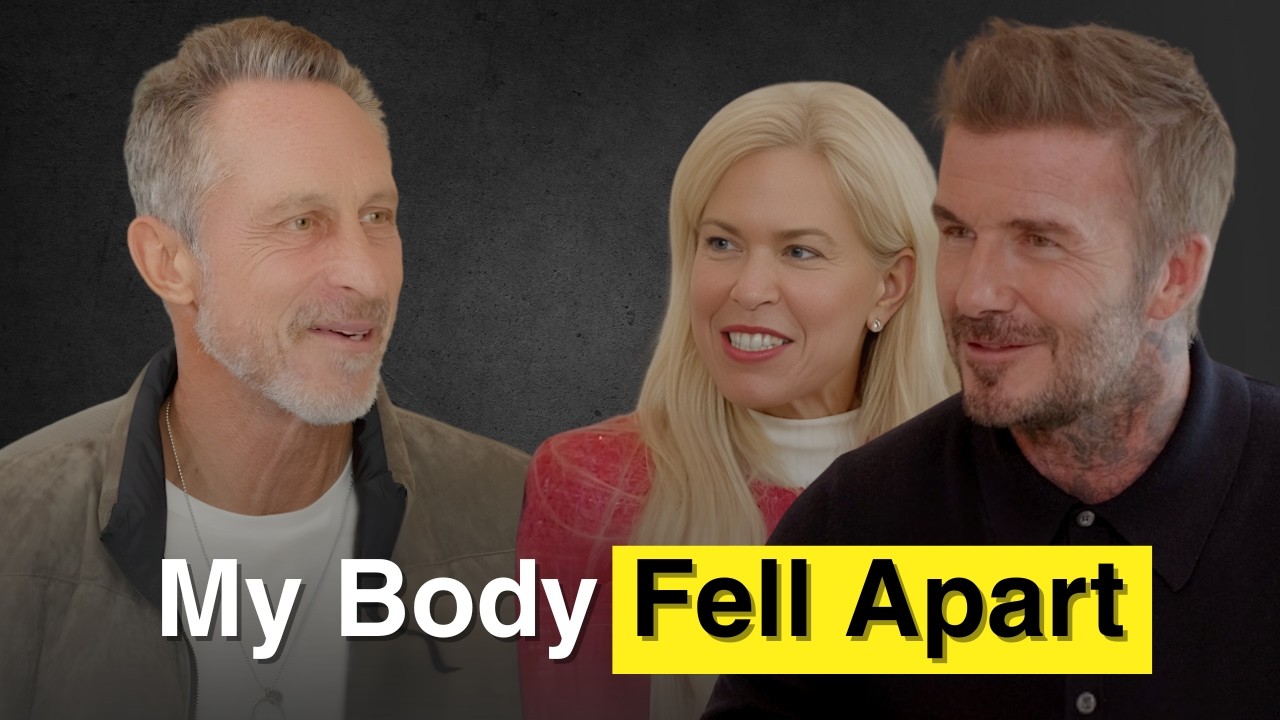
Stop focusing on the scale—you might be "skinny fat" and destroying your metabolism from the inside out. Dr. Gabrielle Lyon reveals why muscle is the "organ of longevity" and explains the exact protein threshold you’re likely missing to stay sharp and resilient as you age
While most doctors focus on body fat, this conversation shifts the center of gravity to skeletal muscle health plus the impact of nutrition on gut health and mental health for a holistic approach to health care for your brain.
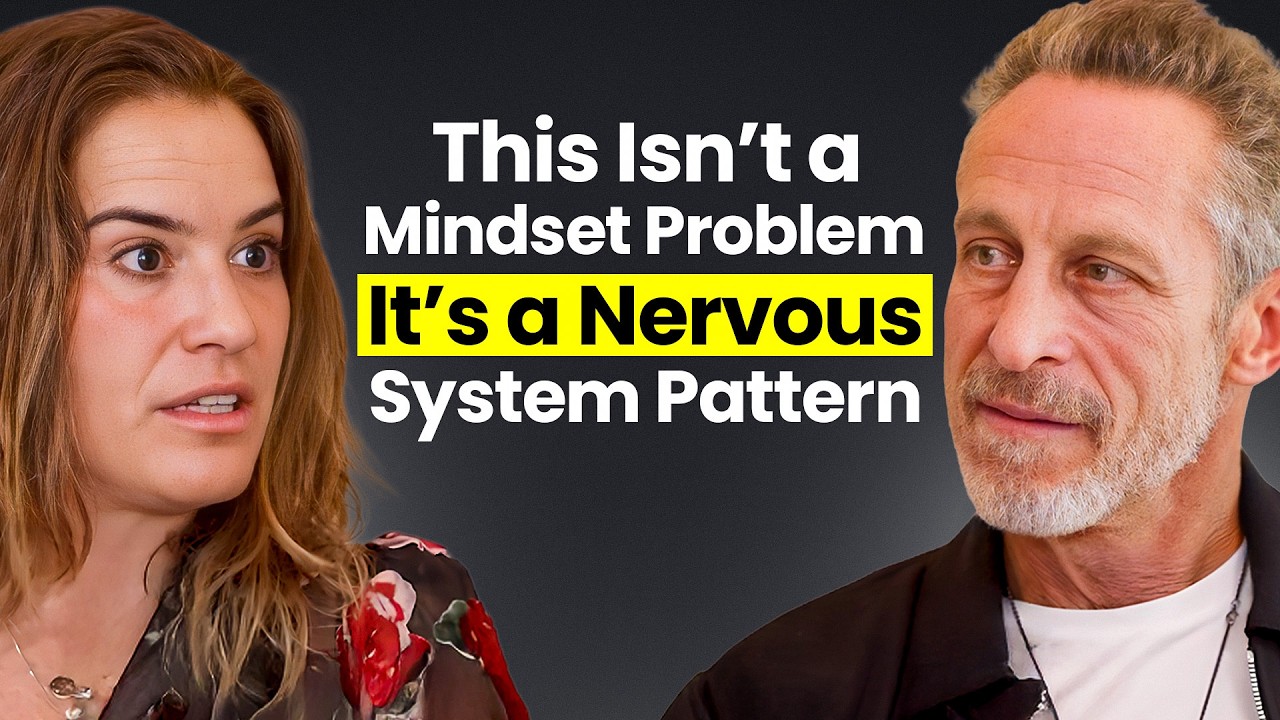
On this episode of The Dr. Hyman Show, I’m joined by my longtime friend and colleague Dr. Gabrielle Lyon to explore why muscle may be one of the most overlooked drivers of long-term health. We focus on practical, accessible ways to build strength as you age, and why muscle plays a much bigger role in your health than most people realize.
We explore:
• How strength training supports your blood sugar and metabolic health, beyond what the scale can show
• Why muscle quality—not weight—is a stronger predictor of long-term health
• How building strength helps you stay mobile, capable, and resilient as you age
• What most people miss about protein and muscle health
Aging well is something you can actively support, starting with how you care for your body today. And strength is one of the most powerful places you can begin.
View Show Notes From This Episode
https://drhyman.com/blogs/content/podcast-ep1107
Get Free Weekly Health Tips from Dr. Hyman
https://drhyman.com/pages/picks?utm_campaign=shownotes&utm_medium=banner&utm_source=podcast
Sign Up for Dr. Hyman’s Weekly Longevity Journal
https://drhyman.com/pages/longevity?utm_campaign=shownotes&utm_medium=banner&utm_source=podcast
Join the 10-Day Detox to Reset Your Health
https://drhyman.com/pages/10-day-detox
Join the Hyman Hive for Expert Support and Real Results
https://drhyman.com/pages/hyman-hive
This episode is brought to you by Timeline, PerfectAmino, BIOptimizers, Mau Nui, Made In Cookware and BON CHARGE.
Receive 35% off off a subscription at https://timeline.com/drhyman.
Go to https://bodyhealth.com and use code HYMAN20 to get 20% off your first order.
Head to https://bioptimizers.com/hyman and use promo code HYMAN at checkout to save 15%.
Learn more about the health benefits of venison and how to get yours, head over to https://mauinuivenison.com/hyman.
Head to https://madeincookware.com and use the code HYMAN for 10% off your order.
Upgrade your routine. Head to https://boncharge.com/hyman and use code DRMARK for 15% off.
(0:00) The Under-Muscled Hypothesis and Muscle Quality
(1:00) Introduction of Dr. Gabrielle Lyon and the Factors Affecting Protein Needs
(1:25) Call to subscribe and Career Reflections
(2:06) Personal Experience with Strength Training and Muscle's Role in Health
(7:19) Functional vs. Dysfunctional Muscle and Glucose Regulation
(11:08) Intramuscular Adipose Tissue and Future Muscle Quality Assessment
(13:39) Resistance Training and Metabolic Health
(19:41) Muscle, Metabolic Dysfunctions, and Hormonal Functions
(23:08) Muscle-Centric Medicine, Myokines, and Muscle Loss Recovery
(27:12) Practical Strategies for Strength Training and Muscle Longevity
(35:00) Dietary Guidelines, Protein Intake, and Resistance Training
(42:15) Protein Recommendations and Understanding Nitrogen Balance
(45:06) Dr. Hyman's Office Hours and Optimal Protein Intake
(50:09) Protein Needs by Age, Activity Level, and Meal Examples
(1:01:04) Metabolic Flexibility, Creatine, and Urolithin A's Benefits
(1:06:22) Mitochondrial Health, Chronic Illness, and GLP-1 Drugs
(1:11:07) Top Longevity Practices and Quickfire Questions
(1:19:39) Closing Remarks and Further Information
#DrMarkHyman #DrGabrielleLyon #MuscleHealth #Metabolism #Longevity #Protein #StrengthTraining #Biohacking #SkinnyFat #HealthTips #Sarcopenia #HealthyAging
Оглавление (18 сегментов)
The Under-Muscled Hypothesis and Muscle Quality
It's amazing to me how ignored this is in medicine and it's such a critical part of health. We have this epidemic in this country of not only obesity but sarcopenia. And you put together a hypothesis which is that maybe it's not that we're over fat that we're under muscle. — From the ' 70s to roughly early 2000s muscle wasn't even thought of. Then we started focusing on body fat percentage. Now, as we continue to transition, we're looking at bio impedance, and now we're beginning to think about overall muscle amount, but it doesn't end there. The real important marker is the intramuscular atapost tissue. It's the quality of the muscle tissue. — Dr. Gabrielle Lion is a board-certified physician with advanced training in nutritional sciences, geriatrics, and metabolism from Washington University in St. Louis. She is redefining health and longevity by placing skeletal muscle, the organ of longevity at the center of aging, disease prevention, and human performance. So, let's get into the protein thing because, you know, this is a hot topic.
Introduction of Dr. Gabrielle Lyon and the Factors Affecting Protein Needs
— Number one, age. The older you are, the more protein you need. Period. Number two, physical activity. The more sedentary you are, the more protein you need. — Really? — Yes. I think building muscle is probably one of the best ways to lose body fat, but also to wreck your metabolism, lower inflammation, improve your cognitive function, — improve your immunity, — help your sexual function. I mean, pretty much everything. More muscle, better sex. — Now, we have everyone's attention.
Call to subscribe and Career Reflections
— Hey, it's Dr. Heyman. I'm so excited to share this episode with you today. But before we dive in, I want to get your help. Please take a minute to hit that subscribe button. Whether you're watching here on YouTube or listening on your favorite podcast platform, it truly means the world to me and it helps my team and I bring you this podcast every single week. Plus, I don't want you to miss a thing. So, thanks so much for being part of this community and I'm glad you're here. Gabrielle. — Hi, Mark. — Hi. Welcome. — Yeah. So great to see you. — Good to see you, too. We've been buddies for decade plus. We were chatting. I remember you used to come to my house and hang out and kind of shadow me in my clinic and see patients with me. And you know, you've kind of taken your whole career and exploded it in this whole field of muscle centric medicine. And I remember you used to
Personal Experience with Strength Training and Muscle's Role in Health
come see me and you'd like, "Mark, you got to strength train. Mark, you got to train. You got to train. " I'm like, "Ah, I bike. I like tennis. — Oh, I'm going to just do yoga. — I do yoga. I'm like, whatever, whatever. " And I always didn't like I mean, look, I'm a tall, skinny guy, so I get intimidated, but I go to the gym. There's all these guys with big muscles and I just feel like I'm I used to do 10 push-ups and my chest would hurt for a week and I'm like this is for the birds. And even though I know as a doctor that I needed to do it, I didn't really start until I was 59. And it was actually you that got me really going on this. You really put a bug in my ear about this and how important it was and started teaching me about the importance of muscle as this neglected organ. Think about it. — Yeah. — Where's the muscle specialist in medicine? You've got a neurologist. You got a cardiologist. You got a rheatologist. You got a gastronologist. Where's the muscle? — Well, hopefully we're creating a new generation of thinking about it and doctors. Right now, think about it. We have physical medicine and rehab. But that's the movement side. — Yeah. — What about the dysfunction that actually happens to skeletal muscle? I mean, skeletal muscle can get Alzheimer's. — Skeletal muscle can become dysfunctional from an immune perspective. It is its own organ system. And it's like the huge organ. Like you got lots of muscle, but you got the biggest organ. — It is. It's the largest organ system in the body and arguably the most important organ system. Of course, depending on whatever your specialty is. We actually just published a paper looking at the importance of muscle mass, strength, and sexual function. — More muscle, better sex. — That's right. — Now we have everyone's attention. I mean, it's amazing to me how ignored this is in medicine and it's such a critical part of health and you know we have this epidemic in this country of not only obesity but sarcopenia and you put together a hypothesis which I find very interesting which is that maybe it's not that we're over fat that we're under muscled. — That's exactly right. — And that the muscle is the key to health. It's not just losing weight because you can lose weight and still be fat. We call that skinny fat. That's right. Thin on the outside, fat on the inside. So, you lose tremendous amounts of muscle as you lose weight as well as fat. And so this is a big problem for people and they end up having metabolic issues, but you're talking about a way to kind of rethink medicine from the perspective of muscle, not just as this thing that moves around your limbs and no body parts, but — it's actually an organ that has all the extraordinary functions that we're just learning about and that I didn't even know about. I didn't learn about in medical school. So kind of take us through like what is muscle? Why is it important? What does it do other than just move your bones around? And why should we be focused on it as a key organ of longevity? — First of all, skeletal muscle is the largest organ system in the body, dermatologists, and we've always heard that it's skin, but actually skeletal muscle makes up roughly 40% of our body weight. — Yeah. — And as you can imagine, the health of your tissue, — for you now, it might be 50. For me, it might be 30. But regardless, it's a large portion of our body. It's the most important organ system that we have because it is the focal point. And I'm going to break down as to why that is. — So skeletal muscle, by the way, is something that we prime our bodies for when we're young. And it is pliable and it's never too late to build. So before we talk about all the functions, let's just pause. What other organ system do you have direct voluntary control over? you exercise, your heart will get better. — But you can't say heart beat 73 beats a minute. — No, I can't do that. Well, I can meditate and get it to slow down. — But you can say, I'm going to contract my bicep or quad. — Yeah, — it's the only tissue that we have voluntary control over. — Yeah, — there's skeletal muscle, there's cardiac muscle in the heart, there's smooth muscle, say in the uterus, but skeletal muscle we have voluntary control over. Now what are the other functions of muscle? Obviously for the architecture of our body, the building, the strength, the power, — but also from a metabolic perspective when we think and listen when I was in your clinic when I would go to your clinic and I would listen to you talk about diabetes, obesity, cardiovascular disease, and Alzheimer's. — These are not diseases that are separate. — Yeah. — Many of these diseases are caused by metabolic pathology. And to say that simply, disregulated glucose, right? Abnormal blood glucose, triglycerides, elevated levels of insulin. So all of these metabolic syndrome, — yeah, — which are actually not caused by fat first. — They are caused by dysfunctional muscle first. dysfunctional muscle is in part at the root of cardiovascular disease, Alzheimer's which is type three diabetes of the brain um type 2 diabetes, insulin resistance. So just the list goes on.
Functional vs. Dysfunctional Muscle and Glucose Regulation
— So what tell us like what is functional muscle and what is dysfunctional muscle? — And before you know um it's interesting because we're talking somewhat in absolutes but it's not in absolutes, right? So is the liver does the liver play a role? Is it fatty muscle? Right? So this is a complicated organism and so for the physicians listening I want to make sure that it's not just comes across as black or white right — functional muscle is the following typically muscle quality is defined based on strength which is a little um kind of misleading right how many push-ups can you do how strong are you how fast can you walk — functional muscle is strong muscle — dysfunctional muscle is weak. Dysfunctional muscle looks like a marbled steak over time. — Yeah. — You get fat that is infiltrated into muscle tissue. And also — you get a Wagu riot instead of a filt. — Yes. And we're going to talk about this in terms of imaging because I think we're at the precipice of something new or a muscle that is dysfunctional has less mitochondrial efficiency. — You and I talk about exercise as mitochondrial medicine. Mhm. — pushing exercise, whether it's resistance training or highintensity interval training or endurance training. All of this is medicine for your mitochondria. So there is the functional aspect of muscle, strength, power, mobility, balance. Then there is the metabolic component — that keeps you active and functioning as you get older. Like I noticed that I when I started doing strength training, I just felt more — solid in my body. I felt more stable. And I when I was younger, I used to like hike on a trail and just jump from rock to rock. And I noticed I was maybe a little more tentative. But as soon as I started strength training, I'm like, "Oh, my body's like my core is strong. I can bounce around on my legs. " And it was a really interesting phenomena to notice. — Yeah. And also when you think about what's important for you is how do we get injury prevention? You know, you and I see patients and we think, okay, well, as we go through life, is there this inevitable decline? — And I would say no. And this inevitable decline as we see our parents get thinner or more frail. You know, this is this kind of — it's expected — expected. But really, that's not how aging happens. Aging happens in what we call a catabolic crisis model. There are discrete moments of inactivity that decrease muscle mass very rapidly and strength. Now with that there is this relationship with muscle mass and glucose regulation. — Mhm. — So often times as people are losing muscle their blood sugar goes up. — Yeah. — Their insulin goes up and so now we are at a point where there is metabolic dysfunction which becomes dangerous because we all know that glucose is toxic to the cells if it remains elevated. I mean we have a disease for that. It's called type two diabetes. You know, I was just thinking about these weightlifters, these like powerlifterss and these guys are kind of overweight. They got big guts and they're big guys and you know or sumo wrestlers like are these guys have a lot of muscle? — They're trained muscle — and are they metabolically healthy? — I made a mistake really early on in medicine and I think what's so cool about medicine and learning is that we can change our opinion. — Yeah. — And when I was at WashU doing my fellowship in geriatrics and nutritional sciences, there was a lot of talk about fit and fat. I didn't believe it was possible. — Yeah. — It didn't make sense to me. Yeah. — Because I was thinking, okay, so there is atapost tissue, subcutaneous, a certain body fat percentage of over 30%. Well, how can that be healthy? And you know what I found? Yes, they can. And you know why? It's actually the intramuscular atapost tissue that matters. — So, let's talk about this. — They don't have marble fat.
Intramuscular Adipose Tissue and Future Muscle Quality Assessment
— Correct. And this is where I think the future of medicine is going because we are going to be you know in the 70s we were very focused on the obesity epidemic. — Yeah. — In the 70s and it was that the nutrition outpaced our ability to kind of manage that caloric intake. — But exercise wasn't even brought into the picture. Do you know why? — Because our physical activity didn't change during that time. — It was still the same. I mean it was lower but it was still the same. So the input it was input versus output and people really started focusing and the experts started focusing on overall calorie consumption. Yeah. Finally up until around 2000 muscle came into the picture as a metabolic organ. But from the '7s to roughly early 2000s muscle wasn't even thought of. — But how did this then frame how we currently think? — Yeah. Well, there was BMI, which we know body mass ind body mass index is just thought of in terms of overall size, right? There's this uh you know, you do this little formula and someone like my husband who's very muscular would have a high body mass index, which would mean he's unhealthy. — Yeah. He'd rip, but he looks bad on paper. — Exactly. — Then we started focusing on body fat percentage, right? And then after body fat percent, if you're 30% body fat or more, then you know you're either overweight or obese. Now, as we continue to transition, we're looking at bio impedance, and now we're beginning to think about overall muscle amount. — But it doesn't end there. This is just the beginning. — The real important marker, and again, we're at the beginning of all this, is the intramuscular atapost tissue. It's the quality of the muscle tissue. And where can you see intramuscular fat tissue? Is it on the MRI? — MRI. I was um talking early on about maybe a year ago. I was talking to Jonathan — about this. My co-founder, — your co-founder of function. And I said, Jonathan, listen, you're doing these early detection screening tests, but this is amazing. And then the next iteration is actually going to look at not just body fat percentage and not just muscle mass, but actually the quality of muscle. — Yeah. Well, we now through function and imaging Ezra offer intramuscular — which is why I'm so excited about because your body composition. This is the way of the future. — Yeah. And now it's available to everybody. You don't even need a doctor. You just go to functional health. com and sign up and you'll also see all your metabolic pathways and inflammation, everything else that's affecting your muscle hormone levels.
Resistance Training and Metabolic Health
— Yes. And if we were to think about that from the listener or the viewer, that means the simple act of engaging in resistance training improves intramuscular atapost tissue. Whether your body fat percentage or muscle mass changes. — When you make the choice to exercise and be physically active, you're improving the quality of your tissue in the immediate. — Yeah. — And that becomes really empowering. I was um interviewing on my podcast, one of the world leading experts in PCOS, polycystic ovarian syndrome. So, someone who's listening to this, if they're struggling with fertility, this is the number one cause of infertility in young women. — And I said, her name is Dr. Melanie Cree. She's in Colorado. She's MDHD. And I said, — well, what is the body fat percentage where we're seeing all these problems? Because in my mind, as physicians, we think, well, there's a certain cut off. So, for example, we know how much protein someone should have. We know what their blood glucose levels should be. We know or we should know what should their percent body fat be where they have these problems, right? Like we should know that. And she looks at me, she goes, Gabrielle, it has nothing to do with body fat percentage. Has everything to do with the intramuscular atapost tissue. — Yeah. — And that really determines how someone responds. — If you do a DEXA scan, you can't tell that. No. — Yeah. So only an MRI can really help you give this information. — MRI, CT, or ultrasound. But ultrasound is obviously that would just be one body part. But I say all this — to then bring it back to the conversation of GLP1s, — obesity, and now sarcopenia. — Okay, can we before we jump on that, I want to just finish summarizing the features of good quality muscle because it's not just that it moves your skeleton around or it's got less fat. It's actually a metabolic sync for sugar. It actually regulates your hormones. It regulates inflammation. Mhm. — You talk about these things called myioines, — which I'd love you to unpack. — Sure. — So, so help us sort of understand the broad range of functions that's besides just moving around your bones and walking around. — Yes. — That they that this plays and why it's so important to have healthy quality muscle, not just the amount that look at, you know, you can mirror. — It doesn't matter. It does matter to an extent, but it really is the quality of the tissue. If we were to think about the quality of the tissue from a metabolic perspective, at rest, people don't actually realize this, but at rest, the body muscle primarily burns fatty acids for fuel. So at rest, if you're metabolically healthy, your muscle is burning primarily fatty acid, — fat. If your diet is too high in carbohydrates, you can force muscle at rest to then burn and utilize glucose. But this is not ideal. So when we think about — during activity, your muscle sucks up a lot of sugar. — Ideally, yes. But you don't want if we're just sitting here hanging out at 0% V2 max, we don't want to be burning glucose. We fatty acids. That's how it was designed. But if you overwhelm the system and if you are constantly eating, you know, if the RDA is 130 gram of — carbohydrates, which is on average 300 gram of carbohydrates, we are creating an environment that we are forcing muscle to respond to. — So number one, at rest, empty muscle, right? So activity allows you to burn muscle glycogen. You use muscle glycogen. That's a storage form of your carbs and your muscles that you It's about 2500 calories. You can — you empty the tank. So, if we think about what muscle does, it as a suitcase. — Now, I don't know about you, but I think you're kind of a heavy packer. Uh you Yeah, you're definitely a heavy packer. At least you were last time I saw you. — That's where I'm going out. — Listen, I got to tell you, when I when you have your place in Lennox and I remember we were running out, I was going in one direction back to New York City and you were going on a trip and you had this massive suitcase and you know what you're doing? you were putting your supplements in, not even just the little pillcase. I mean, the whole bottles were going — and it was absolutely hilarious. Now, why does this matter? If you think about your muscle as a suitcase and let's say you're going on a trip for 4 days and you instead of days, you pack for 14 like Mark and all the supplements in the world. — You're stuffing all this stuff in the suitcase, meaning glucose, and you didn't exercise it like clothes. then all that stuff spills out. It has no place to go. And so muscle, it's really important that you do activity to empty the suitcase of muscle so that when you eat carbohydrates, you have a place for it to go. — Not your belly, but — not your belly. But the reason I say this is because there's no such thing as a healthy sedentary person. There's no there is So when we are talking about the metabolic role of skeletal muscle, we have to talk about it from an ideal standpoint which is healthy muscle burns fatty acids at rest. But if we are living in reality, we know that most people are eating way too many refined carbohydrates and grains. We know that most people are eating roughly around 300 gram of carbohydrates. Meaning that most people that are also inactive have unhealthy sedentary muscle. And so what does that look like in blood? Or if someone goes and gets a function test, what does it look like or whatever? And it is the following. — You have elevated levels of blood glucose. triglycerides. Mhm. — So you are now mismatching your nutrition for muscle health and you have elevated levels of insulin. — So there are two sides to the same coin. There is muscle that is unhealthy, meaning it's full of muscle glycogen. It has not been turned over. It hasn't been emptied. We get fat that then infiltrates into muscle over time, making muscle itself less effective both metabolically and from a strength standpoint. So this is totally not ideal.
Muscle, Metabolic Dysfunctions, and Hormonal Functions
— So that's the metabolic part, but you get you kind of screwed up glucose metabolism. You get more insulin resistance. You get more pre-diabetes. — It's sort of a vicious cycle where you have not enough healthy muscle to actually regulate your metabolic health. But then there's other parts like the immune part and — the hormonal part of muscle. So talk about those. — Yeah. And this is also really fascinating with aging because there are changes that seem to happen with muscle as we age and that is it becomes more resistant to things like amino acids that stimulate muscle. It becomes so there are immune cells within skeletal muscle and those become less robust. um skeletal muscle that is not moved can then become atrophied and also there's a nerve relationship so it becomes less responsive. there's um a dennervation that happens and all of these things are thought to be as normal parts of aging potentially I don't necessarily agree with — because what we see is when you increase activity like we're talking about resistance training non-negotiable 3 days a week plus some kind of cardiovascular you can improve skeletal muscle to then respond and look like youthful muscle and that's fascinating At any age? — At any age. — It's so interesting. I went through this horrible catabolic state last year. — I came and saw you. Remember? — Yeah. Barely remember. I was so high on — Well, anyway, I did. I came and saw you. There was great music playing. — I do remember. And I lost 25 lbs of muscle cuz I didn't really have any body fat. I was already like at 10 or 12% body fat. And so, I just lost my skeleton and my muscle. — And I was worried, you know, I was 65. didn't know if I could build it back. Didn't know how my body would respond. Um, you know, I know all about this phenomenon of anabolic resistance, which is as you get older, it's harder to build muscle. And you know what? I just doubled down on everything that I knew to do, which was strength training, you know, testosterone therapy, which would made a big difference cuz my hormones were just in the tank after the surgery. Oh, yeah. 100, 200 or something. — Unbelievable. I had I used creatine. — I used high doses of protein. A lot of — And when you say high, we should talk about that. — Yeah. So, I would have like 50 grams for breakfast in a protein whey protein shake. I would put in creatine. mitoure, which is something we're talked about, — um, a molecule that helps build mitochondrial help and reduce inflammation. And I was just deliberate in the gym every day for an hour. And though I couldn't do anything at first, all I could do is lay on the floor and or I actually could even get on the floor. I was laying on a massage table and I would put a band around my knees and just open my knees back and forth and activate my glutes. Like that's all I could. — But that was enough to then begin to stimulate Yeah. — the tissue and I just want to say something cuz — I could do like 10 lb weights. Now I'm doing like you know 50 lb weights. — I mean you're strong. Yeah. — Um and you had mentioned myioines which I think is important and myioines are these proteins that are released from skeletal muscle based on contraction and duration of exercise. Now, they were discovered in the 2000s, early 2000s, um, at Copenhagen by an exercise. She's actually an MD who also is an immunologist, really bending Person.
Muscle-Centric Medicine, Myokines, and Muscle Loss Recovery
And um, there are thousands of different myioind. What is so interesting is when you contract skeletal muscle and we're just thinking about you had an injury, we'll call it an injury or a catabolic crisis, but when you went to go contract that skeletal muscle, the myioines that released did a number of things. So number one stimulates bone as we know. So it's not just the pulling — but also helps stimulate BDNF in the brain — which is brain derived neurotropic factor — also it secretes interlucan 6 — which people always think about as this cytoine storm — from macrofasages and other cells but when released from muscle it helps balance the inflammatory response and so there's this pleotrophic effect there's this positive effect when these myioines are released from muscle They do things we don't even know about. And so that's this idea of exercise as medicine. — And by being able to dose exercise appropriately, we should be able to get these responses that are beyond just the responses by improving blood flow. Yeah. — Right. So there's the muscle mass and strength. You're on the ground doing your clamshells to try to then stimulate and engage your glutes, which is really important. We know better leg strength means better mobility, better activities, daily living, but it also means better cognitive capacity. — Yeah, definitely helped for sure. So really, it's such an interesting thing. You've got all these different functions of muscle, most of which have not been ignored. Most of which I certainly never learned about in medical school. Um, doctors don't know how to assess sarcopenia or loss of muscle. They don't know how to treat it. They don't know the first thing about it. It's kind of amazing to me. And I remember when I worked at Kenya Ranch in the '9s, um, we had a DEXA machine and everybody would get a DEXA scan and I was like, this is really fascinating. And we looked at bone density obviously, but we also did body composition. And back then, nobody was looking at body composition. And we were seeing, you know, all kinds of interesting things that people didn't know about in terms of where the distribution of fat was, where loss of muscle was, increased body fat, and it was such an incredible tool. But now with the imaging through Ezra, the comp the company that's part of function, — we can now get sophisticated MRI assessments to see where you're at. And then you can track it longitudinally over time to see what your interventions are doing to help. — And you know, one of the things that I think um you pioneered is this idea of muscle centric medicine. We talked about — and not just sort of at an abstract level, but how do you actually apply this to your life? and your new book, The Forever Strong Playbook, which everybody should get a copy of. — And you agree you're going to do the training program. Why don't we start you on that? — I am. — And we'll do a before and after. Let's just see what happens. — If I follow your six week program to build my muscle. — Yes. — I'm going to get even more ripped. — Okay. But it's also not fair because kind of genetically you're also very lean. But why don't we do that? a body composition assessment before? — Yeah. — And strength assessment before — and then do this for 6 weeks and do a strength assessment after and we'll talk about it on my podcast. — I love that. — And we'll talk about the results from Ezra on my podcast. — I love a challenge — and I know you do. So let's — I mean I'm obsessed. Like I I honestly I have to be honest. I hated strength training. — I hated the challenge. — Do you remember last time I tried to get you to go to the gym? You know what we said we were going to do? [clears throat] — You wanted to go for a bike ride instead. — I know. I'm like I But now it's like I'm addicted. — Well, it's non-negotiable. — It's now it's non-negotiable. And even if I'm traveling, I'll go to the gym. I'll bring my little bands if I can't get things. I have, you know, all these different — Let's talk about a few of the the practical strategies that people can do, which is why I wrote this book. Now, there is this concept of progressive overload. Okay, progressive overload is increasing the amount of weight necessary to get a particular outcome for strength or hypertrophy. We'll just
Practical Strategies for Strength Training and Muscle Longevity
put it all together. But the reality is it's about progressive stimulus. And the reason I say progressive stimulus is because again, you are traveling. And there are many people that are listening to this podcast that say are in pmenopause or menopause and the last thing that we want them to do is to injure their shoulder — which maybe they've presented with frozen shoulder or injure. Listen, you know, I've had a bazillion injuries. — Yeah. — The reason I say it's progressive stimulus is if we take a step back, muscle strength outpaces tendon strength. — Yeah. And it doesn't mean if you are listening to this and you are new to training, it doesn't mean you just have to lift heavier. Heavy is relative. — Yeah. — One to two reps in reserve. Meaning with good form, there's mechanical failure and then there's technical failure, right? You want the muscular failure, the mechanical part. You don't want the you don't want your — form to be all over the place. If you're supposed to do a squat, but you're lifting it with your neck, that's wrong, — right? — And so, what are some of the foundations of a great strength training program that is non-negotiable and everyone can do? I mean, that's 3 days a week. It's full body. It's all about how you progress over time. And the progressions could be reps, could be tempo, could be adding more volume. There's all different ways to improve muscle health. That's not just lifting heavier. — Well, it's interesting you say that because I was in a bike accident and limited, but I didn't stop training. A lot of people when they have an injury, they go, "Well, I'm just going to chill and take this chance to just watch Netflix and lay in bed, you know, but I have like a broken ankle, a broken foot, you know, kind of banged up pretty bad. " And I just was like, I'm not letting this stop me. And I can't lose the progress I've made. And so, you know, I'm working with someone who's helping me adapt to it, but I'm also using these things called blood flow restriction. — Talk about that. — And yesterday we were in the gym and I was like doing like 10 lbs with these things on and I'm like normally I can do like 25 30 lb curls and I was like, you know, and so you can do things without hurting your tendons as you get older — and to deal with this injury risk and make your risk for injury a lot less but get as much or more benefit. Blood flow restriction is something that we've been using in our clinical practice forever. And let me just highlight blood flow restriction. Yeah. So blood flow restriction was originally used in rehab and we use it a lot. A lot of the soldiers use it for rehab for injuries. And what it is you'll put a cuff on and there's various cuffs. I use a Bluetooth cuff um called Saga. Have you ever heard of them? I use Katsu. — Okay. Katsu. So this is that's like — like a Japanese that's a very advanced uh cuff. Um and what it does is it oludes the blood flow meaning it will calibrate to a certain millimeter of mercury and then — like a blood pressure cuff. — It's it looks like it feels like a blood pressure cuff but a little bit more robust. — Yeah. — And what it does is it allows you to train at a fraction of the weight that you would normally train to get the same stimulus. So what does that mean? So you had just said that you do 30 lb curls. — You could pick up a 5 lb weight. — Yeah. — And it would signal to the body because again your blood is partially oluded and it sends growth factors and there's very standardized ways of doing it. Um and Dr. Jeremy Leni who is one of the world leading experts on blood flow restriction. um he was on our podcast and he just gave a master class in how to use blood flow restriction very particular for outcomes, right? So it's not this kind of just haphazard use. It's what percentage are you oluding? What exercises are you doing? What is the injury that you're trying to work on? And it's it's, you know, obviously I'm not their your guys's doctor or uh neither is Mark, but this can be very safe and effective. Yeah. — I used it when I tore my hamstring. I still use it. I travel with these blood flow restriction bands when I don't have access to a gym as well. — That's right. You can do body weight stuff and it's just feels like heavy weights. — Yes. — I mean, I I get these incredible pump in my arms. I look my arms look almost as good as yours after I'm done with my workout. — But it's extraordinary. I mean, also for more advanced aging people, it's great. And also if you don't have a ton of room like let's say you know your someone is on bed rest or someone is injured by just simply inflating that cuff even by doing a partial push-up or even pushing against the wall some kind of muscular movement actually has um again just profound effects from injury and also maintaining muscle — and blood flow which is again really important. Let's get into kind of the details a little bit because clearly muscle, as you've laid out, is such a neglected and important part of our long-term health. You call it the organ of longevity. I agree. I think, you know, if you look at all the things you could do, — I mean, when you're younger, you have a lot of trophic factors and hormones that keep you kind of going. When you get older, those change and you end up, you know, having the dwindles, we call it in medicine. — I never I Well, wait a second. I never heard of the dwindles. — You never heard of that? — No. And you're a geriatrician. — I know. We didn't We never called it the dwindles. That is definitely not a geriatric word. — That is a Markman word. — It's like, you know, you see a slow gradual decline. You dwindle in your ability to function. — Dave never heard of that either, the producer. — Well, anyway, maybe I made it up, but it's something that you kind of notice. And like you said, what we see in our aging population, we think is an inevitable part of getting older, which is this decline in ability and function than doing things. and the truth is that that's not inevitable. Now, it takes a lot of more input and work and dedication and diligence and I want to really get into what does it actually take because you know people can hear this and go, well, I'm not going to go to the gym every day and I'm not — No, they're not. They're going to hear this and they're going to go, you know what, this is the new standard because this is more impactful than any medication I could ever take. — It really is. I mean, you know, losing body fat is important, but I would argue with along with you that I think building muscle is probably one of the best ways to lose body fat, but also to wreck your metabolism, to lower inflammation, improve your cognitive function, to improve your — improve your immunity, — help your sexual function. I mean, pretty much everything your immune everything — and also we have a direct mechanism. So, one of the things that we have to understand is that you know in medicine we have to ask okay so what is the mechanism of action? So for example, muscle mass and sexual function which we published with my colleagues at Baylor, we have a direct action and that is what does muscle do? Muscle, strong muscle improves endothelial function. Okay, improves all vascular health. Strong healthy muscle mass improves NO2 which is vasoddilation. strong healthy muscle helps improve metabolic risk factors, helps control blood glucose, helps control fats, and it's under voluntary control. And you had said something that — sounds like a good ROI. — There's also twofold. We just have to become more strategic at the inputs that we put in. Meaning, what does that mean in terms of inputs that are valuable? you know, as we age, you'd pointed out when we're younger, our system, you know, it's this idea of mTor. We've all people have heard about this, but anyway, it's this protein kinise. It's this growth factor. It's this uh growth perpetuator. Yeah. Um
Dietary Guidelines, Protein Intake, and Resistance Training
— and when we think about it, it's in all tissues. So mTor and I'll get to why this is even important not to get too caught up in the weeds but mTor which is responsible for muscle protein synthesis is in all tissues the signaling of our muscle decreases the efficiency becomes decreased to inputs like protein and so when we're young we're highly anabolic you know uh you've met my son my little one he's training for the SEAL teams he's four he's highly anabolic he could have five grams of protein and it would still stimulate his muscle because he's growing. He's driven by growth factors and insulin. — But when we're done growing, then this input has to change. — And this input would then be resistance training, calories, hormones, carbohydrates, and the balance between all of them changes. So we have to get — well protein is right the amino acids and that's probably the most important. The most important is the resistance training input, the mechanical input, and then the protein input. Yeah. — Primarily leucine. — So, so let's get into the protein thing because, you know, this is a hot topic still. Uh, you know, fat was the boogeyman and then carbs are the boogeyman. Now, lack of protein is the boogeyman. — Lack or just protein in general. — And and yet there's this sort of bias that too much protein is bad for you. We certainly learned that in medical school, you know, that it can stress your kidneys, that it you don't need it, that your body wastes it, it turns it into calories or energy, turns into glucose if you eat too much. — Um, — and and what you're saying is we need far more protein than most people think. and that, you know, you've got guys like Chris Gardner, who I know well, I respect him, he's a top Stanford scientist, but he's very strong in his opinion that we don't really need that much protein that, you know, you can get all the protein you need from like grass. And I think that there's some challenges with that. And I think especially as you get older, there's challenges with that. I think the RDA, which is the recommended dietary allowance, was designed for preventing deficiency diseases like protein malnutrition, not necessarily optimal health. So when people talk about8 gram per kilo of protein per day which is you know — 37 g per pound — pound which is yeah you know a third basically a third of a gram per pound. It's really so you don't get a disease. It's not for optimal health or muscle building or it doesn't even adapt to what you need as you get older. So how do you help people understand the right frame for protein about what we need when we need what how to eat it when to eat it? probably my favorite question — aside from one on my kids. — Now, I want to just touch on Gardner and the episode that he did with Andrew Huberman because we did a response video to that with Dr. Donald Layman, who is one of the worldleading protein researchers who's trained me for over 20 years. — I don't know if you know, but I did a debate with Chris Gardner on the dire CEO and they haven't published it because it's so it was so controversial. — I would really encourage people and I will send it to you. I would really encourage people to listen to that episode with Don Layman. Again, Don is not out. It's on your podcast. It is on the podcast and I will send you a Gabrielle Lion podcast. We're going to but I am going to send it to you because it's it addresses each statement — that because again, you know, it's um it's fascinating to think that how we're communicating science now is like this, which is incredibly valuable. You and I are sitting down and we are talking But you and I have both been in medicine for a long time. Arguably you more than longer than me. Thank God. — Got a few more miles on the — You and I know that we would sit down and there would be grand round and then there would be, you know, for me it would be like experimental biology where you have these worldleading experts have discussions and they would come together and I just say that because typically science is not debated on platforms. So for example, we would take a look at this study and we would say okay this is — it sort of sequestered to the halls of academia not in public forum which is now what's happening which I don't think is a bad thing I think is a good thing — it is but it creates a lot of confusion it does for example Chris Gardner talking about how we're getting too much protein you know his many of his fundamental statements were incorrect and so uh put that aside encourage people to listen to that let's talk about where we are in terms of protein and where that information come came from. — Now, in the 70s, early '7s, there was the McGovern Committee, which then informed the dietary guidelines. — That's right. — The McGovern Committee was written, Do you know who it was written by? — I think I do. — A staff writer in their early 30s that had an economic degree. — Yeah. — This person wrote the documents that then informed the dietary guidelines, which arguably we have barely changed. — Yeah. And they were actually better when they first came out and then the industry got involved. They made them change a lot of things because they were basically talking about eating less starches and carbohydrates, but then actually they made them change it for whatever. But we just have to understand that nutrition is an interesting aspect of medicine because you know it's not like endocrinology or not like uh gerontology. Nutrition has a lot of inputs from food supply or from industry from politics. Okay. So this then changes and informs the public. So they the dietary guidelines have a list of recommendations. For example, it's 10% saturated fat. Anything more than 10% saturated fat is considered unhealthy. But let's just frame this out appropriately. And then the protein recommendation is8 g per kg. Then the uh carbohydrate recommendation is 130 g of carbohydrates per day. Now, let's look at just the fat component. By making 10% saturated fat or more unhealthy, that weaponizes food for all for almost all animal-based foods. For example, an egg, one single egg that has a total of six g of protein has, I don't know, 16% saturated fat. Maybe it has like half a gram. Yeah. Right. six grams of fat. There's tons of high quality protein, choline, fats, soluble vitamins, B vitamins. — But because it as a food has 16% saturated fat, now this is considered unhealthy. — Let's take one more uh example. If my husband who runs marathons is eating 4,000 calories a day, his saturated fat intake can be 44 grams — because of the 10% because the dietary guidelines, which we're going to circle back to protein cuz obviously protein is the most essential and important macronutrient in the world, — the most important. And but people don't realize this, but there it's the only macronutrient we need in large volumes. So you need no carbohydrates are essential
Protein Recommendations and Understanding Nitrogen Balance
— and only four g of essential fat acids. — And we need very low amounts of essential fatty acids, but you need like literally multig. — You do and every day. And here's why. We'll get to that. So 10% saturated fat or more is considered dangerous. However, in medicine, you and I both know that there is a dose and a poison. — Is it 44 grams like my husband on a 4,000 calorie diet or is it 14 or 16 if I'm having a 1500 calorie diet? So the question is what dose of saturated fat is then detrimental for human health? We don't have good evidence for that. The next one is um protein. So protein you'd mentioned that protein is said at the RDA. You said that it was uh intended to prevent deficiencies. Now I'm going to ask you a question. What health outcome is related to nitrogen balance? So the dietary guidelines of protein8 g per kg is based on nitrogen balance studies tech a technique from early 1900s for agriculture to determine what was the minimal amount of protein needed for animals to grow. — Mhm. — Based on nitrogen balance. — I would say it's muscle mass, but I think that's not the answer because it's too obvious. — There's no health outcome that we know of related to nitrogen balance. Mhm. — And so rather than asking the question, is the RDA enough, a better question is, is the RDA a relevant number? — Yeah. — And the RDA is an irrelevant number. — Why? — Because it's based on nitrogen balance studies with no health outcome. — So how do we look at the upper limit or the you know I mean there are certain populations like if you have kidney failure, you have to be careful what protein you take. — But aside from that, — but it's not based on an RDA number. — No. And this is the thing is that rather than re-evaluating and reorienting ourselves to, you know, the indicator amino acid number or some other way of thinking about protein, we've anchored in on the RDA and then we argue about the RDA as if it's a really relevant number. It's not. 8 g per kg is based on a nitrogen balance study, which is arguably irrelevant. — Most people aren't feeling at their health. They're just overwhelmed by the science and what to focus on. There's a new study every week, a new supplement, a new headline, and instead of feeling empowered, you're left wondering what actually matters. And that confusion is not failure. It's just what happens when there's too much information and not enough context. And that's why we created office hours. This is your one-on-one time with me, where we slow down, we make sense of the science, and we talk through what I'm actually seeing work in my practice and in my own life. Every episode, my goal is simple. leave you with clarity and clear actions that you can implement right now for your health, for your family's health. This is our space to learn, our space to grow, and to take control of our health together. Office hours is live now, and
Dr. Hyman's Office Hours and Optimal Protein Intake
I'm glad you're here. I mean, I don't know if you've single-handedly done this or who else is on the bandwagon here, but now protein is in everything. It's like everybody's talking — and we don't, right? And we, you and I know, we've been having this conversation. I've been having this conversation for 20 years and it's great that it's caught up and then it's getting the visibility it deserves and there should be good evidence and guardrail. So 08 g per kg well people are talking about the RDA is an irrelevant number. We know again and I've sent this unit. — So what we should be what should we be eating? — Well the data would suggest beyond 08 grams per kg. The data suggests anywhere from 1. 2 to 1. 6 6 g per kg which could be on the lower end. 7 g per pound up to 1 g per pound target body weight. But how do we make our protein decisions being — your ideal body weight? So if you're no target 300 what if you're 300 lb — target body weight — like what you ideally would like to be f yes you can — if I'm 180 and I want to get to 190 with muscle I have to eat 190. — But let's let's frame this out a little bit and I make this very easy to think about in the book. The book doesn't have a ton of numbers, which is interesting because we always calculate the macros and calculate the calories. — I made this playbook so that it's visual. — And the visual component is oneird of your plate should be protein. — One/ird fruits and vegetables. The other third is complex carbs or starchy sugary carbs that you earn, which we'll talk about. But the protein conversation is really important. 08 grams per kg is irrelevant number based on nitrogen balance studies. All of the data coming out uh largely for the last 20 plus years is 1. 2 will always perform better in a number of ways than8 g. Okay. Higher protein 1. 2 to 1. 6. So double the RDA. What happens? — Yeah. — Improvement and retention of lean body mass. I didn't say muscle because we haven't really been testing muscle, lean body mass, better regulation of blood glucose, better regulation of triglycerides. So when I was um running a weight management clinic at WashU and also in our practice, in order to tell if someone is following their nutrition plan, we watch their triglycerides. — Yeah, of course. — Right. 140 gram of carbohydrates or less, we typically see an improvement in triglycerides by 20%. So — those are the things that are most highly correlated in an acute way to the amount of sugar and starch you eat. — But it's actually related to muscle health. So if muscle is healthy, you have more flexibility. So these indications of metabolic syndrome, elevated levels of blood glucose, elevated levels of triglyceride, um elevated levels of insulin, they're not a reflection of metabolic syndrome. They're a reflection of muscle health. Now we talk about protein as if it's one thing. protein is 20 different amino acids, nine of which are essential, but they all have different biological pathways and there's biological needs that are different. So, for example, as we age, glutathione, glutathione production goes down. We might need three times more protein in methionine as we age than we do when we're younger. — It's one of the building blocks of gluten, — right? So, it's one of the um the amino acids when you are eating for muscle health. All of those amino acids, essential and non, fall into line. And you know, if someone's listening to this, well, okay, protein is protein. Why do I need protein? Well, you need protein for a baz for everything in the body. But it's not just protein. It's these amino acids. It's these individual amino acids that you need. Leucine is important for muscle health, — right amount — for muscle health. You're the one who taught me that leucine was the rate limiting amino acid for turning on the switch that starts you to build muscle. — Yes. But you need all of the amino acids to build muscle which is um you know if we begin to just unpack what does that look like? So 20 different amino acids nine in which are essential you must eat them for a number of reasons. The first thing is understanding that we don't need it just for muscle. The body turns over recreates itself four times a year. Yeah, — on a daily basis, protein turnover is between 250 to 300 g a day. — Meaning you are metabolizing your own body's protein and recycling it and reusing amino acids that were formerly a different protein. — Correct. And at night you are in a catabolic state, but it's not that it's turned on and off. You've got enzymes that are degrading. You are constantly requiring these proteins. — It takes it from muscle. So, it's not just that low muscle mass is detrimental for mobility. healthy aging and we cannot meet our turnover needs with the kind of diet that we have right now.
Protein Needs by Age, Activity Level, and Meal Examples
— So, we need more protein. So, people should be focusing on 7 to one gram. — And that's for everybody. — For everybody and the way in which you do it is important. When you're young and under 40, doesn't matter what you do. Protein distribution and timing doesn't matter. — Meaning when you eat it, — how much you eat at once. But as you get older, you have to learn how to make protein decisions. And there are a handful of steps that you follow to make a protein decision. — Tell it to us. — Number one, age. The older you are, the more protein you need. Period. Number two, physical activity. The more sedentary you are, the more protein you need. — Really? — Yes. Because we were talking about mTor which you know was mamleian target of rapise and this protein k complex. — Can you build muscle just by eating more protein without exercising? — Not really. That's what I thought. — You know people will say that but if you go back well number one the other thing that we have to recognize is that the studies and the literature out there it takes a long time. If you think about sarcopenia, it's in a span of a decade, you're losing 4% or more of muscle mass. That's a very slow decline if you think about it. Can you imagine trying to look at these 12week studies and try to get a sense of the input of 1. 2 to 1. 6 g per kg? It's this stuff is not very sensitive with the tools we have. We're not taking someone's muscle and then stripping it down, right? So we have to understand that low protein intake is over a lifetime, right? These effects are over a lifetime. So the protein decision is the older you get, the more you need. Number one, your age. Number two, activity. The less active you are, the more protein you need. Because if there's two main ways to stimulate muscle as you age and becomes less sensitive, it's the mechanical input as resistance training and then it's the protein input. — And then your metabolic health, right? So the next choice would be how do you determine how much protein? Well, you know, you want to begin to limit carbohydrates. If you're metabolically unhealthy and you want to increase dietary protein because ultimately if we match our diet to our muscle health, then we will be able to live a long healthy life. — What does it look like? Cuz people go like, "God, that's a lot of protein. " — But why do they think that? Because we've been taught, — right? But what does it look like when you eat it like breakfast, lunch, dinner? So very simple. — This morning I had a protein shake which was 50 g of — whey protein. — Amazing. — And put in 10 g of creatine. — Uh you're like rockstar. Your brain function is amazing. And you threw a little uralithna in there and look at you. — I did. I — You're doing amazing. I did. — So there's a couple ways to do it. The first meal when you're coming out of an overnight fast is the most important. People talk a lot about fasting and at some point if we believe that muscle is the organ of longevity. I don't really care when you have breakfast, but recognize that after an overnight fast, you are in a catabolic state, right? And your not just your muscles, but you've got enzymes and everything else is repairing and rebuilding in your body. — That first meal, your body is primed for nutrients. M — doesn't have to be at 8:00 a. m. It could be at 10:00 a. m. Between 30 and 50 g of protein is ideal. — Okay. What does that look like? It could be a 15 g. A 50 g protein shake. It could be — actually double what the says on the label says. It says two scoops is 25. I put in four scoops. — Well, I love that. — But it's a lot of smoothie. I mean, I'm a big guy getting have it, but it's a lot of — So, let's talk about another let's talk about something that I do, — right? So for me, I might have a scoop of a whey protein shake, which is has about 20 g of protein, 2 and 1 half grams of leucine, but that's not enough for me because, you know, I'm burn the candle at both ends and I'm training hard. So I'll add in a scoop of essential amino acids. — You supplement with amino acids. — I do and but I do it very strategically and for a very important meaning. So I know that you use body health. So do I. — Perfect aminos was a big part of my recovery, too. — Yes. And so there's great evidence for recovery and also for people who say want to control their calories. You have a base of protein and maybe it's 20 g and then you add in a scoop of essential amino acids and now you bump up what your body — jacked up a little bit. — Yes. And they there's a lot of data out there on this especially looking at the aging population which I think is really impressive. When you're young, you can get a max muscle stimulation at um you know 14 g of protein, but 14 g of protein for you and me won't it won't stimulate our muscle. But by doubling that amount or by adding these essential amino acids, you now can create a robust response that's critical for aging well. — So you had a protein shake with some extra amino acids. What if you don't want a protein shake? What's breakfast look like? — Eggs. — You need six eggs to get 30 g of protein. — That's right. So, do three eggs plus essential amino acids. I've just solved it. — Also, what about Greek yogurt? — Greek yogurt is easy. The minimum you want to hit is 30 g. — And what is that? 6 ounces, 8 ounces. — Yeah. So, it's a cup of yogurt will have like 20. And then you could have turkey sausage, chicken sausage. If you are vegan or vegetarian, then I highly recommend essential amino acids. and then some kind of multivitamin. So, what do you do? Again, if you're vegan or vegetarian, it could be uh tofu. — You know, the majority of plant protein comes from wheat — in the US diet. Yes. And wheat is a very poor source of these essential amino acids. — So, we're really talking about improving prote. We're talking about improving nutrient density. — Protein quality. — Protein. That's exactly right. Protein quality. — So, what would be lunch? So for me actually and also from a dosing perspective, lunch doesn't matter from a protein amount. — Yes. And — why? — Because we don't have a ton of data. It does it have to be 30 g of protein or is your muscle still primed? The way I think about lunch is that that's the place where you just get your extra protein. The most important part about also these meals is balancing carbohydrates. Um, so for lunch for me is, so lunch today is going to be I prep all my food on a Tuesday, by the way. Tuesday. Lunch for me, you might laugh at me, is going to be protein waffles made with cottage cheese, almond flour, and some blueberry compost. — Blueberries? You're eating blueberries now? — Of course. — I couldn't even let you. — I know. Yes. See, I've evolved. So, the protein waffles are amazing. So, that is one of it's a recipe that I put in the book. So all theing recipes in the playbook are — Yeah, there's some great recipes in this book and there's great images of exercise. You've got a little avatar cartoon of you that is really great and it's like wow this is something I actually could follow cuz I was like all right well I want to vary something I don't want to do something I travel I don't have my trainer like what do I do and this is really great. So — and let's talk about dinner. Dinner is the next — I often will have like a couple of cans of sardines for lunch that's like almost 50 grams of — Yes. But if I need 180 g of protein a day, that's a lot of protein. — But for who? — Well, I'm saying like if I have 50 grams for lunch, for breakfast, and then I have a couple of cans, that's 50 grams. I need another 80 for dinner. — Yes. And so, but here's the other part is the more active you are. So, protein decisions, it's a U-shaped curve. And if you think about a U at the top is the worst of all worlds is if you are an older person who is sedentary. Mhm. — This is the worst of all worlds for muscle health and metabolic health. — But as you become more active than you know say like you're moderately active, your protein need goes down. — So you offset the amount of protein you're eating with your physical muscle activity. And then as you move into the more elite activity, which I'm not doing and you're not doing, the more protein you need. — So dinner would be what? — For me, it's a lean steak, 6 ounces. my lean, my low fat — because I keep my I actually do better with carbohydrates if I were to allocate how I want my food to be. I do much better on a higher carbohydrate diet than on a higher fat diet. And it's just personal choice. — Carbohydrates and fats are interchangeable as fuel sources. — I mean, you mean you don't mean like flour or sugar. — You mean like a sweet potato or — No, I just eat ice cream for dinner. I'm just kidding. No, I don't. I mean, — no. No, I don't. — Let's be specific because I think people hear that and they're like, "Oh, carbs are entertaining. " — But also, how do we think about carbohydrates? — Like a big bowl of pasta or — we talk about how much protein someone needs in a day in a 24-hour period, close to 7 to 1 g per pound, but carbohydrates should be thought of as a meal threshold. We never talk about that. People do not talk about that. Just like protein has a meal threshold, carbohydrates should be thought of as a meal threshold. Are you ready for this? — The average American is eating 300 gram of carbohydrates a day. That's three glucose tolerance tests a day. Okay. But how do we recreate — four? Cuz it's 75 gram in a glucose tolerance test. — How do we re That's really funny. How do we recreate that? So for me, dinner is around 40 grams of carbs. — Yeah. — 40 to 50. — Okay. Anything above that for someone who's listening who is sedentary begins to distort metabolism. — And [clears throat] I cover this in the book. — Yeah. — It's something called a carbohydrate threshold. Carbohydrate threshold is how many grams of carbohydrates can you have at a meal before you begin to distort metabolism. Um — what the choices are again 1/3 is protein, 1/3 is fruits or vegetables, fibrous carbs, one/3 is more complex carbs. — Is [clears throat] there a place for pasta? There is. If you're training hard, right, there's a place for pasta. — But for me, you know, I like potato. I like white potato. — Yeah. — I like resistant starch. I might make the rice. I mean, I eat rice. — Yeah. — But again, I eat I also train. — Yeah. — And I am not grazing all day long. — The thing is you're you know what people don't realize is there's this concept of metabolic flexibility. — Correct. — If you're a diabetic and you have a can of Coke, your blood sugar are 300. If you or I have a can of Coke, our blood sugar won't go above normal because we're metabolically able to handle the same sugar load because we're trained and we're our muscles and our tissues are more sensitive to insulin and we can actually regulate our blood sugar in ways that people can't given the same exact dose of carbohydrate or the form
Metabolic Flexibility, Creatine, and Urolithin A's Benefits
of carbohydrate. That's really important. I — I want to kind of shift gears a little bit. I think this is fascinating. I think you know we covered a lot but I want to talk about some of the sort of added things that I do and I know you do. I mentioned creatine and I think there's a lot of increasing data on creatine. I've been using it for a long time — for cognition for muscle building. — Uh it's a mitochondrial — co-actor. Um and I use a lot of mitochondrial therapies for my own health because I've had mitochondrial issues. And one of the things that I've started using is something called uriththna, which for those of you who don't know, we've talked about a little on the podcast, but essentially it's a molecule that's what we call a postbiotic as opposed to a prebiotic or a probiotic. It's a molecule that's made from using microbiome converting certain plant chemicals, leic gas and others from pomegranate, walnuts, berries into this molecule. Problem is most of us have taken antibiotics. Most of us I mean I do talks and I like have a thousand people who here has never taken anybody like maybe one person will raise their hand or maybe nobody. And so we've all kind of messed up our gut and and have trouble making this. But this molecule is found to have some really extraordinary properties around muscle quality, strength, longevity, muscle function, inflammation, immune health, mitochondrial function. So can you kind of walk us through what the research is on this compound? I mean, they're talking about grip strength and things like — the thing that kind of blows my mind about the research on this is that even without exercise, it seems to improve your fitness and strength, which seems a little bit weird to me, but — but it seems to be true based on the data, including V2 max, grip strength, things that are highly correlated with longevity. Now um uralithna is a postbiotic that the majority of people cannot make and this comes from these elagitanins from walnut pomegranate and let's say you could make it would be I don't know six four cups of pomegranate juice it's a lot of sugar but the reality is um this uriththna compound is so fascinating and the company that we are both talking about is timeline because I don't recommend actually other forms of uriththna because I think it should really be tested. — Yeah, they spend they spent like $100 million researching this stuff. It's crazy. And it's published in JAMAMA and major medical journals. It's not like a — like there's a lot of crappy supplements out there and there's a lot of hype and promotion. — This is one of those things where you know you and I focus on where's the data, where's the evidence, how good is it, you know, where is it? I mean I'm a huge fan and we had honor Singh which is one of their immunologist scientists on the podcast and there's some really cool stuff that uriththna is responsible for. What does it do? Its primary role is in mphagy and that is the removal and degradation of old mitochondria. — Yeah. And you know when you think about muscle and you think about uriththna the house of our mitochondria the majority of our mitochondria — is in our muscle muscle. And one of the things that uroliththn does is it really helps with this turnover process. And the other fascinating thing about uriththna that — cleans up old damaged mitochondria and helps build new ones. — Yes it does. And the other aspect in terms of energy and metabolism I think that we're going to start to see emerging data. So, we know that it helps improve strength and endurance again, grip strength. I think there's also evidence for its use in individuals that are going through chemotherapy. — Interesting. — Because it helps with this muscle metabolism component — and it's just it's a really extraordinary compound. One of the things that we hear in our clinic is that people's energy improves. I think that there's also going to be some emerging data on cognitive function. It's also I think a paper just came out in was it in JAMAMA on immune function and uriththna. They just published another recent paper. Um and it's we typically recommend 1,000 milligs a day. — That's what I take. Yeah. And you can take it in gummies, powder, you can take it in pills. Yeah. — It's pretty extraordinary. Um it's a pretty extraordinary compound that we definitely recommend. And I think, you know, what I like about it is that, you know, it's sort of a phyitochemical, — sort of comes in nature or sort of if your microbiome makes it. Uh, but it works on the mitochondria. And the mitochondria are tricky because they're very delicate little organels inside our cells that convert food and oxygen into energy or ATP that runs everything in our body. And it's sort of the foundation of our health. And most age- related conditions are mitochondrial diseases. In fact, sort of aging itself is a decline in mitochondria. See a 2-year-old running around like a jack rabbit and a 92-year-old sitting on the couch doing nothing. Yeah. The difference is their mitochondria and their our ability to improve our mitochondrial health as we get older is partly related to exercise, strength training, — muscle quality, you know, cardiovascular fitness, both muscle strength training and — and also to um you know things that we can actually influence by reducing our level of inflammation and toxins and infections and all the things that potentially affect it. But there are a
Mitochondrial Health, Chronic Illness, and GLP-1 Drugs
lot of mitochondrial therapies and it's something that has not been really well utilized in medicine at all. Um and what happens is that you know as we think about chronic illness whether it's uh dementia or Parkinson's or obesity or diabetes or even cancer you know — autism you know mental illness depression bipolar schizophrenia the list goes on. These are all mitochondrial diseases — and you and I went to medical school and I think we had our first year uh we learned biochemistry and we learned about some mitochondria and hisystologology and like that was kind of it. — Yeah. — There's no like how do you evaluate mitochondria? How do you test them? How do you treat optimize their function? And as someone who at 36 years old got walloped with chronic fatigue syndrome as a result of mercury poisoning, my mitochondria like were in bad shape. Like my CPK, my muscle enzymes were 600. — Really? — Yes. For years and years. That's a sign of mitochondrial injury. Basically muscle damage. Yeah. — And I could feel it like muscles were not 600, but — what's that? Rabdo, you know, as I was just — ratodomi, but it was like it was some degree of muscle dysfunction. I mean, when you get on a statin, that causes muscle injury. It's a mitochondrial toxin — and it actually leads to these muscle pain syndromes and also elevations in this muscle enzyme that I had. But it's but what I'm saying is that I got to really learn, okay, what are my mitochondria? How do they work? And I started applying this in medicine. And so uralithna is a really powerful mitochondrial nutrient, but there's many others. CoQ10, carnitine, creatine, ribos, — and uh an acettocysteine, all the B vitamins and magnesium. There's a lot of things you need to actually produce energy. So, it's important really to understand how do they take care of their mitochondria. And so, this is one incredible tool and I think it's of all the sort of longevity. — I agree with you. — Wellness supplements is it's quite unique and uh it's part of my daily staple actually. — Same. I'm very careful about the It's actually in this book, by the way. Yeah, I know you wrote about in the book. I was going to say that. — I did because it is something that with all the velocity at which information spreads, how do we begin to make choices that actually can move the needle? And I think that uriththna is a great one. Absolutely. And I think we're going to start to see it be more involved in what I would love to see is how it actually helps those with chronic illness that are going through therapies like chemotherapy. — Well, we have so much more to talk about. Is there anything else before I hit the quickfire questions at the end here that you want to share about what you're doing, what's important, what's in the book. — I think the big takeaway is what many of the diseases that we're seeing now are a mismatch for muscle health. And if we don't become careful, we're going to trade an obesity epidemic for an epidemic of sarcopenia. And we have an opportunity to not recreate history. And it's happening right now in a way that we've never seen before with the use of DLP1s. And then also with now the more liberal discussions on hormone replacement and specifically the anabolic agents. This is the time — and we're learning a lot. — Yeah. Yeah. The GLP1 thing is interesting. I mean you're it's not black or white. They're not good or bad. They're like any other tool. And when they're applied properly, they can be helpful. When they're applied improperly, they can be extremely harmful. — And they can help with the intramuscular atapost tissue. — Yeah. And again, the next conversation that I would love to see as we begin on this journey just in general on reorienting ourselves to muscle health is that anabolic agents beyond testosterone or these myioatin inhibitors. What else do we need to do that affects muscle health? And I will say one last thing regarding this is that a patient can go to their doctor and say, "I want a medication that's going to help me lose fat. " And the doctor probably doesn't think twice about it. But if a patient goes to their doctor and says, "I want a medication that's going to help me build healthy muscle," it's a completely different story. Two organ systems, yet two completely different biases. — Well, what's the answer to that question? Which part? — What drug can I take to build muscle? — There are anabolic agents that are FDA approved that we have to have more conversation about that have to be more involved in the conversations just in general — and um — are using testosterone more. — Yes. And this is the path forward.
Top Longevity Practices and Quickfire Questions
— Yeah. As a mother and a woman, what are the top three things that you do personally to support longevity? — I spend time with the people I love. — Oh, that's a good one. I just like you, I'm very uh communityoriented. — I care about relationships and so I do that. — It's true. You reach out to me. I really appreciate that. Stay connected and I think that's an important part of we neglect. — You know, we can eat well and exercise and take all our supplements, but if you don't build community, connection, relationships, the quality of your life is less, your longevity is shorter. — And consistent consistently, it's not transactional for me. I'm a relationship person. — So that's one thing. One of the other two. — I always train. — And you mean strength train? — I do. — Three times a week. — Yes. And if I train hard enough that if I miss a training session, let's say it's impossible. Let's say, and it's usually not, but let's say it was. Let's say my flight was delayed or I was in the airport and uh the best that I could do is push-ups in the airport, which I will do. And on the plane, I did go to Australia and did push-ups in the um Yeah. But whatever. People are like, "That's a crazy person. " I make it count when I'm in there. — The crazy people are the only ones that change the world. So, I'm with you on that. — Okay, great. I train hard enough that I'm not dependent on the next workout if it's if for some reason I'm traveling. — Yeah, — but resistance training is a non-negotiable. And people will say, "I don't have time. " But you don't have time not to. — Yeah, — I train with my kids. — There's a slide I used in my talk and this guy was like, "Uh, you either have a choice. You want to be you want to exercise 1 hour a day or be dead 24 hours a day. — That's funny. That's um that is awesome. And we make training a family affair. You know, I walk down — I see that in your videos. — I walk downstairs and my son was on the treadmill sprinting. — I'm like, Leonitis, it's 8:00 p. m. This is way better time. He's like, "Mom, I got to get my training in. It's my second training session today. I got to get it done. " — I love that. I mean, and so it's not I'd rather have them decide on the good habits rather than try to break bad ones. — Yeah. And what's the third thing? — Um, the third thing that I do for longevity, — this is a tossup. Obviously, the obvious answer is my nutrition. — Yeah. But I think the not so obvious answer would be spending time with my husband and really talking about the family and the landscape of how we want to go through life. So spending time on the standards of how we're raising our kids and — your values. — Yeah. — That's beautiful. Your mindset and values of how you approach life. That's beautiful. — Amazing. All right. Quick fire questions. — Fasting for women. — Sure. — When does it help? When does it hurt? Uh, if you're trying to get pregnant, I typically don't recommend fasting. Again, there's nothing magical to fasting. It's calorie control. It allows for gut rest, but you know, if you're more mature and older and want to maintain muscle, don't recommend it. — If you decide you want to do it, I train fasted. — Mhm. — It's totally your own choice. Choose your own adventure. — And, you know, 12 hours is minimum like that. People think that's a fast, but it's not. It's normal when people eat all night and then they wake up and eat. I'm telling you, you eat in the middle of the night. So, yeah, just at least 12 hours. Artificial sweeteners, good or bad. — Not going to like this. Not dead yet. — Not dead yet. Because what is the evidence that they're actually okay for your health? not because I think — Yeah, — it's controversial. — So, I would say things like Splenda might not be great for the gut microbiome and there's — sugar alcohols, — right? So Suzanne uh Defod is someone who I look to answer those questions. I'm certainly not a micro biome expert, — but I think for example, um artificial sweeteners when used in moderate doses, you know, not abusing it is, you know, the data doesn't say that it's terrible for you, but — again, — it does depend which one cuz they're not all crazy. Like is it monk food or like is no problem or stevia is no problem. Aspartame or urethrl or xylitol or other sugar alcohols melat those can be problematic. — It depends on the kind and dose person — for sure. — A little bit of CB or monk fruit or — I have so I don't have problems with those. So this is again this is just my personal opinion. Um I'm okay with it. I think one of the things that we have to understand is the way which affects the brain because it does keep you lit in the areas where you don't want to be — which one — all of them they increase you know your sweet perception which causes your brain to light up — and to crave more and so it it's I think there's a probably a craving cycle that it activates but who knows how about caffeine good bad — all of it so I the people that should not use caffeine is if you're pregnant, they don't recommend 200 uh milligrams or more. And you know, listen, if you have a genetic uh perhaps you're a slow metabolizer, um then maybe it's not great for you. But otherwise, I think caffeine has been around for a long time, studied and uh can be used well. And I drink a lot of caffeine. People make fun of me. They're like, "You're 51, 110 lbs, and you drink more caffeine. You drink enough caffeine to kill a draft horse. " And I would say that this is true. — It doesn't affect your sleep. — No. — That's amazing. You're fast metabolizer. — Yes. — How about menopause? What's the number one thing women going through that need to know? — Be strong. — Be strong like forever strong. — Yes. Strength is a responsibility. Strength will take you through that time. — Physical strength be gets mental strength. It's a lever that you can pull that you have control over. You have to be strong. No amount of hormone replacement is going to be a solution for being strong. — It does help balance your hormones. It helps balance blood sugar and insulin. Helps balance — it's a non-negotiable. It's the new frontier of longevity. — Uh it's just it has to happen. — What about cold exposure? Good or bad for women? Cold plunges. — I love it. I do it every day. — No downside. — Nope. — No. And that's I have protocols in the — I've been hearing in the you know the uh the misinformation internet cyber sphere — mechanistic there's the mechanistic data. So when I told you that we just published this paper on sexual function and muscle mass, — there has to be a mechanism that then is related in humans. So there can be mechanism but the mechanism doesn't necessarily translate or hold up. — You know, for example, we like uriththna because we know that there's a proven mechanism translates over to humans. We like essential amino acids because there is a mechanism. We know how this works translates over to human. the idea of cold exposure being different for men or women at this point. There might be mechanistic ideas, but I have not seen that translate over at all. And um I think that cold exposure has been used for lifetimes. I have cold exposure protocols in this book. We are very acclimated to our perfect environment. It's not ideal. We want hormesis. It's a way of stress. Same with heat. Okay, we got a cold punch out back. — I can't wait. I would do it in a heartbeat. You give me a bathing suit. I'm not wearing yours. I will do it in a heartbeat. — All right. Creatine is something everybody should take or — Yes. No, I think that it's again, is there something that everyone should take? No, but creatine is I it's been around for a long time. I think there's a lot of positive. The other thing that I think is really valuable too, we didn't talk about is ketones. — Exogenous ketones. Yes. You're taking ketones that are pre-formed. You can that you can — exogenous ketones. Beta hydroxybutyrate. Yes. — Tell us about why. — Because there's just more and more evidence from a brain perspective, cognitive perspective, um you name it. It just seems to improve performance. I think there's a ton of benefits. I talk about that in the book as well. — Okay. — If I could just make a product myself, I would definitely that would — not being in ketosis from a diet, but adding supplemental ketones. No, for brain function, right? For the ability of neurons and cells. I mean, from a because again, we talk about brain fog all the time and mitochondrial health. — Amazing. — Ketones are another one.
Closing Remarks and Further Information
— Well, Gabrielle, you know, we've known each other a long time. I've seen you grow, evolve, develop your career, um, be a spokesperson for a new kind of thinking about muscle health and just, I mean, the whole idea of muscle centric medicine, I just think is brilliant. And uh your new book, Forever Drawing Playbook, is out. Everybody needs to get a copy. Uh it's the playbook for you if you want to stay healthy long time and be functional and feel good. Um [snorts] where can people learn more about your work and what you're doing? — Well, you can go to my Instagram, Dr. Gabrielle Lion. My website, drgabyelion. com. We have a medical practice called Strong Medical — and we have been around for a while and we just have tremendous patients and results. Uh, also my podcast which you'll be coming on the Dr. Gabriel Lion show. I have a newsletter. I have a YouTube Twitter. Did I miss anything? I'm also a part-time travel agent for my kids. — Amazing. Well, Gabrielle, keep up the good work. Make sure you take care of yourself and uh, thank you for all the wisdom you've given us. — Thank you. If you loved that last video, you're going to love the next one. Check it out here.