Patreon: https://www.patreon.com/Thoisoi
Attention! This video shows dangerous experiments! Do not repeat the experiments shown in this video!
Hello everyone! In this video, I explore a collection of old chemicals. I classify them into oxidizing agents and reducing agents, explain their properties, and demonstrate a few simple reactions. In the grand finale, I mix them all together to see what happens. The result? An intense, fiery, and extremely hot reaction you don’t want to miss!
Welcome to my channel! It's dedicated to experiments in inorganic and organic chemistry! Here you can find a lot of chemical experiments, each of which contains explanations that will be understandable even to people who are not into chemistry. In my video experiments, I also indicate chemical equations that will help you understand the essence of chemical reactions and transformations. If you have problems with the perception of difficult chemical reactions and chemical equations in school, then you can use some of my videos as a self-help guide in chemistry. Also, some experiments from my videos can be repeated at home, of course, in compliance with all safety rules. Many of the experiments that are shown in my videos are shown to children and used as classic demonstration experiments for schoolchildren or students. Each experiment will be explained as clearly as possible. Chemistry is easy for everyone, even for beginners!
#Thoisoi2 #chemistry
Оглавление (4 сегментов)
Segment 1 (00:00 - 05:00)
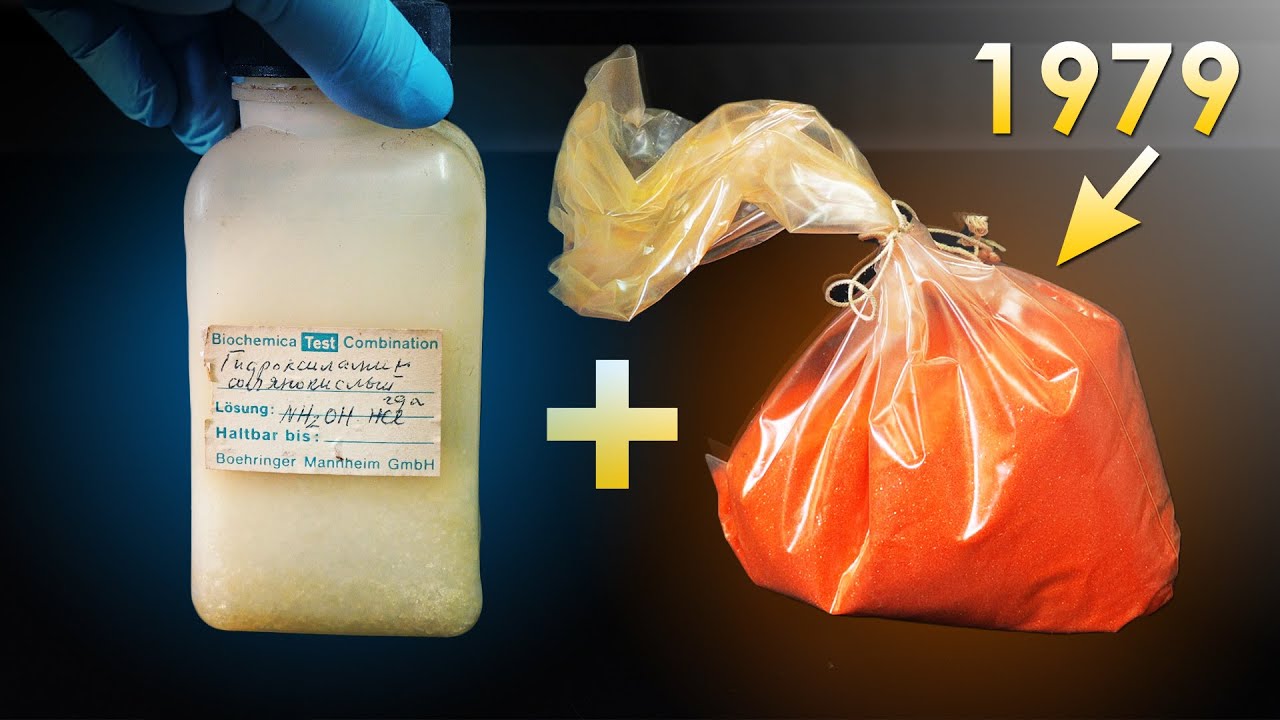
Hi everyone. I think many chemists as well as chemistry enthusiasts have often wanted to explore abandoned laboratories and mix together the contents of all sorts of colorful jars. It's interesting to wonder what would actually happen if you mixed all the chemicals from some laboratory together. Well, let's find out. I remember that I also used to explore abandoned laboratories and schools. But unfortunately, all the chemicals had already been taken out before I got there. So, I never got to fulfill my childhood dream. But luckily for me, not so long ago, I met some interesting people who invited me to visit their facility. Their laboratory had an entire warehouse of chemicals, which according to them had been given to them by a bankrupt lab. And since they simply didn't need most of the reagents, they offered to let me pick out some substances from their stock that I would find interesting to experiment with. And since the reagents were free, I decided to show what would happen if I mix them all together and what kinds of reactions would occur between them. However, if you just mix substances together at random, often there might not be any reaction at all. That's why I divided the substances in advance into so-called oxidizers and reducers. If you didn't know, in chemistry, oxidizers are substances that can take electrons from other substances while themselves being reduced in the process. For example, one of the strongest oxidizers I used is potassium permaganate or simply permaganate. Even though this reagent is about 40 years old, I don't think its properties have changed much since, for example, nowadays in Europeanies 10 g of potassium per manganate cost about €5 and I got a whole 1. 5 kg. You can calculate how much that's worth. In potassium per manganate, the manganese atom is in the plus 7 oxidation state, which is not a very stable form of this element. Because of this, even with mild heating, potassium per manganate decomposes, releasing oxygen, and the manganese atom transitions to a more stable state with an oxidation state of plus4, forming manganese dioxide as well as green potassium manganate. This experiment is still used to obtain pure oxygen in laboratories. To verify that this is indeed oxygen, I collected it in a flask. Fortunately, this is easy to do since oxygen is slightly heavier than air. After that, I lower a smoldering splint into the flask with oxygen and it ignites, which means that there was indeed pure oxygen in the flask. But if you mix potassium permaganate with some kind of reducing agent, for example, ordinary glycerin, the contact point between the two substances will start to heat up on its own due to the oxidation of the hydroxile groups in the glycerin molecule by the permaganate. As a result, the mixture can heat up so much that it ignites spontaneously, which only intensifies the reaction. Because of its extremely strong oxidizing properties, a weak solution of potassium permaganate is often used as an antiseptic, especially in the countries of the former USSR. In addition, today potassium per manganate is used to extend the shelf life of bananas by absorbing ethylene gas, which is released by plants during ripening. In this way, the shelf life of bananas is extended many times over. The oxidation reaction of ethylene can even be observed in a simple experiment in which I initially obtained ethylene by heating a mixture of ethanol and concentrated sulfuric acid. If you pass the resulting ethylene gas through a weak solution of potassium per manganate, you can see how the solution gradually becomes decolorized turning into manganese dioxide. At the same time, the ethylene gas itself is oxidized to ethyline glycol. In addition to potassium permaganate, I also happen to have a jar of vanadic acid which after many years of storage has already decomposed and now essentially consists of vanadium penttoxide which is not particularly soluble in water. Today this oxide is used as a component in the anodess of high power lithium batteries as well as in the production of raditting phosphorus. Since I only have vanadium oxide left, vanetic acid itself can be obtained indirectly. If you add a little hydrochloric acid to a salt of vanetic acid, for example, to ammonium vanadate, you get a mixture of polyanetic acids which have the same orange color as venadium pantoxide. It's also interesting that if you add a few zinc granules to a test tube with such a mixture, the polyvinetic acids will start to be reduced by the hydrogen released from the reaction of zinc with hydrochloric acid. At first, blue vanadium compounds will form, then green ones, and finally violet ones in which the oxidation state of venadium atoms will be two. It's no coincidence that venadium is sometimes called a chameleon metal since its compounds easily change color depending on the oxidation state of venadium in them. The same thing, by the way, can be said about chromium. By the way, speaking of chromium, as a powerful oxidizer, I also managed to get myself a
Segment 2 (05:00 - 10:00)
kilogram of potassium dromate, a rather toxic but interesting reagent in it. Chromium has its maximum oxidation state of plus 6, which is why this substance is also an oxidizer. Today, potassium dromate is used as a component in match heads as well as in leather tanning to make the leather stronger and less susceptible to decomposition. Like venadium compounds, chromium compounds easily change their color when reduced by hydrogen and hydrochloric acid. First, the orange solution of potassium dromate is gradually reduced to chromium chloride of this green color. But if this reaction is continued, a rather rare and air unstable chromium chloride is formed, which has a pleasant blue color. However, unlike the relatively safe chromium compounds with oxidation states two and three, hexavalent chromium compounds are extremely toxic and carcinogenic. So, you must handle them with great care and they must never be poured into waste water. Interestingly, in the 1950s and 1960s in California, USA PG, he decided to save money and simply dumped about 700 million L of water contaminated with dichromate into the general sewage system. And only after 30 years of legal proceedings was the company finally forced to pay $330 million in damages to the affected residents of the town of Hinckley, who had been suffering all that time from the toxic effects of groundwater contaminated with dangerous potassium dromate. As another oxidizer, I also got a rather rare jar of elemental iodine, which for some reason is called metallic here, although iodine is not a metal. Nevertheless, over the years of storage, beautiful lighting crystals have grown in the jar, sometimes really resembling metal. If you grind them in a mortar and mix them with aluminum powder, at first nothing will happen. However, if you add a drop of water to the mixture, the iodine will start to dissolve, forming iodic acid, which can then react with the aluminum and heat the mixture up to the point of self ignition. And yes, the reaction is quite beautiful, releasing a large amount of violet iodine vapor. In addition, I also got a jar of sodium molib that rather unusual substance that is now used as a fertilizer for soils deficient in molibenum. Besides that, sodium molibdate is used as a corrosion inhibitor for anodes during water chlorination by electrolysis. All in all, it's quite a useful substance. Nowadays, by the way, it reacts with very few things. But in aqua solutions, it can be easily reduced using magnesium and hydrochloric acid as well as the hydrogen that is released. As a result of the reaction, so-called malibdinum blues are formed rather rare blue pigments with a complex composition. I also got some regular potassium nitrate or salt peter as an oxidizer. I think many people are familiar with this reagent since it reacts very well with sugar. You can even make real rocket fuel from it, for example, by melting it together with sucrossse or its substitutes such as xylitol. The resulting mixture burns quite well after it solidifies. Although in this case, I apparently didn't heat the mixture enough since the combustion isn't as fast as it could be. In addition, potassium nitrate is still indispensable today in the production of pyrochnics and black powder. Besides potassium nitrate, I was also given strontium nitrate, which has somewhat weaker oxidizing properties, but is capable of coloring the flame red. This can be seen a little when trying to ignite a mixture of this substance with powdered sugar. But still, the combustion here is several times slower than with potassium nitrate. Like potassium nitrate, strontium nitrate is used today in pyro techchniques to create products that burn with a bright red flame. Well, that's it for the oxidizer. Now we can take a look at the substances I managed to select as reducing agents. That is substances that can donate electrons while being oxidized themselves. And the first such substance will be sodium iodide. Like all iodides, sodium iodide is very easily oxidized for example in a solution of potassium per manganate forming elemental iodine which gives the solution a slightly yellowish color. And with a more concentrated solution of potassium dromate, the reaction also occurs, but in an acidic medium. At the same time, due to the saturation of the potassium dichromate solution, more iodine is formed in the solution. By the way, it doesn't dissolve very well in water. But if you add a little purified gasoline to the beaker, the iodine will dissolve much better in this organic layer, coloring the gasoline a deep violet. By the way, sodium iodide, like potassium iodide, is an excellent catalyst for the decomposition of hydrogen peroxide. And if you add a little soap to the mixture, the result
Segment 3 (10:00 - 15:00)
of this reaction will be a beautiful foam cloud. A few years ago, by the way, we made an epic video where we got a huge pile of foam together with the channel Fox Television. Volov. What foam? Look at her. But still, in addition to entertainment, pure crystals of sodium iodide activated by thallium are used as a scintillator. That is a substance capable of glowing under the influence of gamma rays. By the way, these were previously used in old radiation domters. In addition to sodium iodide, I also got another unusual reagent hydroxyamine chloride. This substance is unusual in that it exhibits extremely strong reducing properties, especially in aquous solutions. For example, if you take a solution of copper sulfate and add ammonia solution to it, you get a bright blue compound called copper 2 amine complex. But if you sprinkle a little hydroxyamine chloride onto it, it can reduce the blue copper 2 amin complex to the colorless copper ion complex. Compounds of monovalent copper are rarely encountered as they are very quickly oxidized in air to the blue dalent copper form. But with the addition of hydroxyamine, they can exist in a free state for some time. In addition, hydroxyamine chloride is sometimes used in laboratories to produce nitrous oxide or laughing gas by reacting hydroxyamine with a sodium nitride solution. Interestingly, nitrous oxide in addition to its anesthetic properties also supports combustion very well. That is why a smoldering splint easily ignites if you place it in a cylinder filled with freshly produced nitrous oxide. I also became curious about how this powerful reducing agent would react with the previously mentioned oxidizers. As it turned out, hydroxyamine reacts very well with a potassium permaganate solution, resulting in the formation of an almost colorless manganese chloride. But with a potassium dromate solution, the reaction doesn't really proceed. This is because hydroxyamine chloride forms a complex coordination compound with the dromate solution, preventing it from reducing the dichromate in time. In its dry form, however, hydroxyamine chloride is so reactive that it can react with strong oxidizers almost spontaneously. For example, if you sprinkle it onto a pile of potassium per manganate, the reaction will start all by itself. In this case, hydroxyamine is oxidized to nitrogen and water. But with potassium nitrate, you need to heat the mixture. Even then, the reaction wasn't particularly vigorous here. Aside from the rather unusual hydroxyamine chloride, I also got this jar of pure polyethylene glycol. If you didn't know, this substance is used as the main component in brake fluid. And it also ignites very well if you mix it with a strong oxidizer. For example, when mixed with bleaching powder, this substance may show absolutely no signs of a chemical reaction for quite some time. However, after a few minutes, the mixture suddenly ignites. I was also curious to see how polyethylene glycol would react with other oxidizers in its pure form and whether it should even be added to the overall mixture at all. Unfortunately, when mixed with potassium nitrate, no reaction was observed. But with potassium promaganate, even in its dry form, polyethylene glycol burned exceptionally well, producing a beautiful violet flame due to the potassium ions. Also, as an organic substance, I got this little jar with an unusual compound inocine. When dissolved in water, it colors the solution a bright red. That's why it's often used in microscopy to stain various strains of bacteria. By the way, under ultraviolet light, this substance glows a yellow orange color. I think that when mixed with other oxidizers, it could also produce an interesting effect. And finally, the last reducing agent I got was a powder of metallic cadmium. However, in many chemical reactions, this metal is very unreactive. And besides, it is highly toxic. That's why I decided to replace cadmium with its homalue zinc, which is much more chemically active, non-toxic, and also much cheaper than the now rare cadmium powder. By the way, despite its high chemical reactivity, zinc also reacted differently with various oxidizers. With strontium nitrate, the reaction didn't happen at all since this oxidizer is very reluctant to take electrons from other substances. With venadium oxide, something like ignition occurred, but it wasn't very vigorous either. With potassium dromate, the reaction proceeded much more vigorously. It turned out to be something like a chromium thermite. For some reason, zinc reacted very sluggishly at first with potassium
Segment 4 (15:00 - 19:00)
nitrate. But later, as soon as the components fused together, the mixture ignited with a bright flame with a greenish tint due to the zinc atoms. And the most vigorous reaction was with potassium per manganate. And that's not surprising since regular potassium per manganate has one of the highest so-called redux potentials which indicates how strong an oxidizer the substance is with sodium malibdate. By the way, even such a strong reducing agent as zinc did not react at all. So I decided not to include it in the overall mixture. But with iodine, at first zinc didn't react when simply mixed. But as soon as a little ordinary water was added, the reaction started, releasing a beautiful cloud of violet iodine vapor. Well, after I figured out which substances could react with each other, I decided to mix all my reagents together and see what would happen. To do this, I first weighed out 50 g of each oxidizer into separate containers. I started with potassium dromate and venadium oxide. After that, I also mixed together strontium nitrate and potassium nitrate. For a more spectacular reaction, I also weighed out about 40 g of iodine, which quickly began to sublimate in the jar, filling it with those brownish vapors. But to make sure the reaction would definitely start, I measured out not 50, but 120 g of potassium per manganate into a separate jar so there would be a slight excess of oxidizer. After that, I also measured out 200 g of powdered zinc and 50 g each of a polyethylene glycol and powdered sugar mixture to use as a reducing agent. Separately, I also weighed out about 40 g of hydroxyamine. And basically, that's it. I think we can go ahead with the experiment. For this, in a separate container, I first decided to mix the oxidizers so that the reaction wouldn't start prematurely. After that, I began gradually adding the reducing agents, mixing them with the rest of the mixture one by one. The most active reducing agents, hydroxyamine, I decided to add at the very end since I was afraid the reaction might get out of control. And it turned out I did the right thing. At first, nothing happened. I was already thinking of igniting the mixture with a sparkler when suddenly, right where the hydroxy lamin had been added, the mixture started to smoke on its own. After that, I decided to step back. Over time, the reaction only intensified and then it ignited by itself, releasing a bit of pinkish smoke. Most likely that was evaporating iodine. By the way, the color of the flame was also unusual, a sort of greenish violet hue produced by the zinc and potassium atoms, which looked quite beautiful. After the reaction was complete, what remained was a foamy mixture of zinc oxide and other substances, the composition of which is now difficult for me to determine. Well, now I think you know what happens if you start mixing chemicals from some laboratory and what consequences that can lead to. But if you enjoyed this episode, as always, don't forget to give it a like and subscribe to the channel to discover many more new and interesting things.
Другие видео автора — Thoisoi2 - Chemical Experiments!