Discussing my new book, The Hunger Code and answering questions
Оглавление (9 сегментов)
Segment 1 (00:00 - 05:00)
Hi everybody. We'll be going live in two minutes. Let me just get my headphones. — [snorts] — Hi everybody. Welcome to my live stream. I can see the comments now. So that's perfect. Thank you so much for joining me. It's great uh to talk to everybody. So, just before we get started here, um you know, if there's any questions or anything, please put them in the chat. I'll try and get to them uh as soon as I can and uh you know, we'll go from there. So, let's see. Wow. Thanks for uh thanks for joining me here and um like I said if there's any questions we'll try and answer as many as we can. Um so I just wanted to start off with uh my new book. So I actually just got a copy of the final version which is called The Hunger Code. And I just wanted to uh tell people sort of a little bit about what this book is and why I felt we really I really needed to write this. I actually wasn't going to write um a book like this but uh you know because I had written a lot in sort of 2000 after COVID and stuff I sort of was like okay that's it the social media was quite toxic and everything I wasn't planning to do anything else but there's been so much new research into um things like food addiction and ultrarocessed foods that I thought wow we really need to try to get uh a little bit more clarity on this. And then the more I dug into it, the more um it was becoming clear why this book was really important. So it's been 10 years since the obesity code and the obesity code sort of took us from you know uh calories which is a very sort of um paradigm that really hasn't succeeded cutting calories and moved it to sort of the hormonal aspect and I think it was very successful uh at doing that really talking about insulin cortisol and those other things. And the whole point is that if you look at uh you know calories in, calories out, people say well body fat equals calories in minus calories out. And that's always true. However, you could rearrange those terms and you can simply say calories in equals body fat plus calories out, right? Which says that for every calorie that you eat, you can either store it or you can burn it. And which one it does is very, you know, has dramatically different effects on how much body fat we carry. So therefore, it's not the just the number of calories. It's what your body does with it, which is the hormones, right? So if you eat a food and it stimulates a lot of insulin, then you're going to store a lot of fat. And if you eat a different food that doesn't uh stimulate a lot of insulin, it's not going to. But it's more than that. So, we talked about insulin and cortisol there, but the um the whole point is that there's a lot of people who can still eat uh carbohydrates and not get fat. Like there are entire civilizations, you know, the Asian populations eat a lot of rice. The Irish used to potatoes. If you go to like Germany and Switzerland, a lot of potatoes there. So, there's ways to change it. And it's not simply a low cal a low carbohydrate diet. It's about being low insulin. And they're not the same thing. So you can eat carbohydrates and still have a relatively low insulin response. And that's what a lot of the new data was coming out and that's what I cover in the hunger code. So the hunger code is um available for pre-order now. So, before I dive into some of the main topics of what I really wanted to talk about, um, it is available for pre-order basically everywhere you go. And I would
Segment 2 (05:00 - 10:00)
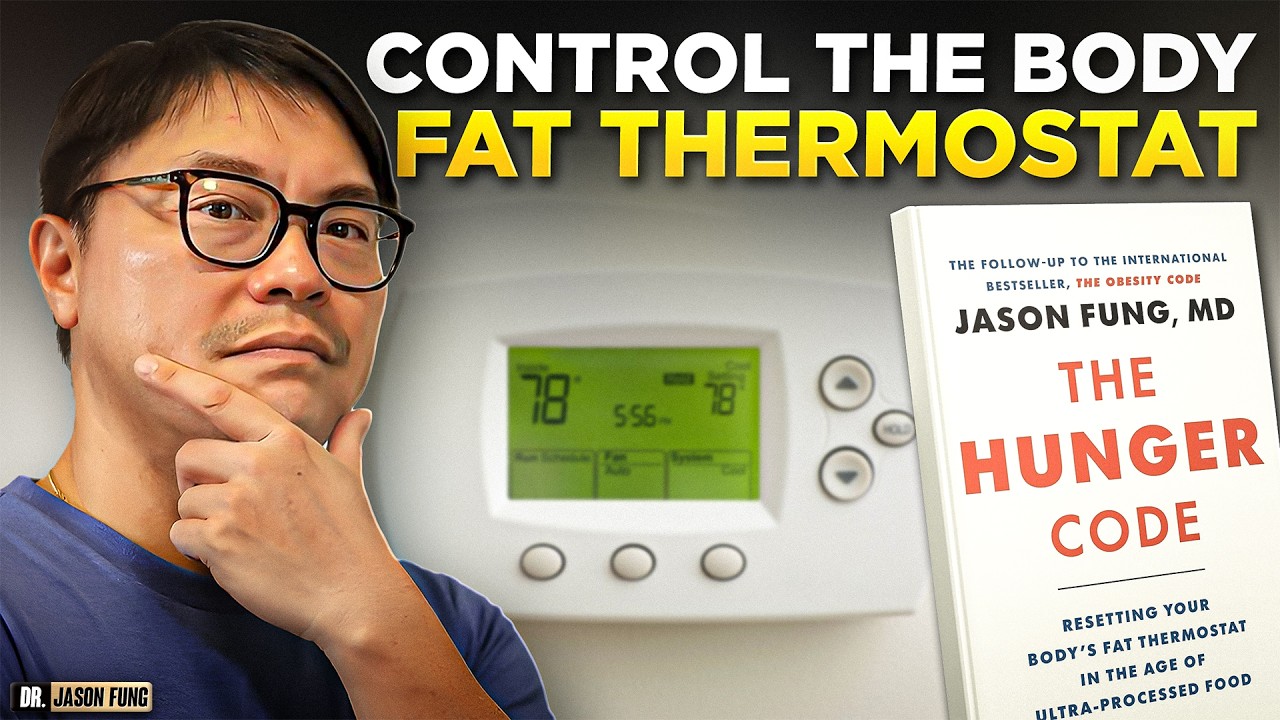
encourage you to pre-order it sort of soon because there are some special bonuses that we're giving away. And uh, it's the when you sign up for it, you can go to my website, Dr. Jason Fun. That's D Oct. and you can simply submit your receipts and then you'll have access to a master class that we're going to run in March. Uh so you have about pre-orders and you know for the first one or two weeks after the book is released, you'll get access to this master class where we're going to take you over these concepts of hunger and how to deal with it. Um and you know this will be my first master class that I'm doing. normally would sell it on the fastingmemethod. com for uh $499. So for the you know $30ish dollars that you get the book, you get over $500 of bonuses. So it's a good deal. If you are going to get it, I encourage you to pre-order it. It's coming out in a couple of weeks and the master class will be sort of March 22nd. The other thing is going to have is some discount coupons to ERA uh broth. ERA is spelled AEI R A. And this is a bone broth. It's a powdered bone broth that we developed with the fastingmethod. com. Essentially, it the reason we developed it was to help with fasting. And you know, we've talked about bone broth a lot. The problem really with bone broth is that it takes a long time to make. So, I make my own bone broth or I used to anyway, and it takes like 20 hours. So, you get your bones and you boil them down. And the thing is that you had to really plan ahead. What the powdered bone broth does is it takes all the work out of it. And there's only one ingredient. It's just chicken bones. That's it. There's nothing else. So, if you want to add a little bit of salt, miso, add a little bit of flavors with some vegetables, you can do it. And it's available in like five minutes. And if you compare it, um, you know, it's about $30ish dollars. So, it's about a dollar something per serving. If you compare it to a pre-made broth, which I did uh recently, it's about a quarter of the price, and it's, you know, convenient because it's a powder and you can actually take it wherever you go. So, there's some coupons for that as well. So, that's part of the bonuses for when you order the hunger code. So [sighs] the reason that I wrote the hunger code is actually the um is because what I started to realize is that the hunger is a sort of overwhelmingly important topic that nobody talks about. If you think about it, we eat because we're hungry and we stop eating because we're full. Right? So if you say that people are eating too much, the problem of the overeating is really a problem of over hunger if you will. And therefore the question is what is hunger? How do you deal with it? And that's really the crux of the entire book. And when you look at it from a scientific standpoint, there's actually three types of hunger. And there's the sort of normal physical hunger that we all feel. And that's called homeostatic hunger. And homeostasis is a concept in biology where your body has a certain level. And if you go above, it's going to bring it down. If it goes down, up. So it's much like a thermostat. And that's why we talk about the body fat thermostat in the hunger code because your body has a certain body fat that it wants to carry. So if you are overweight, what it means is that your thermostat has been pushed up too high. So even if you try to lose weight, right, if you try and push it down, but your thermostat's up here, even if your weight goes down, it's going to try and bring it back up, it's going to either make you hungry or if you don't eat, it's going to decrease your metabolic rate. So the point is that you need to adjust this thermostat. Just like if you go into a room and it's way too hot, you don't say, "Well, it's heat in minus heat out. Let me calculate all the sources of heat, loss of heat, a and see. " No, you're going to say, "Who set the thermostat so high? And why don't I just turn it down? " So, it's the same thing in the body. If your fat body fat thermostat is set too high, you don't have to worry calories, metabolic rate, and all this stuff. You just have to say, "Why is it set so high? " And it's really about the hormones. Certain hormones are going to push your thermostat up. it down. How do you know? Well, you can test it. If you give somebody insulin, they gain weight. Therefore, you know you've pushed their thermostat up. It had nothing to do with calories. willpower. It had to do with setting that thermostat high. If you give somebody insulin and keep their
Segment 3 (10:00 - 15:00)
calories the same, they will still gain weight. How? Well, your metabolic rate must decrease, right? Your calories out must decrease. If you give somebody insulin, many times you're going to be more hungry. So you see that the thermostat when you push it up, it activates mechanisms for you to gain weight and that's going to be hunger or satiety is going to either turn up hunger or turn down satiety or it's going to turn down your metabolic rate and therefore you're going to your weight is going to go back up. In fact, that's what virtually every single study in obesity medicine has shown. So the point is that the thermostat is there but the thermostat is not what regulates it. Right? Just like the room thermostat, it doesn't actually heat or cool the room. It activates a uh heater or air conditioner to heat or kill. So same thing with the body fat thermostat. When you push it up, it activates hunger or decreases your metabolic rate so that you still gain that weight. And that's how the body works. In fact, homeostasis is a very core biological principle. It affects everything. So, it's same thing for body temperature. You set a certain body temperature. When it's too hot, then you're going to sweat. When it's too cold, you're going to shiver. That's just the way it is. If you have uh body salt, if you or body water, if you drink a lot of water, you're going to pee it out. If you don't drink a lot of water, you're not going to pee it out. You're going to conserve that water. Either way you're going to maintain homeostasis but body fat homeostasis is much the same. So what I talk about in the first part which is the hunger code is how do you regulate this body fat thermostat that relates to the physical hunger the homeostatic hunger because again if you think about the problem of overeating the problem is over hunger and then you have to ask the question why are you hungry? So it could be that the hormones are off. Uh that's homeostatic hunger. But there's other types of hunger and this is where it gets very interesting because again um you have to understand why people are eating. If you don't understand that you won't be able to take care of that. So the whole uh the second re the second big type of hunger and there's probably more but I break it into three main types of hunger is hideonic hunger. And hideonic hunger, hideonic refers to pleasure. So uh when you say eating, it's a pleasurable thing. We enjoy eating. So why would we deny that that's a reason why we might overeat? And this is where ultrarocessed foods and um food addictions really starts to uh take place. So when you have the um comfort food, for example, you're eating because it makes you feel better. So therefore, you're not eating because of the physical hunger. You're emotional hunger. And that's hidonic hunger. And it's a real problem. If people are emotional eaters, you can't just say, "Eat fewer calories because you're not taking care of that emotional side that's driving the eating, the emotional hunger that's driving the eating behavior. You got to take care of it before you'll get better. " And the third type of hunger is conditioned hunger. So conditioned hunger is a social environmental problem because you compare two things. When you connect one thing to another thing constantly, then you're going to respond. And the classic experiment is path dogs. So when you give paps off dogs a meal, they'll salivate. Now that's a natural reaction. If you parry the sound of a bell consistently to the meal, the dogs will start salivating and get hungry at the sound of a bell. So what is happening is that you've taken a neutral stimulus, the bell, and turned it into a source of hunger because you've paired it so consistently with the food. Now you think about what's happening in, you know, the modern world. You eat, you know, as soon as you get up, you eat the midm morning snack. You eat when you get your coffee. [clears throat] You eat at lunchtime. You eat after school. You eat at dinner time. You eat after before bed. You eat in front of the TV. You eat in the car. movie theaters. every single time you're stimulating hunger and therefore that's going to be [clears throat] a real problem. And some people call this food noise. And again, it's a real phenomena. When you talk to somebody about food noise, they know exactly what you're talking about. [cough and clears throat] It's a type of conditioned hunger. Until you recognize what is causing it, you can't take care of it. So the if you start to use counter conditioning for example or extinction these are there's entire fields of psychology that are dedicated to understanding conditioning behavioral psychology.
Segment 4 (15:00 - 20:00)
psychology. So if you do extinction for example excuse [clears throat] me what you do is you uh you pair the car for example and instead of eating all the time you don't eat. So now you've you've gotten lots of experience and you sort of dissociated the eating and the car ride or the eating in the movie theater or whatever. And in that way you're going to decrease hunger over time and that's where fasting is really very beneficial because you can break a lot of these uh type of conditioned hunger. So that's all covered in the [clears throat] hunger code. So it talks about the different types of hunger. talks about the body fat thermostat, homeostatic hunger, hydonic hunger, conditioned hunger, and what to do about it. There's three golden rules of uh weight loss. And these rules are actually the oldest rules in the book. One, don't eat ultrarocessed foods because I go over all the different ways that ultrarocessed foods actually sabotage your weight. And everybody thinks, you know, it's all about calories, all about No, no. It goes way beyond that because these foods are these ultrarocessed foods actually cut across all three different types of hunger. So when you think about ultrarocessed foods the processing reduces satiety makes it very easy to eat very pleasurable to eat and you get these really high hits of dopamine and insulin. What happens is they get these bursts of pleasure. So you not only stimulate the homeostatic hunger, but you don't get the satiety. You get the hydonic hunger because it's so pleasurable. And then because they're so easy and convenient and cheap, you pair them with food. You know, you go to the car, you grab a bag of, you know, chips or, you know, you go to the theater and you get popcorn or whatever. It's it because they're easy. These ultrarocessed foods are also part of conditioning. Also, the advertising, right? It's on TV all the time, billboards. you walk into the mall, all this sort of stuff. So, because it cuts across all three different types of hunger, it's really one of the most important things you can do is cutting down ultrarocessed foods. And again, that's why the title of the book is resetting your body fat thermostat in the age of ultrarocessed foods. The most recent dietary guidelines also talk about how what an important aspect it is to eat real food. And really, if you can do that, you're actually so far ahead of the game. But it's way beyond calories. Like what I'm trying to do is really present a very detailed scientifically correct uh physiologic uh look at eating behavior. So it's not simply diet, it's about eating behavior. So it goes into psychology, it goes into all these different things because the more you know, like the better you know, the better you do, right? So if you don't understand a problem, you'll never be able to solve it. So that's where this sort of takes off from the obesity code and goes in. It's I see it as a sort of followup uh to this and really takes it in a sort of a new direction. And what stuns me sometimes I think about these things and it's like I read a lot of diet books and just to see what people are talking about and like 90% of the time when especially when it's an MD or a dietitian they're talking about calories and it's such a simplistic view of things. Um hunger is obviously one of the most important things because you know we eat when we're hungry. Um, so why don't we ever talk about it? I mean, if you were to ask somebody, "What are the three main types of hunger? " You usually get a bunch of blank stairs back. Nobody knows what, you know, what they're talking about. What is he dotting hunger? Like people are like, "I don't know. Why don't you know like why are we talking about it? Why aren't we explaining it to people so that they can deal with it? " So, uh, in the book I have three golden rules and I have 50 weight loss tips. So I tried to keep it you know not just scientifically accurate but also very practical and that's what the master class is going to do as well. We're going to actually take you through that uh master class is run in conjunction with uh the fasting method where you'll be able to find other people because one of the third go the second golden rule is you know intermittent fasting. Third golden rule is find your social uh environment that allows you to succeed because doing it in a group, doing it with friends and so on actually increases your success rate by a lot. So again, if you have a chance, check out my website, drjasonfung. com. You can actually pre-order the book anywhere, but if you are thinking about getting it, please, you know, you might as well take advantage of the uh sort of bonuses that we're offering since it's
Segment 5 (20:00 - 25:00)
over $500 of bonuses for, you know, a 30ish dollar book. So, thanks uh for joining me. Let me see if there's um any questions here. And I'm glad to see everybody from all over the world. That's amazing. I um you know I think that this is actually a very important book simply because it doesn't appear that anybody else is really talking about it. Um so I see a lot of the the comments here about pre-orders. Thank you so much. I really appreciate that. We're trying to, you know, get as many people to benefit from the pre-orders as we can. Um, anywhere that sells books, uh, should be able to pre-order it for you. So, um, you know, there's any of the bookstores. You just have to call them. Most of the online places, uh, as well. Um, in the United States, of course, there's Barnes & Noble, Amazon, um, and you can usually talk to your independent, uh, bookstore as well. Um, in terms of the calories, uh, there's a comment here. My 16-year-old is obsessed with calories. Can you help her? Uh, the whole calories issue is is very interesting because it's so um it's so widespread and it's so wrong because people think that it's the entirety of what you know weight loss and weight gain. It's just a math problem. It's just calories in, calories out. It's so stupid. Uh, it's just like saying, you know, alcoholism is alcohol in minus alcohol out. So, I can treat alcoholism, just drink less alcohol. It's like, that's not really very good advice. Of course, you should drink less alcohol, but until you understand why somebody is drinking too much alcohol, you'll never be able to solve them. That's why there's like 12 steps in Alcoholics Anonymous, none of which is drink less alcohol, right? They're talking about emotional, spiritual, friendships, groups, all the same things that I talk about here, the support, the environment, the social, uh, the mindset, all of these things. You know, they talk about gratitude, mindfulness, all of the same things that we talk about in the hunger code. It's actually so much more important. If you think it's all about calories, you've already lost. Like, you're done. You might as well go home because it's been tried. So many people have tried it and it doesn't work, right? People say things like, "Oh, you know, it's all about calories. " Well, think about this. What if you eat a three egg vegetable omelette for breakfast, 800 calories? You're going to be pretty full until lunchtime or maybe even until dinner time, right? It's a lot to eat. What if you drank instead an 800 calorie frappuccino? You'd be hungry 5 minutes later. So, why are you pretending that these two things are exactly the same? They have the same calories, yes, but they stimulate completely different hormones. The eggs and omelets and vegetables, they stimulate all these satiety hormones. They reduce your hunger, all this sort of stuff. They're they travel slowly through the stomach. It takes time to digest. The Frappuccino stimulates a whackload of insulin. The insulin shuttles all those calories into storage, body fat, and doesn't leave any calories for the rest of your body. So you're you're starving 10 minutes later. Meanwhile, you're gaining weight. It's not a problem of math. thermodynamics. Anybody who says it's thermodynamics actually doesn't understand the problem at all because it's not thermodynamics. The problem is what does your body do with the calories that you've put in it? [snorts] Does it make you full and keep you full or does it not? Because that's important. It's like saying the money in your bank is money in minus money out. But making money is different than saving money. You can't say you if you want to save more money, make more money. No, they're different, right? You have people in the NFL who make millions of dollars who go bankrupt three years after they retire. Why? They made a lot of money. They didn't save Different. If you eat fewer calories, you might lose body fat. You may store fewer calories or you may burn fewer calories. So very different and that's what these books are about trying to really teach you the physiologic way to look at weight gain so that you can decide and all it means is that some foods are more fattening than other foods. That is brownies broccoli. Well duh. Isn't that completely logical? I think so. [gasps] Um so you know why we would think differently? I have no idea. Um, a question about Audible here. Is it going to be available on Audible? I believe so. So, my publisher did um did make a
Segment 6 (25:00 - 30:00)
deal with Audible. Um, so I believe they're going to try to release it at the same time. Originally, I think the obesity code was released a little bit after, but um they they now um you know, they're now going to release it about the same time. um they got the same person to read it from the obesity code. So it will be it will sound the same but it's not me. Um they didn't actually ask me. It's actually really painful process. I I'll tell you quickly that I did the audio book for the diabetes code and what you realize when you're reading out loud is that you add lib a lot. So when you're speaking, you often add in little words or take out little words. It doesn't change the meaning of the word, but it's not exactly the same. So it was so painful. It was like literally eight hours a day sitting in the studio reading and every four or five words they would stop me and say, "Nope, you didn't say 'the'. " Or, "Oh, it's a his" instead of, you know, him or something like that. It'd be like little crazy silly stuff. And I remember being so happy when I could get through like one and a half lines without getting stopped. It was terrible. But I did it because I actually I did the diabetes code because I actually like the um I like it when I listen to the original author. So that's why I did it. But um I actually don't I don't do it anymore because they didn't even ask me. They actually wanted to get it going. They didn't want to take the time that it would take to uh for me to do that. So, but [sighs] you know the I know a lot of you listen to the audio books. I do the same thing and so on. Um let's see question about pasta has like low glycemic factor. I actually do talk about that. Uh pasta actually has a quite a much lower glycemic index than uh white bread and it's an interesting reason why. It's because the pasta the carbohydrates are bound up in the protein. So that's the gluten. Uh so because it's all bound up in the protein, this is called the food matrix. So the food matrix is how the food is held together. So if together very loosely and everything breaks apart. So this is ultrarocessed foods and white bread, commercial white bread. It's very soft. It's very easy to eat. It goes down very quickly. So it breaks apart as soon as you eat it. it goes through the stomach very quickly and then it gets absorbed very quickly. Passa on the other hand because it's bound together with a protein and you know there's some egg in there as well. Um it actually gets it takes a lot longer for it to digest and because it goes through the digestive system much slower. You get a much lower um glucose rise and a lower uh glycemic index and therefore less insulin effect. So you know choosing pasta if you must instead of things like white bread is probably a good choice. There's also I also talk in the book about vinegar. Vinegar is also slows down the digestion of carbohydrates by inactivating salivary amaes which are the enzymes that break down the carbohydrates. So the point is that you can still eat a low insulin diet without necessarily eating a low carbohydrate diet. Eating less carbohydrates is a good way to lower, you know, your glyce your glucose effect, your insulin effect, but there are other ways, too. It's not going to bring it down to zero, of course, but on the other hand, sometimes you don't need to bring it down to zero, and that's also covered if you check out my YouTube channel. There's also a um video on eating a low insulin diet. Um there's a question here. Can you overfast? Um, in terms of fasting, your body does eventually get used to everything. So, sometimes it's good to change it up a little bit. Um, this book is not specifically about fasting, but uh, there are definitely some, um, you know, people who fast and then they find that everything starts to plateau. And it's because your body's always trying to get to that home, it's homeostasis. It's steady state. So, sometimes you have to change it up. So you might want to, you know, if you're used to fasting for 24 hours, you might go a little longer or you might just change it up by eating but eating very clean, for example. So there's different ways to change it up that may or may not work. And it just kind of shakes up, you know, shakes your body out of a bit of um you know, getting too used to it. This happens a lot, especially with the shorter fast, the 16- hour fast and so on. uh because it's definitely uh people start to plateau after a while. So um is there anything about inflammation in the book? Um I don't have anything specific about
Segment 7 (30:00 - 35:00)
inflammation. Um although fasting I'll just mention can be quite anti-inflammatory. There are a lot of um aspects to inflammation that uh you know can be helped with fasting. I think what happens is that fasting uh tells your body that there's no nutrients coming in. So anything that's a little bit overactive such as inflam inflammation bring it down. So again I'll tell you that I do did uh some fasting because I had a lot of tendinitis and um nothing helped. I had it for like a year and a bit is bad achilles. I did ultrasound, I did stretching, I did exercise, I did all kinds of stuff. It's just a lot of stuff. And the thing is that uh nothing helped. And then finally a friend of mine says, "You should try this fiveday fast. " So I thought, "Okay, I'll try it. " I have I prior to that I did a lot of shorter fasts. And after the fiveday fast, and it wasn't a full fast, it's a reset fast, which is what we've been doing for many, many years. It's because we go a little longer. We don't do um we don't take zero calories. We take a little bone broth and once a day I take a little vegetable. So something around 3 to 500 calories uh per day because a lot of the research now indicates that actually preserves a lot of the benefits. And after that 5day reset fast, 70% better. It was crazy how how good it was. And then so I thought, nah, well maybe it's coincidence, even though it had been a year and a half and nothing else worked. So a couple months later, I did it again and again 70% better. Then I did a third time and it's gone. And I haven't had it since. I did have some knee inflammation about a couple months ago, but this time, you know, as soon as I had a little window because, you know, five day fasts, you can't have like a big dinner meeting or something like that in the middle or, you know, a big celebration. So, as soon as I had a chance, I did a fiveday fast. Boom. The whole thing went away. It was crazy. And, you know, it's it's nobody talks about this kind of thought. It's anecdotal. I don't have, you know, a study on it, but I don't need a study. I mean I feel 10 times better. So I think the fasting does help with the inflammation but it's not this book is not specifically uh about that. That's why we have these sessions and so on like this master class that we're going to do. [snorts] Um can you send the link to the book? So I will send the link here wjsonfund. com. So go to there and then there will be a link to buy from uh from wherever. Uh, is keto a good diet? Uh, keto is definitely can work because it's a very low carbohydrate diet and therefore it's going to be a low insulin diet. It's not an easy diet to follow though because it is quite restrictive. So, some people might not do it and you don't always have to stay on it 100%. You can also cycle it. There are people who use it and then go off of back on. It's okay. It doesn't um matter. Um, so yeah, a question here. I've grown with potatoes and bread, but now I'm sensitive to both. I'm not sure why, but I um I know a lot of people who become more sensitive to foods as they get older. Your taste changed, too, because I used to hate eggplant, and now I love eggplant. I order it all the time. So, it's it's crazy. Um, a question about coconut fat. Uh, not coconut fat. There's nothing wrong with coconut oil. Coconut fat. It's a natural fat. So, I always say when you're looking at fat, it's not saturated or unsaturated. That's really the key. The key is it natural? So, is the fat in a form that your body through evolution has evolved to handle? So, natural fats are fats that are very close in nature. So olive oil, you take an olive, you squish it, you get oil. Compare that to corn oil or sunflower oil. Corn is not oily. So what you do is you have to take hexane, which is a petroleum um derivative and you have to sort of get the oil out with the hexane. Then you have to get rid of deum it and then deodorize it and bleach it. It's not exactly natural. It's very unnatural. Same thing with butter. It's natural. not something that people have been eating for thousands of years. Avocados, um, coconut oil, all of those natural fats, uh, dairy fat, likely they're not going to be of a problem. Uh, question here about bone broth is magic, especially if you put some borage full of B vitamins. Yeah, I agree. the
Segment 8 (35:00 - 40:00)
co the bone broth is super uh good because um you know if you look at the uh macronutrients of bone broth and with the arrow bone broth of course they have the nutrition label so you you wouldn't get it if you make your own but in the nutrition label it's basically 15 grams of protein and nothing else there's no carbs there's no fat there's nothing they have to defat it actually so that they can actually dry it properly otherwise they'll go rancid and stuff so they actually have to take out all the fat. So, if you like the fat, um then it's not fatty. You have to add a little bit yourself back by yourself. Uh I actually don't like the fat, but it does have no fat. Uh another question here, I am a carb addict. I prefer to fast instead of eating small portions. This is actually a really important point. [sighs] Food addiction and I cover that in the hunger code in the second part of the hunger code and uh it's on hedonic hunger. If it's if you have an addiction, it must be treated with abstinence. If you're alcoholic, you won't say to them, "Hey, just have a drink. " Everything in moderation. Like, you'd be the worst AA sponsor ever, right? Why? Because that one drink could lead to another drink. That's what happens with addicts. You don't say to a heroin addict, "Hey, just shoot up once, everything in moderation. " No, that's stupid. You'd be like the worst friend that person ever had. So, if you're addicted to refined carbohydrates, you need to avoid them. Why? Because once you start them, you can't stop them. That's the whole point. That doesn't happen with natural foods. If you think about what people say, I'm a carb addict. I'm a bread addict. I'm a pizza addict. I'm a choahholic. Um, you know, these are all ultrarocessed foods. When was the last time somebody said, "I'm addicted to beef. " Like, I like beef, but I'm not addicted to it. It's not like I'm going to keep eating beef until, you know, it's going to make me sick. That's just ridiculous. [snorts] So, the fasting is a great way to get to the bottom of that. So, um the whole uh idea is to really focus in on those things that can help. Keto is a great way to do that. Um and uh you know, again, it's it's really understanding. Um, so that's why there's like 50 tips and so on because everybody's problem is different. So some people will be food addiction, but another person will be sleep. So you can't treat them the same, right? And that's the problem with this whole um calories thing. It's like every problem has the same answer. Eat fewer calories, right? It's like that's ridiculous. It's to the man with a hammer, every problem is a nail. You can't say, "Okay, my problem is food addiction. " Well, eat fewer calories. Did you deal with the addiction problem? If you didn't, you didn't take care of the problem. Or if the problem is, uh, you know, you eat too much ultrarocessed foods, then they say, "Eat fewer calories. " Like, what? No. If your problem is ultrarocessed food, eat less ultrarocessed food. Or if somebody says, "My problem is I don't sleep enough. " And you say, "Well, to lose weight, eat fewer calories. " Like, what? The problem is you didn't get enough sleep. You got to sleep more. Right? And that's the whole point. If you can understand what's happening, then you know then then you can deal with it. And really I think that that's um the most important thing. Um and you know, we're just going to wrap up here, but again, I see John together strong. Thank you uh for being here. And it says um thank you so much. has been following me for a while and um you know I hope I've helped you know I that's my goal here is to really um bring together some information that's not easily available elsewhere um because it's so easy just to say here's fewer calories here's a cookbook or you know the problem is you don't have enough willpower right or something stupid like that the problem is not complex Lex, it's way more than just calories. Way deeper than just calories. And it's time we are become adults and talk about the problems because it's physiology. It's not math. It's not a math problem. It's a problem with physiology and what what we do for it. So, you [snorts] know, I think that the uh you know, we're going to have a few I'm going to try and do a few of these um before the next session. We'll try and answer a few questions, but thanks for joining me here. Um and again, the book is the hunger code. Um you know, it talks about
Segment 9 (40:00 - 42:00)
calories, why the calorie sort of view is sort of so false. Then it talks about the hunger uh homeostatic hunger, hydonic hunger and conditioned hunger because those are the crucial things you need to understand. Some people will be have problems with emotional eating, hydonic hunger. Other people will have conditioned hunger. You can't treat them the same. But if you know about it, then you can do something about it. Um, you know, if you do get a chance, you know, uh, you can also follow me on x. com as well as, uh, Instagram, on YouTube. You know, there's a lot of videos. I try to provide all that stuff, uh, for free. I'm putting out a couple of videos now that start to talk about some of the concepts of the hunger code. And then, of course, if you want to pre-order the book, thank you if you do. Um, and then please, uh, you know, don't forget to go to my website then and claim the sort of, uh, bonuses that were the publishers offering. You know, it's a great deal, um, to really get things going, get things moving, you know, do things all together, try and help each other get off on the right foot, trying to understand the hunger and understand what you're supposed to do about the hunger. And that's really all covered here. It's actually a very practical book. um much more than some of my other books, The Cancer Code, for example, wasn't too practical, but I actually thought it was quite fascinating. So, thank you so much. Um uh oh, one last question. There's about the Spanish version. We did also I don't know when they're coming out, but I know we've sold some of the languages already. So, Spanish language, French language, Italian, German, for sure. All of those uh have been we have publishers that we've dealt with already. Chinese um and I think Japanese as well. So, you know, they should be available very soon. So, thank you so much uh for joining me here. Keep an eye out. I may do another one in a week or two just to answer a few more questions, talk a bit more about this