WIFI (wireless) Standards and Generations Explained

WIFI (wireless) Standards and Generations Explained

Machine-readable: Markdown · JSON API · Site index

Поделиться Telegram VK Бот
Транскрипт Скачать .md
Анализ с AI

Оглавление (2 сегментов)

Segment 1 (00:00 - 05:00)

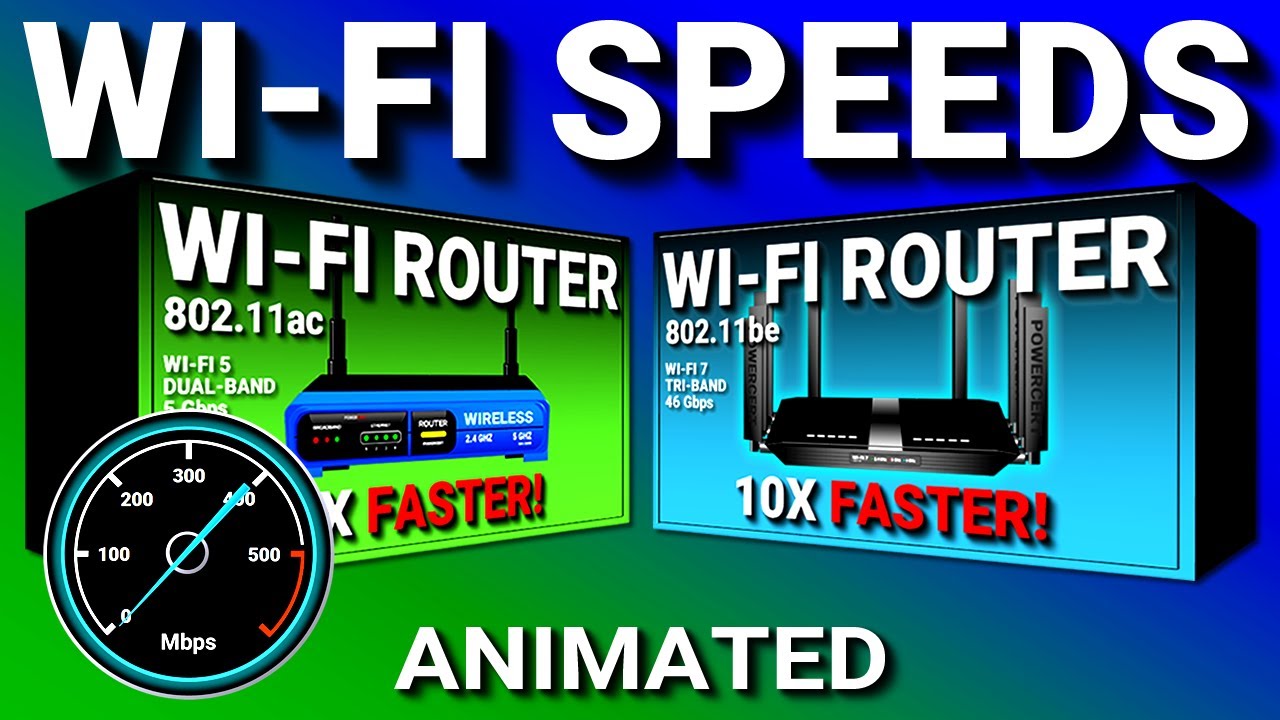
Hello everyone, in this video we're going to be talking about the different Wi-Fi standards. Now Wi-Fi is a wireless technology that uses radio waves that allows networking devices the ability to communicate with other networking devices wirelessly using a device such as a Wi-Fi router or a wireless access point. And since the first development of Wi-Fi there has been some significant changes in the technology and speed in the Wi-Fi standards. Now the organization that created and maintains the wireless standards is called the IEEE which stands for The Institute of Electrical and Electronics Engineers and they are responsible for starting a project called the 802 project. And the wireless standards that they created was called and started with the number 802. 11, which was the first wireless standard. 802. 11, which is also known by its more simplified name Wi-Fi or Wi-Fi 0 came out in 1997. This standard used the 2. 4 radio frequency band and since it was the first Wi-Fi standard, the speed was very slow at 1 - 2 Mbit/s The next Wi-Fi standard was the 802. 11b which is also known as Wi-Fi 1. This came out in 1999 and this had a speed of up to 11 Mbit/s and this also used the 2. 4 GHz frequency band. And also in 1999 the 802. 11a standard which is also known as WiFi 2 was released. Wi-Fi 2 the first standard to use the 5 GHz band instead of the 2. 4. The differences between the 5 and the 2. 4 frequency bands are interference, speed, and distance. The 2. 4 GHz band is very common and is used in a lot of other devices such as microwave ovens, cordless phones, wireless cameras, and so on. So a lot of times these devices will interfere with other Wi-Fi signals and this would cause problems because it would slow down the Wi-Fi network speed and sometimes could cause you to lose connection to the Wi-Fi router or access point. However the 5 GHz band is not as common, so there was a lot less interference. So there was more privacy using the 5 GHz band. Another difference between the two is speed. Wi-Fi 2 transmits data at 54 Mbit/s which was a significant increase from Wi-Fi 1 But because it has a higher frequency, the range is shorter than the 2. 4 because higher frequencies have a harder time penetrating solid objects like floors and walls in a building. And the next standard is 802. 11g which is also known as Wi-Fi 3. This came out in 2003 and this had a maximum speed rate of 54 Mbit/s using the 2. 4 GHz band. And it was around this time that Wi-Fi really started to become popular because Wi-Fi 3 was a significant upgrade over Wi-Fi 2 because of its faster speed and its improved ability to penetrate through floors and walls. And 6 years later in 2009 the 802. 11n standard which is known as Wi-Fi 4 was released This standard was the first to use MIMO or multiple- input multiple-output which is a technology that uses multiple antennas to dramatically increase its speed at a rate of 600 Mbit/s which was a significant increase from Wi-Fi 3 and it can operate at both the 2. 4 and 5 GHz bands. The next wireless standard was released in 2013 and this was the 802. 11ac standard which is known as W-iFi 5. This operates using the 5 GHz band and this was the first standard to use MU or multi-user MIMO. Now prior to this standard Wi-Fi routers and access points would communicate with multiple devices but only with one device at a time. So each device will have to wait their turn to communicate with the router or AP. So as more devices connect to the router or AP, congestion happens. But in Wi-Fi 5 with MU-MIMO it allowed all the devices that are connected to the signal to be able to communicate with the Wi-Fi router or AP simultaneously. So with this technology there was a significant improvement in its speed which had a maximum speed of 3. 5 Gbit/s depending on several conditions. Wi-Fi 5 also takes advantage of beamforming. Beamforming is a

Segment 2 (05:00 - 09:00)

technique that sends transmissions in a specific direction, which strengthens the signal. But without beamforming the transmission is sent in every direction which can weaken the signal which is what happens in previous standards. But with beamforming the signal is directed to the devices that are connected to it. The next wireless standard was released in 2019 which was the 802. 11ax standard which is known as Wi-Fi 6. Wi-Fi 6 operates in both the 2. 4 and 5 GHz frequency bands Now Wi-Fi 6 is faster than Wi-Fi 5 with a maximum speed of 9. 6 Gbit/s, but keep in mind that speed is shared across multiple devices. But speed wasn't necessarily Wi-Fi 6's main goal, the main goal of Wi-Fi 6 was not just an increase in speed but it was to make a Wi-Fi network perform better when a lot of devices are connected to it. One of Wi-Fi 6's main features was OFDMA. This technology lowers latency and delivers data to multiple devices more efficiently. Which basically means that it can deliver data to multiple devices at the same time. And just like the previous standard, Wi-Fi 6 also has MU-MIMO but with an improvement because where Wi-Fi 5 can support 4 simultaneous streams, Wi-Fi 6 can support up to 12 simultaneous streams. And as I stated earlier Wi-Fi 6 can operate in both 2. 4 and 5 GHz but with Wi-Fi 6e where the 'e' stands for extended it can use a third band which is 6 GHz. The 6 GHz band opens up additional channels for delivering large amounts of data to Wi-Fi devices especially in crowded environments. These additional channels will result in a better network performance and a greater capacity to support more users. And in 2024 the 802. 11be standard which is known as Wi-Fi 7 was released. And this was dubbed as EHT which means extremely high throughput. So where Wi-Fi 6 was focused on the goal of connecting and handling a lot of different devices, Wi-Fi 7's goal was speed. Delivering a maximum potential speed of 46 Gbit/s which is incredible. And just like Wi-Fi 6e it uses a 2. 4, 5, and 6 GHz frequency bands Some key features of Wi-Fi 7 that makes it capable of this amount of speed is the introduction of a 320 MHz ultra-wide bandwidth channel which is twice as wide as the previous Wi-Fi standard. This allows significantly faster speeds by putting more data into each transmission. Another feature is 4K QAM which allows more data to be packed into each signal. Wi-Fi 7 also features MLO or multi-link operation, this allows Wi-Fi 7 devices to connect to two different bands simultaneously to achieve greater speeds. So it's this kind of speed and technology that makes Wi-Fi 7 ideal for streaming 8K videos and optimal VR experiences. And finally the next Wi-Fi standard which is due to be released in 2028 will be the 802. 11bn standard which is Wi-Fi 8. Wi-Fi 8 is currently being developed and it's dubbed as UHR or ultra high reliability. So as its name implies, Wi-Fi 8 is aimed to be an improvement in Wi-Fi reliability and not necessarily speed. So guys I want to thank you for watching this video on Wi-Fi standards, please subscribe, leave a comment and I will see you in the next video.

Другие видео автора — PowerCert Animated Videos

Ctrl+V

Экстракт Знаний в Telegram

Экстракты и дистилляты из лучших YouTube-каналов — сразу после публикации.

Подписаться

Дайджест Экстрактов

Лучшие методички за неделю — каждый понедельник