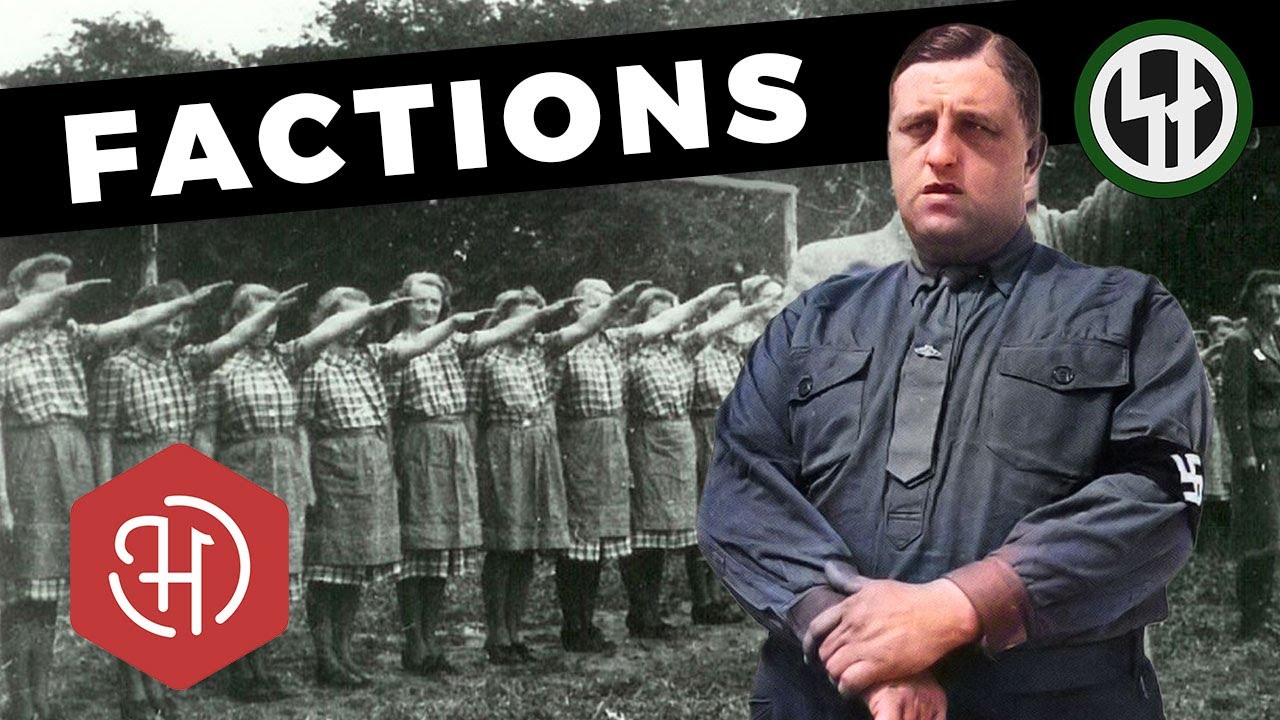
Imagine a Denmark where swastikas fly beside the red-and-white flag. Where Danish men march in brown shirts, giving the Nazi salute, not in Berlin, but in Copenhagen. This was the world of Frits Clausen, the leader of Denmark’s own Nazi Party, the DNSAP. Inspired, almost copied, from Hitler’s Germany, Clausen dreamed of turning Denmark into part of a greater “Germanic Reich. ” But while German troops occupied his country, the Danish people never truly followed him. This is the story of Denmark’s homegrown fascist movement: its strange mix of nationalism and imitation. After WW1 Denmark gained a little piece of Schleswig back from Germany. I say back, because in 1864 the Second Schleswig War took place between, what was back then, Prussia and Denmark. Denmark lost and therefore surrendered control over Schleswig-Holstein to Prussia. As tensions in Europe rose during the 1930s, with Adolf Hitler's rise to power, Denmark proclaimed itself neutral. When Hitler offered the country a non-aggression pact the Danes willingly accepted. But looking at history: Hitler's non-aggression pacts weren't worth that much... The DNSAP (the National Socialist Workers’ Party of Denmark) was founded on November 16, 1930, led by Cay Lembcke (1885–1965). The party was directly inspired by Adolf Hitler’s NSDAP in Germany, even copying much of its program, symbols, and propaganda. It adopted the same anti-parliamentary, antisemitic, and ultra-nationalist ideas, but with a supposed Danish twist. This created a major contradiction: while claiming to defend Danish nationalism, the DNSAP was openly imitating Germany’s Nazi model. Internal conflicts marked the party’s early years until Frits Clausen took over in 1933 and revitalized it, organizing propaganda and publications such as the newspaper Fædrelandet (Fatherland), launched in 1939 with German funding. Political uniforms, brown shirts with a swastika armband were banned that same year by the Danish government. The DNSAP also created the Storm Afdeling (SA), its paramilitary branch, and a youth wing, the National Socialist Youth (NSU). Membership grew from around 5,000 in 1939 to about 20,000 by 1943, drawing recruits from farmers, the middle class, and workers. Politically, the party remained marginal, winning just three seats in the 1939 and 1943 elections. “The Danish Nazi party in the 1930s had, apparently, a membership who, by class and occupation, were a microcosm of Danish society as a whole. Are we to make of this that the DNSAP was a real volkspartei, a cross-class national party, the fascist dream realised? Hardly, when it had a few thousand members at most, and won at its peak 1. 8 per cent of the vote in national elections. The microcosmic character of the membership was, in this case, surely, more chance and coincidence. ” On 9 April 1940 Denmark was invaded by Germany. Also Norway was invaded. After some skirmishes the Danes surrendered within six hours. The quick Danish surrender as well as the fact that the Danes were viewed favorably in the Nazi race views resulted in a fairly 'mild occupation'. Initially. What did this occupation look like? Well, officially the Danish government remained intact. Berlin had opted for a mild occupation in Denmark where the Danish government wasn't overthrown and had room for manoeuvre. However, the Germans did have some demands: Denmark had to conform economically and politically to German hegemony and deliver industrial and agricultural goods to Germany.
Segment 2 (05:00 - 09:00)
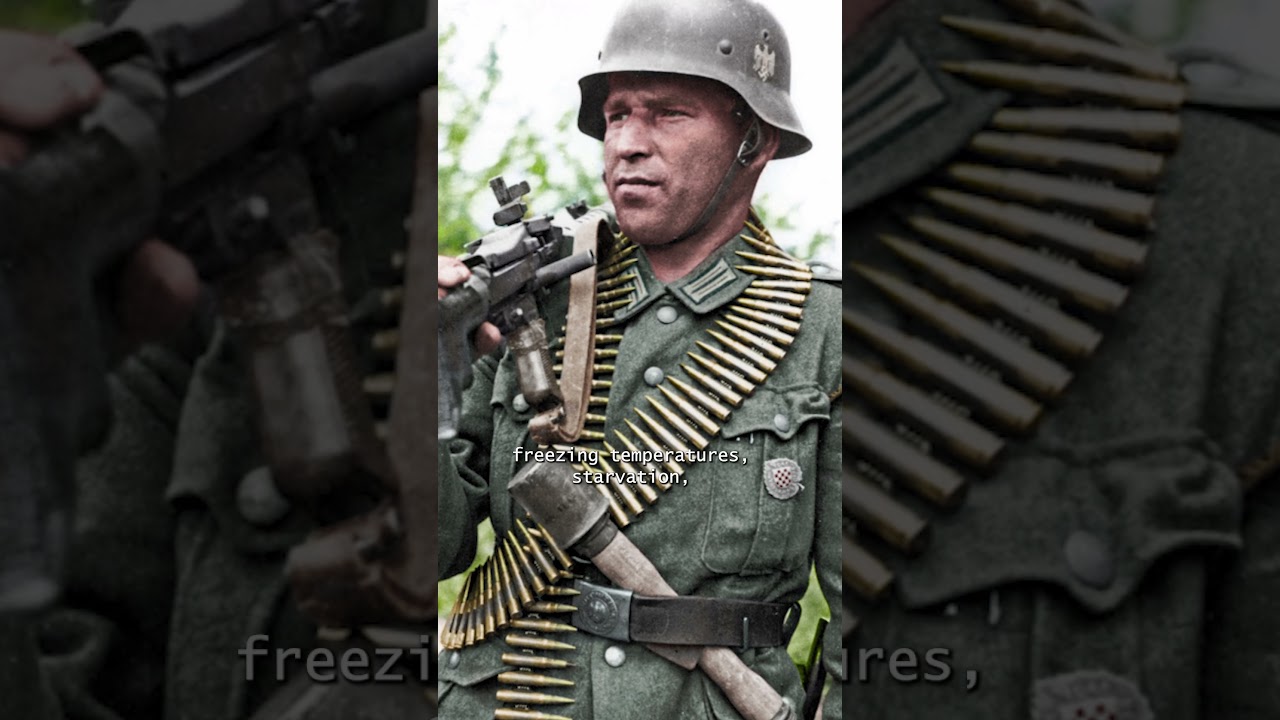
“The Danish experience of German occupation was unique in Europe, leaving negotiations between the two countries in the hands of the respective foreign ministries. In order for this to work Copenhagen, albeit under protest, temporarily accepted German protection (from the British) and was left to govern itself, while Berlin officially acknowledged Denmark’s ‘independence’ and ‘neutrality’. ” In the early occupation years, the Germans offered the DNSAP money and protection, allowing it to expand its propaganda and launch large-scale poster campaigns. In autumn 1940, Clausen pushed for a Nazi takeover of the Danish government, but Berlin refused to help. The Germans preferred to keep Denmark’s existing administration, which ensured stability and steady food supplies to Germany. They didn’t believe the DNSAP could maintain order or productivity. Here you see a more pragmatic side of the Nazis. While the DNSAP was much more, let's just say fully, in line with Nazi principles, the Nazis believed their fellow Danish ideologues would not be capable of ruling a country. Not to mention possible resistance of the Danish population against a Nazi government. Therefore, the Danish government was left intact. Still, until 1942–43, Danish politicians lived in fear that the Nazis might install Clausen’s party by force. Though this threat was likely exaggerated, it served a political purpose: by hinting at support for the DNSAP, the occupiers kept Denmark’s government nervous and most important: compliant. As long as the Danish leaders feared something worse, a Nazi puppet regime, they were more willing to cooperate with Germany. The Germans could make it look like Denmark had voluntarily chosen to join Germany. But, this didn't mean that Denmark had to commit its armed forces to Germany's war in the USSR. So how did the Danish government react to the German attack on the USSR that kicked off on 22 June 1941? Within the Danish government there were heated debates over Danish involvement on the Eastern Front. Do notice that all of the coalition partners in the government, including the Social Democrats, agreed on the point that Bolshevism in general had to be fought. Communism had never threatened Denmark as it had threatened Finland for example, but it was still seen by the majority of the people as a threat anyhow. The Danish communist party was actually allowed to operate legally till August 1941. Internments of communists had already taken place shortly after Barbarossa kicked off. Denmark severed diplomatic ties with Moscow, officially stated it supported the German campaign, joined the Anti-Comintern Pact and set up a commission to support Danish colonizers in the East. And then there was Free Corps Denmark. During the Second World War Danish volunteers came forward to join the Waffen-SS. One week after Operation Barbarossa had kicked off the Free Corps Denmark (Frikorps Danmark) was established as a Danish motorised battalion. Important for the Danish government was that men in this formation had to be volunteers. The Germans asked for conscripts but the Danish government refused this and didn't want to forsake its neutrality, by labeled as a co-belligerent or worse, an ally of Nazi Germany, and thus risk war with the Allies. Christian Peter Kryssing was appointed as the commander of the Danish Legion. Kryssing was a conservative nationalist who did not support the Nazis but was a fervent anti-communist. In July 1941 the first units were shipped to Germany and had to swear an oath to Hitler. This was against what the Danish legionnaires had been promised. Also the men didn't wear Danish but German Waffen-SS uniforms and carried German weaponry. There did exist a Danish flag patch. Learn about the Danish Waffen-SS by clicking right here!