The Hidden Danger Inside Every Candle

The Hidden Danger Inside Every Candle

Machine-readable: Markdown · JSON API · Site index

Поделиться Telegram VK Бот
Транскрипт Скачать .md
Анализ с AI

Оглавление (2 сегментов)

Segment 1 (00:00 - 05:00)

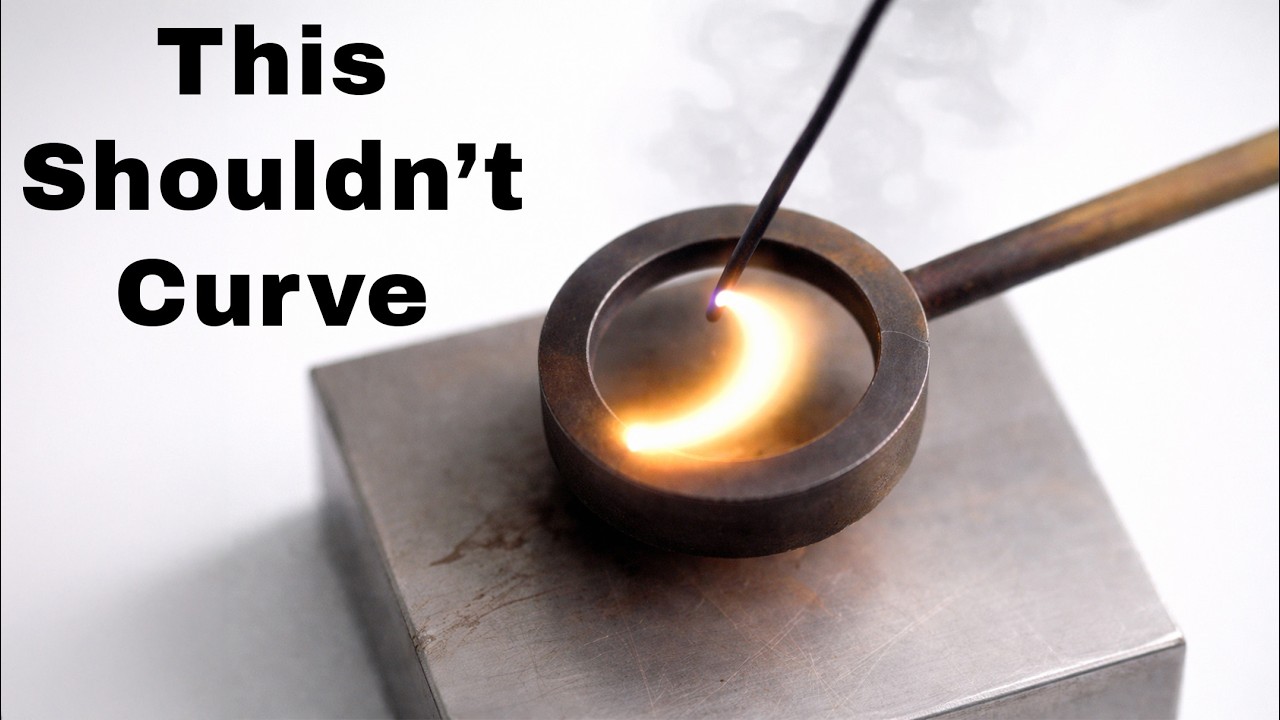
I have some paraffin wax here that I've gotten a little too hot. The safest thing to do would be to dunk the test tube in some ice water that I have in a beaker over here. So, let's do that real quick. What in the world just happened? So, by placing the beaker into cold water, it literally exploded into a ball of fire. And look, my beaker is still intact, still holding hot wax at the bottom. Today, I'm going to show you why hot wax is so dangerous. And I'm also going to solve a mystery that's been plaguing the internet about what's actually happening in this reaction. Oh yeah, and don't try this at home. It's extremely dangerous. Try it at your friend's house first. Just kidding. Don't try this one at all, please. If I asked most people what's burning in a candle, a lot of people would say it's the wick. But that's not actually correct. The wick is really just a fuel delivery system. It wicks up the liquid wax. The wax vaporizes and then the vapor burns. So, we shouldn't be too surprised to learn that wax is flammable, but not in the way you'd expect. You can't just light solid wax on fire. It has to melt and then vaporize before it can burn. It's the wax vapor that actually fuels the flame. This makes it pretty safe to have solid wax lying around. But once you have really hot liquid wax, you enter dangerous territory. If you try to cool it in ice cold water, something surprising happens. It explodes. But why would this happen? This question has been posted all over the internet. Evidently, plenty of young scientists have tried pouring hot wax into water only to discover it explodes. In fact, this is an old demonstration done in chemistry classes for decades. But when you try to find out why, the explanation is surprisingly hard to pin down. Some people claim the wax has an exothermic reaction with water. Others say the glass cracks when it hits the cold water and then the hot wax instantly flashes the water to steam and that sprays wax upward and the wax then ignites from the nearby flame. On Reddit and physics forums, you'll also see people insisting that a flame must be involved for the explosion to happen. So, after I've heated, I've turned off the flame, moved it across the room, so it's nowhere near it can't light it on fire at all. Whoa. And look at that. It still happens. And the test tube is still intact and still holding the wax at the bottom. So, what's causing this explosion and the fire afterward? Well, before we answer that, guess where this power system comes from? Believe it or not, it's an electric toothbrush from today's sponsor, Sucus. These are two items that most people use every day. An electric toothbrush and a water flosser. Now, imagine shrinking a full water flosser and fitting it inside an electric toothbrush. That's exactly what the Sucus Neos 2 Ultra does. So, of course, I had to take it apart and see how they pulled this off. Combining the two isn't that hard. Just look at water pick, but those machines are bulky. The challenge is making it almost the same size as a regular toothbrush. So, here's the body that holds the water. And inside are two main components. This section is for vibration. If I give it a little electricity, it vibrates. But the coolest part is the tiny water system. Inside the bristles is a tiny hole running through the vibration module to a miniature pump. Its volume is only 14. 478 cm. Literally the smallest integrated pump I've ever seen. It uses a small plunger and diaphragm that pushes water up and out the tip with surprising force. See how it vibrates here when I put some electricity on it? And then it'll just shoot out the water. Look how strong that is. Literally like a laser beam. But pumping water is only half the challenge. Traditional toothbrush motors are solid with no room for water to pass. Sucus invented a hollow motor with a 2. 2 mm channel carved straight through it. The motor also provides a 20° sweeping motion that improves coverage and reduces repetitive hand movement. So, the result is a vibrating tip that sprays water at 0. 55 mm with 124. 3 PSI, strong enough to clear debris between teeth. Just fill it with water and it starts jetting instantly. It looks simple, but the engineering inside is next level. If you want to try out the Sucus Neos 2 Ultra, you can click the link in my description for a special holiday season sale. Now, let's get back to our experiment. So, let's look at this explosion one more time. There's no flame nearby, but suddenly after the test tube hits the water, a white mist comes off the top and then a fireball forms at the top. This tells us the most important thing. If this were a chemical reaction with water, the fire would start at the point of contact with the water, but it doesn't. It happens at the top. That's where the wax vapor has mixed with the most oxygen. The boiling

Segment 2 (05:00 - 07:00)

point of paraffin wax is about 370° C. But the auto ignition temperature of wax vapor is much lower around 225 degrees C. That means that once wax is hot enough to boil, it automatically has enough energy to ignite itself. No spark or flame needed. So the only thing stopping it from burning inside the test tube is the lack of oxygen. But as soon as enough oxygen mixes with that super hot vapor, it can auto ignite instantly. So you don't even need a spark to ignite extremely hot wax. You just need wax vapor and enough oxygen. That's actually a little bit scary. But we still haven't answered why the hot wax sprays upward in the first place. Well, if you look closely at the glass after the experiment, even on the test tube that stayed intact, you'll see that it's full of tiny cracks. These hairline cracks leak thin jets of wax into the cold water. When that super hot wax suddenly cools and solidifies, it releases enough heat and traps enough steam to flash boil the water around it, that rapid expansion of steam blasts the hot wax upward in a fine mist. And once that mist reaches the right mixture of oxygen and wax, it ignites. So even though it doesn't always look like it, if there's an explosion without spilling the wax, that means that the glass has cracked. Sometimes the cracks are obvious, but most of the time they're just tiny, hard to see actually. And because they're easy to miss, a lot of people online assumed their glass never cracked and blamed something else. Also, if you just pour hot wax on water without the test tube, it'll do the same thing. But the interesting thing is that I never got a fireball by just putting hot wax on water. Only with the test tube did I get the fire. The test tube seems to be perfect for letting in just enough water to flash the wax into vapor and launch it into the air. But if you do already have a flame present, like on a burning candle, and you pour water on it, then you can get a fireball. — That's why you never pour water on a burning candle. And thanks for watching another episode of the Action Lab. I hope you learned something. If you haven't subscribed to my channel yet, remember to hit that subscribe button and we'll see you next time.

Другие видео автора — The Action Lab

Ctrl+V

Экстракт Знаний в Telegram

Экстракты и дистилляты из лучших YouTube-каналов — сразу после публикации.

Подписаться

Дайджест Экстрактов

Лучшие методички за неделю — каждый понедельник