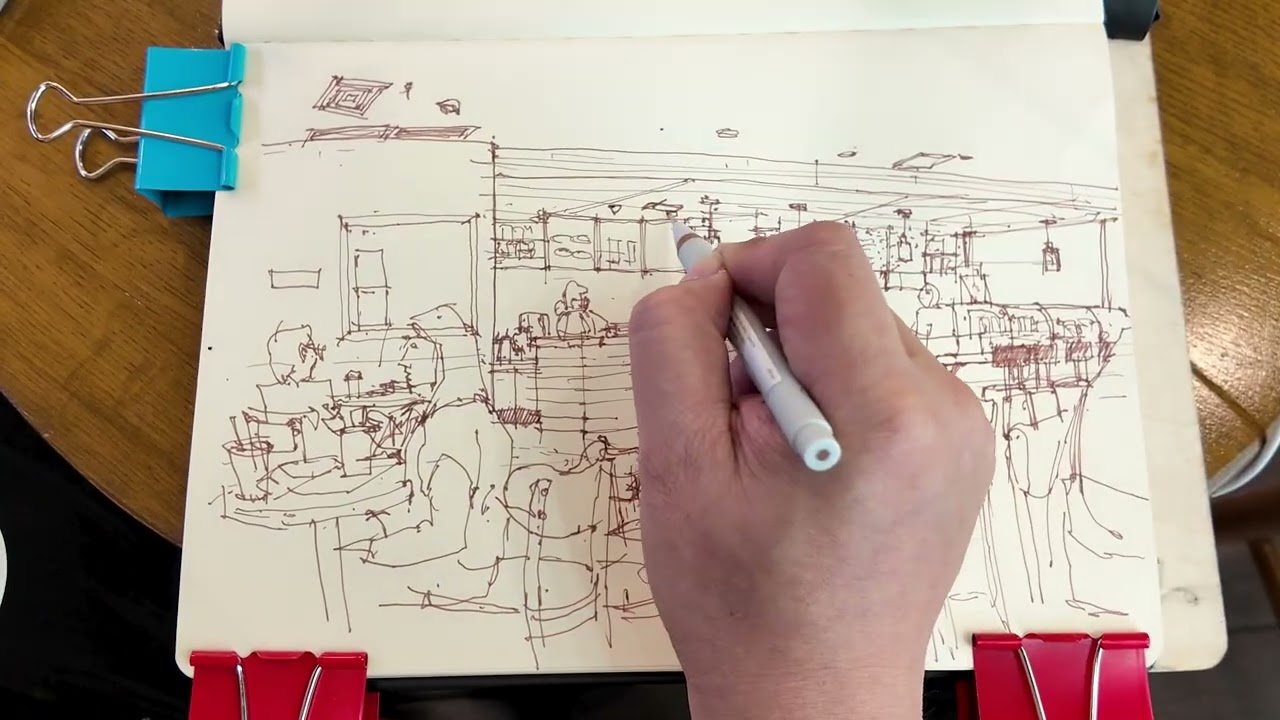
Direct Exterior Perspective Drawing

Direct Exterior Perspective Drawing

Machine-readable: Markdown · JSON API · Site index

Поделиться Telegram VK Бот
Транскрипт Скачать .md
Анализ с AI

Оглавление (7 сегментов)

Segment 1 (00:00 - 05:00)

I will demonstrate the perspective drawing freehand perspective drawing is very useful when you are making uh iterations visualizing it for the first time no on paper so basically um what we have here for the floor plan is 9 M by okay so we have something like this that's so 13. 5 so 9 by 10 so it's 6. 5 here and then the total enti I think is 13. 5 2. 5 here and the rest is uh 3. 5 front door is somewhere here okay here is 5. 5 okay basically it's the same except for the carport no the floor on the second floor is something like this now right so I will assume the dimensions for the levels no so we have the or natural ground line and then we have uh a level up something like uh o at least. 5 M right before let's say the know the uh entrance of the house have to be porch somewhere here so let's level to the to this one 3. 5 M by 5. 5 by three we never have the front door going directly out to the NGL we have a reg usual 2. 7 ceiling another 300 500 mm or5 M so this is two 2. 7 FFL of the ground finished floor L9 so this is like 3. 2 m to the second floor and then another 2. 7 but here to the ceiling right here okay 2. 7 usual actually it could be lower but the this one's usually uh 3 plus met okay let's just say three bigger ah let's make it 3. 5 so this one is 3. 2 M Roofing we have a gutter somewhere there this is roughly about 1. 2 M at least from here the eaves to the uh topmost and say three meters 3. 0 so we have these Dimensions so when you come up with a general sense of the perspective uh grid what's the second line so this is 100% And then Horizon yes so here we can always um again know simplify that you know somebody who is probably short person with a 1. 5 meter simplif it again like K uh we measured someone's eye level to be 1. 56 very exact no but here we're rounding it off so that it's just a little tiny bit different but this is same no I level is all um it's the usual thing that we need to keep to do all of this okay so the percentage okay so if we this is our level zero in a 100% line say we usually would have the vertical line again I'm going to yeah this is the 100% line now we have these Dimensions so the closest thing that I could I probably simplify is the 10 mters and then the this one to be nine so it's almost a square so I'm going to take this I'm going to subdivide this into three okay again know importance of uh having proportion as your guide every time now I can do this even without any scale not using any scale I meaning to say I'm making up this as my reference can make up scales like um can take an ordinary receipt and use the edge as a ruler if you don't have one so we take this is our third meter three because this is again no 1. 5 m / by three equal parts this is one and then if we subdivide this into this these are the numbers so two three and the like no so but then this is telling me that this is too big because I need something like uh 10 m it won't fit the board so what do I adjust make it smaller I use a smaller scale because this is not going to work so I'm going to get

Segment 2 (05:00 - 10:00)

it happens I mean like from the very start you you need to establish the correct um Ser scale so I'm making it smaller and I'm going to Peg it here like Oh My 1. 5 M okay now I subdivide this into three equal parts we know how to subdivide uh this is three right you can use your fingers to just establish what exact as a scale okay again a proportion is a key not necessarily just uh you have to rely on a scale Ruler all the time no so what do we have here so level zero one 2 3 is it the same yes there 3 4 five so take your Dimensions 6 7 8 9 and then 10 Dimensions okay you can go up to what whatever space that you have either it's a bigger paper or not now this is the key thing no okay we have here 40% okay what is 40% of 10 m take the four right I can if you're finger measuring these things you can what you can do is you take two and this is the dimensions for the width of the side no of this one this is so this is times 40% no 40% here of this one measurement what's here how many perc for the front 80% okay 80% of 9 7. 2 okay I can take 3. 5 right this one seven slightly here yes and you do a vertical line for the vertical wall uh Edge vertical edge of this so we have all this okay what's the total height of this including the ground well we'll start with the NGL but what is this total 10 two no um so this one only plus three okay so all in all the total here until the rooftop Edge okay so we have this and then we have uh 80% of 1. 5 is 1. 2 we establish the ground level zero 1. 35 what am I doing here is that different though 1. 35 because it's 90% of 1. 5 and we can establish now the ground base for the NGL in perspective okay so let's just say that you're assuming that everything here is flat oops so I'm here I'm doing all this so we have this and then what is the height here that we need total is 10. 2 so I can assume the met just run it off to 10 m what is 80% of 10 m eight yes of course so eight is here then there's a slight difference like a 1/4 of the way and if I line it here it's huh and then this one from that to here my trajectory of this volume box volume and if I do a straight line they're supposed to meet at one a vanishing point somewhere here and it looks to be correct now this is going to be out of paper

Segment 3 (10:00 - 15:00)

but you there always be a your VP what is this why VP why okay so the formula again if uh and uh we always have to remember this formula with the percentage of the per perspective grid that we want no and then here what is the percentage over here is 90% okay what is 90% of nine but slightly very slightly down here because of this my difference style cuz it is slightly up by15 here therefore par slightly down I'm basing it here if you you're using a scale this is nine up to here but they're not leveled right they're not supposed to be this is the second trajectory of this box volume that we're trying to do no which is what it is though so we have it here I know you can do all the grids again like we did from last week but I'm just going to simplify all of this okay so what is the porch level5 where's Five here should so I'm going to do a bit of lettering here porch and then this is n g l I'm going to place in some letterings here so that we are not confused where it is what it is uh and then what is the uh this the floor level 3. 7 is somewhere here 3. 5 is here 3. 75 is there something to that no again no you always have this trajectory that we need to create what is this then therefore it I could assume that this is the second level okay so second floor second flr not to be confused no that we don't confus and then plus three how do we do that one two and three somewhere there this the third and then it's the rest is the volume of the roofing so these are just levels okay so the box is just the control of uh rules of perspective what do you call this um and here how do you know well thing is if Okay so this one is like wrong has to L like this and it goes to Vanishing but so far away here goes all the way here all of the paper so it's not possible for you to exactly know where it is now but uh we're operating with this just framework of the where these are okay now we have this okay so this is what we're talking about here we have the 10 meter by 9 meter okay this is the Box right so the uh EES actually are here these are the EES okay so this level roof okay so this is but then how do we do the 1. 2 M all around okay so we can imagine this second floor Phantom line where the let's just say where the gutter is roof line 1. 2 M right all around right how do we extend now we can always assume that this is 1. 2 M right one but two oh if I draw this line axis along what is parallel to what which axis why so we could assume that right how do we know that if we offset something like a line like 1. 2 offset we don't concentrate on the corner of the roofing we don't do thisd we don't have references right so

Segment 4 (15:00 - 20:00)

what do we do here we extend these lines corner outwardly by one well you first draw the references so I'm going to do this dotted Lines no but when where do you know does it make sense along corner of the roofing oh actually he that but okay let's just say that this is going like this because I'm you have to look at the parallelity in perspective no you can do that with your grids okay you if you already had created the but the principle here is really all about if it looks right or not it's up to you no you have to decide so here extend 1. 2 met here we're going to extend the roof no so basically this is what we we're trying to do here we're trying to extend this if perspect in perspective this two lines and if they intersect you know the corner of the roofi the overhand okay we're that's what I'm trying to do here so here this is what I'm going to do I'm going to take an assumed 1 M right correct 1. 2 m is somewhere there correct I'm going to take that Dimension I'm going to put it here and then boom okay this is the trans Cession point of where the roof e is supposed to be now here I'm going to go that imaginary vanishing point somewhere off way and then extend that boom what about the next one well the next one is really okay from the vanishing point here trajectory here going this way other way but that's not the where the point is that's just the assume 1. 2 M now what about that one what are you going to do see again I'm take 1. 2 slightly 90% of it and measure oh that's the same thing what about this one the other side here and then from this transition Point vanishing point Y VP right VP y transition Point connect those two lines right and plots and then if these two intersect that's the corner of the gutter of the roof okay here how do I assume that uh yeah this one is going to be here 1. 2 slightly that get this trajectory from here to here and draw line going to vanishing point Y and then extend these two lines where they meet is the corner of the roofing okay what about this one again I extended that they hit but then what about the other part here so I'm going to uh assume that this is going through like that trajectory here 80% of uh 1. 2 I know okay so there's a bit of guessing here okay not this is what it looks like okay so I'm going to erase some of the lines so that you would see what I mean those are the roof Eaves this one is going that way pay attenion to the angles where the vanishing point is supposed to be and these are the three seen roof e so we this is rectangular okay so what about the rooftop um what is the shortest here if I draw a half the angle of a 90° which is

Segment 5 (20:00 - 25:00)

45° right and then here it's this is longer so therefore there's a one meter difference between these two 1 M now we only need to look and find this points where are they these two points in the topmost of this what is then therefore 1 M this is fifth meter this and then I would uh if I place in these lines and this corresponding intersections would be each a meter so this is 2 m what is halfway of this you could you could subdivide this into half oh the halfway of this one is going that way and then I go up and put it there the other one is going this way which is one meter apart right no line halfway about half of this way is so the therefore these two lines are the this one which is 1 M we if we have these four corners in perspective and if we trajectory that and then hits the topmost this vertical and we go and do it here like this and then these two points we trajectory here we find the these two already what is this two points you the location of those two the apex of the roofing the gable roof and therefore we can connect these four to this that one going that one this one going here so the the one that you're seeing if I draw this correctly is the cutter roof right but these are all plotted accordingly so then the rest so we have here 10 m this one is going 1. 5 okay 3. 5 uh this is how many white 9 M uh if you remember how you subdivide into three equal parts remember that oh okay sorry about this I do a vertical line and then do an A intersections among this is you these are the three 9 M so you're parking carport is somewhere here second line second floor line is here okay that's a level there somewhere there and then the ceiling line is somewhere right here ceiling line is 2 3. 2 m is somewhere there here and then the corner of the building okay so this is edge of this it's going this way okay this Falls vanishing point one y it's going to Y and then the wall here Edge is about 2. 5 it's not exactly 3 m see this is exactly 3 mters but so you can slightly off this and this could be column and this is what it looks like if it's a column to the ground floor okay so this is the level of the another porch and how do you extend 3. 5 M for the porch how do we do that you can always take uh 3. 4 M somewhere here what is this uh 5 m right and then we have our four M and four m is something like this and then if we trajectory here 4 M like this 3. 5 it's supposed to be bigger than a 3. 5 if you measure

Segment 6 (25:00 - 30:00)

the 3. 5 here this is slightly larger longer and therefore this is the corner of the porch it's extended right that's the edge of the building the second floor the carport empty ba my balcony so the balcony is here and if this is 3 m all the way there and therefore parang uh subdivide into three equal parts this is the 1 M Mark and this are the where the balcony is if we take this proportion a person would be something like standing behind the railing this very wide though supposed to be smaller 1. 5 ey line uh eye level here it's actually even shorter because you're further down that so it's like this proportion wise now we have to look for this one where is it in perspective this corner Edge so what do we do okay we need uh roughly about 2. 5 M uh down half of this is there I'm assuming that oh let's just eyeball it here 2. 5 because of the proportion that I took from here this is 5 m you halfway 2. 5 farther away slightly smaller so therefore along the lines going there and that's the 2. 5 Edge there's Edge therefore roof here then Edge simplified right okay here we already established where this is and then from here to this corner it extends again no your vanishing point matter where you where your these trajectories are are happening here it extends 3. 5 M away from here from the vanishing point trajectory right it's slightly very slightly huh you can see the surface of the steps of the um balcony because you are only very slightly huh don't exaggerate okay so the rest just assume here since it's farther away let's say uh 90% of that so the edge and you put it here so everything is really dependent on the percentage know house a bit more if you're not sure make it like now 80 to 90% smaller right or 10% bigger if it's closer to uh some uh closer to the viewer so you're assuming all of these things assumptions intelligent assumptions of what perspective the plotting is so it's 38 minutes of me plotting the entire thing um but with talking explaining all right so what about the rest I mean what about all the windows and all the like no so it's really easily to for you to assume like say 1 M minus 90% where's the door somewhere this is the edge of the um uh edge of the front of the house you take this one meter of the door somewhere here slightly of 90 de uh 90% only and then 2 met 2. 1 somewhere there and this is the front door okay front door no 2. 5 cuz 2. 6 actually it's because it's slightly uh higher by5 so it's 2. 6 level so here you can see all the you can start doing all the details it's aligned and on the door it's really what's here do you have Windows what's there living room okay it's pretty wide so there are opportunities for Windows like this High okay so it gives you context of the scale and the proportion of the form right and you can easily just place in the windows and room half way okay so level I mean

Segment 7 (30:00 - 34:00)

like the rest is you know it and then you start doing all the details but tier again is a Quee of all the projections the xyz's no in perspective is relative to everything that whatever you draw which line is related to each other proportions angles vanishing point percentage right proportion see if it's farther away it's slightly smaller assume 80 to 90% uh if it's closer it's about 110 to 120% of the dimensions increase a bit no okay and of course how do you know I mean like for example uh I need a pathway like uh it's 3 m from the porch Line Take 3 m assume 10% go this direction managing point we take the three m 3 m is there and a slightly more and this is alongside along X and this is the property line so that's how we can get here this is 3 m to here because of this the grid that we and how what about the the walkway usually 1. 2 or 1. 5 M so I take half of this and this line can if it's a 0. 1 M from the curb is 1. 1 M from the road and this is the road curb and here my driveway Drive way is from here trajectory again no from the vanishing point you always refer to a vanishing point if it's in linear no so each time vanishing point all the time XYZ I mean like sometimes you know you make this B big mistake you just draw it whatever if the line's going that way it's not going to the managing point then it's wrong correct if the this line is not going to the van here it's the wrong direction adjust accordingly so here like that it's how it looks okay everything is this system of freehand rowing can be achieved the lecture architect Mario valderama before when I was listening in 15 to 20 minutes I was not I was skeptical about it I mean like it takes me hours to do it but by the traditional uh way of doing things right but here he says you know that Prospect of a 15 minute to 20 minute uh plotting method that is as accurate somehow is possibility okay yes it can and I have proven it and as formula actually stays true as I said no before so now the rest is up to you to detail I remember our interior perspective uh exercise you know I I would like to see those details and uh yeah but I'd like to see the first layers how you plot alongside this it's going to be freehand you have already in a grid of sorts no like this normal View and you could see the dimensions right rough drawing first like this and then a cleaner Sheet later on to do the final lines so there's no I don't want to see you wasting time a lot of um by doing a lot of erasing when you make a mistake X more that this is rough throwing well that I probably later the questions come in uh you can ask me exactly how these things are but uh yeah this is for tonight I'd like to see the rough initial form of your designs okay so I guess based on your floor plans and I would like to see a this level in the meantime

Другие видео автора — Arlegui

Ctrl+V

Экстракт Знаний в Telegram

Экстракты и дистилляты из лучших YouTube-каналов — сразу после публикации.

Подписаться

Дайджест Экстрактов

Лучшие методички за неделю — каждый понедельник