99% of Heart Attacks Had This Prior Warning
14:06

99% of Heart Attacks Had This Prior Warning

Dr Brad Stanfield 01.05.2026 47 984 просмотров 2 269 лайков

Machine-readable: Markdown · JSON API · Site index

Поделиться Telegram VK Бот
Транскрипт Скачать .md
Анализ с AI
Описание видео
🩺 Get your personalized health plan: https://drstanfield.com 💊 Supplements I Take: https://drstanfield.com/pages/my-supplements 💊MicroVitamin+ (Pro) Powder: https://drstanfield.com/products/microvitamin-plus 💊MicroVitamin Standard Capsules: https://drstanfield.com/products/microvitamin ✔️ X: https://x.com/BradStanfieldMD ✔️ Patreon: https://www.patreon.com/bradstanfieldmd Timestamps: 00:00 The SMURF-less Phenomenon 02:27 New Approach to SMURF-less Heart Attacks 03:59 The Contradiction Between Two Bodies of Research 07:41 The Methodological Gap 10:25 The Empowering Interpretation of the Data 11:12 The Real Villain in the Story 13:03 The Importance of ApoB Testing Here are the links to the research papers referenced in the video: https://pmc.ncbi.nlm.nih.gov/articles/PMC7237076/ https://pubmed.ncbi.nlm.nih.gov/36179904/ https://pmc.ncbi.nlm.nih.gov/articles/PMC6898813/ https://www.jacc.org/doi/10.1016/j.jacc.2025.07.014 https://pubmed.ncbi.nlm.nih.gov/34450083/ https://www.ahajournals.org/doi/10.1161/01.hyp.34.1.51 https://www.journal-of-cardiology.com/article/S0914-5087(23)00286-1/fulltext https://www.tctmd.com/news/risk-factors-present-nearly-all-patients-who-develop-cvd https://en.wikipedia.org/wiki/Jim_Fixx https://www.recordonline.com/story/sports/2004/08/25/runners-heed-cholesterolcounts/51131216007/ https://time.com/archive/6855620/medicine-why-joggers-are-running-scared/ https://www.upi.com/Archives/1984/07/23/Running-guru-Jim-Fixx-who-collapsed-and-died-of/2268459403200/ https://www.si.com/track-and-field/2020/05/21/jim-fixx-legacy-running-coronavirus https://www.ahajournals.org/doi/10.1161/CIR.0000000000001423 https://jamanetwork.com/journals/jama/fullarticle/2847303 https://www.hcplive.com/view/expert-insights-lp-a-and-apob-in-the-2026-dyslipidemia-guidelines Thumbnail by James Kelly Video edited by Troy Young Script by John Milliken The links above are affiliate links, so I receive a small commission every time you use them to purchase a product. The content contained in this video, and its accompanying description, is not intended to replace viewers’ relationships with their own medical practitioner. Always speak with your doctor regarding the content of this channel, and especially before using any products, services, or devices discussed on this channel.

Оглавление (7 сегментов)

The SMURF-less Phenomenon

On July 20th, 1984, Jim Fixx, the man who's best-selling book on running had inspired millions of Americans to get in shape, dropped dead of a massive heart attack during his daily run on a quiet Vermont road. He was 52. He had quit smoking, he'd lost 60 lb, and he ran 10 miles a day. It's the kind of story that makes us all quietly wonder, is it possible to do everything right and still have a heart attack come out of nowhere? And for a long time, the research seemed to say yes. Between 11 and 23% of the most severe heart attacks occur in people with none of the standard documented risk factors. So, no high blood pressure, no high cholesterol, no diabetes, and a non-smoker. So, that number was alarming enough that cardiologists gave it a name called the Smurfless phenomenon. But, a major new study of more than 9 million people just dismantled what we thought we knew. And the way that they did it revealed something important about how we've been approaching heart attack risk all along. So first, let's take a look at the scary finding seriously, because it comes from real research published in credible journals, and it's genuinely alarmed the cardiology community. In 2023, researchers pulled data from 15 studies covering more than 1. 28 million patients who had experienced a heart attack. And what they found was that 11. 6% of those patients had none of the four standard modifiable risk factors. So again, no high blood pressure, no high cholesterol, no diabetes, and they were a non-smoker. In Australia specifically, that number climbed to as high as 23%, and then there's a troubling twist that made all of these findings harder to ignore. The patients who had no documented risk factors didn't do better after their heart attacks. They did worse. So, the short-term death rates were higher in these Smurfless patients compared to those who had traditional heart attack risk factors. And the working hypothesis was that these patients were flying under the radar of preventative medicine. They weren't being treated with cholesterol-lowering medications or high blood pressure medications, because it appeared that they didn't need them. And so they arrived at the hospital in worse shape. And the implication of this was uncomfortable. If up to nearly of the most severe happen in people with no detectable risk factors, maybe our entire preventative care framework was missing something. Maybe heart attacks really could come out of nowhere. It's an idea that Jim Fixx explicitly rejected. He was confident that if a person didn't smoke and exercised enough, heart attacks were essentially ruled out. And sadly, his own story proved that he was wrong. But, was Fixx just an unlucky outlier, or was something hiding in plain sight?

New Approach to SMURF-less Heart Attacks

Recently, a team led by Dr. Hawk-Kyu Lee at Yonsei University in Seoul decided to approach the question of these Smurfless heart attacks from the opposite direction. Instead of looking at which risk factors patients had documented by the time that they arrived in the emergency room, they looked backwards. They tracked people through the years of repeated health examinations before any cardiovascular event occurred. And the scale of the study is remarkable. They drew on two independent cohorts. So, the Korean National Health Insurance Service database, which covers essentially the entire South Korean population, and the Multi-Ethnic Study of Atherosclerosis, which is a long-standing American cohort. And together, that's more than 9. 3 million people followed up for more than 13 years in Korea and 19 years in the US. And across those years of follow-up, over 600,000 cardiovascular events, like heart attacks and strokes, occurred. For each person who had a cardiovascular event, the researchers went back through all of their available health data. So, every recorded blood pressure reading, every cholesterol measurement, every glucose test, every documented smoking history. And they asked, "Did this person ever have a non-optimal level of any of these four risk factors at any point in the years before the event? " And here's what they found. More than 99% of people who had a first heart attack had at least one non-optimal risk factor beforehand. This was consistent across both countries, consistent in men and women, consistent across age groups from under 60 to over 80. And there wasn't just one risk factor hiding in the background. More than 93% had at least two. So, we've got

The Contradiction Between Two Bodies of Research

two bodies of research telling us the opposite thing. One says that up to 23% of serious heart attacks happen in people with no risk factors, but the other says that more than 99% had at least one. So, both are published in top journals, and both use large data sets. So, how could they possibly both be right? Well, here is where the detective work gets really interesting, because the disagreement between these two findings isn't really a scientific contradiction, it's a methodological one. So, the two sets of studies are answering different questions. The standard Smurfless research, so they asked, "Did this patient have a clinical diagnosis of a risk factor? " That means, were they ever told by a doctor that they had high blood pressure? Was high cholesterol ever written in their chart? Did they have a formal diabetes diagnosis? That all sounds reasonable, but there are two massive problems with it. The first is under-diagnosis. So, getting a clinical diagnosis requires that you've seen a doctor, that you've been screened, and one of your readings has reached a threshold where you can now be classified with that diagnosis. In the real world, though, that doesn't often happen. So, around half of those with high blood pressure, so the single most common modifiable risk factor for cardiovascular disease, they have not been diagnosed. Low diagnosis rates for high cholesterol and diabetes are also well documented. So, if your blood pressure has been quietly running at 138 on 88, for instance, but you've never had it flagged, you'd show up in the Smurfless data set as no hypertension, but you did have high blood pressure. The second problem relates to the threshold that the researchers selected to define risk. So, cardiovascular risk, it doesn't have an on-off switch. These risk factors operate on continuous, cumulative gradients, meaning that the damage accumulates even at levels that fall below clinical diagnosis thresholds. A blood pressure of 126 on 82, for instance, is not clinical hypertension by any guideline, but it is elevated above what the American Heart Association considers optimal. It can promote plaque buildup in the arteries. And if you've had it for 15 years, that's 15 years of the cumulative vascular damage that wouldn't show up in a Smurfless study, because you were never officially diagnosed. In fact, the thresholds used in the Smurfless literature, they've often been high by current standards. So, this study in the Journal of Cardiology defines hypertension as blood pressure of 140 and above. This is exactly why this new study that we've been looking at used stricter cutoff points derived from the American Heart Association's Life's Essential 8 framework. So, these targets are associated with ideal cardiovascular health, not just the thresholds that trigger clinical treatment. So, non-optimal blood pressure is defined as a systolic blood pressure, so that's the top number, of above 120. A diastolic blood pressure, so that's the lower number, of above 80. Non-optimal cholesterol is total cholesterol above 200 mg per deciliter. Non-optimal fasting glucose is 100 mg per deciliter or above. And past or current smoking counted, not just current. So, as Dr. Lee put it plainly, he said that when they looked closely, these early reports of risk factor-free heart attacks might have actually reflected missed risk factor diagnoses or risk factor levels that were non-optimal in terms of cardiovascular risk. Since many of these with risk factors have continuous, rather than a yes or no relationship with the risk of developing cardiovascular disease. And when they were asked about these striking results, Dr. Lee pointed to the consistency. So, he said, "Surprisingly, the results were almost identical between the Korean and the US cohorts. That consistency across very different populations and very different health systems makes our findings especially strong. The two literatures, they are not conflicting each other. What they're answering are different questions. Was the patient diagnosed versus did the patient have exposure? Different questions and very different answers, which brings us back

The Methodological Gap

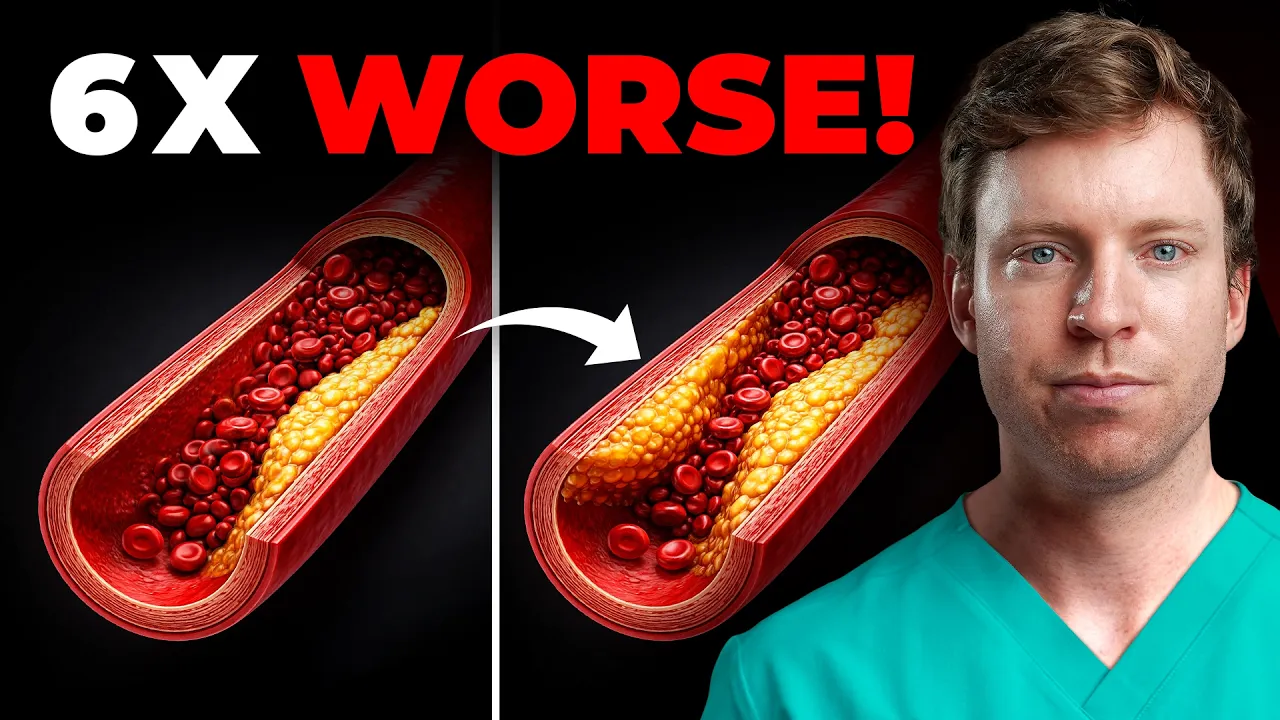
to Jim Fixx, because his story turns out to be an almost perfect case study in this methodological gap. So, a Smurfless study conducted at the moment of his death might have coded him as risk-free. He'd quit smoking 17 years earlier, so he was a non-smoker. He wasn't a documented diabetic, and he wasn't formally diagnosed with high blood pressure. It looked like a clean bill of health, at least with three out of the four standard risk factors. But, if we apply the new study's methodology, the picture is completely different. Fixx was smoking two packs of cigarettes per day when he took up running at the age of 35, and he weighed 214 lb, significantly overweight by any standard. His father had died of a heart attack at age 43 after a first 35. A family history of premature cardiovascular disease that should have put him in a high-risk category. Then there was the fourth traditional risk factor. His total cholesterol was above 250 mg per deciliter, which is well above the 200 mg per deciliter non-optimal threshold, and elevated even by clinical diagnosis standards. And his autopsy confirmed that all of this might have been predicted. One coronary artery was 95% blocked, a second was 85% blocked, and a third was 70% blocked. And there's one more detail that makes Fixx's story particularly striking. So, in December 1983, 7 months before his death, he visited the Cooper Aerobics Center in Dallas. So, Dr. Kenneth Cooper, the pioneering exercise physiologist and Fixx's personal friend, urged him to take a cardiovascular stress test, but Fixx refused. Cooper was haunted by this refusal. He told reporters afterwards that he adamantly refused, and it stands out in my mind now. I don't know why he refused. Maybe he had an underlying feeling that he was ill. Friends and family also reported that Fixx was complaining of chest pains during his runs in the months before his death. And when physicians looked through his records, these may have been angina episodes. And Fixx's own journal entries, recovered after his death, reveal his denial at work. So, that spring, just months before his fatal run, he wrote, "My neurotic blood pressure anxieties, occasioned by feeling intense these past 2 months, are apparently without foundation. Maybe the problem is nothing more than being hypochondria. " A cardiologist commenting on this case at the time, put it bluntly, the second most common symptom of coronary disease after angina is denial. Fix had at least three silent heart attacks in the weeks before his fatal one, according to his autopsy. Jim Fix did not lack risk factors. He lacked detected risk factors, and he actively avoided medical engagement that would have found them. His story is not about the failure of healthy living. It's about what happens if you assume that the visible transformation, sorry, the weight loss, the cut out cigarettes, the miles run is the whole story. And here's

The Empowering Interpretation of the Data

what genuinely struck me about this data, because I think the correct interpretation is empowering, not frightening. If cardiovascular events are nearly always preceded by detectable non-optimal risk factors, if the 99% number holds across 9 million people in two different countries, then the scenario of a heart attack truly coming out of nowhere in someone with long-term optimal risk factor levels is vanishingly rare. It's not common. It's not increasing. It's rare, and that's good news. It means the framework for prevention actually works when it's applied correctly and early enough. The key words here though are early enough. The damage from non-optimal risk factor levels accumulates over the years and decades, and the new studies data proves this by tracking people longitudinally, rather than catching them at the moment of a crisis. As Dr. Nathan Wong, who

The Real Villain in the Story

directs the heart disease prevention program at UC Irvine, he put it when commenting on the study, "The problem is that we practice reactive medicine, rather than preventive medicine, and that is the real villain in the story, not heart disease itself, but the way clinical medicine waits for risk factors to cross treatment thresholds before acting. That is the model that is structurally too late. The goal is to keep it optimal, so below 120 on 80 for as long as possible. Now, for older adults, we may accept slightly higher blood pressure readings to make sure that they don't feel faint or dizzy. It's not to get your LDL cholesterol below 100. In my view, it's to get it below 55. To manage your weight and blood sugar levels, to use medications like tirzepatide if needed. All of that is a higher bar that most clinical practice doesn't quite aim for, but to me, that is the bar that the data actually supports. But there is a catch here, because even if your LDL cholesterol looks fine on a standard blood test, there's a reason why it might be misleading you. LDL cholesterol of greater than 55 mg per deciliter is a real threshold, and it captures a lot, but it's a blunt instrument. What actually drives atherosclerosis, so that's the process of plaque building up in your arteries that eventually causes a heart attack, isn't cholesterol mass. It's the number of atherogenic lipoprotein particles, and each particle that can penetrate our blood vessel walls and deposit cholesterol has a tag on it, and that tag is called apoB. That is a direct count of all of those particles, and the main problem of a standard blood test that most doctors use, so LDL cholesterol, is that it measures cholesterol content carried by those particles, not the number of particles themselves. And those two things can diverge significantly, particularly with those who have got metabolic syndrome, insulin resistance, or elevated triglycerides. So you can have an LDL cholesterol that looks fine, but when you test your apoB, your apoB comes back high. Clinical medicine in

The Importance of ApoB Testing

the past has been slow to adopt apoB testing because of concerns around cost-effectiveness. Adding apoB at roughly doubles the cost of a standard lipid panel. So is it really worth measuring something beyond the standard panel? Well, the argument just lost its last leg. A study just published in JAMA models 250,000 statin-eligible adults across their lifetimes and compared three strategies for deciding the intensity of lipid-lowering therapy. They looked at using LDL cholesterol, non-HDL cholesterol targets, or using apoB strategy produced the most quality-adjusted life years, and it was highly cost-effective. And the 2026 guidelines have now formally incorporated apoB into its recommendations for the first time in a major US guideline, particularly for patients where LDL cholesterol may underestimate true risk. And one of the most powerful tools that we've got for controlling our cholesterol levels is tragically underused. So in this next video here, I'll show you the remarkable story about how it was discovered and the data about how big an impact it can make.

Другие видео автора — Dr Brad Stanfield

Ctrl+V

Экстракт Знаний в Telegram

Экстракты и дистилляты из лучших YouTube-каналов — сразу после публикации.

Подписаться

Дайджест Экстрактов

Лучшие методички за неделю — каждый понедельник