🩺 Get your personalized health plan: https://drstanfield.com
💊 Supplements I Take: https://drstanfield.com/pages/my-supplements
💊MicroVitamin+ (Pro) Powder: https://drstanfield.com/products/microvitamin-plus
💊MicroVitamin Standard Capsules: https://drstanfield.com/products/microvitamin
✔️ X: https://x.com/BradStanfieldMD
✔️ Patreon: https://www.patreon.com/bradstanfieldmd
Here are the links to the research papers referenced in the video:
Exenatide history (Eng's mail-order venom) — https://peptideinitiative.com/peptide-chronicles/exenatide
Gila monster feeding pattern — https://www.zmescience.com/ecology/animals-ecology/gila-monster-ozempic-origin/
Raufman NIH "fishing expedition" — https://whyy.org/segments/ozempic-how-gila-monster-venom-led-to-weight-loss-drugs/
Exenatide / Wikipedia (Yalow training, exendin-4 isolation, VA patent refusal, 3 years rejection, Holst quote, Amylin licensing) — https://en.wikipedia.org/wiki/Exenatide
Exendin-4 53% similarity to GLP-1 — https://pubmed.ncbi.nlm.nih.gov/15866711/
Native GLP-1 short half-life — https://www.frontiersin.org/journals/endocrinology/articles/10.3389/fendo.2024.1431292/full
VA "veteran-specific ailment" — https://www.diabetesincontrol.com/dr-john-engs-research-found-that-the-saliva-of-the-gila-monster-contains-a-hormone-that-treats-diabetes-better-than-any-other-medicine/
Byetta FDA approval / dosing — https://investor.lilly.com/news-releases/news-release-details/amylin-and-lilly-announce-fda-approval-byettatm-exenatide
Exenatide modest weight loss — https://pmc.ncbi.nlm.nih.gov/articles/PMC3241299/
Liraglutide / Victoza approval — https://www.nejm.org/doi/full/10.1056/NEJMp1001578
Ozempic FDA approval — https://www.prnewswire.com/news-releases/novo-nordisk-receives-fda-approval-of-ozempic-semaglutide-injection-for-the-treatment-of-adults-with-type-2-diabetes-300567052.html
Semaglutide 14.9% weight loss — https://www.nejm.org/doi/full/10.1056/NEJMoa2032183
Wegovy obesity approval (2021) — https://www.prnewswire.com/news-releases/novo-nordisk-receives-fda-approval-for-wegovy-to-treat-adults-with-obesity-based-on-unprecedented-efficacy-for-a-prescription-medicine-in-clinical-trials-301306246.html
SELECT cardiovascular trial — https://www.nejm.org/doi/full/10.1056/NEJMoa2307563
Harvard Gazette (Josephine Li & Nils Kruger quotes) — https://news.harvard.edu/gazette/story/2026/02/whats-next-for-glp-1s/
GLP-1 substance use disorders — https://www.bmj.com/content/392/bmj-2025-086886
Hardaway "less rewarding" quote — https://www.uab.edu/news/research-innovation/the-glp-1-revolution-what-uab-researchers-are-discovering-about-how-these-drugs-work
FLOW kidney trial — https://www.nejm.org/doi/full/10.1056/NEJMoa2403347
GLP-1R wide tissue distribution — https://pmc.ncbi.nlm.nih.gov/articles/PMC9455625/
Hunter 1743 cartilage declaration — https://royalsocietypublishing.org/rstl/article/42/470/514/25806/VI-Of-the-structure-and-diseases-of-articu-lating
Cartilage limited self-repair — https://pmc.ncbi.nlm.nih.gov/articles/PMC10071204/
Cartilage repair unmet needs — https://www.mdpi.com/1648-9144/61/1/24
595 million OA prevalence — https://www.thelancet.com/journals/lanrhe/article/PIIS2665-9913(23)00163-7/fulltext
Knee replacement cost ($19,568 US) — https://pmc.ncbi.nlm.nih.gov/articles/PMC10368258/
Karin Payne "no cure" quote — https://news.cuanschutz.edu/medicine/arthritis-glp-1-agonists-obese-patient
Weight loss → 4x knee-joint load reduction — https://pubmed.ncbi.nlm.nih.gov/15986358/
STEP 9 trial (semaglutide + knee OA) — https://www.nejm.org/doi/abs/10.1056/NEJMoa2403664
Qin et al. — pair-fed mouse design, mechanism, human pilot, 17% cartilage increase, WOMAC, authors' caution — https://www.cell.com/cell-metabolism/fulltext/S1550-4131(26)00008-2
Di Chen "independent of weight loss" quote — https://news.cgtn.com/news/2026-02-12/-Weight-loss-wonder-drug-can-also-treats-osteoarthritis-study-finds-1KHcUiXzHsQ/p.html
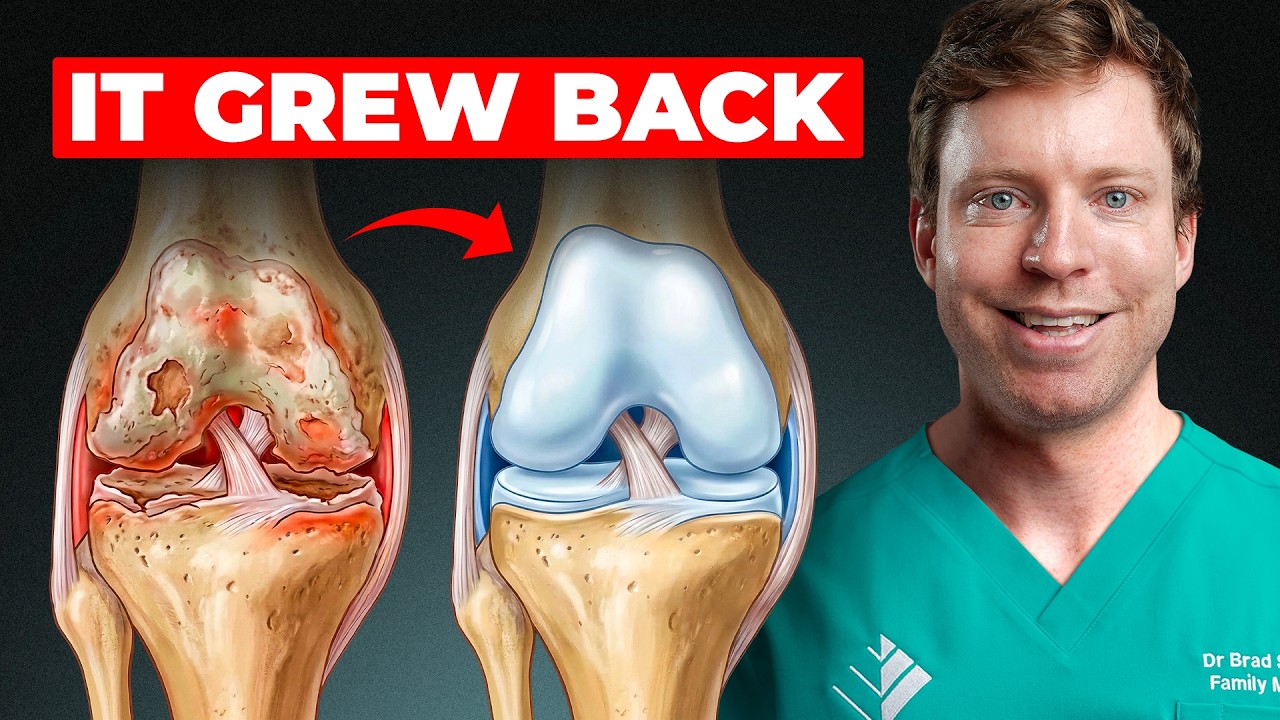
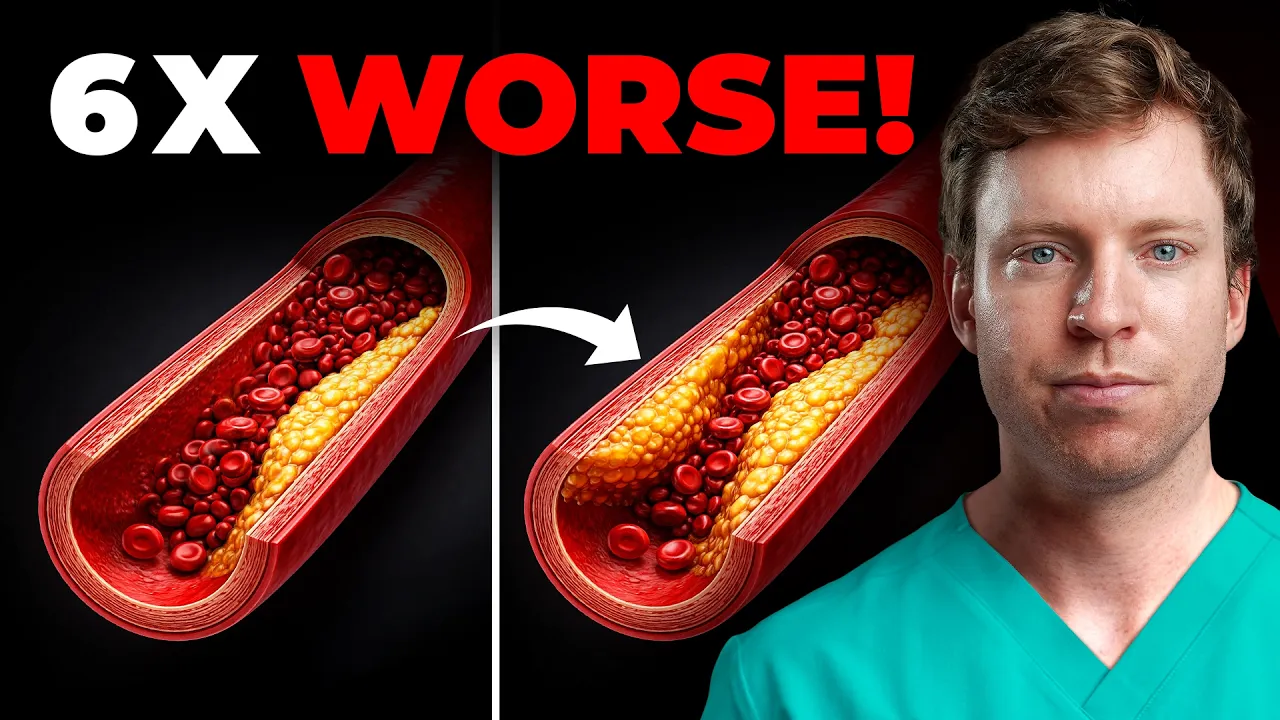
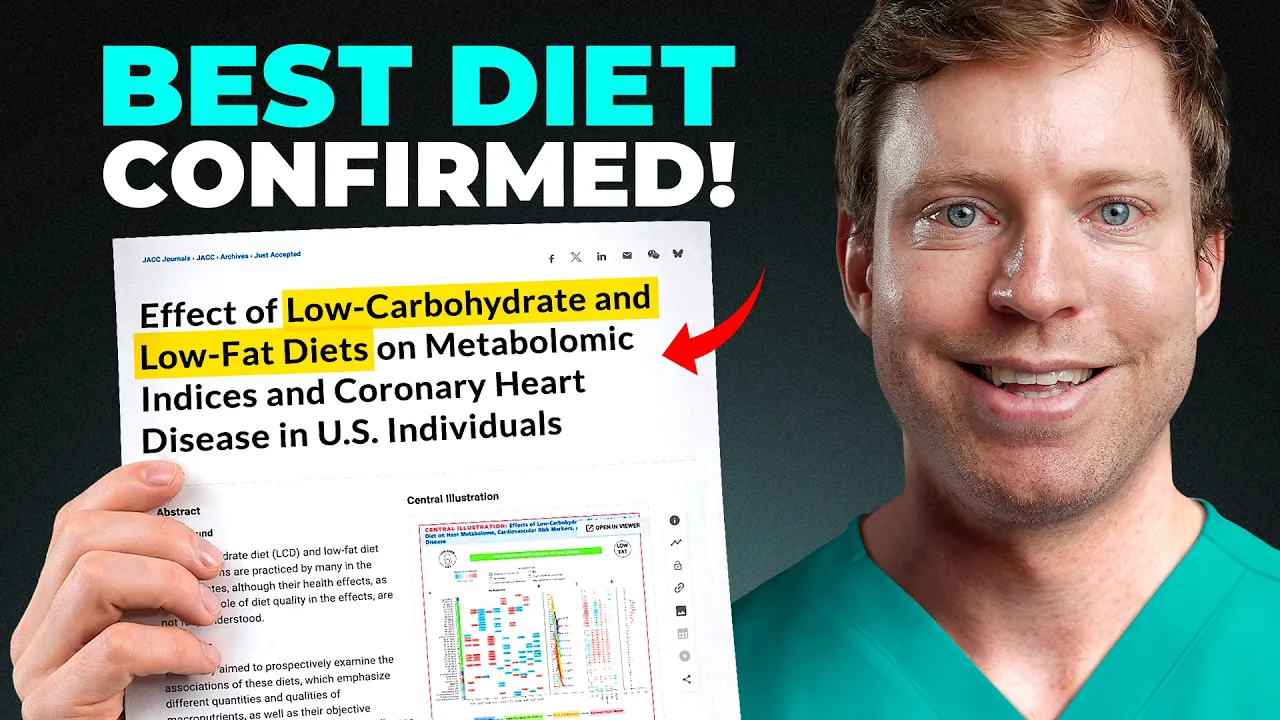
Thumbnail by James Kelly
Video edited by Troy Young
Script by John Milliken
The links above are affiliate links, so I receive a small commission every time you use them to purchase a product. The content contained in this video, and its accompanying description, is not intended to replace viewers’ relationships with their own medical practitioner. Always speak with your doctor regarding the content of this channel, and especially before using any products, services, or devices discussed on this channel.
Оглавление (3 сегментов)
Segment 1 (00:00 - 05:00)
In the early 1990s, an endocrinologist named John Eng walked into his lab at a VA hospital in Bronx with a vial of dried Gila monster venom. He'd ordered it from a mail-order catalog from a serpentarium in Utah. His colleagues thought he was just wasting his time. The idea that a poisonous desert lizard could teach us anything about human medicine seems, just to put it politely, unlikely. But Eng had noticed something in his research literature that no one else was paying attention to, and the compound that he pulled from that venom would go on to become one of the most important drug classes of the last 20 years. It was designed initially to treat diabetes, but then it caused massive weight loss, and then it reduced heart attacks, and then it helped people quit drinking, and then quit smoking. And last month, a study showed that it could do something that every medical textbook says is impossible. The Gila monster is one of only two venomous lizards on Earth, and it lives underground in the deserts of the American Southwest. It has one of the strangest eating patterns in the animal kingdom. It eats as few as three times a year, sometimes consuming up to a third of its body weight in a single meal. And yet, between those rare feedings, its blood sugar stays perfectly stable. And that fact caught Eng's attention. So, in the late 1980s, researchers at the NIH had discovered that the Gila monster venom had a pronounced effect on the pancreas, the organ that makes insulin. One of them, Jean-Pierre Ruffman, described the kind of research that he was engaged in as a fishing expedition that grant committees today would probably dismiss. He later said that he would never have conceived that there was any potential therapeutic benefit, but Eng saw something they didn't. He'd been trained by Rosalyn Yalow, the Nobel Prize winner who invented a technique for detecting tiny amounts of hormones in the blood. He turned that same technique on the lizard venom, and in 1992, he found a compound that had never been documented before, and he called it exendin-4. It was 53% identical to a human hormone called GLP-1, a hormone that tells the pancreas to release insulin when blood sugar levels rise. But there was one critical difference. Natural GLP-1 breaks down in your body within about 2 minutes. It's gone almost as soon as it appears. But exendin-4, the lizard version, lasted for hours in mice. That meant you could potentially inject it and have it work all day. Now, for someone with type 2 diabetes, that could be potentially transformative. Eng had found in a vial of dried lizard venom ordered from a catalog what might be a new way to treat one of the most common diseases on Earth. But there was a problem. Nobody wanted it. Eng filed a patent in 1993. He paid for it himself out of his own pocket because the VA refused to patent it. It didn't address a veterinarian-specific ailment. So, that put him in a difficult position. He bore the expenses of his patent and his discovery with no guarantee that anything would come of it. He spent 3 years trying to convince pharmaceutical companies to develop it. A peptide drug derived from lizard venom? The concept seemed absurd by industry standards because at the time peptide drugs had a reputation for being expensive, hard to manufacture, and inconvenient for patients. So, after 3 years of rejection, in September 1996, Eng presented a poster at a diabetes conference in San Francisco. And a researcher named Andrew Young from a small biotech company called Amylin Pharmaceuticals stopped to read it, and 1 month later, Amylin licensed the patent. 9 years after that, in April 2005, the FDA approved Byetta, the first GLP-1 medication ever made, and it was derived from the Gila monster venom. Developed from a poster that almost nobody stopped to look at. But Byetta was a modest drug. It required twice-daily injections. So, it did help to control blood sugar levels, but it only resulted in about 5% of weight loss. It was useful, but relatively unremarkable. Nobody suspected what would come next. So, Eng's discovery proved something critical. Targeting the GLP-1 receptor does work. That proof of concept opened the door for larger pharmaceutical companies to engineer more potent versions. Novo Nordisk developed liraglutide or Victoza, and it was approved in 2010. It was once-daily instead of twice-daily. But then came semaglutide or Ozempic, and that one was approved in 2017 once a week, and each generation became more potent and longer-lasting. But then the surprises started. Weight loss. Patients on Ozempic were losing 15% of their body weight. It wasn't designed to do that. People were losing weight at rates previously only seen with bariatric surgery. So, the FDA approved semaglutide specifically for obesity in 2021. And after the weight loss, other surprising effects started showing up in multiple areas, like heart disease. The SELECT trial, which was a massive randomized clinical trial, showed that semaglutide reduced major cardiovascular events by 20% in people with obesity who did not have diabetes. So, a drug designed for blood sugar was also protecting hearts. But maybe all of this was just because the patients were losing weight. Less weight means less strain on the heart. That was a reasonable explanation until the next set of findings made it harder to sustain. So, they were linked to addiction. A large VA study found that patients on GLP-1 medications had significantly lower rates of substance abuse. Problems fell by 18% for alcohol
Segment 2 (05:00 - 10:00)
20% for nicotine, and 25% for opioids. UAB neuroscientist Andrew Hardaway explained, "Food simply becomes less rewarding. You still enjoy eating it, but it doesn't drive behavior in the same way. And the same mechanism seemed to be dampening the brain's reward responses to alcohol, nicotine, and opioids. So, this wasn't just a weight loss effect. It was something acting on the brain. " Then there's kidney disease. So, the FLOW trial showed that semaglutide reduced risks and slowed disease progression. And the benefits seem to appear even in patients who didn't lose significant amounts of weight. And researchers started finding GLP-1 receptors widely distributed across many different tissues, not just the gut and pancreas, but also in the brain, the heart, and the kidneys. Niles Kruger of Harvard Medical School captures the feelings of many researchers. So, he says, "It's just astounding how many indications these medications seem to be effective for or have some beneficial effects. " So, decades of basic science starting with one endocrinologist and a vial of lizard venom. But even Kruger couldn't have predicted what came next because the next discovery challenges something that doctors have believed since at least 1743. In that year, a Scottish surgeon named William Hunter stood before the Royal Society in London, and he made a declaration that would define orthopedic medicine for the next three centuries. From Hippocrates to the present age, an ulcerated cartilage is universally allowed to be a very troublesome disease. When destroyed, it is never recovered. And for 283 years, every doctor who's looked at worn-out knees has told their patients some version of the same thing. There's a straightforward reason why. Cartilage has no blood supply, no nerves, so no efficient way to deliver to the cells the nutrients that they need to grow new tissue. And it's one of the few structures in the human body that once damaged, it's severely limited in its ability to repair itself. Now, this hasn't stopped people from trying. So, techniques like microfracture, which is drilling tiny holes into the bone underneath the damaged cartilage to try and stimulate bleeding, have been developed. And yes, we are making some progress in various kinds of surgical interventions. And yet, at present, available treatments are far from satisfactory for many. But then, patients on Ozempic, they started saying something that the doctors initially dismissed, that their joints felt better. Not just less pain from carrying less weight, something else, something unexpected. Now, the obvious explanation is weight loss. So, less weight means less mechanical pressure on the joints. Every kilogram that you lose takes roughly 4 kg of stress off your knees. So, when Ozempic patients reported less joint pain, doctors shrugged. Of course your knees would hurt less if you lose 30 lb. And the STEP 9 trial, which was published in the New England Journal of Medicine in 2024, seemed to confirm this. 407 patients with obesity and knee arthritis. And after 68 weeks, pain scores dropped by 42 points with semaglutide compared to just 28 with the placebo. Patients also lost 13. 7% of their body weight. So, case closed, isn't it? Well, so everyone thought. But a team of researchers at the Shenzhen Institutes of Advanced Technology, which is part of the Chinese Academy of Sciences, wasn't satisfied with that explanation. So, led by Dr. Dai Chen, they designed an experiment that would test it directly. So, this is the study that changes the conversation. So, Chen's team, they took mice with osteoarthritis, and they split them into groups. One group received semaglutide, and the other group was pair-fed, meaning they were given restricted calories carefully controlled so that they lost the same amount of weight as the semaglutide group. So, same weight loss, but no drug. If the joint improvements were just the weight loss, then both groups should look the same, but they didn't. The pair-fed mice, they lost the same amount of weight, but their cartilage kept deteriorating. Only the semaglutide group showed preserved cartilage, reduced inflammation, and fewer bone spurs. So, same amount of weight loss, completely different outcomes for the joints. Dr. Dai Chen explained the implications. This controlled experiment demonstrates that semaglutide's protective effect on cartilage in osteoarthritis is independent of weight loss, challenging the traditional belief that osteoarthritis improvement relies solely on weight reduction. So, if it's not just the weight loss, what is happening? Well, here's the simplest way to think about it. Your cartilage cells, called chondrocytes, need energy to maintain and repair the tissues around them. In osteoarthritis, those cells get stuck running on an inefficient fuel source. So, think of it like a factory running on a spluttering generator. It's barely enough energy to keep the lights on, not nearly enough to rebuild anything. But what semaglutide does is flip a switch inside those cells that upgrades them to a clean, efficient energy source that produces dramatically more energy, more than enough to actually start the repair process. Here's the technical pathway. So, GLP-1 receptors, which nobody expected to find on cartilage cells, they activate AMPK PFKFB3, which is a signaling cascade, and it shifts the cells from glycolysis to oxidative phosphorylation. Those GLP-1 receptors on the cartilage cells, a receptor that nobody was looking for in the cartilage cells. It triggers those
Segment 3 (10:00 - 11:00)
cells to start rebuilding the tissue around them. But mouse cartilage is not human cartilage. So, does it actually work in humans? To investigate, Chen's team, they ran a pilot clinical study. 20 patients aged 50 to 75, all with obesity and knee arthritis. So, half of them received standard treatment with hyaluronic acid injections, but the other half also received hyaluronic acid plus the weekly semaglutide. And after 24 weeks, they put them in MRI scanners. The semaglutide group showed an average 17% increase in cartilage thickness, suggesting regeneration. For the control group, it was less than 1% and patients also experienced reduced pain and improved joint function. So, the tissue that William Hunter said was never recovered, that every orthopedic textbook says is irreplaceable, appears to be growing back. These study results, they open the possibility of a radically new approach to osteoarthritis. We already know that we can reduce pain through weight loss, but it now appears that we might be able to actually regenerate the cartilage. But I do need to be honest here about the limitations. This was a pilot study of 20 patients over a 24-week time horizon. Much larger and longer trials are needed and the study authors themselves wrote, "The protective effects of semaglutide on the human knee joint should be interpreted with caution and require further validation. " But the pair-fed mouse experiment is what makes this more than just another small study. It doesn't just show correlation, it demonstrates a mechanism that seems to work independently of weight loss and is consistent with the broader patterns that we keep seeing with this drug class. GLP1 receptors, they turn up in places nobody expected and they do things that nobody predicted. And when it comes to addressing knee arthritis, there's something else that many people are surprised by. Exercise does help. We no longer think of osteoarthritis as just wear and tear. So, in this next video here, I'll show you what the evidence says is the best exercise to reduce the symptoms of knee arthritis.