What can an obscure theory of industrial productivity teach us about producing better results in a distracted world? In this episode, Cal is joined by the #1 New York Times bestselling author David Epstein to explore this question. They dive deep into a chapter of Epstein’s new book, INSIDE THE BOX, that makes a surprising connection between the so-called “Theory of Constraints” and personal productivity.
More from Cal
Download Cal’s FREE guide to cultivating a deeper life: calnewport.com/ideas
Learn more about Cal’s books: calnewport.com/books
Listen to Cal’s podcast: thedeeplife.com/listen
Chapters
(0:00) How do I get busy to better?
(3:04) INTERVIEW: How Do I Get from Busy to Better? (w/ David Epstein)
(57:58) Post Interview chatter
(1:00:19) A suggestion to break digital news app addictions
(1:05:54) A reaction to a recent newsletter
(1:15:02) What Cal read
(1:16:29) What’s coming up
Resources Mentioned:
https://calnewport.com/who-asked-for-this/
Kook (Peter Heller)
Sponsors:
https://www.factormeals.com/deep50off
https://www.wayfair.com
https://www.mybodytutor.com
https://www.shopify.com/deep
Credits:
Podcast Production: Jesse Miller
Newsletter/Research: Nate Mechler
Theme Music: Jay Kerstens
Оглавление (7 сегментов)
How do I get busy to better?
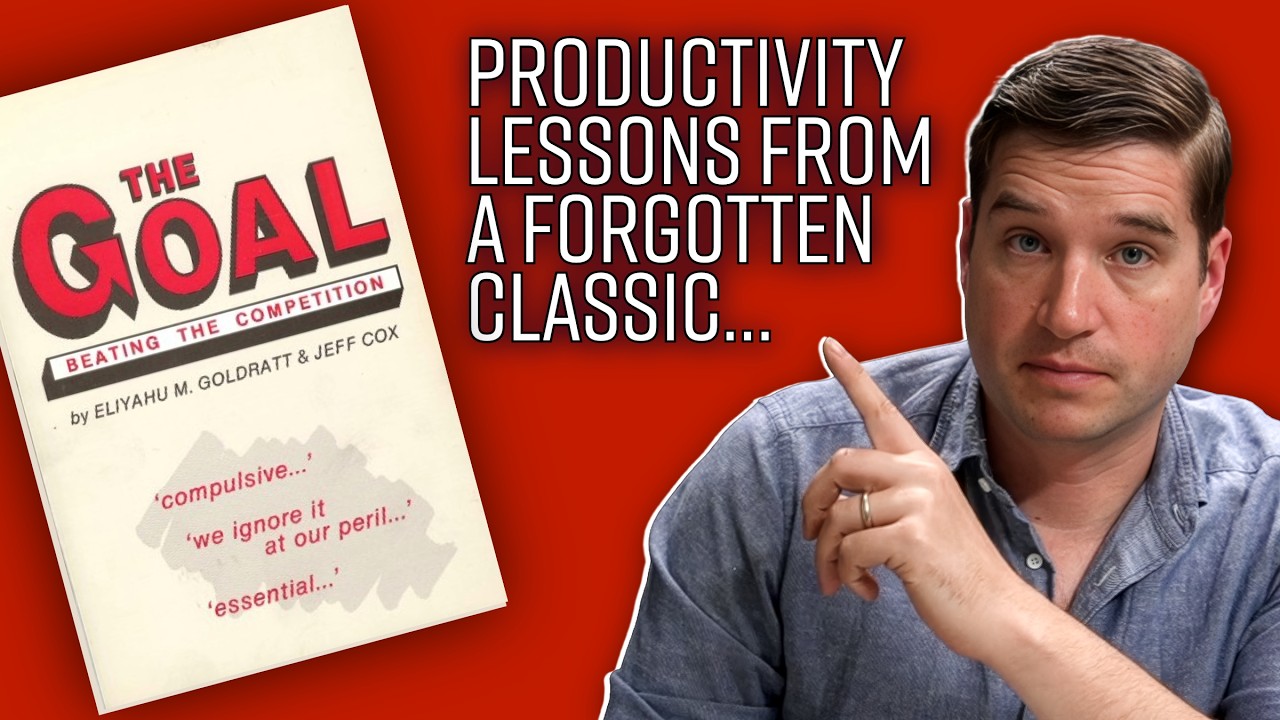
In 1984, a former physicist turned business guru named Elyahu Goldrat published a strange book. It was called The Goal and it was what Goldrot described as a business novel. Now, this book follows the fate of a fictional plant manager named Alex Rogo who meets an enigmatic physicist who through a series of long socratic dialogues helps Rogo turn around the profitability of his plant. It also features a storyline about Rogo's marriage as well as a sort of extended detour to a boy scout camping trip. I told you this is a strange book. But here's the thing. The goal went on to sell more than 10 million copies. Why? Because contained within those novelistic plot lines is a critically important idea that Goldro calls the theory of constraints. Now, I've come to believe that this theory helps explain a paradox that I talk about often on this show. The reality that digital tools designed to make us more productive often end up instead just making us more busy. Now, if you want to know why this happened and how you can avoid it, how in other words to shift from busy to better, then you need to understand the theory of constraints. Well, today is Monday, which means it's time for an advice episode of this show. So, this is the perfect opportunity to dive deeper into the question of how this old theory can solve a lot of new problems in productivity. All right, here's my plan. I've asked the number one New York Times bestselling author, David Epstein, to join me to talk about all things constraints. Why did I invite Dave? because I learned about Gold Rot and the ideas that he talks about in the goal from Dave's brand new book, which is called Inside the Box: How Constraints Make Us Better. A book that uh is coming out tomorrow. So, you definitely need to check it out. Now, in our conversation, Dave and I focus on one chapter of his new book in particular where he introduced the goal and talks about the constraints and gives a bunch of stories about what this theory actually meant. So, I thought he'd be a great guide to understanding what's going on here. um he's going to help me in this conversation understand the underlying theory. Then we apply these ideas to our own lives as writers and almost immediately I come up with some new ideas for improving my productivity based on the foundation that we're going to lay in this conversation. So if you yearn to do more important work but feel like all of your efforts to get things done have just left you feeling more frantic and exhausted or maybe you're just curious why a small business novel went on to sell millions upon millions of copies. then this episode is for you. All right, so let's get into it. As always, I'm Cal Newport and this is Deep Questions, the show for seeking depth in a distracted world.
INTERVIEW: How Do I Get from Busy to Better? (w/ David Epstein)
All right. Well, Dave, I'm really happy to have you here because I read your new book, Inside the Box, which is great, and I recommend, you know, Epstein books are fantastic. Read the book. But there was one chapter in particular that really caught my attention because it gets to this question that we've been grappling with here on the show, and I thought you have some insights that are going to really help us understand a core issue on the Deep Questions podcast. So, uh, I'm glad you're here because I'm going to, uh, first pick your brain about what you wrote in that chapter and then hopefully together we are going to apply it to help tackle this question of why do productivity technologies often end up making us feel busy but not actually like we're producing more. I assume when you wrote this chapter, you of course had me and my productivity obsessions in mind. Is that that's accurate? I assume it's really just for me. — Absolutely. I typically find it's very clarifying if I just build all of my work life around things that I think Cal Newport would be interested in or can use. So, it really adds a lot of structure to my life. — It's what I recommend to everybody. I'm surprised more people don't, but okay. So, let's I want my audience to to bear with me. We're going to start in an area you might not know how this is going to connect, but it does. Um, so I want to start. Can you tell us it's Elish Elisha Gold? Am I saying this name right? Ellie Goldrat. Elahu Goldrat, but Ellie Goldrat. — All right. Elahu Goldrat. Eli Yahu Goldrat. Tell me about his uh path to writing this eccentric novel, The Goal, that actually ended up becoming a classic and capturing an idea about management, especially industrial process management, that essentially changed whole swaths of the economic world. So Ellie Goldrat in the 1970s he's a physicist studying the behavior of atoms in crystals when a friend comes to him with a comparatively pedestrian problem which is increasing uh chicken coupe production. The friend has a small chicken coupe building business and he wants to increase the number of coups he can make and so he's been hiring more people and finding that it isn't really increasing production. So he asks Goldrat, can he study the workflow? It's basically an assembly line. — Yeah. — And see what he can come up with. And Goldrat studies it and what he finds is that there is always a single slowest step. like no matter uh what's going on, there's a single slowest step in the process where no matter how quickly other steps in the assembly process are functioning, work just piles up at the one slowest step. And so once he notices that, he decides to move one worker from a fast step to the slow step and finds that triples the overall coupe output. And this becomes the core of what he came to call his theory of constraints, which is the idea that every system is limited by a single bottleneck. Basically, the single least efficient step in the system. Doesn't matter how fast everything else is working or how efficiently because it's just going to pile up um at that one step. And in order to expand on this idea, he writes this book that you mentioned, this bizarre but also interesting business novel uh called The Goal, which features this character Alex Rogo, who's a plant manager whose plant will be closed unless he can increase production quickly. Fortunately, he bumps into this Jedi-like figure, surprise, his former physics professor, — who gives him these socratic lessons and he starts to see the whole world through the theory of constraints. Like when he takes his son's boy scout troop on a hike, he finds that some kids are really fast hikers, but this kid Herby is really slow. And so the whole group can only go at the speed of Herby. So he ends up distributing weight from the different packs and it slows the fast kids down, but it speeds Herby up and ends up speeding the whole group up. And so fast forward and Alex saves the plant, saves his marriage all by looking for these bottlenecks. And this the book is strange, but it spawned a whole genre of actually even more bizarre business novels, but also like Jeff Bezos made all of his executives read it and hosted a full day book club on it and it sold 10 million copies. And as a fellow author, uh, you can understand what that means. us. It means our respective agents are going to hear like their 10 most feared words to ever hear from us is I have an idea for a business novel I want to write for a socratic business novel. That's right. And it was published in this tiny publisher that I think was basically made just to create this book um and just blew up and now there's even a graphic novel version if you don't want to read the whole uh the whole version. But I should say it also led to this 1200page theory of constraints handbook and Goldrat wrote the forward and in it he asks can I condense all of theory of constraints into one sentence and he says actually I can do it into one word which is focus that this bottleneck or the system constraint shows you where to focus your energy if you want to make a difference. What goes into 1200 what you said 12,000 pages 1200 pages — so this simple idea I'm just curious about this from the a side view how do you feel 1200 pages I wonder um on that idea seems so elegant is it just a lot of scenarios a lot of math I'm trying to figure out case studies I suppose — there's a lot of case studies there looking at different industries um some of it eventually gets more into kind of the p some as it goes on it gets farther and farther away from these obvious industrial production cases and more to some of these more personal cases basically. — Yes. — Um and also just a lot of I would say a lot of bloated theory around it too probably. Um so some of all of that — that's the best type of theory. Okay. So we're we're beginning to inch closer to the personal applications. Uh, one thing that did come to mind though when I read about that is for a few books ago I went deep on Ford and the automobile continuous assembly line and that was another observation. The same observation was made but it's really been lost in the lore of the assembly line which has been very idea focused like what if we move the car to the people. But what's lost out of that if you read the early management journal type articles is man that was hard to get right. It was really hard to calibrate the automotive assembly line because of exactly the theory of constraints type problem. If the steering wheel person took longer than almost anyone else, the whole thing was going to slow down. So the whole it was all about tweaking and configuring and retooling and moving people. It was very difficult. And then finding the right speed where it would move past. Uh and I think that lesson was lost. people looked at the general form and not the idea like, oh, that's part of what's hard about these things is figuring out how to actually make this whole thing keep moving smoothly without the magneto or the steering wheel or something like this uh pulling everything out. Hey, let's take a quick break to hear from some of our sponsors. Let me tell you about one of my secret weapons in trying to stay healthy. Factor. Factor offers fully prepared meals designed by dieticians and crafted by chefs. They're delivered straight to your door and are ready in 2 minutes. No planning, no cooking. The meals are refrigerated, not frozen, which keeps them fresh and quick to prepare. Now, I use Factor to automate my lunch. I don't want to waste brain power figuring out what to eat, and I don't want to continually give in and just grab a slice of pizza when I'm in a hurry. So, I can now just grab a Factor meal from the fridge. 2 minutes in the microwave, boom, healthy meal that also tastes great. Factor offers quality, functional ingredients, including lean proteins, colorful veggies, whole food ingredients, and healthy fats. And they have a 100 rotating weekly meals that keep things fresh and delicious with options that include high protein, calorie smart, Mediterranean diet, GLP-1 support, and ready to eat salads. Are you training? They even have a factormuscle pro collection that is aimed for muscle growth and recovery. It is the easiest way to eat healthy. So head to factormeals. com/deep50 off. That's the word deep, the number 50, the word off. And use the code deep50 off to get 50% off and free daily greens per box with new subscription only while supplies last until September 27th 26. website for more deals details rather. I also want to talk about our friends at Wayfair. Here's the thing. Your outdoor space should feel like you. Mine didn't for the longest time. We had some old wicker chairs in our backyard that were uncomfortable and seemed kind of temporary. Then Wayfair entered the scene. We replaced those chairs with outdoor armchairs that looked great and were comfortable to sit in. Our back patio went from a yard with some chairs to a true outdoor living space. Wayfair can do the same for you. Whether your vibe is modern or coastal or farmhouse or eclectic, Wayfair has options to help you create an outdoor space that's uniquely yours. We're talking outdoor seings, grills, major appliances, storage, patio lighting, rugs, decor. Wayfair is your one-stop shop for anything related to your home. And with installation and assembly services available, you can get a truly seamless experience. So get prepped for patio season for way less. Head to wayfair. com right now to shop all things home. That's w afir. com. Wayfair, every style, every home. — All right, let's get back to the show. All right, so it's a good idea. This sweeps business. But where it begins to get interesting for the personal view is that humans have bottlenecks in our individual activities as well. Uh, maybe we could start with your experience, your illustrative college track career. I learned in this book you were a walk-on. I knew you were an 800 runner and very good at it. I didn't realize you were a walk-on, which is fantastic. But tell me a little bit about the story from the book about how you ended up implicitly applying the lesson of the goal in your running career. — Yeah, I mean, I didn't know the language of the theory of constraints at the time, but being a walk-on meaning I was not good enough to get recruited. In fact, I was not in the same orbit as anyone who would be getting recruited. Um, and I came to track kind of late in my athletic career. And so when I arrived, I was so bad or essentially not um not really on the team. In track, you can kind of hang around as a walk-on. And I one blessing in disguise I had was that because I was a walk-on, nobody cared what I was doing. And um there was a young coach who kind of nobody cared what he was doing either. And we paired up for some experimentation. And we found what was certainly my bottleneck, the thing uh limiting my performance, which was my ability to recover. Um so I simply did not recover from workouts the way that my peers did. So, if we had a work hard workout on Monday, easy day on Tuesday, by the time the next workout came around on Wednesday, uh I was feeling terrible. And then there's another recovery day on Thursday and then you have another workout Friday or race Saturday. And I'm just floored. So, I was just tired all of the time. And once we decided I just didn't recover like the other guys did, implemented some uh high-tech strategies like scheduling class over one workout a week so I had an excuse just not to show up. — Yeah. — So I started doing one fewer workout per week than my peers were doing. And that seems like a bad idea, right? And I I moved my mileage my weekly mileage had hit a high of about 80 or 85. We moved it down to about 35 so that I have more chance to recover. And it worked like crazy. I mean, I started getting faster almost every race once we locked this in, you know, beating people who were blue chip recruits, uh, became a university record holder, all these sorts of things. I won this since it seemed like I went from bad to good so quickly, too. I won this award. I actually have it in my closet over there for the it was on it. It's written for the athlete who achieved significant athletic success in the face of unusual challenge and difficulty. And my unusual challenge and difficulty just being it's a nice glass like in wood box and everything. Um, my unusual challenge and difficulty just being that I stunk at first, right? I was just really bad at first and then once I figured out that I wasn't like everyone else and I had this limiting factor of ability to recover and targeted that, it really unleashed uh unleashed my performance. So it the workouts that would have been increasing your capacity, you were losing that advantage because you were overtraining and then you were either tired in the actual events or it was just your body couldn't actually get the gains because you would drop another workout onto another. So all this potential was being left on the Did you ever read the Neil Baskum book, The Perfect Mile? — About this kind of similar, right? Like I I write about in my new book I'm working on now. I get into a little deeply, but Roger Banister was training uh much less than uh what do you remember the name of the Australian who he was competing against? — John Landy. And John Landy was I will out train in terms of volume anyone who's ever run before. Like no one was running the quantities he was I did the math. He was running like 5x more — meters a week than Banister. But Banister who didn't — he didn't have time. and he was basically what we would call like I guess a resident medical resident here in the US and B like did a lot of other stuff — but knew a lot about physiology — was like okay it's not about volume it's not about endurance now in fairness Landy was also he was a professional runner and he had to run events all year round and it did give him a lot of endurance to do a lot of events but Bannister's like it's all about um processing oxygen and lactic acid at exactly the pace you need for four minutes to break the four-minute mile and all of my training is just built around um doing exactly that. And I'm going to do these whatever it was four 400 repeats with um breaks in between and just until I can get those four the 400s like it get exactly at that slight sub60 and just get very used to that and you know it was all about just exact reminds me of that is he the bottleneck he was like oh it's physiological there's a particular physiological thing I need to do to beat the mile record and that's what I focused on — and to run this first sub4 mile that was very well done I'm a huge track nerd so I commend you on that history you just gave very well done So when I was at Sports Illustrated, obviously I used that excuse to write about Roger Banister and became personal friends with Roger Banister for quite a long time. He used to call me know he passed away. — He passed away. Okay. Yeah. Because it was in the early 50s, right? Or late 40s when they broke their record — in the 50s. In the mid-50s when he ran the first sub4 mile. Um and um he would, by the way, he would call me with like no cognizance of the time difference. He used to be like, "Hello, it's Sir Roger. " He referred to himself as Sir Roger. He wasn't actually. He just refers to him or he was right. — Oh, no, he was kned. Yeah, he was kned. — That'd be funnier if he wasn't. I think that's the that would be the real story. — He could have been kned many times over. He was a world famous neurologist. He was a dean of a college at Oxford. All these sorts of things. Um, but you're right, like he was different in that way, but he was very logical uh in what he was doing. And he I mean I think he did I'm trying to remember if he told me I think he did like gynecological rounds the morning of the day that he ran the first sub4 mile in history. and he went hiking uh you know two weeks before and so that um by the way that focus on so he had a focus on recovery too. So right now the major trend, not that we should talk about track this whole time, but the major trend in training has been something that actually does allow more volume of training. It's called threshold training basically where we've realized that if you actually keep your intensity a little down lower, your risk of injury becomes way less and you can do a huge amount of training volume and then you kind of only run as hard as you can on the race day. So that's this trend that's really improved people in running now where you say oh actually maybe recovery at a certain level is a bottleneck for everyone and then injury will be because if you train enough in track you'll always like there's you'll always get injured. So now the invogue training is this threshold training where you're actually never going all out ever — and that allows you to ultimately train a lot more uh and perform a lot better. So I think this is a different kind of like targeting the a sort of universal bottleneck. — All right. So, as we make our journey, we're making our journey towards personal productivity and technology. So, we've gone from assembly lines the track. Well, let's take us let's take a small step into the world of uh Olympic level swimming. — All right. — Because I enjoyed this. I just want I want us to get used to like these personal bottlenecks and then we're going to jump from there to like uh the world of more like knowledge work. But I enjoyed the Olympic caliber swimming story which I think is similar to yours. Um though it ended up with a gold medal I suppose but tell me tell — but otherwise but let's get into that because I uh I think it's another great example. — Yeah. So this story I tell uh in the book about this swimmer named Sheila Tarina in 1992 she's a student at the University of Georgia and she goes to the US Olympic trials in the 200 meter freestyle. She doesn't make it. She's not close actually and she retires. And then for one of her last courses at Georgia, she takes management 577 in which she learns about the theory of constraints and decides for her class project that she's going to come up with a training plan that would have her drop 3 seconds in the 200 meter freestyle which would give her a chance to make the Olympic team. And so she first does this sort of audit which is how the theory of constraints cases often start looking for what is her bottleneck? what things are not going well and what does she think is the most important one. What Goldrat would call he would often call in industrial production the drum of the system because everything else will march at its beat. Um and so she decides that power strength and power is her bottleneck. She's only 5'2 which is really small for an elite swimmer — and she has an amaz worldass aerobic engine like aerobic endurance and that's what her coaches have her working on just tons of volume but it's not the thing limiting her. She's already really good at it. The thing liming her is strength and power and she doesn't feel like confident that they'll allow her to work on that. But she unretires and decides to find a coach who will follow this plan, you know, will target her bottleneck strength and power. So they completely for a swimmer, the way she would experience that is it's not like she's coming into the final finishing the race like, "Oh, I just got gassed. " It was, "No, I my aerobic was there, but just my power per stroke is such that I'm a length behind a better swimmer. " often and often she was like very would be getting beat at the start and really catching people late like she just like didn't get off to a strong start — and that's a power game. That's like how powerful your whatever your your dolphin kick and initial strokes are, your jump. It's like all those type of things. — Yeah. So, and so her peak speed would be worse than people that she could sometimes beat because they would tire out and she would catch them. So, she wanted stronger start, higher peak speed because tiring out was not her problem. like she was catching people at the end, but if she wasn't behind in the beginning too, she'd have to be like in their turbulence too, which you don't necessarily want to be depending on how it there's a lot of intricacies to that. But — um so they go start working on her strength and power um you know lifting, doing these weight racks that you can attach to a swimmer and they swim and it and pulls the weights and four years later um she goes to the Olympic trials again 1996 and she swims exactly 3 seconds faster. basically 3. 1 seconds faster than she had, makes the team and then in Atlanta uh wins an Olympic gold medal as part of the relay team. And it's amazing if you Google a picture of her and find with the relay team. The other uh three women are probably 6'1. — Yeah. — And she's 5'2. So it's like three women that are the same size. — Yeah. — And Sheila Tarino is 5'2. And then so then she retires after that. And after a few years, she unretires, starts doing triathlon first just for health. Now she has this new outlook on all of her training, which is like what is the thing limiting me? She starts it for fun, ends up winning the US National Championship, goes to the Olympics, finishes sixth, goes the next Olympics in triathlon, retires again, and then she unretires again and learns fencing and horse jumping and goes the Olympics in modern pentathlon. And she is the only woman ever to have competed in four summer Olympics in three different sports. and she retired briefly and she would have like retired permanently if not for learning about the theory of constraints in a management class. — So she was just throwing the typical collegiate uh swimmer thing which is just more time in the pool which — yeah as I learned from Rich Roll that was basically the mentality in the '9s was — more yardage. Yeah. Okay. Well then we can jump from this over to we're going to get to the world of knowledge work now. There's a paper you and I both like. I think we've both written about it. the MIT loan management review paper about the broad institute which starts as a case study that reminds is much closer to gold drop because it's a literal assembly line this time genetic sequencing — but the cool part is that it ends up influencing this IT team that happens to be working there that's much more pure knowledge work this is worth reviewing because I think this is going to start it's going to teams this will get us to knowledge work teams and from there we get to knowledge work individuals but this is probably worth hearing about as well how the theory constraints on a more of a classic process inspired a group of knowledge workers to change how they did their work. — Yeah. I mean, so the that aspect of it like so there were two aspects of it. There was the just the sort of production aspect where they had work piling up in their genetic sequencing lab because some steps were faster than others and it became chaotic and so they had to switch that from a push system to a pull system which you've written really eloquently. Um, — classic theory of constraints there. It's like, oh, you you've read that 1,200 page book. You're like, boom, this is us, right? It was an assembly line. Things were piling up basically. — Totally. But the cooler thing was that they then decided to apply it to their sort of project and idea process where they went and on Post-it notes um made all of their current projects visible essentially. Literally post-it notes on a wall. That's right. And immediately upon doing this um they realized that there were way more things in process than they could ever get done. They realized there were redundancies. They realized you know there were um things that nobody really knew was going on basically or not many people. And I actually think this is like any team in person should do this. Make all of your current commitments visible. And probably what you'll realize is that a bunch of medium priorities are competing with a bunch of important priorities. So they quickly said, they didn't say we're just going to kill all this stuff, but they put it off into a holding pattern. They made this funnel for projects and ideas. Said nothing else is allowed to move into the funnel until something else moves out of the funnel. So basically, they made this idea pipeline of limited size. And so you can see nothing else. We can't just pile stuff in because people are always having ideas. So it'll just grow and grow. So you can't you stop starting and start finishing. You can't start a new one until you finished a current one. And so it both made a sane workflow and uh forced them to prioritize which I think is what good constraints can do. Force you to clarify your priorities and consequently they started actually getting a lot more projects done. They had fewer things in process but they actually finished a lot more things. — Yeah. Yeah, it's like the bottleneck was the actual developers here because my understanding was this was a team that was building software tools internally for use by scientist at this big institute which I used to walk by every day on Cambridge Avenue and when I was at MIT. So I remember seeing this thing you know come up. — Uh the bottleneck was their basically cycles of cognit cognitive focus. You had like this many programmers they had this many cycles available. Um that was the bottleneck. So it's like how do we make the best use of it? And there was this interesting effect that has been very influential for me to hear about is like what happens if you push a lot of stuff on limited cycles. It doesn't just cue automatically nicely. What happens is all the things start kind of competing for the cycles — and then the whole thing kind of log jams up and you know very little gets through. It's like oh this is our bottleneck. How do we get the most out of these cycles? Oh only pull one thing at a time. Little idea but it made a big difference — for sure. And I think it I think that when we don't do that, I mean I was going through a lot of these case studies and there are different aspects to different ones of them, but one theme was so they were because they had so many things in process they were being like ravaged by multitasking basically. So instead of initially the response instead of being you know oh we need to build a funnel and have a limited space was all right we're going to toggle between things more and so there'd be these case studies like one that I wrote about at this uh company that made custom gear boxes for industry where every gearbox they made was totally unique had to be customized and they were having all kinds of problems and they realized the bottleneck was in this small 15 person design office that made the designs for the gearboxes and they had so many things in process that they were just they were switching tasks more than 50 times a day, switching projects. And so it led to errors, frustration, people quitting. And so they implemented a similar rule which was again it was a stop starting start finishing. You're not allowed to start a new design until you finished one. And that dropped the amount of time in a few months. They were getting three times as many designs out the door. And because that was the constraint for the whole system, it dropped the amount of time it took the company to produce a gearbox from a year to two months. — Yeah, that's the part that people often miss, right? Like when I talked about this idea in that one part of my last book where I said do fewer things. People had a really hard time getting past, oh, you're asking me to be less productive. So, I mean, we I got to make money. My company got to ship products. like sure I maybe I would feel better in your like magical utopian world but we got to produce stuff and when you would say no no do fewer things so that you [ __ ] more — so that you you're more productive and people it's really difficult for people to make that leap exactly you have to be disciplined right to be more productive to not toggle all the time and you and I have both written extensively about the work of psychologist Gloria Mark and what's in what she finds in some of these studies is that uh the more time someone toggled during the Okay, the lower is their end of day productivity. So, they're doing all this toggling and the higher their stress, but that's a that's another issue. But they feel like they're doing all these things, right? Because you want to address them as they come to you, but it actually it's that feeling of productivity does not track with actual productivity. — Yeah. I like the way they measure stress when they figured out how to use those heat bloom cameras, — and they did heart rate variability also, but yeah. Yeah, the thermal imaging cameras. Yeah, heart rate variability is quite a good proxy for — they use that as well. I think they figured that out as well. But that was my favorite finding for my book on email was they could actually visibly see stress rise when the inbox opened. They would correlate the app opening. Um okay. So now stay with me because I now want to make the leap into the unknown which is uh applying this to the shortcomings of digital personal productivity tools. — Here's my theory then I'll throw it to you to critique or add on. You can often imagine, here's my theory, as like an individual knowledge worker that some of the things you do, you can think of it as like a multi-step process. I think that's fair implicitly, right? It's like you have your own little knowledge uh assembly lines. A lot of digital productivity tools, whether we're talking about really efficient communication tools like Slack or if we're talking about information management tools that have all sorts of dashboards of stuff available or a lot of the new AI style productivity tools that are entering, they speed up for sure certain parts of that pipeline. But if you're speeding up a part that is before a bottleneck, — yeah, — it doesn't mean that pipeline is going to produce more stuff and that we fall into the trap of this tool definitely makes this thing faster. How could that be negative? And when you put the theory of constraints on, you say, "Oh, no, that's just like going to the chicken coupe factory and being like, hey, the first guy on the assembly line that puts like the roofs on the I gave a new tool and he's three times faster. This has to help. " And actually it's just creating a huge pile up that slows everything else down. Am I stretching too much or is there a potential application here? — No, I think so. In fact, I think I'm kind of living this in real time a bit right now. — You're building chicken coops. I see. Yes. — Building because I started a chicken coop building business. Yeah. Um, you know, because I think AI is unlikely to actually probably will replace the chicken coop. — Yeah. Robots. Robots are going to do it. Yeah. — Yep. Um, and so but I started making videos like a few months ago and — for YouTube or something like this. — YouTube. YouTube mainly but yeah and then you know smaller ones for Instagram and things like that but longer ones on YouTube and — um I'm working with these two guys and it introduced all these and they have a whole team and it introduced all these workflows to me that I'm not used to. So for the first time I'm on Slack, I'm on notion, all these kinds of things. And the tools are impressive in many ways, but it's allowed so much work to get in process. So like I have to approve scripts and things like that and I edit them and sometimes I write them and all this kind of stuff and those Slack and notion allows so much stuff to move but eventually it all has to come to me where I have to go through it and approve it. Right? So sometimes this is involves taking content that I've already written and sort of turning it into a draft of a script or something like that and I have to approve it. And so the bottleneck is my ability to approve and because in the transformation of my material there's often assumptions made or facts that you know aren't quite right just cuz when you're transforming it it's like if it's not your material there's like you make certain assumptions and it can cause factual errors. And so I'm spending a lot of time trying to correct those things. Meanwhile, more stuff is building up at the first step. Yeah. Where it's like more ideas, uh, you know, more of these kinds of things. And so, but then I have to pay attention to that like stuff that's at the top of the bottleneck. And so, it's almost like sometimes I'm creating even more stuff that's coming right back around to me and getting stuck because I can't approve fast enough. So, as I've been talking with these guys I'm working with and we're realizing that my ability to approve content to review it fast enough is the bottleneck saying, "All right, instead of more a better flow in notion or in Slack or even faster responsiveness, what would actually be helpful is a fact checker so that some of the factual problems are caught way before it gets to me so the approval process is more streamlined. But otherwise, it's been just building up stuff at me like I'm the bottleneck. " And so they did actually just uh brought on a fact checker. So I think that's targeting our bottleneck now in a way that notion and slack impressive as they are did not — right they were moving information very quickly notion and slack like wow this is impressive like it can automatically move from here to here and be labeled and sent and waiting but yeah that wasn't the bottleneck. The bottleneck wasn't man we would get more videos out if only it didn't take so long for this person to get this file to me and to get it labeled or whatever but that wasn't the bottleneck. The bottleneck was — that part's quite efficient. — Yeah, — very efficient. — Yeah, I so I think I I've thought of my own sort of podcasting type workflows through a similar frame and but actually from the beginning maybe because I had been working on this issue and thinking about business processes for an unhealthy amount of time. Everything I think about in my podcasting process is about the bottleneck. To me, the bottleneck is my time, right? I have a certain amount of time I can spend on the podcast and I I don't want to go beyond that. And so everything when I have two people I work with and everything is about how do I maximize the percentage of that time that is me thinking, writing or recording the thing I thought and wrote about. And so, you know, producer Jesse, who you've met, uh, the whole goal there was I don't want to touch a computer. Like, that's I shouldn't computer because that's all the things on the computer are things that take time that is not me thinking, writing, or recording or with my newsletter director, Nate, it's u I don't want to touch an email newsletter program. I don't want to like So, can I just work in a Google doc? You can edit, you can copy it, you can send things, you know, you can find the graphics, you can format the things, you can I don't have to spend as much time, you'll catch grammar mistakes, you'll catch spelling mistakes. You know, what could we do that reduces the time I spend doing uh what's limited by the bottleneck and that's made a difference, right? I mean, that's the way I don't want processes that require I don't need information moving quickly. I have weird sort of eentric ways I do things. I mean, I have lots of printouts and we do things kind of an oldfashioned way here because it's not to me the bottleneck is like so long as like I really am maximizing time where I'm trying to figure out what might be the most interesting thing to say. So there we go. I was using theory of constraints perhaps without — that is very of theory of constraints thinking. I mean and you like you as the bottleneck because often times when you identify the constraint right in this case it's your time you have a certain amount of time that you want to spend on this and then often the fix is making us can be making a simple rule. So like in one case it's it stop starting start finishing is a common one um in your case it's I don't want to touch a computer. Yeah. — Right. So you identify the bottleneck and then what's a rule that um maximizes the efficiency of that bottleneck. So, it's you not doing any of the stuff. You doing You want to be spending all the time doing stuff that Cal uniquely does — and the stuff that Cal doesn't uniquely do — that would be infringing on the bottleneck. So, take it away, move it somewhere else. — So, then I'm going to pause it and I I've been exploring this in a past episode. which I'll run this by you that this is what's going on with some of the intersections of AI and knowledge work where there are some initial findings coming out in the non-programming spaces that are saying look these tools we're getting these reports back where the amount of the sort of deep work efforts they don't use that terminology but needlemoving efforts is actually going down and time spent on sort of administrative efforts are going up and the theory of constraints maybe helps explain that is that if you the things that you know it's the drunk searching for his keys under the street lamp only because that's where the light is. I think you bring in an AI LM based tool, there's certain things it can do or automate, right, pretty well. So, you put into that part of the stuff you do and make that as fast as possible, but that's rarely the bottleneck. And I I use the example of um Adam Grant, you know, who we both know, who told me, I think back when I talked to him for deep work years ago, decade ago, and I remember him like correctly assessing, oh, in social sciences doing management theory at Wharton like he was doing. Um the key bottleneck is access to data. He's like, you got to get access to interesting data sets you can then analyze and write your sort of business papers about. and he told me so I spend a lot of time like working on those relationships trying to find the right pots of data that then you can get three or four good papers out of and I was thinking about that because there's a lot of talk now in academic circles about social science researchers business researchers using AI tools like cloud code and hey it speeds up generating your plots from data it can there's these certain types of wrote steps that it makes you makes it much more efficient and they were like this is going to lead to a research productivity boom I was like well actually if The bottleneck, for example, is getting access to the right data. You know, that might be months working on that and you spend like three days writing the paper. And so, it's nice if you can shave some hours off of those days making the plots. That's annoying. And you made it a little bit easier. But that wasn't the bottleneck of producing papers. It's not like producing papers was we just make plots all day and if we can make that twice as fast, I'm going to produce twice as many papers. And I was like, "Oh, it's a bottleneck issue. " Is the AI tools sometimes are making non-bottleneck things faster, which is fine, but it's not necessarily going to lead in that application to, oh, our core thing we do is now happening uh better. We're producing more papers. We're producing more, you know, deep business insights. And theory of constraints, I think, again, helps understand a lot of this. And I think on top of that, like to just put a pin in that very last thing you said there is producing papers is one thing and producing knowledge that makes a difference in the world is a different thing. Right? We've seen that there's been all these incentives to publish enormous numbers of often irrelevant or low impact or non-replicable uh science. And so I think the ultimate question would hopefully be can this in some way allow us to do more stuff that matters not just have more papers. And when it comes to doing more stuff that matters I think it's even more true that how quickly you can make your plots is not the limiting factor right it's finding uh finding new things to look at doing it rigorously all those translating in a way that people can understand all those sorts of things. And not to say that I can't envision ways that AI could help with some of that, but I think so many of the cases or so much of the temptation is to implement this thing and the easiest places to implement it are typically not the most important places, right? It's to speed up some low value thing. And I was telling you before that I've been seeing this where just to educate myself, I spent a bunch of time with one company that helps other companies implement AI is they say they help them hire their first AI employee. — Yeah. — And one of my takeaways from seeing what's going on with them is that it's never been easier to do too much. — Yeah. — And these companies will say, "I got to implement AI. " And so they'll implement it and it'll sprawl and it'll produce, you know, what some researchers are calling work slop now. this huge volume of mediocre stuff that somebody has to deal with and they're not slowing down and saying what is the problem we have make mapping what are the jobs to be done and what tool do we match to that and so since they're speeding just to the sprawling implementation phase it's actually causing a lot of problems because they haven't defined the problem they're actually trying to target this turns out to be very hard in knowledge work I mean I found this the I found this out the hard way working on email as an issue within the knowledge work sphere is where oh what you really have to do on paper kind of makes sense. is like what are the actual problems you're trying to solve and then you can say what is the right collaboration process to optimize the result and that was a bridge too far for most companies because it's we can't figure that out we don't have time to figure that out and we got to just keep rock and rolling and I mean I think computer programming with AI like right now is comically illustrating that point and it is going to get better but right now because I've been doing a lot of interviews with programmers using AI when they switch almost entirely to agent entic code production. They're all following into this classic trap of oh my god everything I feel like is possible now and they're log jamming and and it especially because it takes a little bit of time for the each run to actually produce something that you're like well I can do something else in here and they're log jamming with 13 things that are all kind of getting stuck when before they might have only been working on one or two and it's like a classic case where a better workflow plus that tool will make a difference but when you first just throw I mean email did the same thing when you sometimes you throw these tools into the mix and people just grab them and start trying to make things faster left and right. It's like bringing in electric power drills to the Ford assembly line to certain places and certain stations are going much faster and others aren't. The whole thing is going to get — uh jumbled just like my metaphors here have. Analogies have been jumbled. — But it's interesting. I mean it's I think there's a lot to this that's like that saying. I can't remember who said this, but um you know, if you don't waste a few hours, you'll end up wasting a few years sort of thing. That if you're not slowing down and thinking about what you're doing and doing it in a targeted way and targeting a bottleneck that matters where you can actually make a difference, uh then it feels fast, but you end up wasting a lot more time and energy in the long run. Hey, let's take another quick break to hear from some of our sponsors. Now, I want to talk about MyBody Tutor, a 100% online coaching program that solves the biggest problem in health and fitness, lack of consistency. Now, here's how My Body Tutor works. When you're signed up, you're assigned a coach. The coach helps you figure out a nutrition and exercise program custom fit to your goals and the realities of your life. And then, this is the key part, you check in with that coach daily using the My Body Tutor app. You report what you ate and what fitness activities you actually did. This is why My Body Tutor works. This accountability combined with customized advice helps motivate you to actually stick with your plan. Now, if you get knocked off due to sickness or travel or changing circumstances, your coach can help you update your plan, revise it, make some exceptions. They're there to keep you on the path. If you want to get healthier, this is the solution. So, head over to mybodytutor. com to sign up today. And if you mention deep questions uh when you sign up, you will get $50 off your first month. That's mybody tutor. Tu t o r. com. I also want to talk about our friends at Shopify. Starting a new business is hard. I remember what it was like starting up the new media company that produces this podcast. Here's what I learned. Don't reinvent the wheel. Trust industry leaders where you can. This is where Shopify enters the scene. If you need to sell something, you need Shopify. Shopify is the e-commerce platform behind millions of businesses around the world and 10% of all e-commerce in the US. From big names like Allirds and Mattel to new brands just getting started now. You want to sell online? Get started with their design studio. With hundreds of readytouse templates, Shopify can help you build a beautiful online store that matches your brand style. You need help spreading the word? Shopify can help you easily create email and social media campaigns to get your customers wherever they are scrolling or scrolling. If we ever start selling products related to this show, I know exactly what platform we'll use. Shopify. It's time to turn those whatifs into with Shopify today. Sign up for your $1 per month trial today at shopify. com/deep. Go to shopify. com/deep. That's shopify. com/deep. All right, let's get back to the show. Okay, so here's the last thing I want to do before I let you go. I want to try to apply this thinking to our world as writers, right? Um because it's an interesting world. I mean, I just did an interview a couple weeks ago with, you know, a writer who switched to a typewriter, — which is the opposite of a efficiency increasing tool. It's productivity tool. She's producing better books. So, I want to understand what's going on here. So, let's just think about real quickly if we're think about what we do as non-fiction writers. I guess the question first is what is our bottleneck? and then I want to try applying if that's the bottleneck. How do we what really matters for broadening that? — I let me tell you I was much this compared to my the sports gene and range inside the box I was way more efficient and I'll explain why. So in my first two books I wrote 150% the length of a book and then had to cut it back to a book with inside the box. I did not start writing, you know, it was about a two-year process and I did not start writing for the first year. All I did interviewed, I researched, I mapped the territory and then I made this a single page outline with the structure on it. As you can see, I wrote as small as humanly possible, tried to defeat my own system of keeping it on one page, but I found it extremely difficult to do that. I took a 100,000word thing I call my master thought list which is ideas, quotes, stats, all this stuff. 100,000 words. So much longer than the actual book and read it through it, printed out in the hermitage in the back of a Franciscan monastery where I didn't speak for 2 days — as one does. — And when I was done, I then said, I'm making a one-page outline. The stuff that's standing out in my head will be the important stuff that goes down here. And it was very difficult to do that because it meant that I had to ruthlessly prioritize and cut out things that I find interesting. and I had to organize it in some coherent way. And that exercise was difficult and it meant that I didn't start writing until much later than I did with my previous two books. But then when I started executing on the writing, I flew. I was I sat on this book for several weeks before I turned it in because I was done. I didn't even know that you could finish a book early and I was like, what do I do? Should I send it in? And so I think for me the bottleneck was organization of information. Like I have a very digressive brain. I jump all over the place. Again, I ended up with a hundred,000word note sheet. — Yeah. — And you can't manage all that much information. And so it was how to figure out what's in and what's out and to structure it. — And so I spent um just more time this time around making sure that I had a clear architectural plan for the writing before I got into it. Because in the past I get into it and then I start figuring out the architecture while I'm in the middle of it. And that means I get to writing much quicker, but because that organization is my real bottleneck, I end up executing much slower even though I start earlier. — That's interesting. So if that's the bottleneck, like making the best sense of the information, what's the right idea or structures to pull out of it, then broadening that bottleneck, for example, would be less about probably tools and maybe more about like going to the Franciscan monastery like, okay, how do I get myself? And I know you talked about this in inside the box when you talked about Isabelle Aende and the locations that she writes in etc. The soft commitments I think you talked about. Um that becomes more important is like oh if that's the key part of this process then what I really want to make sure is there's like this one period or three-day period where I'm in the best possible situation just to sit and think and make sense of it. And that's more important than speeding up some other you know step that came earlier. Those could be conveniences, but that wasn't going to make you produce a better book. But having the best environment and approach and ritual around that key bottleneck step, that's where you could probably have the biggest improvement. I think so. And I think but I think it requires a little bit of I don't know if I want to say some kind of confidence or something because it doesn't it feels very inefficient. I mean, this was right like instead of starting to write, I'm going to go away to Franciscan monastery with my a giant stack of papers that I printed out and read them by hand one at a time. — Yeah. — So, it feels very inefficient. And but this is like Tony Fidel, the lead designer of the iPod and co-founder of Nest, who's an important character in the book, was telling me like with the Nest team where he made them prototype the box before they had the product because he said, "This will force us to decide what is it that we really want to communicate in a succinct way to the end user and it'll force us to prioritize because there's not much stuff can fit on this box. " And he said those kinds of things, what he called these ultra constraintbased things, they slow you down, but they force this kind of hard thinking that then makes the execution much faster. And so it did feel inefficient to me at the time. I was I was trying to be more efficient in the sense that I didn't want to write like once I became a parent, I'm like, I can't be writing a book and a half to get a book anymore. I need to make better use of my time. — Yeah. Um, but I didn't realize how much faster it would make me. But it did require me burning some of this time up front where in the past I would have jumped into the writing. So I would have felt like I was starting more quickly. Yeah. So I think it had to have a little bit of a faith in in the process. — I'm actually excited about this. This is just writer geekery. So apologies to the audience. But another writer geekery observation about what you just said that I'm excited about because I'm thinking about this. There's a real efficiency. I think a really smart observation that the kind of the bang for your buck when you're researching it it's larger in some sense, right? Like when you're writing, you're burning a lot of mental energy with Wordcraft, right? So if you're overwriting, that's a lot of energy that really doesn't go anywhere productive. It was time you spent getting sentences right in a whole chapter that was going to be cut, right? Because there's a lot of overhead for writing. So what you did is you frontloaded research which um it's much more you're getting much bigger return like I remember that year because every time I talked to you were some other place in the country doing something cool but every time you have a go meet someone or read something you end up with like usable notes for that idea formation process that's like a really efficient use of time in some sense and then you do the Franciscan monastery to make sense of all of that and then when you're doing the huge mental overhead of like this sentence needs to be right you're not wasting half of your effort on sentences that aren't going to see the light of day. — Absolutely. I mean, this would cal this might like drive your efficiency brain crazy, but in my first book, I took a trip to a remote area of Arctic Sweden that I had to cut from the book. The whole chapter Can't be taking trips to Arctic Sweden that you're going to cut from the book. And had I put more thought ahead of time into what the boundaries for the book were, I would have realized that there was no way this thing was getting in there. — But this is a key follow-up. So did you the trips you did was that after you had a structure based off of things that you read or phone interviews and then you went and did trips knowing this is what you're going to use or were some of the trips you did exploratory before the monastery structuring of the information — there were some of both. There were there were definitely exploratory trips also although none of them were to Arctic Sweden. And I did enough thinking ahead of time like so for this book I wrote a longer proposal before I sold the book. so that I had a little better sense of, you know, I did enough I did enough research ahead of time that I would have known that like the something like the trip to Arctic to Sweden would be worthwhile or not. So, I absolutely did exploratory stuff. No question about it. Um, but I still had kind of a tighter uh bounding around the project even from the beginning really because of some of the research. But this is the first time I didn't end up cutting an entire chapter. — That's amazing. I've written and the book's 20% shorter than my other two. — Yeah. — Um — Yeah. Uh but it's very tight. Um and I I we're really writer geeking, but I like the structuring. Readers will listeners will know if they read the book. Uh there there's a lot of interleaf structuring which I appreciate actually in your chapters without over the top telegraph transitions that you're A to B, back to C, BB A. there's a sort of interle you do that I think is um you know the sign of you've thought through your structure and it feels lean which — I appreciate that and also I wanted to you know I always think of with a book project they take enough effort that I kind of want to start a project where I don't feel like I have all the tools that it will take to finish it because then you're forced to try to get them to finish it and so this was a structural experiment for me where I wanted to try something with sections that included multiple linked chapters because I'd never done that before. So, there's also an experimental aspect to it and just something that I wanted to try to be more coherent than I had been in the past. — I thought it worked. I thought it worked well. I think it's also like a credit to the reader's intelligence like, oh, okay, we're moving back and forth here and we don't need cliffhers to do so. But, as I was about to discover, it wasn't so easy. Dot dot dot — dot dot. Oh, I do some of that. Uh, okay. So, just to wrap this up for the listener, uh, here's what I'm pulling away from this is in the things that matter to you in your life, be it a professional thing or be it I'm trying to get in better shape or learn how to do a complicated hobby or improve my relationship with whatever, you got to think about bottlenecks as much as you think about just what are tools that'll make me more efficient at certain parts of this. And often servicing the bottleneck, either making it broader or not wasting your time with things before that are just going to pile up. That's where the big wins come and this is why you have to look at digital productivity tools in particular with a little bit of care. Do not study them in isolation. Of course, the tool makes something faster. Email is faster than typing in a voicemail code on your office voicemail. Of course, it is, but it also made everything else worse. So, you have to think of everything in the context of what is the whole process that produces stuff and where is this bogging down? Uh, so I've turned your uh sort of discursive general idea non-fiction book into a business advice book, Dave. I hope you're okay with that. But that's the that's a core lesson that I'm pulling out of this that I hope people hear. — Absolutely. I mean, I want it to be useful for people and I there's a huge dose of research in this book. I mean, as I said, since I overwrote my first two books, I was inefficient with my time. I wanted to get better at these things. And so I came to see the world through bottleneck tinted glasses and think about it in all my own work of what is my limiting factor here. Not what is the thing that I'm good at and that it's easy for me to do and to improve the efficiency of that, but what's actually limiting me. So a lot of this was about uh me exploring things that I wanted to get better at myself. So yeah, I hope there's some of that for other people, too. All right. Well, enjoy the conversation. The book is inside the box. Uh when this comes out, it will be newly available. Art has a star from Publishers Weekly before it even came out. or recording this. It's going to be another banger of a book. I'm using the YouTube uh lingo here. Now that you're doing YouTube videos, you need to learn. So, it's going to be a banger of a book that's going to be 100 fire. 100 fire. — I don't know what I'm doing. — That was so natural sounding.
Post Interview chatter
— All right. So, there we go, Jesse. That was my conversation uh with Dave Epstein. I don't know. I like this idea of writing a business novel. — Yeah. I think mine would be I can imagine it now. It would focus on the front office of the Washington Nationals and then an enigmatic young computer scientist joins and through a series of long socratic dialogues helps turns the team around and then in a dramatic finale is asked to come in to pitch relief in the World Series and the game. — I was thinking you were going to say that. — Yes. They're like, "Oh my goodness, a middle-aged enigmatic computer scientist has just taken the mound for the nationals and uh here it comes. There we go. 42 mph. Sodto swung so hard he lost the bat. He's a hero. No, this is what would really happen. They'd be like, "All right, enigmatic computer scientist has just entered the game for the nationals. He's on the mound and he, yes, has hit Wanoto in the head with the ball. Uh, he's out of the game. " All right. Anyways, good conversation. I really do think this idea of bottlenecks. This has to be right. like I'm already thinking about revising and elaborating my existing knowledge for productivity theories around this idea of bottlenecks but it really helps understand right I mean why do digital tools often make us uh busier but not better is because what we do is a process and there are bottlenecks in this process the steps that really define the pace at which things get done digital tools again like the drunk searching for his key is under the spotlight because that's where the light is they focus on what part of that pipeline they happen to be good at. And so what you end up doing is speeding up parts of this process that's before the bottleneck without making the bottleneck bigger and then you just pile up more work and you get more frantic and actually in the end less gets done. So theory of constraints makes a lot of sense. If you want to learn more about it, don't read the goal. It's kind of a strange book. Read Dave Epstein's book inside the box. Chapter 8, I believe, is the chapter that we talked about today. All right. Well, that's enough from me. I want to hear from you. Now, as is our tradition on these Monday advice episodes, Jesse and I like to open our inbox and read some notes from the audience. So, remember, you can send us your feedback, questions, or suggestions to podcast@calport. com. All right, let's get into it. Uh, we had a long interview today, so maybe we'll just do two messages. Uh, Jesse, what should we look at first?
A suggestion to break digital news app addictions
— Our first message is from Alexander, who has a practical suggestion for people looking to break their digital news app addictions. — Yeah, we've been talking a lot about this on the show recently. We get a lot of emails about this too. Like in our current moment, digital news addiction, uh, especially for people who are a little bit older, has become sort of the new social media addiction. Just this sort of constantly following the news, constantly putting you in some sort of doom loop. All right, let's see what Alexander had to say here. Currently listening to podcast episode from March 16th, where you talk about news apps, addictions, and doom scrolling like on the New York Times app or website. This was in fact one of my biggest issues implementing a deepwork lifestyle and over time I found RSS to be really useful for this. Now the biggest advantage of RSS feeds over apps. You kill doom scrolling right away and RSS feed is finite. So even if you keep coming back to it 250 times a day you shouldn't spend much more time on it. Once articles are read and archived they're gone. Additional benefit RSS feeds allow much more fine grain control over content which feeds you're subscribed to etc. Beyond this, RSS readers like Inoroo in Ino reader, which I really like, lets you filter for keywords, remove duplicates, um, and can often fetch the full text, which means you don't even have to touch the media's website anymore. Very useful to kill the news addiction. Not everyone is familiar with RSS, but it's been there for ages, and there's a million reader apps, and RSS feeds are maybe surprisingly still very common. I'm not a regular listener to your podcast, so apologies if RSS feeds have been suggested before, but I thought I'd send you a message about it just in case. I'm glad to see that RSS is hanging around. Uh this goes back to the the days of blogs. You know RSS? I feel like I use you as my proxy for like a normal person. — Oh, you probably know the term from our podcast. — Yeah. And I've since a prior episode like a few months back, I've tried to use that in a reader thing. — Yeah. So what's your sense with it? How how — I like it. I just never use it. I put article I put saved articles in it, but I never check. When I have more time, I'll eventually check. So there's like 20 articles in there. Yeah, the key I think with those RSS readers is you need to find news sources that have a feed that you like. I This is kind of the problem with news is RSS made more sense with blogs because with blogs it would be maybe one or two articles a week and you're like, "Oh, I like Cal Newport's blog. " So, I want to see his new articles once or twice a week and the RSS reader would fetch them when they're new and bring them into the reader. And so, if you follow 10 blogs, you'd be like, "Yeah, I'm going to have like 20 or 30 articles that kind of build up over the week. " New sites are publishing constantly. That's the problem. Like, so if you can't subscribe to an RSS feed for like the New York Times, like I mean they don't have that, but if they did, it would be hundreds of articles. So I think that's — the problem is you actually need these sort of curated news sources to have RSS feeds are. Now, for people who don't know what it is, RSS, it's just a it's a format. It's like a format agreement. It's a text format that you use to describe content. Here's its name. Here's the title. Here's when it came out. Here's the link. Here's a description. Maybe here's the full text. If you want to maintain an RSS feed for like your own blog, what's really happening is every time you post something, you just add information about that new post gets automatically added to this RSS feed, which is just like a text file. And what RSS readers do is just if you subscribe to a feed, it just means they check that text file a bunch. And if there's something new in there, they grab the information and put it into the RSS reader. So it's just a way of easily monitoring when particular sites have produced new information. Where RSS has become very important in our current world is podcast. This is how podcast release new episodes. So a podcast host, so a server that actually holds the literal sound files for your podcast has a RSS feed for your podcast, just a big text file. And every time you publish a new podcast episode, they add to that RSS file the title of the episode, its description, and a link to the MP3 file. And so what a podcast player really does is when you subscribe to a podcast, you're just telling it, keep checking that text file for that podcast, and if you see something new, grab the new information from it and put it in the player. So RSS actually stuck around. There was a while, you know, 10 years ago where it was uh the idea was Google was trying to kill RSS because they wanted social media, these more controlled experiences of information to be the key. RSS is like having your own social media player, right? It was I am curating individuals websites that I want to receive information from in an app. And what the big attention economy companies wanted was no you want to download our app, right? be it Facebook, be it Instagram, be it the at the time, Google had its own social media networks that ended up not working. We want you to download our app and we'll curate the information. We don't want you in a third party app pulling from third party sites. So, they uh Google bought one of the major RSS readers a long time ago and killed it. And so, the conspiracy theory is because it does these big companies no good to have the little guys be the provider of information. So, I'm glad to hear there's still readers and ours is still out there. But for text, I think you have to also have a revival of individuals writing, which they do, but they're doing it now for email newsletters. They're doing it for Substack. Uh, and Substack, again, isn't big on RSS feeds because they want you to read the Substack articles in their own reader. So, it's an interesting world out there. Um, but I do like RSS because anything where it's individuals publishing and individuals curating their own custom content from individuals without a large player involved, I think that is good. So, you know, hey, I'm here for RSS. All right, let's do another one. What else do we have here, Jesse? — All right. Next message is from John
A reaction to a recent newsletter
who is reacting to the newsletter you sent out last Monday. — All right. Well, let's load up that newsletter. Uh, I'll put on the screen here briefly, just so we know what John's talking about. So, on April 27th, I published a newsletter post titled, "Who asked for this? " If you're not subscribed to my newsletter, by the way, you should be. Newport. com. All the type of ideas we talk about in the various episodes of my show. All right. So, let me just briefly summarize this article. Um, it focused on a article that was published on The Verge by Elizabeth Lado that was called Silicon Valley has forgotten what um normal people want. Here's a quote. This is not me. This is me quoting Elizabeth from that Verge article. I said the following quote. Within recent memory, people who made software and hardware understood their job was to serve their customers. It was an identity. It was to identify a need and then fill it. But at some point following the financial crisis, wouldbe entrepreneurs got it into their heads that their job was to invent the future and consumer's jobs was to go along with that invented future. Later, Leato says the following, and I quote it in my article, "In the place of problemsolving technology, companies have jumped on successive bandwagons like NFTs, the metaverse, and large language models. What these all have in common is that they're not built to really solve a market problem. They are built to make VCs and companies rich. " I think this is a good point that Leato is making that if you go to the 90s, early 2000s, there was this sense of we have built something that's going to be really useful to you. We're going to make the pitch why this is useful. People like, "Wow, that does sound useful. " And then they would use it. This is what the iPod was. People had all these discmen with anti-skip resistance and bringing books full of CDs around with them to try to swap it in. They wanted to listen to music portably. It was a pain. And then Apple said, "Hey, you could put a thousand songs in this one device, no skipping, and you can with a scroll wheel quickly shoot through albums to get to exactly the songs you want to listen to. " Yeah, it's a little expensive, but it solves a real problem. It does something that you are already doing and care about much better. And people said, "Yes, yes, please. " They sold a lot of iPods. The iPhone was the same way. Like, look, you got your iPod and you have your phone. Your phone's not particularly good. The interface is annoying to check voicemails. You have to go through menus and press buttons and just listen. And then you have to put down the phone, the put on your earphones for the iPod. What if we put those together, give you a beautiful visual interface and give you visual voicemail so you can actually just click on messages and hear them right away. These are two things you care about and are already doing. We made this much easier and better for you. And people said, "Yes, please. This is great. " Right? So this was the way the web was presented the same way. You have to go all the way to a store to buy uh a book. Well, what if you could just do it from home and it's here in a few days. you could look at the whole catalog of all possible books, something you were already doing. We made it much easier for you like, "Yes, please. I want to do that. " Then we did have this shift in the 201s coming into the 2020s in particular, where there's much more of this notion of I think of it as VC firms were looking for where are their green economic pastures where we can grow uh unicorn companies. So after the attention economy sort of saturated, there wasn't any more unicorn plays, meaning billion-dollar startups to do in social media, they went looking for other things. So you have like Andre and Horowitz really pushing crypto, right? Because like well maybe this is a place where we can get this type of 100x growth. We get unicorn investments and then we got a lot of energy. Uh like the metaverse became a thing. We put a lot of energy. Facebook spent $80 billion on that. This could be a growth area. Didn't the didn't work and now we have large language models. And in all these cases what's different this what leato was arguing. What's different than past technological innovations we've seen in the technology space is that these innovations are happening without a clear selling proposition to the average person. They're like, "Hey, we're inventing the future and trying to create massively valuable uh companies. You just need to go along. It's up to it's not our job to make understand you don't we're not going to explain to you why you need to use crypto. We're just going to kind of shame you into like you need to be and hype it up. " And what I argued in this piece, somewhat controversial, is that for most normal people, this is what LLMs are like right now. They have a lot of power. utility, but the case hasn't been made to the average person yet about how it's going to make their life better. So, I'm going to read one more thing from this. Uh, generative AI has no shortage of ways that it might be with care, shaped into genuinely useful products. But this shaping needs to actually happen before the hyperscalers earned a right to continually harass the psyche of billions of people with breathless pronouncements. Most people don't care that GPT55, which was released last week, underperformed Opus 47 on the swing pro. They want the AI companies to let them know when they have a product that will actually and notably improve their lives. And until then, they want these companies to just leave them alone and do their best to not crash the economy. All right, that's the context in which we get this message from what is this, John. All right, here's what John says in response to my article. I think you're right about the disconnect Lato describes. The industry has spent a decade trying to invent futures rather than solve problems people actually recognize. But there's an interesting countercurrent emerging with AI which almost runs in the opposite direction. What I'm seeing anecdotally at least is not people asking AI to automate their lives wholesale, but using it to build very small, very specific tools for themselves. Not startups, not products, just solutions. I was chatting to a friend who built a simple app to predict whether it's worth putting the uh wash out in the next 2 hours. I know what that means. And someone else I saw the other day put together a tool to track lowflying aircraft near their home. Another is sketching a better podcast experience for their Garmin watch. None of these are ideas in the venture sense. They're just irritations resolved. Personally, it feels closer to the old pattern one used to see with what you might call necessity-led making. That is people designing better baby slings, writing children books, or hacking together small businesses around a very particular need, often identifying their downtime. The difference is now that the barrier to execution has shrunk. So in that sense, AI might be filling part of the gap LPO describes by making it viable for individuals to run a use case of one and actually build what they want rather than enduring a torturous climb to releasing mass market products. All right, so John, I think that is a cool trend. Here's the problem. That's an incredibly minor trend, right? 99%. 9 or 99. 5% of people are not going to learn a coding harness so that they can write custom apps to solve their problems. That's like a That's a enthusiast that would do that. And it's really fun. Everyone I know who is like vibe coding solutions to just things in their own life loves it. It's like the ultimate model train set, but it's also annoying and it's technical and if you don't have any background in coding or computer science, it can be um it could be pretty intimidating. Most most most people are not going to do that. So I think that is cool, but that I think is a minor use case. I mean it's similar to with like crypto you know there's a small group of people that were building these blockchainbased solutions for various things that got a lot of sort of philosophical cyber libertarian enjoyment out of saying like look there's no central party involved in actually building this sort of database and that was very cool but 99% of people aren't going to do that and don't care and don't want to use those products because they're slower and they don't care about the cyber libertarian philosophy underneath them. So that's where most people are. Most people don't want to build custom apps. This was actually the same argument that surrounded the original release of consumerf facing personal computers. Right? So you're wondering why does like the Apple 2 when it was released in the late '7s. Why was the main thing that ran on that was the basic computer programming language? The idea was people are going to write programs for the individual things they care about. Basic is an annoying language if you want to build anything cool. I used to be a game programmer when I was a kid and basic was incredibly limited, right? It didn't take me long until I was touching the graphics cards with a simler in my C programs because I wanted programs that actually had real pizzazz. But if you just wanted to write, hey, uh, I want to store recipes. I want to make a custom address book. I want to be able to do some calculations on a regular basis for my business. These are the type of things. This is the idea of the original personal computer. You will write in this simple highle programming language programs for you and the stuff you care about. That's what the computer is for. It didn't work. Most people didn't want to write programs. People don't like programming. It's annoying. They don't want to build their own tools. And so we got the software industry instead. Like, okay, great. We'll just build tools for you that you think is cool. So, I think what you're talking about, John, is awesome. And I don't think that is ever going to leave the niche. It just everyone I know in my life who's not from my computer science uh circles is not going to vibe code custom web apps, you know, and run a local server and try to get the proper uh, you know, the proper uh swing JavaScript library configured so that they can have the latest UI that's going to work with HTML 5 compatibility. They're just not going to do that. They just don't care. All right. Uh, that's all the time I think we should do for the inbox. Um, before we wrap up today's episode, like we like to do on Mondays, do a quick update about what I've been up to. All right, on the reading front
What Cal read
a couple things to say here, Jesse. Uh, I read another book since last time I read the memoir Cook K by Peter Heler. So, it's a memoir of him taking like in his mid-40s taking six months to try to go from someone who has no idea how to surf to being able to surf barrels, so like overhead waves. on relatively short boards. I think like seven six boards or something like that. The reason why I read it is because this is I have to draw a couple dots here. Um I saw a preview for Ridley Scott's new movie coming out this summer called The Dog Stars. It's about post-apocalyptic uh everyone gets killed by the flu. It's a post-apocalyptic survivor type thing. Um James Brolan's like the old guy Bengali and then I don't know there's some you know attractive young star is playing the younger guy. Anyways, that's a novel by Peter Heler. So, Peter Heler wrote this memoir. He's an adventure writer. He's from that like Susan Casey era of like outside magazine. Let's like go on adventures and write about it in the '90s type of adventure writer. And he wrote this memoir. Um, and then after he wrote this memoir, he became a novelist and he writes novels. And his first novel was The Dog Stars. So, that's okay. — I went backwards. Um, and he's an interesting guy because he owns a lot of land in Colorado and he has a off-grid house and he goes there to write and he's an interesting guy. I started reading The Dog Stars after this and I aborted it. — Really? — Yeah. — Uh, there's two things. — Are you going to watch the movie? — I'll watch the movie. I like Ridley. Um
What’s coming up
the style wasn't vibing with me. It was a little bit stream of consciousness. No quotation marks. A lot of just like saying things, declaring things. And then he said something like this and that. And it's an interesting style. Not for me. But more importantly, I really don't like dystopian novels. They I don't like zombie novels. I don't like post-apocalyptic novels. I never read Cormick McCarthy's The Road. It kind of bums me out. And so I got like a 100 pages in. I was like, "This is buming me out. " So — you don't abandon that many books, right? Or do you? — Uh not really. But I was like, "This is buming me out and I don't love the style. I'm going to read the baseball book you got me instead as my fifth book. I'll read it over the next couple of days. " U I also want to suggest I have a rule suggestion. And Jesse, you got to give me your feedback here. I have a rule update to my five books challenge I'm thinking about implementing. So, as longtime listeners know, I read five books a month. I think it's a good arbitrary rule to make sure that like I'm actively putting aside time to read and not sort of giving up on it. The issue I'm having is I think I'm steering myself away from too many long books because it's hard to fit in a long book when you're doing five. I've done it occasionally. I read that 600page Sanderson book. to do a 600page book, I basically have to read four books in two weeks and have like whole half months to do it. So, I want to read more long books um or more hard books. So, my the rule I'm considering is take the page count of a book, divide by 250, round down, that's how many books a book counts for. Yeah. — All right. So, like a 400page book is one book. A 500 or 600 page book would be count as two books, right? If you got to like an 800 page book, that would count as three books. So divide by 250 and round down. That's what I'm thinking. — No, I think as a fan, I definitely want to see your feedback on reading bigger books. — Yeah, I was looking I'm probably not going to read them. — Well, I was looking at a book I Well, you read Rise and Fall of the — Yeah, that took me forever. — Yeah. How many pages was that? Uh, that's pretty long. But I read um 1929, but actually — that's a long one, too, right? — That was pretty fast, though. I read that over a break. — Yeah. He uh Sorcin writes in a fast style, but that was like a 600 800 pages or something. — That was longer than I thought. — Yeah. So, like if I want to write a book like read a book like that, if I if it's going to count for two or three. I was looking at a book the other day. I want to read this summer and it was 800 something pages. — No, I think the audience definitely wants to see your feedback on longer books, too. — Yeah. So, that's going to be my new the other rule, which I don't have yet, but I'm thinking about is if it's a very hard book, — then also um maybe I'll make that 250 number smaller. — Yeah, — like a 300page really hard book maybe should be two books. So, anyways, I'm thinking about these rules. I mean, the main thing is I just want to read and if I don't have these rules, — if anything, you might get blasted on Twitter, but you're never going to see it anyway, so it doesn't matter. — Yeah, go ahead. — People on Twitter don't have the attention span to make it to this part of the podcast. They were out three minutes in, so I don't have to worry about that. Um, all right. So, what's coming up? I have uh a trip to a mountain resort in Asheville. — Sweet. — Uh, going to work out with Brad and Zach. — What are you going to do? — I'm going to write. It's like a — No, I meant like workout. — Oh, I don't My trainer lives in Asheville. — What are you going to deadlift like Brad or — um I think my arms would literally rip off. It'd be like that SNL sketch with the the Have you seen that one? The performance-enhancing drugs Olympics where it's just like everyone and Dana Carvey comes out with this like huge muscle suit and like he's going to lift like 800 lb breaking the doubling the record and he's like then his arms rip off and all the blood goes squirting out. Yeah, that would be me. So, I don't know what we're going to do. Oh, I will tell you Actually, we have a plan. Um, I need some new equipment for my home gym. And so we're gonna test out multiple things at Zach's gym — to be like, oh, which of these like, okay, this would be a good thing for you to that that's kind of the plan is to kind of scope out and test out, you know, what can fit into my small space. Um, so Brad and I are going to we're going to like figure out the world and we're going to work out and I'm going to write. I got a room. It's just for a couple days. But — you going with your family? Are you going by? I'm just going up middle of the school week when the kids are in school. So, it's minimally disruptive and it's celebrating the start of my sbatical. — Oh, sweet. Yeah. So, it's good. — You driving or you fine? — Yeah. Too far to drive. — So, that's what I'm up to. Um, all right. So, we'll be back on Thursday. I'm sure we'll have an AI reality check episode and be back with the Monday advice episode the Monday that follows. And until then, as always, stay deep.