In his recent New York Times essay, Cal argued for a “cognitive fitness” revolution to resist the onslaught of digital tools degrading our ability to think. But how does one actually strengthen their brain? In this episode, Cal details a sustainable cognitive fitness routine built around five key components.
More from Cal
Download Cal’s FREE guide to cultivating a deeper life: calnewport.com/ideas
Learn more about Cal’s books: calnewport.com/books
Listen to Cal’s podcast: thedeeplife.com/listen
Chapters
0:00 How Do I Build “Cognitive Fitness”? | Monday Advice
30:51 Message from a social media influencer
33:02 Reaction to Amy Timberlake interview
38:01 Putting Cal’s advice into practice
41:20 What I read
43:45 What I’m doing
Resources Mentioned:
Book: The Noonday Devil (by Jean-Charles Nault: translated from original French)
https://www.youtube.com/watch?v=PdvqpqHSQas
https://www.nytimes.com/2026/03/27/opinion/technology-mental-fitness-cognitive.html
https://www.newyorker.com/culture/annals-of-inquiry/what-kind-of-writer-is-chatgpt
https://i0.wp.com/www.americamagazine.org/wp-content/uploads/2023/10/MertonCover.jpeg-427330.jpeg?w=992&ssl=1
https://www.nytimes.com/2019/01/25/opinion/sunday/steve-jobs-never-wanted-us-to-use-our-iphones-like-this.html
https://anjalibanerjee.com/paws-and-platen/from-typewritten-draft-to-published-page
Sponsors:
https://www.calderalab.com/deep
https://www.vanta.com/deepquestions
https://www.shipstation.com/deep
https://www.zapier.com/deep
Credits:
Podcast Production: Jesse Miller
Newsletter/Research: Nate Mechler
Theme Music: Jay Kerstens
How Do I Build “Cognitive Fitness”? | Monday Advice
Not long ago, I published a splashy op-ed for the New York Times. It was titled, "There's a good reason why you can't concentrate. " Now, it argues that technology is rapidly diminishing our ability to think, and that this is a major problem for both the individual as well as the success of our society more broadly. In it, I propose that the solution is a revolution in cognitive fitness, not unlike the physical fitness revolution that emerged in the second half of the 20th century. Here's how I conclude the piece. I write, "My intention is to spur a shift in understanding that can build into a larger revolution. I'm done seeding my brain, the core of all that makes me who I am, to the financial interest of a small number of technology billionaires or the short-sighted conveniences of hyperactive communication styles. It's time to move past fretting about our slide into the cognitive shallows and decide to actually do something about it. Now, this essay's made the rounds and I'm proud of it. But there's one question that I've been asked more than any other by people who read it. How do I become more cognitively fit? I gave a few ideas in the essay, but people want a more systematic brain fitness routine, a sustainable way to push back against the digital forces trying to make us dumber. Well, it's Monday, which means it's time for a Monday advised episode of this show, which seems like the perfect opportunity to dive deeper into this question. All right, so here's the plan. Uh, in the weeks since this piece has come out, I've refined my cognitive fitness program into five different components, and I'm going to go through each of these. I'll justify why each make sense, and then give some practical advice for making that component work. Now, these five components add up to a basic cognitive fitness plan that I think basically everybody should consider adopting. So, if you've been feeling like you've literally been losing your mind to technology and you're ready to start taking back control, then this episode is for you. As always, I'm Cal Newport and this is Deep Questions, the show for people seeking depth in a distracted world. And we'll get started right after the music. All right. So, let's get started with our first component here. We'll do a reveal. Uh, and it is read every day. I think this is a very effective tool. Uh, in physical fitness rather, there's a uh a very effective idea is that you need to lay a base of regular activity. This is my inspiration here. So in physical activity uh physical fitness we might say for example you need to walk at least 7 to 10,000 steps a day. This is associated with all sorts of positive health benefits. Well I think we need a similar base layer of fitness when it comes to cognitive training. And I think that should be reading. Reading rewires your brain in a way that literally makes you smarter. I want to actually read a quote from my New York Times piece about exactly this effect. Making sense of written text exercises our minds in important ways. We develop what the cognitive neuroscientist Maryanne Wolf calls deep reading processes that rewire and retrain neuronal region regions in ways that increase the complexity and nuance of what we're able to understand. Deep reading is our species bridge to insight and novel thought, she writes. All right. So, what's being said here is that the more time you spend reading, the more you're rewiring your brain to basically harness together different regions that were originally evolved for different purposes, but when combined gives you this intellectual superpower, complicated thought, nuanced thoughts that brings more of your brain matter to bear at trying to understand and produce original ideas and original understanding. But there's another justification for daily reading as well. It gives you practice with the fundamental skill of aiming your mind's eye at a desired internal target. Now, we're already naturally born to be very good at aiming our attention at a salient external target. So, if I say, I want you to really pay attention in this basketball game to player number 23, we're very good at that. Oh, I can fix my attention and just watch that player. But when it comes to putting our mind's eye on an internal topic like a thought or an idea, that requires practice. That doesn't come naturally. Reading is giving you that practice. So if we read more, we're going to rewire our brain to be capable of smarter thought. And we are getting practice directing our mind's eye in a way that will help us actually take advantage of that wiring. All right. So if that's the big idea for the first component, let me give you some practical tips for actually succeeding. If you're not a big reader, I think the key is to start with reading things that you are excited to read. Do not be snobby early on. Do not think I need to be reading a good book that's going to impress my book club friends or I need to be reading a big profound book or otherwise it's a waste of my time. No, this the act of decoding the symbols themselves at first is what we want to get used to. The act of putting your mind's eye on one target for a sustained amount of time is something we want to get used to. So, pick something you're excited to read. It doesn't matter if it's simple or fun or trashy. If it's a romance novel or like a highly uh emotional Colleen Hoover novel or if you're reading uh really trashy genre, you know, adventure fiction, doesn't matter. Whatever you're excited about coming back to. Now, I would start with 15 to 20 pages a day. Let me tell you how you hit that target consistently. Read with your lunch. Read in bed before you go to sleep. That'll get you to 15 20 pages, no problem. So, it's a good automatic way to get to that base layer. Over time, you want to increase those pages. Maybe get closer to 30 to 50 pages. This might require that you develop a little bit more of a reading habit. Oh, like I have some time before dinner. I'm going to actually sit and read. I'm on the subway going to work. I'm going to sit to read. So, as you get more used to reading, it'll be easier to develop a reading habit where you read in more times during your day. The final place I want you to get is once you're used to reading, you can aim your mind's eye. You're starting to build those connections is to integrate more what I am going to call hard books. So, you start with books you're just excited to read. So, you do it. Once you're up to this 30 to 50 pages a day and aren't having much trouble hitting it, make one book in three quote unquote hard. And by hard, I think of that as if it's non-fiction, it's presenting sophisticated original ideas or analysis. said if it's fiction, it's going to be a more challenging literary genre that is ultimately going to be more rewarding, but takes more concentration to understand what's going on, who's who uh slower consumption to make better sense of what's actually unfolding. So, you can think of the difficulty of the book you intake like your mile time. If you're an amateur jogger, if you're new to running, you're not gonna be like, "Okay, I'm just going to whip off a 530 mile because I really want to do it. " You're not going to be able to do it. But on the other hand, if you're continuing to train and you're running more and you're building up your endurance, then you can see that mile time coming down. That's the way to think about hard books. The more you read and the more sophistication you begin to interle in, the more ease you'll have with tackling more and more difficult books. And so where you want to end up here is this. A solid amount of reading every day. one out of three books hard. One little addendum I'll add to that is uh you should feel free to reduce the daily page count if you're reading a very hard book. So that what matters there is the slow contemplation, not the raw pages at that point. Let's take a quick break to hear from some of our sponsors. If you're growing a business that sells things to people, your ability to successfully and efficiently fulfill orders is critical to your success. This is why you need ShipStation. With ShipStation, everything you need to manage getting orders to customers is in one place. We're talking about a single tool that can pick the best carrier, find you the best rate, print labels in bulk, send and track, give you tracking updates, right? And that's not all. Ship Station's ability to share tracking details cuts customer service inquiries by 12%. it it's returns management information also gives you the data on what's coming back and why and it has analytics to show you where you're sha saving and where you need to optimize. There's a reason why over 1 million businesses have trusted Shipstation. Now you can try ShipStation free for 60 days with full access to all features. No credit card needed. Just go to shipstation. com and use code deep to get 60 days for free. 60 days gives you plenty of time to see exactly how much time and money you're saving on every shipment. That's shipstation. com code deep. I also want to talk about our friends at Vanta. If you run a company, you've probably noticed recently that risk and regulation are both ramping up. Customers now increasingly expect proof of your security before they'll even consider doing business with you. Now, this can take up a lot of your time unless you use Vanta. Vanta automates your compliance process and brings compliance, risk, and customer trust together on one AI powered platform. Now, here's a stat that caught my attention. Vanta customers report a 526% return on investment over 3 years. Here's another. Vanta boosts compliance team productivity by 129%. These are big time results. So whether you're prepping for a sock 2 or running an enterprise GRC program, Vanta keeps you secure and keeps your deals moving. Get started at vanta. com/deepquests. That's vanta. com/deepquests. All right, let's get back to the show. All right. So, that is component number one of five of our plan for cognitive fitness. Let's go to component number two. Don't avoid writing. Now, here's something I've learned. Most people don't like writing. They avoid it if they can. And now that we've introduced generative AI tools that are capable of doing more and more of especially like the low stakes everyday writing for you, many people are writing less than ever before. What I'm suggesting here is that you consider rejecting this trend in your own life and seeking out as many opportunities to write as possible. Now, to be clear, I understand why people don't like writing. This is not a moral failure. It's actually a physiological reality. a rational response to a physiological reality. Uh, I want to read a quote I wrote in a New Yorker piece I published a couple years ago about what happens in the brain when you write. All right, so here's what I wrote. Writing is hard. It requires us to use multiple parts of the brain in an improbable symphony of high strain effort. Our hippocamus hippocampus summons relevant facts. The pre-tal frontal cortex tries to organize them. A brain region known as Broca's area helps us narrate in a familiar inner voice. Our verbal memory stores and manipulates the narration as we transfer it to the page. Meanwhile, our brain recruits our spatial working memory which evolve to track our location physical space to orient our words within a hole. Right? So, this is why we feel resistance to writing. We basically have to orchestrate many regions of our brain to work together in a way that they weren't evolved to do. It's hard and we feel strain. But here's the thing. That sense of strain or difficulty that you experience when you face the blank page serves a useful purpose from a perspective of cognitive fitness. If we think of reading as helping to rewire your brain in a way that makes it capable of smarter thoughts, then writing we can think about is uh an activity that actually then makes use of those capabilities. It makes your brain more capable. It takes those yolked together regions of your brain, reverses the flow and says, "Let's use this to produce original thoughts. We wired these to understand complicated thoughts. Now we can use them to produce original thoughts. " So, if we want to follow the fitness analogy we've been using here, reading is sort of like building a cardiovascular base and getting your body used to activity. You know, I jog, I walk every day, I stretch, I'm no longer inactive. Writing is like the intense gym workout. You need that base to be able to go to the gym and do a hard workout without just ripping every muscle. But it's that hard workout that's actually going to then grow demonstrable strength. So writing creates more strain and resistance than reading. It's harder, but it gives us a lot of cognitive strength. And if you think about that way, I think it makes more sense. Like you can walk and do steps and maybe even get in light runs every day. So you should be reading every day. Writing is like your gym workout. You want to seek out writing, but also recognize it's going to require more concentration. It's harder. It's a harder thing, but we get the bigger gains from it. So, I want you to change your mindset about writing. Instead of thinking of that strain of facing the blank page to write that group email and as an intolerable feeling, like I would do anything to get away from this. Instead, think of that strain you feel when facing the blank page like the burn of a muscle in the gym. And if you're working out, you learn to retrain your brain to say, "Oo, I like that feeling. That means I'm about to get stronger. Yeah, it's hard in the moment, but I'm going to feel good afterwards and I'm going to get stronger. " That's how I want you to think about the strain of writing. Do not flee it. Do not say, "JI will do this and somehow this will make me more productive. " As if that's really the bottleneck to your value production is how quickly you write the occasional email. It's just you fleeing the string. Don't you want to get that muscle stronger. All right, so here's some practical tips. uh your self-perception matters. So just say, "Hey, I'm someone who likes to write. " Just keep telling yourself that. Make that part of your identity. When uh our group at work is like, "Hey, who wants to send this message to the client? " You be the one who says, "I can do it. I can write it. I like writing. I'm good at writing. I don't mind doing it. " Two, study technique. When you read, hey, why was this article good? What's the art? What's the author doing here? Why is this flowing so well? Oh, look at this rhythm. Look at the switching back and forth between A and B. Look at this integration of quotes. It's like quote sentence, quote, explanation, call back. Begin looking for analyzing, understanding, and appreciate the art of writing in your reading. What you're doing there is you're pulling out techniques that you can then utilize in your own writing. It's going to make your own writing feel better. use journaling or if you have a newsletter or whatever it is, but have some way that you are writing regularly, but also doing it in a way that forces you to structure your thoughts. That's why I like journaling or maybe if you're publishing a small newsletter. These activities force you to not just write words, but to use the writing to organize your thoughts, to take something that seems kind of clear in your head and have that feedback loop of like, how do I express this clearly on words? Oh, it wasn't as clear as I thought in my head. and that feedback makes me clarify it and then the writing helps me again and you get much more complicated thoughts out of it. You have to practice structuring your thoughts with text. So you need something that you're doing semi-regularly that does force you to do that. It really could even be if you're reading interesting books, just taking notes in a word file somewhere about the core ideas from each chapter as you read it. Even that internal exercise alone can help you make sense of thoughts at a much more uh add much more structure to the thoughts that are in your head. I also want you psychologically to acclimatize to the 10-minute rule. So the hardest part about writing is the first 10 minutes. That's the part where you feel the peak intolerable seeming resistance because again remember that symphony of brain regions I talked about earlier. You have to coordinate a lot of your brain together before you can effectively start producing words. That takes time. That could take 10 minutes. So until all of those areas are successfully connected together and firing together, the writing is going to feel really bad. But then once they are, it gets easier. So if you're used to that, oh, the first 10 minutes are going to stink and then it's going to feel better. It feels much more tolerable. Like I know how this movie plays out. Yeah. Yeah. This is really hard. I'm writing nonsense, but it's going to get better once I get to the other side of that 10 minutes. So really acclimatize yourself to that. And I think you're going to find writing to be less demanding. All right, so we got two components of my cognitive fitness routine. Let's bring up the big board again. It's time for component number three. Here comes the big reveal. Go on thinking blocks. All right, here's what I mean by that. Go on. Jesse's amused by my tape. I think it's dramatic. Jesse, what do you think? — I kind of like it. — Oh, there we go. All right. Those who are listening don't know, you're missing a real I would say and Jesse tell me if I'm correct me if I'm wrong here. Avatar caliber effects we are deploying in this episode right now. Just that's what I want you to imagine is actually happening on the screen. All right, let's keep going. What do I mean by a thinking walk? I want you to go for a walk several times a week. Do not bring your phone. If you have to have your phone, have it buried in a bag. Put on the ringer and put a headphone in your ear so if it rings you'll hear it. You don't So you're not checking it. It's actually going to be a pain to get it out. On the walk, I want you to think about something important to you. It could be professional. It could be personal. It could be a problem you need to solve. It could be something you're working through or maybe your brain brainstorming or daydreaming about something you're excited about, but a solitary target that you're turning your mind towards. The key is to get practice on this walk of turning your intention inwards and making sense of some sort of information or yourself that there's exterior distractions around and you're able to turn your intention internally and actually operate in an internal world of abstract thoughts. Now, in an age of constant algorithmically optimized diversion, we're sort of losing our comfort with this type of self-reflection. And I really think this is a problem from a cognitive fitness standpoint. Self-reflection is where you make sense of your life. It's where you develop your sense of self. It's where your best ideas come from. And it's very cognitively demanding because again, we love to look at the tiger. We have a hard time turning inward. So, it requires practice. And thinking walks are a great way to do it. I really think we underestimate now what we're losing when we don't spend time with our own thoughts. There's a famous book, for example. It's published back in 1948. It was called The Sevenstory Mountain. It's the autobiography of Thomas Merton who goes from being a sort of a drift academic in New York to a Trappist monk down in Kentucky. If you read this book, and I reread it recently, I have a first edition of it. His transformation from this unhappy academic to a monk is all about self-reflection. He dramatizes throughout this memoir his thoughts, his engagement with his thoughts, his dialogue with himself. It's all discernment. It's all exploration of what is going on inside his own head. Like, let me lead you read you a quote from the book. This is a key scene when Mertton uh gets this big feeling of inspiration from reading a Gerard Manley Hopkins poem. Hopkins is a sort of Jesuit poet and thinker. and he turns inward to try to make sense of this feeling and has a big revelation. All right, so let me read from the book here. Suddenly, I couldn't bear it no longer and got into my raincoat and started down the stairs to walk to the local Catholic parish. And then everything inside me began to sing, to sing with peace. Later, while walking the late night streets after a particularly debaucherous night, a crystal clear thought emerges. I'm going to be a priest. Now I'm adding there there's a little bit of the quotes from the book and some of that is my own summary of it but basically what I'm capturing here is there's these key scenes in the book where he's reacting to the strong feeling from a poem goes walking thinking about it thinks about it the next night after a hard night of partying introspecting turning his attention inwards and realizing I think I need to be a priest that's self-reflection that's discernment but it's not just about understand yourself it's also about cognitive fitness if you can turn your mind inward and keep it on a target. Not only does it make your own life better, it makes your brain stronger for almost any type of purpose. These walks can be short at first. Maybe do like one long one each week, like on the weekend, but otherwise these can be like relatively short walks of just going around the block. Just get used to that rhythm. As I mentioned before, if you absolutely have to bring your phone, put it in a place where you can't do a quick check, right? Because your short-term motivation system is always measuring the cost of various activities towards the benefit. So if the phone is in your pocket, it's saying we could pick that up and look at it. That's very low friction to do. But we're almost certainly going to get a reward for doing that. The reward wins over the cost. Let's do it. But if the phone is in the bottom of your bag, it's like actually the cost of having to stop and open the bag and go in and get it. That might outweigh the reward of what we see on like Tik Tok. So actually I'm not going to generate a sense of motivation to do it. So it's easier to avoid distraction if you make the distraction less available. I think the gold standard is just don't have your phone. But if you do make it less accessible, it could also help if at the end of these walks you journal your insights. So it forces you through this exercise of like let me try to structure and make clear in a physical artifact what it was that I was wrestling with inside my mind. That's a feedback function that over time clarifies your internal thinking. So, you need to think about um what did I figure out on this walk? And when you write it down, you're like, "Oh, maybe that's not as clear as I thought. " And that's going to actually help you get more cognitive fitness out of this actual exercise. All right, we're making good progress here. Let's go back up to the big board. It's time for our fourth item. The fourth component of my cognitive fitness routine. Plug in your phone. You may have heard me talk about this before, but I think it's absolutely vital. So, I actually want to emphasize it. When you're at home, do not have your phone with you. Keep it plugged in. I suggest keeping it plugged in the kitchen. You can put on the ringer so if someone calls, you can go look for it. You can go in there to check in on messages or to look things up. If you're waiting for someone to text you about something important and you worry about missing it, tell them, "Hey, my phone's in the other room, so call when you're ready and I'll hear the ring and then I'll know to come see what's going on. " The key is to spend hours each day in your house without your phone there as a constant companion. Now, this might seem weird at first, like why am I artificially not holding on to my phone? But actually, the weird thing is always having your phone with you. I call this the constant companion model of phone usage and it's not intrinsic to the device. This is actually an idea I've been writing about for a while now that the original idea for a smartphone was not to be something you have on you at all times. That actually evolved later after the advent of the Apple App Store and the discovery by the social media companies that if people keep their phone with them at all times, they can exponentially increase the amount of engagement they get. So the constant companion model of using your phone is not some deterministic inevitability of having a smartphone. It's a business model based on fracking your attention. So the weird thing is actually having the phone with you at all time, not keeping it plugged in while you're in your house. So this is one of the best ways to fight back against this. Now, why does this matter? because it gives you lots of practice doing things without that constant short-term motivation ping of pick up the phone, pick up the phone. You don't realize the extent to which you're battling against your short-term motivation system with every single thing you do when the phone is with you. People report when they run this technique that it feels like a weight has been lifted off of their brain or they've been given some sort of like highly potent synthetic aderall because without that constant battle against your short-term motivation says to pick up your phone, you focused effortlessly. You get clarity you didn't have before. So think every show you watch, conversations at the table, reading a book, doing chores, like doing all these things without that temptation to pick up the phone completely changes your experience of what it can be like in the world and that makes your mind much stronger. This is a great way to build up cognitive fitness. So here's some practical tips about it. Uh if you want to listen to a podcast like mine during chores, use AirPods. If your house is large enough that you're going to another floor and the AirPods can't reach to where your phone is, then you can bring the phone to whatever floor you're on and plug it in somewhere there, but don't put it on your person. Train people who are uh used to texting you and getting rapid responses that you don't have the phone on your person when you're in your house. So, you know, if it's in the evening or the morning, they might have to call if they want to get your attention. And of course, the other advanced tip here is make the phone itself less desirable by taking off any app that makes money from your engagement. Any social app for example, take that off your phone. And this will give you a sort of diluted simulation of the phone plugged in effect when you're away from the house and the phone might be with you. The less interesting the phone is, the less strongly your short-term motivation system fights to try to get you to pick it up. And you get more training and practice. just keeping your focus on whatever you happen to be doing. So, it's a great way to pick up cognitive fitness. I sort of think of this as the like stop smoking analogy. That's like the right analogy here. Spend a lot of time each day without your phone. It's like if you're trying to get stronger, yeah, I think you should stop smoking. That sort of background activity that over time is making everything else harder. That's how I think about this. All right, we're down to our fifth and final piece of my cognitive fitness components. Let's give the big reveal. Learn a hard skill. This is the final component of my plan. Master a skill that requires you to focus to get better, but that also gives you clear rewards. You get a clear signal that oh, I am getting better. So, I have to focus to get better, but then I get a clear reward when I do. I think athletic pursuits fall into this. Golf or tennis or pickle ball or whatever it is. As you work harder on this skill, you get a clear reward of, oh, I'm getting better shots or I'm scoring more points. I think musical pursuits are obvious as well. Oh, I can play this song that's hard and it's cool and I couldn't play it before. I'm clearly getting better. Um, artistic crafts or pursuits, you can see the same thing. Oh, I'm better at knitting and you can see it because the sweater is more impressive. So, I think this is a it's a great way uh to build up skills. Now, actually last week I had the author Brad Stolberg on the show to talk about how building a disciplined practice can make you less distractable, right? So, for example, he uses weightlifting, powerlifting as a centering force for his own cognitive life. And so, that's part of it, right? If you're learning a hard skill, it builds up a sense of discipline so you can resist distractions easier. But there's other cognitive fitness advantages here as well. One of the big ones I think is it helps train your long-term motivation system that when we focus on something hard over time we get really uh meaningful rewards. The more your long-term motivation system can get involved in the game, the more of these sort of hard one meaningful rewards that you introduce into your life, the more primacy your long-term motivation system gets over the short-term system. The long-term system can swap it, right? So, if the short-term system is pick up your phone, you know what can squash that? The long-term system can come in and say, "No, we're going to keep practicing the guitar because I have learned the rewards of mastering these songs are great. " And it's much bigger than the reward of seeing something interesting on Tik Tok. So, I can just turn down the volume on that short-term motivation system. And you're much easier able to keep your attention focused. So the more experiences you give your long-term motivation system of successfully reaping long-term rewards, the more you have the ability to modulate the influence of the short-term system. And in other scenarios as well, that short-term system no longer is going to have as much of a bite. The other cognitive fitness advantage of learning a hard scale is just practice focusing. You know, it's hard to say, let me just sit down and focus just to practice it. But if I have a reason to do it, I'm trying to learn this chord and then I learn it and then it sounds better, it's easier to sustain your concentration. But that is just practice again with aim in your mind's eye, which a lot of cognitive fitness comes back to this facility with blocking out noise, modulating your short-term motivation system, sustaining focus on a target of your choice. This is an excellent way to practice that on a regular basis. So, we get the three benefits of this one. what we talked about with Brad in general, you're just more disciplined, makes you uh easier able to resist distractions or diversions. Two, it specifically requires you long-term motivation system to help you with that. And three, it's a great way to practice sustaining focus on a complicated target for a longer piece of time. Some practical tips here. This needs to be something that you do on a regular schedule, not just when you feel like it. It should be a more disciplined pursuit. Um, it needs some sort of skilled component that improves with deliberate practice, but then gives you clear indications that you're getting better. That's what's going to help your long-term motivation system learn. There's some sort of coaching you can do here. It helps any sort of feedback or coaching from another person can really help you stick with it. All right, so there you have it. I gave you uh five components for impro imp uh improving your cognitive fitness. This is like a standard exercise routine before your brain. Read every day. Don't avoid writing. Go on thinking walks. Plug in
Message from a social media influencer
your phone and learn a hard skill. This is like a the cognitive equivalent of having a reasonable health and fitness routine just to stay in reasonable shape. You don't have to do these five, but you really should be thinking about your cognitive fitness like your physical fitness and health and say, "Well, here is what I do. Here are my rules. Here are my regular activities. " And maybe you customize this to yourself, but what I would like you to avoid is having none, to not be thinking about that at all. Because we live in an environment now with so many so much digital junk food, so much incentives, digital incentives for mental inactivity that if you're not thinking about it, you're going to end up the cognitive equivalent of being really out of shape and unhealthy. All right, so if you want to go deeper into these ideas, definitely read that New York Times piece. it'll kind of lay out the whole philosophy there. Um, my book Deep Work, which came out 10 years ago, lays a foundation for a lot of those ideas as well. So, check that out. But there you go. Get your brain smarter. — So, when you incorporate the reading 30 to 50 pages, that can all be books, New Yorker articles, magazines as well. — Yeah, I think that's fine. Yeah, I think articles are fine. um make it physical or Kindle, you know, uh not 50page equivalent of tweets like well, you know, hey, I scrolled Twitter for three hours and if I really add up all those words, that's like 50 pages because what you want is that sustained concentration of following the structure of the thoughts and getting lost in a particular piece without changing your cognitive context. Um yeah, I think articles are just as good. Books you can read on a Kindle if you want. That's physical. It just uses electricity to change the physical configuration. So there you go. Just this is all an excuse. You just like the fifth one because it's an excuse to play golf. — You're like, I'm just working on my cognitive fitness. — That effective feedback. Your handicap goes up. Is that effective feedback? I don't know. — It's feedback, that's for sure. Okay, before we move on to our second segment, I want to take a quick break to hear from some more of our sponsors. We talk a fair amount on the show about AI, and longtime listeners know that the AI future I'm most excited about is one
Reaction to Amy Timberlake interview
in which you use this technology to build custom tools or workflows aimed at specific efforts, automating the shallows so that you can focus on the deep. Well, this is exactly the approach offered by Zapier. With Zapier's AI orchestration platform, you can bring the power of AI to any workflow so that you can do more of what matters. Whether we're talking about an autonomous agent or a customer chatbot or something else, you can orchestrate it with Zapier. Here's an example I thought was really cool. Let's say you're tasked with summarizing customer feedback that gets stored in a spreadsheet. With just a few clicks, you can set up a mini AI agent in Zapier that at a set time each week can automatically gather that data from the spreadsheet, summarize it, put it in an email, send it to the people that need to see it. Zapier is for everyone, tech expert or not. This is why teams have already automated over 300 million AI tasks using Zapier. So join the millions of businesses transforming how they work with Zapier and AI. Get started for free by visiting zapier. com/deep. That's zaper. com/deep. I also want to talk about our friends at Calder Lab. Hey men, you need to start taking better care of your skin. The best way to do this with Calira Lab. Calira Lab makes high performance skin care designed specifically for men's skin. Men's skin is 25% thicker, oiler, and ages differently from women's, which means men need to need clean formulas engineered for their specific biology. Calira Lab's three-step regimen is powered by clean, clinically tested ingredients and breakthrough patent pending uh technology that delivers visible results. All right, so here's how it works with Kier Lab. Step one is to use their cleanser clear which will their cleanser which will clear dirt, oil, sweat, and buildup. Step two, you use their serum which is clinically proven to reduce wrinkles, firm skin, and improve elasticity. And look, if you're a tired old man like me, it helps reduce the puffiness under your eyes, which is, trust me, is something you want to try to do. Step three, you use their moisturizer when you're done, which is lightweight and non- greasy and helps your skin stay healthy. I really hadn't done much with my skin until I got these three products from Calira Lab. I didn't realize how much I was missing. This is a small habit that produces big results. So, go to calderab. com/deep and use the code deep for 20% off your first order. All right, let's get back into it. All right, well, you've heard enough from me. Now, it's time to hear from you. As is our tradition at the end of the Monday advice episodes, I like to open my inbox and see what you, my audience, has to say. So, if you have a question, a reaction, or something interesting to share, you can send it over to podcast at calalupport. com. All right, Jesse, what's our first message we have today? — The first message is from a former social media influencer. — Oh, interesting. All right. So, I'll just call this anonymous because I don't know if they know if I was going to read this or not. Um, during my time in school, I accidentally became an influencer of sorts, which sounds weird, I know, on Instagram and Tik Tok in the nutrition space. I gained followers, had millions of views, went viral, etc. At first, I was over the moon, but I quickly felt the mental impact of being chronically online. I walked away from the slot machine and stopped posting on the platforms in 2024. My experience with social media and the decrease in my mental health, productivity, original thought, individuality, happiness, etc. really shook me. It's become a topic I'm extremely passionate about. I share my journey on my blog and plan to start a community group here for those looking to leave these addictive platforms. It's definitely isolating being a 25-year-old who's not on social media, but reading your book was a nice reminder of why I chose this path and how I know I'll be happier for it. Thank you again for standing on your beliefs and being a guiding voice in this space. I also find extremely admirable that you're not on these platforms. You walk the walk. Well, that's great to hear, right? That when this person left their influencer role, they're like, "Oh my god, everything is so much clearer. I'm actually happier. I didn't realize how much this is weighing on me. " One thing that captured my attention is that she said, "It's isolating being 25 and not on these platforms. " I'm interested in that. I think that is becoming less true as these platforms over the last three years have to their doom followed the Tik Tok model of breaking away from following people, following friends, choosing who you're trying to get content from and have instead moved to a model of just we're going to algorithmically show you random short form stuff that'll press your internal buttons. The more these become just abstracted slop entertainment, the smaller the impact becomes on, oh, I don't use these anymore because there's no one to notice it. There's no one that you're talking to on there. There's no one who's following you on there. So, no
Putting Cal’s advice into practice
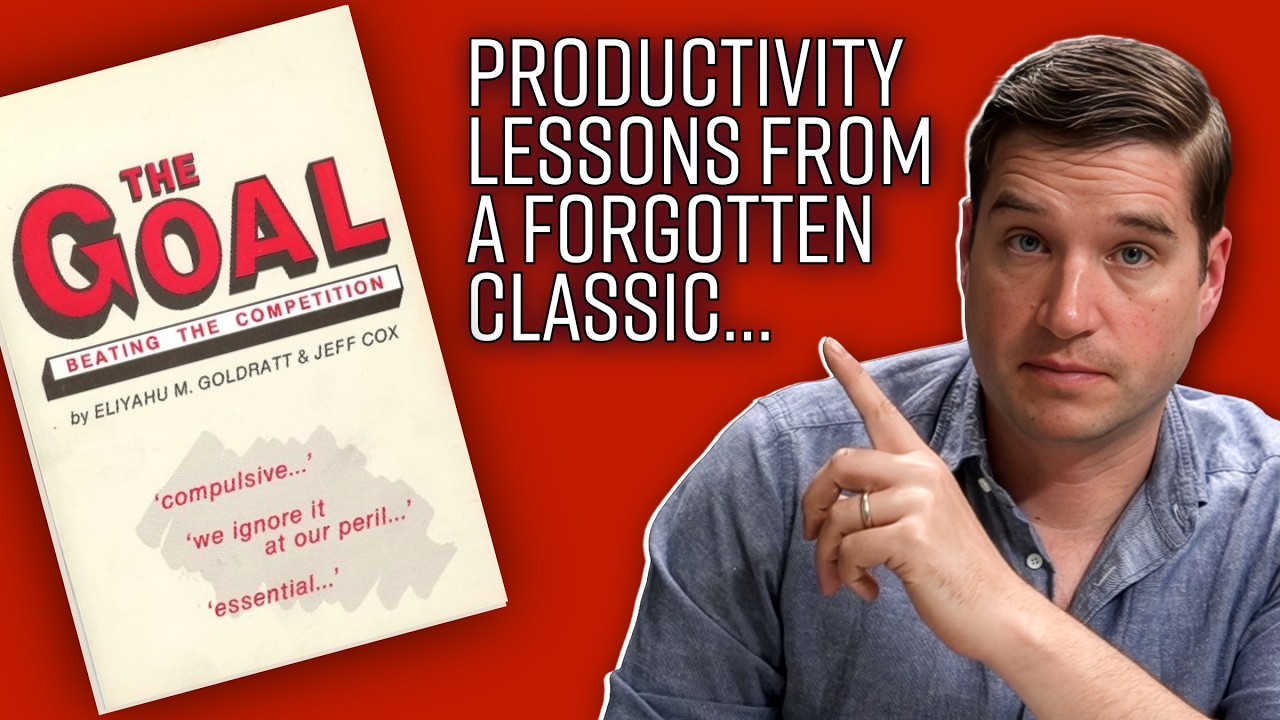
one knows it if you're on there or not, with the exception of like some memes you may or may not know. So, hopefully that is that's becoming easier. All right, what else do we got, Jesse? — Our next message is from a writer reacting to your interview with Amy Timberlake. — Okay, interesting here. All right. So, this is from Anjali Banerjee who knows Amy Timberlake. So, we interviewed the acclaimed children's book author Amy Timberlake, I think two weeks ago, uh because we were interested in the idea that she uses a typewriter, which is a slower piece of technology than a computer and has fewer features, but makes her a better writer. We use this as a metaphor about slowing down can actually produce more and technology doesn't always understand that. It's always about just speeding up. So, um, and Jolly Banner G wrote and said, "I wrote stories as a child on a typewriter, but switched to the Mac when it first came out and used computers thereafter, but then about 7 years ago, I decided that screens notifications were too distracting. So, I went to my local typewriter shop and bought an electric typewriter, but I had to keep programming the margins. So, I took it back and bought my first completely manual typewriter, a Hermes Rocket Circuit 19 circuit 1956. From there, I caught typewriter fever and now own over 100 manual machines. That would be me, Jesse, if I start getting typewriters. This whole office will be full of typewriters everywhere. I'm curating my collection, focusing on keeping typewriters with type faces that can be easily scanned in the word using OCR apps or unusual models with unusual type faces. I wrote much of the first draft of my 14th novel on a typewriter, and I posted an image of the typewritten draft of the first paragraphs versus the final version on my blog. Oh, we should look at that. Let's bring this up here, Jesse. This is the blog post. So, Angelie Banner G publishes under the name AG Banner. And I'm putting this on the screen here. Okay, there you go. So, look at that oldfashioned typewriting. Um, and then this actually an interesting article because she talks about what her final published opening was versus this. So she cut most of this but she wrote about how this is how she got out all the relevant thoughts and then she realized what's actually core here and then she cut a lot to get to the final version of it but the essay helped her uh the typewriter helped her work out those views. So I think that's pretty cool. I mean again the idea here that this comes back to it's all about bottlenecks. In fact, I think uh we might get into this in more detail in an upcoming episode, but it's this idea that there's a lot of steps involved in doing creative or cognitive work. And a lot of the tools we come up with, the digital tools are supposed to make us more productive speed up parts of that process, but it's like an assembly line. And what really matters is the bottleneck pieces, right? So if you do the other steps faster, it's just going to pile up work at the bottlenecks. You're still not going to get more actual results out. And often the bottlenecks in cognitive or creative work are not sped up by just having better tools. And in fact, sometimes they require that you step away from tools to be able to actually improve your output there. And I think typewriting is a big piece of this. Like the bottleneck for bookw writing is often producing really good words and and improving that bottleneck is often not about some tool that makes you
What I read
go faster, but actually being able to spend more time in a cognitive state where you're more likely to come up with the good things. And so you can have as many AI sped up research database tools as you want, but if that bottleneck stays small, you're still not going to be producing books much faster. So I think that's cool. Also, I didn't realize this, Jesse. It's a good idea that what people do who write on typewriters is they scan it. That was new. So she was saying she finds typewriters that have fonts that can be easily scanned into like word with a optical character recognition program. So you do it you type and then at some point you scan those in a computer and now you're editing on the computer. — I kind of like that workflow. — Just some insider baseball for the audience. It is incredible like how fast you type. — Did I type? — Yeah. So, I was thinking if there was type fires all around here, it'd be kind of loud. — It would be loud. I do have a loud keyboard, which I want to say Jesse refuses to use. — I like the other one. — Oh, the other one's so much worse. — You don't like the other one? — I That's okay. So, audience, I have a beautiful mechanical typewriter that lets me type at an incredibly fast speed. Very good. Springed up. It's loud, but it's a very good mechanical typewriter. And Jesse insists on using the Apple magic where it's like the little flat keys on the rubber gaskets. It's like soft. I don't know. I kind of like it. — It's hard to go fast. So the the mechanical one you the finger springs back up so you can get back into action a little bit quicker. — I think that's you type a lot faster than I do. — Well, we are going to start recording this podcast on wax cylinders and then we can later like remaster them. See, I'm going to embrace this. Then we can later remaster them in the digital. But that way we'll focus more. — The other insider baseball is like you not only type fast, but you keep on typing. Like you don't stop typing. I've been writing for a long time. I'm — like go. — I do go. I write. I write a lot and I write fast without AI. All right. Do we have any more? We have one more message, right? — Yeah, we do. All right. Our final message is a case study of someone putting your advice into practice. — All right. Let's see what we got here. This comes from Solomon. Salman says, "I run a textile company in Pakistan. I employ about 200 people and it's growing fast. I came across your podcast and then picked up Deep Work a couple months ago. I want to share what happened because I think you'd find it interesting. I deleted Instagram, Facebook, LinkedIn, and Twitter from my phone. Not my accounts, just the apps. If I need them, I can log in on a computer. And that's it. That was the whole intervention. The first few days were rough. I didn't realize how deep the habit was until there was nothing to
What I’m doing
scroll. I literally asked my wife if I could use her Instagram. Her feed was built for her, though, and I quit after 2 minutes. A week later, I forgot those apps even existed. My phone usage dropped from 6. 5 hours a day to 3. 5. That's 90 hours a month I was just handing over to feeds. But the numbers aren't even the main thing. I started sleeping better, started working out again, and this is the one that hit me hardest. I'm actually present with my six-year-old daughter now. More drawing, building, and playing in the last month than the previous four. I didn't need a vacation to be a good dad. I just needed to put down the phone. I wrote about this experience on LinkedIn and it kind of blew up. People messaging me saying they're deleting their apps. Others saying they've been struggling with the same thing for years. wasn't trying to preach or anything, just shared what happened. Honestly, your work was the push that started all of it. I'm now doing deep work sessions from more most mornings. 60 to 90 minutes, no distractions. Still figuring out how best to use them as a CEO. Turns out removing noise doesn't automatically give you clarity. That's a different problem. But even the early sessions have produced some of the best thinking I've done in years. All right. I love that story. I mean, look, if you take the benefits that you get from stopping using social media on your phone and you just listed them abstractly, people would pay huge money for those benefits. If you said, "I have a a productivity tool that is going to like gain you back 90 extra hours. It's going to significantly increase like the time with your kids, your ability to work out, you're going to feel better, you're going to produce better thoughts. " If I said I had a app that did that or a pill that did that, this would be the like oympic of intellectual activity. Everyone would be all over it. But it exists. Just stop using social media on your phone. Just these huge benefits are just sitting there. It's like people in physical fitness are like exercise. If you could put the benefits of semi-regular moderate exercise into a pill, it would be a blockbuster. Well, it's the same thing. The benefits of not using social media in your phone, especially as like a grown-up with kids, are immense. Sometimes you just need a push. It's that you just got to stop it. Just like I said in that New York Times piece, stop with the moderation. Stop with the, well, I just use this in this case and I have these apps to control this or that. It's digital ultrarocessed food. It's digital Doritos. It's digital Oreos. You're a grown-up. Don't eat Oreos. Don't eat Doritos. Right? Like, we just need to move on from algorithmically curated short form content. it adds no value to your life and you get massive value if you stop using it. So, I think that's a great example um of what can be gained. So, thank you Solomon for sending that in. All right. Uh like we like to do, I want to end our Monday episode by quickly bringing you up to speed with what I'm up to. So, I read the other day uh the book I read last week was The Noonday Devil. This was recommended by one of our listeners. It's a it's written by Charles Jean Charles Nalt in French and I forgive me but I don't know the I didn't write down the translator's name. Um so this is it's the he's a Benedicting monastic I believe. Uh so it's a religious book as published by the Ignatius a Jesuit press but it's interesting. This is why the listener suggested it to me because he thought there'd be some overlap with what we've been talking about here with the deep life. It's about the Greek term acidia ac which you can translate as like spiritual sloth. And it was this really big issue for the early monks. Right? This is something that the desert fathers the original monastics in the near east deserts of the early common era they struggled with in their sort of desert monastic cells. St. Thomas Aquinas wrote a lot about this in the medieval period and then it sort of fell off the radar and this book is bringing it back. and say we should bring this term back because it's really useful. And I did find some interesting I mean anytime we have people writing about one of these mental states or productivity issues for 2,000 years I'm interested. I was like oo I like these older takes and there's a couple interesting things I'll mention real quick I learned from this book. So this idea of spiritual sloth or acidia part of the definition is a certain lack of activity right? So part of it is you could just not do stuff. You just stop doing stuff. Uh and they captured that as a problem. But what was interesting is they said the other way that a CDIA can show up is essentially busyness for the sake of busyness. Now the term that the French author uses is confusingly translated as activism because obviously activism has a clear meaning in English of like you are uh you are advocating for a cause. But they actually the author means activism differently here as like pseudo productivity, busyiness for the sake of busyness. Being active for the sake of being active without an actual meaningful goal to it. So I thought that was interesting. They're like spiritual sloth. Um this sort of sense of despair could either lead to I just stop doing things or I'm just doing nonsense all the time to distract myself. And the real cure is meaningful activity aimed at meaningful goals. So it was interesting book. I mean, these are like religious academic books are not necessarily like the most fun reads, but I got a lot of good information out of it. Um, and otherwise, the main thing else that's going on in my life is I'm still trying to figure out I have summer coming up. I'll keep you posted, but I always have my summer schedule. That is how I run my weeks during the summer when I don't have class responsibilities at Georgetown. And I am thinking about a shift this year, Jesse. My traditional summer schedule has been uh deep work every morning till late morning or lunch and then I would do Tuesday, Wednesday, Thursday in the afternoons is when I would do other things like podcast recording or meetings or calls and keeping Monday and Fridays open of calendar things, professional calendar things so I can just like have long days thinking and reading or even just recharge. I'm thinking about switching it to uh Monday, Tuesday, Wednesday as the days with my active afternoons and then Thursday, Friday leading to the weekend being the days where I don't schedule things on the calendar. I think that's going to match better our podcasting schedule. — You're still going to deep work in the morning, right? — Yeah. Uh deep work every morning. Yeah, that's the given. So, anyways, I think — if you stop doing deep work, like nobody's going to listen to the show anymore. Well, it all falls apart. — Which like, yeah, which by the way, it's like all the pressure of the internet is — you better keep on doing deep work. — What I mean, all the pressure of the internet is like, hey, just work on the stuff you do afterwards. But if you don't have anything to talk about, what's the point? Then you just get like obsessive about, I don't know, your thumbnails or something. But like, you still actually have to have something to talk about. — You got to do deep work with Humeman. He said he wanted to do it with you. — Um, yes. Yeah. Yeah, we could do it together. — He said he wanted to do it. — All right. Me and human do some deep work. Do some deep work together. Um, as long as you don't go in the gym. It's a strong individual. Strong individual, man. They're out there. Yeah. He like set some record on that one on Cameron Haye's podcast because like whenever people come on his podcast, he puts him through this gauntlet of exercises and he like carried the boulder up the mountain or something. Didn't take any breaks. — I'm not going on Cam Hannes's Haynes's podcast. That's like the worst way to get people on your show. like, "Hey, come on my podcast. I have a pretty good audience. Um, you're g have to carry a boulder up a mountain. " — Yeah. Then run 10 miles and then lift. Oh, — my equivalent is going to be like, "All right, I'm going to make you spend an hour reading in translation a book on a Cydia. " That's my equivalent of pushing the boulder up the mountain or we'll do a typing speed challenge. Might you might be strong, but what's your WPM? What's your words per minute? All right, that's all the time we have for today. Thank you for listening. Uh we got an AI reality check themed episode coming out on Thursday and then another advice episode the Monday to follow. So we will see you soon and until then as always stay deep.