Why You Grow Bitter As You Get Older — Arthur Schopenhauer
11:32

Why You Grow Bitter As You Get Older — Arthur Schopenhauer

Einzelgänger 01.05.2026 76 712 просмотров 4 232 лайков

Machine-readable: Markdown · JSON API · Site index

Поделиться Telegram VK Бот
Транскрипт Скачать .md
Анализ с AI
Описание видео
Why do some people grow bitter with age? Why do some older adults seem cranky, as if they’re simply done with life? Support the channel: ✔️ Patreon: https://www.patreon.com/einzelgangster ✔️ PayPal: https://www.paypal.me/einzelgangerco Books: (affiliate links): 📖 Taoism for Inner Peace: https://amzn.to/4bN9lVB 📖 The Urge: Fall of a Stoic: https://amzn.to/3Yc77Kw 📖 Stoicism for Inner Strength: https://amzn.to/3rZU0xL 📖 Stoicism for Inner Peace: https://amzn.to/3e6myLX 📖 Loose: On Letting Stuff Go: https://amzn.to/3QVfrqM 📖 Unoffendable: https://amzn.to/35e23a5 Merchandise: 🛍️ Shop: https://einzelganger-shop.fourthwall.com #schopenhauer #arthurschopenhauer #einzelgänger 00:00 Introduction 01:24 The great sham 04:13 The illusion of lasting happiness 07:22 Pain goes deeper than joy 09:42 The end of the play

Оглавление (5 сегментов)

Introduction

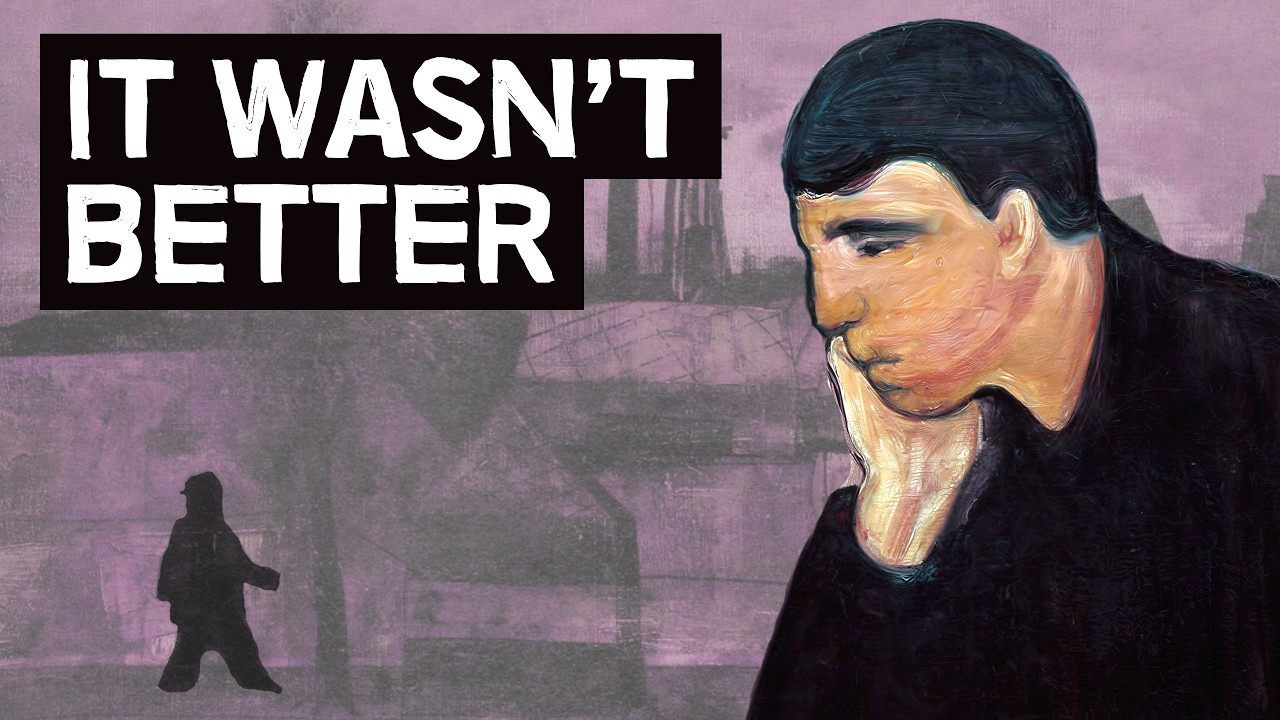
Why do some people grow bitter — with age? Why do some older adults seem cranky as if they're simply done with life? Is life actually getting worse? Or do we just begin to see it differently? When we see older people who seem a bit distant, down, or even bitter, it's easy to say they have only themselves to blame and that they should simply be positive. But maybe their bitterness wasn't entirely their fault. Maybe it's the result of life's illusions about happiness. Illusions that have begun to wear off with age. For the pessimistic philosopher Arthur Schopenhauer, it's not all that surprising that people aren't too thrilled about life anymore. Because if we're really honest, isn't life, by and large, a disappointment? This video explores why people become bitter as they get older based on Schopenhauer's philosophy. My name is Stefan. If you enjoy my work, you can subscribe to my newsletter on Substack. You can also support me on Patreon and my books are available on Amazon. Thank you. And I hope you'll enjoy this video.

The great sham

In our younger years, life seems to play a curious trick on us. Our future looks bright, filled with endless opportunities. Time and space stretch out before us and we're excited about what's to come. In early youth, as we contemplate our coming life, we are like children in a theater before the curtain is raised. Sitting there in high spirits, eagerly waiting for the play to begin. As Schopenhauer put it. When we are still young, we see ourselves flying air blades, living in dream houses, and being part of happy families. We imagine our lives to be fulfilling and that our happily ever after is waiting for us around the corner. And we may also find ourselves idealistic about the world around us. I certainly was when I was younger, believing that the adults had been doing it all wrong and that we, the younger generation, would certainly clean up the mess and make the world a better place. Maybe we had seen too many Disney movies or maybe we were shielded from the darker aspects of life or maybe as children were simply more inclined toward hopeful thinking. Whatever the reason, Schopenhauer considered this ignorance of the future a blessing because if we had really known, we would have seen what we are. Innocent prisoners condemned not to death, but to life. We would see that life's misery is not an exception, but an inherent condition of being human. And that, of course, isn't a nice prospect and would destroy our youthful enthusiasm. Yet blissfully unaware, we plunge into life with great expectations and even greater desires. But it doesn't really play out as we had hoped and we most likely collected a fair share of painful experiences, some of which happened many moons ago, but we still carry them with us. As we grow older and encounter more hardships, life begins to feel like nothing more than an unfortunate episode between birth and death. And so, over the years, we become bitter and even feel cheated. And we ask ourselves, "Why am I not happy? Where did I go wrong? Did I miss something? " — Schopenhauer's essays in Studies in Pessimism explain why life often ends up so unsatisfactory for us and that this isn't necessarily our fault.

The illusion of lasting happiness

I was talking to a childhood friend a while back and although I forgot how we arrived at this topic, he said, and I'm paraphrasing, "No matter the person you encounter today, it will never be like the first time you fell in love and every time you meet someone new, the feeling just gets less and less intense. " During that conversation, we came up with other examples, a first gaming console, a first car, a first house, experiences that hit hard the first time, but with each repetition become a little less intense. I thought about it afterward and it seems to be a common experience that the same pursuits bring less and less satisfaction over time while the desire for them remains. And here's where things take a darker turn. Whether or not the intensity fades, the desire itself seems to persist. How many people keep chasing the high of falling in love even though it always fades and often results in a painful heartbreak? And it's not just falling in love that's fleeting. Most forms of pleasure are temporary and often take quite some effort to attain. So, why do we keep chasing them? According to Schopenhauer, we keep chasing because of the irrational force within us, the will to live. Because of the will to live, we are always driven to desire something and soon after we get what we want, we grow bored with it. The novelty wears off and we desire something new. At the same time, we grow up with the illusion of lasting happiness, but when all is said and done, we never really reach it and eventually, we end up disappointed and frustrated with life. Shipwrecked, as Schopenhauer called it, arriving in the harbor with masts and rigging gone. When we're older, we have made so many attempts to get something we believe will make us happy that some of us begin to see through the game. As opposed to the young versions of ourselves, full of expectations, we now see past the illusions. Life, as it turns out, means ongoing dissatisfaction with no lasting solutions. The old tricks promising lasting happiness don't work anymore. As Schopenhauer wrote, "He who lives to see two or three generations is like a man who sits sometime in the conjurer's booth at a fair and witnesses the performance twice or thrice in succession. The tricks were meant to be seen only once and when they are no longer a novelty and cease to deceive, their effect is gone. " End quote. So, maybe that's why my friend has started to notice that whatever once made him happy no longer does, at least not to the same degree. Meanwhile, the longing remains.

Pain goes deeper than joy

One thing we learn as we get older is that misfortune often runs deep. And it seems to overshadow the satisfaction we have experienced so far. More optimistic minded individuals would likely disagree, asserting that the enjoyment in life actually outweighs the pain. But Schopenhauer fired back at such claims by making a comparison between two animals, one eating the other. Which one has a more intense experience? The one enjoying the eating of the other animal or the animal suffering the pain of being eaten alive? And if that example doesn't cut it, let's take an honest look at our own experiences. There are countless things that can make us cry and scream in agony, but how many can overwhelm us with pleasure in the same intensity? The severity of pain compared to pleasure is not surprising though as Schopenhauer observed that pain is a positive experience. It makes its own existence felt, as he put it. Pleasure, contentment, and happiness, on the other hand, are merely the absence of pain. The brief relief we feel when a desire is fulfilled while pain itself is deeper, stronger, and far more enduring. Emil Cioran, another pessimistic philosopher very much influenced by Schopenhauer, didn't write his work on the heights of despair without reason. He too recognized that suffering carries far more weight than pleasure. And so, falling in love, for instance, isn't a positive experience that adds something, but more of a painkiller temporarily freeing us from our suffering. The more intensely we fall in love, the stronger the effect. Now, when we're older, we often have experienced a lot of suffering and much of it cuts deep and sometimes we never really recover from it. We have spent our whole lives putting out fires under the guise of pleasure, fun, and happiness and we repeatedly burned ourselves in the process. So, is bitterness a surprise then or is it a logical outcome of expecting much from life only for it to be painfully underwhelming?

The end of the play

Before the play ends, we may realize it sucked and won't get any better. And so, we have seen enough. The sham has been exposed. Our tickets were a waste of money, and we feel ripped off. During this emotional roller coaster ride without safety bars, we have accumulated enough pain that it started to weigh on us, especially when misfortune keeps coming, adding to our bitterness. We might still experience enjoyable things, maybe even fall in love, but these just aren't enough to find relief from all the baggage we're carrying around. Schopenhauer wrote that in our later years, the disappointment of life begins to dominate our feelings, and we find ourselves longing for a time when life still felt full of hope, the moments before the curtain was raised. But our tragic human condition also makes way for something else, what Schopenhauer called the most necessary thing in life, tolerance, patience, regard, and love of neighbor. Our experiences can make us bitter, but they can also deepen our empathy for our fellow sufferers. Because in the end, we're all in this together. Thank you for watching.

Другие видео автора — Einzelgänger

Ctrl+V

Экстракт Знаний в Telegram

Экстракты и дистилляты из лучших YouTube-каналов — сразу после публикации.

Подписаться

Дайджест Экстрактов

Лучшие методички за неделю — каждый понедельник