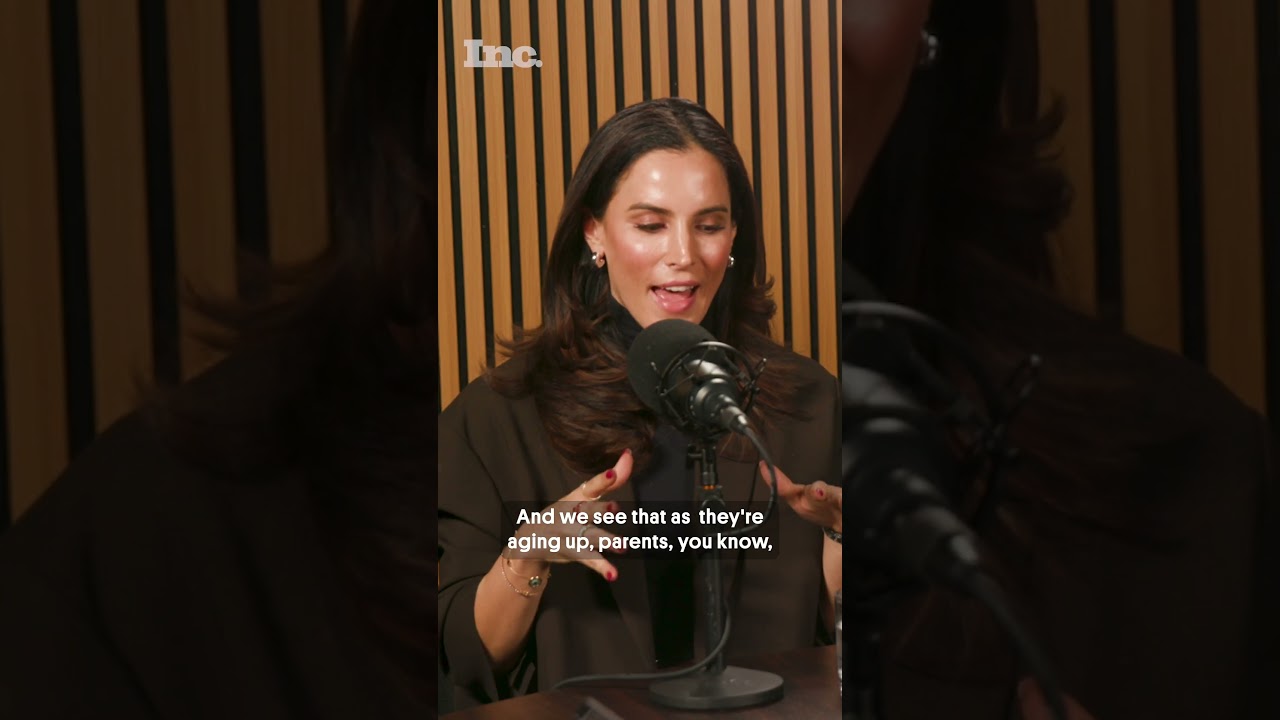
In this episode of Your Next Move, recorded live at the Inc. 5000 Conference in Phoenix, Inc. senior writer Sam Blum sits down with Kimberly Furrh, founder of Furrh & Associates, a certified public accounting firm ranked No. 4454 on the 2025 Inc. 5000 list.
Furrh shares how she built her business from a side hustle in her living room into one of the largest accounting firms in Southwest Oklahoma—growing through strategic acquisitions, word-of-mouth referrals, and a bold expansion into business coaching. She explains why today’s entrepreneurs don’t just need tax preparation—they need education, guidance, and a “safe space” to ask the questions they’re often too embarrassed to raise.
The conversation dives into the realities behind rapid growth, from managing thousands of clients with a lean team to hiring ahead of demand and reshaping company culture to prioritize learning and service. Furrh also breaks down common mistakes entrepreneurs make—from misunderstanding what’s tax deductible to improperly managing LLC structures—and why those missteps can have serious consequences.
Plus, she offers a candid take on AI in accounting, the ongoing shortage of CPAs, and the lessons she learned the hard way after a devastating data loss nearly derailed her firm.
For founders navigating growth—or just trying to get their financial footing—this episode offers practical insights on scaling smart, staying connected to your customers, and building a business that meets entrepreneurs where they are.
Оглавление (6 сегментов)
Segment 1 (00:00 - 05:00)
Brought to you by Capital One Business. When it comes to growing your business, sometimes you need more than financial investment. You need personal investment. That's what Jeff Platner, Capital One Business customer and co-founder of Brackish, discovered after a unique groomsman gift in the form of a turkey feather bow tie grew into a successful men's accessory line. But when they were ready to expand, Jeff turned to his Capital One representative, Alex Parker, who wasn't just an adviser, but a Brackish customer. Because of the encouraging conversation with Alex, Jeff launched a woman's line, scaling the Brackish brand to the next level. Because at Capital One, it's not just business. It's relationships that help you do more business. Learn more at capital. com/businesscards. Hi, I'm Mike Hoffman, editor and chief of Inc., and you're listening to Your Next Move audio edition, produced by Inc. and Capital 1 Business. In this season's audio edition, we're bringing you conversations from the Your Next Move pop-up studio at the Inc. 5000 conference this past October in Phoenix, Arizona. You'll hear Inc. writers and editors interviewing the founders of some of the fastest growing private companies in the country. In this episode, Inc. senior editor Rebecca Dazinski talks with Dr. Sandy Fiaski, founder of Loadstone People Consulting, which ranked number 872 on the 2025 Inc. 5000 list. Loadstone helps private equity firms and their portfolio companies strengthen leadership teams and build better people systems. Now, Rebecca starts the conversation by asking Sandy how she turns human behavior research into clear, practical decisions for leaders under pressure. Hi, could you tell me your name, your company, and what number on the Inc. 5000 you are? — Absolutely. My name is Kimberly Fur and I am the founder of Fur and Associates. We're a certified public accounting firm in Southwest Oklahoma and my number is 4454. Check that out. Right. — Nice. Yeah, you made it. Is this your first time? — Absolutely. Didn't even know Inc. existed until two years ago when I was asked to certify somebody else's results and they didn't make the list. So, I decided, you know what? I'm going to make that list. And I worked really hard for 2 years to get here. So, yeah, it's pretty great. — Wow. That's an interesting origin story for making this list. You're a CPA, — correct? — How long have you been in business for? And like, what's been your secret to massive growth over the last 12 to 24 months? — Well, so I mean, I started in my living room. Um, my boss at the time, I was CFO for this guy who built landfills for the army. So he built garbage dumps for the military. — And he said, "Thank you for making me rich. " — And I was like, "Okay. " And then 2 days later, my pest control guy says to me, he's like, "So what do you do? " And I said, "I'm an accountant. " He goes, "Need my taxes done. " And I thought, "Come back on Saturday and I'll do your taxes. " — And around what time? Like what year was this? — This was in 1999. — Okay. — Yeah. So I started in my house. I started in my living room. He had my 2-year-old on his lap and I sorted through his receipts and I did a tax return and he gave me money. — So, I thought, "This is pretty cool. " — So, I did it on the side for a couple years and made nothing, — like no money. So, I decided I needed to get aggressive, started seeking out who I could buy their business. Long story short, after buying eight different accounting practices over the years, I am now the largest in southwest Oklahoma. Yeah, this is pretty cool. I guess like over the next year to two years like how are you going to sustain this massive growth you've been experiencing? — Oh, okay. So, in my industry there's a lot of serial entrepreneurials on the small scale, right? They haven't hit their $500,000 yet — and they are hunger to learn. I've got a waiting list of clients that are looking for one-on-one consulting of how to run their business. M. So, we've recently added business coaching to the accounting platform, which is not real common in Oklahoma at the moment. And so, our goal is to just to add more accountants that are willing to advise that entrepreneur that's just trying to get started. — And right now, we've got a waiting list of clients. We've got probably 75 clients that are waiting, just chomping at the bit to get some advice on how to run their business. — Wow. I mean, how many clients do you have that you've actually been able to take in? Um, right now we're at about 5,700 clients. — Wow. — I know. — That is a lot of clients. — It's a lot of tax returns, right? Yeah. Yeah. — What's it like around uh tax season at your office? Do you sleep? — No. — Yeah. — But who needs to sleep, — right? — Yeah, totally. I mean, that was my thought. — Yeah, you can sleep when you die. I mean, tax season is so concentrated. You have 2 and 1/2 months to really do what you need to do. But the entrepreneur guy, he's not organized. he's not ready to file his taxes in the spring. So, you
Segment 2 (05:00 - 10:00)
actually have 10 months to do their taxes. So, yeah, we just do all that work in the summertime when their stress is not there. — Mhm. — Yeah. It's pretty cool. — Okay. Gotcha. What is like the most common piece of advice you wind up giving to new entrepreneurs who are, you know, looking for tax advice from someone like you? — Well, so, you know, the most common question we get is what's deductible? — Yeah, that makes sense. — Yeah. They don't know. They listen to Tik Tok or Instagram or, you know, other social media of what's deductible, but they really don't have certainty on what's deductible. So, we actually created a course where they can pay to sit with an accountant and really go over what's deductible. But, I'll give you the secret. It's whatever is ordinary and necessary for your business is a taxdeductible item. — Okay? — And it's crazy that these guys don't know it. Ordinary and necessary. — I mean, yeah. Isn't that like an argument, though? Like, you could argue some things. — Absolutely. The tax code is full of opinions. — Mhm. — And you just have to be able to support your opinion with a 50% certainty. — 50%. And you can win an IRS audit. Check that out. — Wow. That's interesting. — Ordinary and necessary is all you got to do, man. — Yeah. I'm going to learn a lot in this half hour for sure. So, you teach them how to write things off basically. What's the most common sort of like because that's something that like freelancers need to know how to do. Like when I was freelancing, I would write off my rent, you know, that kind of stuff. — Sure. Yeah. — When you're starting a construction business or something like that, what are these people trying to learn from you other than writing things off? Well, so you know, most of the entrepreneurs are embarrassed that they don't know — and so they get in front of bankers or other people and they realize they don't know what they don't know and so they don't want to sound stupid. And so we have created this safe space for the entrepreneur to come in and ask questions and not be made fun of. And so when they go back and speak to their bankers or their investors, they sound intelligent — in that safe space that we've created is really how we've tripled our business since I learned about Inc. 5000 two years ago was creating that safe space for entrepreneurs. — What's the program called? — It's self-made. So honestly, I was certifying a client's results so he could apply for Inc. 5000. He didn't make the list, but that's okay. And so I realized that in order for me to be on the ink list, I'm going to have to be triple of where I'm at right now in my business. So what's the product that we need? What is the most common scenario that we have in our business? It's not tax returns. Nobody cares about that. I mean, they just want their refund. Bookkeeping is an necessary evil. So what else could we do to bring in these business? And that business coaching and that education piece really was the key. — Who teaches these classes, I guess you want to call them, right? — Well, you know, it really just depends. We've got lots of great accountants in our firm. Some are more specialized than others, and it just really depends upon the need. And so, when a client signs up for an educational program in our system, they're going to have three to four different people on their team to teach them the things that they need to know. so they can go out and grow their business and hit that million-doll mark. — So, are you actively like advertising the firm or this one product? — That's just it. We haven't advertised a diddly squat. — Not a single thing. It really has just been word of mouth in the entrepreneurial community in North Texas and Southwest Oklahoma. — Okay. So, we are just now getting into the marketing situation. As a result, we've got clients all over the world now. — Wow. What are the primary industries you serve like locally? — The real estate investor. — Okay. investor thinks their poop don't stink. — I'm just going to be real transparent. They think because they've got, you know, 10 to 20 single family homes that they've made it. — They don't really realize they haven't, but we're going to let them have their ego. But the real estate investor is really our key target. — Okay. — Yeah. — Got it. — And they talk to each other. It is so funny. They'll talk to their real estate agent who now talks to the other guy. And as a result, we've got real estate investors in 26 states now. — Wow. Those entrepreneurs who are just starting out in their careers, like what is the biggest mistake, like the most common mistake you see them making on their taxes? — Well, it's not really on their taxes. They go out and create this LLC, right? limited liability company and don't know how to protect it — and they go out and violate that sucker so many ways. They don't sign documents correctly. They don't set up their bank
Segment 3 (10:00 - 15:00)
account correctly. And they totally jeopardize this beautiful business that they're creating because they don't really understand the things that's involved with having an LLC. And it's not about what's deductible or making too much money or not saving money for taxes. It's really just violating the core principles of the legal structure of their business. — And how do they do that? — When you're an LLC, there's certain parameters that you're supposed to do. So, when you create a contract, whether this contract is with a subcontractor or if you're a real estate investor buying the property, you have to sign it a certain way. You can't sign it as if you're Joe Smith. You have to sign it as Joe Smith, the member. who's a member of the LLC. — Okay? — And so that little bit of signing totally violates in IRS's eyes — their LLC. So why do they spend the money to — sign the paperwork as like an officer of the company? — Correct. Yeah. And so they go in and violate these LLC's that they've created and then they want to file their taxes and have that liability protection from the IRS and they can't. It's really sad because they don't have that education piece. — Yeah. — Navigating that bureaucracy. It's like the last thing that like any of them want to do, right? — Absolutely. Well, yeah, because they're creators. Entrepreneurs are creators. We're here to create and be dynamic and bring in that business and close that sale and get, you know, the next deal. We don't want the minutia of admin. What entrepreneurs is good at admin? — Yeah, totally. I know that I'm not. I'm not an entrepreneur though, but still, I can relate to being bad at admin. So, you mentioned that you're just starting to think about marketing. I guess I'm familiar with like accounties, advertising and stuff. I when you think of like — specialty like services that cater to I don't know like business people or just the general public. I think of like public injury law firms being like — right — advertising heavy but like how are you going to advertise your company? — We have certain requirements as a certified public accounting firm. We have restrictions on how we're allowed to advertise. So we've actually spun off this business coaching portion of the business because then if we have a separate business for it, we're not under the guidelines of this certified public accounting community. So right now we actually have recently bought a program called Omni and we are just blasting a lot of promo and we're having workshops just a lot of social media posts. — Okay. Is Omni a like email marketing platform? — It is. It's a is a version of Highle. Have you heard of High Level? — No, I haven't. — Okay. So, HighLevel is this. It's like a CRM platform that also will do your social media post for you. You can set things up in advance. It also responds to client inquiries, send out promo pieces. It will allow you to create this webinar signup that's never really a webinar. It's like a I don't know. I just bought it, so I I'm still learning about it, man. — Yeah. That's cool. — Yeah. Did you mention how many people work for you? — No, I didn't. But I only have 17. — Really? Only 17 people and you have that many clients? — Yeah. So, two years ago, I had eight. Eight employees. — Okay. — And so, the concept was we've got to double our client base. So, let's add more people. And so, yeah, we're at 17. — So, when you think about scaling, you tend to hire ahead of growth. Is that sort of how you look at it? — Well, you have to. I mean, because if you don't have the bandwidth to bring in more growth, you're going to stop yourself from closing that deal. — At least that's my experience. And so, yeah, I've just hired five employees since July 1st to get to the 17. Now, we're just ready for business. — And when we come back, Kimberly explains how her firm uses industry specific AI. But first, a quick break. Starting a business comes with its share of ups and downs, which is why staying true to your vision is essential. A non-negotiable for Romeo and Milka Regali, Capital 1 Business customers and co-owners of Ross plant-based restaurant in New York. Romeo and Milka took a leap of faith when starting their own restaurant, gutting an empty space and building it from the ground up. Every pipe, every wall, every detail. But building from scratch came with a heavy financial burden, which is when they turned to their Capital One business card. With the flexibility of the card's no preset spending limit, they were able to spend more and earn more rewards while bringing their vision to life. Today, Rossa's success is proof that with passion and the right support, it's possible to make your dreams a reality. Learn more at capital. com/businesscards. Everyone wants to talk about AI all the
Segment 4 (15:00 - 20:00)
time. I don't know if it's the same in a, you know, your field. I write about tech and tech bros and VCs and stuff. Uh, so AI is just thrown at me from every angle of my life throughout the workday. You probably don't have it that bad. — No, we don't. — Yeah. But I'm curious like can you use AI programs to do people's taxes? You probably can't, right? — You can't. Well, so in my world, we have to have specialized AI. So, we actually have an AI that is very secure where it will allow us to do certain functions. But really, no, you can't use AI for taxes. You can for bookkeeping. You can for other things like financial statement analysis, but again, you have to have a really secure platform because you're dealing with clients private data. — Yeah, totally. Have you seen startups try to enter the tax industry like pedalling an AI product? Is that something that's going on? — So, there's this guy right now that's really showing up on my social media feeds that he thinks that you can take a whole bunch of receipts and sort them with AI and create financial statements. And I'm thinking, yeah, you can. But then really, can you? — Mhm. — You know, most of our clients like the fact that they have that personal relationship. AI has its place, but when you're dealing with people's money, you really need that personal relationship. — Yeah. I guess maybe when you're filing your own taxes and you're trying to just like, — I don't know, organize things, perhaps that could be applicable. — Yeah. I'm not sure. So, talk to me about the culture at your company. How do you maintain the culture while you're growing? Is that a challenge? — Well, so in all honesty, I hated my culture two years ago. I fired every executive and every admin person in my office. I only kept my technical people, my accountants and bookkeepers. Everybody else was fired. Wow. — Because they did not want to grow. — When I came back and said to him, "Okay guys, I learned about this Inc. 5000 list thing and I want to be on it. Let's figure out how to be there. " And I was met with stops by my admin team, my executive team. That's not where we need to be. fired every single one of them in the last 12 months. We are now have a new culture of growth and really servicing the client and really helping them understand their situation. And as a result of changing that culture where we're there to help each other, we have skyrocketed. — But yeah, no, culture is really important, but you've got to stay focused to the end goal. — We have pictures of our clients in our office so we can see that little guy. insurance agent or that pest control guy. We can see their families. So, we understand that's our endgame, that guy. — That's interesting. Are these framed photos or these like just how do you organize them? — We have a gal who's responsible for downloading social media pictures of our clients — and just randomly posting them. So, you may open the cabinet to get more paper towels for the bathroom and there is going to be Jason, the State Farm guy. So, it's kind of like a cookie culture or — Absolutely. Cookie c Yeah. Absolutely. Yeah. We just celebrated National Cheese Day back in June and we had cheese earrings and cheese hats and we gave out cheese slices to the clients. It was pretty awesome. — Wa. Okay. Interesting. Yeah. I wonder like uh you know if like a prospective client walked in and just saw you guys like duck dad on cheese gear what they would think. You know, maybe they think like hey you know this is right for me if you have a good reputation. I've known to be unusual. So, hey, there you go. — Do you think being unusual is Yeah, it must be an asset. You have to be who you are, obviously. Absolutely. But like — when you think of like an accountancy, pretty buttoned up and, you know, sterile usually. — Absolutely. Yeah. I was just talking to somebody here at the conference that when you think of an accountant, you think of that stupid green visor with a pocket protector full of pens and a calculator, right? And no social skills. Mhm. — Okay. We're not that accountant. — Yeah. We are ones that really laugh. If we don't have laughter in our office, then something's wrong. — Sure. — We're noisy. We're loud. We're caring. But yeah, we are not the stuffy accountant. — Mhm. Everyone makes mistakes in business. Tell me about a recent mistake you've made, but you would make again because the lesson that you learned from it was helpful. — Well, I don't know if I'd make it again, but let me tell you. Yeah. Let me tell you a story. 2015, March, height of tax season, and I trusted the wrong people. Before my server was in the cloud, my server crashed. I lost every single stitch of data in the height of tax season. We lost all the financial statements that we had prepared at year end. We had first quarter payroll reports looming at us, tax deadline looming at us, and no data. We're in such a remote place in
Segment 5 (20:00 - 25:00)
Oklahoma that it was going to be a week before we could get back up. — So, it was awful. just hard for like a technician to come fix your computers. — Absolutely. Our backups were corrupt because my IT person had been lying to me. — Oh, no. — And she said she was testing my backups and she wasn't. — So, that was a lesson I learned. — Don't trust your IT guys. You verify your IT guys. — How do you do that? Well, you make them show you. — Yeah. — You know, show me that you restored that file. Show me my backups are still functioning. — Well, what became of that whole mishap? — You know, I drained every single bank account I had. I maxed out every single credit card. I borrowed money from the guy I was dating and hired temps to come in and recreate all this beautiful data because and I had to call clients and say, "Bring me back your original documents. " And we literally spent 2 weeks nonstop, 20 hours a day, two different shifts to recreate everything, to make the deadlines. — Wow, that is hectic. — It was awesome. — How do you stay It was awesome. sane in a moment like that? I don't think I could do that. — Um I — That's like That takes me back to like high school math class or something. — It was awful. Yeah. Lots and lots of candy. I actually hid underneath the receptionist desk and just shoved Reese's peanut butter cups in my mouth for about 2 hours. — Okay. — Cuz I really just didn't know what to do. — Yeah. Like panic eating. — It was huge panic. Yeah. And they're like, "Are you okay? " And I'm like, "No, no, I'm not. I need more chocolate, please. " — Yeah. So, the lesson learned is like having trust in the people who work for you, obviously. — Yeah. Absolutely. you can trust, but you still have to verify. — Yeah. That was really the lesson learned. And so going forward, you know, when a client tells or a staff member tells me they handled that client who's a little bit cranky — Mhm. — Okay. I trust them, but I'm going to reach out to that client anyways and say, "How's it going? " Just to verify that it really was handled. — And as a result, that small personal touch has just made my business grow exponentially. — That's a good point. And I think a lot of founders talk about having like being not just like being the CEO and having the title, but like really being hands-on and being the face of the business also like — helps you maintain better control over it for sure. And also Yeah. Like so how hands-on are you? Like you have so many clients. Are you talking to everybody? — No, I have my favorites. — Yeah. You talk to the ones that are necessary, the ones that can get you the referrals, the ones that bring you extra business, but you know, I don't talk to everybody unless I need to. — Right. — But they think everybody thinks that I'm their friend. And that's okay. I'll be your friend as long as you write that check. — Yeah. Totally. I mean, that's right. It's a transaction. — Absolutely. But just when you make it, just because you're the founder or the CEO or the head honcho, you can't disconnect from your client base. — You know, you don't necessarily know what really is the issue in your business. — You've got to know what your customers are thinking. You've got to survey them. You've got to be connected, — right? — Yeah. — What's like the age group of most of your like new clients? Like do you have like a lot of like younger entrepreneurs? — Yeah. Uh, so I've been in practice for 28 years — and my client base, the older guys, they're retiring. They're closing their business. So the bulk of my guys are uh younger than 35. — And so you would think younger than 35, they could figure this out on their own. They can't, but they're afraid to go and talk to their mentors and tell their mentors they don't necessarily understand how taxes work or bookkeeping works. So we're that safe space for them. Most of the clients are my daughter's age, which is really weird. — Yeah. But that's okay. — Yeah. I mean, understanding the tax code is really perplexing for a lot of people, myself included. You know, that's a good resource for them, I imagine. — So, in closing, what do you think the biggest external risk to your businesses in the next year? like whether it be I don't know like supply chain issues, regulation, just like you know things of that nature. And the thing is like being that you're an accountant, people need their taxes done. So like — are there any like external factors that actually affect your business in that kind of way? — Well, you know, it it's really just the supply chain because people don't want to be certified public accountants. M — they don't want to go the younger people they'll finish their degree but they don't always want to take the test — and they don't want the responsibilities
Segment 6 (25:00 - 26:00)
that go along with being a CPA. There's a national shortage of certified public accountants. — So much so that our industry has reduced the testing requirements in order for you to take the test. So it's definitely going to be supply chain in the next several years. Like I'm at 53 years old and I'm already thinking who's going to be my suex successor. Yeah. — Right. I've got to plan 20 years out for somebody to replace me. — Yeah. — And that wasn't the case just 10 years ago. — Huh. Well, I mean maybe these things go in waves, you know, but — they do. But that's all right. — I would imagine that like going to universities and kind of like recruiting people from accounting programs, right? — Absolutely. We do more marketing for our supply chain than we do for customers. — Mhm. — Right. The key is to market the guy who's a junior in college and really start nurturing them and so when they graduate they want to come work for you. So I've been marketing to the local universities for years and it's paid off. That's how I was able to grow so quickly. Marketing for clients, no, not necessarily the thing. — Right. Yeah. — Okay. So final question. Where do you want to see your business in the next two years? — Well, you know, that's what I don't know. I would love to be on the Inc. 5000 list for the next 10 years and I'd like to be on the Inc. 500. So that's my goal right now. — Okay. Well, hey, that's a worthwhile one. You know, I hope to see you back here for sure. — Absolutely. Thank you for your time today. — Yeah, thank you. It was great talking to you. — Absolutely. — That's all for this episode of Your Next Move. Our producer is Blake ODM. Editorial editing and sound design by Nick Torres. Additional editing from Sam Gibbau and Tad Watams. And our executive producer is Josh Christensen. If you haven't already, subscribe to Your Next Move on Apple Podcasts, Spotify, or wherever you listen. And Your Next Move is a production of Inc. and Capital One Business.