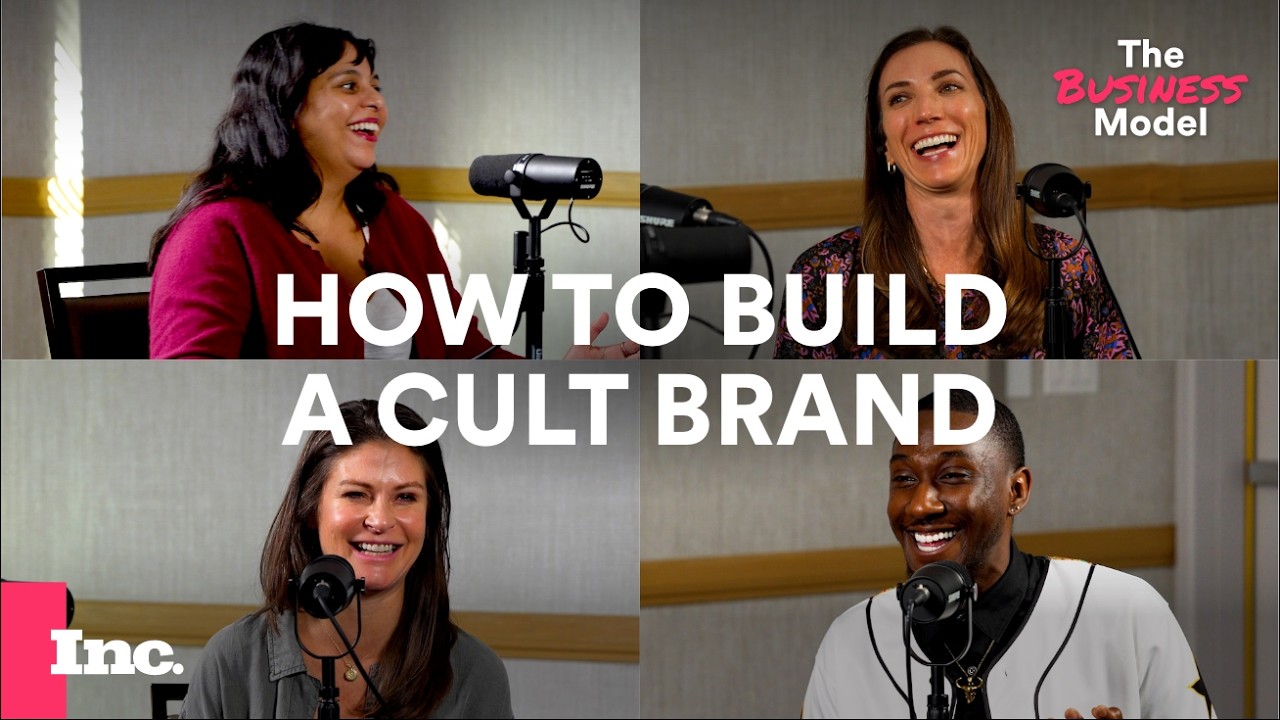
This episode is your roadmap for taking a good idea, turning it into a business, and keeping your customers coming back for more.
In today’s climate, finding your niche — or better yet, a cult-like following — is like a cheat code for success. And our panel on this episode of Founder Group Chat has done just that.
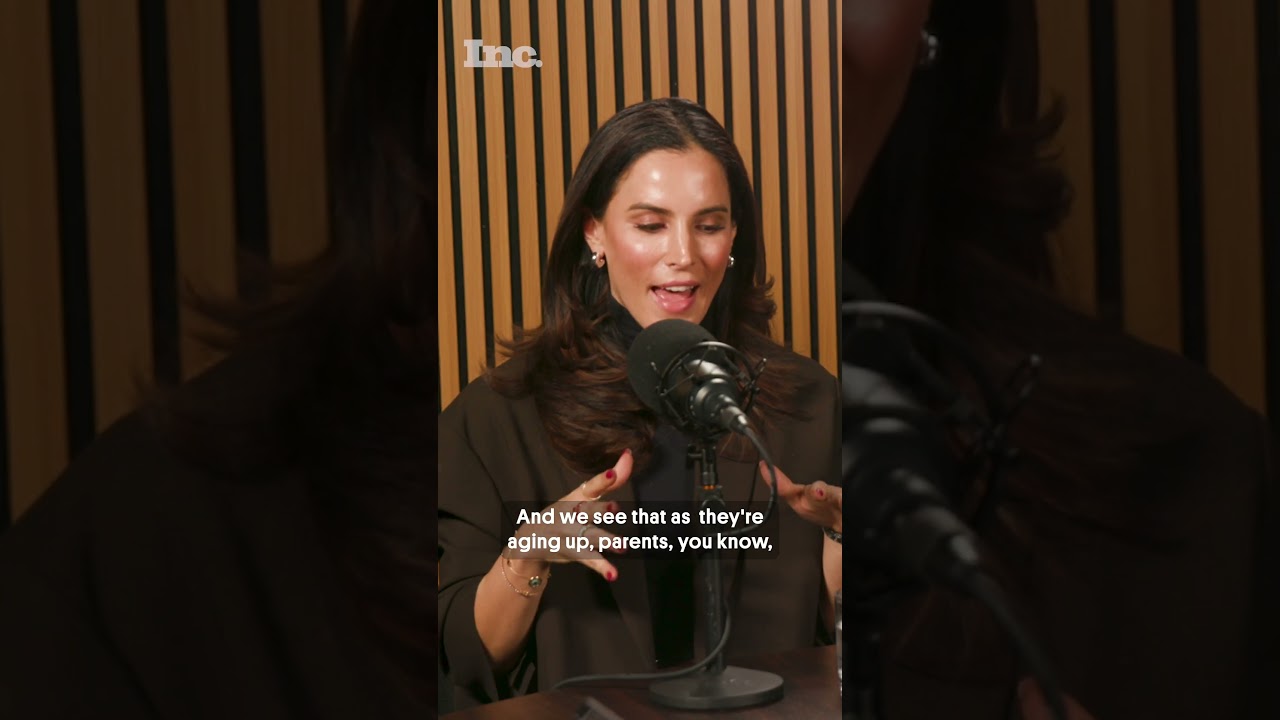
It’s a Founder Group Chat marathon with host Jennifer Conrad leading a conversation among three exceptional leaders of cult-favorite brands: Arey’s Allison Conrad, Mizizi’s Paakow Essandoh, and Sara Jensen of Hugh and Grace.
Inc. Magazine delivers advice, tools, and services to help business owners, entrepreneurs and CEOs grow their businesses more successfully. You'll find information and advice covering virtually every business and management task including marketing, sales, finding capital, managing people, and much more. Visit Inc.com for the latest!
Get social with Inc. on:
Facebook: http://on.inc.com/ilqUryJ
Twitter: http://on.inc.com/8FGInRj
LinkedIn: http://on.inc.com/gt7KsIn
Instagram: http://on.inc.com/wLObvE2
Pinterest: http://on.inc.com/8lPoT0r
Оглавление (19 сегментов)
Segment 1 (00:00 - 05:00)
I always say to people who ask like, should I do this idea that I have in my head? And I say, if you think about your idea and you think about somebody else doing that thing, would you be so mad at yourself that you didn't do it? That to me is a good indication of whether you should do something or not. — That's a good litmus test. Yeah. Welcome to the business model by Inc. I'm Jennifer Conrad here with a new founder group chat. Over the next four episodes, we're zeroing in on building a successful direct to consumer brand. We'll cover everything from idea through customer retention, getting founder stories and expert insights along the way. I got to record this episode at the EIL conference a couple of months ago in Palm Desert, California with a great group of founders. My name is Allison Conrad. I'm the CEO and co-founder of Array Hair Care. And so we are the first ever clinically proven proactive solution for aging hair, specifically gray hair. We slow and repigment gray hair and help with thicker, fuller, healthier hair. — My name is Paco Asando, founder of Mazizi International. Mazizi means roots in Swahili and we make sportsware celebrating countries and cultures from all across the world. — And my name is Sarah Jensen. I'm the co-founder and co-CEO to Han Grace. Hugh and Grace is a lifestyle wellness brand that promotes hormone health for men, women, children. These three each founded niche companies and gained almost cult-like followings. We're going to hear all about their journeys over the next four weeks. And today we start with a big question. How do you go from idea to full-fledged business? We'll get to that right after our short break. — We've all been there. Your team's feedback is scattered across emails, chats, and sticky notes. It's a mess. But PDF spaces in Adobe Acrobat gives you one collaborative workspace to streamline every file and comment. Learn more at adobe. com/do thatwithacrobat. — Thank you all for joining me today in Palm Springs in this very beautiful day. So I'd love to hear from all of you because you have such unique brands. How did you come up with the idea for your brand? Paco, let's start with you. — Yeah. Uh so I originally founded the company back in 2015. I have bounced around a little bit in my childhood. So I was originally born in New York, moved to Ohio when I was 2 years old. From there, I moved down south to Dallas. I spent my teenage years in a suburb called Plano. From there, I went to the University of South Florida for undergrad. In each of those states, I went through a bit of my own identity crisis, just trying to fit in with the new environments. And um ultimately, by the time I got to Tampa, you know, college student trying to figure out just who I wanted to be, what I wanted to do with my life. And I just had a really hard time making friends. But I did meet someone that was straight from Kenya, straight out of Nairobi. He was entrepreneur himself. He was renting orthodontic equipment to dentist around Nairobi. Kid was just like a year older than me. And I was just like, how are you paying your way through school? Like you're not that much older. I must be doing something wrong. And ultimately, he kind of inspired me to go down the path less traveled. He used to wear this just cool stuff that we'd wear here in the States, but it just had Kenyan fabric to it. And when I saw that, I was like, "Oh, I' I've never seen anything like this before. I do have like an African community in Texas. There might be an opportunity here. " And that just kind of led me to learn more about myself, learn about my gunian heritage. My family's originally from West Africa and Ghana. And after the course of like a year and a half of trying to go to fine manufacturers to do everything from start to finish, not able to tried to license the idea of what Mazizi would be, um got rejected by every single person that I pitched to. Ultimately, someone pointed me in the right direction of manufacturing overseas. So once I did that and got a few quotes, realized I was getting quoted a tenth of the cost anything the American manufacturers were quoting me. I set up a photo shoot back in Dallas. I launched Mizi on August 30th, 2015 and went viral and I haven't looked back since. — For those of us who are not watching the video, can you tell us about the shirt you're wearing? — Yeah, so [clears throat] I'm wearing one of our original designs. It's our Ghana baseball jersey. I try to make sure I'm adding all the little cultural nuances in each of the countries that we're representing. So Kente cloth is a big uh part of Ghanaian Akan culture. So in the trimmings of my baseball jersey, we do have a Kente print has Ghana across the front. We have our independence year 1957 on the back and then an ame symbol that's kind of translucent on the back of the design which is a ancient adinkra symbol. It's from Ghanian history and it means the supremacy of God. So — cool. — Yeah. — And Alice and Conrad no relation. — Oh I know. I was like wait is that a typo? Are we friends or cousins? I don't know. — Maybe. So you are creating the wrinkle cream of hairare. Tell me about this and how you came up with the idea. — So, it was from my personal experience. I did not enjoy seeing gray hairs
Segment 2 (05:00 - 10:00)
popping up as I was doing all these proactive things for my skin care. I was using retinol and hyaluronic acid and SPF and there was so much on the market that existed for skinincare. And for hair care, it was like if you're having hair loss, there were products, but that was pretty much it. I wasn't personally experiencing hair loss at the time. Um, so my co-founder is my hair stylist of 10 years and he's also a tririccologist. we came together and were so frustrated that he was frustrated too as a stylist that the only solution he had was accept your grays or dye them and um hair dye is not the cleanest product. Um so we thought people would start questioning this practice in the future and what other options can we give people to have some more control over the aging of their hair. Um we started with a supplement that was our first product. We have a team of um doctors and chemical engineers and cosmetic chemists and all behind the science behind — the products that we make and also the science behind why we go gray. There's only one gene that causes gray hair and it accounts for about 30% of why we go gray. So it's not the you know you can't say my mom or dad are gray. I'm it's inevitable it's going to happen to me and there's nothing I can do. And then now we have a whole line of topical products as well. So — it's incredible. — Yeah. Thanks. And Sarah, we were just on a panel together, so I know your whole story, but tell us about how you came up with this company. — I never thought I'd start a company with my husband. Um, but we went through 14 years of unexplained infertility. And during that time, we went to top doctors across the country. Um, we spent every dollar we had either on therapy or acupuncture or fertility treatments. And it was our sixth round IVF and we were the best doctor in Beverly Hills and just broke down. Like, I can't keep doing this. Like, we're just going to end our marriage. It's breaking me as individual. We had made huge lifestyle changes. I was ultramarathoner. I stopped running. Just everything was trying to get pregnant. And it was then when the doctor said, "What chemicals are you spraying around your house and what skincare and wellness products are you using because those impact your hormones? " And I hadn't realized that for all my treatments, I was always prescribed a hormone cream. And I rub a small amount of cream on my skin at night, go my blood work done the next morning, and my hormones had spiked. Not fully realizing, oh, other products can impact my hormones as well. The amazing part of our story is my husband's sister volunteered to be our surrogate and gave birth to our son Hugh. — And a year later, my sister called me and said, "I want to try to give Hugh a sibling. " — And she was our second surrogate. And she gave birth to Grace. — The name Hugh means heart, mind, and spirit. And grace means goodness, generosity, and love. And we finally had our kids. And I couldn't sleep. And it wasn't because we had a crying newborn, which we did have. But I said, Ben, like when we were learning about the topic of hormone disruption and hormone health, we were thinking just hormones and infertility, but these chemicals and a lot of products we use every day and they're linked to anxiety and cancer and obesity and depression and things that affect all of us. And we and our professional careers, my husband was operating a multi-billion dollar family office in Beverly Hills. I had my NBA from USC and I worked in philanthropy. So I was working with all of our top alumni and parents across the country raising transformative gifts. And I said, "Ben, this topic impacts everyone and we were so fortunate that first of all, we could afford all of our treatments, but now and have our little miracles, but how do we leverage our network and create solutions for people? " And so we keep our messaging very simple. We say it goes on and around your body, impacts your hormones, positively or negatively. We have skincare, home care, wellness, hair care, good for men, women, kids, and really bringing education and awareness around a topic that a lot of people still don't understand. — Wow. — Yeah, that's amazing. Also, that's just like a sides comment. That's so cool that your kids' ants are like also — had them in their bodies. That's so special. I'm an aunt, too. So, like that. I just think about and a mom. So, it's like such an interesting so cool. What a gift. — I always thought like adoption. It's like get pregnant. And for anybody out there that's ever struggling, like I remember it was our we had just I think we're 10 years out into fertility treatments and we just had another failed round of IVF and we were walking out of therapy and I just like broke down. I'm like I can't keep doing this. And my husband said, Sarah, are we going to be parents to kids you genetically give birth to or are we going to be parents? And it was like okay parents we can do that decision. But then we had just still didn't really consider surrogacy until they came to us and volunteered and our first surrogate it took her three times to get pregnant. She had multiple surgery. I mean, it was a long process, but I it was Yeah. Never I thought. And I got to deliver my daughter. So, I'm like, there's so many Yes. life turns out interestingly sometimes. — So, your children, Hugh and Grace, they are actually here with you, right? And I know you traveled a lot with them as a working parent in the early days. — We are. My daughter says, "Mom, some people live in homes. We [clears throat] live in Airbnbs and hotels. We have a community of people who help sell our products and share our mission and we do live events all over the country in Canada. I'm actually going to Abu Dhabi Friday. This is our fifth conference I've spoken at this month. We want to be with them. They're in first and second grade and we
Segment 3 (10:00 - 15:00)
can homeschool and travel with them and they show up at events. They do the work and so it's we're a family business, a true family business where we got a RV one summer and we wrapped it. We went all around the country because we need to learn how to people talk about hormones in different ways. So it was Yes, they are very much um a part of the brand. — Yeah. I'm curious for the two of you how you balance because you know being an entrepreneur you have to be on the road a lot. in conferences and um windowless rooms like this often. So you know how do you kind of balance your life and your family and everything else with this need to be out and about? — You want to take it or — you go first? — I am quick to say no to things in people. I let them know straight forward that like look, I'm I may not always be around. I try to set some hard boundaries to make sure that I'm resetting, that I'm taking time to myself, that I'm recharging even though I'm at a conference. I'm going to a spa and getting a massage and trying not to spread myself too thin. I think early on I recognized that was a people pleaser. And I when you're trying to run a business, maintain a social life, time for yourself, m time for your partner, you just are juggling a lot of just balls in the air and you don't want any of them to fall. And it's like, okay, where do I cut back? You know, how do I set hard boundaries so that my arms are getting too tired and I'm able to juggle everything that's on my plate? It feels good when you are maintaining all of those relationships. Yeah, there's going to be seasons where you may be more heavily focused on one over the other, but I've seen that through communication and letting people know like being just straightforward with them about your capacity and how much that you can or cannot do. They're pretty receptive and you might again might not always be there, but I'll be there when it's important, you know. — Yeah. How about you? — I wish I'd gotten a massage today. — We all do. It's a big regret, but my husband is I couldn't be doing this without my husband's help. He's he also works, but he takes care of the kids when I'm gone. And I think who you choose as a partner, not only in business, but in your romantic life is such an important decision to make. We have a very even balance of like he does the cooking, I do the laundry, like you and we very early on kind of had that conversation of, you know, we're both going to have really intense jobs, so we got to figure out how to make this work. Um, but I think it's really important to show my kids that I work really hard as you set the example for your kids. And my kids are now almost nine and 12, so they still like me for the most part. So, I'm really relishing these moments as they're fleeting. when I'm gone for a little bit, they're really excited to see me. So, it's really nice when you come back and you're like, "Oh my gosh, mom's back. She we she's useful to us. We like her. We missed her. She's great. " So, but yeah, I think those decisions you make and obviously also who you bring in to run your, you know, help you run your company and that's so important so you feel like the your employees are there and answering questions and they can do the things when you're not there. I do enjoy traveling and do these events and talk some sometimes you do live in your bubble of your company and you can't it's like hard to get out and see what's going on in the rest of the world and outside of beauty you know what else is happening so I think it's important — I love the quote you are the sum of the five people you spend your most time with — yes — because my husband's last career I was the only positive person of those five people — and here we get to choose our team community we choose who we spend time with and it really makes a huge impact on I think mental health, physical health, and also where you can delegate, you know, where you can let other people kind of jump in. — What's been the hardest part for y'all about managing a team? — Is there an easy part? — Oh gosh, I don't that it's super hard and I don't know that I'm all that good at it honestly, which then I'm like, oh shoot, should I be the one running this company? You know, it's like you have these questions of at what stage because I'm not the founder who's like I'm going to be running this for forever in time. It's like at some point I should not be running this. Recently, I've been thinking about that a lot of like when is that time and who's the right person to be leading and managing a company. Um we're still pretty small, so it's still relatively manageable, but yeah, I think it's so it's such an important thing and your people are your most important asset to your company and your business. Um, and it's just hard. But do you have any insights? — No, I so I'm only child, so I've never necessarily had to take care of other people or had that responsibility. So jumping into entrepreneurship was definitely a challenging hurdle to just confront. And I know early on I heard the mantra that people don't have business problems, they have personal problems that reflect in their business. — And when I heard that, I kind of recognized that the truth in that, right? Like if you have some unresolved issues or if there's specific triggers that go into your decision-m or whatever the case may be or things that you're not acknowledging, that's going to
Segment 4 (15:00 - 20:00)
reflect in the decisions that you make in your business. It's going to reflect in if you're not confrontational and you hire someone that clearly isn't doing something right and you're avoiding confronting them, that's going to harm the business. So, it's like, all right, how do I address these things about myself to address these chinks in my own armor? um so to speak so that I am able to scale the business in a healthy manner and I think recognizing that and now realizing oh damn like I have to do the personal work the inner work. Um it it was a very sobering reality to come to. — I like it. We have a fully virtual team. We started we launched during co we beta launched during co. Yeah. — Um but we and we travel a lot for different events and brand building but um we have a chief of staff so we make sure that everyone's getting the bi-weekly check-ins everything's running smoothly and then we come in as it is but having a virtual team and also trying to create culture. It's been — it's been interesting. It's hard. — How big are all of your teams? — We are 10 full-time. Um but we do use agencies and several consultants. Yeah, we're six full-time, four part-time, and then agencies and consultants. Yeah. — Yeah. Then I have a team of five. And then we outsource our manufacturing. And then we have designers in Ghana. Our team's pretty remote, scattered between New York, Florida, Texas, and then our manufacturing is done in Asia. — We've all been there. Your team's feedback is scattered across emails, chats, and sticky notes. It's a mess. But PDF spaces in Adobe Acrobat gives you one collaborative workspace to streamline every file and comment. So if you need six departments to finally agree on a proposal, do that with Acrobat. Need to turn a mountain of feedback into one plan of action? Do that with Acrobat. Want to stop searching for files and finally get everyone on the same page? Do that. Do that with Acrobat. Learn more at adobe. com/do thatwithacrobat. — A lot of people have ideas for businesses and even really good ideas, even see like holes in the market, but then it's like how do you get the idea off the ground? And so I'd love to hear from you guys what it took to go from I know this is what I want to do to this is my company. Would you like to start Sarah? — Sure. So I told you we've had our kids. I'm like Ben, we have to start a company. We have to do something. He's like, "No, let's just enjoy our kids. " — And but finally when we realized like this is a massive opportunity. We didn't want to start a company. We need to start this company. — And so it was going to our networks and saying who can you make introductions to and how do we like it get going? And I remember we were supposed to launch in May of 20 and we had just hired March of 2020 right before co we hired our first two employees. We had our funding secured and then co hit and every the funding pulled out and we weren't paying ourselves and we were paying our employees and Ben it was like that we had put a large chunk of our liquidity into the business to get it going and Ben looked at me one night he's like are we doing this or are we not? I'm like we're in it. we we are doing this. And so it was blood, sweat, tears, grind, but like when you believe in something so much and then surrounding yourself with people who were also believe in you. And I joke I'm like if I can ask for $50 million to name a building, I can ask you for any favor as long as I believe that like that it's helpful. And so it was saying like how do we do this? Who can help? Resourcing that is that commitment. And there has been plenty of sleepless nights and not even knowing how we're going to like we went to our employees and said we'll give you equity but we need to lower your salaries and having people that said like we called our one of our employees and said we're not sure if we can offer you this job and she had other great job offers and she still came over and came to work with us and so it's um but it's that belief and then remembering and staying with it and working like crazy — non-stop. You know, it's like, is it belief or is it delusion? A little bit of both. I think — I like to call it naive optimism. You know, — totally. Oh my gosh, that's so true. I think we had a bit of a unique situation where Jay, my business partner, sees clients and so he couldn't see clients during COVID. So then we could work on this project and then he went back to seeing clients and he introduced the idea and the concept and the product, the supplement first to them to see if people were receptive and people were very receptive. So, you know, he already knew historically that people had this challenge and it wasn't just me as one person saying this. I wish something existed like this. Um, but then we could test it out on people and really kind of like slowly roll it out. Um, but yeah, we didn't pay ourselves for the first two years. We only paid in equity for our first luckily like our first cohort of people were people we were related to. So, that always helps. Um, and yeah, it was a lot of sacrifice, but again, just belief in what you're doing. I always say to people who ask like, should I do this
Segment 5 (20:00 - 25:00)
idea that I have in my head? And I say, if you can't if you think about your idea and you think about somebody else doing that thing, would you be so mad at yourself that you didn't do it? Would you be like, "Oh god, like I I'm so mad I had that idea. " Like, it would be so frustrating. That to me is a good indication of whether you should do something or not. — That's a good litmus test. — Yeah. With me it was really just despair, you know. — I was going to school to become a pharmacist and I actually took time off of school after my freshman year. I went back to uh to Dallas. I worked as a farm tech. I absolutely hated it. That's not the profession, but I recognized that it just wasn't for me. I was actually juggling two jobs at the time, right? I was working as a server um at a sports bar and then at a farm techch as at a retail pharmacy. I could just see how the environments were really just affecting me. I could work a double shift at the sports bar and I'll be good. I can go um go on a bender and hang out with friends after. But working at the pharmacy, I would work a 7-hour shift and I'll just be wiped. I'd be exhausted. I wouldn't want to talk to anybody. do anything. And I realized I didn't want to go back to school just to end up right back there. So that's what kind of initially pushed my motivations to take Mizia a bit more seriously. Figure it out. Figure out how I can flesh it out. And yeah, um whenever we launched and it went viral, I was like, "Okay, there's product market fit here. I might be doing something right. " So that's whenever I leaned into it. Same scenario where you just kind of you don't pay yourself. You just reinvest everything that you can um bootstrap as much as you can. you wear as many hats as possible until it gets to the point to where you're like, "Okay, we have some extra cushion here. How can we bring people on that can do this role better than I can? " Um, and yeah, that's how we ended up getting started. So, — I also feel like sometimes life happens for a reason. You know, we had all the information and then like Ben between our like we know people. We know people in these different product verticals. We know like I don't know sometimes like you learn things and I feel like say like the more you learn the better you do. I don't know. I was so driven to help create this, but I just think looking back at your background and saying both yours and saying like, you know, people who can help. — Yeah. — And we really are create businesses to really help other people. — Yeah. I like to think that we're all given our own god-given advantages whenever we take stock and inventory of those and then we lean into it. Um you never you always surprise yourself with opportunities that come after. — That's all for this founder group chat. We'll be back next Friday with Paco, Sarah, and Allison to talk scaling. How do you get your brand to grow? Thanks for listening to this episode of The Business Model from Inc. Be sure to subscribe wherever you get your podcasts and on Inc. 's YouTube channel at youtube. com/incmagazine so you don't miss an episode. Our first 3PL, the month we launched, accidentally sent out $40,000 of product. What do you — accidentally? They had a tech upgrade. [gasps] So we were with them for about a year. Then we — they stayed. What was welcome to the business model by Inc. I'm Jennifer Conrad here with the new founder group chat. I'm back with Paco Essendo of fashion brand Mazizi, Sarah Jensen from the wellness brand Hugh and Grace, and Allison Conrad of Array, a hair care brand. Today, we learn how each of these founders built their supply chains. Three very different businesses, three very different supply chains. Their stories are fascinating, and we'll dive in right after a short break. — We've all been there. Your team's feedback is scattered across emails, chats, and sticky notes. It's a mess. But PDF spaces in Adobe Acrobat gives you one collaborative workspace to streamline every file and comment. Learn more at adobe. com/do thatwithacrobat. So, I'd love to hear a little bit more about how you have grown and scaled your businesses. And to start, let's talk about your supply chains. Where are all of you manufacturing? So currently we're manufacturing in Asia and China specifically. We have tried to expand or diversify our supply chain to other countries. I've been to Pakistan. I have inquired in Vietnam. I've been uh reached out to different countries in Africa like Maitius or Lutu in South Africa. And the one thing that I've seen that is just an issue or just um hard for us to overcome is the fact that when it comes to China, it's really hard to beat the quality that they're able to offer at the price point that they offer it. When I've gone to other companies or countries, they may be able to meet beat the price point like Pakistan, but the
Segment 6 (25:00 - 30:00)
quality just isn't all the way there or they're able to match the quality like Vietnam, but the price point isn't as competitive as China. It's been a bit of a challenge for us to diversify. One thing that I have seen since honestly co has been um the rise of the manufacturing industry in Mexico. We've seen that their textile industry has become a pretty robust especially in northern Mexico and we're looking at nearshoring there and figuring out how we can manufacture our products um tariffree or taxree. But outside of that, we've started off with China and since then it's been really hard for us to go anywhere else just cuz like we get treated well. If it's not broke, why fix it? — Our components are made in China, but um our actual products and the ingredients within them are manufactured in the US. Um we have two different three different manufacturers, but a supplement manufacturer and then the topical manufacturer which is in California. So, we've had, knock on wood, pretty good success with that. I think the tariffs did affect us. We've taken that cost as a business, which has been tough. And we are talking about now like, do we need to raise prices? And it's just a really hard thing to do for your you don't want to do that for your customers. Um, but at the same time, you have to look at your bottom line. So, we're navigating that right now. It's a bit of a challenge. — Yeah. So, where are things in the States for us? It's been interesting trying to find like you know because we have hair care and we have homeare and we have supplements and drink so like we have different manufacturers for almost every product vertical and trying to find the best terrorists have not really impacted us which we're thankful for but it's been it's a lot to manage all the different manufacturing groups. — So do y'all's manufacturers do they know each other or do you keep those relationships pretty siloed and separate? — Yeah, pretty siloed. — Yeah. But our 3PL brings it all together. Yeah. So, tell us about your third party logistics companies that you're working with and how you figured out, you know, who are the right partners there. — Our first 3PL, the month we launched, accidentally sent out $40,000 of product — accidentally. They had a tech upgrade. [gasps] — So, we were with them for about a year and then we — stayed. Well, we — Well, we had we everything was there and we couldn't we until you get to scale, you have to be like certain for other 3PLs to do your business. So, then we went to another 3PL um in Vegas and it was right before Black Friday and we shipped everything and we got a call that said that only one pallets arrived and Black Friday sales started — and we're like where's other pallets? And we get a random email into customer service from the Amazon Las Vegas warehouse that said, "You have several pallets sitting here. I looked up your brand and it looks pretty nice and you I think you may want to come get them. " And so for a week, my husband jumps on a plane from LA, goes gets a U-Haul pickup truck, manually loads everything, drives it to our other 3PL. But I will say 3PL's will make or break. It can make or break you. It's been It's been a lot. — Who are they Hold on a second. Who were they shipping these $40,000 — $40,000 worth of free products to? And then they — your customers — to our customers — were your did you like use that to like always? No, cuz we they couldn't even tell us who they shipped it to. I mean, they were people who had purchased because we did the beta launch, but this is our official month and we were not generating $40,000 of revenue each month at that point, right? And so they couldn't even tell us who they sent it to. And then those people obviously did not purchase again for a while because we launched this with skincare and or and so it was um — yeah it was fun. — Fun times. Fun times, dude. — Oh my god. I still have so many questions like did you did you sue them? Like what? No, you stayed with them. Oh my gosh. Wow. — But you've changed now. — Yes, we've changed now. And then you also look at different companies for scale. So now we're Yes. So there's — although I have PTSD from moving from one to the other and so like I want to make sure that — we started with a 3PL in Tampa and at first everything was cool right they things were good they're running they're shipping our products to our customers and then at some point whenever we started scaling the product introducing more SKs and since we're representing countries certain countries sound like one another but they're two completely different countries there's Democratic Republic of Congo and then there's they're not necessarily the same country or same background so someone from that country or one of the other gets to the other country, they can get offended and just like, "Y'all are messing up here. " And it got to a point to where they were just sending all the incorrect products, incorrect sizes. And I was just like, "All right, let me just go. I'll sort all the inventory. I'll make sure it's like labeled correctly. " So, I'll educate their staff to make sure that they know the differences in the countries. And what's crazy is that whenever I was going to do that, and keep in mind I was in college, so I was just a young kid. I was 19 at the
Segment 7 (30:00 - 35:00)
time, or I started the company when I was 20. I was like 21 at the time. As I'm sorting out all the just the different SKUs that we have in inventory, one of their employees just comes walking by in one of our jerseys and he was just like, "It's nice, right? " And he just thought I was just like the intern college kid that was given the work to sort out this just handful of a brand. — You stole that — 100%. feels like, you know, sometimes the manufacturer, they ship the products and some not all of them come packaged. So, the ones that don't, we just throw away. And like, dude, this looked way too cool to throw away. I was like, what are you talking about? And then that same 3PL ended up shipping a customer Viagra. We don't sell drugs. We're in the business of clothing. — That happened to us, too. Not Viagra, but something else. Yes. And we were like, what? — So, I I'm not the biggest fan of 3PL's. We did jump to another one in Texas and although they were better, they just they eat up a lot of cost. And one thing that I've recognized is that no one's going to care about your product as much as you do. So if you're don't have that access or control to your product, if you're not able to add those little embellishments like handwritten cards or little thank you notes or whatever the case may be, it can suffer or the customer experience can suffer for it. So we ended up bringing everything in house by like year three and it it's kind of been a blessing since. — Wow. — That's impressive. I used to ship the packages out in the way beginning, maybe like the first six months. And my daughter at the time, I'm was making her help me and she was like, "Mom, I don't want this to be my job when I grow up. " And I was like, "This is temporary. I don't want this to be my job either, but it's fine. We're just going to get through it right now. " But it was little Steve Jobs moment of like shipping from my [clears throat] garage for a while. But — you've all made it — made it through all that. I want to talk about fundraising. Um, and — the joy, the joy. — Um, so I know both of you have raised money from venture firms. You're fully bootstrapped. Maybe I'll start with you. Raised money from Grey Coft and Female Founders Fund. Y — and so what was that process like? Do you have any advice for other people as they're — doing the thing? — Yeah. So I did work a little bit in venture before starting this. So I had that perspective of what investors look for and I had spoken to a bunch of entrepreneurs and that helped I think just frame how I was looking at building the company too. So you know you really can't raise on an idea. I mean I'm curious to see it sounds like maybe you were able to do that but it's very hard to raise money on an idea. You have to have especially in the products business. It's not a tech company like you have to show sales. And so I put my own personal money into it to start the brand. And then when we were in nine months in, we had sales. So I raised a round of friends and family with uh I went to Stanford business school. So some of my folks from business school. So they were really investing in me. Maybe not necessarily the idea, but some of my most loyal customers I will say are from that raise that got us through until our seed. We raised our seed in 2022 with Greycoft and Female Founders Fund. But actually uh Anu from Female Founders Fund reached out to me as a customer and she was like, "This is such a great concept. I use your products like you should raise money and I was like oh well I don't think we're ready yet to do that and she was like yes you are because she's great pressure. Um and — she actually told me this story too. She was like yeah I invested in them because I'm I mean he's — she's so great. So she introduced us to Greycraft and obviously Gray is in their name and Array does gray hair so that's all it took and I'm joking but it was a little bit of kismmet and they're wonderful. We work out of their offices. They're super supportive investors. Um, we've been very lucky with our investors and but we maybe it's luck and also work. We talked to hundreds of investors throughout the process. I knew a lot from my previous life, but we wanted to align with partners who had a long-term vision. So, they were very patient. We're creating a new category in hair care that takes a lot of time. It education and does take money. Um, so it was just aligning everybody's incentives. Of course, everybody wants this to grow and excel, but also what is the threshold for time and patience and working how like how do they work together? I wanted very hands-off investors and they were like great then we can do that. So, it didn't all work out. So, I'm grateful for that. — Yes. And we should say that a new is a new [clears throat] dog of female founder son. — Yes. — Okay. And then um your investors were Xacctor and Rachel Zel. — Yes. And friends of family. But um so it was pre-revenue. So it's interesting you have this concept this idea and we also have a different business model. So we have a community of advocates and so we're not just purely retail DOT to see but we have people so think of a very elevated Mary Kay — where it's community because we're like we're creating a solution that people don't know they have. It's not an Instagram ad it's word of mouth and it's education community content products as a holistic solution. Most funds don't like that business model because it's
Segment 8 (35:00 - 40:00)
not — MLM. I know it's direct sales like a dirty word but it's like — it is well so no. So it's like it is MLM. It's multi-level composition, but it's only on performance. So some MLMs will compensate you just for enrollments. They have large um entry points. We have zero inventory risk on individuals. It's $45 to enroll. You go to a website hungrace. com/sarah. You share it. And but when we were saying like this needs to be word of mouth. It needs to we have so much education around this topic and it's purely performancebased. All my friends are advocates because they want 25% discount. So all our advocates get 25% discount. But then you can also earn money and you can build a team if you want. But funds do not really like that. But it's interesting. So XFactor ventures, they back female fund founded companies that have a billion dollar market opportunity. And they saw gut so they backed us pre-revenue because they saw us by hormone health is the next gut health. We're still like it's a massive opportunity. And they saw us having authentic connection to hormone health but also us by modernizing direct sales. People are want recommendations from their friends. They don't want targeted ads. And we've been able to cut through the noise the past five years because we have over 10,000 people who were authentically talking about our products. And my husband was on a board of directors for another um CBG brand and like we didn't want to be our business reliant on the algorithm that could change any point, but also we needed that longer story format especially in the beginning. Rachel Zo was great. She's um the time I haven't talked to her recently but we're her largest investment but she's all about empowering females female entrepreneurs because you think about it we have over 10,000 female mostly female entrepreneurs we have a few great men also they're creating income and building their business by partnering with human grace but funding is not my we've grown really fast and it's been so frustrating because we have these amazing metrics we have amazing people and then you have people just like nope there's not you know I don't understand what you're doing. And so and also really creating a category like we were talking about hormone health over 5 years ago when no one was like people were like skincare and hormone health like what is that? You're like your skin's your largest organ. How do you not understand? Like but it was tons and tons of just education, — but it's my least favorite part of the job. — We've all been there. Your team's feedback is scattered across emails, chats, and sticky notes. It's a mess. — But PDF spaces in Adobe Acrobat gives you one collaborative workspace to streamline every file and comment. So if you need six departments to finally agree on a proposal, do that with Acrobat. Need to turn a mountain of feedback into one plan of action? Do that with Acrobat. Want to stop searching for files and finally get everyone on the same page? Do that. Learn more at adobe. comdo thatwithacrobat. — How did y'all build the like grit and uh persistence to face all those rejections with trying to raise funds, getting noses, getting told no, getting told, oh, maybe we like this if you tweak the idea like this. — How did you stay true to your roots and keep pushing? I think because I was on the other side of it for a while, I like realized how the percentage of yeses is so low. — Yeah. — So, the odds are you're going to get nos. And you should see my spreadsheet of all the investors I talked to. I mean, it's like so long. But I knew that going into that that was it's a numbers game, right? I kind of knew in my head who the people I would want to work with, too. So, so then it was also thinking about, oh, those people are not the right people to invest in me anyway. Like those are not the right partners. Um, but you learn from all these meetings because you learn the questions they're asking and the skepticisms they might have and why they aren't. And you have to also realize it's not just about you as a person. It might not even be about your company. It could be their situation and what their LPs are asking for to be focused on and invest in. So there's so many factors and it's such a small percentage of an outcome of actually happening. So that helps make it and obviously when you do it then you're like okay that was worth all the effort but it is certainly not for the faint of heart. We turned down a seven figure check right when we launched — and um and they had grown several billion dollar companies but we knew they would not grow the business in the way that we felt we our kids names aren't the business. It's a little more personal and like and so but training on seven degree check was hard because we have been selective also cuz it's you partners. — Yes. — I actually forgot I did too. — I like forgot that I did that. Um and same thing I was like they're asking way too much for the amount that they're giving me and this is not the right partner to grow this the way I wanted to. So you can get really flattered by it too and be like oo yes like they're giving me money. I should take it and it's like that's really expensive money
Segment 9 (40:00 - 45:00)
to take to you're giving up a part of your company so you really have to think very hard about it — and you asked about the grit like I was athlete ultramarathoner but my dad always said you can do hard — and so like I've done very hard things in my life like infertility 14 years of infertility but it's like you said what doesn't kill you makes you stronger but just knowing like I can do hard I can do this and knowing that like you truly believe in what you're building and helping and like you can you got this — I can do hard I like Yeah. — So, so far Miss is fully bootstrapped, right? — Yes. — Have you considered taking on funding? — I'm worried about taking on other people's money. I do think that at some point in time, naturally, we're going to have to I would love for Z to get acquired, me to be in like a board, more of a uh advisory position for it. But yeah, I mean, we've ran off bootstraps, friends and family, grants, and just being very strict with our bottom line. My mom has a background in accounting, so she really helped out with making sure that I'm not overspending here or there and teaching me the financial just uh diligence to make sure that we are scaling the company in a just healthy way. But never say never. — Do you guys have any advice for him if he's going to take these meetings? — Yeah, please. — Well, I was going to say we run that company the same way with like very we're very stra like bootstrap like not bootstrap but scrappy. We're like always have run the business with profitability in mind. Um we spend a lot of our investment on clinical studies, product development, like things that are not marketing spend. When I was doing that years ago, people were like that's dumb. Like you should you like just grow the business, grow it at all costs. But now things have very much shifted back to having great unit economics and retention and like all the metrics that make a good business. So I think you already have that. So that's great. I think just trying to find the right people um is really ultimately what it's about. I think fashion is a little it's like all these different sectors are like tech if AI if you have an AI company great it's so easy to raise money like any you don't even have to have like a great idea and people will put money into it. So I think there's these different sectors too that are just there's less people that are involved in that those sectors. There's less acquirers. There's just like less ways to for people to make money. So, you just have to identify who those folks are — and be strategic. Find someone that can help you grow. I was talking to a fund and she's like, "Well, Ben and I are co-founders and co-CEOs. " And she's like, "Well, Sarah, you need to be the CEO and Ben needs to be VP. " I'm like, "We like he has way more business background than I do. " I'm like, "No, we took two of us to have the family. " I'm like, "It's just I'm like, "Be find somebody who will support you and help you have your dream, but also hopefully is strategic and can make introductions for you and get you places where you want to go. — Understood. I appreciate the advice, ladies. Thank you. — Or you don't have to. You can keep boot. I'm serious. Like that does not every company or brand needs to raise money. Like that doesn't have to be everybody's path. No, we doubled in Q4 of 2023 and having inventory business or 2024, whatever yearlers, but like but having inventory business where we have at least so much capital and to have business double in three months was just — we had to. Yeah. — But if you don't have to, I enjoy your life. — And that's it for this week's founder group chat. Next week, we talk collaboration and moving from direct to consumer into retail. Thanks for listening to this episode of the business model from Inc. Be sure to subscribe wherever you get your podcasts and on Inc. 's YouTube channel at youtube. com/incmagazine so you don't miss an episode. for every no that I get, there's a higher likelihood of that yes being around the corner. So despite them uh ceasing the legal department and just rejecting this, I was like, "All right, let me figure out just how to figure this out. Welcome to the business model by Inc. I'm Jennifer Conrad. It's Friday and it's time for another founder group chat. Today's topic, collaborations and moving into retail sales. My guests once again are Allison Conrad of Array, Paco Essendo of Mizy, and Sarah Jensen of Hugh and Grace. Brand collaborations and retail partnerships can be a cheat code to scaling your company and getting in front of new audiences. These can also be some of the trickiest deals to land, and they can come about in unexpected ways, as you'll hear after the break. — We've all been there. Your team's feedback is scattered across emails, chats, and sticky notes. It's a mess.
Segment 10 (45:00 - 50:00)
But PDF spaces in Adobe Acrobat gives you one collaborative workspace to streamline every file and comment. Learn more at adobe. com/do thatwithacrobat. — Ho, I'm really excited to talk about this, which is that you did some very cool collaborations. Talk to me about how Black Panther came together. So, it's a bit of an unconventional story to say the least. Back in 2017 whenever the first Black Panther movie trailer had dropped, uh people had talking or hopped on social media saying, "Oh, what should we wear to the movies? " There was a segment of customers that were saying, "Let's wear traditional wear, dashiki, just African garb. " And then we had a smaller subsegment of customers that was like, "No, let's wear Mazizi jerseys. " And we had an even smaller subsegment of customers saying like, "No, Mizi needs to make a jersey for the movie. " The idea was great, but at the time we were only three months or three years old rather. And what business this multi-billion dollar conglomerate having have to work with us? And I started doing my research, figured out how was Marvel going about marketing the Black Panther movie. What problems were they having? What current product offerings were there? And how could I position as a solution? And I put together this whole deck. I ended up sending it to the licensing department. Got rejected immediately. They told me they have enough partners. They don't need any more. Marvel typically charges six figures or seven figures rather, six figures. Six figures for uh just their minimum guarantee to use their IP and they're like, "It doesn't make sense. " You know, I can be a bit stubborn. — I went back and forth with them for a bit. Um it got to the point to where they were like, "If you release anything with Marvel IP on it, we'll have to take legal action and CC the legal department. " So, I was like, "All right, let me back up. Um, if I can't go through the front door, how about I go through the back? So, that's whenever we took to social media. We did this whole Miz for Marvel campaign. We made a mockup of what the jersey would look like. Just this black Wakanda baseball jersey, and we shot a video for it. That video went viral. It got picked up by the Shade Room. Um, there's just people tagging Marvel saying that they wanted it. I went back to Marvel and I was like, "Look, there's proof of concept. There's demand here. Like, what's up? Let's work together. " there. I mean, at that point, they were just ignoring my emails. H [clears throat] throughout that entire process though, I had made a LinkedIn and connected with everybody that was at Marvel's offline department on LinkedIn, you know, just being annoying, being persistent. And it wasn't until one person, and this was March of 2018, the Black Panther movie trailer or Black Panther movie had released February of 2018. So, by March, my company and I were just like, "Look, we've put way too much time, money, attention into a product that we can't sell. we can't get any ROI from like this is a loss leader let's cut and move on and that one person on LinkedIn had reached out to me on in March saying hey I see your tenasty I see your ambition um let me connect you with the Disney consumer products team Disney is the parent company of Marvel so even if the child may say no if the parent says yes they kind of have to listen so that's whenever I connected with the DCP team in Glendale I flew out there and then with 48 hours we signed a deal about how we could be a subency of Disney's these consumer products and make the Black Panther jersey a real thing. [snorts] — So cool. — Thank you. Thank you. Thank you. — Yeah. And so what did that do for your business as far as visibility, sales, things like that? — Yeah, that the Black Panther jersey eclipsed all of our other products at the time. I think with working with a bigname brand like that, it kind of legitimizes your company. It shows people that like look, if Marvel can work with this business, they must be legit. They must be doing something right. And that ultimately opened up doors for future collaborations, right? Like since that did well, Disney came back the following year and asked us to do something for their Lion King live action remake. Paramount saw those two and reached out to us during the Coming to America 2 sequel. This was like 2021 and asked how we can be licency for them as well and do something for that campaign. And even now we're talking to a few other um entities that are across travel and sports and we've shown them like look we we've been able to do this in the past. We worked with these major companies. What can we do for with you? And I think being able to have that just like on the resume has been just done wonders for our credibility. — Cool. — So impressive. Yeah. — Thank you. [clears throat] Thank you. It was a journey, but I always told myself that like for every no that I get, there's a higher likelihood of that yes being around the corner. So despite them uh ceing the legal department and just rejecting this, I was like, "All right, let me figure out just how to figure this out. " — Yeah, — that's great. I always say if you don't ask the answer is always no — literally. So — are there any like major collaborations that you guys would love to or like your favorite brands that you would love to work with or partner with? — We've actually collaborated. So we do a lot of education. So the Institute for Integrative Nutrition is the world's leading health education platform in New York City. Deepac Chopra is their chief wellness officer. They have a hormone
Segment 11 (50:00 - 55:00)
health course and so they have human grace scholarship with the hormone health course. And then we are actually looking at doing a collaboration where because they certified health coaches and the health coaches then figure out like how to create a business. — Yeah. — And partnering where you opt in because we do the monthly the weekly training calls, monthly incentives, trips, conferences, master classes. — And so we've partnered with them over the past several years, but we're actually looking at much more meaningful partnership there. And then also other health coaching platforms. Um Ben just had a call today with another large one because we have the tech, we have the history also. Yeah. — Um but more education driven. — I love that. — We do more sort of marketing partnerships. We do a lot of GWPs with like-minded brands. I have a lot of founder friends in this space. So I reach out to them constantly. Uh but we are launching a new product uh in March that's a very special overnight product I will say. So, we created an eye mask with Luna, the um — I want to say like lingerie brand, but they make so much more than lingerie, but bedtime brand, and it's an exclusive color you can only get on our website. So, it's we're really excited about that. We think a lot through working with dermatologists and tririccologists, hair stylists. We want experts, again, like you're saying, to talk about the product. There's so much education, there's so much explaining around it. And so, it's really trying to work with those partners who can help spread the word. So, it's not us saying how great our clinical study is. It's a third party — validation. Yeah. — Yeah. Allison and Sarah, I'd love to hear from both of you a little bit about how working with hairdressers, healthcare providers, and things like that has helped to spread the word about your products. — So, we have a call advocates or the advocate for their better health. Um, and it's been amazing because these are people who sometimes people hear her story and they're like, "Oh, I had breast cancer or I'm going through per menopause or performance or allergies. " And so people have they have a connection with hormone health and that mission and then they enrolled as an advocate and they get 25% off. So all my friends want the 25% discount. To date we have spent zero on any paid social or digital acquisition. — We've grown all organically word of mouth and they are so passionate and it's amazing. But I get so many DM like my like for product ideas and live events and saying like can we do this with like anyways it's a lot. It's amazing. Um, but we've that's how we've grown authentically just from you have people talking to their communities. It's interesting. We're looking at our customers and our largest customer past year and a half is a GLP-1 doctor and when people lose weight fast so there's toxins and fat and people are losing weight fast and the toxins get into your bloodstream and so our product set it's called the routine but it's hydro detox. people need all of these extra supplement supplements. And so he has partnered our used our routine as supplements as a holistic supplement to DLP1. He reached out to us and said like the performance is amazing. I'm having amazing retention for my customers because they're not feeling a lot of the other side effects. — And so now we're looking at other med spots. But it's interesting when you look back at your business say like, "Oh, this is how's how it's evolved. " It's great. We're just in the beginning stages of reaching out to professionals, but so far it's been very great. Um, and the reception that like using even them in paid ads has been so much more effective than just regular paid ads, too. And then, of course, organic is very effective. So, yeah, we're trying to figure out how do you scale that? Um, how do you get to the right people? I think what we're challenged with, I love hearing about your word of mouth model. What's challenging for our model is that it's like people aren't going to be like, "Your hair doesn't look good. you're aged, your hair is aging, right? So, it's like, oh yeah, that's a tough one. So, it has to be more like personal, you know, I'm experiencing this is what I'm going through and I'm taking this product. So, we're thinking through that, too, of like how do you create a loyalty referral program when you have a product that shouldn't be offensive to like we're trying to make aging hair not something to be embarrassed about or like you don't talk about it. Like people talk about aging skin and start so early. It's like 12-year-olds aren't are doing this, so why isn't this happening in hair? But it's it'll take a minute. — It's been interesting. So, we look at performers, our advocates. And so, our two top sellers for a long time. One is hormone health expert, multiple certifications, has a whole big following of like per menopause, menopause. She can talk about all the science and like why this why you need this right now. The other one, she's early 50s and she just goes, "My hair has never looked better. my skin I'm not feel like and she just talks about like how like she feels also because we talk about hormone health where people are now talking about but that was so taboo — and like for so long men have hormones too men male menopause it's called andropause like I don't know — fun times ahead — but we've had to like have this whole conversation of not being scary endocrine descripting chemicals to
Segment 12 (55:00 - 60:00)
simple swap like look better feel better it's making it where it's a positive and leading with benefits Yeah, definitely. — We've all been there. Your team's feedback is scattered across emails, chats, and sticky notes. It's a mess. But PDF spaces in Adobe Acrobat gives you one collaborative workspace to streamline every file and comment. So, if you need six departments to finally agree on a proposal, do that with Acrobat. Need to turn a mountain of feedback into one plan of action? Do that with Acrobat. Want to stop searching for files and finally get everyone on the same page? Do that. Do that. Do that with Acrobat. Learn more at adobe. com/do that withacrobat. Cool. And so for the most part, all of you are selling mostly direct to consumer, but I know Allison, your products are in Arowan and Credo. So maybe you could talk to us about how you've started to move into retail and what advice you have for others who may want to do the same. — We wanted to make it manageable. So we knew that they have, you know, around 11 stores each. So my business partner, Jay, goes into the stores around LA, talks to customers, talks to the sales associates, gets more information so that we can be better informed for larger retail partnerships. So it just feels easier to manage. For us, we wanted to have that clean with Credo, having that um badge of being clean when that's not what we lead with. We lead with the science and the efficacy, but people who care about clean then know that we're at Credo and have their standards and Arowan is just, you know, in the zeitgeist and they're just awesome. I mean, they can sell anything to anybody. It's pretty incredible. Um, but we've seen a really great response. We've actually were the number one hair care brand at Arowan for most of last year. So, it was really exciting. And that is our core customer is somebody who really cares about their health and wellness and is sort of on the um what do they what are they called like early adopters like that that's who our customer is. So — cool. And have you guys thought about move into retail and what that might entail? — Yeah. So we're actually discussing now with a uh specialty retailer. So there's a collaboration that we're working on right now with the major basketball league and there's a special — very impressive league who — um and yeah so they're interested in picking up some product. So we are talking now and this will be one of our first retail plays or retail distributions but otherwise we've been direct consumer for a lot of the time. Um, again, we've seen that no one's going to care about your product as much as you. In retails, ultimately, uh, your product will be moved to, at least within fashion, right? Things move fast. Your product's going to move to the back of the rack or it's going to be moved from the front of the store. And we took a lot of time, money, and energy to how we positioned our product. So, we stayed away for retail for the longest, especially not trying to do mass or anything of the sort. But with some of these major partnerships that we have coming down the pipeline, we feel like, all right, this makes sense for us to find some DRO and figure out how we can get some solid placement um to leverage the credibility. You know, — we've inbound interest from some large great retail. Um we haven't to date. Our business model though, we designed it. We have an affiliate option, advocate option, or a retail option. So, a lot of doctor's offices have the retail option, but our advocates can also, if they have a relationship with their local gym or spa, they can actually enroll them as a retailer. So, we're actually in a lot of retail locations because our advocates have great networks. And so, it's smaller, but we'll be reassessing and evaluating as um as we grow. — That's incredible. You It sounds like you literally have a mini army that you just deploy. — An amazing mini army. Yeah. How did you grow that? Like it was it just it grew from them growing it or how — So it's interesting. We launched our business. We had 200 advocates and it was May of 21 and we did a big party in LA and we told our advocates if you guys get 50 people in a room we will fly out and support you. We thought we'd be in five cities and we were in 60 cities the next few months. Ben and I were and we're like wait we want we miss our kids. Like we started this business so we can beat our kids. So the next summer we got an RV and wrapped it with Hugh and Grace. So we went from LA to Seattle, Boston DC and back and did events all over the country and some in cornfields and barns and houses and but we really learned how to people talk about especially this is five year over five years ago but hormone health and like when people lean in when people's eyes glaze over like how do you how do we communicate but it's really them be our advocates becoming passionate and saying like these products have impacted my life like this is something I really care about I'm passionate about there a lot of them are very into wellness and so they share and then they're we've lot of people making six figures like it's it's real and then think about it also it's interesting as a with connectivity so
Segment 13 (60:00 - 65:00)
we've never been more connected to society there's this huge loneliness ep epidemic — and so by us creating this community actually helps with hormone health and being part of a mission people feel connected and supported and we do live events so is it's that um people I think really want to be part of community. — Yeah. — And so that just grows also. — Um I'm hearing from a lot of brands that they're getting more and more interested in inerson [clears throat] and experiential marketing because that's what really moves the needle now more so than social and things like that. So I wonder if either of you have experimented with that at all. — Yeah, we're definitely actually looking at what we can do about doing some type of retail popup surrounding the World Cup coming up. I think with the partnership that we have in the pipeline and given the amount of traffic, since I'm in New York, given the amount of traffic of tourism that's going to be in the city, it makes sense to just find a way to engage with people and face to face and do something that's um experiential that people can enjoy that they can't necessarily get from other places. It's definitely uh something that's been top of mind as of recently, but love to hear from y'all. How have y'all gone about like just throwing events or — if you get World Cup tickets, let me know. — Definitely. — Those are did not win the lottery for that. We haven't done a lot of that and I think now we want to do more of it. For a long time what we've done is just like how do we track the money we put in and the money that gets out like everything needs to be trackable and now we're like no like we need to also build a brand and get the word out about this concept. So we have done events in the past where Jay will my business partner will do tricoscope analysis which is like a um a high level microscope on your scalp. And so it's like one of those things where you're like, I don't want to see, but I do want to see when you see it blown up on a screen. — And his favorite thing is like he can guess the last time you shampooed like from seeing your scalp. It's really amazing. — And he will find a gray hair on anybody. Like everyone's like, I don't have a gray hair. He's like, "Yeah, you do. I'm going to find it. " But so we've done things like that more like in Credo stores and and but now we're thinking about how do we do this in a larger way. We're working with Ipsy this year. So, we're doing a master class with them um with a group of influencers and so that'll be a fun inerson event too. But yeah, more to come. We do ton of events then jokes because we do incentive trips and leadership retreats and talk like — lots and he's like you started this company because you like to you just wanted excuses to travel and I'm like well no but and then Hugh and Grace come they show up and they'll like we did a big event with Four Seasons and they were up there like putting all the products and they came to the event and people met them so they they see that but it's really that connectivity and people want to experience the brand and understand and so it's a huge part of our us. — Yeah, we we've shown up at a lot of different festivals, whether it's we used to travel with the Afrounk organization, we went to Paris with them, we went to Johannesburg, we ran some vendor workshops for them as well back in the past. And we've just really seen the importance of being able to develop those face to face relationships with your customers. I think finding a way to see real-time reactions, get real-time feedback, seeing just okay, what are the things that they may have like cringe from or what are the things that they actually lean into? And getting that data real time is so valuable that you don't necessarily always get when you're just kind of interacting with them over the computer or just like through ecom. But yeah, I think like it's definitely important to find ways or however creative you can be with it to uh make those face to face connections and be able to meet your customers where they're at. — Sarah, maybe if you could tell us some of the best practices that you've learned about events, any advice you have for them as they're starting to do more live events. — So, it's interesting when we told our advocates, get 50 people in a room and we'll go support you. And we didn't give budgets. We didn't do like we didn't say like you have to have flowers or whatever and people just did it like on their own and it really was backyard sometimes and really a you know corn field and so we empowered people just to like sometimes I think you think it has to be perfect look a certain way it has to have your brand aesthetic and this but I'm like no — you just go and show up and so just as you guys think about events that there's so many people who are interested and I think people want to go with places don't know if That was the answer you're looking for. — I do think of it as Yeah. being like very expensive to put on, you know, you have to make like this event right now. It's like so well — conferences like so we do have we have three to four very large events a year where it's people will fly in and that kind of stuff but like we're doing wellness events all throughout the summer all over. So it's we're just partnering with our local advocate and they're finding the venue and they're getting speakers and we'll come in for part of it. but we're letting them do it and they're so creative and excited and — it's I think just partnering with another brand or whatever and just saying we want to do this or piggy back on to events that are already happening. — That's all for today. We'll be back for our final chat with Paco, Sarah, and Allison in a week. Thanks for listening to this episode of The
Segment 14 (65:00 - 70:00)
Business Model from Inc. Be sure to subscribe wherever you get your podcasts and on Ink's YouTube channel at youtube. com/incmagazine so you don't miss an episode. I'm terrified by these like AI UGC. I'm like what? No, I will never do that. I mean, how much like that is a guarantee inauthentic like no one will trust your brand if you're doing that. — I was talking to a CEO last night and they said that they have their four of their top 10 influencers are AI. — Really? Oh my god, that's so scary. Welcome to the business model by Inc. I'm Jennifer Conrad here with a new founder group chat. I'm joined once again by Allison Conrad of Array, Paco Essendo of Mizy, and Sarah Jensen of Hugh and Grace. This episode, how to find and keep your customers. For founders, it can feel impossible to get the word out about your company. Fortunately, our founders have thoughts about that. After a short break, we've all been there. Your team's feedback is scattered across emails, chats, and sticky notes. It's a mess. But PDF spaces in Adobe Acrobat gives you one collaborative workspace to streamline every file and comment. Learn more at adobe. com/do thatwithacrobat. So now I'd love to talk to you guys about how you find your customers and how you keep them. I'd love to hear from each of you like what's working now as far as finding your audience. You know, is it social? Is it events? Is it referrals? — I think it's been all of the above when it comes to socials and because our product is so specific to specific countries and cultures. One thing that we've done has anytime we're working with a new c or country, whether it's South Africa or Somalia or whatever the case may be, I will go out and ask people like, hey, who are the top creatives within this space that you think I should just keep an eye on or I should connect with? Um, what are like local events that are happening? Where are your community based at? and then how can we go and show up at those events. So whether it's like a street festival or Independence Day parade or whatever the case may be, uh I try to do as much as I can to immerse myself within these cultures so that we're actually showing up in an authentic way, learning the little quips, the jokes, the nuances, the taboos. Um and really making sure that we are just acting as a friend. You know, I think at the end of the day, people just want to be seen and heard. So it's like all right, how can we show up in a way that they're a they are able to feel seen and heard and buy our product as well. — And are you primarily targeting diaspora communities? Are you also going to these countries? — So we have vended in these countries before. What we have seen is that there is a bit of a different attitude towards countries um between the diaspora and the locals that are there. And it's not to say that's like one model fits all. I think that one thing we've seen is that as someone that's in the diaspora or someone in another country, you're a bit more proud and prideful of your background and your history as opposed to people who may be living there that may be frustrated with the current circumstances or the government, whatever the case may be. So not necessarily going around to wear a jersey that's representing such unless there's some kind of specific event or Olympic or World Cup or something that really truly calls for the country nationalism. And then one thing we've also seen is that when it comes to conversion rates for the product that we have at the price point and quality, once you convert it into some of these local currencies, it just doesn't become as affordable. We're not here to target the super wealthy or super rich. We're trying to make sure that we're creating impact within these communities for people to feel proud wherever they're at. And so it's been a bit tricky selling back home on the continent, but we recognize that the diaspora is everywhere. So, we do try to do what we can to make sure that we're selling whether it's in Italy or Australia or Germany and showing up and representing people that are in countries that are just outside of uh the continent. — I mean, we rely pretty much on paid socials where most of our marketing budget goes, which I don't love. Um, so we are trying to diversify out of that a bit, but we started doing TV ads this year and podcast advertising. So, we'll see how that goes. But I think also our team is now tasked with like how do we go more brand marketing like out of the box thinking and so we it's more to come more — which social channels are tending to work right now — mostly meta — and a little Tik Tok we haven't quite mastered we went viral in Tik Tok last year for a repigmented hair strand and then they took Tik Tok down the next day I was like oh my god of course like that's our luck so we are looking into Tik Tok shop and getting
Segment 15 (70:00 - 75:00)
affiliates and we will launch that soon. But yeah, mostly meta and Google is what we're on right now. — And we are all organically word of mouth. We have not spent anything on digital or social or um I I'm terrible at social media. I hate social media. — And so it's just our people talking and loving the And then you have to have products that work. — I say I don't put my kids names on products. like you have to the results and then you have all these you have thousands of testimonials every single month of people talking about our products that go out. — How do you spread the word when you have this great userenerated content or you have these great reviews? How are you making sure that other people see them? — We'll reshare great ones on our social. There's a lot of lowhanging fruit. Like room for improvement, but really it's just people get really excited and then when you feel better when you're excited about something, you're going to authentically tell other people about it. — You're going to want to share it. tell your friend, you're want to speak on it. So, it makes sense. I think that one thing that kind of gets lost in the sauce is that people believe that social media marketing is everything, but in reality, it's really not. If these third party apps get shut down or if they're gone or they're banned or whatever the case may be, what are you going to do? And being able to have such a like reliable word of mouth um just functioning system is honestly it's a blessing for you and it's incredible and so impressive. Yeah. So, — thank you. It's a lot of work. — Are either of you experimenting with using user generated content or have you done that in the past? — We have we do that and we have done that. I I'm very strict on who we use for user generated contract. I don't think a lot of brands are. I think they just have people who like are paid to say that they like something and that's not something we want to do. Uh and our products take time. They take three to six months to see results. So, we have to bring in people who are very committed to using the product. um and we'll show their before and afters and tell their story. It's a harder thing to do than like a red lipstick where you're like, "Oh, look. It's looks great. I love it. " So, that's been a harder thing to build over time. And when working with influencers, it's all it's partnership building because it's a unique product. Um and they also have to explain the product and how it works and the clinicals and it's not the easiest thing to do, but we have a team now that's working on that. I'm terrified by these like AI UGC. I'm like, what? No, I'm We'll never do that. I mean, how much? Like, that is a guarantee inauthentic. Like, no one will trust your brand if you're doing that. — I was talking to a CEO last night and they said that they have their four of their top 10 influencers are AI. — Really? — Oh my god, that's so scary. — So, I I have mixed feelings, right? — Wait, hold on. What? Can I just ask what type of products? — I forget. It was CBG. But like — it was there were two people at the dinner table last night. — Okay. No worries. But you know like you think about that it's like how okay what are you selling if it's with like a fake person? — I mean you we couldn't ever do that. — I think us being in the west there's probably a different attitude towards like virtual. So I know like Hatsuni Miku for instance she is a virtual idol that's out of Japan. She's been around since like 2011. They literally take her around. She has holographic concert and she has just this wide fandom of Gen Z all around the world. This is not a real person. She's literally a virtual idol. And yeah, I mean, she sells products. So at the end of the day, I think that AI influencers, they're not necessarily new, but I do think that the attitude that we have over here in the west towards such is like, okay, that just sounds like branded authenticity. But I think it really just depends on like your consumer and how they look at such like that. How exposed are they to — that type of like model or something of the sort? Cuz — yeah, they've already been doing it for some time in the East. Um, I feel like we're just the ones that are catching up now. So, — yeah, that's very true. Yeah. What about you? It seems like you were you're a very online brand. — Yeah. — So, I'm curious like how the word of mouth has spread online and to what extent you're relying on userenerated content. — We lean pretty heavily on UGC. I think that because of the nature of our products, people tend to want to take cool photo shoots or just do creative, inspiring projects with them. For instance, there was like Desmond Bane who wore the Nigeria hockey jersey during the NBA playoffs last year and that went viral. That took off. So, we're like, "All right, of course, we're going to like push it and see how we can share it with our like Nigerian community to get them proud as well and saw that web press would pick it up. " We also used to do something called Muzzi ID to where we would get just pictures from our customer bases um and ask them questions about like, "All right, who are you? What do your roots mean to you? What does your jersey mean to you? " And then we'd share that with an email newsletter on like a bi-weekly basis to where we're showing others how other people feel about their jersey and connecting them um regardless of what
Segment 16 (75:00 - 80:00)
country they're from. And that did really well for us. We saw that like people genuinely wanted to get products so that they can tell their story and share or be shared with amongst our community that's worldwide. And then we also do something called Mazizi Spotted to where if you're out in the wild or wherever the case may be wearing a jersey. I mean it's a lot of people that know me to where they'll be like, "Oh, I saw a jersey. " And they'll take a picture and then text me it and um we'll post on our channel saying spotted. And we recognize that has been something that has just kind of been self-fulfilling and it's encouraged people to wear their jerseys out and it's encouraged other people to keep an eye out for jerseys so that they can take a picture, share it and for us to reshare it with others and yeah, just self-fulfilling cycle. So, — um, and I'm glad you mentioned email because one thing that I'm hearing is that a lot of entrepreneurs are really focusing on building their email list now because of some of the issues we've seen with social media sites getting shut down, changing ownership or just changing algorithms and then all of a sudden you build up this great following and um, maybe they're not seeing your content anymore. So, I'm curious what role email plays for all of you today. — We pretty rely pretty heavily on it. I think early on in Miz's first um just inception, the first three months with working with the 3PL, they suggested that we work with a different like backend CRM system. They recommended a few like web developers for us. We ended up going with the cheapest. We got what we paid for. Our first site broke. We were shut down. We literally we spent like the next four to five months figuring out like, okay, how do we went through just different CRM systems, different web developers, and ultimately we landed on Shopify. But that whole experience taught me that like regardless of uh how much momentum you may have on social media at any given point when it's gone, how are you communicating with your customers? What do you have to rely or like fall back on? And that was one of the earliest lessons. I was like, okay, you need an email list. You need some kind of direct channel to be able to communicate with your customer. If whatever methods of third party social media goes down or if you're just not posting as often and now things are slowing and you're getting slower engagement, not being seen as much, it's like, okay, how can I still like cut through that noise and still find a way to talk to our customer regardless of all that? I think email and SMS has been really important and really integral for us to make sure that we're maintaining a relationship with our customers. — Yeah, — we have 37 flows. looks like a lot. So, yes, we rely very heavily on email and SMS. We also have a thing called a ray effect, similar to what you were talking about, where we highlight customers stories and people really enjoy. It's interesting. That's not great for prospects, but it's great for current customers, which I found really fascinating because I was like, "Oh, I thought that would convince somebody to use the buy the product, but it was more of like a person who's already in the product, committed to it, enjoys seeing other people's stories and buys additional products. " So yeah, we're doing a lot of AB testing and a lot of different flows and technologies and now looking at how AI can help optimize your email list and who you're sending to. We aren't very good right now at specific content for specific people at specific times. And I've had a lot of meetings with different AI platforms that say they can figure this out. I'm not totally convinced yet, but I think there that is the future of getting the right content to people and knowing the right amounts. You know, we do three two to three emails a week. That's probably not for everybody, but it's like some people may want that, some people and I know you can like, you know, say how many you want, but it does need to be more tailored. So, still a lot of work to be done, but yeah, like you talk about different customer audiences because we have our advocates, we have our customers and we have our HG insiders who are loyalists and they get product discount and so really communicating there and then because we have different product verticals. So somebody who's buying our skincare may not want a wellness article or but there's also cross-selling opportunities and then we have our community who also they have their email lists. So it's — do they own it or do you have access to — we have so no they have their own personal email lists. So a lot of them are business owners, entrepreneurs but we'll have our flow but then they have their own flow. — Interesting. And so it's been really interesting to see how that all works together. — Yeah. — Cuz it's interest like you don't own that. It's almost like Amazon like I have no access to that customer information but Amazon. — Oh, so we know our customer because they buy. So we know all the customers but — Yeah. But then they're what I'm saying is you you're advocates but then their list you don't have — their list but as soon as well when they purchase — they they're associated Yeah. with the email address and so then they know it's where how it's — attributed. — Interesting. [clears throat] Interesting. — Do they just decide what emails to send out or are you also saying like we suggest — we have brand guides, we have, you know, we have AI to make sure we're not making health claims and curing cancer and getting people pregnant. But we have I [snorts] mean set lines and we have, you know, the independent contractors. They sign stuff and they enroll. But — but you're not saying like on Monday
Segment 17 (80:00 - 85:00)
you're send No, we do have we do trainings and so we have a social media training, we have guide books, we have that kind of stuff and back end we have another app that people could use for ideas and but they Yes. It's their community. — Yeah. Yeah. — And I'm curious about customer retention. I know both of you have sort of subscription model. So how are you making sure that people are continuing to buy, continuing to come around? So our actually over 60% of our revenue is on subscription and so people we have a HD insider program. It's free to enroll. You get 10% off free shipping over 100 but you get double product credit for every dollar you have on subscription and then one point or one mile or think point um for every just add ad hoc. We also offer our HD insiders, you know, access to master classes and just a few other perks, but it's — that loyal and also but I think also our with our business model, people want to support their friends and so there they love that they're supporting someone they care about — and the products work and we don't have a ton of products. We don't want to have skew proliferation make people feel like I have to buy everything and so by just staying lean that way. Yeah, we have a like upwards of 70% of our revenue is subscription based and more than 50% optin for subscription on their first order. We'd love that to be even more and we're working on that. But it's interesting because when we started with the supplement, it was very high. It was like 75% opted in and then now that we've developed shampoo and conditioner and serums and topical products, people are less likely to subscribe to that. like a supplement is more of like a subscription based product, but um our products take time and they take consistency. You have to keep using them. So that's what we're trying to explain in education, not like trying to be like we're locking you into a subscription because we want more of your money, but it's like if you want to see results, you have to keep up with the product. — Um we do, you know, up to 25% off every month and free shipping and we do gift with p I mean free gifts throughout their order cycle. So we don't have a loyalty program yet. So, I'm trying to figure out how best to do that. I think what the big question for me is, do we do one inside of our subscription platform, but then we're tied to a subscription platform or do we do an outside loyalty program? It's you can't switch loyalty programs very often. So, it's like you got to make a good decision. — So, we're going through that right now. But, um, yeah, I think it's really focusing more on not just the financial benefits, but the benefits to the person and the things that they're trying to achieve and their goals. It's interesting. We were reverse. So we launched with skincare — and when we when we're skincare company we had average day to reorder was 72 days — and then we launched wellness and then homeare and then hair care and so across all four product verticals we're now at 32 days. — Okay. — But it's been interesting cuz when we just skincare it's that's interesting. — Yeah. Ours we see you know some people most people don't wash their hair every day. So that one's shampoo is more of like a 60-day cycle, but a supplement you really do need to take every that's closer to 30 days. And so it is figuring out what are these cadences that people — are using the product. I just wish maybe AI will solve this guys cuz it's going to solve all of our problems. But it's like I just wish we knew every customer of like this is exactly when they need to reorder if they're not on a subscription to ping them right at that moment. And like oh man, Amazon is so good at it. It's so scary when you open your app and you're like how did you know that I need that? But I do need that click. — Have you figured out any good strategies for um attracting repeat buyers? — Yeah. So, because the nature of our product, we recognize that uh we were spending a lot on just like new customer acquisition cost, everybody wants if you have a jersey that's from a specific country, right? If you're Gion, if you're wearing a Ghana jersey, you're not necessarily going to buy an Egypt jersey unless you have a specific tie to it or relationship with Egypt. that ended up leading to like skew proliferation to where it's like, okay, how do we continue making new colorways or new types of jerseys for specific countries in across so many countries? And it just got messy really fast. So, how we ended up actually pivoting was one introducing customizations. So, how are we able to make one-off jerseys that are a bit more high margin? We charge a bit more, but we give you full design support to work with you to create the jersey of your dreams, right? like if we don't have a country that you want or a jersey type that you want, we'll work with you to make that one specifically for you. And then also providing customizations to B2B. How can we leverage our design and manufacturing capabilities to where we're making jerseys for schools, teams, and leagues? And at that point, it's just a matter of uh account like management. Schools have used their budgets. So, if we're making jerseys for their esports club, it's like, "All right, let's make sure that we're maintaining the relationship so that when the semester does end and they do have a new just like slew of students coming in, we're the preferred vendor that they come to, so they just put a repeat order in. " And that's actually been really successful for us. And it's kind of eclipsed a lot of our direct consumer business just because schools order larger uh quantities and won't necessarily have to spend on marketing and selling. It's
Segment 18 (85:00 - 90:00)
like they know exactly what they want. we just design it, make it, charge them, get paid for it, ship it to them, and then we're kind of done. So, that that's kind of been what we've been leaning on as of late in regards to like customer retention and focusing more on our B2B pipeline um and seeing how we can scale it in a sustainable way. — Cool. So, that's mostly K through 12 schools or — actually it's been a bit of everything. Um we just uh outfitted Sutton High School. This was like two weeks ago. And then we're also talking to Rhode Island School of Design to see what we can do about outfitting their athletic department. We were the jersey manufacturers for this past basketball season for them. A lot of them have been colleges. So, we have like Endeott College, we have uh Wittenberg College, and a few more that we're currently talking to at the moment. Yeah, it's really the colleges that are a bit more wellunded than K through2. — Yeah, makes sense. — We've all been there. Your team's feedback is scattered across emails, chats, and sticky notes. It's a mess. — But PDF spaces in Adobe Acrobat gives you one collaborative workspace to streamline every file and comment. So if you need six departments to finally agree on a proposal, do that with Acrobat. Need to turn a mountain of feedback into one plan of action? Do that with Acrobat. Want to stop searching for files and finally get everyone on the same page? Do that. Learn more at adobe. com/do thatwithacrobat. — We've been together almost two hours now and we've barely talked about AI. — Great. — I feel like we talked about it so much. No, — you know, everyone is starting to talk about geo and this idea of optimizing for search and how you can get your products into AI search results. So, have you had any luck with that or how are you thinking through that? this is very top of mind right now. So we have been talking again like talking to a lot of people to try to figure out the best way to approach it and we've gotten you know the audits on like how we're appearing on chat GPT and Gemini and like where are the conversations going. We have not yet optimized our PDPs for that or done that work. I think that's the next step. It's like vetting who you are working with and how you're going about it and then figuring out how to implement. But it certainly is where the future is going and you know, where how are ads going to appear in chat and like how do you then do that? And so there's it's a lot, but I think it's important and I think it's interesting because I think a lot of these agencies are also like figuring it out too as they go. And so it's really fascinating to have all these RFPs and like see all these different ways of approaching it. Yeah. So I don't know do you if you guys have solutions yet, let me know. — There's just so much there's so much to learn. Yeah. And there's so much inbound being a brand especially like places like this been multiple conferences this month. There's lots of inbounds and making sure you find the right partner for stage brands. Yeah. — Yeah. We haven't been too intentional about it. But what we've seen is that because our product is so specific, we're still showing up regardless. So that's been a plus. But still trying to figure out like all right, what makes the most sense and where should we pour our time and energy? I think at conferences like these when it comes to AI uh if you're taking like a bird's eye perspective what I've seen that people categorize their products in is like there's data analytics so how can we use AI to find patterns or just whatever find information regarding whether it's our customer our supply chain and then solve for those inefficiencies I think there's the marketing side so it's like all right how do we go about marketing with through LLMs creating AI generated videos or campaigns or hero shots with ChetBT or Nano Banana Pro. The last bucket customer experience I feel like is are all about how can we use AI to personalize the consumer journey whether it's top funnel or bottom funnel to make sure that they're having um journey that's very specific to them whether it's like a chatbot that you're talking to and you're telling how you want to dress or what the occasion is for and then they're offering solutions for you or specific products or ads or pop-ups are popping up because based off whatever information you've inputed in the past or search history I've seen those are like the main buckets that AI as it stands today has generally fallen into in regards to how people are going about working B2B for such but at the end of the day where I think at least with MIS we've placed our focus on is data analytics how can we utilize AI to for research and development or making sure that we're solving these inefficiencies within our supply chain or business and the rest will ultimately follow because of such and yeah so we haven't put too much intention in regards to making sure that we're showing up on a lot of these LLMs we are already because of how specific our product is. So, it's like how can we make sure that we are not letting this wave just pass us by, but genuinely taking the time to understand how we can apply AI to our data um to make smarter decisions across the board.
Segment 19 (90:00 - 90:00)
— Thanks so much to Paco, Sarah, and Allison for joining me in this excellent founder group chat. We'll be back in a week with a new batch of founders on a new topic. Thanks for listening to this episode of the business model from Inc. Be sure to subscribe wherever you get your podcasts and on Inc's YouTube channel at youtube. com/incm magazine so you don't miss an episode.