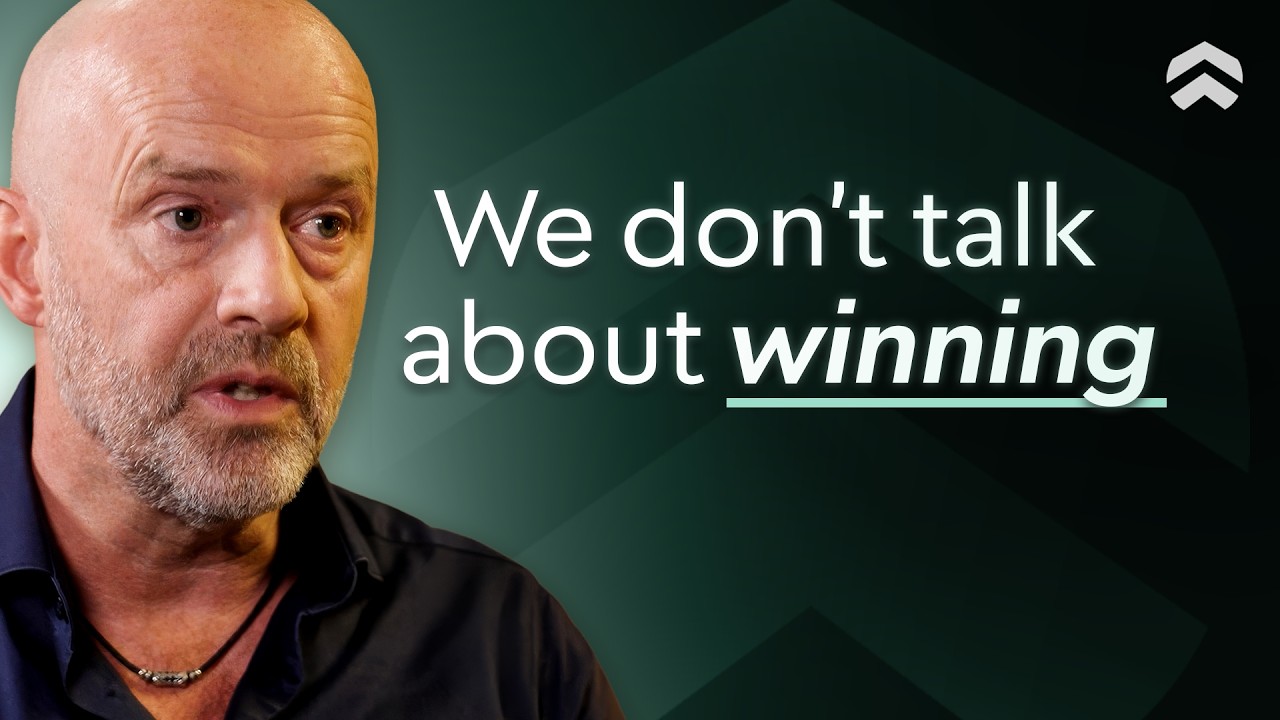
The Fighter Pilot Who Trained Bodø/Glimt to Take Down Man City & Inter Milan
1:00:09

The Fighter Pilot Who Trained Bodø/Glimt to Take Down Man City & Inter Milan

High Performance 03.05.2026 14 950 просмотров 227 лайков

Machine-readable: Markdown · JSON API · Site index

Поделиться Telegram VK Бот
Транскрипт Скачать .md
Анализ с AI
Описание видео
Bjørn Mannsverk is the former F-16 fighter pilot who swapped combat missions for football kits to lead Bodø/Glimt on a historic rise. Under his guidance, the small Norwegian club achieved the impossible, dismantling giants like Manchester City, Inter Milan, and Atletico Madrid despite a stadium capacity of just 8,200. In this episode, Bjørn explains how he transformed the team by strictly banning the word "winning" and replacing it with a performance-driven culture built on "awareness training." He breaks down his "Fighter Pilot Method," including high-pressure "friction meetings" and the on-pitch huddle known as "The Ring" that refocused his team after every goal. Bjørn also explores how treating a dressing room like a combat squadron drove the club’s revenue from €4.2m to €80m and why letting go of ambition is the ultimate key to elite success. 🚨 Partners Better Help 👉 Join Jake in Saying It Louder with 10% off Betterhelp Therapy. Click here: https://highpfrmc.com/hpp-betterhelp-yt Postcode Lottery 👉 Discover how Postcode Lottery players are Powering Hope Together. Click here to find out more: https://highpfrmc.com/hpp-postcode-yt XTB 👉 To find out more and make your money work, use code HPP at: https://highpfrmc.com/xtb-hpp-yt Heights 👉 Get 20% off your subscription by using Code: HP20 here: https://highpfrmc.com/hpp_heights_yt3 HP Foundation 👉 Do you want to kick-start an evolution that will change the lives of millions of children? Find out more about the High Performance Foundation: https://hppod.co/foundation Explore offers and discounts through our other partners: https://hppod.co/partners #highperformance #bodoglimt #ucl #championsleague #football Chapters 📕 00:00 Intro 00:31 25/26 UCL campaign 05:30 Mental collapse 10:37 Avoiding goals 17:12 Awareness training 27:10 The ring 31:40 Eight captains 37:29 Toxic players 40:50 Beating Mourinho 47:57 Dealing with pressure 56:38 Quick-fire questions
Оглавление (11 сегментов)

Intro

Now, you're a former F-16 fighter pilot. You've never played football. You've got no interest in the sport. And yet, the club that you work with have just beaten Manchester City, Atletico Madrid, then into Milan in the Champions League. Tell us, how does that happen? Never fear a storm. Be ready to adapt. The key is staying true to ourselves.

25/26 UCL campaign

Bjon, welcome to High Performance. — Thank you very much. — Now, you're a former F-16 fighter pilot. You've never played football. You've got no interest in the sport. And yet, the club that you work with have just beaten Manchester City, Atletico Madrid, then Inter Milan in the Champions League. Tell us, how does that happen? — No. Um, I think we have to go back to my background as a fighter pilot. Uh and to keep it short uh um we did an experiment in 2009 2010 uh that was mental training. We didn't really know what it was but we we just was looking for something we could train outside the normal fighter pilot uh stuff. — Yeah. Um and it was um it was quite the new method in a way uh and it was well received by the pilots uh by other personnel at the squadron and the effect was uh also uh very good. Uh and then some years later in 2016 when booty glimp were supposed to celebrate their 100th anniversary and um and uh it was a crash and burn. So even though they uh believed that they had the skills — to remain at the top level uh they didn't manage and they realized that this is caused to a collective mental collapse. — Okay. — And they also realized that they didn't have any way of training when within the mental aspect. So but by accident um they came across this mental pro project uh the mental training in my squadron many years uh before um just a few hundred meters actually away from Osmir Stadium in Buddha and uh they liked as well the method and how it was received uh and well aware that mental training was there was a little bit of stigma around it. — Okay. — Um they uh — what do you mean by that? Um I think that um they have seen or they have tried something uh during the career and seen that uh it sometimes it hits sometimes you really get a push back and then the locker room kind of closes for a year or two and they were afraid of that happening. Uh and I personally I think that mental training is very closely related to mental health bad mental health. So if you do mental training, you have a problem. Uh that's my personal perspective. U but they liked it and they thought that if it worked for a fighter pilot, we believe it's going to work for a football player as well. So that's uh when Bodiglint made contact. — Now you're going into the Bodogland dressing room just when they've been relegated. — Yeah. What can you describe what it was like? Um I didn't have any reference um first of all so I just had to see what I saw but um I actually I just watched them playing some games and uh I could easily see that there was a lot of bad energy like they were not united uh a lot of aggression towards referee decisions and so on. So, so that was what I saw, but other than that, I more uh I more had to depend on the information I got from the club itself. And um — and more and what were you being told? — Uh no, basically I was told that uh they claimed this was a collective u mental collapse and that they believe in mental training. Uh and then when I met uh them for the first time, I met the coach team. uh I did a presentation based on my references from the fighter pilot culture and uh from the mental training uh at least and kind of a plan uh they responded very well and uh they also promised to be part of this journey and they uh fulfilled that promise. So this is not a one-man show. Um you can easily point at me but I will point back to many people. So this is it's a joint journey. Um so they like the idea and uh and other than that they uh picked out some players um that they had we believe they have a potential — uh but um they are struggling uh and maybe you can help them. I was quite clear that uh I had to do this on my spare time because I had a full job uh on full job plus. So I said I can do this in my spare time but I can't take all uh but anyway you need to give me some uh that volunteer in a way because I already experienced from our own project in the squadron that you can't force this on people. I mean people are chief in charge in their own life. They make their own decisions that will impact their life. Uh so we need to save time. It's going to be waste of time for me and for them if they don't want to even try. So when I meet people I can kind of say that hey I know you're volunteering uh i. e. I also believe that you're willing to try something else.

Mental collapse

— So tell us a little bit around what was the re like you've got players then that have volunteered they recognize that they've experienced the mental collapse. They want to get better. — Tell me the first thing that you would do with somebody that sits in front of you then. — No it's more to get to know them. Uh so basically let's start talking about something. Uh I think I'm kind of um my thing in a way is that uh when we talk there suddenly there is something I can't really I don't really follow you. Uh it doesn't really make sense. Um so I become uh curious. Um I normally say I'm kind of holding you tight now for a moment and ask hey could you explain that and go a little bit deeper. So in a way then I I hear how they are thinking uh and a lot of the times it doesn't make sense. this is only making sense in your head but as soon as you have to explain it to me they kind of understand themsel that uh this is not completely right or we can discuss could there be different ways of thinking and could you change your perspective uh when it comes to that so that's a typical situation uh but it turned out that I would say that we were um we had a flying start would you tell us about some of the specific ideas that you've introduced to the up — what I have introduced. Um yeah, again I think that the way it works is that we end up with something u but we we a lot of the times we really struggle to figure out who came up with the idea. — Sure. — Yeah. So it's just a process but what we have done I think that um the first thing that um kind of surprised me when I came into the the club uh beyond that they didn't have any mental training. I thought everybody had it, — right? — Yeah. Because I knew from my own background that this was so powerful even though we were top athletes as fighter pilots. — Uh so that surprised me. Uh the other thing was that the extreme focus on results. It was a matter of just winning games and taking points and obviously that's why we're in for it to get good result. But the focus were way over uh over the top in a way that if we win a game, it's a good performance. If we lose bad performance. And that does something with learning. We get so biased. So that was uh really uh strange for me because I came from a background where we we couldn't really look at the result. As a Norwegian fighter pilot, luckily you never went to war. — Yeah. But we understood that the consequences of not performing well enough if [ __ ] hit the fan that could be fatal for you and the system in itself. So we were really motivated to always improve to become better. So that was my kind of I say most like I'm a little bit damaged out of being in that culture for more than 20 years. But that was my default when I came in. So that was a collision. Uh but I said okay um I just have to continue to argue my way in a way and and realize that uh to change culture it takes time. I mean culture is al it's a mentality the way we are thinking. — Yeah — it takes time. So on so I was talking to my 8 10 players uh for one and a half year uh always kind of manipulating them into uh to believing in focusing on the performance not the result and in January we started in May June 2017 in January 2019 um I had this last meeting around with oneto ones and then we met in a group session uh and I was and they were supposed to leave for um for preseason camp uh a couple of days later and I heard that they have a tradition to meet the coach team and the players on that preseason camp and uh and come up with ambition for this season. So I heard about it so I said so what do you think the ambition is going to be? I was like, "Well, we're going to be top five and we need to so many points on blah blah. " And I was so tired of this. I I gave him a quite a heavy push back and said, "Why don't you just focus on the on your own performance, what you can control? " And it was a little bit resistance, but then they were ready and then they said, "Yes, that's a good idea. " And uh and then this whole Sakarasan, we always did this together. So he just took that information and shared that with which was the head coach at that time and said this is the status about uh with half of the players or the leaders or the ones participating in the program — and he was like yes that's the way we're going to go and uh we never had that meeting. — So we have haven't had any results uh goals since January 2019. So you're a

Avoiding goals

football club that doesn't set goals, doesn't set targets, doesn't talk about winning? — No. — And Cherson told me that was the final uh brick or the missing brick and now he felt free when they free to maneuver to really focus on uh on the making the steps and move in the right direction. — So what do they talk about if they're not talking about winning then? uh they still talk about winning and losing but you just have to continue to focus on the things that you can control and I mean for us the the most important mentality and as a performance culture is that uh we need to focus on the things on the right things that we can control uh saying that what I'm actually trying to say is that we do have a limited capacity of time and energy and we need to spend that on the most important things and basically don't waste time and energy on things that you can't control. — So what are the most important things — and the result is not fully controllable. We know that there are factors that will impact the result. So for us it's not efficient enough. We need to spend it on other stuff. So we you can do it on uh focus on obviously nutrition preparations uh focus intensity uh present when you are on training recovery sleep it's so many things that you can fully control. — Yeah. — Uh but as long as you don't get tempted to start controlling like the other team are they going to be better than us? Maybe. We don't know. we just need to kind of be loyal to our game plan and uh and do as good as we can. So that is our mentality in this we call it sustainable performance culture. Uh a performance culture is basically where we in culture you need culture is always people. Yeah. — So it's mindset. So we work with individuals but we also work with individuals working together. This is a paid advertisement by better help. We have raised men to keep things in, to not complain, to not show weakness, to just get on with it. And suddenly we're asking men to open up, but no one's ever taught them how. And what happens then? Well, it builds stress. It builds pressure. It creates anxiety. And it comes out in ways that we don't want it to. You know, 60% of UK men signing up for Better Help online therapy site anxiety is the reason. 60%. That is why I know therapy matters. Not because something's wrong with you, but because it just gives you the space to actually put words to what's happening in your head. And for a lot of men, me included, when I first went to therapy, it was the first time I'd ever been able to do that. And that's why I'm so proud to be working with Better Help to kick off an initiative that I am personally very excited about. We want to encourage men to say it louder and get comfortable opening up. Society taught you not to and now society asks you to do it. So, it's time we learn to lean on each other to open up and measurably change the future of men's mental health. This is about taking that first step in a way that fits into your life. So, when life feels overwhelming, I know therapy can help. Sign up and get 10% off at betterhelp. com/performance. That's betterh lp. com/performance. And stay tuned for the next 3 months as we talk more about say it louder. There's a stat I keep coming back to. Postcode lottery players have collectively raised over1. 7 billion pounds for charities and good causes. Now, that's kind of a number that's hard to grasp, right? You can't really picture 1. 7 billion, but you can picture a breakfast club making sure that kids start their day ready to learn, a mental health service being there for someone when they need it most, or a youth program building confidence in the next generation. That's what 1. 7 billion really is. It's not just a number. It's thousands of moments where someone got the help they needed because of funding raised by Postcode Lottery players. It's consistent. It's long-term. And it's all driven by players. Together, you are creating real impact. So, if you want to see more about how this funding is making a difference in communities, click the link in the description to learn more about powering hope together. Postcode Lottery manages lotteryies for 20 charities. A minimum of 30% of each ticket price goes to charity. 18 plus. Conditions apply. not available in Northern Ireland. On the individual side, it's a matter of if we can make you as strong as possible because it's going to be a heavy load being a high performer, especially over time. So, you need to be as strong as possible. Uh first of all, you need to secure your foundation, then strengthen it as much as you can. And then we we focus more on we all have a potential. So, so even I have a potential. is not big as a football player but I have a potential but this is where I think mental training is focusing because even though we have a potential we we really struggle to get a full potential out — yeah so then what's left is what we call the performance but there is a big piece of that cake is friction or uh disturbances and it's most likely the way we're thinking — so selft talk — okay so let's so If you'll permit us beyond, let's talk about some of the individual techniques and then we'll talk about how this manifests itself in the team environment. So — you talk around doing meditation and get the players to do that in their kit. — Yeah. — Explain the — meditation. Yeah, we can go. We can start because that's the basic. Yeah. Uh um and even though I say it's no quick fix in mental training, there is a shortcut and the shortcut is uh awareness training. And that was what we did in the squadron because we were presented uh um the model of the Olympic uh top athlete center in Norway and like this is uh how we do mental training at different levels. Uh but we do realize at that time that it was like we do realize that uh doesn't really matter where we're working in the model there's always one common factor and that's you need to be present and it's actually pretty obvious. Uh so we are wondering if we put uh our effort into just basic awareness training can we get aggravated effects? Do we get side effects without even practicing it? So describe what

Awareness training

awareness training looks like. Yeah, awareness training uh we use the mindfulness approach. But I think that if we spool even further back to understand why do we need mindfulness training and uh and me and you uh we are um we do have a lot of things in common I would say because if we go all the way back to our ancestors and there back in the stone age or whatever uh we have a special type of people that survived and that was the people that uh kind of picked up that uh movement or that noise and they also in addition they had a brain that was always thinking this is not good and so I mean drama kings and drama queens that was the one and they thought that something's going to eat me it does I don't care what it is but I think it's going to eat me and you climbed in a top of a tree and or hide in a cave you survived so that's us we have the same brain we have kind of an autopilot in the way of thinking — so the ones that picked up that movement or that noise they get kind of credit for that. Uh but that also means that we are not really good on keeping focused. We get easily distracted. — And is it one thing that is quite important when you want to perform it is to be present. — in the present moment because that's where you're performing. And this mindfulness training is basically it's not to increase the length that you are focusing. It is to be really good to discover that I lost focus. — Okay? — And then I will be really quickly return my focus to the most important thing to perform. So that's the very basic with this mindfulness training. So you are basically sitting down and meditating. — Yeah. And you figure out that since I'm sitting in a quiet room, I'm sitting still uh and I'm uh I'm closing my eyes. There are more or less no external inputs, but still I lose focus. And that is basically some thoughts, some feelings, or it could be some body signals. — Yeah. — And you just have to get into that zone or test it out to realize how big impact it has. — Yeah. and our way of thinking is that first of all something is about keeping focused but the other thing is that realize that wow this is the way I'm thinking and you can't really control it comes and go in magnitude and uh in directions but we do believe that what how you think and how you feel will impact your decisions — so it's better to at least be aware that I'm no I'm afraid or I'm really upset or angry or jealous or whatever it takes So this is the basic for the for um the mental training, the mindfulness training. — So you do this mindfulness training, but you ask the players to wear their football kit in the dressing room while they're doing it. Would you explain why? — Uh no, we didn't. They we tried to do it like um in a normal setting. So we basically met in a room and uh sit on chairs and meditate. And we we uh we also forced everybody. — Yeah. We put all in the club including the coach team and the medical team. So was uh the rumors fold but it is uh the explanation and the effect is uh quite clear scientific findings as well but it is so boring and people don't really necessarily see the effect quickly enough and uh it's so it's hard otherwise everybody would do it but some really pick up on this mindfulness and salt was one of them. So he got really strong on uh on being aware on how he's thinking and how he's feeling but also being more sensitive what's happening around. That's why I think it's been so important to kind of make the our uh development and uh where we should focus during the time. — And you mentioned as well about the voluntary nature of working with you and the input that you do. Why is that important? it was a waste of time because I had limited time available. Um but also on on the receiving end if they were really against it. Um but we kind of changed that as well. So right now I do want to once with all the players. — Okay. — A quick catch up. But um this was something that the captain's team wanted because we always tried to make new steps and we figured out that uh was asking like okay what what's an intention on uh within the mental aspect uh this year and we sorted why don't we just ask the captain's team and they came up with like hey we need to go back to the group sessions and uh and what about the oneto ones I asked um everybody so they made a decision. — Brilliant. Yeah. So tell us about the group sessions then because you spoke about having friction meetings. — Yeah. — Describe that. — Yeah. So we been describing now the individual the model like foundation uh performance and obviously um to develop your own skills on the more organizational part. This was more directly related to my experience from the fighter pilot community where we are the experts. um we need to meet and uh and evaluate what we're doing and um being able to to identify lessons and find fixes and share that quickly. — Uh we also need always to kind of uh attack I call it attack what we're doing uh continuously improve. So it's like what we did yesterday it is not necessarily good enough for tomorrow. So it's more like more than just evaluating one game. It's like more like um how we defend over time. And obviously the top layer is where we together um try to be creative and and develop something make smarter uh solutions. So, so this was what I was used to and uh this was also an eye openener for me when I started in the bull game because I did these oneto ones with those eight 10 players and they were talking blah blah no problem one to ones and then I figured out okay my job is just to put them in one room and obviously they know a lot of football I don't so I put them in their room and I said please start sharing and it was totally silent so then I understood that uh they haven't trained on this. They're not well trained on this. Uh so that so I identified the only on they didn't have a dialogue with the coach team either. They had there was a monologue not because the coach team wanted that but they didn't response. So then we had to really roll it back and say that okay we need to practice. So first we need to expose ourselves. So we should talk about something it doesn't really matter. used to tweak it right the right thing for us right now and then maybe we could start criticism and criticize each other or being skeptical or to help identify to improve. So we tried to do all these processes uh with just the players and uh and then suddenly we really succeeded where they start sharing they are com they are competing against each other but they start sharing the good stuff with each other. — Go on explain more on that. I'm fascinated. — Yeah because I think that if we talk about sharing it's like hey we should meet and if we are struggling with something we can ask for help. And that's pretty obvious because there's an incentive. It's incentive for me if I'm struggling to get the solution from you. — Yeah. — So it I win on that, you lose. — Yeah. — In a in a system where we don't trust each other. So for us it was for me at least it was like a really important day when I saw that was a player sharing something good with the ones he was competing against at the same role in the team. then we see that the trust is there. So I believe basically when I share something that I'm good at with you, I I strongly believe that you will give me back something in the future. — And did you see that happen? — Yeah. So it was like they did need they didn't hide for each other. We're more open. But it's still a struggle obviously. — Yeah. We are not perfect but experts coming together and discussing is important and also they came up with um with uh findings that like we we don't really believe in this um the way we defend each other or um part of the game um the way we supposed to play — and uh we've been trying this for months now and um I felt that they they're starting to lose faith in that and said okay but then I think it's important that we bring this out of this room and meet the coach team to discuss this — and the players would then take that to the — coaches and that's part of the training to make you accountable — for your own career and and for the team and uh and be bold enough and brave enough to face the coach — which bings me then be on to the ring the fellowship of the ring the t that — Yeah that the B fans have got. — Yeah, this is the one that when your name is mentioned, it's synonymous with

The ring

this. — But would you describe what is the ring? — Yeah, as I mentioned in in this uh organizational part of the work meet, learn and share uh continuously improve and then develop or where we need to be creative and this was also uh a very important date. we have been discussing uh how are we going to kind of uh stick together uh when people are making mistakes so we can hug each other and so on. — But uh my perspective is that we uh we did meet in a group session uh this was um on the way out of the pandemic — in Norway we've been play we started to played without uh audience or spectators but now it was like I think like two four or 600 was maximum at the stadium. Yeah. — So, it's really quiet. Uh, but the week, the following week, uh, we are in traveling to Poland to play. I don't remember the team, but basically they were opening up. So, it's going to be like 30,000 people on the stadium. So, that was the right thing to talk about. So, what that's going to happen next week? What what's your thoughts? And then they just start sharing perspective. Ah, it's going to be great. A lot of people, a lot of energy, and it's going to be noise. This is the players talking. I have all the voices now. So, it's going to be uh a lot of noise. Yeah. I guess it's going to be hard to hear the coaches. Uh it's actually each other out on the pitch. Yeah. So, so basically we have this uh talk before we go the game starts in the locker room and then we have in the break. Uh and um and so then yeah, that's it. And then I just throw in some some like in hand ball at least the coaches have a timeout card. So you can throw that in on the table and you get some I don't know 60 seconds or whatever so you can uh um change your tactics or whatever. And then everybody was like kind of laughing and then one of the guys was like no but there is a break and people what are you what are you talking about? Yeah. Every time the goal is scored there will be a natural break. Yeah, that's true. But then we can gather how are we gather who has who's going to take the initiative and how are we going to form it and what going what are going to talk about and they kind of invented something new and then we said that they liked it. They said yeah this is a brilliant idea. — So just for closet so this will be either when Bodo score a goal or when B concede a goal — the players will come together in this ring — they can use it. So they don't use it all the time. — Okay. So, so we have uh obviously examples when uh when we are um really on the defensive side, but um I also recall when we were playing another game and um we were actually in Europe and this was the day before the match and uh and um I asked them, okay, what about what should be the focus for tomorrow? And then s the play said that. Yeah. Recently it seems like when we have scored a g scored a goal we kind of a couple of minutes later we kind of we're lowering your intensity or something like that. People like yeah I think you're right. Yeah maybe you should take a ring tomorrow when we score. So then they took the ring to just get hey pay attention now. Now, I don't know if you if you're aware of this at the moment, Bjorn, but there's been a debate with Chelsea Football Club that they get together in a huddle and people think it's performative rather than it actually makes a difference. So, — tell us a little bit about the huddle, who like who initiates it, what do they say within that huddle, and what do you think the benefits of it are? — Yeah. Um actually I don't know because I never listen into when they they join during a game. Uh but basically anyone can form it. — Okay. — Yeah. So but you can see it's like they understand kind of no now we need to get together. But it is not like um it's more like uh hey we need to refocus forget about uh this is important now. I believe it's something like that. Very constructive, very to the point from and that's the benefit of having a lot of captains as well.

Eight captains

— So tell us a little bit around how the captains are selected. You said there's eight of them. — The captain's team. — Yeah. Um actually that was my um third surprise when I came into football because they had one captain and uh for me it's a matter of leadership. So, so, uh, if you're going to have some one leading, uh, the players, why do you end up with a grumpy one? So, so I was like, okay, uh, how do you pick a captain? And, uh, and then I said, why do you only have one? because I'm used to from the from the fighter pilot business even though I was the squadron commander uh I was not necessarily leading every training mission the formations you you had a group of people that they were qualified to lead for instance for four for jets and they will just be evenly shared so everybody get a chance to practice because it's a difference between being a lead and being number four in a formation. So the good thing is when you are a lead you can you can really feel on your body what you need from your wingman's uh and flight leads to perform and then the next day you are the wingman so you know what the lead needs from you. So it's is a good dynamic and it built uh it build um obviously something within you uh confidence and self-esteem but also uh knowledge on leadership. It's a lot of leadership. So that's what like why don't we have more captains uh that rotate on uh on playing as a captain. So we ended up with three for many years uh and it is kind of a pilot. You test out something but obviously we got the feedback. It was good to the captains just to talk together who who's going to be captain today. Yeah, I've been sleeping a little bit not perfect last night or I've been captain now for two or three games and I'm a little bit weirded out and could we change? So they all saw the benefit of that but um me and Hov we really believe that we should increase the numbers. So it took a while to convince Hetil that this is smart. Uh because then um and I think that it in combination that uh we we now were a point that we understood that culture is absolutely the most important thing a good culture and realizing also it's hard to dictate players to have a culture from the outside. uh we need to kind instead of losing the locker room, we're going to take it from the inside. — So we we will have more captains to do the job, make them accountable, responsible, uh but also identifying captains that do have the values, the attitude, they walk the talk, and they don't need to be like perfect in the mindset or the performance mindset. They don't even have to be uh playing a lot. uh that doesn't matter but they all should volunteer to play as a captain if they get the chance so they can feel this responsibility. So then we ended up with eight uh right now it's seven because um one retired from football but uh I hope we get back to eight pretty soon because we also use them in the group sessions. So uh then we split the player uh all the players into four groups. So we are down at six seven. That's a good group dynamic. Yeah. — And there will be one at most likely two captain in each group. — Okay. then uh they are kind of they are sticking together and they can really run this group session not me or uh and the cycle if I can share that the cycle is that right now because everything changes but right now it's like I have a onetoone I catch up short catch up with all the players and it's like hey we are in Bonai group session in next week so do you have um any right things to talk about a topic that could be relevant for everybody. So I get all these inputs and then I kind of figure out that I think this is these could be important topics. I could have on some of myself or get some inputs from — and what kind of topics do they offer? — It depends. It could be um we've been working feedback culture initiate a project around that and then we get the status on that and what do we see uh it could be medical team or but it can't be like a small thing just relevant for you — is how we arrange traveling or um yeah so it it could be different things then we meet the captain's team uh me and holar and then we share over our perspectives and uh and do you have any perspective? It's basically pre-planned the group sessions, right? — So we make a decision that we think these are the topics we should uh bring into the group session and have a discussion. Then we spread out small comfortable groups. It's not risky to share your no coaches uh present and then they speak more freely and then we join again. So what happened? what's the biggest takeaway? And then we prepare for meeting the coach team and also the strategy. How are we going to approach them? — And then they meet, they discuss, they come up with some kind of decisions. This is going to be our 1% improvement uh on the coach side or on the team side and then they feed it back to all the players. That's kind of the

Toxic players

— Have you ever had a player that doesn't fit within this culture? — Um basically you need to get rid of them. — Has that happened? Um yes I think so. — And so how does the process of the rejection of that player from the culture happen? — Uh normally we I would say that it make it make it a good story in a way that um you can move on and uh we can move on. So you can kind of follow your own dreams. So, so um so I think that should happen uh I think that's that should happen not only in sport but in business as well — because that's what we see that culture is so important. Yeah. — Uh but um — you can have a really strong culture but if you have like a few indiv individuals that are cheating or something and it's really disruptive. So you really have to protect that. — You know something happens when you hit your 40s. to actually start to realize that the scarce thing in life isn't ambition anymore. It's actually time. And between running businesses, hosting this podcast, trying to be present as possible with my kids and my family, there is only so much of me to go round. Which is why I've been thinking more and more about how to make things in the background work a bit harder for me. And this includes my money. And this is where XTB comes in. XTB have launched a cash ISER and stocks and shares ISEAR where new customers can currently own 6% interest which includes a 2% boost for the first 90 days. You get taxfree growth, daily interest, flexible withdrawals, and no account management fees which means that your savings can grow while you're still staying accessible. And if you open an account and make your first deposit within 7 days, you'll also receive a free stock to start your investment journey. If you want to learn more, just go to xtb. com/en/join/highperformance and use code hppp when you sign up. You know, there was a point a little while ago where I looked at all the supplements in my kitchen cupboard. And my wife laughs about this even now and she's like, "What has happened here? " And honestly, I didn't realize that all of the supplements I was taking had got so complicated. But I think it's cuz I was trying to be a dad, partner to Harriet, trying to run a couple of businesses, trying to find time to host this podcast. And I suppose really what I needed was less things in my life and just a few things that actually work. And I think there's a myth I'd like to debunk at this point, right? And it's that high performance doesn't mean trying to chase everything. It doesn't mean finding every hack. It doesn't mean squeezing more into every single day. Sometimes the best performers, and they've told us this when they've been in this studio, they just prioritize simplicity. They only master the fundamentals. And to be honest, I think I've learned this the hard way through trial and error. And I think I now realize that nothing is more fundamental than fueling your body with the right nutrition. And I believe this helps. Vitals by heights is nutrition without the noise. Just two capsules, 6 seconds, zero effort. And in here, all the essential nutrients, the vitamins, the minerals, the healthy fats that are designed to power energy, focus, recovery, and sleep. So, we're talking about no mixing, no nonsense, just everything you need in the right doses. And I think if something takes longer than about 10 seconds, I'm out. Luckily, this takes about six. So, you're fine. So, why don't you strip your health routine back and just focus on what matters? Head to heights. com/jake or enter code HP20 at checkout for 20% off your first month. I promise you, I believe this stuff really works.

Beating Mourinho

— So, you started this journey in 2017. I wouldn't like almost like the apex when you came to global uh consciousness was the 6-1 defeat of Roma, Jose Mourinho and all. You've described that as one of the first times you've ever seen the potential of a group actually manifest itself. — Yeah. Potential of the group. I don't know the potential of the group but that's what was the first time when I saw the philosophy our philosophy played out. — Describe it. — Yeah. The philosophy was sustainable performance culture. So if we as I mentioned if you have u the the athlete the player like u the strongest foundation they can have right now that they are playing up to their potential and they continue to develop their skill set. That's what we expect from you. Nothing more but nothing less either that you do as good as you can in all these aspects. And if you can put 11 of those into the team and you put on our values when it comes to the team values like you need to be loyal to the game plan and the way we going to play and also this uh brother and sisters in arms attitude that we stick together uh we uh it doesn't matter if we go we win and lose together but we also try to play each other as good as possible. — Okay. — Then the team is performing at this. — So there your three values about loyalty brothers and sisters in our is perform. We call it performance, development, loyalty and then uh this stick together this um yeah — brothers in arms. So those four values we always uh we always refer to that then we think the team will perform at it best and we will get a deser a result as deserved over time. And this was what I saw uh in the game versus Rome where I saw so many players playing up to their potential and I knew uh some of them had made giant leaps when it comes to development and they did this as a team with loyality and this brother in arms attitude. So we got the result that was deserved. That was the first time I saw that played out all the way. We've been uh nitty-gritty on the details for so many years and finally we are we bloomed. — So what so tell us about the dressing room after that then you've you get back into a dressing room. You've just defeated — Yeah. — Jose Mourinho's team 6-1. — Yeah. — You don't talk about winning. So what's the conversation? — We celebrate. Yeah. Yeah. Um but that time we I think we did was a home game and away game. Yeah. then we normally don't celebrate until we done with both the games. So, so but it has changed obviously people get enthusiastic but I see that um over time when this mentality is really uh all over you that's you uh you see that this victories is not that important. It is like oh this misunderstand me correctly but it's like this was great what's next — right — what did Mourinho behave like after a humbling like that do you know — no he he behave then that time he behaved but u but uh it didn't go well after that but he was uses his poor technique I remember he was like coing up in the face of but um after just what did he do? — No, he was just up in his uh head and like doing that and it was like it was a power play. You can watch it on the YouTube and then it changed he's using all the tricks but uh what I heard that's kind of um a fun fact. you you're talking about the ring uh and the ring uh actually became such a focus area for Rome when we played uh I think in the quarterfinal in the they have a match meeting I think the day before with UEFA and then Rome kind of claimed that they should be um prohibited to use the ring during the game and I thought then this is great effect. — Yeah, great artist steal. Yeah. So then tell us about some of these other incredible results. Uh talk about Manchester City. You've got one of the richest clubs in the world turning up in the Arctic Circle. — Yeah. — What was the preparation like leading into a game like that? — I think that we are not perfect and even though we have a philosophy and not focusing and talking about result, people do get affected. We are all people. — Yeah. We are afraid of making mistakes and of losing uh something. We're more afraid of losing something than gaining something. That's our stone age brain in a way. So they are not perfect and I think that when we finally qualified to uh to the Champions League, we started to play. We played actually pretty well I think uh but we didn't really manage to get those points and the final. So, so in a way we were hoping for uh the knockout phase or at least the playoff and then at some point it was like you can forget about that. I think it was like. 3% chance — right — before the last three games diesel dorf or Dortmmont uh and um and I remember we I met them in Spain just before that game uh and we were talking about this and it was like okay guys now you can really let go of the expectations you have nothing to defend no now you can go out and play so and even after the team were sick as well then we kind of played uh a draw against them. So then we're like, "Wow, cool. " But still, Manchester City, no way. We can just go out there. There's no expectation. And they managed to have no expectations. And then I think we again we met Manchester City maybe at the weakest point in the season and they were up in the north. So a lot of benefits on our side, but we played really well and uh then it became a surprise for them. So, so it's it's great fun to see them uh when they are unafraid. — Yeah. — In a way. And that also with Atletico Madrid, it's like still and suddenly it's a miracle. We continue. So, so it is still we are not perfect. Not at all. But there's a really intriguing pattern that you've described here whether it's with uh the individual players or or collectively as a team that when you remove that sense of expectation the liberation that follows their freedom — Yeah. — t uh tends to happen. — How are you preparing to go though from being the hunter to the hunted — because now that you're developing a reputation, you're being seen as uh more than just giant killers.

Dealing with pressure

— Yeah. How are you dealing with that sense of expectation? — It's the same deal. We we try to focus on ourel. That's the only thing we can control. But we — I think that we still we see that we have um been beaten hard in the national league now by our the previous um champion we was a five zero. uh and is we we're not we still good but the mentality is like now we face people that or face team that really knows us well I think that's the that's been a benefit I believe in the Europe nobody knows about bulld right now they know about bull still it's like no can't be like that so that's a benefit but back home uh now we get nothing for free so we need to change that mentality and Uh and we also need to be hungry and uh again go out and perform and that's always it's like I don't give a damn in the results. Go out and perform. He always says that. So it's that's the basic story. That's the recipe. — So after the sports in Lisbon game, you win 3-0 in the first leg and then are defeated in the second. — Yeah. — What's the conversation like in the dressing room after that? — They were pretty good. We also have this um this captain's team is also responsible for a quick debrief in the locker room. Yeah. — After the game. So out with all the medical team and the coaches and they are alone and uh and I was quite impressed with them because then they managed to get in the locker room. They were really disappointed. They were heavily beat. Uh they felt uh felt that they failed and they were ashamed and all that. But the captain team they stepped up and said that hey no we can't focus on what we did not achieve we have to look and all our achievements and we are still good even though we were not good today. So I think that lifting up that mentality uh impressed me and they do it uh by themselves. — So tell us about staying hungry then. How are you going to get this team to keep this hunger, this curiosity, this willingness to keep going into their growth zone? — Yeah. Um I personally I believe that um the motivation, the inner motivation is that I always become a little bit better. I learn something new. And I think that's also related to why when I'm saying that when we achieve something, it's not that important. It's like what's next? So even I remember even the first time we became champions in the National League, first time ever, it was like party, we are ready to party and then like no, let's move on. So so, so I think that the to keep the hunger, you need to really embrace this. I'm learning something new. And uh and by that you also have a stronger motivation to get out of your comfort zone into the growth zone and uh and kind of enjoy having um to struggle with stuff. And I see that with uh Patrick Bag is really great on that. Now I'm struggling. I love it. So something like that. The risk is always that you can become a little bit fat and nappy. — And what about you? I mean, this has been an incredible journey that you've been part of. What's been the biggest learning that you've gained? — Um, biggest learning I think we have developed um appreciate at least I really appreciate uh our philosophy uh that we have developed. is very is very oriented. It's very warm when it comes to people, individuals, because it doesn't matter if you're a football player or your middle of your career. This is something that you really can bring on the rest of your life. Um, and it's sustainable uh in a way that it's going to last uh but also realizing that you can't use more than you have. So, I think that I really love that philosophy. I think it's really warm. It's not like a uh you try to squeeze everything out of people and then leave them. Um what I also learned uh in and that's not from football but it's like we talk about our brain design that we all come from the same place and what I see is that even though I meet so many skillful people I mean really skillful people uh in what they do different things it turns out that everybody's turn out to be people are people we're all human beings so we face kind of the same challenges, but we also have the same opportunities. So that's what um we try to keep it simple in the in the way we work because it doesn't matter if you're a portfolio manager in the Norwegian oil fund or a fullback in Buddha glimp or a fighter pilot or a business lawyer. People are people they kind of responds on the same things. And my final question then beyond to this fascinating conversation has been that culture is probably one of these most used and abused terms within the corporate and the sporting landscape. What you've described here breaks down culture into something very tangible. — How much difference do you think it really makes to the ultimate performance of a team? — The culture. Yeah, I think that's if you can also I think you can um u take this mentality or mental work and that will be a really big part of this culture. It is the way we are thinking and it's the way we work. So we we say it's mentality and process that's uh how we do and uh absolutely the biggest uh factor for us. Obviously they need to have some kind of idea on the football side and the technique and that's taken care of but uh by far uh the most important thing and I think that the more you talk about it and but you also need to challenge all the time what do you mean it is like an energy um debate we are lacking energy and okay so what kind of buttons are we going to push now what do you mean about energy culture we need to have more we have to develop a more precise language in a way. What do we mean? What is good culture? What is not good culture and we also need to make sure that everybody knows what's within and what's outside. So you can correct uh behavior that is not within the culture we want in plenary for instance. See, I I think one of the things that has made you extraordinarily special in terms of what you've done at BTO is that you've taken an abstract idea of culture and even today you've made it really practical, tangible, and accessible. — What's the biggest mistake that people make when it comes to trying to create a high performing culture? they they're not able to disengage from looking at the result. Yeah. Because you get so biased when you know the result and I know that good result can hide uh bad performance and the other way around. — Yeah. — So, so I think that's the biggest mistake and that's what I hear a lot of people talk about we are only focusing on performance but I can clearly hear that they are mixing it up for us. So, so I think Patrick B or one of our captains, he he said that officially that um and I don't think anybody is as specific on this as us. He can also clearly hear that when he or see it when he goes other places that u we are quite unique in the precision uh of that. But it takes time as we said it's not a quick fix. We've been working on that for years and we still obviously we fail and we have to onboard new people in the way of thinking and so we're still human beings. We still struggle you know.

Quick-fire questions

So if we can finish with some quickfire questions then around your work and the culture that you do. Would you describe the three non-negotiable behaviors that that people have to buy into when they come and join? I think it's clearly you you have to be really skillful and talented uh if you're going to play uh and disregarded behavior. But we want people to be um uh themsself uh because we believe you're best on being yourself. But also take feedback so you can adjust if your behavior is not uh good. You need to take uh you need to be loyal to uh the way we're playing. Uh you need to to um try to play each other better. — Yeah. — So I guess that was more than three. — There's four. Yeah. But they relate to the values. — Yeah. The values is all over. Values is all over in a way. And um there's a interesting thing in uh in Buddhist they also developed um what we call um employee employees promises in a way that normally what I see is that when you come into a business the business kind of promising the employees this if you work for us we will give you this. — Okay. We turned it around and we said that when you're part of bully, you promise us to and that is also based on the values. I will I will like values and the method like I will uh share what I learn. I will ask questions. I will criticize. I will so it's all that kind of uh — and the players like the players agree to this. — That's a strategy document. So I don't think I believe some of the place they don't know about it at all. We but we do it all the time. — Okay. — That that's our culture in the first team but we have a bigger organization every we put it in but it's the principle of just hey you need to commit to the team is the most important. — So that is so what's the greatest piece of advice you'd give anyone that wants to create a culture similar to this? Um I think you can start the most effective um tip is basically ask yourself the question that what I'm now wasting time and energy on or we are can we if that's uncontrollable we need to stop doing that can we control it that's the most important question in your own life but also as an organization and then the next question is what are we using time on energy on is that the most important thing and But that's basically my um my the mantra in the fight pilot community was like um train as you intend to fight and we turn it around to a question but we are now spending time and energy on we really need to believe that this is what we need if we if [ __ ] hit the fan and we have to go to the war — train us if we — intend to fight — yeah I love that I've loved this whole conversation it's been so rich and so detailed and thank you for being so candid with us it's been so illuminating. — Well, thank you very much. — Thank you.

Другие видео автора — High Performance

Ctrl+V

Экстракт Знаний в Telegram

Экстракты и дистилляты из лучших YouTube-каналов — сразу после публикации.

Подписаться

Дайджест Экстрактов

Лучшие методички за неделю — каждый понедельник