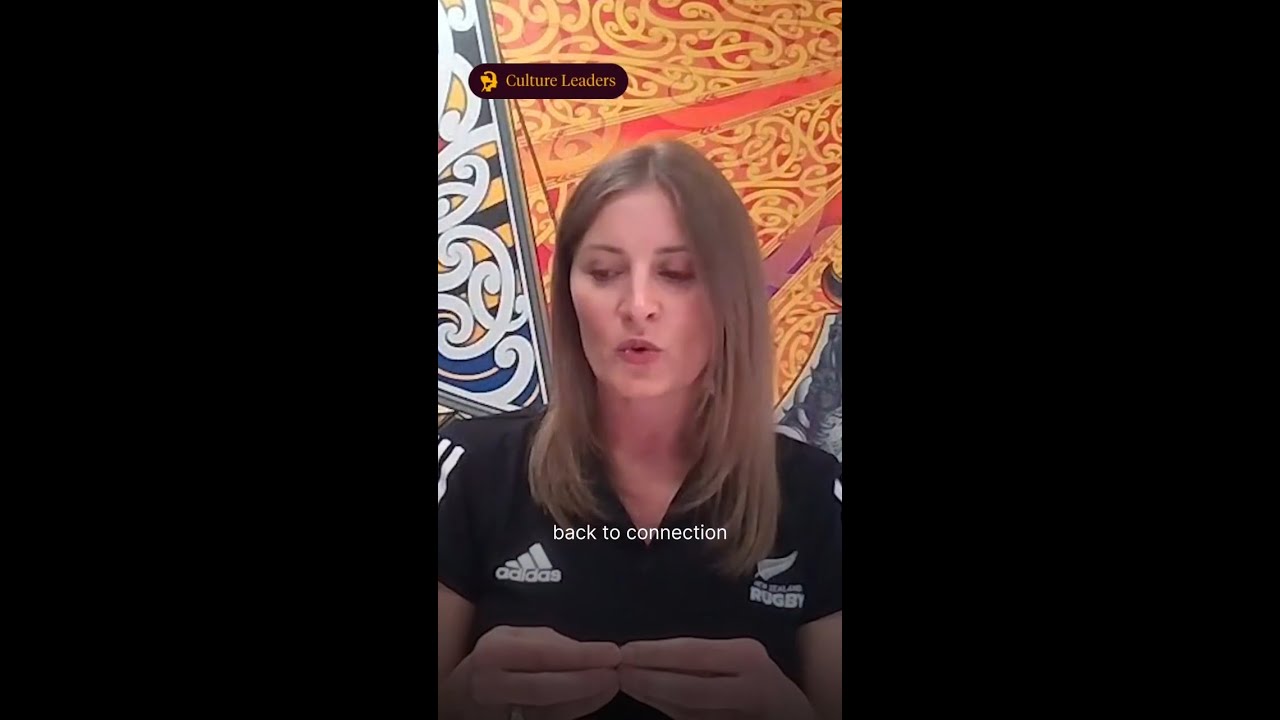
What does it take to lead the people strategy for one of the most iconic and scrutinized sporting brands in the world? Toni Grimshaw, Chief People, Safety, and Wellbeing Officer at New Zealand Rugby, joins us to go behind the curtains of the All Blacks and Black Ferns. She reveals the "Operator’s Playbook" for building a culture that thrives under the weight of a nation’s expectations.
Оглавление (8 сегментов)
Segment 1 (00:00 - 05:00)
There's a ritual at New Zealand rugby that happens when someone joins the organization. The lights dim. Ex-All Blacks and Black Ferns players walk in. And new staff members, people who will never step on the field, are presented with their jersey the same way that elite athletes receive theirs for the first time. It's borrowed straight from the teams. And it works. Tony Grimshaw, the chief people, safety, and well-being officer at New Zealand rugby, says staff commitment there is stronger than anywhere she's ever worked. Now, keep in mind, New Zealand rugby is a not-for-profit. So, no one's getting rich by committing. And this isn't a workplace where the work is easy, either. They're pretty upfront that if you're not prepared to give 120%, this isn't the place for you. Their commitment is their strength because of rituals like this. Because of a concept called kaitiaki. You don't own the jersey. You're a guardian of it for a short time. So, what impact do you want to leave? And that mindset is simple. Team before individual. Legacy over ego. It isn't just talk. You know, when commercial partners come with big money to build campaigns around individual star players, New Zealand rugby says no. Revenue on the table, and they turn it down. Because the principle matters more. And here's what really stopped me. The All Blacks are selected season by season. Every time they come together, it's essentially a new team. You know, last year the team was named in early June, and they played their first touch test match 2 weeks later. 2 weeks. 2 weeks to go from strangers to performing at the highest level on the world stage. In those 2 weeks, you think they'd be on the field tackling, kicking goals, drilling plays. But that's not what those 2 weeks look like. They're in club rooms connecting. Talking about their whakapapa, their heritage, why they play, and what it means to them. And then they get clear on how they want to operate as a team. And only then, courage. That's what gets them on the field winning games. This conversation isn't about making work softer. It's about sustainable high performance, and what that actually looks like when an entire nation is watching. When pressure really is a privilege, but only if people are supported. So, let's get into it. Good day there. I'm Justin Ansoat, chief people and customer engagement officer at Culture Amp. And I'm here with Tony Grimshaw, chief people, safety, and well-being officer at New Zealand rugby. The organization behind the All Blacks, the Black Ferns, and one of the most iconic brands in the world of sports. And so, before we dive in, I want to do something a little bit different. You know, we've got these conversation cards here uh that we created with the amazing psychotherapist Esther Perel. And they're designed to surface things that don't usually come up in your usual kind of two truths and a lie types of questions um to get at the human stuff behind work. So, Tony, you up for pulling uh a couple out and seeing what happens? Kia ora, Justin. Great to see you. Absolutely, let's do it. We use these cards in our team all the time um to open up meetings and build connections. So, I'm a big fan. I love that. And kia ora to you, too. Um so, the three I've pulled out is um so, take your pick. Uh the message I wish I could unsend. A piece of advice I still think about. And the skill I wish I got to use more. Any of those speak to you? Oh, good questions. Um Yeah, look, there is a piece of advice that I still think about that I got really early in my career, and I've been thinking about it recently. Um so, it springs to the top of mind. And it was when I was very early in my career, and um you know, I've been a bit of a workaholic. Like I'm work nerd. Like I love what I do. Um and I definitely have a tendency to just work all the time and think about work all the time. So, go home, work in the evenings, work on the weekends. You know, I just can't stop. And um a boss sent me down earlier in my career and said, "You know, you need to manage this, Tony. Like this isn't sustainable. " Um and the piece of advice he gave is that what is given will be taken. So, the message was that I set the standard for how I will work. And if I set the expectation that I will consistently work in that way, that will just become the expectation. And I think about that advice a lot, you know, because as a leader, it's really important to role model work-life balance. And as a parent, you know, I need to remember to bring a bit more balance in my life. So, that's one I come back to often um naturally. Such a great example. I mean, I hear that I mean, a lot of us in this field hear that advice a lot, but I've never heard it described in that way before. And so, that's incredible. And I
Segment 2 (05:00 - 10:00)
know as a leader in the organization, that sets the tone as well. And it's going to be so exciting going into the depths of an organization, kind of peeking behind the curtains at one of the most famous sporting institutions in the world where we're trying to balance like high performance and understanding how that ties into this dedication to work. And so, I'm really excited to spend this conversation learning more. Um but before we go into that, like let's just talk about right at the start. Like when you stepped into New Zealand rugby, what was your first day at New Zealand rugby like? You know, you walked in, you kind of looked around. What's going on inside your head? And what's your vision for the place? Um my partner and I joke about this because the biggest thing that was on my mind, and I'm sure other people can relate to this, was like, "Oh my god, nation, do I wear a suit? Do I wear high heels? Do I wear sneakers? " You know, that was probably the biggest thing going around my mind. Um I settled on sort of suit trousers and and sneakers, by the way. Um but actually, when I came in, I was just immediately quite in awe, actually. I hadn't come from sporting organizations. So, suddenly to be in this amazing, you know, organization like New Zealand rugby. Like I've got ex-All Blacks in my team, you know. I was just pretty just a bit of imposter syndrome, to be honest. Couldn't quite believe I was here, but was really excited. Um but I think the vision that I brought in, and what I was really excited about, was the opportunity to learn about this high performance culture. You know, learn about what our teams and Black do, and really think about how we pull that into the organization and kind of leverage that internally to drive performance and culture. So, that was both the opportunity and the vision I had. You know, the opportunity that we have at New Zealand rugby that I think's really unique. Um I think I have probably one of the best CPO roles out there. Agreed. And what a fun story to start with in terms of your entry. And and you're saying the things I think that a lot of people are thinking about. It's what do I wear on day one? And and cuz it's such a big symbol of what the culture's all about. So, what's the correct answer to that question? We have a policy which is dress for your day. Um so, if you have important meetings um or you're with, you know, stakeholders or partners, you might dress a bit more formally. Um but day-to-day, we wear, you know, what we call Adidas. So, you'll see lots of Adidas. We're really proud to be partnered with Adidas, and I think we all think we're really lucky to work in an organization where we can wear sneakers and t-shirts and hoodies and be really comfortable while we carry out our work. And it sounds so small. It's just like, "What do I wear? " Like, how how's this at all relevant to a culture? But I do think that symbols and rituals kind of build that culture, and it sends an important signal. It's one of thousands of signals, that's no doubt, that you have to build your culture. And you know, one of them I've heard about was when, you know, a new employee joins New Zealand rugby, there's this kind of jersey presentation ceremony. Um and it's borrowed directly from how the All Blacks or the Black Ferns kind of receive their jerseys as they join the sporting team. Um can you take me inside one of those moments? Like what actually happens in that room? Yeah, absolutely. Um so, we're really big on building connection to our game, you know, to the purpose, to the reason that we're here, which is to unify and inspire through rugby. And a big part of that is, you know, carrying through a lot of the rituals and practices that exist in our high performance teams, and have existed in those teams for a very, very long time. And so, one of the rituals that we have in place is the jersey presentation. So, every few months, we bring together all our new starters to an induction day. Pretty stock standard. We talk about the organization. They meet the exec. What it's like to work here. Um all of that. But at the end of the day, and this is always a surprise. We don't put it on the agenda. Um we do a jersey presentation. So, we dim the lights in the room. And we have some of our staff, some of our ex-professional players. So, our previous CEO was an ex-All Black. We've got Eroni Clarke here, ex-All Black. Kendra, ex-Black Fern, legendary players. Um but come along, and they share with us the story about when they joined the team. Um and the moment that they really felt part of the team, and what it meant to wear the black jersey. Um and to be the guardian of that jersey. Um and so, they come in, and they share the story because I think it just makes the experience um and the connection to our team so tangible. Um so, we tell the story, and then we bring everybody up individually, and we present them with their black jersey. Uh and we tell them, you know, you're here. You're part of our story now, you're you're part of the legacy of the black jersey. Uh it's our
Segment 3 (10:00 - 15:00)
responsibility to leave the jersey in a better place. Um and so by presenting you with this jersey, we really want you to think about that responsibility, you know? Um and it's such an incredible ritual. I know it sounds so simple, but you just see the pride. And the next day you see everyone turn out wearing their jerseys and they're standing a bit taller and it's just such a cool and special moment. Um what I would say though, I mean, of course, we work with All Blacks and Black Ferns. Like, how lucky are we? We work in rugby. Um but this has been true of any organization that I've worked in, right? If you can find ways to really connect people with the purpose of the organization, what you're there to do, people just connect in so much more strongly. They bring more empathy to their work. They've got more context in the way that they carry out work. Um so this is a really special example with New Zealand rugby, but this is true of any organization, I think. It is. And but peeking behind the curtains a little bit, uh as we talked about, I do think it's a really special concept. And I want to double-click. I don't know if we can say that anymore cuz we're having a conversation, we're not really clicking. But um would love to learn more about that. And so you touched on what I understand is a Maori concept of kaitiaki that uh you know, New Zealand rugby cares a lot about and you talked about this concept of you're the guardian of the jersey, not the owner. Um and so you're here for a short time and then you know, what impact do you want to leave? I I'm really curious to learn more about that. You know, how does that mindset show up um day-to-day in work? Because it could be easy from the outside to look at an organization like um New Zealand rugby and go, well, no, you've joined this clan and you are you live, die, and you're here forever. Um you are So how do you balance that? And what does it look like to um leave that legacy and be a guardian of the jersey? Like, how does that show up? Yeah, great question. We are we're so lucky at New Zealand rugby and I think the thing that sets our teams in black uh apart is our ability to draw on the rich culture that comes from our Maori and Pacifica players and volunteers and coaches right across the system. Um and in Te Ao Maori, they have these beautiful values and one of them is kaitiaki, guardianship, which is what you're referring to. Um and the idea is that exactly as you said, you don't own the jersey. So one of the things you might notice when you see the All Blacks play, for example, is we don't have the players' names on the back of the jersey. Other teams do. Um so we talk about the fact that, you know, you we've been here for well over a hundred years and we will be here long into the future. And so everybody that comes into the organization, whether you're in a team, a professional team, or in the HR team, um has a role to play to leave the jersey in a better place. And this is beautiful Maori value of kaitiaki where which outside of the sporting context refers to leaving, you know, land ownership, leaving New Zealand, leaving your part of the world in a better place. Um and so we talk about this a lot and for us it helps to manage ego and entitlement. Honestly, it's really about saying no one's bigger than the jersey. The jersey will be here long after you're gone. We have a responsibility to honor the legacy of the jersey and leave it in a better place. And I think that just means our players and our staff bring a really different mindset to the way that we work and make decisions, which is about ensuring rugby is successful and that we spot inspire and unify for the next hundred years, not only today. Yeah, that's a powerful concept and I know a lot of organizations say that they really want to believe it. Um but I want to dive into some of the examples that of how that shows up in the workplace. And I know there's one that I'd heard of that really stuck with me um because I think it's really easy to show your values and that's a very strong value for you when it's a very easy decision. Um and it's it shows up values really show up best when it's a difficult decision, when you're making a counterintuitive decision because you're supporting values and a lot of ways in organizations, one of the strongest places to do that is kind of putting your money where your mouth is. And I'd heard that New Zealand rugby turns down sponsorships or commercial opportunities when a partner wants to go in and build a campaign about one of the individual star players there. And that gets to this concept of the star player doesn't have their name on the back of the jersey. It is a team jersey. And so um you know, New Zealand rugby will walk away even when there's actually quite a bit of revenue attached. So can you walk me through some of those situations? You know, what's at stake? How do you hold that line on team before individual? So how does that show up um within the organization? — [snorts] — Yeah, great question. Uh look, to me this is a value that we're pretty uncompromising
Segment 4 (15:00 - 20:00)
uncompromising on. Um and while I can't give any sort of very specific examples cuz we're talking about sort of commercial negotiations and things like that. Um what I will say is that if you ever see billboards or advertisements, you know, um you know, or content um around our players, it will never feature heavily one player. It'll always be showing multiple players. Um we like to make sure we show the All Blacks and the Black Ferns. So we're you know, really mindful that no one person is ever, you know, bigger than the team. And you're quite right. Like, I think the values matter the most when they stand for something and when you're willing to make some really difficult decisions to honor those values. And I've seen our organization in a way that no other organization I've worked for, if I'm honest, um has kind of stood by this value right up to the highest level, you know, even our board chair. Um when people make a suggestion, "Hey, we'd love to just work with this individual player. " You know, the answer is always no. No one player is bigger than the jersey or bigger than the team. You know, rugby's a team sport. We're an organization, we're a team, we're here to unify and inspire through rugby. Um and yeah, I think it's a nice way to set the tone for the way that we want to work inside New Zealand rugby and and frankly, I think what sets us apart in some ways from other teams. And other examples from inside the organization, outside of the sporting team, where you see that value show up um that might be different from other places you've worked um or the kind of the usual workplace that Uh yes. I think I I can't really can't think of one specific one because it's kind of so much part of our DNA. Like, and I think as an organization our people are quite humble by nature. And so it'd be rare to see one person coming out and saying, "Hey, I'm amazing and I did this amazing piece of work. " You'll always hear um we did this as a team and these are the people that helped me and here's how we contributed to this. So we're always thinking about how all the parts of the team come together to deliver what we need to. Um yeah, it's hard to pick one example because it's just so much part of our DNA. It it's impressive because when you do it all the time, it's just who you are. It's not a thing that you do. Um and you touched on this concept of team first and um people look at sporting teams like the Black Ferns or um the All Blacks and what one thing that surprised me is that they're selected season by season. And you know, every time they come together, it's essentially a new combination of the team. Um and they usually get, from what I understand, you know, up to 2 weeks last year to get to know each other before they go out and represent their country. And so I imagine, you know, people might assume what goes into those first couple of weeks. So if you had 2 weeks only to get to know each other as a team and then go step on the field and operate as a single unit representing your country where it's team over individual, can you give us again a peek behind that curtain to know with only 2 weeks, what do you do to get that team ready to operate as a team? Because it busts this myth that you have to be together for a really long time to know, trust each other, and operate as a team. What goes on? Yeah, absolutely. Um that's exactly right. Um one of the things I was really fascinated by when I joined New Zealand rugby, and anyone who's kind of worked in sports or played sports will know this, that the team changes, you know, all the time season by season. So you're constantly kind of resetting. And one of the things I've really loved observing about our teams is that in that short time, so they might have 2 weeks before they go out and play a test match, which in corporate seating is just crazy. Like, how do you even get a team ready for that? Um but for our players, you know, they go right back to connection. So connection with each other, um they will spend time off the field, you know, in the club rooms, uh talking about uh their rugby whakapapa. So whakapapa is like your background, your lineage, where you've come from. So they spend time talking about that. Who did they play for? How did they get into rugby? How have they come through? What does it mean to them? Uh they share their culture. Um we are so lucky, we're so blessed with um these different cultures and the values of Pacifica and Maori coming into our team environments. Um so there's a lot of time really deliberately invested up front in building that really strong sense of connection with each other in order to become a high-performing team. Um and once we've built that team with we sort of have this framework that we use, connection, clarity, and courage, right? So, once you're really connected
Segment 5 (20:00 - 25:00)
once you've built that strong sense of connection, you can get really clear about the mission. So, as a team, how do we want to show up in 2 weeks when we play, you know, whoever we play? Last year it was France. Um and how do we want to play? How do we want to show up not only on the field, but off the field as well? What are the behaviors we want to exhibit? What are the values that we want to identify for ourselves as a team? And then I think the courage piece is the ability to put all of that together and go out and give it everything, you know, to win and to function as a team. And it's one of the things I've absolutely loved about learning more about our high-performance environments is the deliberate investment in that connection up front. Uh we as an executive team for New Zealand Rugby are going through quite a lot of change at moment. Um we've just welcomed two executive leaders in. We've got another executive leader, um you know, moving on in a few months. And those two new executive leaders are 2 weeks into the role, and we've just taken 2 days together as a team to connect. And it starts off a bit awkward, right? Like you hardly know these people. It's a bit like going to a wedding. Um it you know, the beginning of a wedding, you don't really know anyone, you don't know who to speak to. Starts off a bit like that, but we go deep. Why are we here? What do we know about each other? What do we think want to achieve? We get really, really connected. Um that was the first day, and then the second day we moved into what do we want for the organization? How do we want to show up? How do we want to behave? And what we found just last week is that deliberate time connecting on the first day meant that the second day we were like firing on all cylinders. We made so much progress as a team. And I walked away thinking, how did we ever do this before? How do teams get to work without investing that time in connection? Um because it's easy to put off because you're so busy, but it's so worthy of the investment. And I think our high high-performance teams show that, demonstrate that every season. So, great, connection, clarity, courage. And when when competition is strong and the scoreboard doesn't lie, and you only have 2 weeks, um it's very easy to assume that you just jump straight in and let's go run some drills. Let's just run drills. Let's hit the field. Let's go do our thing. Um but if you think the most effective way of doing this is actually starting with connection, um it reduces the fluffiness around the concept of oh, this fluffy thing, let's just kind of let's get this over with and like let's get straight into the drills, but it's actually core to the team's performance internally and as well as the teams on the field. And um I can imagine with so much pressure, like your product, like you know, many organizations have products, and your product is, you know, essentially the teams, um and your own organization's always in the public eye, including, you know, you mentioned before you're going through this massive transformation, you know, vacant CEO role before, you know, all brand new uh All Blacks head coach, new board, and the media probably assumes it's absolute chaos. That's what we hear from the outside. Tell me what it feels like internally when you're dealing with that amount of pressure. Uh for me, honestly, it's quite exciting. Um I'm not a status quo leader. Like I'm attracted to transformation and evolution, and I think that's really exciting. Um but actually, if I put it in our context and I take us back to that value of guardianship, we're the kaitiaki of New Zealand Rugby in the jersey at this point in time. And while we absolutely honor our legacy and our history, um we know, like any other organization actually, that the world is changing around us, and as an organization, we cannot stand still. Even with a brand like, you know, the All Blacks and the legacy that we have, you cannot stand still. The world is changing. And so, what we're moving towards is this new chapter for the organization and the game. And while it feels like a lot is changing at the moment, and it is, um what I feel is an organization that's getting itself really well set up. You know, it's connection and clarity and action. Um we're getting really clear about what's our strategy, what's our purpose, who are the people that we need around the table, what is the future that we are seeking, um and how do we get ourselves there? And I think at the moment, we're in this really exciting period where we're putting all of those pieces together. Now, I don't shy away from the fact that change is unsettling. Um and even though we talk a lot about this and the responsibility we have of guardians, you know, as guardians of the game right now, um change is unsettling for our
Segment 6 (25:00 - 30:00)
people. Um it feels like things are changing quickly, um but the world is just changing at a faster pace than ever before. Um and so, we're really you know, focused and we use the frame connection, clarity, courage to bring people right back to like, why are we here? What's our role as guardians? Let's get really clear. What does the future look like? How do we make sure Rugby is still New Zealand's number one sport in the future? And the courage is, let's go after it. It won't be easy all the time, but let's go after it. And so, that's how it feels at the moment. It it's exciting, um but it's a lot, too. Um a lot to take away from there, and it feels very centering to talk about connection, clarity, courage. It's the thing you come back to. Um and again, very centering in a world of change. And I love that uh that in this world of change, you see it as excitement. And it sounds like that's a lot of what goes on inside New Zealand Rugby. Um you know, pressure while the entire nation is watching you kind of go do your work, um is a unique kind of pressure. And uh and it sounds like people there really invite it. I remember the All Blacks famously said, you know, pressure is a privilege. Um and so, can you tell me more about how that comes to life inside New Zealand Rugby? Like what can we learn about that off the field? It feels like this embracing of change. Um tell me more about that. Yeah, absolutely. Yeah, um pressure is a privilege is something we hear quite a lot, and it was sort of referenced in the legacy book that came out. So, I think a lot of people are very interested in this concept. — [sighs and gasps] — When I think about um pressure as a privilege in my context as the chief people and safety officer, um you know, I think we have to acknowledge that New Zealand Rugby, it's not an easy organization to work in. Um we it's really complex. We are doing everything from growing um participation at grass grassroots level, um right through to driving our high-performance teams um to be the number one ranked teams in the world. Um we have a commercial strategy that sits around that. We've got really complex player safety and welfare needs. So, there's so much that's happening. Um and you know, as an organization, we're global. Uh so, we work and we often have to meet in the evenings or early in the morning. Our product, Rugby, it's played in the weekend. So, we ask a lot of our people, right? We know that. And we we're really up front with that, you know, um with people when they come into the organization. You know, we want them to know that we're a high-performance organization. We work really hard. You know, our people give a lot, and that won't be for everybody, right? So, we're quite honest about that. Um we're a not-for-profit. Um our purpose is to bring revenue in to invest back into the game at the grassroots level. So, we're not the highest-paying organization, either. Um you know, a lot of our people could go elsewhere and earn a lot more. Um but our people choose to be here because of all of this. You know, we build that sense of connection to our purpose, to the reason that we're here. Um and our people want to be part of that. They feel deeply, deeply connected. Um so, when I think about, you know, the pressure being a privilege, I kind of put it in that context. And I certainly feel this. It's a lot. It's hard. I work long hours, but God, I wouldn't want to be anywhere else. You know? Um and yeah, so we talk about that a lot. We do we're really aware, though, of the trade-off that comes with that. You know, we really have to think about the wellbeing of our people. Um if we put it in the player context, we think about player load and player wellbeing. Gosh, these players are traveling all around the world. It's a problem with being at the bottom of the planet, right? They're traveling all around the world. They're playing more and more. Um the game is getting more physical. Um so, we just have to be aware of the privilege that we have and the opportunity that we have, but also the sort of trade-offs that come with it that we have to keep our eye on and manage on the way through. Yeah. Um people are not there just for the money, which is very clear. And I think one thing that really works well in New Zealand Rugby is that you're very clear about who you are, um unashamedly so. And so, if you're up for this journey, if this is what excites you, as you said, um come join us. Um and if it's not, then it might not be for you. But it strikes me that level of clarity that you have. And people might look at New Zealand Rugby and look at the your two products who you're um uh the two teams that you largely support and think that they think a lot about the good times. Like what an incredible team, what an incredible legacy. But there's also tough times. I imagine, you
Segment 7 (30:00 - 35:00)
know, there there'll be these tough losses of test matches or in a World Cup. So can you walk me through maybe what the 48 hours after a big All Blacks defeat actually looks like from a people and well-being perspective. You know, what are you paying attention to that most people wouldn't see? Yeah, I mean good question. No team will win all the time. Professional sports team or HR, you know, any team we just don't win all the time, right? It's just life. And so yeah, I have definitely noticed when we do experience those losses on the field, you come into the office on the Monday morning and it's quiet. You know, people really reflective about why is that and what do we need to do to turn this around? You know, and people are curious about that. But mostly there's a level of care that I just haven't seen you know, really in any other organization. Every organization has bad days or bad years or you know, whatever challenges. But for us people feel it. And you can see it and you can feel it in the year in the office. We're really lucky because we have leaders who are involved in the game who will try and debrief us back to the organization like even at a high level just to let us know, you know, how people are feeling and and what they're doing and kind of keep that level of connection up. But it's never an easy 48 hours after a loss. When you care that much about the team, your product and the outcome, when you're that mission driven you're not disconnected from the outcomes. You know, like well, that was someone else's problem. Well, that was like someone else's product. Okay, like whatever. You feel that connection. It was really interesting to hear kind of how the team responds to that because the All Blacks and the Black Ferns cultures are probably one of the most studied team cultures in the world, I think. A lot of scrutiny, a lot of things written up. And so what's something about how the culture actually works in New Zealand rugby that maybe the books, articles, stories just get wrong or they miss the point of. What's it actually like? Good question. Judging by the emails that we get into our information box on a Monday morning after a game, I think everybody probably thinks that we all work directly with our teams in black and have a say in how they're coached or managed on the field. — [gasps and laughter] — So we know working for New Zealand rugby that, you know, we're a product that, you know, New Zealand feels really deeply connected and committed to. So we see a lot of that sort of emotion and you know, we get a lot of feedback about how our teams are doing. So that's one thing. We're not all in there with the coaches in the club rooms after a game debriefing with players. Um I say that a bit jokingly, but honestly by the emails I think people think we are. — [snorts] — But no, I think what is really special about rugby in New Zealand rugby is what we can do through the game of rugby and the really positive change that we can drive through the game. So while absolute priority is growing, you know, participation and making sure the game's really successful in New Zealand, making sure our teams in black are winning, we also know we have this responsibility to do a lot of social good in New Zealand. So we do a lot of work in the communities raising awareness around mental health and well-being, for example. And working in particular with young men where we know there's really high rates of depression and anxiety to kind of reduce the stigma of that and use rugby as a vehicle to do that. We have All Blacks that are ambassadors, you know, back into the community driving this messaging. We do a lot of work around women and girls participation in sport. We do a lot of work around player safety and welfare. You know, how do we make sure players are safe and supported and the game is really sustainable for anyone that comes into the system. And I think sometimes we focus so much on the on-field results that we forget that there's just so much more substance to New Zealand rugby and what we do and what we care about. Yeah, it's really well put. It's a it's really important and it's a vehicle to even more goodness. And it's been a great conversation and I feel like we could talk for a very long time. But I'll I'll wrap with one more question for you, which is a lot of people again are very fascinated with the product, with the teams, with what goes on. Like I love to taking a sneak peek behind what goes on in New Zealand rugby. For people
Segment 8 (35:00 - 36:00)
that are curious about the organization, if you could share one thing to someone who might be interested in joining New Zealand rugby or what goes on in New Zealand rugby, like what would you share with them? It is without doubt the best place I have ever worked. Our people are incredible. The most passionate group of people you will ever come across. They care so deeply about the game and the outcomes and it it's just such a privilege to be here. It's such a special place. Like I said, I think I have got the best CPO role in the world. Could see it in your face throughout this conversation. I could feel it from the energy. Tony, love the conversation. It was such a pleasure. Thank you for being so transparent about what actually happens behind the curtains of one of the highest performing set of teams and most studied team cultures in the world. To our listeners, thanks for tuning in. Hope this gives you some fuel for your own high performance journey as you're thinking about your own organization. Until next time, I'm Justin Ansuwat. Keep it real and keep it human. —