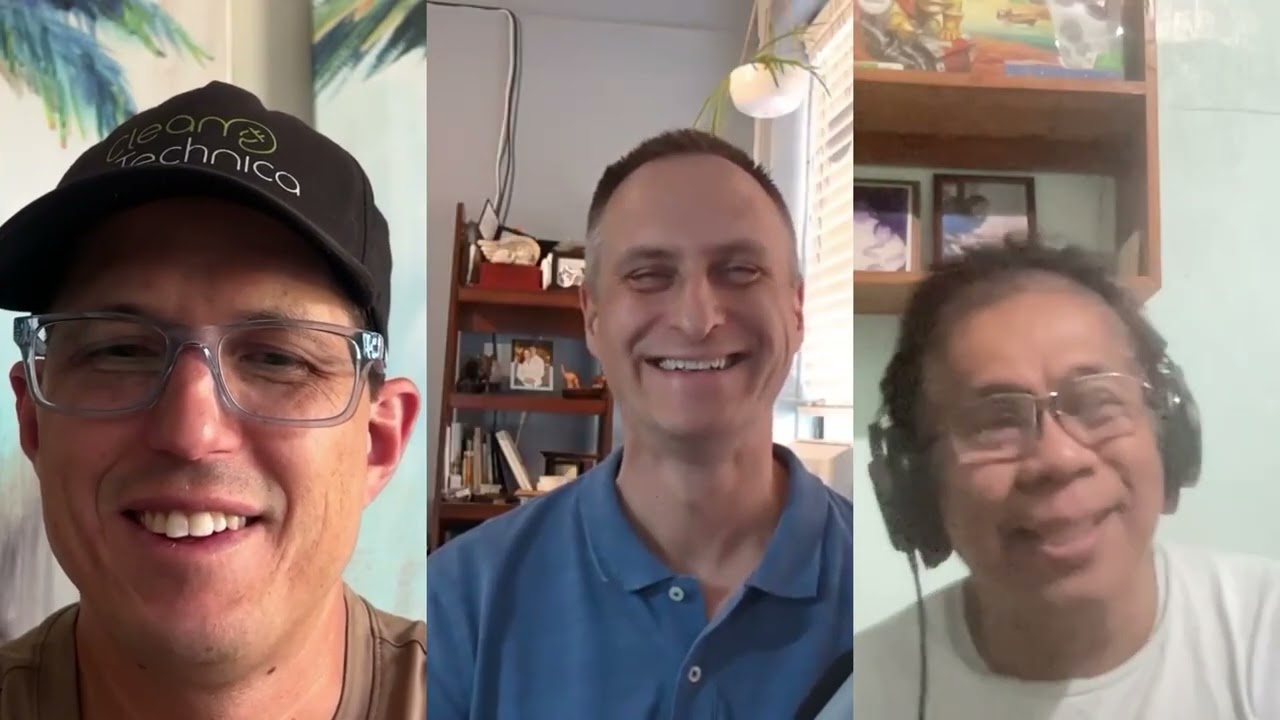
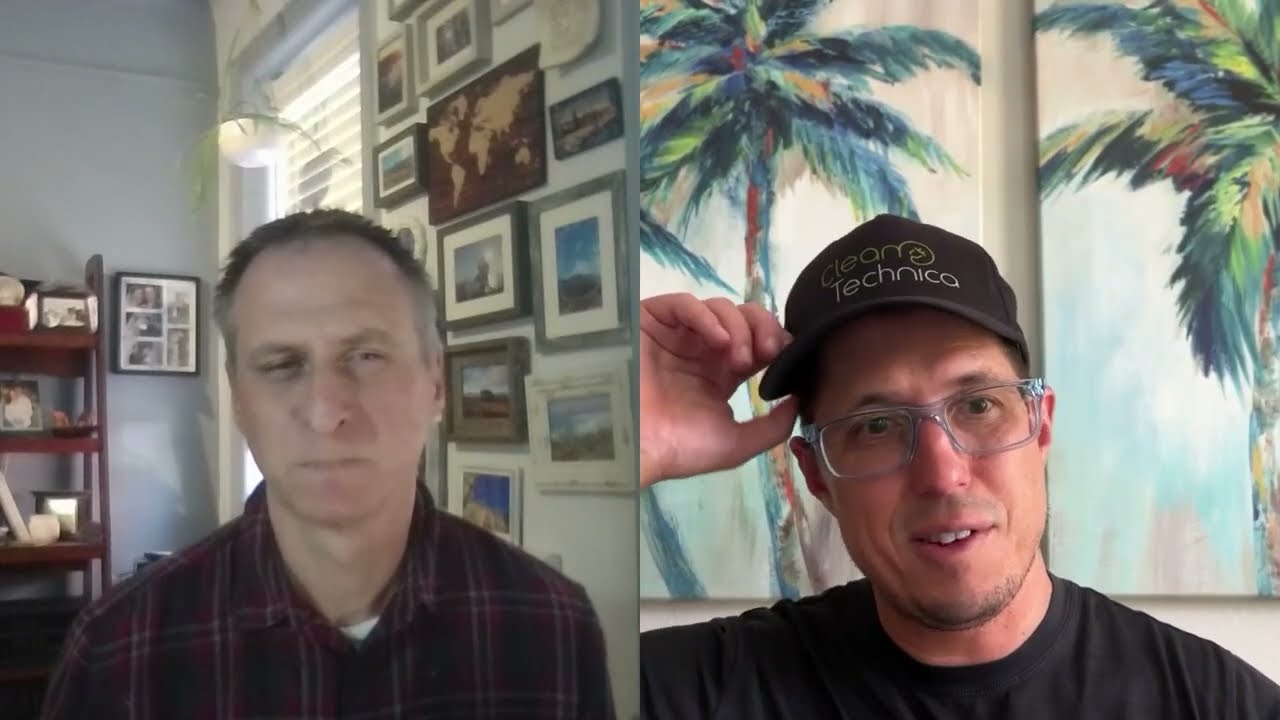
In this episode, Dylan McDowell, CEO of the National Caucus of Environmental Legislators (NCEL), and Hawai‘i State Senator Chris Lee break down why state action matters now more than ever in the clean energy transition, how hands‑on learning is shaping real policy outcomes, and what trends are defining the 2026 legislative landscape.
Оглавление (11 сегментов)
Segment 1 (00:00 - 05:00)
We're here for another episode of Clean Tech Talk, our clean technica YouTube and podcast show where we interview experts from around the clean tech space. Um, today's joining today joining me is Dylan Mc Dylan McDow uh and Chris Lee. Dylan McDow is the CEO of the National Caucus of Environmental Legislators, NCEL, and Chris Lee is a member of the Hawaii State Legislature and president of NCEL. Uh so to get rolling, I like to start with sort of your individual background, what you've done in your life, in your career, and what led you to what you're doing now. and then Um, but I sort of feel like today I want to just start with what NCEL is first and then get into your personal stories a little bit more. So, so what is NCEL and um, yeah, what is it doing? — Yeah, thanks for having us. Um, you know, I think safe to say as we transition on clean energy and investment and transform the grid, um, and not just in the energy space, but kind of as we transform policy across the country in conservation, in land use, in energy, housing, uh, and on and on, uh, you know, policy is at the center and NCEL of that because we're a network of about uh almost 1500 state legislators, Democrat and Republican, across all 50 states, who've been working uh over the last 30 years to transform policy and improve outcomes in all these different issue areas. And it's really um I think the decision makers themselves uh and NCEL is a network of those decision makers that help spread best practices and policies and ultimately ends up with the kinds of stuff that u people see in the front pages of their newspapers when there's a big new um law passed that provides uh advanced clean energy support or um protects wersheds or any of that stuff. It all uh often tends to come from the policy makers collaborating behind the scenes, sharing those ideas and best practices and turning them into these big deal wins ultimately for the country. — Dylan, did I capture that? — You captured that really, really well. And um you know, as a senator who's been involved with NCL since the beginning of your time, I think you you've seen that firsthand. I'll just add a little bit of context too for listeners. And you know, Zach, thanks for having us to talk about this. Most state lawmakers are part-time. I think it's a really overlooked and underappreciated fact is that at the state level, the capacity is very limited. You have states that where there's no staff at all. You have some states where they don't get paid or they might get paid as little as $100 a year. You have states where they meet for 30 and 60 days and that's it. And so NCAL is really that peer-to-peer connectivity for states to talk with folks across the country who are working on these issues, leading on them, and then have access to resources, bill trackings, and convenings that support that leadership. And so that's really the kind of what it boils down to is how do you make state leadership more effective and these folks that are really on the front lines of innovation as successful as possible and to learn and create that connectivity across the country. — Excellent. I think that's a very good intro into all of this. Thank you. Uh I want to get keep going with that. I want to, you know, do you know some my own context and follow up, but let's first get your stories because I want to know like what led you to what you're doing here and um yeah, and what you personally are working on. So yeah, let's just get a little bit more on your personal history, your background, your story. Uh we start with Chris. Um, — yeah, you know, I've actually been in the legislature here in the state of Hawaii in the state senate uh for the last 18 years and never imagined I got involved with politics or I was never in student government. And I was never any of those things, but um ended up doing an internship coming out of college and um did it here at the state capital working for an elected official just manning the phones in the front desk and over the course of a couple months saw individuals walk in the office um regular people off the street saying, "You know what? We need help with this and that. " and watching those folks actually affect real world outcomes. Um, and in one case massively change the direction of a community uh changing this billion-dollar development that started with uh you know one uh senior citizen coming in saying hey we got to fix this. Um and the legislature that year um actually radically transformed
Segment 2 (05:00 - 10:00)
that and changed the law to ensure public access to this area in perpetuity based on this guy's um request and ultimately the organizing effort he did with his friends and neighbors in the community. I thought wow like first of all individuals can make a difference. Secondly um if this guy can do it surely my friends and I who care about stuff and our own communities can do something similar. And so that kind of got me propelled looking at policy and how we can really engage people from communities to make a real difference in their community and in the political process uh to affect these real world outcomes that people I think too often in this country see as like well you know it's politics it's over there doesn't affect me and there's nothing I can do about it personally and it's really the farthest thing from the truth. So, this has been um a wild ride, I think, over the last uh 18 years for me. Um not only learning that lesson, but getting other folks involved, friends, family, neighbors, and then folks from the community, and then discovering the National Caucus of Environmental Legislators, which is this trade group of other um elected officials, Democrat and Republican, bipartisan, like across the country, um where everybody at the subnational level, right? get away from DC and all the BS that comes out of some of those conversations and gridlock and all this stuff and realize at the state level there are elected officials who care just as much and are willing to work across the aisle, collaborate and actually get stuff done. And that was really um the next big step that's inspiring for me because I really got involved and realized you know the issues that um Florida faces on the east coast are not actually that dissimilar from issues that are faced by uh North Dakota or you know Hawaii out here. And if we work together on some of these things, we can really start to um multiply the outcomes and share resources and collaboration and come up with policies that are actually passable that can supersede um partisan politics and ultimately get in place um to change lives and to change communities and change outcomes. And that's something that I've really found valuable over the last um you know decade and a half or so. Great points and interesting story. You know you might have a career in uh politics. Anyone ever tell you that? No, I'm just it is funny you know we different space completely but you know in this online world we have you know millions of readers and a very tiny sliver who comment and engage in the discussion with us and I mean some places nobody reads the comments or whatever but you know I'm very involved in following and they have strong influence. I mean, it's funny because it's such a tiny percentage, but those people who speak out really do influence, I think, a lot more than we generally realize. And one of the things that's always stood out to me when people talk about how to influence federal, you know, Congress people in the US government and um at the federal level, it's like just call, you know, call them, reach out, like voice your opinion. And I'm like, well, most of us just think, oh, yeah, whatever. You know, but it does seem like there's such a small portion of people who tend to speak up and those people do end up often being able to change a lot. So it is a great — I would just say um to that point it's not only that individuals can make a difference but when you think about the wide range of stuff that affects us on a daily basis like from the time you get out of bed and um walk out of your house in the morning what kind of roads you're driving on. Um what kind of transportation options you have, what kind of schools your kids are going to go to, what kind of health care you have, what kind of environment your community um really is. All these things and so much more are decided actually not by the president, not by Congress in a big way, but often by your local elected officials, state and local officials. And these are folks that grew up and probably live right down the street in the same community as you. And they're infinitely uh more accessible than, you know, somebody off in DC. And there's a role to be played in DC, don't get me wrong, but for real world impact, those are folks that you can get on the phone with or just walk down to their office often. Um, have a conversation with them and there's something that they can do about it. And so that is something that a lot of people I think really don't realize and it's really inspiring because it means that we're all empowered, right? We all have a pathway and a voice and an access to the levers of decision-m, — right? Yeah. I love that. That's really good. Dylan, let's get your story. — Yeah. So, I grew up on the Oregon coast in a little town of Yaha. It's about 600 people. And when I was in middle school, I started volunteering at the Oregon Coast Aquarium. And that really taught me how much I loved talking to people. Not about the things behind the uh the scenes, like I got to do all the cool things of feeding sharks, playing with the octopus, but it was really talking to people about science, about nature, about their connection in that space that resonated. And so, I followed that, stayed at the aquarium for a while. When I went to Oregon State, was really focused on environmental education. got my teaching
Segment 3 (10:00 - 15:00)
license for high school, did some student teaching, did a lot of science writing, was actually kind of going in a direction where I maybe would have been at Clean Technica um in a different life here. And so I think there's, you know, I love the work you're doing in that storytelling piece, making it relevant. And kind of on a whim, I ended up working at the government relations office at OSU. And while I was there, I was my role was translating Oregon State science for lawmakers to understand the connections there. And I was started getting responses from legislators themselves. And I always think about this one example where I would I sent some research about Christmas trees. Oregon is a big Christmas tree exporter, biggest in the nation. Very proud of that in the state. And one of the lawmakers wrote back of, you know, happy Thanksgiving. I hope you have some great pie. My family always makes uh berry pie. And it was sent from Bill's iPhone. And that moment really started where I really started to notice that at the state level, you're sending emails to folks. you're updating them on really important things and they are writing back. They are sending you information and it's that connection kind of like what Chris is saying where these are people down the street that are holding town halls. They're holding coffee shop meetings that you can go to. And I realized at the time that all of these skills that I had of talking of framing science and accessible language um for managing a classroom of 30 high school students on freshman biology. You can use a lot of those skills to wrangle a network of 1300 state lawmakers and bullet points. How do you kind of make things as accessible and exciting as possible as relevant as actionable? And so that's really what I've carried with me through my career and I've been doing state policy work for about 12 years now. And while most of that's at the state level, to Chris's point about the things that you see around you, I think that as I moved back, so I was in DC for a long time and I now live in Salem, Oregon. Uh, really nice to be back in the home state. — And being in Salem, I have gotten pretty involved locally. I was on our parks and wreck advisory board for about six years. I was chair from many of that. I started a bike advocacy nonprofit focused on getting safe infrastructure. And you see these abilities to get involved in the system, but like you said, Zach, not that many people show up at meetings. apply to be on boards and commissions. And so state and local decision-m has so much potential, so much relevance to what everybody sees on a daily basis, the tree canopy around them, the roads they're walking, biking, driving on, and yet there's really a need for more connectivity, more involvement, and more resource sharing across that space. And so that's what keeps me here and makes me so excited about the work every day. — Yeah. The state level is funny, isn't it? Because you get the federal level which gets all the attention of course and then you get the local level which you get quite a bit of involvement and and action in uh because it's so local. And then you get this middle state level that is really often neglected in every possible way like uh attention, you know, involvement, engagement, everything. And it is sort of the forgotten middle I don't know middle child or stepchild. Yeah. But um as you know getting to the essence of you know I think how we got connected even maybe um — we obviously there's dramatic pullback and um against pullback from clean tech at the federal level um as Trump be you know is in his second term. Uh, and I mean the most aggressively anti-cle techch pro fossil fuel policies and activities we've seen at the federal level. Uh, and just right at the beginning of that, you know, many of us thought, well, this is not going to be we're not going to make be able to make much progress, you know, advocating for stuff at this level right now. We really need states to step up like states have to step up and do the core work of advancing the clean techch uh transition as quickly as possible and you know being you know bigger players more proactive. Uh so you guys are like you're right at the core of it now like you are our hope you're our you know Jedi Knights that we're hoping for to come in and you know and uh keep the story going in a positive way. So tell us more about about what you guys are doing at NCL and um and yeah h how that's linked to our kind of vision of a cleaner uh technology future. Yeah, you know, it's it's um as uncertain as the world is in the moment and certainly as policy vacasillates kind of back and forth at the federal level, um on the state side, a lot of uh our elected officials uh Democrat and Republican have been um actively working together because at the end of the day, like we're all connected to our communities locally, right? We're not living off in um DC. And what that means is the issues that we focus on that we
Segment 4 (15:00 - 20:00)
work on together. Um we have a true vested interest in resolving like regardless of the politics, right? Everybody wants jobs in their community. Everybody wants more affordable prices. Everybody wants cleaner water to swim in and drink. Everybody wants all these kinds of things. And the federal I think challenge that we've faced is um these budgets that you know are facing massive cuts um in resources going to different state programs and into communities. You've got policies that are uh opening up opportunities where um uh companies can suddenly pollute in ways that they didn't before. I mean, there's all kinds of stuff that I think on the truly, you know, nuts and bolts, boots on the ground level are impacting communities, and we haven't felt a lot of those impacts yet, but we know they're coming. And so, we've been working together to figure out, all right, how can we get past the politics and say, all right, what is in the best interest of our community? And then put those policies in place. And what's really been fantastic um not just this year but you know for many years NCL has been around for um now just about 30 years since the '9s um doing work quietly behind the scenes. I mean out of NCEL you've seen — Man don't make the '90s seem like a long time ago. Come on now. — No, you know what? I'm I was kidding I don't want to date myself here but uh the 90s were my golden age growing up. So I uh those are the good old days. But um but you know in this point like um we have an opportunity to kind of like work together to figure this stuff out. And so um NCEL behind the scenes for all these years has been kind of a behind thescenes um coordinator where we've brought uh legislators from coast to coast and in between together and had these conversations. And out of that has come um some of the most aggressive um policies u protecting communities from um dangerous chemicals or pesticides or other things that have spread around the country. um vehicle uh emissions before the federal government um took action on it right where state level policies driven by members of NCEL and uh across the board on every issue there's stories like this and so a lot of the impact people feel you know we have strong communities today as part of the result of the work of a lot of our state lawmakers around the country and that's true under Republican presidents it's true under Democratic presidents it's true um in good times of economic IC prosperity and hard times when uh budgets are tight. And so, you know, this is no different fundamentally in the support we're seeing and outreach from elected officials in Democratic and Republican circles uh across the country right now because folks are um looking just the same for solutions to real world problems. And I'll just give you an example of the way this kind of works. You know, in Hawaii, for example, um uh in 2015, we were the first state to pass um a law that said, you know what, we want to be 100% clean energy by 2045. Um hard stop and uh convert our utilities and clean energy projects and deploy more um money onto the grid for that and create more jobs and ultimately clean up emissions and reduce prices compared to the expensive fossil fuels that uh we were relying upon. Um that was the first time a state had adopted a policy like that. Um but working behind the scenes um across borders where we had these conversations with fellow lawmakers from other states. We can say look here's what we did. Here uh is how we did it. Um you know here where the benefits are. We've engaged our industry. We're seeing now all this investment in the clean energy space. We're creating jobs. In fact, in Honolulu after um uh much of his discussion, you know, clean energy was the fastest growing sector of the economy and during the recession accounted for a quarter of all building permits. I mean, that is not insignificant, right? That is huge economic development. That is jobs. It is money and it is cost savings for electric rateayers who now because of a conversion to cheaper clean energy are seeing their rates um not only stabilize um because you know prior to this every time there's a war uh and fossil fuel prices like shoot through the roof um you know those prices get put into everybody's electric bills and people see it uh right up front. These are things that have been huge benefits. And so those lawmakers go back and say, "Hey, you know, we can do this too in our places. " And so you've seen a proliferation of those policies around the country because policy makers talk to policy makers and we share those best practices. We share the narratives for how these things are done and ultimately um we're able to replicate those policies around the country. And I'll just note, you know, 2015 was the year that first happened here in Hawaii in this particular example. um over the next um presidential term, which was the
Segment 5 (20:00 - 25:00)
first Trump administration, um we didn't see a pullback, right? We saw states take those policies and lead. We went from Hawaii being one state in 2015 to now almost half the states in the country with a 100% clean energy or carbon neutral um law in place. And that was um driven by state policy makers in spite of federal push back on clean energy, climate, and other policies. And so today, we're seeing the same kind of thing across many different issue areas where folks are going to collaborate and we're going to move forward with what's in the best interest for our community regardless of the federal politics. — Yeah. A few positive things to kind of uh zero in on. Uh so as long as I've been covering um this industry for clean technico which is you know 17 years or so uh and I'm sure much longer the American public has massively supported clean energy solutions and are not particularly pro pollution. So the public the you know on both sides of the aisle like the idea of clean energy supporting clean energy and don't really want to be polluted and you know get various cancers or heart disease or different things. Um and the second positive from that is really that we have seen many red states uh even become leaders in clean energy deployment and adoption and policies. Uh so we've seen that politically it can be a bipartisan issue. an issue that even uh political um major political uh politicians support. And then the third point is sort of what you were saying which is it's actually they've become such successful big industries and the costs have come down so much that they have driven our economy like driven our glo our global economy our national economy and many state and local economies. um because of how much uh they're being adopted and deployed uh because they're the best cheapest new option for energy and also on the transportation side EVs. Um, so it is like I think there was a question when Trump came into office again like how much is he going to really focus on this and tried to be combative to this? And unfortunately we've seen that what he learned from his first term was sort of like if I want to do stuff fully the way you know I just need to ignore all the people who say not to do this or to do this and just do 100% the worst. I mean, the worst stuff I can do to clean energy and, you know, stop projects, take away uh approvals that have already been granted, um, all kinds of things that just go beyond what any normal president or administration in the past has done and what anyone would really support doing when you look at public polling on these topics, you know, like people don't really support these act activities. So, how do you guys how are you dealing with that that kind of uh split between the fact that more or less people support clean energy and EVs and support government supporting them and don't want to be polluted. At the same time, we've never seen such um some such aggression against them uh as we seeing right now. One point I would take pick up from what Chris was saying and you touched on this too is the tiein to public health and pollution I think is really important. So I'll just quickly share NCL was founded by someone named Leon Billings and Leon was a staff writer on the Clean Air Act and the Clean Water Act back in the day um as on the as a Senate staffer. He then went to become a Maryland delegate and realized that there's very little capacity for lawmakers as I shared earlier and that so but so much of what he took from the federal work that has come that went into his time as a state lawmaker and into NCL's very bipartisan founding was keeping health and people at the center of a lot of this thinking about the impacts to communities thinking about the human side of the of all of this and that's something we really hold true and I think you know NCL does work on clean energy we also do environmental health work conservation and ocean work as well and there's so much connectivity for lawmakers and across all these topics and I share Leon because the news of this month is really about the endangerment finding going away via the EPA and um that's you know usually the underpinning for regulations for greenhouse gas emissions that roll back of the endangerment finding does not mean that states are not going to be doing things. It actually means states are going to be doing more things. It really means that the states are now the only ones that are going to step up. It gives them more authority, more opportunities in many cases to actually set regulations for greenhouse gas emissions, look at climate policies in their states. It is really opening the door to say, okay, there is a retreat on the
Segment 6 (25:00 - 30:00)
federal level from these policies and so many states have already laid the groundwork for this work um for climate work, for greenhouse gas emissions, for all kinds of protections and those are going to continue. And so I think it's actually a really big opportunity to bring that all together and to look at for NCEL as you know one of our founders helped write some of that underpinned what became the endangerment finding and then to see states taking that mantle. Um as I look to your point Zach about this not really being a partisan issue, we're seeing that in the clean energy space right now. We're seeing everything from data centers that pretty much every state is talking about. And it's not just states like Oregon that are passing really strong regulations and laws, but you have Texas, Georgia, a lot of states really, regardless of politics, saying there need to be protections in place. What do those look like? Um, you're also seeing things like plug-in solar, which is a kind of a new tech new opportunity to access solar for folks in addition to rooftop. And that was led in Utah and is spreading. 33 states are now looking at that in some capacity. And so there's a really big opportunity here for ideas to spread very quickly. And that's the beauty of states, the laboratories of innovation idea where one state can try something, they can pilot it, they can make it more effective, other states pick it up. Sometimes that translates to federal action, but otherwise it just leads to more and more great things happening at the state level. And we're really seeing that right now. — Yeah, that was one of my that was going to be one of my next follow-ups was regarding that um issue with the endangerment finding. And basically if you know it goes forward and there's no federal policy to regulate fuel economy and to to demand a certain level of fuel economy then the Trump administration's whole argument that California can't have a higher standard is gone because there's no federal standard anymore. So that gives California the opportunity to say we set whatever standard we want. There's no then lawsuit of you can't go above the federal standard because there is no federal standard. And then you have the various ZEV states. So I have been this one of my big questions has been like how ready is California and other states to say okay you play that you make that move on the chessboard we're going to set our own um standard automotive standards that are going to do a lot more than they would have otherwise. Um is that a big part of the discussion that you're seeing on the state level? was that what can you say about that discussion and about the like you said the capacity and the kind of focus on that among state policy makers. — Yeah, I think it's a huge part of the discussion right now and you know a lot of states are just entering their legislative sessions um this year. um virtually everybody is going in you know January um and they'll last for a handful of months and so this is top of mind right now in the most timely way at a moment where states have the ability to act and right there are laws being considered there's budget priorities being set all that sort of stuff and you know what's interesting about this is um you know even separate and apart from what's happening in DC right now with the endangerment finding specifically and you know what that's going to mean uh for cascading kind political um actions and so forth. Um just on the whole, right, I mean the last two years you've seen a retreat from um clean energy and clean transportation policy funding certainly going toward electric vehicles, electric vehicle charging and all of that public transportation even. I mean, these are things that ultimately drive up the cost of transportation and the cost of living for Americans, no matter where you live. I mean ultimately, right, we're not seeing um clean energy support translate into lower prices uh for gas or anything like that, right? That's going up as well at the same time. And so what's really happening is you're seeing options for cheaper, cleaner transportation just being taken away or made more expensive by federal actions. And so it doesn't matter whether you're Republican or Democrat at the state level, right? you want to be able to give people choice and you want to give them options that are going to reduce their transportation. They're cost of living and all of that. And as we know, I mean, EVs are beyond a point now where you're seeing cost parody. It's you can find EVs out there with like awesome range for the same price you can as a typical um gas equivalent in so many cases and in so many places. But right they have cheaper cost of maintenance almost none basically. Uh you certainly have a cheaper cost of fuel which is like again like you know a fraction of what it costs to go to the pump every uh every week or every other week. Um and the lifespan of these vehicles are going to last like probably longer than you'd ever imagine. Um because there's just
Segment 7 (30:00 - 35:00)
fewer moving parts and they'll just keep going. And with batteries where they're at now, innovating and getting better and better with longer range and longer durability, you're not seeing the kinds of range anxiety that u we talked about 10 years ago. And so what that means is the more of these vehicles you can get into the hands of folks who want them all around the country, the faster people are going to be able to reduce their cost of living, transportation, and at the same time clean up emissions and make cities and towns and everywhere uh better places to live. And so states are standing up on that. Um, but what's really driving the conversation too, which I don't think it's talked about kind of in retail politics, um, you know, as people communicate with their elected officials so often, is it's changing the industry. The federal actions are changing our national auto industry. And you know, I was at a conversation or at a convening of um uh state lawmakers in the transportation space not too long ago, and it was a bunch of Democrats, a bunch of Republicans, and some of them were newly elected. So, you tend to have, you know, some of the um learning curves that have yet to be figured out. Folks aren't as, you know, well-versed in EV policy and everything. And initially, right out the gate, there were a couple conversations in going on. And you had some Republican um uh Republicans are like, well, you know, aren't these like more polluting than, you know, typical um gas cars anyway because you got to mine for the batteries and everything? And no is the short answer. Uh the automakers are explaining and they're saying like, you know, well, you know, what about the cost and blah blah. And at the end of the day, the automaker said, look, the end the bottom line is this, right? We're seeing innovation happen at a remarkable pace, not only here in the United States with the transition to electric vehicles, with automakers like Ford and GM and um others. But we're seeing that around the world. China now is the world's leading auto manufacturer with the world's largest um automaker manufacturing EVs for a fraction of the price of US vehicles. are we not scared of that demolishing the US auto industry? And so the conversation quickly switched to how do we keep American industry competitive because that's all our local jobs in states with manufacturing plants. It is our brands. It is our ability to provide vehicles and technology for our own country that is on the line. Because if you can't sell beyond our borders and you're being eclipsed by foreign auto manufacturers who have better technology at a cheaper price, we have no future. And the minute that we heard that from the auto industry, um we realized collectively like, okay, we got to do something. And so the conversation switched from the typical kind of retail, you know, political divide to all right, what can we do together to maintain American excellence and innovation and make sure that we're going to be able to have an economy that's going to survive and really thrive throughout the rest of the 21st century. — Yeah, I love that. And I mean it's too often forgotten in this world, but um you know we're all Americans who have should you know theoretically have the desire to make the American situation better, improve the situation for Americans and then as at the state level, you know, Hawaiians or Floridaians or Oregonians or — Oregonians. Yeah. uh you know we have you know mutual desire to to help and improve our our state. Uh so it is something that's it's just too easy to get into that world and think uh opponents when you should be thinking that we want to be collaborators um finding you know working together to find solutions to core issues we're facing. Uh I love how you describe that. Um, this all of this my other big kind of followup that I'm just honestly just curious about with so one of the is, you know, issues with Trump is that he so strongly will target anyone who gets off script or gets off his agenda um from his own party. Um so he just will very viciously go after his own party members um if they diverge from his sort of focus. Is there a concern that you see on the state level or is it detached enough among you know state legislators, policy makers? Um, is there a reticence and a concern to do anything pro clean tech or anti- fossil fuel even at that level because people don't want to be targeted and picked out and, you know, gone after? — You know, I think it depends, to get sorry. Um
Segment 8 (35:00 - 40:00)
I think it to get sorry. Um, — it depends on the region and the state and the personalities. people are going to do what they want to do. Each state's going to have a different path forward that it has to choose. And you know, rightly so, those elected officials in whatever state are going to um look out for the folks in their community. I think um what the federal government does is frankly up to the federal government. Um right, we're not going to change that at the state level um at least in the near term. Uh but we're going to all act in our own interest. And fundamentally what we're seeing is our own interests align. And that is looking out for our local communities, our local environment, our local jobs, our local costs, all of that. And those things um transcend any of the federal politics and talking points. And the bottom line is like at the local level, right? We're connected to our communities in ways that, you know, the president or Congress um just isn't. And so we can have conversations at our local corner coffee shop with the folks that we represent on a regular basis and hear from them and they expect to hear back from us. And so people I think fair to say are fed up with the politics of DC. Democrat, Republican, doesn't matter like who you are. Folks just want things done. And at the state and local level where we all kind of work together, those things often align far more than people would expect. There's probably like 90% of the stuff, right, that we work on together, we agree upon um and we'll move forward with. And that's where collaboration really can help because um while the solutions themselves and the laws may look different between Nebraska versus Washington state versus um you know Hawaii or other places fundamentally what goes into developing those policies uh is really the same stuff and it's really how do we um get people on board with um you know whatever the right fit solution is for our state on whatever the issue is. How do we engage the community and communicate that well? How do we bring the stakeholders in from the business community and the environmental community and labor and all the others? and how do we ultimately package something that has the political pathway to actually get into law and help create real change at the ground level and doesn't just end up some talking points right on a um a CNN um — uh newscast and that is where folks really do want to come together and I think we're seeing that across all these different issues and conservation and environment and clean energy and transportation and housing another huge one where we're seeing the right best practices to create more sustainable, cheaper, cleaner housing actually start to proliferate all around the country to great effect. So there's huge opportunity out there and it's really exciting and it is not partisan uh dependent, right? And it's happening irrespective of the stuff that's happening in DC and we're seeing it from Democrats and Republicans coming together regardless of those political uh traditional silos that people tend to think of us living in. — Yeah. — Well, my hope was just that it would be far enough removed and that the invisibility of these state level would be something that would be really beneficial for making that progress. But Dylan, go ahead. Keep going. — Yeah, I mean I would add two pieces. One to build on what Chris said, one is the international stage. Exactly like Chris mentioned, you know, cops are continuing these international there's so much international work that's happening. Chris, you've done such a great job in Hawaii connecting with other countries and having experiential learning opportunities. Other states have that and this the learning about the world stage does continue. The technology innovation is happening in other countries and that is impacting what happens here in the US and I think states are really continuing to get their own voice out there on that stage. And you do have state leaders like California, Hawaii that I'm sure other countries look to and they're like, "Oh, we like what they're doing, right? Let's work together or learn from them, right? " — Yes. And you see states like California, New York, and others that actually are having partnerships with other countries directly to where they're learning from them. Countries like Sweden and others where they're actually taking their technology in their skill sets and the ways that they've developed things in different countries and bringing that in at a state level. And so it shows the power of states and the opportunity for that collaboration. I think the other piece to build on what Chris said is so much of this can be grounded in the state reality that folks are facing. It's not about just morals of why we should be working on climate change, which I think there's a lot of agreement around and there's a need for that. But there's these realities about wildfire impacts, rolling blackouts. Um, utility rates have gone up across the country. Whether it's electricity or natural gas or other sources, you're seeing increases that you're not protected from. In some cases, 50% or more. Um, you have the gas price volatility that
Segment 9 (40:00 - 45:00)
Chris mentioned. We're seeing a lot of issues with housing and figuring out not only costs for buying housing, but maintaining rents, etc. And all of that has an environmental component. And so all of these solutions, especially in the clean tech space, actually contribute to that. If you have solar and battery backup and you have distributed energy sources, you can be protected and in um insulated from some of these blackouts. If you have solar energy and battery backup, you're not going to see your utility rates go up every year in the same way because you're creating your own electricity. We're seeing so many states investing in housing right now. If you're doing that upfront with energy efficiency on the smart level, you are going to create um cost savings in the long term, cheaper projects in the long term. And so I think it really comes down to these local economics and really thinking about this isn't just doing it because it's good. It's good for business, it's good for pocketbooks, and it's good for the environment on top of all of that. And I think that's what's really making it something where Republican, Democrat, across the aisle, we're seeing these solutions happen. And that's what's really exciting because that's where that then translates across state and party lines. It's something where you can share these examples and it really ties into what all of us really want to be focusing right now, which is a better world for everyone. — Yeah, I love that. And I mean just I mean the federal level is such an abstract level when we do get into policy and politics and like you said, it just hits the ground when you get into the state level. And just think about EVs for example. I mean, Republicans and Democrats alike want to buy the coolest, best new electric vehicles. They drive better. They're more convenient when you can charge at home. And they also just want the support of a better public charging infrastructure, a better uh policy framework around them. Um, so it it does seem all logical and easy and clear to like to work on these things together. Uh I guess there is just kind of a concern because the state of our politics nationally um how well that can be done at the state level. — Yeah. And I — there's going to be a lot of lawsuits in the short term. I think both on the California clean air uh waiver, both for the endangerment finding, etc. But despite that, we will see the policies continue. We tracked about 3,000 bills at NCL last year across environmental topics. As Chris mentioned, we're going into short sessions for most states. We're still seeing so much momentum on all these issues. And that's because states are not going to wait. They're going to keep innovating. trying new things. And you know, I think you pointed out a few challenges with charging infrastructure, etc. There are real things that have to be figured out for electric vehicle adoption, for widespread solar, and states are doing that right now, which is great. And that's where NCL and others come into this space to say how did you finance this? How did you work across levels of government? How did you have newus and partnerships and public private partnerships to innovate to make sure that this can continue? And I think we've seen a lot of really creative thinking in the last year alone that will hopefully lead to better adoption, a lot of problem solving and just better policy overall. — Oh, thank goodness. Yeah. Um any Yeah. Any final words? any anything else you want to focus on what you all are doing or top issues of the day uh to wrap up — you know the one thing um I probably should have said this at the very beginning um Dylan might have mentioned it but you know we across the country right there's um thousands of state legislators elected uh from state to state and just in the last two election cycles right we've seen almost half of those legislators turn over brand new people elected who are um democra rat Republican raring to go uh in their home communities but often don't know um what they don't know and I'll say this having gone through this myself like pretty much every single year right the minute you get elected you're going to be inundated absolutely inundated with all these different um lobbyists and interest groups and folks coming out of the woodwork saying hey we have like the solution to all the world's problems this is it you know if there's anything you do this. And some of it is legitimate, like total snake oil, some of it is um just completely um irrational. Uh but coming into office brand new, you often can't tell the difference, — right? — Because you don't know, right, like um uh what's legit and what's not. You don't know the history of these different groups or who they're tied to and so on so forth. And so what happens is elected officials tend to turn to their peers and that's where groups like NCL and the coordination that we bring is so important because it allows us to connect legislators together in ways that they otherwise wouldn't have access. And that means you can go and ask your colleagues not only in your own state but in other states um
Segment 10 (45:00 - 50:00)
you know what's real here and who's not and ultimately what's been tried before? What's worked? What hasn't? Um how do we invest our time and resources in our own state solving our own problems in the most efficient way possible so that we're not just recreating the wheel all over again wasting time and money. um or we're not worst case making the wrong investments and charting the wrong policy path that we know is going to fail because it's failed elsewhere. And so that is really the value I think of having these kinds of conversations um from policy maker to policy maker, peer-to-peer across state lines, sharing best practices, sharing knowledge, and ultimately working together um Democrat, Republican on all these issues because at the end of the day, they're all the same at their core everywhere. And at the end of the day, we are one country and we're going to need to succeed together. And I think we're in a path now where states are more vital than ever before given um a lot of the uncertainty and and everything else going on at the federal level. And as we go into the 21st century, um it's going to take states stepping up to really make sure that our local businesses, industry across the board, a or transportation or whatever else, um are world competitive. I mean, we in the United States dominated the 21st century because we were an economic powerhouse that built on and embraced innovation. We cannot retreat from that today or we face um irrelevancy in the 21st century as other countries eclipse us and clean energy and all these other things that is now um being thrown back in our faces as our own technologies that we invented here in the United States like PV and uh so many other clean technologies that are cheaper and reduce cost are being uh in adopted in mass by other foreign competitors. s like we cannot let go of what made us great in the last century. We need to double down on that. And that means working together to advance the right policies, the right investment, the right strategies at the state level now more than ever. And I think what's really exciting about this is if we do this right, I think we have an opportunity to do more these next few years than we would have um under any other president, frankly, because it forces us to work together and cross party lines. And if we can build out that political and financial infrastructure at the state level, it means that we're well positioned and our industries and business and communities are well positioned to benefit from it regardless of who the next president or congresses in Washington DC going forward. And that I think is the real opportunity that's before us if we work together the right way. And that's exactly what the conversations at NCEL are moving toward right now. — Yeah. It is funny. I mean, we're even being leapfrogged by much smaller nations and developing nations in a lot of these adoption trends now as cheap clean energy and EVs are becoming accessible to almost everyone. And it is very frustrating but also a little funny that we can be leaprogged like that. But then as you note um the state level just is sort of in that same like there's the potential to do the to follow the trends of these smaller nations developing nations that are just saying well we're it's ready we're ready let's go and do it and it does feel like there's all there's often been too much left to the oh well the federal government needs to deal with this and not enough uh we going to do this here we're going to do we're going to drive this forward perhaps. And uh I love what you guys are how you're framing it, how you're talking about it, what you're doing to make this possible. Um that point that you made about the turnover and Dylan's points earlier about how little state legislators are often compensated or supported. It those are I mean two of the most striking things of the whole conversation for me because it that is crazy. that is like, you know, you would think, okay, they're gonna they kind of have comfy salaries and support staff and they're going to be just set for life in those positions. So to hear that they, you know, get like almost nothing and then they turn over really rapidly, it shows, it's interesting because there's opportunity there. There's always opportunity for change. You know, we don't like when people are in these positions for too long. So you're like, "Okay, good. there's opportunity for new blood and change, but you're often probably like a hamster on a wheel just, you know, going and doing what someone before you did. And you need organizations like NCAL, it seems, to like to move the whole the whole group forward instead of, you know, just kind of makes me think of Groundhog Day a little bit, you know, like old movie Groundhog Day with where you just end up like
Segment 11 (50:00 - 55:00)
having to go through the same thing year after year because it's difficult to um to get people rolled in. Um, great stuff. I think it's extremely exciting. I think there is so much potential like to get back to more state rights. It's ironic that we talk about state rights on the left here and state progress and state um leadership. I'll let Dylan um have sort of final words on these or whatever other topics you wanted to end on. — Chris encapsulated everything beautifully and I think — he is a really good speaker. I'm just losing guys. I'm going to see him on CNN soon. — He's a great state senator and a great deal. Um I think the piece I would hone in on is kind of what you touched on at the end there is that lawmakers at the state level are really doing this because they're passionate and we have seen while we've seen the turnover, we've also seen some really incredible people coming into office. people with backgrounds in environmental engineers, people with freshwater attorney backgrounds, people coming in that have worked in the field in solar industries, etc. And so there are people with experience coming into office, which is really exciting. And the headwinds are big, especially when you look at the federal level, some of these lawsuits, but the solutions are there. And I think that's where the work we're doing right now is focusing on helping train this new generation of lawmakers that are coming in, helping them connect with their peers across the country, but also seeing solutions firsthand because it exists. And it's a matter of looking, like you said, not reinventing the wheel, not playing Groundhog Day, but going and saying, "How did another state do this? How did another area do this? What's the new technology that's coming into the space? " And we um Chris mentioned his 100% renewable bill in Hawaii. We've taken three different cohorts of lawmakers out to Hawaii now to see that firsthand and with a partnership with the Blue Planet Foundation to actually see this work and understand how it happened. Talking to the utilities, talking to the green bank, talking to folks on the ground to understand what lessons can be brought back. We did a tour in December with electric innovation initiative helping lawmakers see some of the firsthand technologies out there from electric tractors to um looking plug-in window heat pumps instead of AC units that are so loud here in the Northwest. We're now having to get AC because the heat is so big, so much greater than it was when I was growing up and for most folks here. So these solutions exist and we want to get lawmakers across the country to see those, bring that back and really transform the conversations happening to say there's an economics case for this. There's a health an affordability and resilience case and ultimately that's why we're fighting this fight is that this is good for everybody. The solutions are there and really now is the time for states to lead more than ever. — Love it. Great stuff as well from you Dylan. Both of you guys are very polished, very well trained, very a lot of good experience, I'm sure. Well, uh, we definitely — long enough. I'm bound to stick my foot in my mouth. So, — Oh, yeah. We that's everybody everybody. Uh, but that's uh it's great. We have to I think you know at Clean Technica would love to keep working and covering what you guys are doing. We need to do better on our part of covering the state level and uh giving more attention and energy to that level of policy and change. Uh, I think it is critical and as a Floridaian like I'm I know you're from you know Oregon, Hawaii. I'm like guys you guys I'm sure you know from your colleagues and whatnot but it's a different animal over here in Florida and I'd love to uh to be you know to help and be involved in how you guys keep working on this um in places like Florida as well. So — Florida's doing some great work. you there are some amazing things from everything from wildlife connectivity to thinking about sea level protection, zeal rise, coastal resilience, blue economy. So there's some really great things happening in every single state. I really want to underscore that it's everywhere across the country there's things to emulate and pull from. — Yeah, I know it's a great state to make fun of. I'm you know I was born in Florida. I've lived elsewhere, lived in Europe for 11 years, lived in North Carolina and Virginia, but I've been back here for seven years. Um, I know I it deserves all the jokes it gets, but um there is a lot it's always an interesting place with a lot of interesting, passionate people trying to to do good stuff. So yeah, we we'll have to keep collaborating and it just really interesting and wonderful to get your rundown on what you do, what's happening at the state level and uh how we can be I mean honestly you gave me positive energy which is hard these days when we talk about policy to get really like oh I'm excited we're going to do this. Uh you're both really good with that individually but also I guess with what NCEL stands for and does. So um so it's great to hear about. So thank you. Have a good day. Enjoy uh enjoy the rest of the week. — Thank you for having us for having us.