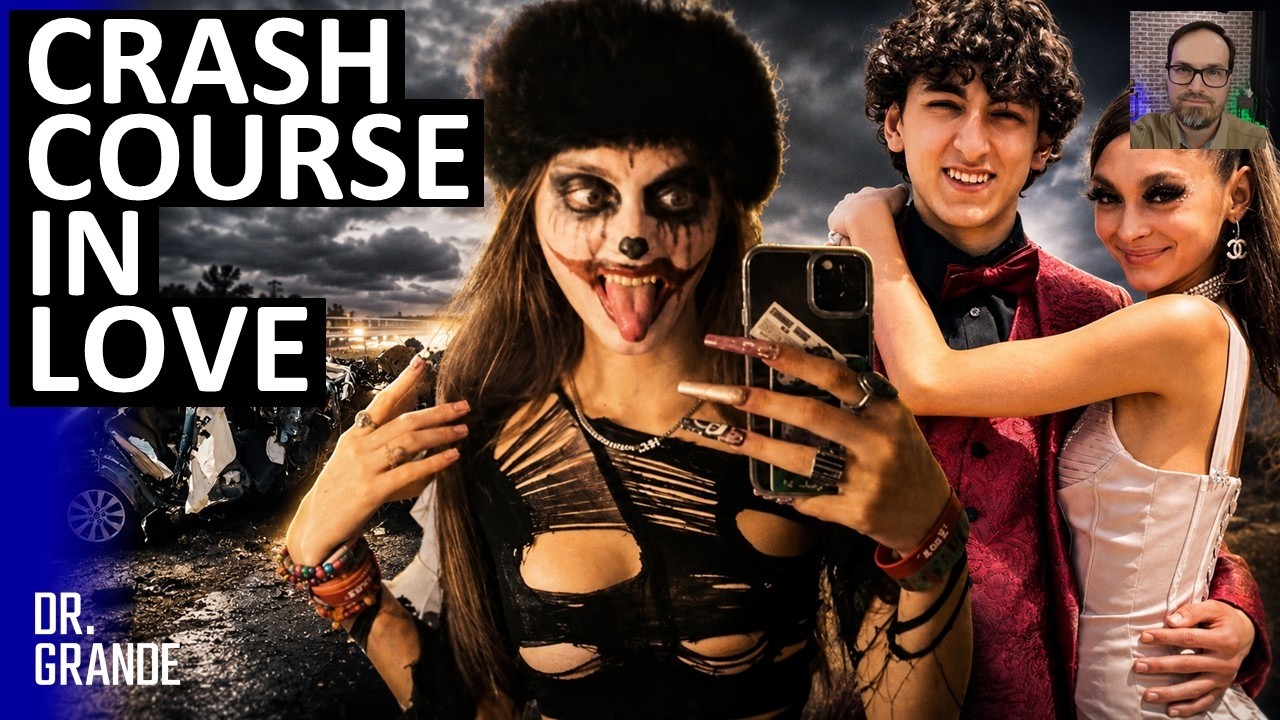
This video answers the question: Can I offer an update on the case of Mackenzie Shirilla? Her notorious crime is the topic of a documentary titled “The Crash.”
Support Dr. Grande on Patreon: https://www.patreon.com/drgrande
Dr. Grande’s book Harm Reduction:
https://www.amazon.com/Harm-Reduction-Todd-Grande-PhD/dp/1950057313
Dr. Grande's book Psychology of Notorious Serial Killers: https://www.amazon.com/Psychology-Notorious-Serial-Killers-Intersection/dp/1950057259
Check out Dr. Grande’s merchandise at: https://teespring.com/stores/dr-grandes-store
Оглавление (4 сегментов)
Segment 1 (00:00 - 05:00)
Hello, this is Dr. Grande. Today I will offer an update on the case of Mackenzie Shirilla. Her notorious crime is the topic of a documentary titled The Crash. First, I'll look at the background of this case, move to the timeline of the crime, then offer my analysis. Mackenzie Ford Shirilla was born on August 2, 2004 and lived in Strongsville, Ohio. This is a suburb of Cleveland. She was raised by her parents, Steve and Natalie. Sometime around 2018, when she was in high school, Mackenzie became romantically involved with a fellow student named Dominic Russo. Dominic was involved with cryptocurrency, wanted to start his own clothing line, and had dreams of selling products related to vaping. Sometime near the end of 2021, Mackenzie moved in with Dominic. They lived in a house owned by Dominic's mother, Christine. This house was right next door to another house where his mother and brothers lived. Now moving to the timeline of the crime. On Saturday, July 30, 2022, 17-year-old Mackenzie Shirilla, 20-year-old Dominic Russo, and a 19-year-old friend of theirs named Davion Flanagan drove to a graduation party in Mackenzie's 2018 Toyota Camry. They arrived at 10:15 p. m. and remained there for a short time. The group then drove to the home of a 19-year-old friend named Paul. His house was on Brushwood Lane in Strongsville, Ohio. They arrived at about 11:00 p. m. Mackenzie, Dominic, and Davion smoked marijuana at this get-together, which has been referred to as a sleepover. At 5:30 a. m. on the next day, Sunday, July 31, the trio left the sleepover at Paul's house. Mackenzie was driving her Camry, Dominic was in the front passenger seat, and Davion was in the back seat. Just before 6:20 a. m., a motorist called 911 and reported observing a severely damaged vehicle at the intersection of Progress Drive and Alameda Drive. When emergency responders arrived, they found McKenzie's Toyota Camry severely damaged. The vehicle had slammed into the brick wall of a building occupied by a pipeline repair and maintenance company. McKenzie was in the driver's seat severely injured. Davion was in the passenger seat dead. And Davion was on top of him mortally wounded and died just a few minutes later. When McKenzie was extricated from the vehicle, one of the first things she said was, "How is Davion? " McKenzie was flown by helicopter to a hospital where she was treated for injuries including broken bones. Here's what the police found during the course of their investigation. After leaving the sleepover at Paul's house on Sunday, July 31, 2022, McKenzie drove her Toyota Camry to Pearl Road and traveled south. She made a right turn onto Progress Drive at 5:34 a. m. She used her turn signal and was driving slowly. Progress Drive has a speed limit of 35 mph and it is 3,800 ft long. It runs through the Progress Business Park then ends at a T intersection with Alameda Drive. Not long after making the right turn onto Progress Drive, McKenzie pushed the accelerator to the floor. The gear shift was manually moved into neutral before being manually moved back to drive. McKenzie made a small left turn and then a significant right turn. The force of the vehicle was so great the data recorder calculated that the vehicle was rolling over. This hard steering event was probably caused by the Camry hitting the curb at the end of Progress Drive and becoming airborne. Right after this, the vehicle slammed through a sign and into the building. The data recorder in the vehicle recorded the last 4. 6 seconds before the collision. During that time, Mackenzie had the accelerator at 100% acceleration. The Camry was moving at 97 mph before it left the road and 80 mph when it slammed into the building. Mackenzie never applied the brake. A consulting firm was hired by the state to examine the Toyota Camry. The firm concluded that the brakes in the vehicle were functional and there was no mechanical or electrical failure that would have caused a loss of braking, accelerator control, or the ability to steer. At the time of the collision, Mackenzie had marijuana in her system, but no other substances. On November 4, 2022, just over 3 months after the collision, Mackenzie Shirilla was arrested and charged with murder, drug trafficking, drug possession, and possessing criminal tools. The drug charges were based on the discovery of psilocybin and a digital scale at the scene of the collision. Mackenzie was also charged in connection
Segment 2 (05:00 - 10:00)
with a separate incident. She allegedly broke into the Columbia Church of God in Columbia Station, Ohio on July 19. She was charged with breaking and entering, vandalism, and desecration. Mackenzie went on trial in August 2023. She selected a bench trial, which meant there was no jury. A judge would decide her fate. On August 16, Mackenzie was found guilty of two counts of murder, one count of drug possession, and one count of possessing criminal tools. The judge said that surveillance video clearly showed the purpose and intent of Mackenzie. She chose a course of death and destruction. When talking about Mackenzie's driving behavior, the judge said, quote, "She morphs from a responsible driver to literal hell on wheels as she made her way down the street. " Unquote. McKenzie received two concurrent terms of 15 years to life in prison. She will first be eligible for parole on October 29, 2037. Realistically, based on the history of parole board decisions in the state of Ohio, McKenzie has about a 45% chance of dying in prison. If she is released, it is very unlikely that will occur after serving just 15 years. Probably 30 or 40 years in prison. Now, moving to my analysis. McKenzie continues to maintain her innocence. In the documentary, The Crash, she stated that she had no intent to kill and said, "I have excessive amounts of remorse. " I'm not sure excessive was the best word to select there, but I guess she was trying to drive her point home. At trial, her defense argued that no one could possibly know what happened inside the Toyota Camry. The state, of course, disagreed. They believe that McKenzie slammed her vehicle into the building to kill Dominic. Davion died because he just happened to be in the vehicle. He was not the target of McKenzie's rage. This brings me to the question, was McKenzie guilty of murder? Let's take a look at the evidence both for and against the idea that she was guilty, starting with the in culpatory factors. McKenzie and Dominic had a tumultuous relationship leading up to the fatal collision. They separated and reunited a few times. Dominic's mother said the relationship was strained and the couple fought and threatened each other. McKenzie became increasingly possessive of Dominic. On July 17, 2022, 2 weeks prior to the fatal collision, Dominic called his mother upset saying that McKenzie was driving erratically and dangerously. A family friend named Christopher went to get him. Dominic was a passenger in a vehicle driven by McKenzie. This vehicle was on the shoulder of Interstate 71. Christopher could hear McKenzie on the phone saying something to the effect of, "I'm going to crash this car right now. " Sometime after this incident, McKenzie was video recorded threatening and degrading Dominic and threatening to break into his house. Dominic's brother said that Dominic told him he was considering ending the romantic relationship with McKenzie. According to McKenzie's cell phone data, several days prior to the fatal collision, she visited the Progress Business Park. Progress Drive was not a road that McKenzie drove on a regular basis. There is no evidence that McKenzie had any business in that area. On July 31, 2022, after McKenzie left the sleepover at Paul's house, she could be seen making a right turn onto Progress Drive. She was not driving dangerously at that time. She appeared to be in control of the vehicle. After this, McKenzie pushed the accelerator to the floor and kept it there until slamming into the building at the end of the road. She claimed that she had no memory of the event, which is consistent with trauma. The credibility problem is not her claimed memory loss. Trauma can cause memory loss. The credibility problem is that she simultaneously claims she cannot remember what happened, yet somehow knows she had no intent to kill. If she cannot remember the act, how can she confidently remember the absence of intent? McKenzie was diagnosed in 2017 with a condition called postural orthostatic tachycardia syndrome or POTS, which can cause a loss of consciousness. Medical experts said there was no evidence this condition contributed to the collision. Furthermore, if McKenzie did pass out behind the wheel, how did she navigate Progress Drive all the way to the end? The road turned to the left and to the right prior to reaching the building that McKenzie struck. A high level of control was necessary to keep the vehicle on the road. Moving to the exculpatory factors, various people who knew McKenzie and Dominic said they seemed to be in love. Two friends who saw the couple shortly before the collision did not report anything out of the ordinary. It wasn't like they were arguing or anything like
Segment 3 (10:00 - 15:00)
that. As far as the July 17th, 2022 incident where McKenzie allegedly threatened to crash her car while Dominic was with her, it's possible that Dominic caused this trouble. For instance, McKenzie sent a text message to his mother saying, quote, "Can you come get Dom? He just grabbed my steering wheel on the highway trying to spin out my car and hurt me. " Unquote. It's worth noting that this text message was not introduced at McKenzie's trial. It only became available later. There are non-homicidal explanations for McKenzie slamming her vehicle into the building. Perhaps she was playing around and pushed the accelerator to the floor. As the car accelerated rapidly, McKenzie panicked and froze. This is why she did not lift her foot off the accelerator or apply the brake. Maybe McKenzie intended to accelerate but not to collide with the building. Like the T intersection came up faster than she thought. The stop sign on Progress Drive, where it intersects Alameda Drive, is obscured by trees and only visible when a driver is close to the intersection. It is also possible that McKenzie intended to collide with the building but not kill anyone. She did not understand the physics of driving at that speed. When considering all the evidence in this case, do I believe that McKenzie was guilty of murder? In my original video about this case, I believed she was guilty of murder. The documentary, The Crash, made McKenzie's position look a little more compelling, but I am still convinced of her guilt beyond a reasonable doubt. What do I think happened in this case? This is just a theory, my opinion. Mackenzie was self-centered, impulsive, excitement-seeking, attention-seeking, reckless, aggressive, arrogant, grandiose, fatalistic, erratic, aimless, vindictive, petty, cold, callous, overconfident, disrespectful, antagonistic, perfidious, falsely believed she was special, had a sense of entitlement, and was moderately creepy. After graduating from high school, she did not have any ambitions other than substance use and hanging out with friends. Mackenzie's driving was horrendous. When the police reviewed her social media, they identified hundreds of instances that would qualify as distracted or reckless driving. Her life was just one big party, but there was one source of frustration and anxiety for her. Mackenzie had a volatile and tumultuous relationship with her boyfriend, Dominic. She could not envision a world where they were not together romantically. Dominic was part of her identity. Without him, she felt invisible, rejected, and humiliated. Their frequent arguing kept the concern about a separation at the forefront of Mackenzie's mind. She decided that if she was ever going to lose Dominic, she would bring an end to both their lives in a vehicle collision. This way, they would be forever connected. Their love would be permanent. In her distorted thinking, separation could be defeated by destruction. They would share the same fate. No future together meant no future at all. Mackenzie was familiar with Progress Drive and knew that it would be an ideal location to execute her plan because there was very little traffic at night. She was not necessarily dead set on following through with her plan, but she kept it in her mind. It was always an option that she could use later on. At some point, Dominic may have threatened to leave Mackenzie or she otherwise came to believe they would not be together. In a fatalistic move, she decided to follow through with the collision plan. Mackenzie did not have any motive to kill Davion, but she moved forward with him in the vehicle anyway. Davion was just an innocent bystander. From Mackenzie's perspective, he was expendable, which illustrates the terrifying scope of her selfishness. Everything was always about Mackenzie. No one else in the world mattered. After the sleepover, Mackenzie drove onto Progress Drive and slammed the accelerator to the floor. Dominic and Davion realized what was happening and tried to stop her. This is why the gear shift was moved into neutral. Mackenzie must have pulled it back into drive. She was determined that everyone would die that night. As far as justifying the murders, Mackenzie probably didn't view it as wrong because she was suffering and she was willing to die as well. From her perspective, this was justice. She had the right to kill because of her strong emotions. Amazingly, Mackenzie survived the collision that killed Dominic and Davion. This was unexpected. She did not know how to react. Her first instinct was to deny responsibility, which is what she did. Despite this, Mackenzie was charged with murder and convicted. Now, she is simply trying to escape the consequences of her behavior. In the documentary, The Crash, Mackenzie was interviewed. This had the potential
Segment 4 (15:00 - 15:00)
to be an explosive and revealing development, but it was not. Mackenzie simply maintained that she had no intent to kill and she was sorry about what happened. Again, she said she had excessive amounts of remorse. She selected her words relatively carefully and could be seen talking to her lawyer who was just off camera. Mackenzie will spend many years in prison playing the victim. Her case stands as a testament to the dangers of impulsivity and how a person who is willing to die can be the most dangerous offender in existence. Those are my thoughts on the case of Mackenzie Shirilla. Thank you so much for watching. I'll talk to you soon.