Machines That Build Your Electronics – Factory Tour | Meline Group
46:42

Machines That Build Your Electronics – Factory Tour | Meline Group

Robert Feranec 16.04.2026 11 849 просмотров 347 лайков

Machine-readable: Markdown · JSON API · Site index

Поделиться Telegram VK Бот
Транскрипт Скачать .md
Анализ с AI
Описание видео
Personal factory tour just for you. You normally won’t see the machines this closely. Very special thanks to Alicia and Serena from Meline Group. Enjoy! Links: - Meline Group website: https://www.melinegroup.com/ - Alicia's LinkedIn: https://www.linkedin.com/in/alicia-lau-65b23781/ - Serena's LinkedIn: https://www.linkedin.com/in/xinyi-duan-a0638a288/ - Learn Electronics with FEDEVEL courses: https://fedevel.com/courses Chapters: 00:00 Entering the Meline Group factory 00:43 PCB uploading machine 00:49 Line width adjusting machine 01:28 Cleaning machine 01:52 Solder paste machine 02:16 3D SPI to check solder paste 03:19 Pick and Place machines 07:30 First Article Inspection machine (FAI) 13:48 2D AOI machine (Automated Optical Inspection) 16:09 Reflow Oven machine 19:06 3D AOI machine 22:21 Offloading machine 23:14 X-Ray machine 26:26 BGA rework machine 32:38 Wave soldering 34:10 2D AOI for through hole components 36:47 Flux machine 37:10 Wave soldering machine 40:25 Two waves 40:55 Selective wave soldering machine 44:09 Microscope for board checking 45:07 End of the tour. Thank you for watching. ------------------------------------------------------ (C) FEDEVEL by Robert Feranec https://fedevel.com
Оглавление (22 сегментов)

Entering the Meline Group factory

Welcome. I went to Shenzhen and visited the line group factory to have a look how electronics is manufactured. And everybody, yes, D. Okay, your turn. What does it say? Yes, D3. And I would like to keep this original sound because I think it's very authentic. To enter the factory, we have to go through this special room which will remove the dust. And this is the very first machine what we are going to have a look at.

PCB uploading machine

These two machines are both uploading machines, uploading boards.

Line width adjusting machine

This is very important machine and very unique. The whole line automatically adjusted the width. Notice there are two PCBs. The line adjusted the width based on these PCBs. And this machine is going to basically put the boards inside of the line.

Cleaning machine

This is the cleaning machine. This is a cleaning machine. Oh, it's for dust free. It can make it dust free. This is a cleaning machine, automatic also. And after that, we do the solder paste.

Solder paste machine

So, this is the machine which will spread the solder on the pads. The solder is later melted and it will solder down the component. So after solder paste

3D SPI to check solder paste

This one is SPI, 3D SPI to check our solder paste is good or not. — [bell] — Yeah. See. Notice the difference between the board without solder paste and with solder paste. So without solder paste you can see the gold surface on the pads. With solder paste the pads are a little bit gray with the solder. So this machine is for checking the solder paste that is the area, the thickness, if they are uh according to the requirement. After 3D solder SPI, now it's uh

Pick and Place machines

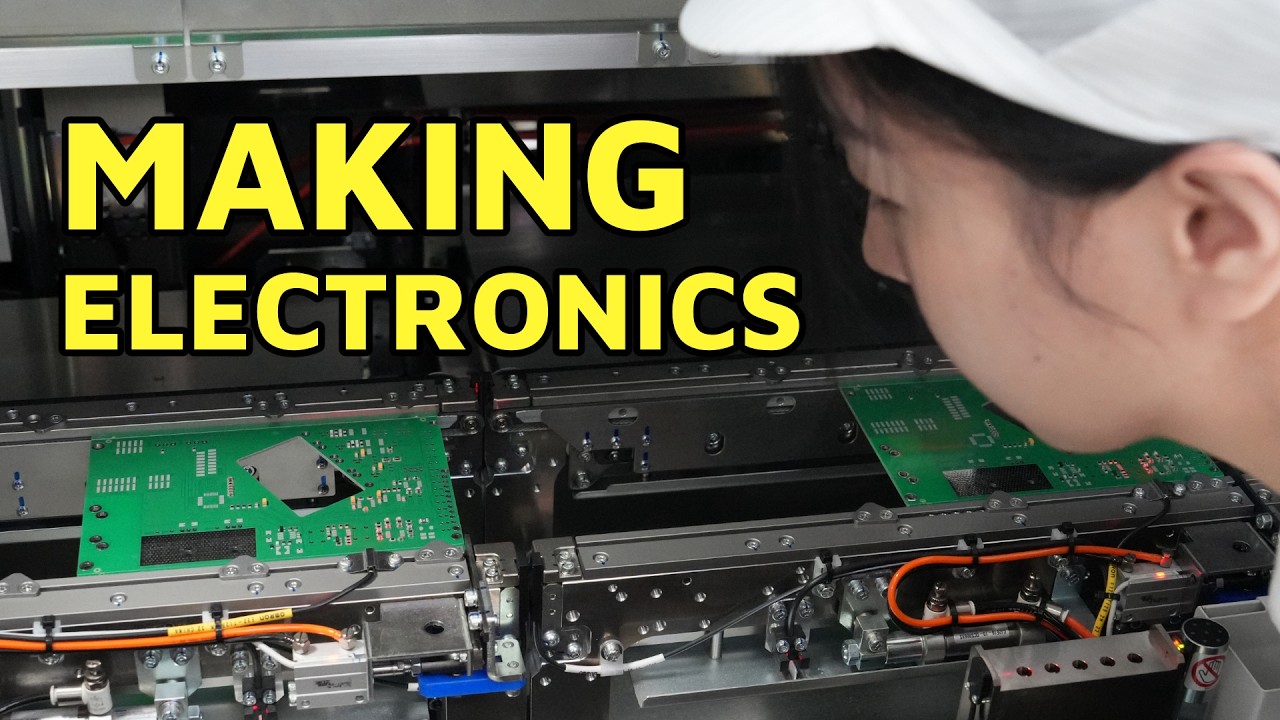
SMT, Yamaha SMT 20 up. So this is pick and place machine. It is picking up the components and placing them on the board. On the PCB. So what exactly is this? Is the camera checking the components? Uh Yes. So this is the camera recognizing the components and is automatically assembled on the board, and this machine can assemble uh two sides 70, which is uh 140 components at the same time. And the speed of this machine is it can assemble uh it can mount for uh 96,000 components each hour. Yes. So, it's very fast. Um Uh there are two SMT machines. One is for regular size components, and this one is for bigger size components. So, it can assemble mount at the same time 48 each side, which is 96 components at the same time. And the speed of this machine, YSM10, is 46,000 components each hour. So, these feeders are different? Huh? Are the feeders different? If they are the Uh feeders are the same or not the same? Feeders, they actually have the components. Um The feeder can be used in both machines. It's just Just the same or not? Just that the width is not the same. It's just the width in the feeder is different. You know, because the components they may have different width. Uh is the width of the And now it's 8 mm. This is 8 mm, and this is a 16 mm. 24 mm, so it's wider. And this one is a 56 uh mm. Yes. The final weight is — But this one cannot put in that machine, right? But different size feeders can fit each machine, both of the machines. It's just this machine is set to assemble the smaller components because it's a faster. Yeah. Yes. So bigger components they need to be assembled with slower speed. Yeah, here. Yeah, I know. I can keep it open. They have to put that the key. Yeah. Notice this small chips. They are actually not picked up from the feeders. They are picked up from tray. So before every mass production production, we require first article inspection after SMT machine. So now we will go to our FAI machine, okay? FAI They do this because they don't want to, you know, feed thousands of boards with wrong components. So firstly, before

First Article Inspection machine (FAI)

first article inspection, the engineers will insert each orders SAD, which is uh a designator. The position of each component — along with the BOM list uh inside this machine program in and then the checking the checking of the board will uh will this there are two needles it will touch each uh the pins of each component to see the position uh designator and the components if they match all the things are according all the things in the computer. The variance? Yeah, yeah. Okay, and then? Oh, okay. So we have already putting the description of the each component, the designator, the value and then after checking um after checking there it will generate automatically the real value see if they really match. Mhm. So uh here the is um the sentence of uh of if they match is uh if it's not good is NG. If it's good is pass pass. — Mhm. So this report this FAI report can never be corrected manually. It's generated automatically. So How clear? Yeah, let's see. Let's see how it works. Notice this I will talk about it later in a minute later. The yellow foil on the top of the board. — Yeah, yeah. So, it's measuring values of capacitors and resistors. Uh this board has been checked the ones already, so the pins has touched the some of the components and to make it not so she's yeah. But I noticed there are no ICs. These are only capacitors and resistors. Uh so first article inspection has two steps. The first step is for the capacitors and resistors for the value of them to check if they're right. It has some foil on it so that the components the small components will not And the second step is for the chips. Mhm. Okay, now I'm going to pause for a moment and I'm going to explain actually what happened. So, as I mentioned before they actually run mass production they would like to be really sure that uh all the components are correct because once you sold a thousand of boards and you find there is a wrong component you have to redo them. So, I'm sure you understand. And uh they do it in two steps. So, they use this special machine in the first step they put there uh double-sided tape and uh they put there the capacitors and resistors and measure this. That's what we can see here. Also, she mentioned uh notice these components are a little bit moved it's because they already run the test and for the recording they're running again. And when the probe is touching the components, it can move them a little bit. That's why they look a little bit not organized. But in reality, they are very nice. You will see a little bit later how the placement looks when the probe will not touch the component. It will be very nice. So, in this first step, they place all these passive components on the top of the foil. So, it means the PC is not going to influence the values of the components. And the probe basically just check every single passive component. And then in the second step, they will put there also the chips. And then they have this optical inspection on this machine and it will double-check number of different things like component designators or chip designators, pin one position, and you know, this kind of information. So, I'm going to continue keep playing this and it will be explained. So, watch. So, now is for is the retesting for re-inspection for the NG parts. Mhm. Yeah. After adjusting. Yeah. Yeah, because some of the components were moved, they re-run the test to measure the components which failed the test before. So, it's pass now. Yeah. It's all pass. So, this FAI machine can check everything including chips, not only capacitors and resistors. This board has chips in on it. Notice how nice the components are placed here. U2 U1 U2 U3 pass. Mhm. Okay. Yeah. And that's the inspection for the chips. — Yes. Thank you. So, you can also check the not only the pin number one, but you also check if there is the correct chip. Yes. Yes. Yes. Read the text.

2D AOI machine (Automated Optical Inspection)

So, after FAI over there, we have checked that the first board is all right. So, before mass production, we need to program here in this 3D AOI according to the or 2D AOI. Sorry, thank you. According to the success the pass board into it. So, all the other boards will be follow this programming to check. Okay. So, the programmer engineer firstly combine the BOM and designator all in put the files inside and also scan the real board of the after FAI checking. and then they make a Okay. Okay. So, match all the all those files together with the real scanning of the real board to and then we use this 2D AOI to check if every component designator, silk if they are all right. So, they basically compare the images between the uh first article board, the one which was correctly assembled, with all the others which will go through the machine. Scanning. Okay. Start the inspection and now it shows Okay. It's okay.

Reflow Oven machine

And after 2D AOI our board goes to the reflow oven machine. Hello. I was told you spoke about what you say is special because that is nitrogen. — Yeah, like So, after the 2D AOI our board goes to this 10 zone 10 zone reflow oven. And this reflow oven has nitrogen. And the oxygen inside is 1,472 ppm. That's oxygen oxygen. But this one this whole reflow oven machine has nitrogen. And so, why we would like to help tonight? So more and more nitrogen can decrease the possibility of oxygen nice and it can make sure the soldering more shiny. More shiny means smooth and uh more pretty. And after the 10 zones so our reflow oven machine is under checking every day with our technician by our technician to check the 10 zones different temperature. Here. So it's under maintenance. So it's under monitoring every day. So this is today November 11th. Do you know what day it is Robert today? It's double 11 it's a Chinese single day. — Yeah for single people to celebrate and then it becomes shopping day big online shopping day yes. Yeah but okay I hope it's interesting for you. Okay. But so yeah it's today and it's under surveillance and maintenance every day every day. And that's our company logo. Me lying group. Yeah. Okay.

3D AOI machine

Okay. After reflow oven we have one final 3D DIY. So, we can talk a little bit about what is different between 2D and 3D. What is the difference between Yes. He said he will tell us later. — So, is there difference to setting up this machine and the other machine? It's the same kind of a theory, but the different way. Yes. Oh, no. The 2D and 3D are different. So, now this is a This is the original. This is the capacitor. Sorry. So, 3D is three-dimensional. And 2D is only the the Yeah. Only Yeah. So, And uh 2D DIY is only uh can only be told the difference by the optical from the top and then from the lighting difference. Yeah. But, here 3D And the 3D comparing on the basis of 2D, it can show all angles, 360 60° angles of not only the signs, different angles of the resistor, but also the solder's height, thickness, and every possible angle it can be checked. And it can be of course is better than only one side. Okay, let's do the testing. So with this machine you can actually check also for example quality of soldering. Notice is a little bit different. It's not only taking pictures, but I think there is like a laser or something. Okay. Yeah, thank you. Okay. So if there is a false alarming or something some problem, there will be one more time checking by our engineer, visual checking with uh to make sure the result is correct.

Offloading machine

And then now is the offloading machine and goes Yeah. So sometimes I heard this last machine it can sort the bad and good. Yes. NG it means not good. Okay, but in on our production line, if there are NG boards, we are going to take care from here. So, only Yeah, only good ones coming out from the offloading machine. Yes.

X-Ray machine

Now is X-ray machine for BGAs. It's like Yeah. So, the X-ray machine firstly exposed the image. And then our engineer will check if it's right. And then once our engineer confirm that the image is right, correct, then we save the image. Yeah. So, for each BGA we do the X-ray uh in this order and in this way. So, they use X-ray so they can see under components if all the BGA balls are soldered correctly if there is no short circuit, for example. Okay. Now it's for checking if the BGA is a short or open and with the angle of zero degrees. And later we will make it a little bit bigger degree and to check if the solders are all right or not. Now he's adjusting the angle. So right now the angle is 46. 4 428 degrees. To check the solder. Yeah. So it's different angle now. Wow. You can see the Vias there. The PGA. PGA and Yeah, because the angle yeah is 46 degrees. So if the solder is not right then it will have shadow. Then we can decide if it's soldered well or not. I think this one is not

BGA rework machine

So Robert, this is our uh PGA rework station. This rework station is from Germany. It's Ersa and uh it's small but it's pretty expensive. Um it's called as BGA rework station but for any bigger size components if it needs rework uh it can be done on this machine. Let's do it. Let's see how it works. Go. So then they are going to basically remove this big chip and then place that new one. See here. The temperature is rising slowly. This is a temperature sensor. Uh can can detect the temperature at real time. And this is the real uh picture of the VGA. So this small machine can imitate the reflow oven's temperature. So the green line is the programming temperature and the red line is the real temperature. As you can see it the matches pretty well. And this is what? Yeah. Oh, these are the elements which are here. So right now is heating the whole board. Oh, yeah. No, no, no, no. When it reaches the T3 It can be taken out automatically. The BGA. And now decreasing the temperature. And then Hybrid heater and now it's for cooling down. So after the first of BGA has been taken out by our BGA rework station, now our engineer is cleaning the solder spot. He is removing the solder. With some alcohol. Now cleaning with alcohol. Now he is applying on some flux. Flux, yes. So now engineer has put the replaced the BGA there. It's the peak and place unit using that and then after that it will move here to match the spot. The correct spot. Okay. Normally they don't need to use this machine. But I was very curious though, so they specially prepared for me in this demonstration. Because I really wanted to see it. Yeah. The inhaling what inhaling mouse And it's taking a photo right now on the screen. And then there's the image. Image of the It's still matching the position. Oh, nice. And then after it's placing at the right place then it starts to rise the temperature again to So Again, it's like the same procedure as beginning. Okay, good. Thank you. Thank

Wave soldering

So, this is the our wave soldering line. Before soldering, we are doing manually through hole insertion according to the instruction paper. So, in our production line, all the instruction papers, we don't use papers. We show the instructions on the screen. So, in this way, it's more friendly on environment and also it can prevent we somehow lose the papers. I'm going to pause because I would like to explain. So, to manufacture electronics boards, there are kind of two basic steps. In the first step, we soldered it down all the SMT surface mount components on the board. And in the second step, we still very often we still may need to solder down also through hole components. So, these through hole components, these are the components which you need to put through the board. And that's the step what's going to happen right now. And as you can see also, every worker of ours is wearing the ESD to discharge electricity. ESD bracelet.

2D AOI for through hole components

After manually through hole insertion, here we set 2D AOI machine to check if we insert at the right place and if they are everything is good. This. So, our engineer is also programming here. He is programming that uh which holes needs to be inserted with components and which shouldn't according to the exact paper and to check if we have done the work correctly. And after two days AOI, we have So, this is a wave soldering line which requires fixture. It's different from the selective wave soldering. So, we have the fixture. Yes, so this is the fixture. So, there are openings only where the pin needs to go. Yeah, yeah. So, this is actually a special fixture. So, for mass production DIP, we all need to customize fixture according to the requirements of the different spot of the soldering. And this fixture is pretty special not only with this, but also we made the small fixture to put the because the teaching is wrong. I am a confused, right? Because according to the customer's requirements, this fuse which need to be inserted all should be higher than the board. So, we made the this is smaller fixture to make it stabilize there. Also, after insertion, boards coming through in the 2D AOI machine. Then this shows it's uh passed. Oh, and then it shows it's passed. It has a musical da da da. And then

Flux machine

our board goes into the flux. Uh this is uh spraying flux machine. Flux is the basically some kind of chemical which helps to achieve better soldering quality. Okay? So you put flux first and then you do the soldering.

Wave soldering machine

Uh after the flux machine here he because our um this wave soldering needs the fixture. And the fixture made it thicker. So it needs longer time to pre-warm it. This um to to increase the temperature. So inside here you can see it has a three temperature zones to slowly increase the temperature. So the boards are in the heating zones. Three temperature zones. And this is the board. Yes. Slowly slowly. These are Chinese. This is a flux station um flux station machine uh heating room one, heating zone two, heating zone three, and the waves. Wave one, wave two. Mhm. Wave soldering. So why there are two waves? Uh This is up. — Some of them um There are two waves soldering. Because the waves one is for flat waving. One is to the one is for some very narrow gaps. So it needs um flowing uh flowing waves. Yeah. Ooh. Ooh, cool. Different waves. Oh, right now is only flat waving. Flat wave soldering. So when is when the gap is uh more narrow, then it requires the first wave soldering can squeeze into uh the smaller parts. Do you want to see inside? The two waves. After You can take it closely and you can see

Two waves

the two uh waves are very different. Wave one is this is for the smaller gaps. Uh wave two is a flat. Very clean, huh? I work here, but I don't usually see this. So, I think this is very cool, also.

Selective wave soldering machine

Now, before we continue with this one, I'm going to explain what you are going to see. Uh we moved to different machine. This one is also used to solder down through-hole components. It's very similar to the uh wave soldering, but this one is called selective wave soldering. So, you can solder the components only in very specific spots. Uh right now, they are going to start the machine. So, uh he's putting this kind of tip on the machine. Cleaning the tip. And then you will see small fountain of the solder going out of the tip. See? This is how it looks. In the next step, he has to calibrate the machine. So, he is going to kind of find out where is the top of the fountain. — And after the calibration we can see how this machine is used to solder components on a real board. Now they are spraying the flux. So again the flux to get better soldering quality. And now it's pre-warming here inside. it's going to be soldered. Oh. So wave selective wave soldering doesn't require fixture. It can solder specific points as required. Um Robert, you can shoot the screen of the

Microscope for board checking

— Okay, this is our 3D telescope. It's for making more supportive inspection. So, it can enlarge the board in I don't know how many times, but the super super big times to make every single angle very clearly to check the solder points. To check the size of uh each component. And here it can use the measurer to measure the size also. And then can check the solders at each point and the surface. It's a supporting inspection machine. It's not a like a main inspection machine. This is very high quality microscope, actually. I've seen many microscopes. This picture is very nice.

End of the tour. Thank you for watching.

I would like to say thank you so much for this factory tour. I learned a lot. And I hope you learned a lot, too. — Thank you so much to Meline Group and Alicia and Serena. Okay, show show this wall. This. — Okay. — That's all for this video. I hope it was helpful. If you would like to learn more about electronics and board design, check out that online courses. You will find everything important there from basic board design up to advanced board design and high-speed PCB layout. We have courses in Altium, Cadence, KiCad, and also courses covering many different topics. For example, FPGA, EMC measurements, and so on. Visit our website at federal. com. That's all for this video. Thank you very much for watching and don't forget to leave your comments. See you in the next video. Bye.

Другие видео автора — Robert Feranec

Ctrl+V

Экстракт Знаний в Telegram

Экстракты и дистилляты из лучших YouTube-каналов — сразу после публикации.

Подписаться

Дайджест Экстрактов

Лучшие методички за неделю — каждый понедельник