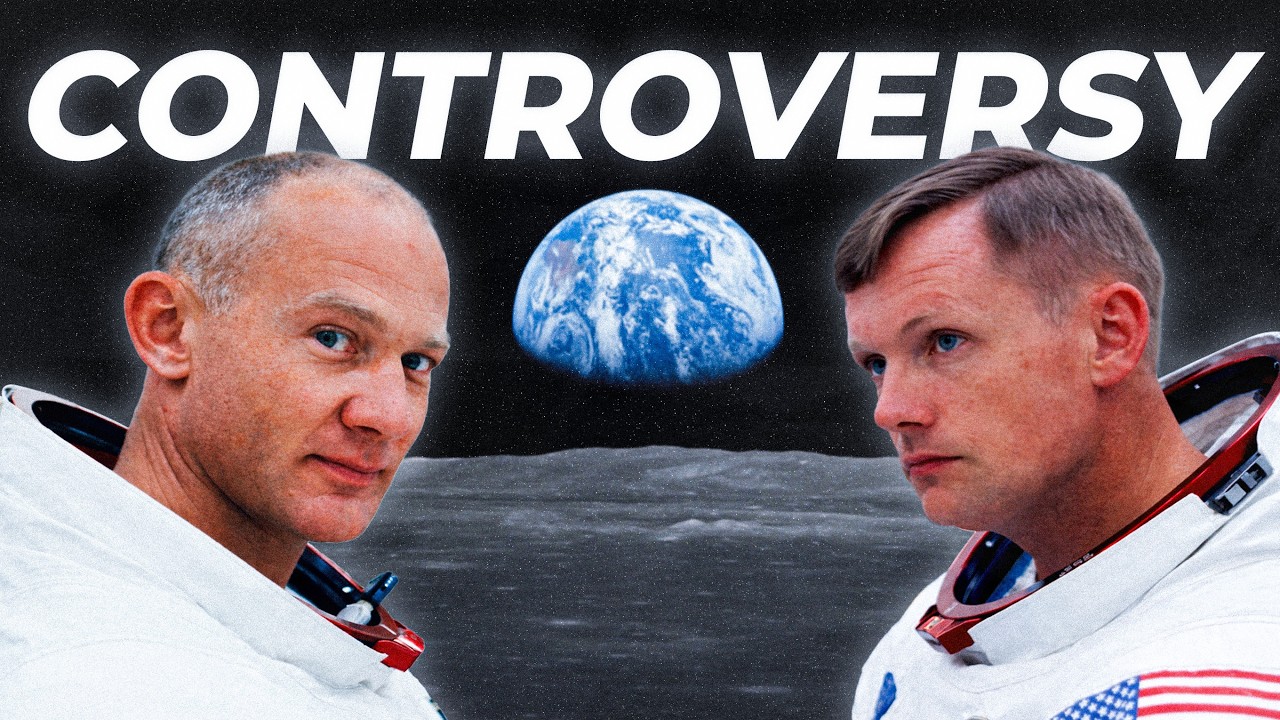
Why Engineers Became the New Billionaires
9:53

Why Engineers Became the New Billionaires

Newsthink 19.05.2026 25 580 просмотров 1 471 лайков

Machine-readable: Markdown · JSON API · Site index

Поделиться Telegram VK Бот
Транскрипт Скачать .md
Анализ с AI
Описание видео
The modern billionaire is no longer a businessman. @GensparkProduct is an all-in-one AI workspace that reached $250M ARR in just 12 months. Try Genspark with free credits available upon signup. Genspark is now offering a 'Get Started' bonus! New users can try premium features like AI web app building and deep research for free. Plus, you can earn extra credits just by completing simple tasks! https://www.genspark.ai/?utm_source=yt&utm_campaign=Newsthink #Genspark #WorkwithGenspark Chapters: 0:00 Elon Musk Is Not a Businessman 0:22 Old Billionaires vs. New 0:40 Jensen Huang’s “Once In A Lifetime Opportunity” 2:35 Bezos Built Amazon Like an Engineer 3:06 The Amazon Flywheel Explained 3:44 The Genius of 1-Click Ordering 4:14 AWS: The Bet That Changed the Internet 4:44 How Google Solved Search 5:36 Zuckerberg’s Strategy 6:04 Elon Musk and First-Principles Thinking 8:05 Why Engineers Became the New Billionaires 8:33 Genspark: All-in-one AI Workspace Books referenced: The Thinking Machine by Stephen Witt: https://a.co/d/0hYX6SYK (not affiliated) Elon Musk by Walter Isaacson: https://a.co/d/0ceaa0rb (not affiliated) Newsthink is produced and presented by Cindy Pom https://x.com/cindypom Grab your Newsthink merch here: https://newsthink.creator-spring.com Support Cindy on Patreon! https://www.patreon.com/Newsthink Sources: GeForce 256: Konstantin Lanzet, CC BY-SA 3.0 via Wikimedia Commons Oregon State University: saml123, CC BY 2.0 via Wikimedia Commons Wooden breadboard circuits: Miclan, CC BY-SA 4.0 via Wikimedia Commons Quake III Arena video game: https://www.youtube.com/watch?v=ydXjUo0jipoCreative Commons Attribution license (reuse allowed) Bryan Catanzaro images sourced from NVIDIA Image 1 of server farm at the CERN Recruitment Center in Ain, Rhône-Alpes, France: Faber, CC BY-SA 2.0 via Wikimedia Commons Image 2 of server farm at the CERN Recruitment Center in Ain, Rhône-Alpes, France: Faber, CC BY-SA 2.0 via Wikimedia Commons Larry Page and Sergey Brin image: Ehud Kenan, CC BY 2.0 via Wikimedia Commons Larry Page and Sergey Brin image 2: Joi Ito from Inbamura, Japan, CC BY 2.0 via Wikimedia Commons Mark Zuckerberg at Harvard University sourced from Harvard University Zuckerberg “Move Fast and Break Things” image: Mike Deerkoski from San Francisco, U.S.A., CC BY 2.0 via Wikimedia Commons
Оглавление (12 сегментов)

Elon Musk Is Not a Businessman

Despite being the richest person on earth,  Elon Musk doesn’t see himself as a businessman. I’ve heard people say, ‘Listen, he’s an out-of-the-box thinker,  he’s a businessman, he’s an entrepreneur. People that know you say I’m not really a businessman, I wouldn’t say. You would say? I’m not really a businessman. You’re not a businessman, no? No. What are you? I’m an engineer. Engineer?

Old Billionaires vs. New

Yah. For most of modern history, the world’s  richest people weren’t engineers. They were industrialists and financiers  who controlled physical assets: oil fields, steel mills, railroads, and banks. But the richest today are not  traditional businesspeople. They’re engineers, programmers,  and technical founders.

Jensen Huang’s “Once In A Lifetime Opportunity”

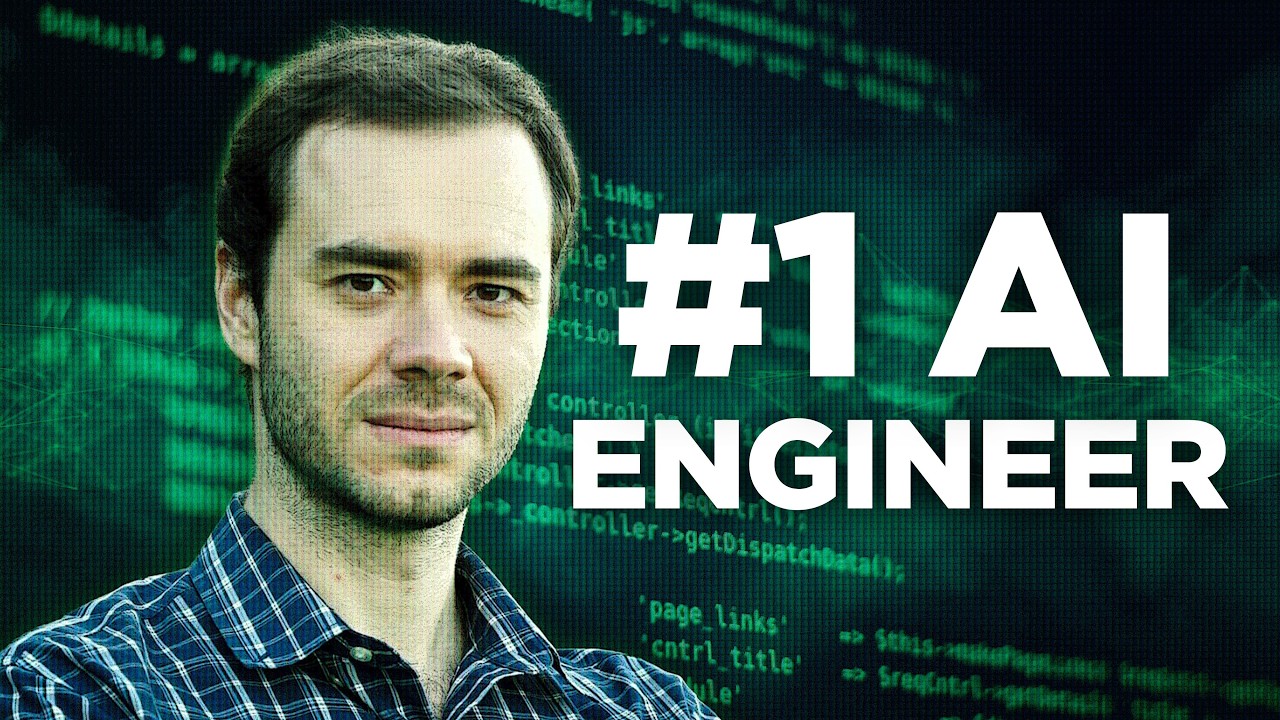
Take Jensen Huang, the CEO of NVIDIA. He majored in electrical engineering at Oregon State where he became  fascinated with circuit design. In 1993, he co-founded Nvidia to build  graphics processing units for video games. Nvidia’s chips were used to render  3D graphics, lighting, textures. GPUs were extraordinarily good at  performing many calculations simultaneously. That turned out to be useful  for far more than gaming. In 2013, a junior engineer at Nvidia, Bryan  Catanzaro began experimenting with using GPUs to train neural networks. AI was still in its infancy. When he presented his idea to  management, they dismissed him. But he believed he was onto something. So he decided to go directly to Jensen Huang was immediately intrigued. He cleared his entire weekend to immerse himself in AI research papers. By their second meeting, Catanzaro was stunned to see that his boss now understood the  subject just as well, if not better, than him. Huang realized Nvidia was no  longer just a gaming company. Its chips could become the computational  foundation for artificial intelligence itself. We're gonna be collecting enormous, enormous  amounts of data. And all of this data can contribute to helping machines be smarter. It was like an epiphany. As David Kirk, Nvidia’s former chief scientist  told author Stephen Witt of The Thinking Machine: “He got it immediately, before  anybody. He was the first to see what it could be. He really was the first. ” His engineering mind let him see the greater potential and gave him the foresight  to shift the entire company’s focus. Inside a conference room at Nvidia,  Huang erased a whiteboard and wrote: O. I. A. L. O. Which stood for: Once In A Lifetime Opportunity. Today, Nvidia is at the  center of the AI revolution. Its chips power ChatGPT, autonomous  vehicles, robotics, drug development, and the most powerful supercomputers ever built. This is the first office of Amazon. com, Inc.

Bezos Built Amazon Like an Engineer

Jeff Bezos isn’t primarily known as an engineer. This is my desk here. But he thinks like one. When Bezos launched Amazon from  his garage in Seattle in 1994, he was obsessed with being frugal. Instead of buying expensive office furniture, he built desks out of cheap wooden doors from  Home Depot held together by four-by-fours. The “door desk” later became a  symbol of Amazon’s frugal culture. He viewed Amazon less as a store and  more as a self-reinforcing machine.

The Amazon Flywheel Explained

That idea became known as the Amazon Flywheel. Rather than maximizing profit on each  individual sale like a traditional retailer, Bezos designed a self-reinforcing system: Lower prices attracted more customers. More customers increased sales volume and attracted more third-party sellers. More sellers expanded selection and lowered per-unit costs through  greater scale and efficiency. Lower costs enabled even lower prices. The cycle reinforced itself. This kind of feedback-loop thinking  lies at the heart of engineering. That same mindset showed up in another idea at  Amazon that was deceptively simple but brilliant. In 1999, Amazon patented its famous  “1-Click” purchasing system, allowing

The Genius of 1-Click Ordering

customers to buy an item with one click using  pre-saved payment and shipping information. Most retailers treated checkout as a  simple transaction, but Bezos treated every extra click as friction. The more friction in a system, the more likely customers  were to abandon their carts. By removing friction through 1-click shopping,  Amazon significantly increased conversion rates. But Bezos was thinking far beyond online shopping.

AWS: The Bet That Changed the Internet

In 2006, Amazon launched what  sounded like a bizarre idea: It decided to rent out its computing and storage  services to other companies over the internet. At the time, most businesses operated  their own physical servers and data centers which were expensive to build and maintain. Today, AWS powers huge portions of the internet, from Netflix to Airbnb to financial institutions. While Bezos helped build the infrastructure powering the internet, two Stanford PhD students  were trying to organize the internet itself.

How Google Solved Search

Before Google, search engines  were surprisingly primitive. Webpages were ranked based on how many  times a keyword appeared on a page. But that’s problematic because a webpage could  rank high simply by stuffing, for example, “cheap flights cheap flights  cheap flights” all over the page. Larry Page and Sergey Brin wanted to figure  out how to get actual quality results. Their breakthrough was to treat links between  websites like citations in academic papers. In scholarly papers, a citation  from an important source carries more weight than one from an obscure source. The same logic could apply to the internet. If a trusted website like NASA’s  linked to another webpage, that acted as evidence the page was important. They turned their idea into PageRank — the algorithm that became the foundation of Google. Page and Brin showed that two computer scientists could build systems capable of reaching billions. Mark Zuckerberg took that to a whole new level.

Zuckerberg’s Strategy

He personally wrote much of Facebook’s  early code from his Harvard dorm room. Zuckerberg didn’t launch Facebook to everyone  immediately. He rolled it out gradually: first to Harvard, then other Ivy leagues and  elite universities before the general public. That exclusivity made Facebook feel  more trustworthy and socially valuable, allowing it to grow rapidly, organically. Facebook’s early motto captured that engineering culture perfectly: “Move fast and break things. ”

Elon Musk and First-Principles Thinking

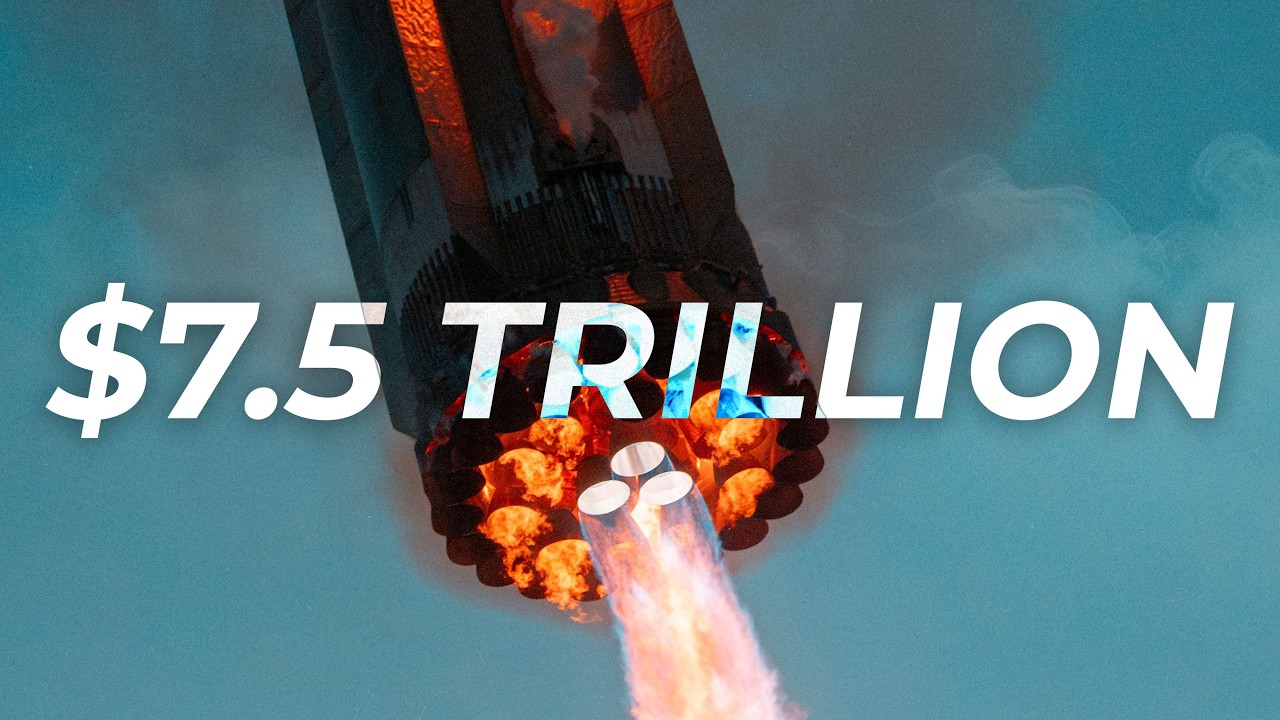
Perhaps no billionaire embodies that move  fast mentality more completely than Elon Musk. It was already apparent when  he started his first company He and his brother Kimbal had the idea  of building an online business directory and combining it with map software for  navigation years before Google Maps existed. They called it Zip2. As in, you  could “Zip to where you want to go”. He slept in the tiny office  they rented and worked nonstop. Former colleagues said Musk would sometimes  rewrite other engineers’ code overnight after they went home because he wasn’t satisfied with it. Walter Isaacson’s biography describes how: “Like Steve Jobs, he genuinely did not care if he  offended or intimidated the people he worked with, as long as he drove them to accomplish  feats they thought were impossible. ” Musk was drawn to problems  considered “impossible”. Rockets had always been extraordinarily  expensive and not reusable. Although the Space Shuttle’s boosters could  be fished out of the ocean and refurbished, it became enormously costly. Musk approached the challenge of reusable rockets through first-principles  thinking: breaking rockets down to their fundamental components and asking why  they couldn’t be reused like airplanes. In exclusive footage I obtained, Musk explains  his approach to a group of young students. You look at what others are doing and  say, ‘Well, others didn’t make it work, so therefore it doesn’t work. ’ A first  principles foundational approach would be to say, ‘Let’s look at the physics  and economics of a rocket,’ and say, ‘If we can analyze the physics of the  rocket, is it physically possible? ’ Using this approach, SpaceX designed Starship,  the world’s largest and most powerful rocket, to be fully reusable, something long  considered economically unrealistic. If SpaceX becomes the most  valuable company on Earth, Musk could become the world’s first trillionaire. The modern billionaire is increasingly not a  financier or industrialist but an engineer.

Why Engineers Became the New Billionaires

Technology has changed that equation. Engineers and programmers can create products used by billions of people without  owning vast amounts of resources. They’ve become a new kind of billionaire. And many of them weren’t  primarily focused on making money. They were obsessed with building the future,  and the wealth was often a byproduct. One thing the billionaires in this video had in  common was an obsessive focus on productivity.

Genspark: All-in-one AI Workspace

Researching these videos used to take a lot  out of me: I was constantly jumping between dozens of tabs, articles, and book PDFs. That's why I started using Genspark AI, an all-in-one workspace that combines GPT,  Claude, Gemini, and more in a single platform. One feature I love is Deep Research. For  this video, I wanted to figure out when exactly Facebook expanded from Harvard to other  universities. Instead of spending a lot of time piecing it together myself, Genspark quickly  delivered an accurate timeline in seconds. They also have a powerful Workflow  feature. I get flooded with emails every day from sponsors, job inquiries, and  tons of spam. Now every morning I get a clean summary of my unread emails, categorized  by what needs my immediate attention. It's also incredible at creating presentation  slides. I told it to create 10 slides on Nvidia's rise, and it generated them in seconds. And clearly, I’m not the only one who finds it useful. Genspark has reached a staggering $250 million annual run rate in just 12 months, making  it one of the fastest-growing AI tools out there. And right now, paid users get unlimited  AI chat and unlimited image generation. They’re also offering a “Get Started” bonus where  new users can try premium features like AI web app building and deep research for free. If you want to check it out, you can use the custom link in my description. Thanks for watching. For Newsthink, I’m Cindy Pom.

Другие видео автора — Newsthink

Ctrl+V

Экстракт Знаний в Telegram

Экстракты и дистилляты из лучших YouTube-каналов — сразу после публикации.

Подписаться

Дайджест Экстрактов

Лучшие методички за неделю — каждый понедельник