The Controversy NASA Doesn't Talk About
7:11

The Controversy NASA Doesn't Talk About

Newsthink 13.04.2026 40 275 просмотров 1 236 лайков

Machine-readable: Markdown · JSON API · Site index

Поделиться Telegram VK Бот
Транскрипт Скачать .md
Анализ с AI
Описание видео
Buzz Aldrin did something unexpected during Apollo 11. Use my link https://poly.market/newsthink and code: NEWSTHINK to support my channel and start trading today! Chapters: 00:00 The Controversy 0:45 Aldrin’s Explanation 2:14 The Fight to Step on Moon First 4:09 NASA’s decision 4:52 The Tragedy of Buzz Aldrin 5:39 The Image That Never Existed 6:14 Betting on SpaceX IPO Books featured in the video: First Man: The Life of Neil A. Armstrong by James R. Hansen https://a.co/d/061OL02i Return to Earth by Buzz Aldrin: https://a.co/d/0gptxcAu Newsthink is produced and presented by Cindy Pom https://x.com/cindypom Grab your Newsthink merch here: https://newsthink.creator-spring.com Support Cindy on Patreon! https://www.patreon.com/Newsthink Sources: All photos and videos in space and on the moon courtesy of NASA.
Оглавление (7 сегментов)

The Controversy

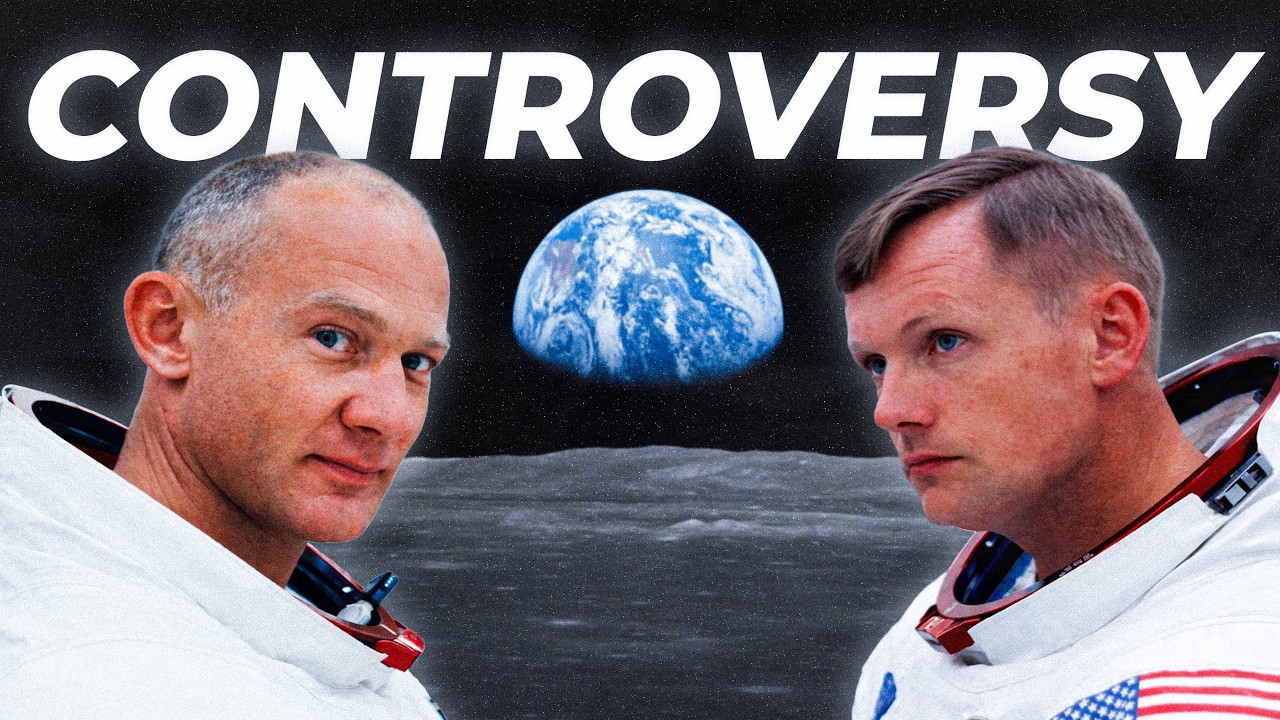
Everyone knows Neil Armstrong was the first person to step on the moon. That's one small step for man, one giant leap for mankind. But there are almost no photos of him on the surface. All the iconic images you've seen are of Buzz Aldrin taken by Neil Armstrong. There isn't a single clear photo of Armstrong on the lunar surface. There's only this photo of his back turned to the camera and a tiny reflection of him in Aldrin's visor that Armstrong took himself. When those closest to the Apollo 11 crew realized Aldrin had taken almost no pictures of Armstrong, they were shocked. Flight director Gene Kranz put it bluntly, "That's something to me that's unacceptable, but you know, life isn't fair. " So, why didn't Aldrin take any photos of Armstrong? In his

Aldrin’s Explanation

autobiography, Aldrin explained it this way, "As the sequence of lunar operations evolved, Neil had the camera most of the time. It wasn't until we were back on Earth and in the lunar receiving laboratory looking over the pictures that we realized there were few pictures of Neil. My fault, perhaps, but we had never simulated this in our training. " In other words, he's saying they had never practiced taking photos of each other during their training. Yet Aldrin did find the time to take the famous photos of his footprints and those weren't part of training, either. Years later, Aldrin reflected to James R. Hansen, author of First Man, "I should have taken it upon myself to do that, but I was intimidated by the enormity of the situation. " Those closest to Aldrin never accused him of intentionally leaving Armstrong out. Command module pilot Mike Collins, who remained in lunar orbit aboard Columbia while the two men were on the moon, told author Hansen, "It never entered my mind that there was some nefarious plot on Buzz's part to exclude Neil. It just never occurred to me. Maybe it should have. " Apollo 12 astronaut Al Bean reflected, "I mean, think about it. I'm going along on the boat with Christopher Columbus. He's carrying the camera at the moment, but I'm his first mate. We all know what should happen. Nobody knows the answer why it didn't. But one person at NASA believes he knows the answer. Richard Underwood trained the astronauts in photography and told NBC News Buzz was mad at Neil and didn't take his picture. NASA denies that jealousy was involved, but Aldrin had

The Fight to Step on Moon First

lobbied hard to be the first to step onto the moon. Astronaut Gene Cernan recalled, he came flapping into my office at the Manned Spacecraft Center one day like an angry stork, laden with charts and graphs and statistics, arguing what he considered to be obvious, that he, the lunar module pilot, and not Neil Armstrong, should be the first down the ladder on Apollo 11, even though Armstrong was the commander of the mission and held ultimate authority. When Aldrin realized Armstrong would be chosen, he admitted, "I did become angry when the grapevine reported Neil was going to make the first step on the moon because he was a civilian. So, it would look like a triumph for all of humankind rather than a military achievement. " At the time of Apollo 11, Armstrong had not been on active military duty with the Navy for nearly two decades. He had worked as a civilian research test pilot for the NACA, the predecessor to NASA, and then continued with NASA after it was formed in 1958. Buzz Aldrin, by contrast, was still an active-duty Air Force officer. Aldrin had always been ambitious. Early in his career, one of his Air Force classmates remarked that he was too competitive, too insensitive to others, too determined to be the best. When Aldrin went to Armstrong to discuss the issue directly, he recalled, "Neil equivocated a minute or so. Then, with a coolness I had not known he possessed, he said that the decision was quite historical, and he didn't want to rule out the possibility of going first. " When that didn't work, Aldrin talked to anyone who would listen. Crewmate Mike Collins recalled, "Once Buzz tentatively approached me about the injustice of the situation, but I quickly turned him off. " But Aldrin insists others misinterpreted his motives. "Whether or not I was going to be the first to step onto the moon was personally no great issue. What I did resent was that the decision was stalled and stalled until finally it was the subject of gossip, speculation, and awkward encounters. According to Aldrin, NASA ultimately

NASA’s decision

made a decision based solely on the lunar module's interior design. Armstrong was seated closer to the hatch, so it was more practical for him to step out first. Aldrin claims to have quickly and simply the decision, but Collins recalled that Buzz's attitude took a noticeable turn in the direction of gloom and introspection shortly thereafter. Aldrin did admit that his father was furious. Gene Aldrin was an aviator and an officer in the US Army who contacted several influential friends at NASA to try to change the outcome. He became even angrier when a commemorative stamp declared Armstrong the first man on the moon. He tried to get the wording changed to first men on the moon to emphasize that both astronauts had landed together.

The Tragedy of Buzz Aldrin

Ironically, Aldrin ended up receiving far more public attention in the years after Apollo 11. While Armstrong shied away from fame and lived a quiet life as an aerospace engineering professor in Ohio, Aldrin stayed in the public eye, writing books, appearing on TV, and speaking about space for decades. Yet, for Aldrin, reaching the moon, the absolute peak of human achievement, also became the peak of his own life. He began struggling with depression and alcoholism. I was suffering from what poets have described as the melancholy of all things done. He had achieved the ultimate goal, and there was nothing left that could match that moment. At one point, he felt so low that he went to bed one night and stayed there on and off for an entire week.

The Image That Never Existed

We'll never know for sure why Aldrin didn't take the time to take a good photo of Armstrong, but we can imagine what it might have looked like. Astronaut Alan Bean painted Armstrong on the moon based on the photo of his reflection in Aldrin's helmet. In the end, Armstrong never held any grudge against Buzz. He later said graciously, "I don't think Buzz had any reason to take my picture, and it never occurred to me that he should. I've always said that Buzz was the far more photogenic of the crew. " That kind of humility was exactly what NASA wanted in the first man on the moon.

Betting on SpaceX IPO

moon. The return to the moon will almost certainly come from SpaceX. Their reusable rockets have slashed costs significantly, and that changes everything. So, the big question is, when does SpaceX actually go public? All eyes are on the IPO timeline. That's why I've been checking Polymarket, the world's largest prediction market. Right now, traders there have the odds of a SpaceX IPO by the end of 2026 sitting at around 94%. On Polymarket, people put real money behind their convictions, buying yes or no shares. These are informed traders, pricing in every piece of news instantly. Polymarket had a strong track record in 2024. Traders gave Trump a clear edge when many polls didn't. If you've got a strong read on what happens next, whether it's tech, politics, or any other major world event, you can trade your edge by heading to the link in my description. Use my code NewsThink. It helps support the channel and trade world events in real time. Thanks for watching. For NewsThink, I'm Cindy Pom.

Другие видео автора — Newsthink

Ctrl+V

Экстракт Знаний в Telegram

Экстракты и дистилляты из лучших YouTube-каналов — сразу после публикации.

Подписаться

Дайджест Экстрактов

Лучшие методички за неделю — каждый понедельник