The Math Genius Who Suddenly Disappeared
9:17

The Math Genius Who Suddenly Disappeared

Newsthink 26.04.2026 33 111 просмотров 1 441 лайков

Machine-readable: Markdown · JSON API · Site index

Поделиться Telegram VK Бот
Транскрипт Скачать .md
Анализ с AI
Описание видео
Alexander Grothendieck was at the top of the mathematical world before disappearing. Try https://brilliant.org/Newsthink/ for FREE for 30 days and get 20% off your annual premium subscription. Chapters: 0:00 The Mathematician Who Disappeared 0:20 A Traumatic Childhood 1:19 Discovering Mathematics 1:53 Thinking Like a Mathematician 2:28 Stateless and Struggling 3:06 Rise to Greatness 3:20 Algebraic Geometry 4:00 The Weil Conjectures 4:35 A Different Way of Thinking 5:08 Suddenly Quitting 6:27 A Strange Final Chapter 7:37 Shaping the World Today 8:13 Learning Math Intuitively Newsthink is produced and presented by Cindy Pom https://x.com/cindypom Grab your Newsthink merch here: https://newsthink.creator-spring.com Support Cindy on Patreon! https://www.patreon.com/Newsthink Sources: Grothendieck pictures sourced from https://webusers.imj-prg.fr/~leila.schneps/grothendieckcircle/photos.php Auschwitz camp photo by Cindy Pom University of Montpellier: Vpe, CC BY-SA 3.0 via Wikimedia Commons IHÉS building Contributed by Vassilii Khachaturov, CC BY-SA 3.0 via Wikimedia Commons French Ministry of Defence: Rutgers University: Tomwsulcer, CC0, via Wikimedia Commons Grothendieck tombstone: Gustav Roch, CC0, via Wikimedia Commons

Оглавление (13 сегментов)

The Mathematician Who Disappeared

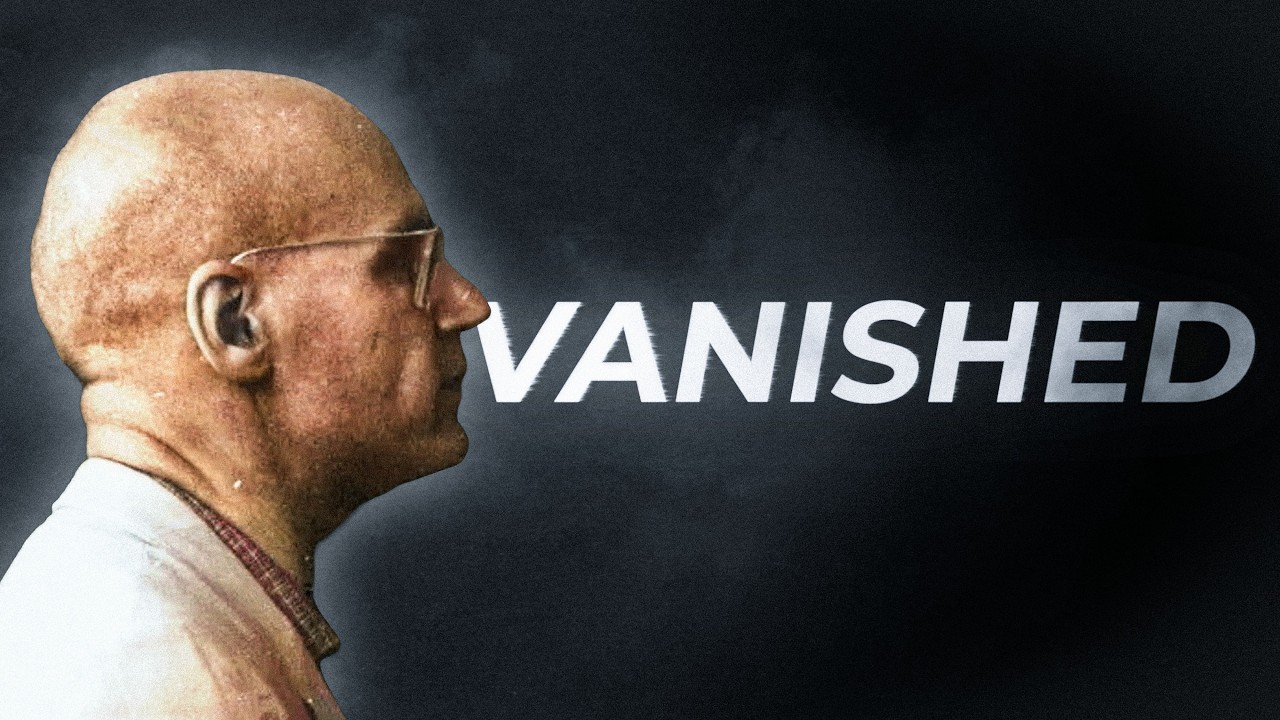
Very few mathematicians have a story like Alexander Grothendieck. He didn't just win the Fields Medal, the Nobel Prize of math. He completely reshaped algebraic geometry. And then, at the peak of his powers, he walked away, living in isolation for the last two decades of his life. To understand why, we have to go back to the beginning.

A Traumatic Childhood

beginning. — His childhood was traumatic. His father, Alexander Shapiro, was a Jewish anarchist who fought against the Russian Empire and lost an arm after being shot when he tried to escape. After the revolution, he fled to Western Europe where he met Hanka Grothendieck, a writer. She was married at the time, but Shapiro famously told her husband, "I will steal your wife. " And he did. — Their son, Alexander Grothendieck, was born in Berlin on March 28, 1928. When he was five, the Nazis rose to power. His parents fled to Paris, leaving him in the care of a foster family near Hamburg. He later recalled painfully, "I found myself hastily dumped into a foreign family. " For six years, his mother barely wrote to him. His father never wrote at all. Their reunion in Paris in 1939 was short-lived as his father was soon arrested, sent to an internment camp, and later deported to Auschwitz where he was killed. He and his mother were also interned for two years at a camp in southern France. It

Discovering Mathematics

was inside the camp that he first discovered the joy of mathematics, drawing six-petaled rosettes with a compass. When his mom was later moved to another camp, he was sent to the village of Le Chambon- sur- Lignon, which quietly Jewish children. During Gestapo raids, he hid in the woods for days. He managed to go to school, but he hated how mathematics was taught. As he later wrote, "What I found least satisfying was the absence of a serious definition of the notion of length, of area, or of volume. I promised myself to make up for this omission as soon as I could. " While studying at the

Thinking Like a Mathematician

University of Montpellier, he discovered major results in measure theory without realizing they'd already been discovered. — But working alone was a blessing in disguise because he learned to think like a mathematician. "Without ever meeting anyone with whom I could share my thirst for understanding, I nevertheless knew deep in my gut that I was a mathematician. " He continued his higher education in Paris, the center of math in France, and then Nancy, where he flourished mathematically while his personal life fell apart. He had a son with the older woman who ran the boarding house where he and his mom stayed.

Stateless and Struggling

After completing his doctoral studies, he struggled to find work because he was stateless. He could have become a French citizen, but as a pacifist, he refused the mandatory military service. A professor eventually recommended him for a teaching position in Brazil at the University of São Paulo, where he lived off milk and bananas for two years so as not to waste any time. Then he spent a year teaching at the University of Kansas before being invited to Harvard in the late '50s. But he almost didn't get a visa because he refused to take the loyalty pledge required during the Cold War, promising not to work to overthrow the US government. When he was warned he could be jailed, he said it was fine so long as he had books. In 1958, he was

Rise to Greatness

finally hired in France at the Institut des Hautes Études Scientifiques, a leading research center, thanks to the insistence of esteemed mathematician Jean Dieudonné, who refused to join the faculty unless Grothendieck was also hired.

Algebraic Geometry

hired. At the IHÉS, he devoted himself completely to algebraic geometry. Algebraic geometry explores the deep connection between equations and geometric shapes. For example, the equation x² + y² = 1 describes a circle. Every solution to this equation is literally a point on that circle. But Grothendieck didn't just study shapes. He worked 12 hours a day, seven days a week, to build an entirely new language for the field. His 1,800-page work, Éléments de géométrie algébrique, transformed algebraic geometry from a collection of fragmented techniques into the unified discipline we now call modern algebraic geometry. One of his

The Weil Conjectures

main motivations was to solve a set of extremely difficult problems known as the Weil conjectures, after French mathematician André Weil. Grothendieck and his colleagues proved three out of the four. The hardest remaining one was a geometric analog of the Riemann hypothesis. The Riemann hypothesis says that although prime numbers appear scattered randomly, their distribution follows a deep hidden structure. The Weil version asks the same question, but geometrically. When counting the number of points on algebraic shapes over finite fields, do those counts also follow a deep hidden structure? Grothendieck refused to attack problems

A Different Way of Thinking

head-on. Instead of smashing a nut with a hammer and chisel, he preferred to let the solution unfold naturally, like softening the shell by soaking it in water or leaving it in the sun and rain. As he beautifully put it, "When the time is ripe, a simple pressure of the hand is enough. The shell opens like that of a perfectly ripe avocado. " In 1974, the final conjecture was proved by his brilliant student Pierre Deligne, who built on Grothendieck's foundation while also adding his own ideas. Around

Suddenly Quitting

this time, Grothendieck was at the height of his powers. Yet, in May 1970, at the age of 42, he suddenly resigned from the IHÉS. He had discovered that a small part of the institute's budget came from the French Ministry of Defense. For a committed pacifist, even a small amount, 5% in this case, was broke his promise to stop accepting funding, Grothendieck quit in protest. He hoped his colleagues would join him. None did. His disillusionment had been growing for years. He had already refused to travel to Moscow to collect his Fields Medal in 1966 to protest the Soviet Union's imprisonment of two dissident writers. A trip to war-torn North Vietnam deeply affected him, and he began fasting once a week in opposition to the Vietnam War. In many ways, he echoed his father, who spent his life fighting power and oppression. For years, a portrait of his father, painted by a fellow prisoner in an internment camp, hung in his office. After leaving the IHÉS, Grothendieck became more vocal politically. — He co-founded the activist group Survive and Live, which warned against nuclear proliferation and environmental destruction. He became so radical that he wouldn't even let his wife, Mireille, drive a car. They divorced shortly after he left the research institute.

A Strange Final Chapter

— He eventually returned to teach at the University of Montpellier, living extremely frugally in an old house without electricity. — For a time, he lived with his new partner, Justine, a grad student he met when he visited Rutgers University, but she left with her son when he was just two months old. — By the late 1980s, he became preoccupied with spiritual matters. He believed that God spoke to people through their dreams. He sent a long letter to friends and colleagues announcing an impending New Age, which he predicted would begin on October 14, 1996. — By the early '90s, he had burned around 25,000 pages of his mathematical writings. Then, he disappeared into the Pyrenees, where he lived in a village completely isolated for more than 20 years. Only a handful of people knew his exact address, and he asked them to keep it secret. In 1992, two mathematicians, Leila Schneps and Pierre Lochak, managed to track him down. They described to the New Yorker how if a leaf broke off a plant in his home, he would place the fallen leaf in its own glass of water. He told them that he and the plants could communicate. He never spoke to them about mathematics.

Shaping the World Today

mathematics. Alexander Grothendieck died on November 13, 2014 at the age of 86. Le Monde called him the greatest mathematician of the 20th century. The foundations he built continue to shape our world. Grothendieck's revolutionary language of algebraic geometry laid the groundwork for elliptic curve cryptography, the mathematics that secures websites, cryptocurrencies, mobile banking, and encrypted messages we send every day. Ironically, the man who turned his back on power and institutions helped lay the mathematical foundations

Learning Math Intuitively

they now stand problem and struggle through it step by step. Grothendieck believed you shouldn't try to prove something until you understand it so deeply that the answer feels almost obvious. That kind of thinking, really understanding math, is something anyone can get better at. What I like about Brilliant is that it teaches math interactively. Instead of just watching lectures, you're actively solving problems step by step. I've been going through their exponential functions course, and it's helped me think through problems more clearly rather than just memorizing formulas. Brilliant's courses are designed for everyone, whether you're brushing up on algebra or pushing yourself with more advanced concepts. They also have a wide range of courses in coding, AI, data, and science, all built around learning by doing. You can try Brilliant for free for 30 days by signing up at brilliant. org/ new thing. The link is in the description, or by scanning the QR code on your screen. And if you decide to continue, you'll get 20% off an annual premium subscription with full access to Brilliant's thousands of lessons. Thanks for watching. For New Thing, I'm Cindy Pom.

Другие видео автора — Newsthink

Ctrl+V

Экстракт Знаний в Telegram

Экстракты и дистилляты из лучших YouTube-каналов — сразу после публикации.

Подписаться

Дайджест Экстрактов

Лучшие методички за неделю — каждый понедельник