DPReview editors Abby Ferguson, Dale Baskin and Mitchell Clark sat down to discuss the Panasonic L10, the first new compact camera aimed at enthusiast photographers that we've seen in years.
-----------------------
DPReview.com is the world's largest digital camera review website. Welcome to our YouTube channel! Subscribe for new feature videos, reviews, interviews and more.
Discover the world's most in-depth digital camera reviews at http://www.dpreview.com
Оглавление (13 сегментов)
Segment 1 (00:00 - 05:00)
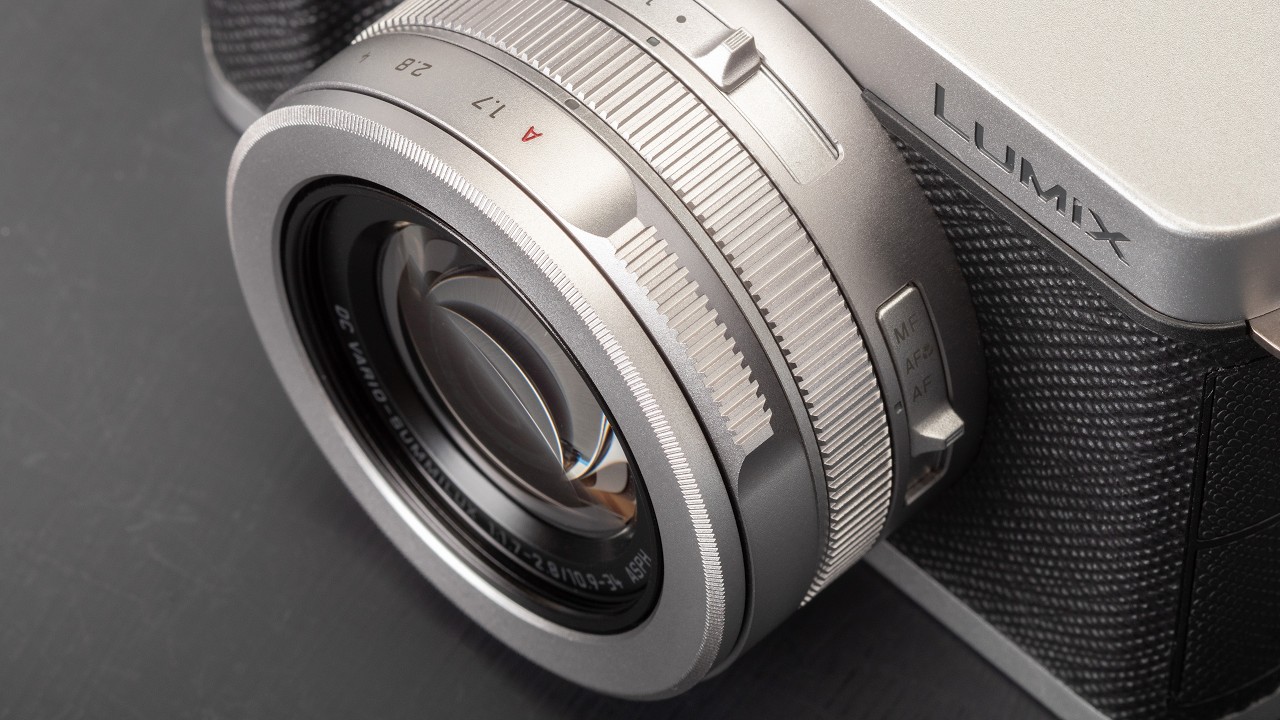
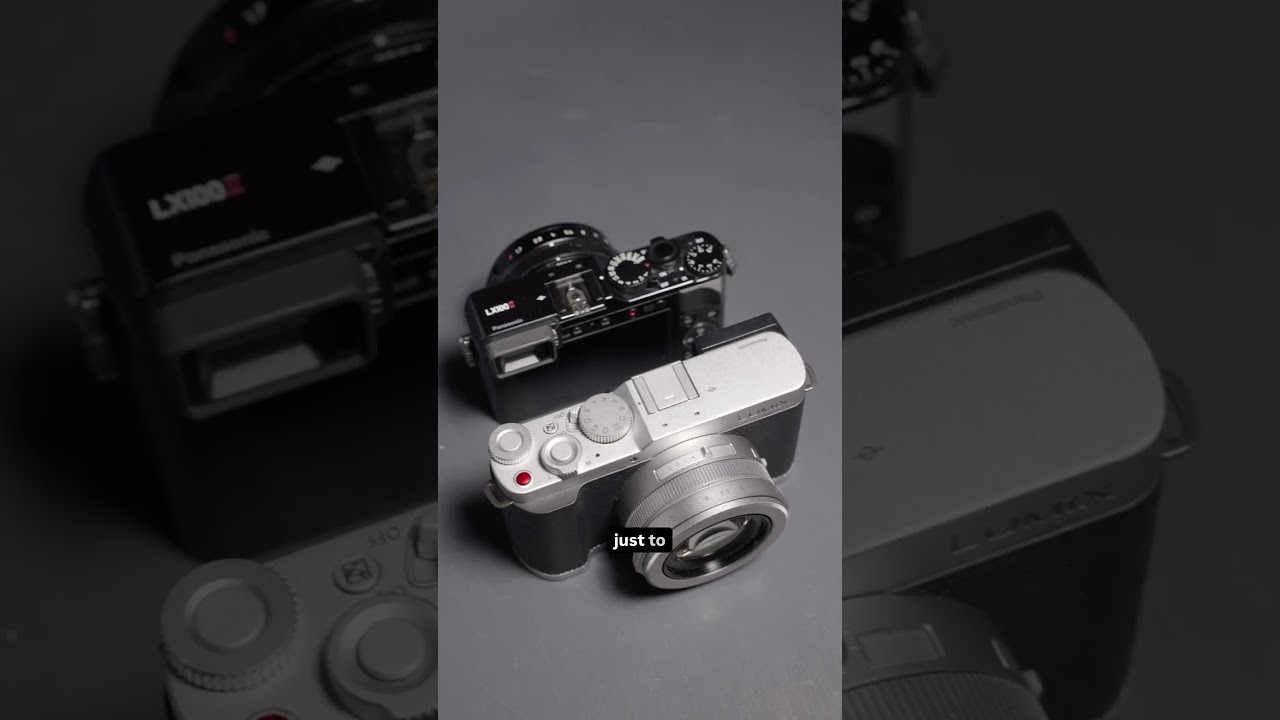
Hello everyone. We are back today to talk about the big announcement, the elephant in the room for last episode that we didn't get to address because when we were recording it, we actually did not know what the camera was. This is going to be our episode on the Panasonic L10, Panasonic's new compact camera with a 4/3 sensor and a 24-70 mm equivalent zoom. Uh with me today are Dale Baskin Hey everyone. and Abby Ferguson. Hi. So, I just want to get everyone's initial reaction to this camera. When you first heard the news about it, what did you think? I was very excited. Uh we have not seen a truly new compact in quite some time. Um Was it Canon that had one at the beginning of the year? Last year Canon announced the PowerShot V1, I believe, which was the vlogging focused uh compact with a 4/3-ish sensor. Um and then Panasonic had released another compact, sort of a more travel zoom one, but that was a very minor refresh of a previous compact that they had. Um where they basically added a USB sort USB-C port and removed the viewfinder. Yeah, so that's the one I was thinking of. So it's been a bit since we've had a truly new compact that actually has new components and more modern autofocus and processor and all of that. So, I was pretty pumped to see this. Um I don't I'm not in the market to buy a compact, but if the right compact came along, I would be very interested. Uh I will say that. Uh so, I was pretty excited when I saw this. Yeah, I have to admit I was pretty excited about this one, maybe for a slightly different reason, and it's because I really love what Panasonic has done over the years with their multi-aspect ratio cameras. Uh this is not something that's new for Panasonic. Uh and for anyone who's not familiar with what Panasonic does, they've provided a range of cameras where they allow you to change the aspect ratio on the camera while still maintaining the same angle of view for every different aspect ratio. So, whether you're shooting uh 4 by 3 or 3 by 2 or even 16 by 9, and it means you get at uh particularly the wide end of the lens, you get to use that full wide angle lens at any different aspect ratio. And uh like I said, this isn't new. In fact, right here on my desk in front of me, I've got a Panasonic LX like 7, which is an older, probably almost 20 years old now, uh compact camera that uses the same technology. And uh little secret, I still use it because I just enjoy it. It's a lot of fun, even though it's quite out of date technologically. Uh but I just really love that multi-aspect approach that Panasonic has used over the years. They haven't used it as much as I'd like, but I was really excited to see them with another camera that does this. Yeah, so it's a to your point, Dale, it uses a 4/3 sensor, 27 megapixel one, the same one found in the GH7 and the G9 II. So, those are, you know, Micro 4/3 interchangeable lens mirrorless cameras. Um but it only uses around 81% of that sensor. Uh so, you can get up to 20. 3 megapixels in the 4:3 mode, which is sort of your largest area uh that you mode that you can use. Um And like you said, it continues that tradition of providing the same uh diagonal field of view across the crop modes. The 1:1 mode is a bit weird. It's actually just crop of the 4:3, which isn't necessarily ideal. They could go taller on the sensor, but there you go. Uh now, the it's interesting because this camera isn't being pitched as a predecessor to the LX100 II. Um Uh do you mean a successor? Yeah, successor. Uh Dale, I think you mentioned that they said in the briefing that it was sort of the start of a new line of premium compact cameras? They did in the briefing they talked about the fact that this was really the start of a new line which implies that maybe it's the first of more than one. Uh but they also made uh they also went to pains to point out that this is not an extension of the LX100 line and although there's a lot of visual similarity and similarities in the lens and the way they work and I understand why people want to equate it to that camera. Uh they made really clear that this is not an LX100 camera and truly I think the size of the camera actually reflects that. It's a different size and it's a slightly different design philosophy, but you can definitely if you've used an LX100 camera, you can see the DNA of the 100 series in this camera. Absolutely. Um so, you know, they have they use the same lens. Um Panasonic I think said that it was uh updated in unspecified ways which probably means that it's going to be pretty subtle difference. Um but the LX100 II has sort of a dedicated dial for the aspect ratio whereas the LX10 has a customizable uh switch. So, it you can have it and by default it will
Segment 2 (05:00 - 10:00)
control your aspect ratio, but you can also set it to do a couple of other things as well. I actually am a little bit disappointed in that by the way Mitchell because and I again I'm holding this uh LX7 on my desk here that I've been using for years and it has a really nice little clicky dial to switch between aspect ratios and I'm not sure a multi-function ring really replicates that even if it clicks. I'm just not sure it replicates having that dedicated control that's made this kind of camera very popular from Pana- uh excuse me, from Panasonic. So, to be clear, it's not a multi- multi-function ring. It is actually pretty much exactly the same switch um with four positions. It's just that uh they are no longer sort of labeled as aspect ratios um and there's sort of a weird one where the first position is giving control over to the camera body rather than sort of having its own setting. So, you can kind of set it up so that it gives you access to all four that it can do at once, but it's in a bit of a weird way that can change sometimes. Okay, well, that actually seems like a great compromise. So, the ring that you see on the lens, that is controlling the power zoom and as I This is not 100% gospel. I'm not 100% sure that you can actually reconfigure that. That may always just control the power zoom. Again, I I've been in the menus, I've looked around for it, but uh and I can't find anything to change it, but that's where we are. Um it also now has a mode dial on top. So, for you know, P S A M and then a bunch of other custom modes um rather than a shutter speed dial. So, there you go. More differences. I think that's the thing that bumps me out the most, which I have not used Panasonic's other compacts to be clear, so it's not like I'm used to another way, but I just really like tactile controls and so the thought that I have cuz it's just the one thumb wheel that would change shutter speed or aperture or whatever, right? You have this uh top plate thumb dial here and that has a button that's customizable on the middle. Um and then you also have a rear plate dial. Uh that one historically I don't love. Um but you can technically uh assign that to be shutter speed as well. Yeah, but I still would rather have a little bit more tactile control up top for exposure settings that I'm theoretically going to be changing on a regular basis as opposed to mode dial, which I'm probably not going to be changing on a regular basis. I know uh Richard has also expressed disappointment that they took away the dedicated uh aspect ratio control because if it is specifically marked to do something, that really encourages you to play around with it. Like me, when I first heard that they took away the aspect ratio thing and made it a customizable control instead, I was like, "Great. I would never use that. " So, I'm totally happy to like just reassign this to be something else. But, I thought, "No, okay. I'm actually like testing out this camera. I should try what is essentially one of its core functions. " Uh and so I did use it and I found, "Oh, I actually do enjoy, you know, playing around with this, changing my aspect ratio using this control. " Uh and making it something customizable means that other people won't necessarily have that experience. They might buy it, take it out of the box, immediately configure it to do something else, and then never get to get the experience of trying it out. Um Again, there's pros and cons to that. For the people who have tried it out and know that they don't like it, uh they now have the option to rebind it. But, there's some give and take, I think. But, may maybe one of those other things they choose to do with it is the core experience that they want. So, you know, as long as that physical switch is there, I'm okay with it. I can use it the way I want, you you want, somebody else can use it the way they want. I actually think that's a really good compromise. Now, I do think something is lost sometimes on cameras at a very subtle level when everything on a camera can be programmed in 19 different ways. I mean, there's definitely an advantage to that. The first thing I do when I pick up certain brands of cameras as I start reprogramming certain buttons to use them the way I like to use them. And all the power to anybody else who wants to do that. But, part of me does long for the days of a certain simplicity when you take a camera out of the box and it does certain things and everything has a label and the labels do what they say they're going to do, not what you program them to do. You know, maybe I'm being nostalgic here, but uh you know, I I miss that to a degree. I will say, unlike the other uh buttons on and dials on this camera, that particular one can only be assigned to do like one of five things. Um so, it's a relatively simple tool. So, you can have it uh set to certain focal lengths. So, if you want to say, you know, position one is 35 mm equivalent, two is 75 mm equivalent, and you can just switch quickly switch between those using that switch. You can too for photo style and real-time lot. So, changing the color mode of your camera. Obviously, one is aspect ratio, and then the other is what subject you want the autofocus system to detect. Which is
Segment 3 (10:00 - 15:00)
actually a good segue to talk about the other big change with this camera, and that is the fact that it has the processor from the Panasonic S1R II. They specified S1R II. My understanding is that all of the S1R II series cameras have the same processor. So, you know, take that for what it's worth. Yeah, the S1R II has highest resolution, so it sounds impressive. Exactly. And that brings along sort of phase detect autofocus, which is a big change. Well, that's also in conjunction with the sensor. But, phase detect autofocus, as well as more complex subject recognition modes. So, instead of just being able to detect humans, it can detect animals, planes, trains, cars, and do pet detection as well. So, if you could say like, "Oh, I want you to detect bikes. " Or focus specifically on the rider's helmet. And it has various modes for different subjects that it can recognize. So, it has sort of a much more sophisticated autofocus system than I believe that then Panasonic has included on its other cameras. Yeah, no, and definitely it's an upgrade over the LX100 series. And like I said, I love the LX100 series. I've always been a fan. But, one of my big frustrations when using that series of cameras is the autofocus. Maybe more now than it used to be just because AF has become so much better in general now that I notice it more. But, yeah, let's be fair. It's what, a six or seven-year-old camera now. So, it's been around the block a few times. But, every time I use that camera, that's the one little frustration I usually run into is the autofocus just isn't up to snuff. Even back then it was maybe a little bit on the edge, but the camera was nice enough that I got around it. So, I think the fact that they've brought these updated AF algorithms, the subject detection modes, and all of that, I think that's going to make it a much more pleasant camera to use and a much more natural camera to use. And I think also combined with the sensor that we're talking about, the same one that's in the GH7 and the G9 II, I think that makes a really nice combination. Yeah, I think one of the arguments against this camera is, "Look, it's got a smaller 4/3 sensor, and it's not going to be as good as say an APS-C or a full-frame camera in low light. " Uh yeah, okay, that that's true. I think we all know the limitations of having a smaller camera sensor and what comes along with that. But the one thing that I've been really impressed by from Panasonic is how much they've been able to get out of this particular sensor on the GH7 and the G9 II, and it can be pretty impressive at times, and I think yeah, if you are going to have a camera with a sensor like that, I think this is the right one, and I think Panasonic's done a good job of optimizing it. With that new processor, you also get sort of uh a bunch of updated features. Um so, the doesn't combine them in camera. This one can. Uh you get features like crop zoom, which uh sort of basically just automatically applies a crop to your JPEGs. Now, interestingly, when if you recall, Dale, we were at this launch together, the Panasonic S9 had a feature called hybrid zoom, which would basically apply an increasing amount of crop as you zoomed in with the physical lens. Um and I thought that was a really clever one because you know, it at 24 mm you can still be really wide, but then as you get in tighter, it's applying more and more crop, uh and sort of just like, you know, getting you a tighter field of view digitally. Um and that is absent on this camera, which I figured would be a pretty like kind of a shoe-in choice. I thought it might be a distinction between full-frame and 4/3, uh but they actually I believe the GH7 has gotten that feature in a uh in a software update. So, I'm not exactly sure why it's missing, but it also gets the it does have the sort of real-time LUT feature where you can apply different look-up table files. So, you know, different custom color modes to it. You can connect to the Lumix app where you can download different ones from creators and now edit RAWs. Abby, I believe the other just the other week you had released an article talking about Lumix Lab and one of the big down points was that it doesn't do RAW support and then they're like, "Oh, guess what? It does RAW support now. " — Of course they change it right after I write that article. That sounds about right. No, they were just responding to you very quickly. Very impressed. Yeah. I actually I do want to ask Abby a question about this camera though because we've just been talking about a whole bunch of things it does, a few things it doesn't do, but it it's got a lot of bells and whistles. But Abby, I always think of you as kind of the purest photographer. Like you're the fine art photographer and I'm just wondering when you pick up a camera like this, how important are all those bells and whistles versus just having a very pure photographic experience with a camera like this? That's a good question. I it very much depends on the situation for me, but in general I think you're right and I would call myself a camera purist and I do like simplicity and I like not being able to think about the camera necessarily or having to change things or having to deal with different settings or whatever the case may be. I like being able to just pick up the camera and not think about the fact that I'm using a piece of technology which maybe sounds weird to say on a TV review show, but
Segment 4 (15:00 - 20:00)
alas, I do like simplicity and so I think I don't think that having the bells and whistles necessarily takes away from it as long as the format of the camera and the user experience and all of those things lets you kind of ignore it to a certain extent, if that makes sense. If it If that stuff doesn't get in the way, then I'm fine with them being there. I just don't want to focus on them. I think that's one of the things that has gotten us and maybe some other people on the internet so excited about this is, you know, I mentioned that Panasonic or that Canon compact the other day, the PowerShot V1, where that was, you know, you can take pictures with it, but it is very much an experience designed for videographers. Whereas this is, you know, designed It can shoot video. It's a Panasonic camera, so it actually has shockingly capable video features, but it's designed for photographers. The controls are for photographers, and it can just get out of your way. You can just pick it up and shoot. There's a couple of things about it that will make it slightly different experience than using sort of a mirrorless camera, an SLR, or whatever, but it You can have that experience with it if you want. Yeah, I mean, that's something that Panasonic even called out in its media briefing when they launched the camera is they were really clear that this is really a photography camera. Does it shoot video? Yeah, I mean, everything in the camera is capable of capturing video, so why the heck not? But they really see this as a photographer's camera. I do let I want to drill down on that, Dale. Not the part about the video, but briefing itself. So, as a bit of a peek behind the curtain, a lot of launches, what will happen is the manufacturers will send us the camera ahead of time, and they'll brief us privately before the announcement, and so we can sort of That's how we have an initial review ready to go on day one with original pictures and a sample gallery and all that is that we've had access to the camera beforehand. That is not what happened with this camera. I seem to remember, like the Sony RX100 Mark III, this was basically a bolt from the blue, and we found out more or less as everyone else was finding out about it. Yeah, it and I think the really interesting part, and maybe this is a little a bit of the inside baseball that would be fun to share with listeners is what it took for us to get this camera because Panasonic you know I don't know why but all of this stuff always triangulates around certain dates but Panasonic happened to pick the same week to launch this camera as Sony picked to launch its new a7R VI and between some people being out of the office and traveling, other people like you being at the a7R VI launch and some other complications that we had which I won't necessarily go into. It was actually really hard to find a way for them to send a camera directly to us that week and Mitchell uh uh walk me through exactly what happened because in the back of my mind I have a pretty good picture of what happened but it was like a lot of balls in the air and plates spinning and people getting on trains and planes and automobiles and going up and down the I-95 corridor on the East Coast and at some point the camera landed in your hands. That's all I know. Yes. So essentially you know Panasonic was like oh we can ship you this camera and I was like that's great. I will be in New York specifically that day that it's supposed to arrive. So rather than sort of having the camera sit at my house without me there for a couple days, we thought okay. Our social director lives on the East Coast, Megan and she did a heroic job of driving the camera down to me and we met outside of a B& H camera that I was just hanging around waiting with texting back and forth. She's like oh my gosh traffic is so bad. I'm like yes it is New York. That is what I've heard. Uh and eventually we find each other. She hands me a box and then we go inside B& H and look at the film. Um but — [clears throat] — that got me the camera about I want to say like an hour and a half before I had to go to the airport. Like I had to be at the airport to leave New York about an hour after I this camera. So I tried to run to Richard Butler's favorite place, the High Line, since it is somewhat close to New York to B& H. I got there, it was closed, which is apparently a thing that happens to parks in New York City. So, I wandered around a construction site for a bit to get at least some sample photos, and then got on the train and left and brought it back to Spokane, where I could take product photos and start writing about it. I mean, I just love where you just happen to be hanging out in New York was right outside of B& H Photo. But, so to be clear, you Meaghan who lives in a completely different state on the Eastern Seaboard had the camera shipped to her. She actually shot an unboxing video, I think, like literally as she was unboxing it. This was not something scripted. She did it in real time. Then jumped in the car and basically drove to New York, handed this thing off to you in front of B& H Photo, and you went and landed at a construction site.
Segment 5 (20:00 - 25:00)
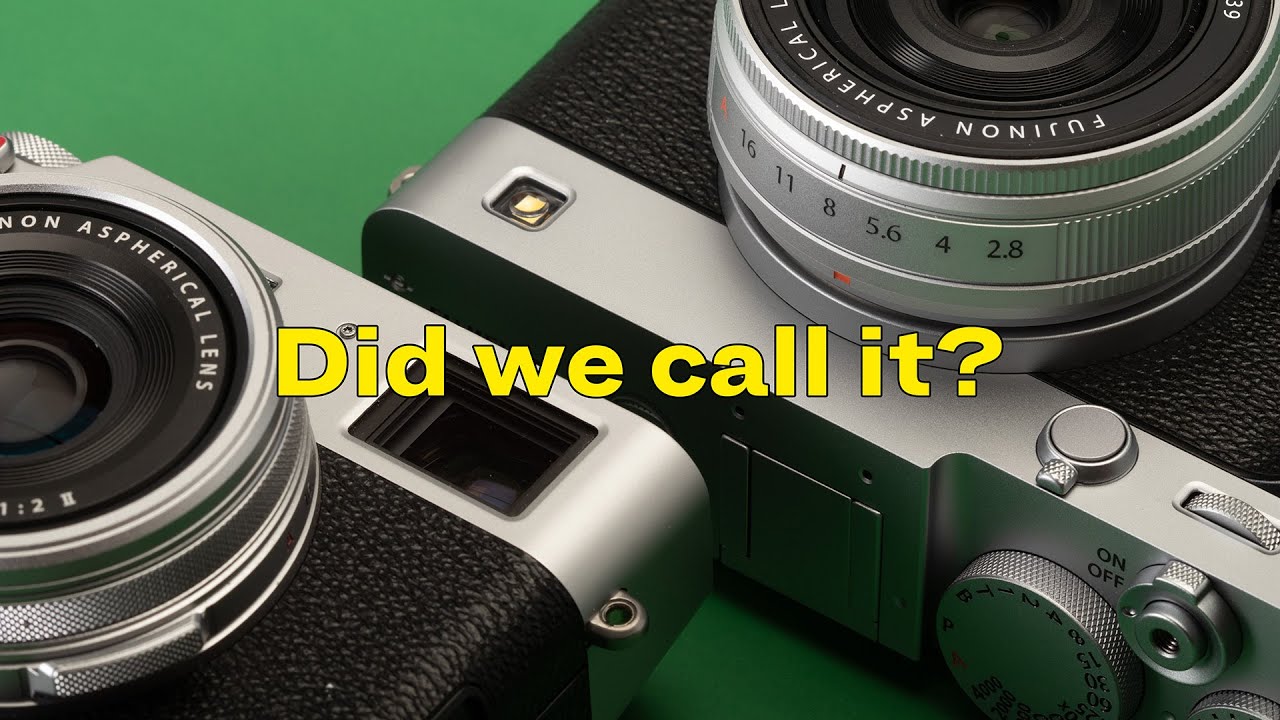
Apparently. I know this isn't the way it actually went, but I still like to picture you guys both in trench coats meeting up in an alley with a briefcase handing it off and then walking your different directions. That's forever how it will be in my head. Actually, what happened was that she left it on the park bench, and I met a stranger. They had to say a code word, I and then they allowed me to access the park bench. — Well, you know, to be fair, they did not ship it in an armored case with a combination without telling you the combination. Maybe that's a story for a future episode. Yeah. Again, huge shout out to Meaghan basically getting the camera, shooting a video of it. I will say a lot of the when I first saw that video before I had gotten to hold the camera, I was like, "Wow, that looks really big. I wonder if Meaghan just has small hands or not. " cuz I've only met her once or twice, and that hasn't like, you know, I just haven't been like, "Oh, let me study the size of your hands to make sure I have an accurate reference for whenever you hold a camera. " But, that is one of the things with this camera. It is a fair bit larger than sort of the LX100 and maybe other compacts that people are used to like the GR III, um it is, funnily enough, almost exactly the same size and weight as the Fujifilm X100 series, so the X is the most recent version. I actually think this size issue is something that merits talking about for a minute because this camera does have so much of the DNA of the LX100 series in it. Effectively the same lens, a lot of the same features, similar look that I know a lot of the discussions I've seen online, people are clearly assuming it's roughly the same size as that LX100 series cameras. It's not. This is a physically larger camera. Mitchell, for anyone who hasn't been to the DPReview homepage, if you go uh Mitchell just published a article that shows the two cameras right next to each other photographed so you can see the size. It's a much bigger camera, which isn't necessarily a bad thing. And I I'm not even sure that it's a thing that Panasonic had to do in order to, you know, I heard all kinds of uh speculation, you know, the processor is hotter or it needs more video uh dissipation for heat for video, you know, all kinds of things. Some of that may be true. I think maybe the biggest argument is maybe just the battery is bigger and so they had to make the case a little bigger, but I'm not sure any of that is really the reason the camera is the size it is. My gut tells me is because Panasonic decided that was the size they wanted to make it. I think Panasonic made this camera the size they wanted to make it for a reason, and I don't think it's accidental. accidental that it's maybe just a couple millimeters different than the X100, like you mentioned, Mitchell, and maybe even has a little bit of a similar look and feel. I wish we had a couple of those side by side just to show off. Uh but I don't think it's lost on other camera companies that products like the X100 series have been crazy popular, have gone viral, and they can't make the things fast enough, and that there's a demand for products like that look a little bit retro, are a certain size and a certain look, and provide a certain experience. And I'm not unsure that uh Panasonic isn't shooting directly for the same type of — think that leads really well into uh sort of the community reaction to it. Um we have seen like a fair number of people express the sentiment somewhat along this won't fit in my pocket, uh it's not weather sealed, there's no IBIS, I'm not going to buy it. Um I would just say uh for one, I I wouldn't say that the LX100 II that most people are comparing it to would fit in a pocket, either, at least not a pants pocket. Especially not women's pants. Do you all even get pockets? I'm — No, fake pockets. I literally have a pair of pants with fake pockets on them. Yeah, I mean, maybe cargo pockets on cargo pants. Maybe. I you know, I wear cargo pants and this wouldn't fit in most of those pockets. It'll fit in a jacket pocket, and this technically will in a pinch, but it's definitely not comfortable to carry around like it will. Um but that's also kind of true of the X100F. It's really one of those cameras that's meant to be on a you know, a chest strap or a shoulder strap or wherever you want to put it in a small bag. Um And I would say that's true of most of this class of camera. Weather sealing, fair point. Uh it's hard infamously to weather seal a camera with a extending lens. Um It's just and it does extend quite a bit, actually. I can demonstrate that. And I would say ponderously, I think it takes about 2 and 1/2 to 3 seconds to boot up, um and it takes another 2 and 1/2 to 3 seconds to go from its widest to its uh most tele option. So, that's it's definitely not like a quick uh when Ricoh launched the GR IV, they basically said something along the lines of yes, we've shaved 0. 2 seconds off the boot up time or something like that. Like that's how that camera is built for capturing the moment, whether or not that moment's about to happen in front of you and you just have to like take it out of your
Segment 6 (25:00 - 30:00)
pocket and press the shutter button. This is not that camera. Aimed at very different audiences and I think that's worth going uh realizing going into it. Ponderously is now my word for the day. So, we had some other comments. Um again, very similar uh vibe of I don't understand the hype around this camera. It's more for video lovers. Uh the lens is standard slow zoom in terms of full frame. So, I just want to get y'alls reactions to that. Do you think that this camera is for video lovers? No. I don't even know if I need to say more than that. No, there's no There is a mic jack, there's no headphone jack. Uh if the zoom is slow, like you're not going to want that for video. So, it to me and I'm someone who am kind of strictly a stills photographer and would prefer a stills camera and to me I see this very much as a photographer's camera. I will say uh I love a power zoom shot in a movie. Uh Modi Supreme made great use of those. This is my movie review corner. Uh love I love it when movies power zoom. I want directors, give me that more often. Um but no, I would agree it it's not a video camera. Uh it can do it. Um and it again, like I said, it has very capable, you know, it has open gate, it has the MP4 light for vlogging. Although the optical image stabilization I would say is not ideal for a sort of handheld shooting for video. You would really want for best results to put it on a tripod. Does have a threaded uh lens mount for uh filters. Lack of a headphone jack. Really tough to monitor audio correctly. Although, I did find it funny. The LX100 II, which is even more not a video camera, it's nowhere near as capable as this one, has a micro HDMI out port uh which they did not include on this one. I I'm not saying that they should have. I just don't really understand why they did for the original one, either. Well, I mean the micro HDMI port is kind of a joke anyway, because that's the first port that breaks on every camera if you actually use it. So, I don't blame them for not putting one on this one because the same thing would happen. To address the lens being relatively slow in terms of sort of aperture, uh, it's F1. 7 to F2. 8. And it goes down to two F2. 8 around 50 mil equiv. Um, so, you know, for the back half of the range you're going to be in that slower uh, slower aperture range. Uh, and that is around F3. 8 to 6. 2 in four frame terms on like an equivalent uh, field of view. Which is not fast, but it is also like if you look at the size of it that is still a relatively small lens compared to sort of what you would get even on a four frame camera. I A lot of people have compared this to the S9 and this is still a smaller than the S9 with I want to say a like a relatively similar uh, kit zoom that is also quite slow. I think it's around the F6. 3 uh, territory at the long end of it as well. Yeah, I think I mean yeah, it would be nicer to have a faster lens, but then you're going to have a bigger lens. And if people are already complaining about this being not a pocketable camera, then having a bigger lens to have a faster aperture in there. It you can't have everything. There has to be trade-offs. There have to be kind of sacrifices made to get certain things that are the priority. And I think in a compact camera like this, size is going to be somewhat the priority. And so, having a faster lens would take away from that. Yeah, you know, I do think in a perfect world, yeah, would I want a faster lens on a camera like this? Yeah, absolutely. Particularly if you're going to use it for something like casual or street photography. Particularly if you're going to be in low light. And you know, that's certainly an argument given the size of the sensor. Look, it's a reality of having that smaller 4/3 sensor is it's going to be less productive in low light. That said, it's easy to second-guess Panasonic and why they made the decision they did. I think it's a solid lens. It's not the best lens I've ever used. It's not the worst lens I've ever used, either. You know, if I was going to go back to the drawing board and you know, it's easy to be Monday morning quarterback on this, but if I was going to go back to the drawing board, I might actually change this lens a little bit and do maybe like a 24 to 50 mm equivalent and try to make it a little bit faster. And we've certainly seen some lenses like that made for interchangeable lens cameras. But you know, again, it's easy for me to Monday morning quarterback that. You know, I I'm sure part of the price equation on developing this camera was the ability to reuse a lens that they already had, rather than having to design and manufacture a whole new lens from the ground up. And I respect the fact that the lens I just described might have pushed the price to $2,000 or even higher. So, I certainly think you can get away with it. And in the time the camera has been available to some people in the media, I've certainly seen some examples from photographers I know or follow who also
Segment 7 (30:00 - 35:00)
have access to this camera that have shown me some stunning photos out of this camera. And like anything else, ultimately it comes down to two things. the photographer and how good is your vision and your ability to capture images. And how well do you know your equipment and how to work around any limitations of that equipment. Are there going to be certain things that you just can't do? You know, shooting in almost no light on the street in the middle of the night in the dark. Yeah, maybe it's not going to be as good at that. But I've seen some really good examples that prove if you know what you're doing, you can get spectacular images out of this camera. To that end, Dale, if you are shooting a vantablack car driving down a on that street Don't forget the black cat. There's a black cat in the car. Yeah. Exactly, yes. Uh driving actually. Very anti. You might want to get out of the road. The this camera actually does have a leaf shutter. So it can sync with flash up to its maximum shutter at 1/2000. So you have an option for that. It doesn't come with one and it doesn't have one built in. I think the LX100 did come with an external flash. You know, almost certainly wasn't anything special, but it is going to be a bring your own thing. Although I think Godox has plenty of options that you could use that would be great. — [snorts] — Yeah, I'm not sure your exact scenario is when you're going to be using the leaf shutter at 1/2000 of a second. Maybe a little bit slower. But I look, leaf shutters are great and particularly if you need to do high excuse me, I can't talk today. High sync high speed sync flash. Boy, I was going to get that out somehow. High speed sync flash outdoors like in really bright sunlight and you want to use a strobe. A leaf shutter is a really good way to do it and like you said those Godox flashes are just fantastic and I'm sure there's one that matches this camera really nicely. That's not something to be overlooked. I just say now there's no shortage of small cheap flashes that you can get. Godox, Viltrox. I think TTArtisan makes some. Like there's going to be plenty of flash options for a camera like this. Dale, you brought up price earlier. The price of this camera is 1499 I believe. There's a special edition one. The want to say titanium gold is the name. That's $100 more. It comes with a funnily enough threaded shutter button which the normal one doesn't. Um and a leather strap and I believe an auto lens cap. So instead of one that you have to clip on and clip off which I suspect is going to be very easy to lose. Just you can attach it to the camera. Doesn't have to be, but you can attach it to the camera and it'll automatically open up. And I I will say vaguely upsetting way. I don't actually like how it looks that much. Um but there you go. Uh that is not limited edition as in there's only a few of them being made, but you can only get it from certain stores. I believe it's mostly Panasonic selling it direct to consumer through its website. The shocking thing to me is that they're only asking $100 more for it because if you think about it, just throwing in those accessories, the leather strap, the threaded shutter button, and the fancy pedal type lens cap, I mean, I could easily see a camera retailer like B& H throwing those in and charging $100 more for it. Uh I think this is one area where, you know, Panasonic could maybe learn a lesson from Leica. You know, like Leica would take that, uh put it, you know, put a couple special things on it, and charge $500 more short for it. Well, and of course, that's what you can get away with if you're Leica because you're effectively a luxury brand, and, you know, Panasonic, let's face it, they're not seen globally as a luxury brand. Uh but I guess I'm just shocked that it was only $100 more. And for what it's worth, this version comes with a rope strap, which I don't know, I personally like better than leather, but there you go. — [snorts] — And by the way, I do like the look of that edition. The What do they call it? The gold titanium? I happen to like the look of that. It's a little bit ostentatious, but I think it's tastefully ostentatious. I don't know, Abby, what do you think? I love the look of the or the color of the camera. It reminds me of the Contax G2, I think it is. Um the like iconic camera. Um So, I really like the color. I do not like the shutter at all. It reminds me of I think I sent the photo to you or the meme to you, Mitchell, but it reminds me of the um I'm blanking on the name of it now, but the bad guy in Stranger Things, the like monster thing. Is it called a Demogorgon? Yes. It reminds me of the Demogorgon in Stranger Things. Cuz it opens up like this. — So, not a fan. I almost wish you hadn't mentioned the G2 because I have had a longing for a G2 for the longest time and every time I Oh, every time I go to Japan and I go into use camera stores, I'm always looking for a really good G2 and what I mean, you guys have shopped in Japan at camera stores with me. You know how it is. You're just looking for that magical thing and one of these days, I'm just going to unload my wallet in Tokyo at one of these used camera stores with the right G2 gets dangled out on a
Segment 8 (35:00 - 40:00)
fishing line in front of me. — someone who won't be unloading their wallet is one of our commenters who said, "You know, it's too expensive at $1,500. It's just an upgraded version of the previous model. " I'd say that's most cameras. Uh the L10 would have been more appealing with the Leica Lumix 15 mm F1. 7 lens. It would have been a good alternative to the Fujifilm X100. — [snorts] — And while I can't deny that seems like a cool camera, uh I do want people to recognize that they are asking for something different. Uh you know, like you said, the X100 and the GR IV uh fixed lens compacts quite different from a compact with a zoom. Um just completely different audience and I think uh you know, some people are going to lean towards one end and the other. Um as well, for more context, the LX100 to launch for around $1,000 in 2018 and that'd be around $1,300 now. So, expecting it to be much less than that is probably sort of ambitious. Um and the current uh competitors to it, the RX100 VII sells for $1,500 and that has a type one sensor. Um similarly, the G7X III uh from Canon is $879. Good luck buying one at that price and not, you know, around $1,500 from a scalper. And when they did launch a sort of anniversary special edition that was actually available to buy, I think it was around $1,300, too. It was definitely pushing a thousand. It was much more than its launch price, so. I think too with compact sometimes I so I feel like sometimes it's hard to remember that you don't also need a lens. Like you at least for someone who always buys ILCs I see the camera price and it's then okay, well then I also have to get lenses and then so when I see the price of a compact my brain just kind of thinks price of camera that they're totally comparable. But I you don't have to get a lens for this. So 1500 is a 1500. That's you're done then. This is also true when you're comparing sizes of cameras. Yes, I realize that this is similar size to the Panasonic S9, but that is the Panasonic S9 without a lens on it. — Yeah. Look I understand the frustration. I think we just need to get used to the fact that this is the new normal. Prices on everything have gone up globally in the last few years and the days when we get great compact cameras for $799, they're over. Uh you know, I think let's just accept it. Uh look on the plus side if I compare it to the cost of groceries, I don't think camera prices have gone up as much as the cost of groceries in the last few years. So, you know, it's not necessarily out of line with the rest of the economy and between all of the global politics and you know, global supply chain issues, especially starting with COVID I think the reality is these products are just going to cost more and there's probably fewer people buying them. Yeah, look I know that shipments of cameras according to CIPA are up a little bit and certainly uh shipments of compact cameras are up a little bit. But yeah, we're also seeing a few more models coming out and I'm not sure that the companies can depend on selling as many copies of any given model to recover their R& D costs as they used to and they've got to build that into the price. It also speaks to something that Richard wrote about a while ago. I feel like I have to speak for him when he's not here. Like be the voice of Richard sometimes. You know, he's listening to this somewhere just pounding on a table saying, "But but but. " — I'm sure I'll it in his slack. But um it's this camera, if you look for sort of like what are its direct competitors, there's nothing that is one-to-one the same. Like I said, the Canon G7X III and the RX100 VII, they have smaller sensors and their lenses go a bit further. I think the RX100 VII is up to 200 mil equiv. Um so definitely a lot further reach, but you're also using a smaller sensor. If Panasonic or any other cam camera company is putting the effort in to come out with a new camera, it's hard to justify if you are basically making an almost exact copy of something else that already exists, because then you're splitting the market. You know, if you want to make a Fujifilm X100 competitor, you have to compete with the Fujifilm X100, and that is apparently a very difficult thing to do. So camera companies are probably less interested nowadays in competing for the exact same markets, and instead they're looking, "Okay, how can we differentiate this product? How can we make something that's a bit different than what our competitors are making? " rather than one-for-one competing with each every product. And certainly that still exists, you know, the G the Nikon Z 6 III and the Canon R6 III and the Panasonic S6, no sorry, S1 II. Those are very similar cameras and they more or less go blow-for-blow. But outside of that very competitive part of the market where you are just going to sell all of them that you can make, you're going to get weirder, more like specialized, and not just three different versions of the same thing with different
Segment 9 (40:00 - 45:00)
badges on it. I mean, I think it's right, and I don't even think I don't think I would call this camera a weird or niche camera, but it is still to your point, there's not a direct one-to-one comparison, and so it's not you're not going to be able to get something that is exactly like this for cheaper. It's not like they have this elevated price just because they can and you can get something else for less. So, yeah, I think it's a good point to keep in mind, for sure. I think speaking of things that don't really exist yet, currently, who knows. But, there were many, many people who said, "Oh, this camera would be great with a Micro Four Thirds mount on it. If it was an interchangeable lens camera, I'd be all over it. " And I get that. You know, it has been quite a while since we've seen a truly small sort of modern Micro Four Thirds camera. Panasonic specifically, the GH7 and G92, which we both mentioned, those use essentially or at least the G92 uses essentially the same body as the S5 II, which is a full frame camera. It's not a small camera, neither is the GH7. So, I get the desire for that. And I think, you know, if that someday happens, that would be really cool. But, for now, we have a compact and I'm also not mad about that. Yeah, I don't disagree with the people that say that. I mean, I've always been a big fan of the Micro Four Thirds format and I could be very interested in a camera that looks like this that has a Micro Four Thirds mount on it. And I think was mentioned earlier, maybe like the 15 mm f/1. 7 lens going on there. You're right what you said earlier, that's not this camera. This is a different camera. But, I can certainly understand why people want that camera because I kind of want that camera. Dale, do you remember at CP+ when we interviewed Panasonic? I'm pretty sure we asked them about small Micro Four Thirds and bringing up the fact that there hasn't been one in a while and people seem to want one. I don't remember their response. Do you? Yeah, it's a good question. I remember what they mentioned off the top of their head. I have a feeling it was one of these corporate kind of uh cryptic answers like, you know, we're endeavoring to enable our customers to pursue their passion through vision with the products that will enable to them to get there within our ecosystem or something like that. I which is what they all say, right? Except for maybe a couple of different people, but uh I do remember them maybe kind of hinting that there was something in the works and I suspect they were probably referring to this. I know OM System, you know, the other flagship bearer for uh the flag bearer for Micro Four Thirds, um the PEN has always been sort of that sign kind of small rangefinder style uh Micro Four Thirds camera and they did tell us explicitly they are still working on one. So, it's possible that we'll see something like that just from another manufacturer. Um you know, it other small Micro Four Thirds cameras, the OM-5 II is not particularly big, although that does have sort of the rangefinder style hump. And if you're looking for modern technology, that's not that camera. Um but, you know, it has some other benefits to it. You know, and Panasonic originally, you know, they came out with some Micro Four Thirds models like the GX series like the GX1, for example, I think was the original one, that were actually they weren't rangefinders, they didn't have a viewfinder, as I recall, but they were relatively compact models that you could just put a Micro Four Thirds lens on and I really enjoyed using those back in the day and you know, when Canon came out with some of their M series cameras, their APSC interchangeable mirrorless cameras a few years later, I actually thought some of those were remarkably similar in look and concept to some of those early Panasonic Micro Four Thirds cameras. I would love to see Panasonic make something like that again. You know, that said, look, I understand Panasonic only has so many resources like every company out there and they have to make the products that are going to be most impactful to their bottom line and maybe that's not it. I will say uh But, know, like you said, they have sort of made that type of camera in the past, and it is not uncharted waters for a camera company to release a compact and then release a very, very similar interchangeable lens camera um so that sort of replicates it. We saw Fujifilm do this with the X100VI and then later the XE5, which is essentially a very similar camera, you know, almost the exact same dimensions, size, weight, everything. And then they released the kit lens that basically emulates the X100VI's lens. So, you know, who knows? And — like it's not like Panasonic hasn't done this before. If I can tax your memories and go back 20 years ago to 2006, if I remember the year correctly, I believe it was the Panasonic L1 was a rangefinder style Four Thirds camera, not Micro Four Thirds. It had a mirror in it that age it would have been. But it was effectively a Four Thirds
Segment 10 (45:00 - 50:00)
rangefinder style camera that used the Four Thirds lens mount. So, 20 years ago Panasonic did do this, not quite with the exact same camera we're talking about, but conceptually, yeah, they were there. I don't want to get into the naming of this camera because there was already an L10 before. It was a DSLR in 2006. Don't even get me started. There's been an LX10, which is something that I've called this camera repeatedly and have to correct myself every time. I I don't reuse names. You know, we're running out of letters and numbers apparently. Yeah, it reminds me of when Canon reused the S100 name and so now there's two different S100 models in the world. I mean, come on camera companies, there are other letters in the alphabet. We can use them. I totally get why they didn't want to call it an LX100. They I think that would have been a mistake if they had, but you know, LX I don't know. Just something else. Yeah, you look and I can actually see a logic for calling it the L10. The camera I just referenced, the L1, was 20 years ago. It was effectively a rangefinder style 4/3 camera. Going from the L1 to the L10 20 years later with a camera that's conceptually the same, albeit with a fixed zoom lens. I can see some logic to the progression. Well, I think it's worth with actually pointing out that this camera is sort of they are pitching it as a celebration of their 25 years of the Lumix brand. So, that you know, I can see wanting to tie it back to that heritage of the early years. Hey Mitchell, the one thing we haven't talked about at all, and I think you are the best situated person here to talk about it, is what the camera is like to shoot. You shot it. Is it fun? What do you like about it? What do you not like about it? Maybe that's the more I was going to say maybe sometimes that's the more important question. Yeah, so you know, I haven't tested the LX100 II. So, that's not actually a camera that I've used before. I have used, you know, sort of compact cameras like this before, but just not that specific one. And I've been enjoying it. Having a viewfinder turns out really nice. I know the fully articulated screen is a little controversial among some photographers, but again, I enjoy it. I also enjoy that they have finally added sort of a vertical display mode. So, when you are holding the camera vertically, it will show you all your information in the correct you know, orientation. So, you don't have to sort of do the translation in your head. Um And yeah, it's been engaging to shoot with. You know, you have an aperture ring, that's nice. Direct physical controls are always a win in my book. And after I rebound the kind of strange default controls for the thumb stick, basically unless the lens is in auto mode, if you are in aperture priority mode, this does nothing. Not a great choice on my part. I would say, you know, the default should probably be exposure compensation, which is what I put it to basically immediately. Um Yeah, I think it's a good focal range. You know, as always, I wish I could get a bit tighter, but I've been able to make it work with what I have. And if I want to get a little bit more subject isolation for something that's a bit far away, I can switch to 1:1 or 16:9 and just, you know, crop away some of the frame. Perfect. Um This is an unfair question, but would you buy it with your own money? I might buy my wife it. I don't know if I would buy it. Um but she's always like, you know, kind of unfair. I get to play around with all the fun cameras. Um and you know, she is always like, I wish I could take pictures, too. And you know, sometimes I'll give her something to shoot with. Um but she's she doesn't have a camera of her own, and I could see it being this maybe more likely the G7X although that doesn't have a viewfinder. Uh and I don't you know, I can't buy it. Like no one can buy it. Um so, it is not without outside of the realm of possibility. Um You've always said that you're a fan of the 4/3 system, uh the micro 4/3 system. For me, I do sometimes get that thing where I'll get the picture and I'll look at it on my camera on my phone and be like, "Wow, that's really good. " And then I'll load it up on my computer screen and say, "I do wish it had that bit more detail, a bit more resolution, bit less noise. " Um so, for me personally, I'd probably go for something like a G G84. But again, I will say that is a different camera. It is fulfilling a different need. Uh so, you know, it's it's not necessarily uh the type of camera with that I would buy, but but I also think that for the person who it is, it could be very exciting. That was a really good way of not answering my question. I should be a politician. Uh okay, straight answer, no, probably not. — Actually, yeah, okay, and that's fair. I think actually your first answer was really good. Abby, I'm going to ask you a little bit of a different question. Do
Segment 11 (50:00 - 55:00)
you kind of want this camera? I kind of do. I like Mitchell would struggle a little bit with the sensor size. I mean, I'm someone who also likes the XQD2, so I like my resolution. Are we talking about cameras? cameras or Star Wars robots? It's hard to tell sometimes. Uh, but I and I shoot medium format film, too, so I like having that extra resolution in case I need it or I just enjoy having it. I haven't shot with a small sensor in quite a while. So, it may be that I would shoot with it and not have any issues with it, but I just kind of have this little hold up in my brain of would I get annoyed by it? You should definitely check out the sample gallery. I know you've looked at it, but like, you know, do some pixel peeping cuz it is good. Like, it is a modern sensor. There are a lot of people who find sort of images from the G92 and the G87 to be more than acceptable. So, it there's a lot to recommend it. And again, the size is it's not tiny, but it's not big, either. It's very easy to fit in a sling bag or in a bum bag or, you know, in a purse. You can carry it around with you and not have it be too much of an imposition. And we'll say there are a couple of things that would annoy me for the price if I did spend my money on it. Um, the lens cap is, you know, it's not on here right now. I don't have it in the room with me, but it's basically just sort of a pinch on, pinch off thing. Um, I would lose it immediately, essentially. Like, and then that's a lot of glass to just be sitting there without any protection. So, there you go. But is that really any different than a an interchangeable lens camera where you have to keep track of the lens cap? No, I lose those immediately, too. Although, it's much smaller. — Uh, yeah. And with the interchangeable lens uh cameras I do have my sort of ND photo with its own special magnetic things that are the size of a dinner plate, so it's very easy to just slap those on. But and then I wasn't dissatisfied with sort of the build of it when I first got it, you know, um it has a metal top and bottom plate and a magnesium alloy front plate. So it feels very sturdy. Like, you know, it weighs a bit. It's 500 g, which is not like overly heavy, but it's, you know, you feel it in your hand, right? And you're not just going to like throw it around or whatever. And it feels nice, but then when you sent me the LX100 II, I felt it and thought, "Oh, I actually way prefer how this feels. " And there's a couple things for that. One is I would I would call these dials sort of Fujifilm style, and in fact they look and feel exactly like the dials on my XT3. And I think that's a good thing. Whereas these, I feel much closer to what you would find on the Panasonic S9. I can't say for 100% sure that they are plastic, but they certainly feel like it. So, you know, it's not that it feels, you know, bad. It works. It's not jiggling around on the camera. It just doesn't feel super premium as a touch point. And then the grip I also do not like very much. It is they said a Saffiano leather style, which means almost certainly not leather. I mean, you can send it to Rose Aksel and he'll, you know, cut a slice off and set it on fire to tell what it really is. Maybe not a great idea. But it just doesn't feel that grippy to me, and a lot of that is the fact that the rear thumb rest is just the case material, whereas on the LX100 II, it is actually rubber. And this just feels like a little bit grippier to me, which I prefer. But again, that is going to be a matter of personal preference. There will be people who prefer how this camera feels to that one. Uh and in fact the lens I would say feels better in my estimation. The aperture ring feels a lot nicer than the one on the LX100 II. Um and it does like do this very nice satisfying click into A and then you really have to work to get it out of there. So you won't accidentally bump it out even though there's not like a physical lock switch. But what do you think? Does that seem like a deal breaker to you? Do you need it to feel like, you know, this is the nicest camera I've felt? No, cuz if it's a camera that I'm just kind of bringing around with me on vacation or a backpacking trip or whatever the case may be, I don't need it to feel like this luxury object. Like I'm fine with it feeling nice and nothing more. Um so those definitely would not I mean maybe I would have very different feelings when it's in my hand, but at least in theory with you telling me this I don't think that would be a deal breaker for me. I actually think travel at least to me is the obvious use case for this camera. The focal range is really useful for travel that 24 to 70 focal range. Uh you know, it's wide enough to get the interior of a cathedral, but it's long enough to take, you know, maybe a slightly short portrait if you need it, you know, an environmental portrait or something like that. And if it's a fun camera to shoot and it hangs around your
Segment 12 (55:00 - 60:00)
lens or excuse me if shoulder nicely on a strap and it's easy just to lift up and use a nice viewfinder to take a photo, I think there's a lot to be said for this camera as a travel camera. Yeah, there were a couple of other folks who were like really excited to see it. I know a lot of the uh comments that we read were criticism. I think that may just be a feature of our audience. But, you know, someone said, uh in an era with so few cameras of this type being offered accepting the need to accommodate a really large battery and it does have a really large battery. Uh that is one thing I should have mentioned. I do like the thickness of this grip. Uh it's very, you know, it is a substantial in a good way where it's very easy to hold and use one-handed because I do have sort of a really nice place to put that ginormous battery, which provides a bunch of like all day all weekend of shooting. Which don't overlook that, by the way. That's actually a really nice feature. Yeah, you know, you can charge it via USB-C in basically any way that you charge any other device, but not having to is very nice. Um, you know, uh — This person said, "I think count the blessings first and grumble later. I think we're lucky to see this built at all. " And again, I'm I'm excited to see this camera and even though I said I would not buy one, I hope people do, people who actually like it and actually want it to, you know, who want to own one. Um, again, saying actually like it makes it seem like I don't like it. I do like it. I just don't like it $1,500 worth. And also, I have to test a bunch of other cameras. Um, but like I want this to succeed so that manufacturers have sort of get the signal that this type of camera is popular again. And then maybe we'll all see one that more directly aligns with what I particularly like in a camera. Because if Panasonic only makes this, then there's a 0% chance that anyone gets the version that they want. Whereas if they if this is a big hit and they decide, "Oh, okay, now we can fit another one in the lineup. " Maybe that's the one you want. Or if Leica sees this and says, "Okay, we can make a deluxe version of this. " Um, you know, then you get more compacts and you get more choice. And I think you touched on the reality of the situation there within your comment, which is it's probably not exactly what anyone wanted. And I think that's okay. Uh, you look, there's no such thing as the perfect camera. The day there's a perfect camera, two things are going to happen. One is the camera industry will shut down and two, DPReview will probably become a remnant of the past because there's never going to be a perfect camera. There might be a perfect camera for a person. You might occasionally luck across it. It's not often. But every product, whether it's a camera or a car, is a set of compromises that they need to make in order to appeal to a broad enough group of consumers that enough people will buy it. You know, if you made the perfect camera for one person, you'd probably sell one of them. So, I am glad to see Panasonic made this camera. Overall, I'm pretty impressed with it. You know, I haven't shot with it personally yet. I've used its predecessors. I've certainly used similar Panasonic cameras. Uh but, one of the things that I do take away from this just based on my history in the camera industry, is I do feel like Panasonic listened to customers on this because customers have been saying, you know, "Hey, we want you to continue. " You know, people were asking for LX100s. I know that's not exactly what they got, but conceptually they got something similar that may actually be a better design for certain things. Maybe it's not exactly what you wanted, but like you, I'm really glad Panasonic made this camera. I think they did take input and feedback from customers into what they designed, and that's really important, and I think they did a pretty good job at it overall. Yeah, I don't think there's anything that I see in this camera where I'm like, "Oh my goodness, you all ruined it. " Uh the controls maybe need a bit of massaging, uh but again, that's, you know, most cameras I have to rebind controls to make them fit me. I wish the defaults were a bit more sensible. And what I don't think I we always heard, it's like, "This is the camera for the youth. " I don't know if this is the camera for the youth. Um but, I think there's a lot of people who, you know, like you said, travelers, people who just want something to take with them on their everyday life. I think there's a lot of people for who this would be a really good camera. They're into photography. They want the versatility of a zoom. They don't want to have to buy in They maybe own another mirrorless camera that has interchangeable lenses. They don't want to buy into another lens system. You can get this and be done, and you can shoot great video, photos, and it just does everything okay enough, and it's small enough that you can take it with you every day and just have a nice camera. So, Mitchell, one of the things that I'm going to ask you about here is for someone coming from a smartphone, do you think if there's someone who's been shooting on a smartphone and they want to step up to a dedicated camera, maybe one that integrates really well with their smartphone so that they can develop their own color profiles or do processing on their phone or things like that, do you think this is a good step up camera for someone who's maybe an a real enthusiast for photography who's looking for that step up camera from a smartphone? I think so. I think you get sort of the
Segment 13 (60:00 - 62:00)
more background separation without having to resort to software tricks. I think you will get better single shot performance. Now, obviously, the big question is HDO. This camera does have a HEIF it can shoot HOG HEIFs, another benefit of that new processor. So, you can get sort of those dazzling images that your smartphone would provide by shooting, you know, exposing to the right and then having the camera automatically bring that up and capture the specular highlights really well. So, yeah, I think for a smartphone shooter, because Lumix Lab exists, and I said I don't know publicly, but I said with that previous travel camera they announced, the fact that it doesn't support Lumix Lab is a nightmare. Like, why are you still releasing cameras that don't support this app? This does. It you can USB-C pictures to your phone. You can Wi-Fi transfer them to your phone relatively quickly. I think for someone they pitched the S9 as that camera. I don't know if the S9 was a great choice for that camera. For that use case of like upgrading from your phone, I think this is. I think they did it with this one. I would agree with that, and I think there's kind of a general sentiment or movement to for people to put their phones down and kind of step away from some of that technology, and I think this camera could be a good step for people like that that still want to take photos, but they maybe don't want to have their phone out with them all the time. It gives them the flexibility to, like you said, to easily get photos to their phone for if they're wanted to share it to their Instagram or text it to their family or whatever. But it kind of gives you a little bit of separation there without feeling like you have to fully invest [clears throat] in a camera system or go too deep into the world of photography. Yeah, I want to point out a missing feature on this one that my phone does. This camera I try as I might, I cannot get it to show me AI propaganda from Facebook on it. And it doesn't like put that in my face every time I pick it up. Can't believe they omitted that. That's wow. It'll be in the next firmware update, don't worry.