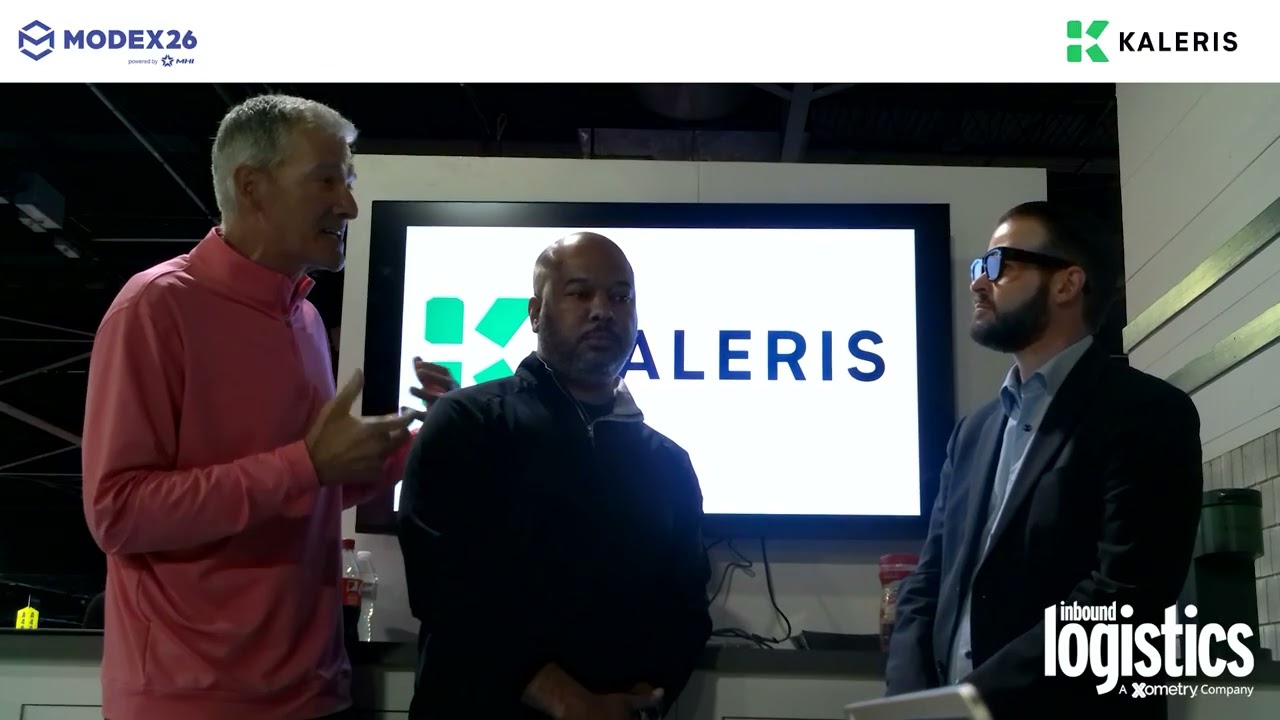
Inbound Logistics/MODEX 2026 Interview Series: Zebra - Andre Luecht, Director, Strategic...
11:51

Inbound Logistics/MODEX 2026 Interview Series: Zebra - Andre Luecht, Director, Strategic...

InboundLogistics 02.06.2026 2 просмотров

Machine-readable: Markdown · JSON API · Site index

Поделиться Telegram VK Бот
Транскрипт Скачать .md
Анализ с AI
Описание видео
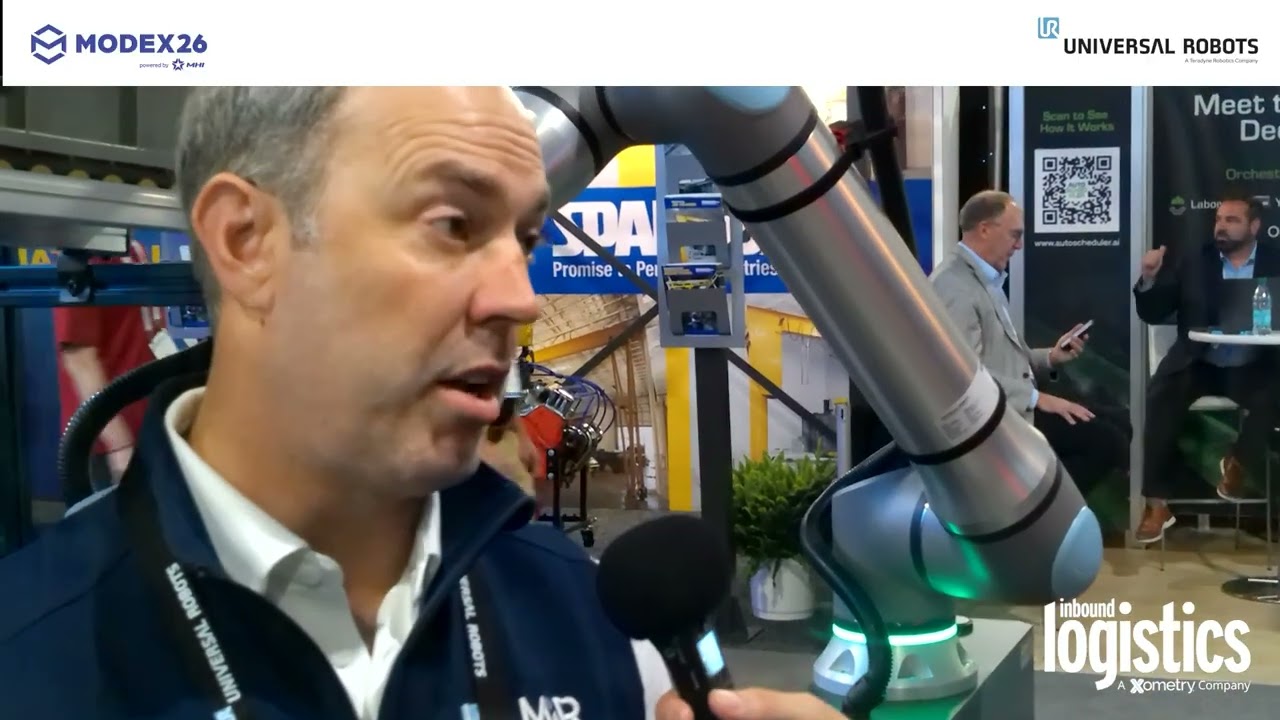
Inbound Logistics/MODEX 2026 Interview Series: Materials handling is evolving fast—where are the biggest changes happening? We spoke with leaders across the MODEX show floor to find out. In this interview, Andre Luecht, Director, Strategic Business Development Management for @ZebraTechnologiesGlobal gives his thoughts on the pain points customers are seeing this year, the advanced solutions and services at MODEX that would have seemed impossible just a few years ago, and the biggest mistakes companies make when they start their digital transformation journey. Luecht also reveals the biggest blind spot that warehouse managers still have today and shares a demo of Zebra's new Inventory Intelligence system. This conversation is part of our MODEX 2026 Interview Series, featuring insights from leading supply chain and logistics technology providers. #MODEX #materialhandling #supplychain #logistics #warehousing #distribution #tradeshow
Оглавление (3 сегментов)

Segment 1 (00:00 - 05:00)

Good afternoon. This is Joe Bondo with Inbound Logistics Magazine and we are live from Modeex 2026 day 2. I'm sitting here right now with Andre Luch, director strategic business development management at Zebra Technologies. Andre, how are you today? — Very good. Thanks for having me. — Yeah, I appreciate you coming on. So, we'll jump right into it. What would you say uh is the single biggest pain point your customers are bringing to you this year compared to maybe two years ago? — If I reflect, I've been uh the show for a number of years now, but if I reflect on this um in previous years, you'd have an outsized um focus on green field exercises, full automation. And this year I think there's a bit of a realization that brownfield individual workflow automation is worth pursuing. So that's something that a lot of our customers are looking at saying what can we do with our current footprint. Is there something that we can improve? What can we do to make our people more efficient and our processes? So a lot of the automation is what I would call um pocket automation or single workflow automation. So looking around the Modex floor today, uh I know it's very busy, but what would you say is one thing you're seeing that might have been unthinkable to leave it just 5 years ago? — Yeah, I I'm not sure how feasible, but we've seen some humanoids uh running around and uh the proliferation of that kind of technology would stipulate that this is the perfect form factor, right? So — absolutely without a doubt, Andre. And um I'm wondering if that is if that is true. Um I haven't seen many use case there are some I'm sure I haven't seen many use cases where that turns into a um valid ROI valid use case to deploy uh those type of uh this type of technology. So you you've talked about several different types of technology here in the past couple minutes. What would you say is the biggest mistake you see companies making uh as they're embarking on a digital transformation journey? — Um neglecting the basics. Um bad data will not give you good outcome. Um bad data or not enough data um late data. If you don't have real- time data, good quality data, the uh recommendations that your systems will spit out, um it's just not going to be as good as it could be if you were to invest in collecting and capturing the data if and when it happens. — So, Andre uh you guys are launching a new AIdriven solution for MTL. How is Zebra using AI to change the warehouse from a place that just tracks data to a place that actually thinks and optimizes itself? — Yeah, that's a good question. So, we have um a couple of new products that we're launching. So, on the um data capturing side, the WS uh 501 RFID uh enabled uh data capturing device that uh lets you um keep both hands free. That's a wearable. and then um our TC 501 and 701. And what that does it it allows because of the chip architecture and the investments in the um device we see frontline AI capabilities and frontline AI capabilities is something I call it useful AI physical AI um the kind of AI that isn't limited to uh people that sit in front of a desk but is available to people um on the shop floor helps them perform their task better helps them to or gets them real-time feedback. Those are the kind of um developments that will help you improve your warehouse performance. So, handheld in the moment, frontline AI to make decisions at the edge by the people that actually have to perform the task. — So, you talked a lot about digital trends and optimization, right? What would you say is the biggest blind spot warehouse managers still have today? And how does Zebra's new software suite help them see not only see uh but fix it in real time — on the blind spot? Um I mean I think we all as humans have the tendency to chase the shiny object. Y — um and I think to some extent the same is true here. uh we all look at green field lights off kind of total full automation environments whereas most of our customers most of the market is in brownfield is in existing warehouses and uh I think that leads itself to focusing on or passiveness where you say unless we build a brand new uh facility

Segment 2 (05:00 - 10:00)

there isn't very much we can do so um Focusing on the here and now is probably a lot more uh profitable than um the uh the fantastic uh full automation green field uh kind of applicable or uh applications that we see in the um — the uh number is it C is that pole C as a lot of the full automation. So that that's something um that is probably uh something to look out for. — Andre, so earlier today uh I had the opportunity to get a demo of your new inventory intelligence system and granted we're not at the booth looking at it now, — uh but could you talk a little bit about how that AI powered imaging doesn't just scan the box, uh but how it actually can alert a manager if a shelf is misaligned or a high priority shipment might be in the wrong place. — Yeah. So we um have invested over time um significant amount of um resources into improving our camera vision, machine vision capabilities. And in that particular uh portfolio, we have uh cameras and capabilities that range from basic barcode uh detection scanning to sub millimeter uh quality control uh applications and anything and everything in between. Um we have acquired some um software assets and hardware assets in that space that lets you do um dimensioning 3D uh applications that lets you count how many box how many items you put in a box. uh lets you do quality control um or determine um if you have the right number of uh items that you took into your warehouse through um uh multitude of cameras with uh different capabilities. So long story short, we mentioned earlier the uh RFID capabilities, any and all kind of form factors, uh read ranges, etc. But combine that with um camera vision uh capabilities. You're getting to an environment where it's really hard to miss an item that either comes out or goes uh goes in. Um so you you're getting to a full um inventory suite or inventory visibility suite to enable to uh fulfill everything that uh needs to be picked and needs to be put away. So Zebra has always really been that bridge between the worker and the system. With the rise of AMRs and cobots, how do your new AI tools help humans and robots work together without stepping on each other's toes? — Um that is something where we have shifted our focus to um to the workers themselves. So, how can we potentially turn the the workers into or augment the workers, turn them into a more professional um more proficient and more efficient uh kind of uh resource in the warehouse. Can we There's a very nice side effect. Um we do a warehouse vision study once a year and um we have um asked the warehouse workers on the floor what is it that you want to see in terms of technology and the initial hypothesis was um technology could be a threat and we were people were hesitant. That was our hypothesis. — Absolutely. — The outcome of the uh study was quite the opposite. the warehouse worker on the shop floor wants to see more technology than even their supervisors would be able to provide. Now, we looked at this and thought, well, this is odd, but someone explained it and said, look, if you start a new job and someone hands you a 10-year-old laptop, you don't feel quite as motivated — as if they have invested a lot into uh the latest technology. So, that was an interesting outcome of that particular study. And on top of that, the new um warehouse worker generation or associate generation uses all kinds of technologies at home. So uh the form factor, the uh user interface that you are experiencing at home, you want to find the exact same thing at the work uh place. So uh that is a focus on the um on the investment of uh into uh the workforce and the front line. — That that's an interesting point. I appreciate you sharing that, Andre. Uh last question here. So many people think that AI is really only for the mega warehouses. Uh are these new solutions scalable for the midsize company that maybe is just starting off on their digital transformation journey? — That that's a very good question. So we

Segment 3 (10:00 - 11:00)

looked into this long and hard because a lot of our customers didn't really know what to use AI for and it's not done with buying an enterprise license of Gemini, right? So um uh we have split our AI capabilities into three different branches. Some very uh software development kits that you can uh add to your existing software suite. Think about translation capabilities etc. The next level up is what we call blueprint where AI capabilities are built into the workflow. A valid simple validation of whether the what the process produced is exactly as it's supposed to look like. So if you put a parcel in front of a door, is that a good picture I'm taking? Because that is the proof of delivery. And the last one uh would be what we call agents where we uh where you could in essence you can interrogate standard operating procedures, right? So you can um ask an agent any question. There's an oil spill. What do I do next? — Yeah. — Right. So these kind of agents that can all live and that is something I mentioned earlier can all live on the device. There's no cloud connection required, no cloud cost. — Uh that can live on the device. You can interrogate your standard operating procedure. It comes back with the next best option or whatever the uh is compliant with your operating procedure and it does that in over 20 languages. — Wow. So yes, it's scalable because it the more you use that, the fewer time you need uh for rework or the fewer rework items or uh instances you have the um you don't need the supervisor every time you have a question. Uh you don't need a translator if this isn't done in English. So there's a lot of opportunity where AI can help even smaller and mediumsiz companies and it's definitely scalable.

Другие видео автора — InboundLogistics

Ctrl+V

Экстракт Знаний в Telegram

Экстракты и дистилляты из лучших YouTube-каналов — сразу после публикации.

Подписаться

Дайджест Экстрактов

Лучшие методички за неделю — каждый понедельник