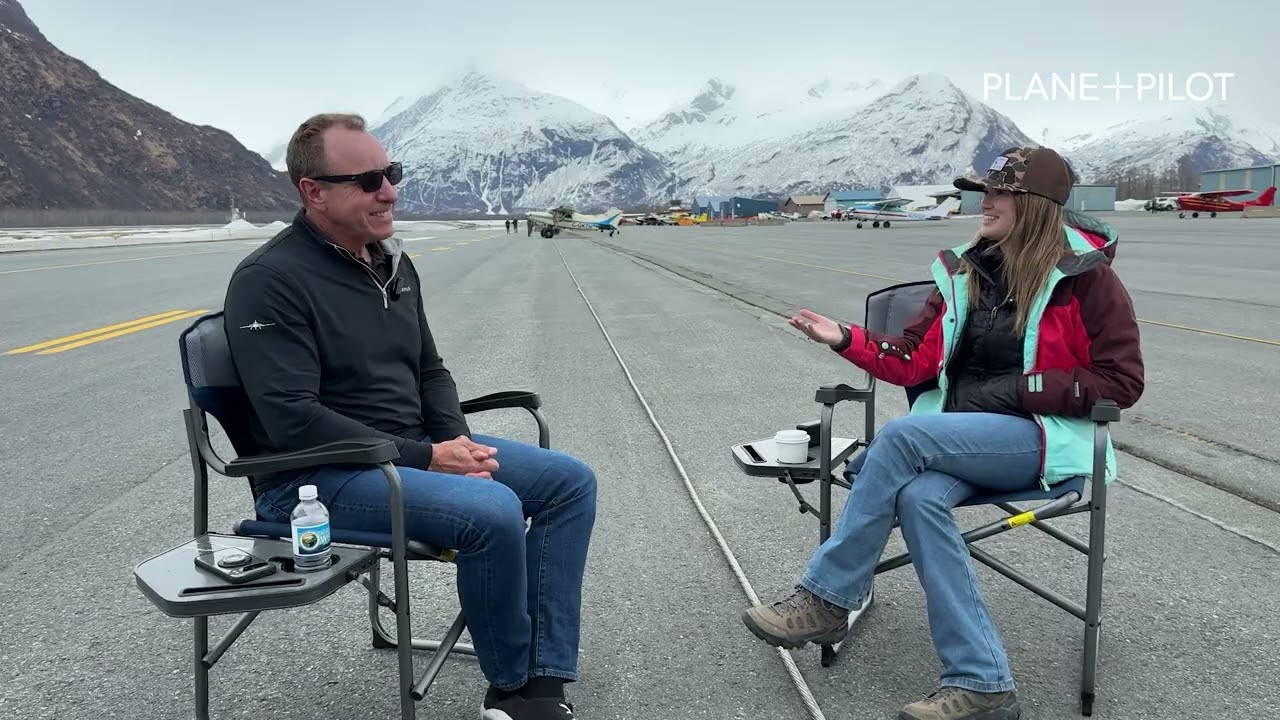
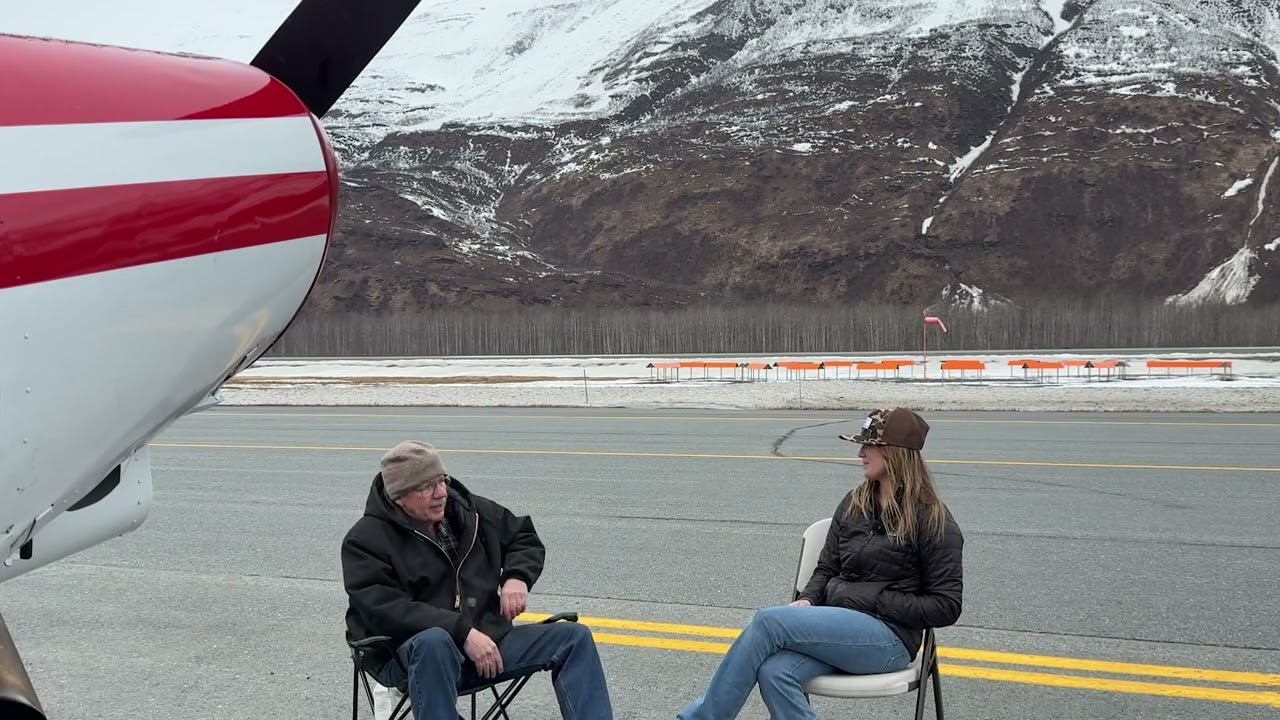
Join host Cayla McLeod for the latest episode of the Plane + Pilot podcast featuring longtime pilot, Master CFI, and FAAST Team representative Ken Wittekiend. From learning to fly in a 65-horsepower J-3 Cub to administering nearly 2,500 check rides across the country, Ken’s aviation journey is defined by humility and an enduring passion for flight.
To learn more about Ken please visit https://www.promarkaviation.net/bio.
Plane + Pilot is AVWeb’s sister brand.
Оглавление (9 сегментов)
Segment 1 (00:00 - 05:00)
Hey y'all, Kayla McLeod here with Plane and Pilot and today I am super excited to be joined by Mr. Ken Weedon. Ken, thank you so much for joining me today. — pleasure, Kayla. — Oh my goodness. Well, we are here at the Burnett Airport. Ken, this has been your stomping grounds for a very long period of time. So, let's just jump straight into it. Who are you and what's your role within general aviation? — Well, I am a long-time GA pilot. Almost all of my experiences in general aviation and primarily as flight instructor, ground instructor, aviation educator. That's really the bulk of my time. I did spend about 10 years as a pilot examiner. So, that was kind of a an additional way of working in the aviation space, but on the other side of it terms of, you know, working with the sort of the product of instructors as they prepare students for testing. — Well, Ken, you mentioned being an aviation educator and I have been so thrilled to have learned from you over the past several months as I went through my instrument training. What a process that was. So, thank you so much for being a part of my journey with that. But, you don't go from being a flight instructor or just even a normal pilot overnight. So, how did you originally get your start in aviation? — Well, I learned when I was in school at UT in Austin. Had no business learning to fly. I was struggling to make grades so I didn't end up getting drafted. I was married at the time and, you know, really it was a passion of mine that was sort of, I think, resident, but it really wasn't a high priority with all the other things going on. My dad was a P-51 pilot right at the end of World War II. Very young and right at the end of the war. So, I grew up hearing stories about that, although he had quit flying by the time I came along. But, I think that probably somehow laid a bit of a foundation for it. But, with other things going on, including college, I really didn't see an opportunity or a role to learn to fly. I was working at this little lumber yard part-time, make a little money while I was going to school, and the fellow that ran it was a pilot. And he had a customer that would come in there that owned a little grass airport out near Manor, Texas. And they got to talking, and I said something about, "Well, that That's interesting. " And I was invited to come out, take a what was basically a discovery flight in an old clapped-out J-3 65 horse Cub with no electrical system and no brakes. And I went out and thought, "I'll do that. Sounds like something fun to do on a Sunday. " And it was like somebody set the hook. And at that point, I just thought, "Oh, I don't know how, but I've got to find a way to do this. " So, I worked out there and struggled to gather enough money for lessons, and you know, over the course of about 6 months, finally got far enough along to take a private pilot check ride and got that done. And then later moved back out here, actually, and bought that airplane and then kept it here and or nearby and flew it around for a while and worked on getting some additional training, commercial certificate, instrument rating, and then CFI. So, all that was back in the mid-70s. And once I started working on the instructor rating and realized that really was my passion in it. I didn't never really had a whole lot of interest in being an airline pilot. I wanted to teach. And so, the flight instructor part of that fulfilled that uh need to teach. I have a uh degree in education, but I never taught in the school system. I always thought teaching in an airplane made a lot more sense and seemed a lot more fun. — Well, I think it's really unique to hear about a person that, you know, your goal is never to get to the airlines. Your goal is to never fly corporate. I learned the other day you don't even have a multi-engine rating, but you have built your life and your business around GA and flying. So, you know, with that being said, you've spent almost a lifetime, I would say, teaching. So, how have you perfected that art of flight instruction over the years? — It's a great question. I think like probably anybody in any discipline, we look to people who uh we interact with, who end up being mentors for us, and I certainly had plenty along the way, some of whom I still work with today. Uh I have been very blessed to have been able to come to know and to work with some of the finest aviation educators in the country. And so, that has been hugely helpful with me. And I
Segment 2 (05:00 - 10:00)
think probably it also uh comes from a curiosity about how to be better at the craft, not so much at the flying portion of that, although that's critical, but teaching people to fly airplanes is a different skill set than flying the airplane. A lot of people who are wonderful pilots aren't necessarily the best educators because it's difficult for them to identify with people who are struggling and for whom it doesn't come easily. So, I always felt like that was something that was interest to me was to figure out how to communicate with people who were uncertain or struggling, and the joy for me was always figuring out a way to explain something or demonstrate something or teach something and watch the light bulb go off when it finally connected with them. And so I've always been driven to try to figure out better ways to simplify explanations and to understand more deeply how things work. One of the real I think assets that a pilot can have is a curiosity about understanding in depth about the why aspect of things, not just how something is or what we do, but why do we do it that way and why does that matter? — How do you go about teaching a let's say new flight instructor for instance that skill set? You know, I don't feel like that's taught in some of these larger flight schools or accelerated programs. So if a new CFI is out there and listening, what would be your message to them about truly curating this art and mastering this art of instruction? — Well, it's a bunch of things. One of them is I think you need to bring a sense of humility first of all that you don't understand all of this. I think sometimes young flight instructors particularly think they've got it figured out when they get out and start teaching for real, it maybe becomes pretty apparent that there's a lot they haven't figured out yet. So I think that is part of it. Curiosity as I said is part of it to want to understand more deeply how things work both from the airplane, the aerodynamics, the rules and systems that we operate in. All of those things I think anybody when they start teaching it becomes aware of how little they truly understand it in depth. And so I think that hunger for knowledge, that sense of humility, the other parts that are kind of connected to that from a if you think about attributes for flight instructors is that I would tell young flight instructors most of the time we, cuz I was guilty of this as well, we talk too much, we don't listen enough and we fly too much. The sort of dirty secret is many people will teach themselves if you set the environment for them and structure it in a way that they can experiment and guide that effort, they will figure things out. Sometimes talking too much or flying too much gets in the way of that process. — I think another key aspect of this is the student on the other end of this whole big picture and I've been the student, uh, you know, recently going through my instrument, uh, rating. But if someone is out there looking to connect with a flight instructor that has a similar mantra, mindset, and goal with teaching their student the why, not just the eight-tomato flames, for example. What would be your words of wisdom to the student out there that might be looking to connect with that flight instructor? — Another great question and I think a lot of people struggle with that. And it's so common for a potential student to show up at a flight school and they are quickly assigned to an instructor. They assume that must be the way it is and they for better or worse sometimes can do well or struggle a bit. Um, so from the aspect of how do you go about finding that proper match? I think it's the same way you would approach a lawyer or a doctor and that is is there a rapport? Do you feel like they can communicate? Do they listen and can they answer the questions you have in a way that makes sense so at a level you're ready to learn? Um that's real important. I think it's becomes pretty obvious pretty quickly whether that instructor knows what they're talking about or not. So I think you approach it from that standpoint and you just interview them just like you would any other professional and don't be shy if it's
Segment 3 (10:00 - 15:00)
not a good fit. Sometimes it's just not. And I think sometimes students are real reluctant to either speak up and advocate on their own behalf or to go to the chief instructor and say for whatever reason this isn't a good fit. I'd like to try somebody different. But that's part of the process as well. — Is there a process as well for looking for a certain flight school? You know, there's a lot of big schools out there, accelerated courses, ATP, airline programs out there. What do you recommend people look for as far as the school itself is concerned? — Yeah, you know, it's a um it's a dilemma, Kaylee, in a lot of ways because these large schools in most cases are oriented to people that are on a professional track that have an objective of going to the airlines and they often are employing their own former students as their instructors. That's Everybody wants to build hours and the path to that has always been primarily through instructing. So they tend to plow back their graduates as instructors. And I think there sometimes is a bit of jaundice and people are expressing some angst about that and saying, "Oh, these young instructors really aren't very competent. " I don't find that to be true. I find often times instructors are motivated and um they are very knowledgeable. They are knowledgeable within the framework that they were taught within. And they tend to teach what they were taught like all new instructors do. But, I think it is unfair to say that as a group they're not very interested or only there to build time and move along. There are certainly some of that there. But, again, if a student detects that that's what's going on, a lack of interest, a lack of preparation before the lesson, a lack of time available to have conversations about uh and feedback about how they're doing, then it is time to think about finding a different instructor. But, the overall structure of, say, a 141 school has some benefits if somebody if that's what their goal is. It is um demanding of time and effort. The student really has to be committed to the process. So, for people who maybe are um not in that mode where they just would like to be a GA pilot and maybe would like to eventually own an airplane, that may not always be a good fit. So, they may be more comfortable at a smaller school or school that's not catering to the airline wannabes. — Well, earlier, Ken, you mentioned that you were also a designated pilot examiner, a DPE, for quite some time here in Central Texas. So, I'm curious. I want to learn more about your time as a DPE, how you became a DPE, and then, of course, um you know, unfortunately, your termination, if you're comfortable chatting about that chapter of your life. — Yeah, the way it happens is still pretty much today if you have a working relationship with your local FSDO, they are looking around the district and looking for people who are uh teaching, almost always it's going to be flight instructors, or they could be corporate pilots who are also teachers. And they're looking for people who they feel like will present the FAA in a professional way uh that will be interested in doing a fair and impartial test. Um, and if once they identify somebody that might be a potential DPE, they will have a conversation with them. If that goes well, then they will send them off to school for a week usually in Oklahoma City, come back and then you go through a basically a mentoring process there where they are going to observe as you begin to do testing and give you feedback and you build out plans of action and if all that is going well, then you'll eventually be given permission to start doing tests and as you go and get experience in that uh, list of things that you can do will broaden out. So, I started in 2010. I was familiar with FSDO, they were familiar with some of the teaching and seminars and training stuff that I had been doing around the district. Um, so they reached out to me and I was doing some tailwheel instruction with the people in the FSDO. So, we had a working relationship. So, when the need arose for some DPEs in the district, they asked if I would be interested and at first I had sort of reservations about it because again, my passion is instructing and testing is completely different than that with kind of one exception. And that is the thing that happens with DPEs working with the instructors that are sending students. You end up pretty much becoming a mentor for those
Segment 4 (15:00 - 20:00)
instructors. The good instructors are soliciting feedback after the test has occurred. They're trying to be better at the craft of teaching and so that DPE instructor relationship is real important. And I always thought that was one of the real benefits of doing that was that it was helping to sort of uh, help the next generation of flight instructors be better at teaching. — So, over the course of 10 years, so 2010 to 2020, — 2020. — how many check rides did you give as a DPE? — I was pretty busy. I did 2,500 somewhere around 2,500 tests in that time period. — 2,500 check rides. Did you have a favorite check ride to give? — Probably CFI. Uh because again, the force multiplier of a good instructor and it's and their impact on the industry and on their students that they will touch is for either good or bad is significant. And so, I always felt like that making sure that when they came out of the blocks, they understood as much as possible about what that was going to look like and what it took to be effective at teaching. I always thought that was the most interesting and in some ways the most difficult test for pilots to go through that transition from being a pilot to being an effective educator. — Well, as I've been told, October of 2020, is that correct? Okay. So, October of 2020, you got a phone call. — I did. I was actually uh this started actually earlier than that. It started in September. I had been in Alaska that summer and I was on my way back and I was doing testing at uh CAU, which is California Aeronautical University in Bakersfield. And I was in the middle of a test and I get a call from my managing specialist who said, "Hey, there's an investigation going on. " Said, "You're not the target, but you're involved, and so we'd like you to pause what you're doing and let the investigation play out. " And I said, "Well, can you tell me any more about what's going on? " They said, "No, we really can't. " Said, "Okay. " So, I terminated that test, flew back to here and uh then over the course of the next several months it became difficult. They still wouldn't share with me what their concerns were, but it was through a bunch of discussion it sort of became known what it is that they were worried about. And so I finally in I think it was October, finally they made decision the decision that they were going to terminate my designation and they did. So there was a human cry among the GA community that was very moving to me. I was shocked and amazed at the level of support that came from that. People were quite upset with the local FSDO. Um but nevertheless because of the way that whole process works, there really wasn't anything to be done. So there was no there's no true appeal to that. Once the local FSDO makes that decision then it's pretty much a done deal. — I want to take a quick step back because I think there's a lot of Central Texans that might be listening to this podcast that have heard the story several times, but we have a pretty broad reach here. So I'm curious if you could explain to the folks that are listening why they went about terminating your DPE status in the first place. — Yeah, it was it resulted and again they did not share this. It just became somewhat evident through some investigation that I was able to do and it resulted from a webcast or a Zoom meeting that I was attending. It was being done by Trace Clinton and Jeremy Walters and it had to do with back country flying and tailwheel airplanes. And they were presenting and their premise was if people are going to do that kind of activity which they certainly were and are, then there are things they needed to know to make that safer. And so I was just one of a group that was attending the presentation. I had no role in it. I wasn't presenting. Um and it was the typical Zoom meeting where you can see all the participants in the little windows. And one of the FAA uh safety program managers was there. Another DPE was there. So, we were just watching this unfold and Trey told a story about when he was teaching for me in my airplane and how they had gone down and engaged in water skiing in the airplane with the big tires. And uh they were Jeremy asked Trey said, "Well, what did Ken say about that when you told him? " And Trey said, "Well, he just looked at me. " And Ken told me, "Says, you know how you learn to do that? " And Trey said, "No, I don't know. " I told
Segment 5 (20:00 - 25:00)
him, "In somebody else's airplane. " And everybody chuckled at that and we went on. Um so, that was kind of the end of that involvement. Well, then later it turned out that one of the FAA inspectors who I had a working relationship with took great umbrage at that. He just thought that was being uh flippant and frivolous and that I should have spoken up in the meeting and condemned that activity even though I wasn't involved in that meeting. And uh so, that was what really kind of got him upset and then he carried that concern back to the FSDO manager. Additionally, now all this was during COVID. So, nobody was together. We were all doing this by Zoom. I was at home at my desk and I had a little cup of uh what appeared to be and was red wine. And so, they used the fact that they could see that as an indictment that I was somehow promoting the fact that drinking alcohol was I guess something that was condoned in that. So, that was their premise for the termination. You know, lack of professionalism was the way they structured it and of course I took great umbrage at that and so from there it it just evolved that we had, you know, a big human cry and people wrote letters and called the FSDO and I had a fair amount of uh involvement in aviation education nationally. So, there were people with the Society of Aviation and Flight Educators and some of the larger AOPA folks and so forth that also tried to intervene all to no avail. So, that was kind of the end of the story. — Well, it is an absolute disappointment in my opinion because you are nothing but a fantastic educator and absolute aviation professional and a true gift to this industry and in a way I'm kind of thankful for it because if you were a DPE I'd probably be taking my check ride with you as opposed to getting really amazing ground instruction for you. So, I think I benefited but I think, you know, the FAA as a whole, I mean, truly what a disservice to no longer have you in an examining authority and role. — Well, I appreciate that very much. Um I listened to your podcast with Darren. And you know, Darren had a little bit of a upset in his career recently, right? With AOPA? And his take on it was the same as mine. And that things like this happen to any of us. There are always going to be unanticipated disasters that happen from time to time. And it's how you deal with that matters. And he said it well that it also often times opens up opportunities to do other things. And I thought after I kind of got over the shock of it um that was probably my take on it that there would be other things. It would allow me to go back to teaching which was always my first love. And uh that I would do I could to continue to promote aviation safety and aviation education, but just do it in a different role. So, that's what's happened from then and now what is 6 years. — Well, you've had such a positive take on it. Like you just said, I mean, you can't get any more positive about such a negative situation. But, what are you hoping is the major takeaway from this entire debacle? Um there's some big things going on behind the scenes. Would you mind elaborating on that a little bit? — Yeah, there are and some of those are um broader even than the narrow DPE situation. A lot of the flight schools with their uh professional programs and their students are very concerned about not going to an airline interview with a failure of a check ride on their record. So, one of the ways that you can maybe stack the deck is a little maybe a little harsh, but maybe not, is to have the big flight schools have their own examining authority where they don't have an independent overview from an outside DPE. So, there's a lot of move toward that. Part of that is because there has truly been a shortage of DPEs and I get that. Uh there is concern within the aviation community at large that DPEs are making an awful lot of money and that perhaps that is a bit of price gouging going on. I don't think that's entirely fair. I don't think people understand the challenges and what all goes into that. So, I'm not going to comment on my opinion about the fees, but I do think that there is truly a shortage of DPEs. So, that is another driver for this move for these flight schools to try to have control of their destiny to where when their students are ready, they get them tested and get them done. So, the concern I have with that, of course, is that lack of
Segment 6 (25:00 - 30:00)
independent oversight. So, we'll see where that goes. In terms of the DPE uh treatment, I am convinced, as many of us are, that the FA is not terribly interested in changing the appeal process or what is really a lack of an appeal process. You kind of have to remember that the same condition or situation existed for pilots back for many years, where the FA could uh sanction a pilot for something they perceived to have been uh done by that pilot that was incorrect, and the pilot really didn't have a lot of uh ability to influence that. They were at the mercy of the FA. They didn't have to share what they were concerned about. They um they would quickly jump to some sort of a sanction, like a suspension. Um that changed only from a congressional effort led by the senator from Oklahoma, James Inhofe, who ran afoul of that system. And through his lobbying of other interested uh people in the Senate and in the House, they passed the uh Pilot's Bill of Rights, and then later a second version of that, which forced the FA to change their ways of treating pilots that came afoul of the regulations, where there was no uh there was no legal problem, and there was no intent, where it was just a an inadvertent encounter with airspace or something like that. So, the FA begrudgingly then began to change what they the way they treated pilots. That never happened in the DPE community. Again, because people see it as a privilege, and the FAA makes the DPEs acknowledge that they can be terminated for any reason or no reason at all. And once a termination occurs, there is no appeal of the facts of the termination. You can appeal only to the degree that the FA followed their process that they have written out and as long as they didn't miss checking a block, then there was no appeal on the basis whether it was justified or not. So, that's the way it is today and that in my opinion and opinion of many others is something that we need to deal with. And again, I'm not comfortable that the FA will do that on their own. I think the only way that'll happen will be either through congressional action or some kind of legal action. — So, there is a movement currently taking place. — I've heard that. — Do you care to elaborate on this movement, sir? — I can't say too much about it, but um there are now some 35 or 40 DPEs who have been terminated for what they believe is unjust cause and that number has accelerated in the last few years. The number of terminations has risen. Uh those people have come together in a class action lawsuit which has been filed with the FA and is in the early stages, but that is an attempt again to try to force the FA to acknowledge that it is not due process and that it's wrong and it needs to be addressed. So, we'll see. It's going to be a long drawn out process, I suspect and it may not ultimately be successful, but there is a fair amount of um interest in it around in the GA community. — Well, I'm very eager to see how this all works out. Like you said, it's going to be a very long and lengthy process, but I want to also chat a little bit about, you know, we've talked a lot about the FA. I want to get back to you as a person, pilot, and aviator, and an educator. Not only are you all of these things, but you're also a writer. You've written for Plane and Pilot. You have numerous articles published on our website, which I had the pleasure of looking back in the archives this morning, and it's so nice to read your articles. So, if you haven't read what Ken has written, definitely check him out. But, you've also played a role as a disaster relief pilot. What initially led you to wanting to take part and to volunteer in that capacity? — Sure, I'll be glad to. Let me come back to one other thing about the FAA while we're here so I don't miss saying this. My experience within the FAA has been, for the most part, very positive. The FAA is a big bureaucracy. It has a lot of people, many of whom are very dedicated to aviation safety and to doing the right thing. It, um, it is unfortunate that there is great variability from FSDO to FSDO. So, often the culture is set by the manager of the FSDO. And even within the FAA at large, many of those people are very well-intentioned and do really good
Segment 7 (30:00 - 35:00)
work. But, again, from a cultural standpoint, there are some problems. And that's what, hopefully, will be addressed. But, but again, for all those hard-working FAA inspectors and other people within the agency, you know, I'm very pleased at the work that they do, but there are things that we need to fix. So, having said that, um, in terms of the disaster relief effort, that really came about sort of serendipitously, I guess. This started back in 2005 with Katrina, the hurricane that tore through Louisiana. And I was here teaching, and I had a Bonanza, and I began to pick up that there was a need for some GA support. So, I tried I reached out tried to figure out where I might be able to help. Never could get any real clear direction because things were so chaotic. So, I just thought, well, the only way to do that is to go there and try to figure out how we could be of some assistance. So, a friend of mine, Pat Shaub, and I loaded up in the Bonanza and we just flew over there and we said, "We're here. What can we do to help? " And there was a there were a couple of groups that were actively moving supplies from Central Texas gathered up by a lot of times by the churches and trying to get that material delivered over into the disaster area. And GA could do that. The roads were impassable. Uh things were just an absolute uh disaster in the true sense of the word. And the other thing that people didn't realize at the time was a lot of that effort when it was being mounted by FEMA and the military and so forth doing search and rescue, a lot of that was focused on the New Orleans area. But the satellite communities like Gulfport and Bogalusa and Baton Rouge, places like that were not getting much help. So, GA was able through these efforts to get critically needed supplies into the secondary markets, if you want to think about it, and to move people around where they were needed. So, very quickly we just start "Hey, we're here. " And people began to give us tasking to say, "Can you take this over there? Can you pick up this person? Take them there. " So, we did that for about maybe 7 or 8 days, I guess. And then at the end of that period, the roads had gotten opened and people were able to move stuff by truck. And so, the need for GA began to slow down. So, that was kind of the end of that, but I came back from that thinking, "Wow, what a great use of time and effort and expertise, and I would like to do more of that. " So, the next opportunity was in 2010. And that was when the Haiti earthquake occurred. And it didn't get as much publicity in the US, but when I got to I was curious about it because again, I wondered what role general aviation might could play in that. Haiti was a mess before the earthquake, and then the earthquake was absolutely devastating. People, I think maybe still don't know, but over 300,000 people died in the earthquake, and there were over a million injured. So, what happened was the epicenter was in Port-au-Prince. Well, immediately, anybody that could leave the city did. They dispersed out into the smaller communities, which like in Katrina, were being woefully underserved. I mean, the military and relief agencies were all focused on getting into the capital, but nothing was available or being done into these secondary markets. So, I connected with a group called Bahamas Habitat, which had been doing hurricane relief in the Bahamas, and I called the guy on the phone. I was here in home, and I said, "I've got an airplane. Um, is there any use that you could make of that if I could come? " And he said, "When can you be here? " And I said, "Well, I don't know, maybe 3 days. " So, I left the next day and flew into Florida, and we started moving stuff from Florida over to the Bahamas, and then we staged out of the Bahamas FBO and flew all each day we would fly down to Haiti, drop a load of supplies, and then fly back, spend the night in the FBO, and do that again. I did that for about I think we were 9 or 10 days of doing that. — That had to be a pretty hectic environment flying in and out of. So, how did you manage the level of stress when it comes to dealing with these people that are hurting and they need help, and also managing the aviation, the flying element of this big puzzle piece as well. — Well, it's an interesting education for somebody in my position that had never done that kind of flying. I had been to the Bahamas in the airplane. So, I had a little bit of experience in flying into that part of the world, but of course nothing like with this level of disaster and chaos and dealing with no weather reporting because all of that was not available
Segment 8 (35:00 - 40:00)
and dealing with the uncertainty of what was going to happen when you got there. You know, you would they did a really good job of staging the materials based on what they were hearing that was needed. So, primarily it was medical supplies and I remember one time we took a whole load of x-ray developing fluid. This was when they were still using that instead of digital and they needed these this material delivered and so they loaded it up and you know, basically three or four five hours later it arrived where it was needed. So, you would fly in, stop in Turks and Caicos for fuel and then all the way down to Haiti, land at one of the secondary airports there and there would be a crush of people. Somebody would come out of the crowd and say, "I'm here from such and such a medical clinic or such and such an orphanage and I'm supposed to take your supplies. " You didn't know if that was right or not. All you did was trust that hopefully this was going where it was intended. They would quickly unload everything and we would load back up and start the journey back. So, back to Turks for fuel and then back to Nassau and you're clearing customs at each of those steps. So, there's a lot of paperwork and a lot of bureaucracy to deal with as you're making that journey each day. But the secret to that really was first apparent with the effort at Katrina, but more so with Haiti. Was people would come back say, "Well, thank you for doing that. It was wonderful. I really appreciate it. And it was expensive, and it was sometimes not so safe. And you know, there were a lot of challenges. " And I would say, "Look, you don't understand. As a pilot, two things happen. One, there's a whole bunch of people that you need to be recognizing or doing the really tough jobs behind the scenes. The pilot sort of got all the exposure with the media and so forth. But, for every pilot there, there were lots of other people doing tremendous work and making that happen. So, there's that. The other part is you come back from that and you think, "Gosh, that was really expensive and challenging and all that. When can I go do it again? " Because the reward that you get from that is so beyond what little bit you give in it, that that's the message is you come back changed from doing that. And you think, "Gosh, I want to do that again. " — Well, you kind of recently had the opportunity to help close to home here less than a year ago when the floods struck uh Central Texas, Kerrville, uh Hunt, Texas. Do you think that your disaster relief effort um your experience that you had helping in Louisiana and in Haiti played a part here with managing the logistics and helping out here in Texas? — It did. One of the things that I think sometimes people don't understand at first when they get involved in something like that is how chaotic it is. You have to be prepared for the fact things are not going to go the way you think. It's going to be inefficient at times. um things won't get done the way as fast as you would like. Sometimes you sit around not doing as much as you wish you could. That's just part of it. So, having known and seen that in prior experiences, I think prepares you better to accept that that's just the way it is. The And of course, the Kerrville and Central Texas experience was different because there was no aviation involvement in that. But other than that aspect, very much the same sort of thing. People coming out of the woodwork to help with anything and everything. Equipment, um my oldest son is a rancher and he had been involved in the North Carolina experience after Helene with mule teams going up in the mountains to help with that. So, they brought the mules down to look for people. Um it was just an amazing effort and people just pulled the stops. They show up and they just say, "Tell me what to do. Run a chainsaw, cook grocery, you know, go get groceries, uh whatever you need, we're here to do it. " And I think that is the measure. That is the joy of participating in that is you see such goodness in people. — Well, for people out there that might be interested in, you know, gathering their own airplanes, their own fleet, their own people to go out when disaster strikes, what are these organizations looking for? Is it a specific aircraft? Do you need to meet certain pilot uh minimum requirements? What is that process like? — Well, the first thing I would say is people are really motivated to want to help and it's tempting to just go and do. It is really much better if you find one of these groups. Uh AirDrop is one. Um the Bahamas Habitat that I worked with, there are a number of them that
Segment 9 (40:00 - 44:00)
are out there. Samaritan's Purse, a bunch of them that are organized. The group that I'm working with that I worked with in Kerrville is called Heal Corps and they do a variety of search and rescue. Um they have dog teams, they have dive teams. They are just an amazing group and it's all non-profit. So, these are people donating their own time and effort. You need to find a group like that to be associated with because they have the infrastructure and the skill set and the management ability to direct those efforts effectively. Uh, it really can create problems if people just show up. — Well, Ken, I think people are starting to understand truly the jack-of-all-trades that you are in this business and in this industry and as the wealth of knowledge that you are, I think there's a lot of people that are listening to this podcast and taking in every word that you have to say. So, if there's someone out there listening that is going through the nitty-gritty of their pilot training, maybe the middle of their instrument rating like I luckily am done with that, check that box, lots of learning ahead like we've talked about. Uh, license to learn. Um, but if someone is out there and they're currently struggling, um, what is your biggest takeaway for them? Maybe a piece, um, of motivation to stick with it and to see it through. — Okay, so just like we were talking about with disaster relief where it's always not going to go smoothly, there's going to be some chaos along the way. That's just baked into the process and I think you have to be prepared for that. Now, there's a balance. If it is such that you feel like you're really not learning and the problem is you're not communicating well with whoever's providing the training, you need to address that. But, other than that, just be prepared for it being more difficult than maybe you thought at first. It seems great fun at the beginning and then all of a sudden the work begins and it becomes frustrating and difficult at times. So, part of it is perseverance. you just have to have faith that you're going to get it done and hold yourself to high standards. Try to say, "I want to understand the why behind this. I don't want to just know the tomato flames part, but I want to truly understand what's going on with that. Because it matters. You know, the objective we all have, whether it's the instructor, the certainly the student, the FAA, the DPE, all want one thing and that is at the end of the process, that person has the competence and the confidence to go into the national airspace system and do it safely and be able to load their family and friends up and go places and do things. So, that's where we're trying to get to, but the process can be messy and you just have to have uh a certain work ethic toward it just to keep, you know, plugging away and to understand it won't always go smoothly or be easy, but it's worth it in the end. Just like you found out. — Oh, I got to find it out, that's for sure. Thank you for hanging in there with me. — Absolutely, it's my pleasure. The joy for instructors is seeing their students succeed and seeing them go through that struggle and come out of it with truly an understanding and an accomplishment that is so rare. You know, it's not we don't have a lot of people in the whole population that are pilots. It is fairly rare still and it's not easy. So, I think it's an amazing accomplishment for people like you that have been able to take on that challenge and not only embrace the challenge, but want to be really good at the craft. I think that's the difference. — I couldn't agree more and you know, Ken, you're out there still teaching. You're no longer a DPE, but you are out in this business. You are out at Oshkosh in the Pilot Proficiency Center. If someone is looking to reach out to you, maybe for some life advice, some training advice, who knows, where can they find you? — Yeah, the probably the best way is to through my email or website promarkaviation. net. But I am always happy to speak with people, to offer insight and advice wherever they might need it. The pilot proficiency program is a true love of mine up at Oshkosh. I'm doing that program for about the fourth year now with Redbird Flight Simulation. So, we'll be up there again this year doing that. And I teach for the one of the Bonanza groups around the country and still do a lot of seminars and so forth. So, yeah, I'm still deep off into it. I can't get away from it. I love it. — You can't and I can't get rid of you. You know, you're stuck with me now through the rest of this training journey of mine. I can't thank you enough, Ken, for, you know, not only being here and taking the time with me today, but just hanging out with me in general and being a supporter and a true mentor. So, it's been a privilege and can't thank you enough. — Well, it's my pleasure. I look forward to the journey.