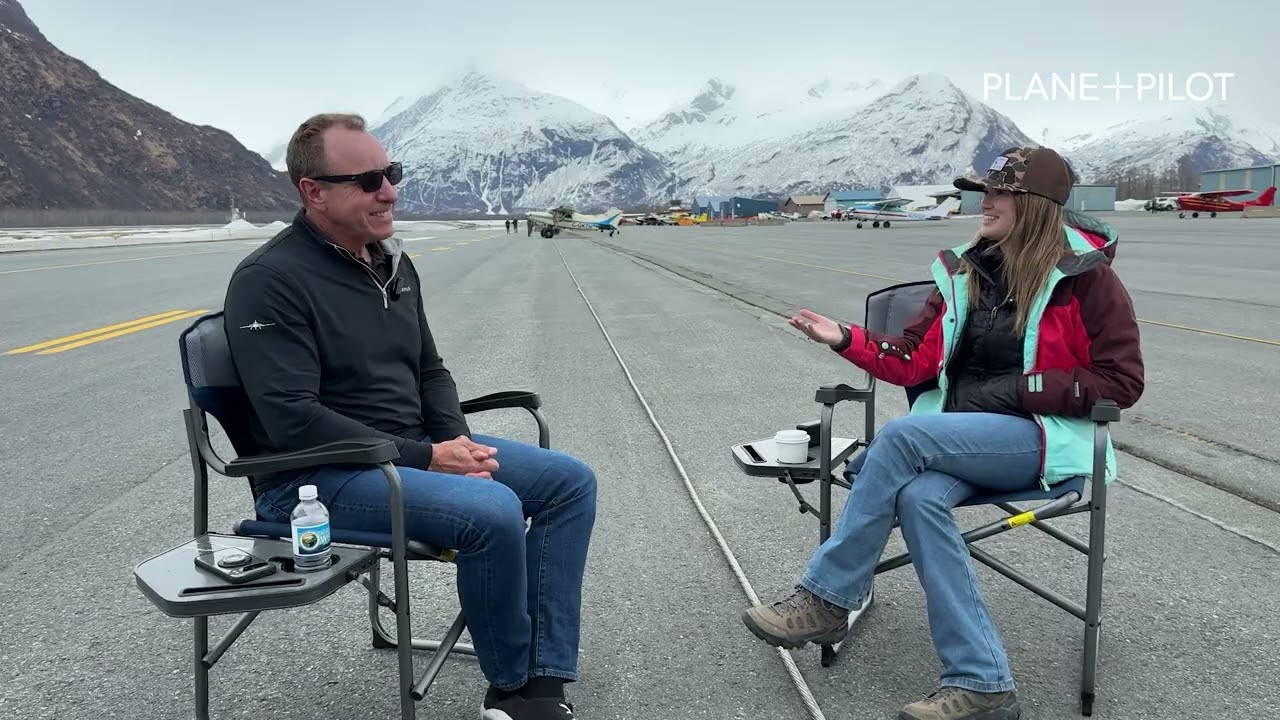
Cayla McLeod comes to you straight from the ramp at the Valdez Pioneer Field (KVDZ) in Valdez, Alaska. McLeod sits down with veteran Alaskan bush pilot Denny Serie to discuss the realities, challenges, and thrills of flying in the Last Frontier. Whether you're a seasoned aviator or an enthusiast dreaming of the escaping to the Alaskan backcountry, this episode offers a practical, inside look at what it actually takes to survive and thrive as a pilot in Alaska.
Оглавление (7 сегментов)
Segment 1 (00:00 - 05:00)
Hey y'all. Kayla Mloud here with Plane and Pilot magazine. Today I am with Denny Siri. Denny, thanks so much for joining me today. — My pleasure. — Well, we are in a beautiful place here, Valdis, Alaska. Denny, you are a true bush pilot, a true Alaskan. You've been coming here for a long time. Uh so tell me all about yourself. Who you who are you and what's your role within general aviation? Well, basically, uh, I like to say my role is to fly my wife wherever she wants to go because I buy her airplanes and so I'm just a private pilot just having a good time up here. Uh, get to fly a lot of different places. It's a lot of fun in Alaska. Always go out to the Brooks Range and go hunting or go somewhere and go fishing or just go on a fly around with some friends. get some friends together and go to Gnome or go over to McCarthy and just fly around and stay at all the cabins or just camp on a sandbar. And uh Jane loves to go and camp. And the stole competitions are a lot of fun. We have a lot of people here that uh we enjoy doing this. We're all friends and a lot of good camaraderie uh just fun in general. Well, it's a beautiful place and I have thoroughly enjoyed getting to see this place for the first time. This is my first time in Alaska and you know, I've just been blown away. Every airplane up here is essentially someone's Ford F-150. — It is uh up here or a lot of us use our planes for several things. You know, I I do it for hunting or just camping. We do that and so and it we don't go to airports. You're landing on river uh sand bars, mountain sides, mountain tops. Uh I put skis on in the winter. About a third of my flying is on skis and ski flying is fabulous. I've flown uh dogs for the sled races and you know vets and you support those or you have somebody out in a cabin that for the winter you can go out and bring them supplies or just go hang out for the weekend with them. So we you we are planes are very utilitarian and uh not always the prettiest. It's not a pretty plain yepy crowd. I would say there are some pretty ones, but uh when you start landing in the brush and stuff, you're going to have some scratch scratches and dings and uh so you don't worry about those little things. You just want a good flying plane. Well, I love the utilitarian aspect of life up here, but you don't go from being a student pilot or a private pilot to going out and being able to land on these riverbeds or off airport anywhere up here. So, tell me about your journey learning to fly up here in Alaska. — Well, first I uh a good friend of mine uh I worked with his wife and uh I was down at the airport looking around at planes and he said, "Are you gonna are you serious about this? " And I said, "Yeah. " And he said, "Well, you you know, you should just buy a plane. " And I said, "Are you sure? " And he said, "Well, if you get a driver's license, you're going to want a car. " And he said, "It costs a lot to rent a plane. " And he said, "Just buy one. You'll be money ahead. " And then he introduced me to my mechanic, Mitch. And uh Mitch talks more than me, which is hard to believe, but he does. And he sat me down and we just talked and about what I wanted. And then it took six months to find our first plane. It was a pacer and a great plane. As a trainer, it scares you to death, but it is a very capable plane. I flew that all over Alaska. And uh my first instructor was an old crop duster, Herb Hubard. Um he was in his 70s and just fearless, never got excited, just fabulous. Um and then Mitch, after I got my license, Mitch took all people from the hanger, all the clients or guys that just hung out and he would take us out flying around Alaska for about four or five days every once a year and we flew to every corner you can think of and so we' take the wives and girlfriends and uh he had always chased good weather and sometimes we got in some bad weather but he took us out and I would say I learned that's where I learned how to fly in Alaska because he was a very experienced pilot. Uh, I'm not really a bush pilot. I just happen to fly out there. But he was a bush pilot and flew for a lodge and he could tell you before you landed every mistake you were going to make. And even after he told you, you still made them. And uh, but that's where I think that's where I cultivated a lot of my skills and uh, the ability to be able to fly where I fly and how I fly was actually from
Segment 2 (05:00 - 10:00)
my IIA. And I've had other great instructors, but I'd say Mitch was the guy that taught me the most. — What does it take to be able to be successful up here in Alaska as a pilot, as a CFI? You know, I think there's a lot of people down in the lower 48 that want to come up here and feel that Alaskan adventure. You know, there's lots of pictures on Facebook and social media, lots of YouTube videos out there about it. But what does it actually take to become a pilot up here in Alaska and to be safe while doing it? I — I think the big thing and is the things you learn to get your pilot's license. They're all great. And a lot of those things they do are because you have to pass a test. — So they can't be real vague about stuff because when they ask you a question, if you're vague, well, did you pass it or not? You know, so they say things that, you know, you should never do this, you can't do that. That's nice for a test, but in reality, everything is open. When you talk to a CFI, when you're learning, they're going to say altitude is your friend, as speed is your friend. Well, in Alaska, if you're flying in a mountain range, altitude may not be your friend. You don't want to be at 1,500 ft between a, you know, in a 3,000 ft valley cuz that's where the wind can really be quick kicking. You may want to be at 5T, you know. So, you have to be comfortable flying at 5 10 ft off the ground. You have to be comfortable, very comfortable in bad weather. If you want to fly to the Brooks Range, it's at least three mountain ranges and probably six weather s systems. You're going to be flying in scutty weather. the rain. You're going to be flying in wind. And you have to go out and train in all of that and be comfortable in that. And then when you land, you can't do like they train. You can't burn up 500 feet of runway just trying to burn off energy. you have to have your energy gone and be ready to touch down at the threshold. And those things uh that just takes training and time and you need mentors to help you through that. And one thing I'd like to point out and I always do this is don't look at any of the stole competitions or any of the YouTube videos and think that is how you should come up and fly. That is a very specific thing. We have a mile before the line and a mile after the line. We can make a lot of mistakes and the worst thing that'll happen is people will say, "Hey, you were short or long. " You know, you won't get the first place. You do that out in the bush and you're going to lose your plane. You know, so I think that's and speed, you know, a Super Cub can fly at 36 miles an hour in ground effect. You can land in almost anything, whether it be a tree, you know, a mountain side at 36 miles an hour. Just go ahead and land, you know. Yeah. Or the goaround. The other thing, goarounds are always free. No, they're not. There are a lot of people who get killed in go-arounds. When you look at a runway, if you have to decide if you're going to go around or not, and there are times when you say, "No, I'm just going to take what I get. " And yeah, you may get a wing or a gear and you call the helicopter and you get a little expensive lesson, but there's a lot of different mindsets when you fly up here. And uh gear, I was telling you earlier, you know, I carry a 15lb tool bag that never leaves a plane. My plane survival kit is probably about 22 lbs that I carry just to keep my plane safe. And then I have my own survival gear. So, it's a totally different mindset. And that's and you have to really take it to heart. Clothing. Don't wear synthetics next to your skin because if you get in a fire, it's going to burn. Wear wool or cotton. And so all the little things that people teach you. That's what And I learned all of this from somebody else. This isn't some, you know, somebody's held my hand and they still hold my hand constantly uh to do it. So it's a big community. Well, you mentioned your personal survival kit and I spent a good bit of time in Montana and Idaho really getting exposed to backcountry flying for the first time this past year and I absolutely fell in love with it. But it's an entirely different world than flying, you know, in the flat land like in Georgia or Texas where I've spent the vast majority of my, you know, flight time. So for you as someone who's up here and could find themselves in a life-threatening situation on a moment's notice at any point in time flying from, you know, Anchorage to Valdis or Vald to Fairbanks or wherever you're going, just a lovely, you know, flight along the connect, you know, you're susceptible to
Segment 3 (10:00 - 15:00)
all of these conditions out here. All of the weather, all the predators. I've seen mama moose, baby moose, bears, you name it, it's out here and it's ready to try to get you for a little snack. So, what are you carrying in your personal survival gear that you would recommend to pretty much anyone out here? — Um, well, one thing is uh an InReach, a satphone to communicate and I have my InReach and a mount in my plane. So, just because I'm I'll be 70 this year and my memory isn't always that great. And uh so it automatically turns on. It automatically pings my wife and several other people. They plot my course everywhere I go. So, an InReach is great. I have a good ELT, the new uh 406 ELTs. You talk to the rescue people. It went from, "Okay, we're going to start a search to let's land next to the pilot and pick bring him home. " Uh those are the communication things are huge because with an inreach you can text home and say hey uh how am I getting home and I have friends back home that pilots and they know the route I want to take. They check all the passes on the cams and so they can and they can tell me when I should leave and shouldn't leave. So uh that that's a big deal. But then you got to be prepared, especially up here. The hel the rescue helicopter may not make it for three days, four days. I have friends got trapped on a glacier and it they were part of the rescue team. National Guard rescue team and the helicopter couldn't get to them. They spent four days in a snow cave, five, I believe. And it was the Enreach. They were able to contact with the Enreach and keep in touch, say, "We're okay. We're okay. " Um, so I carry a bivvie sack. — Bivy just it's like a big garbage bag for your sleeping bag. — Okay. — And it's got a zipper on it and it gives you about 10 15° warm warm, but you're dry. You can go through a monsoon and a bivby sack. — And then I got a sleeping bag. I carry a lighter one the summer. In the winter I carry a Wiggies. And uh so I got those two things. So now I'll be warm and dry. And then some food, not a lot because I'm kind of fat, so you know. And then a way to make water. I got stove, um, first aid kits, flares, a little survival book, I got duct tape. Uh, the big thing is I got enough tools to fix almost anything on the plane. I can take my wings off. I can fix a lot of things. Carry a hacksaw, uh, blade so you can cut the tips of the prop off if you need to. Not that you would ever do that. Not that anybody would ever do that, mind you, because that would be maintenance without an IIA sign off. But if you had to get out of somewhere, you know, those little tricks. And um — what else do I Oh, like I said, the plane the important thing is your plane survival because let's say you get stuck in weather. — Well, in big winds, yeah, you're going to be okay, but what about your plane? So, you need I need you need duck bill anchors. I uh that you can drive into the ground. So, I carry an axe to drive my duck bills in. I carry uh gil nets because if you can't get it in, then you got these big gil nets and you fill them full of rocks and logs, anything you find and then that'll hold you down. And big tie-down ropes. I carry 100 ft of mule tape that you pull um electrical things through condu, 1500 lb test, and you can use that as if you flip your plane over, you can flip your plane back with that. You can tie it down. You can tie down your buddy's plane. We forgot his stuff, you know, and you can make it come along with it with carabiners. I got a bunch of carabiners. — So, uh, tire repair kit. Uh, I carry a 12vt tire inflator. — Wow. — Because you don't know where you're going to land. So, if you're going out to explore, you want your tires like I run my Bush wheels down to 3 and 12 lbs. Really absorbs everything. I can land in a lot of soft stuff. But sometimes you need a higher tire pressure to get off the ground. So you want to be able to pump them back up. So just all those little tricks. So those are just some of the things I carry and water. When I go camping, if I'm going camping, it's a gallon and a half a day. — Wow. — Of water. — Well, I want to talk a little bit here about this beautiful airplane that is sitting in front of us. And you know, I was kind of meandering along a little while ago and I saw you, you know, out here with your gas cans and draining your fuel and you're out here to win Vald this weekend and I can't wait to see you uh see you do that. But before we get into everything stole competition, I want to get into the nitty-gritty of this airplane. And you know, there's not many bone stock airplanes sitting out here on this ramp right now. There's a lot of
Segment 4 (15:00 - 20:00)
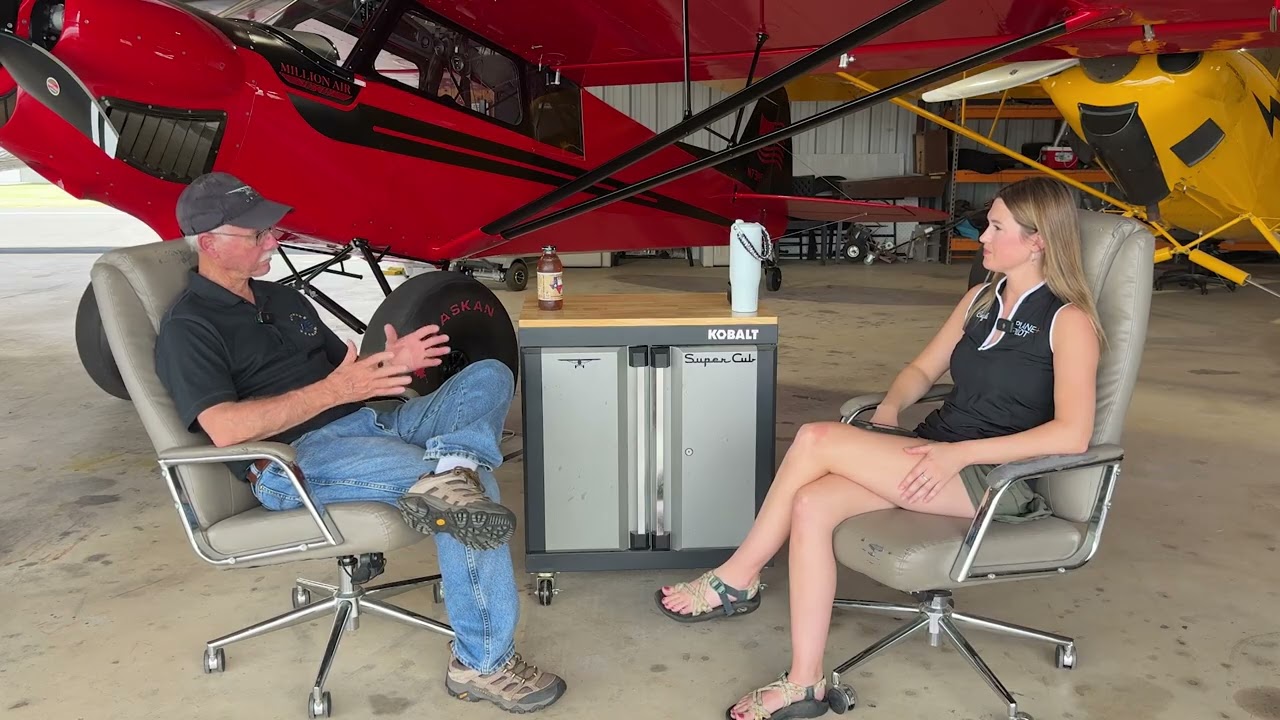
experimentals. There's lots of fancy carving cubs. You know, there's a couple things here that uh you know, we got some 172s and 170s, but I am always drawn to these uh cubs that are just bone stock. — Well, it it's not really bone stock. It's a certified cub. Yeah. — In the certified and it came from a guide, so it was on a 135 ticket. Actually, several of the things have been changed. The wings — the wings are basically stock wings. Uh yeah, stock wings. Um, the gear is heavy duty 3-in extended gear. So, the original gear was kind of light for this type of work, but it does have the inch and a quarter axles, an brakes. Now, in those uh with the brake boosters on the stock brakes do they can lock up a 35 in bush wheel. The advantage of running inch and a quarter is they're 2 and 12 lbs lighter per side. And that gets into the stole side. — And you say, well, how do you how do what's better? You got people say, "Well, I want the big inch and a half. " Well, that's 5 lbs more. And then, uh, I run 31in tires. I do have 35s, but I just prefer I do better with the 31s. Uh, the cash car routinely beats me now. Uh, he runs 35s and a lot of that. You'll see a lot more 35s probably nowadays than 31s. I just got real used to my 31s and uh, I'm happy with those. Um, so and then I have the shocks. I you don't see a lot of bunggees anymore, the old bungee shocks with the hydrobs. So now I have the alpha omega system and that was one of the precursors to the new Acme shocks or the new uh airframes. uh McFarland now bought out airframes the Al McFarland Alaskan shocks and those are night and day difference that is a huge game changer. I wouldn't I'd recommend not training on those. Uh they are too forgiving. you will, you know, you if you want to train to learn to be a good pilot, learn how to land well, get a good like a goodyear tire or a 850 and a set of bunggees and they do have no mercy on you. They will show you every mistake you make. Once you get good and you really want to have fun, then go spend big money on the other stuff because it is a real game changer. A huge safety factor. Landing on the bush wheels is a big safety factor. The same with the shocks. You don't bounce. You just stick to the ground. You can break much better. Uh what else is different? Um actually stock tail wheel. Yeah. So a lot of the rest of it is stock. The trick to it is Oh, and my engine. I have a 160 horsepower. This Cub, a 1951 Egg Cub originally came with a 125 horsepower uh engine. So big upgrade with the engine. I run a bore prop uh 8243 normally and that is the gold standard. Uh the bores are tough props. They spin up. They take a little while to spin up, but if you hold your brakes now you got that big mass spin and when you let go you really pull and they go through some rough stuff without damage. So that now the they're getting better with the carbon fiber and some of the other props that but I've been given too many people's grief about flying carbon fiber yepy stuff. So I have to if I take it this off they're going to start harassing me. — Well, you were telling me, you know, when I first came up to you, this is a working man's airplane. So, you know, what's your thought on these new modern tail draggers? You know, you're just talking about them a little bit. What do you think? Would you ever upgrade? Um, actually I'm building my wife another plane. Although it is going to be pretty similar to this. I am putting constant speed prop on it. 180 horse uh bigger wings, bigger flaps. I mean the Keller flaps that airframes had. That's a those are really nice. Uh the big the experimentals with the really big wings makes a huge difference. And a lot of people like the looks of the round tip wing, which is nice. And it handles in big wing winds. It It's not as affected. It's not affected by big wings winds as much as the big square wings, but I've flown a big flap square wing cub and it is magic. It is. Especially when you got a heavy load. If you're really loaded up and you start pulling on flaps and you have to add between three and four on your flaps, you have to add 300 RPM. — Wow. — And it just it is so powerful, so smooth. I love a big wing. But I like this. This has done everything I need. And it and this is your basic guide for Alaska. It has a belly pot. I
Segment 5 (20:00 - 25:00)
didn't mention my belly pot. that is uh if you're up here, if you're carrying stuff, the belly pod is key. It puts all the weight right under the center of the plane and it just flies great. So, you're not in the old days, they used to put they I used to have extended baggage, but you used to end up putting way too much weight in the back and you you'd get your CG too far back. With the belly pod, you keep your CG where you want it and uh it makes a big difference. — Well, are you going to be competing this weekend with the belly pod? That's the question cuz I just saw you drain the vast majority of your fuel. So, uh, what's your game plan? Let's get into the mechanics and the magic behind Vald and this lovely stole competition that you're getting ready for. — So, the plan coming over initially was to fly direct. So, I had drained all the fuel out of my left wing at home and I put in 5 gallons and then I filled my right tank with the thoughts of I'd burn most of that out. And then when I got here, I'd have to drain maybe out 5 gallons, but we ended up flying with a couple other guys. We're sure of the route. So, I went full fuel and uh I burned off my left tank until I had six gallons left for the competition. Then I flew on the right tank and I even flew around a little bit extra to get it low enough that I can draed the rest of it out with the three cans and that's what I did. So you don't want to carry any extra weight as far as the belly pod and the gun boot goes. Uh I've won these the Titina heavy takeoff uh competition and squint competition three times with the belly pot and gun boot. And the advantage of doing that is if anybody ever beats you, which Cash commonly does, he didn't have his belly pod on. Although last weekend, Cash Carr beat me with a belly pod and a gun boot and he fair and square beat me in a competition. So he's definitely ruling king of a working class. His is the same as mine. It's almost identical. So — Well, how did you perfect your stole flying? How did you become the winner of these competitions and Valdis? — A lot of practice. It's a lot of practice, a lot of watching. The biggest thing actually was watching videos because what you think you're going to do, you're not doing, you know, and then break it into sections. I go up and I stall the plane. I in the spring if I'm going to compete, I go up and I stall the plane. I do a lot of slow flight. and do that at altitude and then figure out your pattern coming in, figuring out your takeoff, uh, and break even the landing phase. Fly down the phase where you flare and you're going to get ready to flare, fly down the runway, just fly it down, not landing, and do that 30 times, holding yourself off the runway and getting as slow as you can. Now, that's not to say you should drag the plane down the runway. That flying down and holding it right there, that should be about two seconds, maybe three, of your landing profile. So, you should come in, you should be able to come in and flare where you want to flare. You should know what that is. You should flare a very short time and then you should set the plane on the mains. And then braking, practice braking all the time. For off- field work, I practice all the time. I skid the brakes. I lock my brakes up when almost every landing. Another thing nobody ever tells you is every time you land, they say, "Look at the runway. Look at this. " Well, you know where you're going to land. — Do crash? Every time you land, you should look to see where you're going to crash. — Because some places all you have to do is straighten something and you can fly home. The other place is a helicopter. You know, so example, if you're going to land and you got all your friends there and they're all over here, you should as you come in, say to yourself, no matter what, I'm not going to the right because now you'll wreck three planes. — Yeah. — Always find a place to crash — on on, you know, you should have that decided before finals. Yeah. Don't have to think about that. So, let's talk more about stole. So, I break it down. I I figure out — where get real comfortable feel be able to fly your plane at one mile above stall speed and not even think about it. Just And how you how do you do that? How do you get your plane set? How do you do that? Where should your trim probably be? — Full nose up. — Yep. — Yeah. That's scary, ain't it? So, you got full nose up and now you do a full power go around. — Oh, yeah. You're Yeah. — Why would you do full power when you did a go around? — Cuz that's what you're taught. — There we go. Maybe you should think about that. Maybe you should because they go moose ran out. Why don't you do full power? Because I only need about 200 RPM to get over it. — Yeah. you know, all you got to do is do this
Segment 6 (25:00 - 30:00)
this, — right? — And you're over. — Everything you've been taught when you want to fly up here and do this type of it's, you have to think about it. Now, yeah, there's times when you do go full power and 2,000 hours of tail jar flying. I never really had to, you know, I've done it, but I've never had to, you know, if I have to do a go around, all you have to do is give a little power, do some pilot stuff, you know, the trim, doesn't flap, and hey, you're in takeoff mode. — Yeah. — And then you know, so always fly hands off. always trim. So, same thing on the competition. I trim. When I land, I'm at full nose up trim. 1400 uh 1400 RPM. If I let go everything, the plane sets at 42 mph. — There you go. — Right. So, I know without looking down, I can I still got some, but if I start pulling back, I'm getting closer. So, and if I go to 15 or 16, I can't pull back at all. And I actually probably have to push forward a little bit. So, you have to know those things. what those numbers are. So, you just glance down and go, "Okay, that's where I'm at. " And I know if I let back more, it's going to stall pretty soon, you know. So, what's the slowest three point full stall landing? Is that a reality? In most conventional tail draggers, when your tail is about your tail wheel is a foot and a half below the mains, — right? — So, that's how you want to come in. You want to be right there. Now, you don't want to hit tail first. So you you may want to be there, but then right before you touch down, just bring lift the tail and you'll set right on the mains. You won't have that bouncy stuff, you know. Read up on the MAF technique, Mission Air Force. They have a great technique. It's Cessna by Cessna. I can go to full nose up trim, 1400 RPM, full flaps. I got a sportsman on it. It'll set right at 60. So you just come in just nice easy work your altitude your prop when you ready to land you just you pull back a little bit for your flare then you just let go and it'll roll on a main tail will be low and then it'll lift up. So there's a lot of little secrets that you learn. Uh what's another one? Well with I think I did all my landing came in flare. So practice it in sections though. Just practice little pieces. Don't try to do it all at once because especially if there's other planes in the pattern. If you're in a lower 48, — right? They're doing 747 patterns. I mean, they fly, you know, from Tucson to Phoenix to figure out base, you know, I can do a pattern — in 3 and 1/2 minutes, — you know, to full stop. — And so, let's talk about takeoff. So deciding when to rotate is an important thing and it's all on the air on the air speed over the wing. What really affects that is your wind. So you how do you determine when to rotate? Your plane will tell you if you listen to it. So I don't pick my tail up. I just I set my trim for my plane with me and actually it's for a pretty broad range myself 5 gallons of fuel full nose up trim 18 forward. So that what you have to do on that is figure out how many turns your jack which if you have a cub if you have if your trim is connected to a cable for the indicator you should always count your turns because that cable's going to break. Happens all the time. So, um, nine turns back. What I do is I just lock the brakes. I hold it for 3 seconds. That lets that big SP prop spin up. Max RPM, right? Little bit of lean. Should you lean on the ground? — Depends what your altitude. — There we go. Yeah. And if you're competing, I get 24 20 25 more RPM. So, yeah, I lean a little bit. Lock the brakes. So, let the engine spin up as hard as it can. And then I let go. I don't do anything. I I'm steering with my toes, right? Feet come off the brakes. I just put my hand in front of the stick and the tail's going to come up this high. I'm going to run for a little bit. Don't know how long. As soon as it starts to come up again, my nose starts dipping. My stick touches my hand. I bring it back to where it was, and I add full flaps. and you watch it'll it'll just levitate off the ground and uh it's it it's very it it's not real exciting. It's not, you know, because when you pick the tail up and you go, it's great. And picking the tail up is great when you're off field where if you got to see where you're going to go, but when you take off field and you know, when you're out in the bush, you don't take off short. You use as much runway as you can. you get as much air speed as you can because in case you get a downdraft or something, you want to make sure you get off the ground and you're good flying. You watch when the planes come off here, they can barely fly. Yeah. — You know, you don't have good aileron control. You may not have good rudder
Segment 7 (30:00 - 34:00)
control. You know, you're just hoping that you'll get enough speed and you just stay in ground effect till you get going. So, those are a lot of the little tricks in all of that. Somebody else taught me except for the Well, no. Mitch taught me. Mitch taught me the tail thing, too. — Well, you've been doing this for a long time. You've had lots of practice. So, what are you hoping to accomplish this weekend here at Vald? — I want to spank cash car cuz he beat me last weekend. And uh no, I just want to have fun. I mean, it's just a great time. If you get beat, that's fine. I've been beat a lot of I've gone everywhere from DQ to 10th place to almost every place along the you know I've done second third you know first I've done them all here and it's just a lot of fun and it's just being with your friends and hanging out and it's a good way to tune up for summer cuz I'm going to have to go fly this summer with my wife and I don't know where she's going to want to go but I want to make sure when we get there I because we've gone places where we're landing and you know we run into a hurricane or something, you know, and we've had some really sketchy landings we've had to do. And the fact that I did all of this stuff, I'm prepared for — and so she's real happy to fly with me and that I love that. — Well, what's your advice to someone that's looking to maybe fly up here from the lower 48 or maybe Canada and they're looking to try their luck at next year's Vald Stole competition? um practice a lot uh like uh and watch some videos, but don't drag it in. Hey, my number one thing is do not drag it in. Don't do it ever. Um sometimes if you're in a hurricane and that your only good air is 10 ft off the ground, you have to do that. It's very dangerous to off field to drag it in. At a stall competition, you're just setting yourself up to be pushed into the ground. learn to do a steep approach and uh you know do a little slip, look out the side, make sure you know where you're going. Look out the side. That's where your landing spot is. And if you're trying to drag it in, you can't see because you just you got too much stuff in front of you. So, uh don't drag it in. Practice a lot. Uh it's getting to Valdis is the hardest part of the Valde stole competition. It is worth coming. Come if you're drive flying all the way up from the lower 48. Come a week early. And if you get here early, that's fine. If you got a couple days, you can go play local. And then what I would do is leave the plane and go back home and then come back again. And so I know several people who have done that. They leave their plane, they fly back home, and then they come back a month later and go on another adventure because that's a long flight up here and there is so much to see. and Valdez is a small part of it, you know, and there's other flyins that are fun. Uh, Squinta was a huge one. It that was the hardest one was Squintna because it was just very hard there due to the winds and that really brought out the the expertise. You could tell the good guys that won there often, you know, you go like he's got the skills and although even that I mean I've seen experimentals there. All the experimental class got beat one year by a husky because they're the poor guys. All the wind was just terrible when they were they their little five minutes, you know. So, um there's other things to do up here flying. Fly up to the Brooks Range, fly to the Wrangles. Oh my gosh, it's beautiful out there. So, don't make it just about one thing. If you do come up, try to leave your plane and go home and then come back and fly again and leave it up here for a summer. That would be my advice to anybody coming up. — I couldn't agree more. As someone who has ventured up here to Alaska for the very first time this week, I have been up here for seven days and I feel like I've seen just a very, very small portion of what this amazing state has to offer. So, I can't wait to get back up here when it's not cloudy and, you know, snowing on me earlier this week. I can't thank you enough for joining me. I can't wait to see how you do this weekend. And thanks so much for being part of it. My pleasure.