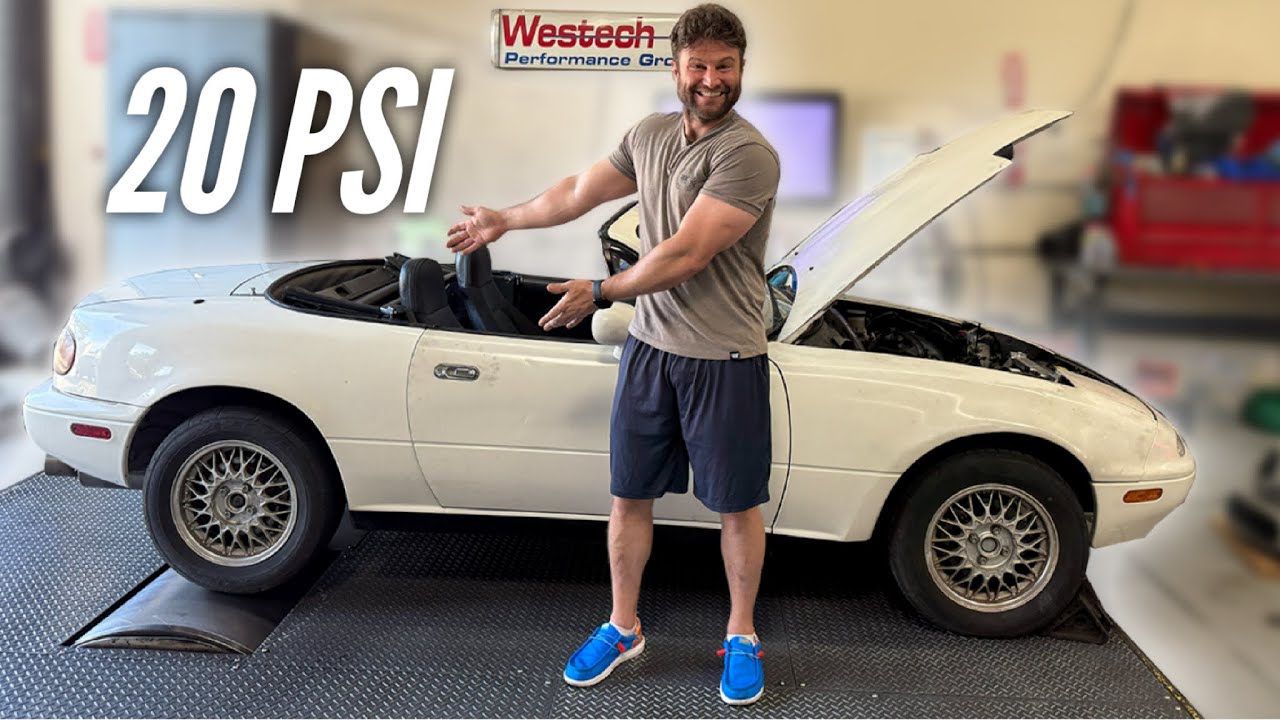
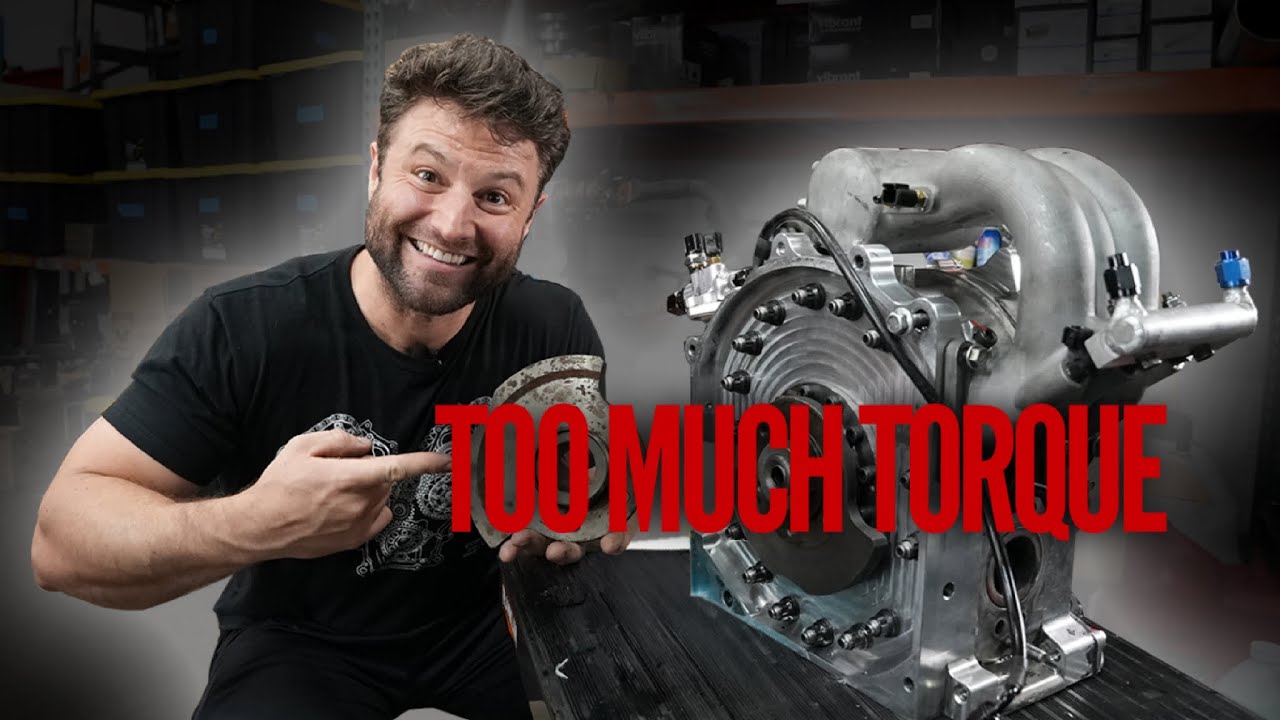
The whole point of this video series is to get a aluminum rotor solution. Everybody says it's not possible. Clearly it can run. Run so well that I can absolutely beat Vin in his Insight and snap the diff. We're putting more miles on this thing, fixing the diff, and then uncovering the very first time we're seeing an engine teardown with an aluminum rotor. — Here we go. — That was a morning. The ultra rotor itself died. Again? Yeah, I don't know what's going on. 120 miles so far and generally uneventful. — Oh, the belt's gone. Oh, nice. Yeah, it must have thrown it immediately. With it having low compression, the turbo is just boiling. This event we won't have too much to film on only because I'm finally getting to live in the moment and enjoy this. We threw a belt on the one rotor on the way here and the car is having issues with idling. It just idles low, idles high, whatever. I didn't make it to the Miata event at the Petersen in time, but we made it here on time. Early morning. I haven't done a Cars and Coffee in years. And so it was really fun to come out and see all of my people, surprise them with slightly obnoxious one rotor sound. — It's such an incredible event. Not only was I part of the rotary community, but it's also part of the Miata community, which is a whole new group of people, similar but different. But we're going to go ahead and do the cool drive off into the sunset. Into the rain. — Clouds. So, hopefully she starts and makes me look cool. But it's kind of hard looking cool in a Miata. As cool as you can be, bro. — as I can be. — These 10 fingers, these two hands, are going to tear this apart not nearly as fast as Terry. I'm psyching myself out because I just had a weird day, but we'll have this thing out and then disassembled. And really honestly, it's the oil pan that pisses me off the most. Terry did such a good job. I don't really want to undo that, but let's pull this thing apart and see what's going on inside that single rotor and why she's only getting 10 miles to the gallon on the way back from the adventures last weekend. A working transmission being pulled off of the one rotor. I'm almost annoyed that the transmission does work. Nick and Joel, uh nickname around here, is flying out tonight or so and leaving me uh trying to have a life, whatever. He's excited to see what's inside of this engine, but I think I'm going to hit him with the good old click-baity part two. You guys will get the real full story. It's in this video. But for him, I'm going to be like, "Dude, you won't believe what's in this engine. " and then just not respond to him the rest of the time he's gone. Well, that's the cost of racing Finn. So, the absolute piece of [ __ ] that made this did a pretty damn good job. But, that explains why that part was having problems. As you may recall, this thing has been shaken to death violently. I was blown away cuz this bolt was tight. This one's shattered off. And the whole thing could still flex. And it's like, "Wow, this thing This metal is thick. " Well, that explains the flexing. We'll re-weld that. Re-weld the front cover. And then this should be good as new. But, that that's crazy. — It's just me. It is Saturday and it's just kind of back to the basics on tearing down this one rotor. And I want to do it very methodically. Obviously, we've torn down quite a few motors on this channel, but this is a very unique case in the fact that one rotor is doing 100% of the work. And it's using an aluminum billet rotor. Much less, it's just uh a lot of unique new things. I had the timing completely off and I had also had the rear keyway snap. So
Segment 2 (05:00 - 10:00)
this engine's been under a lot of weird stress beyond the normal operating conditions. I've just abused the [ __ ] out of it. So, I want to show you guys what I see very methodically because it runs. It runs well, but it's got low compression. And I don't believe that's the aluminum rotor's fault, but I'm going to let the facts speak for themselves. If there's ever been a commercial for Valvoline, this is it. To have a keyway off by a significant degree. It wasn't slightly off. It was lopsided completely. It says a lot about how well the Valvoline can handle the extra pressure that put onto it cuz a bearing can handle several thousand PSI of strength with the right oil. This not only was protecting it against running it hard at 28 PSI, but it was also the lopsidedness of the weights all being not countered. There's no bearing material in the oil pan. I'm letting the oil pan drain right now and just to start things off, I'll show you guys there's no slop in here. I even ran it with low oil pressure cuz the oil was blowing by and going into the catch can and that's a whole design issue on our end. It's not enough oil pan. But you can see there's nothing other than properly used VR1. And so the issue I first saw when opening this thing up, the whole rotor all the way up to the exhaust port was filled with gas. We're going to go ahead and tear it apart and see why I have low compression above all. Because this is a one rotor, I can use a little shortcut here uh if I feel like it's necessary. But I can pull the engine apart from the back and leave the e-shaft in place. And you know, cuz all this stuff is there's a keyway in there that would rip through the bearing. I've done it before on the three rotor where you just pop the back off to get to the rear rotor. We'll pop the rear off. It's already going to be a pain in the ass with how tight we've made now made this. And I just took the nut off, but this thing's cinched down there properly. And then we can take all these bolts off and pop the rear cover. It's not that I want to be lazy, it's just know the answers. And then if no answers are showing up, I guess we can continue removing the rest. But no bearing material means that even if I tear this apart, I can see that the front bearing's going to be just fine. The very first thing I'm observing, I thought the thing was already off cuz look at how that pops. A little pop pop. And so I thought this was like already slide back forth. But no, the whole e-shaft is doing that. So that means that the rotor bearings or the rotor, the stat gear I've never felt that before. Obviously I've never built and uh unbuilt any one rotors, but that was a very interesting little like lash type of situation. That's a lot of play that uh catches my attention. — It's the moment we're all waiting for and you and I found a couple of bolts that either bent or the they experienced some sort of warping and it doesn't surprise me. The pre-detonation area before the spark plugs. Fascinating that sort of a bolt could have take that sort of hit. But I stopped because it already started splitting open. I just took the bolts out which makes sense but I wanted to make sure we spoke back to the good camera. Okay, everything's good. Scared the [ __ ] out of me. That's a lot of plate wear for that being uh fresh but nothing Nothing's sticking out yet. Oh, this is a first look at somebody being open and honest about an aluminum rotor in an engine. And a couple things stand out to me immediately. Those uh oil control rings I thought would be ground down or something from all of the slamming around. Now this side is the gear side. I'm looking for like massive gear wear from all the Remember the counterweights past this. Also, the bearings are ridiculously in great shape. Not only did I use thinner oil uh but that counterweight is right here screwing everything up. So you you'd expect there to be some serious problems. It looks incredible. Absolutely incredible. You can see like a little bit of scuffing on the rotor face. Uh but I'm really surprised that maybe the oil control rings aren't touching. Well, I guess they are because look at you can see the double rings. These are three-piece apex seals. Kind of confused. Not an easy like "Oh, [ __ ] We blew it. " type of moment. We're going to go ahead and remove the rotor. Except for all the seals. That was one thing I noticed immediately when looking into the exhaust port is just how dirty the face of this got. Oh, the rotor bearings. Um now the rotor bearing being orange does not surprise me because if you guys remember, I had it almost to the copper because of the center part of this rotor was actually not machined properly. It's off by 2000s or so. That's showing on the bearing, but I'm assuming the rotor bearing would take the majority of this brunt of pain.
Segment 3 (10:00 - 15:00)
Well, that's a lot of wear on that the uh lobe. Let's get these parts out. One of the very first things I'm going to check uh Mazzie, uh the David, the fat five-rotor guy, and I, you know, catch up quite a bit lately. He was curious if the apex seals had warped. I haven't warped apex seals in a long time, but the even low compression he's got a really good point there. I'm curious about this housing, actually. That's Maybe this will say something. Look at how shiny that is on the corners. It's very interestingly worn. Uh in the middle. You guys can probably see it from there. The shininess on both corners. There's no blatant detonation. There's tons of chattering there. That's also Again, can't say that's aluminum rotor because we don't know who, what, when, where yet. This is the perfect teardown moment. Very interesting. I've never seen this before, which is probably what makes this a good candidate for the all this testing. I've got some light wear on the faces, but I do not at this moment believe the aluminum rotor is a single part of any of these problems. Okay, let's see what's going on with these apex seals. So, what I'm going to do is just put them face-to-face and see if I can see light through the middle of them. I'm not seeing any light through them like I have in the past. So, step one isn't telling me anything. All three faces at 60 psi compression, so there's a smoking gun somewhere in here. You don't just get 60 psi compression without a reason. The devil's in the details here big time cuz everything looks like acceptably used. Um nothing looks grossly out of place. So, I'm going methodically through this, and what you can see here actually makes a lot of sense. It's all three apex seals springs, outers and the inners all stacked with each other. They all have the same compression. bend. So, then have a brand new one. Let's see. Pretty similar. They're not bent per se flattened, but there is a slight bit of bowing in the middle. As in the new one's got a slight bit more spring. So, I think out of abundance of caution, I'm going to be replacing them. Something that really caught my eye immediately is how good the oil control rings are. I was expecting those to be ground down, but this isn't like the four-rotor. The four-rotor was pulling a vacuum, and it had tungsten on the sides. The other thing is this gear is in really great shape, and so is the gear that it corresponds to. It looks higher mileage than it should be, but it doesn't look bad. Before I start cleaning this, and I want to show you how important that is. If you take like a little bit of this, the aluminum really does clean up quickly, except for that spot where it's all gummy. But, you can see here, here, and here, all three of those spots have a clear spot. And that is very significant to me. It directly leads to this line that is actually kind of like a witness markish line here. So, I don't know if the rotor with the way it rotates and wobbles. This one doesn't, but this area does still touch. Typically, you'll see like Mazda will have the tip clearance. And that must be the case with these billet rotors. I It's been a minute, so I'll check their lengths and everything, but it is funny to see that it is on that side, but not on this side at all. The side seal is definitely not letting that [ __ ] get in here. But, you do see it kind of does like that. Other than the first fired up, this is only been ran on ethanol. So, to see all this junk is really a telltale sign of something. These are details that really do matter. This is where the videos are made or broken aside from entertainment. So, that's all gummy. Which is like unburnt premix. Premix is coming in either through this side or through this side. I can't tell if this means that it's the alcohol is coming through this side so it stays clean and it's burning on dirty, but it makes it over there one way or another. You can just see like it's gummy and it doesn't matter which premix you use. All ethanol, like alcohol premixes are gummy when you have things not operating perfectly. So, yeah, that's smudging. And then that also corresponds to some weird [ __ ] going here, too. You know, things are swirling, misfiring, whatever. It does not matter that it is a one rotor. A one rotor at 300 horsepower is two rotor at 600. That's a very scalable aside from engine harmonics. So, this clear area here correlates to that clean area here on each of the faces. The other thing that's really like got me questioning is this clear area here that then goes into two spots. That one even more so over the apex seal. That is identical on every single face. That quickly it's all gone. But you would expect I mean, my other rotors don't uh don't get dirty
Segment 4 (15:00 - 20:00)
um but they're not clean. They're just not this dirty. So, I'm guessing unburnt fuel, crankcase oil getting in there potentially. Normally, you guys don't get to hear this, but this is my like working theory and I think that this rubbing definitely prevents things from uh working perfectly. Some of you guys might notice this just how the bearing looks and that does not match the bearing condition of the rest of the engine. It looks really rough. It was already rough when I put it in. Just much smoother. And by rough I mean it like it looks worn. I had to take it down considerably. Several thousands because there was just a manufacturing issue on these. These are early versions of these rotors. These rotors were off center. So, I fixed it and that's why this thing's been running, but it may have given me too much clearance and that explains, you know, lower oil pressures or whatever. It doesn't explain why it looks rough. Like obviously I wouldn't put chunks in there. At this moment I I'm really impressed with it and it's working better than I was expecting for all the weirdness. Like I'm looking for issues that could occur with the ring gear. The very tips of the teeth are more in than a stock ring. And I was wondering if that would cause the rotor to like bind up. I don't see anything specifically that shows that. Normally you'll start seeing this face cuz it'll do this if the bearing is really loose. The rotor will kind of walk and stay on the ring gear side. So, this side doesn't look particularly different than this side. This side does have more burnt. One of my biggest concerns is that we also had all these other issues all at once. So, you can see there's just gunk. The good news is the play is very minimal. Nothing looks out of place there. Grab one of our apex seals themselves. This is all the far side face stuff. I was expecting to find that I had flattened springs, but the springs not being that flat really has me scratching my head. We'll get the side seal springs. I haven't seen any of these yet. These could be flat. Huh. Hard to tell without a reference one. I the gumminess concerns me for long-term running of it. Like I don't want this stuff gumming up and causing seals to stick. I'd like to be able to not have that. The side seal clearance is really nice and tight, but still you can feel that little baby click. Keep this. This little rubber piece, those always get eaten up in ethanol. So, you That's just a natural part of ethanol life. I'm not used to seeing the springs on these uh not flat. Normally, I beat the [ __ ] out of motor, push it too hard, and uh those are the first thing to really flatten. But, they look good. Feel like that eventually will turn into uh some problems in my mind. Considering it is the one rotor, I will probably be replacing all the springs. I don't need to be wasting all this time and trying to tell you guys all these new experimental things and then oh yeah, I reused that part this time and that's what caused me problems. I don't want that because I can do that on the three rotor and the four rotor and all the other ones that are not so experimental. It's pre-mixed and we did over pre-mix it. So, I should clarify that. I think Joe put even more than I asked, which this would be one result. But, if you're burning it cleanly, it doesn't get this bad, but just for reference, this is over 2 oz per gallon and that was intentional because of the not benefit, but the lack of worry. Otherwise, from this point on, we're going to run 1 and 1/2 oz. One way or another, it's clearly uh lubricated. There's something to be said about that. Whatever that's going on. This one has it swooshing like this, which could be the exhaust coming out, and this one has these two marks that's sweeping on the tail end. This is clearly a rough combustion result. Can't make heads or tails of what it's doing. There's like three marks here. Not making a lot of sense to me yet. This at least kind of makes sense. The combustion shooting out. Maybe this middle area matches this middle area, but these two don't really line up exactly with that out. This is a completely stock exhaust port. And it's not catching on any of that. And then this mark there it's not catching on any of this, but that mark is really curious. It's like off-centered. This edge clearly is hitting this plate. I've never really gone this thorough cuz we're always in a rush. What you're looking at here is a couple telltale signs. This really shows you how a rotary engine spins in circles. So, you'll see two reflections, this one right here and this one right here. They're both big diameter circles. Smaller one, bigger one. Those are just simply the circle that these are
Segment 5 (20:00 - 22:00)
swishing around on. It's the outer edge of that circle, but it's actually the inner edge of each of these uh oil control rings. So, the oil control rings, they're actually like this. And so, the oil can get back into the oil system, but it scrapes it back in. So, it can't come out is the idea behind the shape. With how visible that is this quickly, and I can feel that outer one a little bit. Thought for sure these would be like worn. They're used, but they're not worn. And then you can see a circle up here and then a circle down here. And that those are really wild. Those are really fascinating to me. Put the rotor on there. If you watch the corners, they always stay out in the corner areas. These corners apex seals never go in. So, you have side seals that can do these wild sweeping motions, uh and then oil control rings that do their part. That's where you get these wild patterns from. You see all these swirls? For me, this is pretty common. Side seals naturally kind of like float a section of it over that. But, the thing I'm concerned about is all this swirling when that's areas that really shouldn't be touching aside from the side seals. The side seals are doing a lot of covering of these areas. You know what else is covering those areas apparently? These. Something's metal on metal that lines up there. Now, this is steel and that's aluminum. So, this is going to wear faster, but it just shows you something's touching. I can't even see it from there. There's the reflection showing you there. Looking at and talking with various people and just kind of making sure my ideas make sense, I feel confident in the aluminum. I'm willing to rebuild it with the aluminum rotor yet again. See the improvements that we can make. The power drop was 100% from the apex seals warping. I believe that the rotor hasn't had its fair shake yet. And so, what's really cool is you know, the bearing was out of center. So, we're actually getting in another rotor. We're waiting for that for next week and we'll put that one in with fixed apex seals. Pound for pound, can the aluminum be a viable option? There's going to be something weird. It's just a different metal. There's going to be something different, but I'm willing to put my money where my mouth is and see where that is cuz we need options. And clearly, this lasted a lot longer than I expected and it broke not because of the aluminum. I'm very excited to take this to the next level. Really, this is the issue, the side of it. We're going to be doing it with a fresh rotor and seeing if how much of that was counterweight being completely off, timing being off, all those things. So, now that the engine's in a great spot to be, you guys get just true my best scientific effort on saying, "Yes, this is cause and effect what a billet aluminum rotor can do. " And here's its strengths and here's its potential weaknesses.