Do you want a lot of protein, and not a lot of calories? Head to https://davidprotein.yt.link/SAJjLSX to get a free carton with an order of four or more.
T-Shirts: https://www.dahmracing.com/collections/shop
Music:
––––––––––––––––––––––––––––––
Music: Good Energy by Aylex / alexproductionsmusic
License: https://freetouse.com/license
Free Download / Stream: https://links.al/GFz
Music promoted by Audio Library: https://links.al/youtube
––––––––––––––––––––––––––––––
Music: Remote Location by Filo Starquez / filo-starquez
License: Creative Commons — Attribution-NonCommercial-ShareAlike 3.0 Unported — CC BY-NC-SA 3.0
Free Download / Stream: https://links.al/u1O
Music promoted by Audio Library: https://links.al/youtube
––––––––––––––––––––––––––––––
Music: Good Energy by Aylex / alexproductionsmusic
License: https://freetouse.com/license
Free Download / Stream: https://links.al/GFz
Music promoted by Audio Library: https://links.al/youtube
––––––––––––––––––––––––––––––
Music: Set Me Free by chillity / chillityofficial
License: Creative Commons — Attribution 3.0 Unported — CC BY 3.0
Free Download / Stream: https://links.al/4ST
Music promoted by Audio Library: https://links.al/youtube
––––––––––––––––––––––––––––––
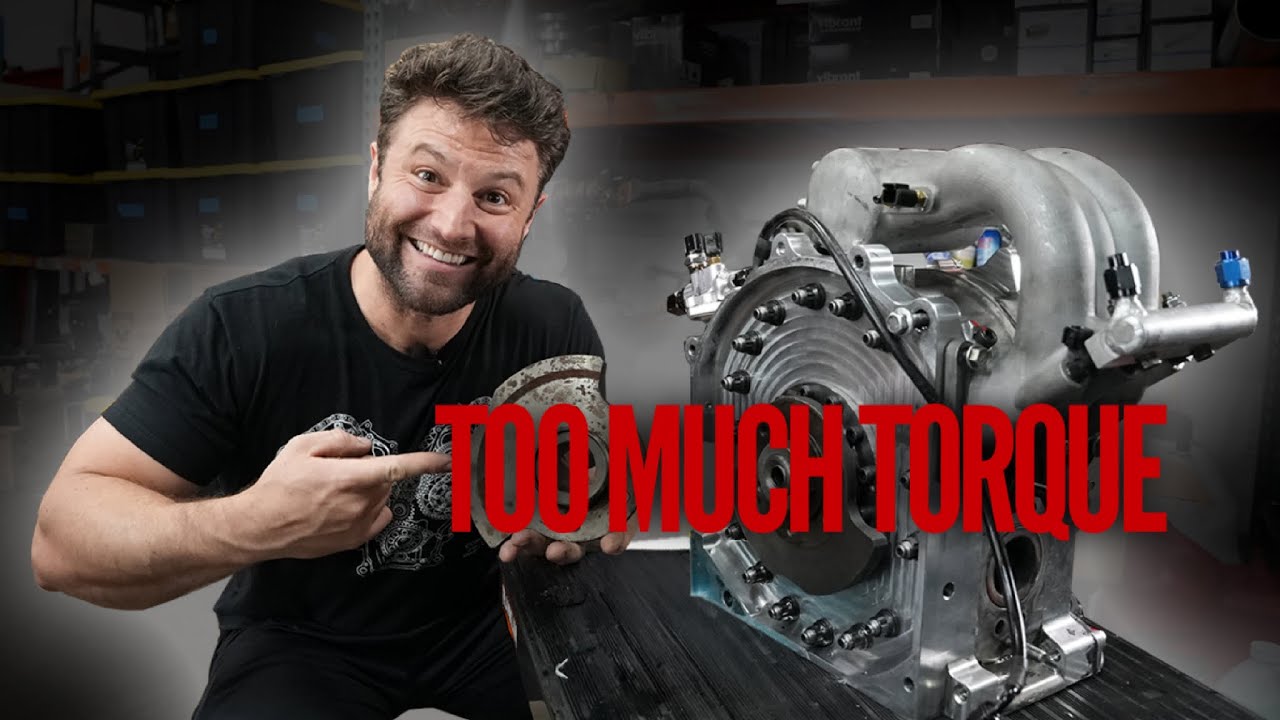
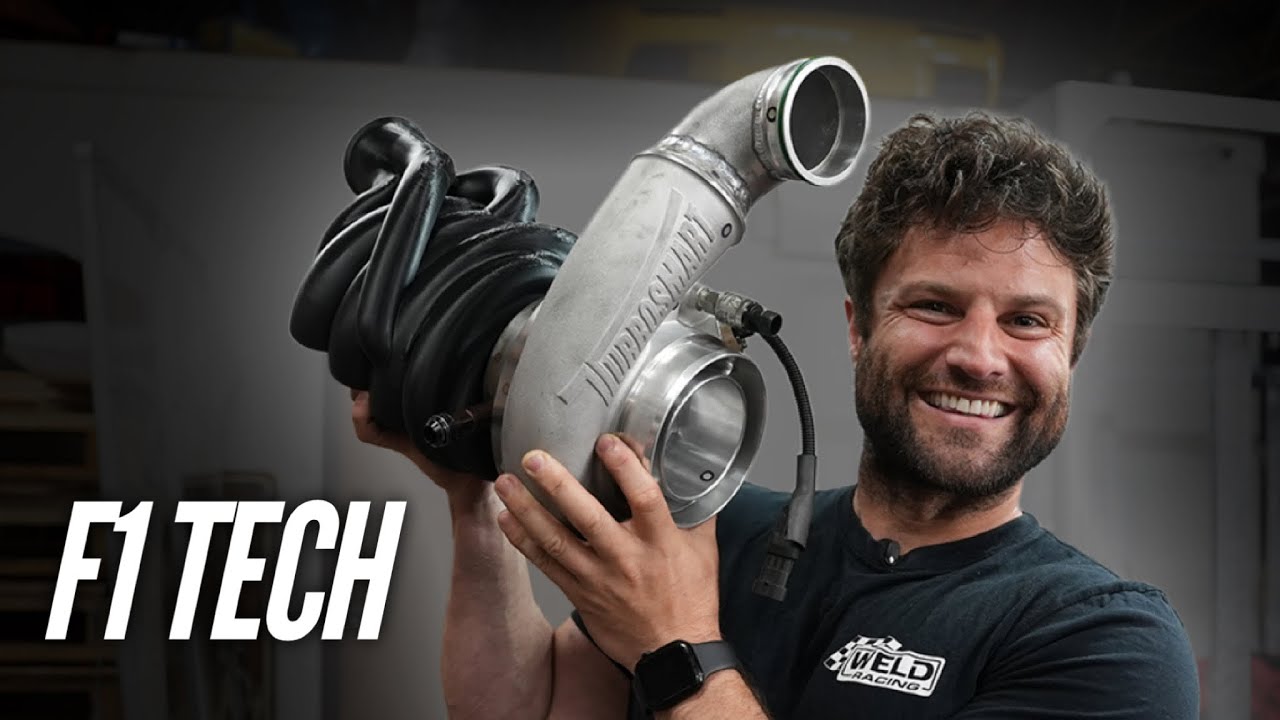
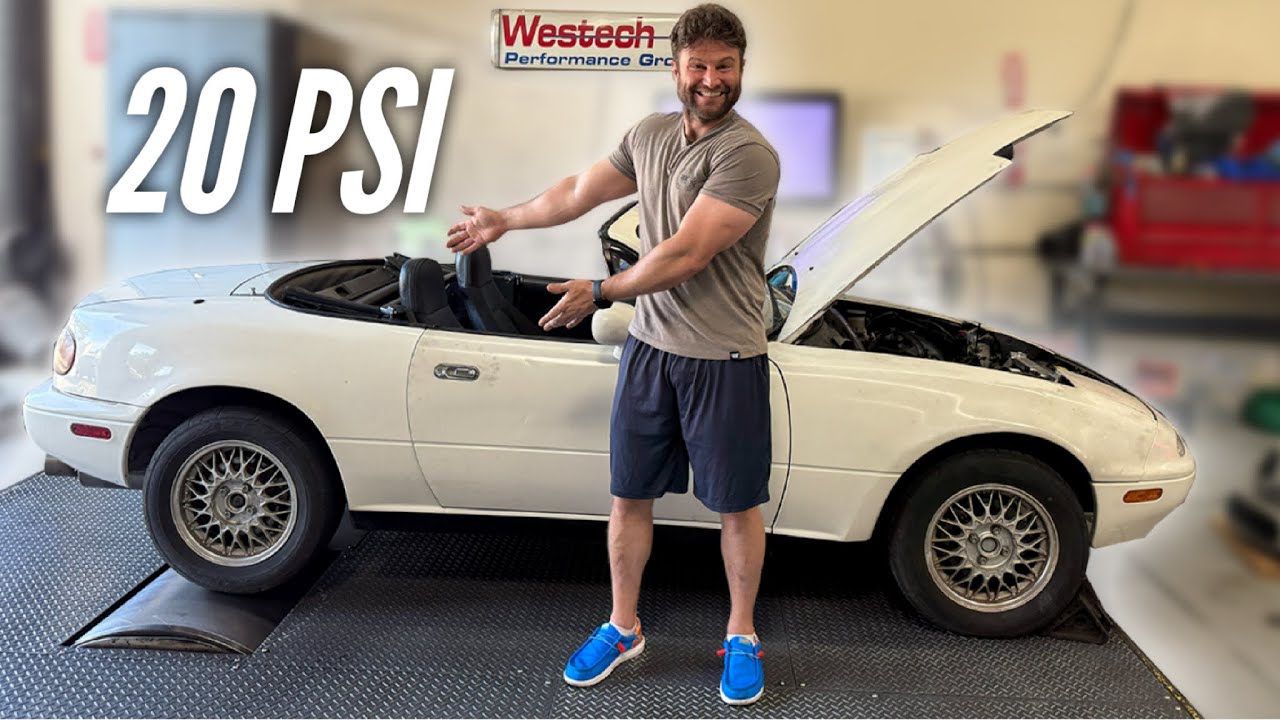
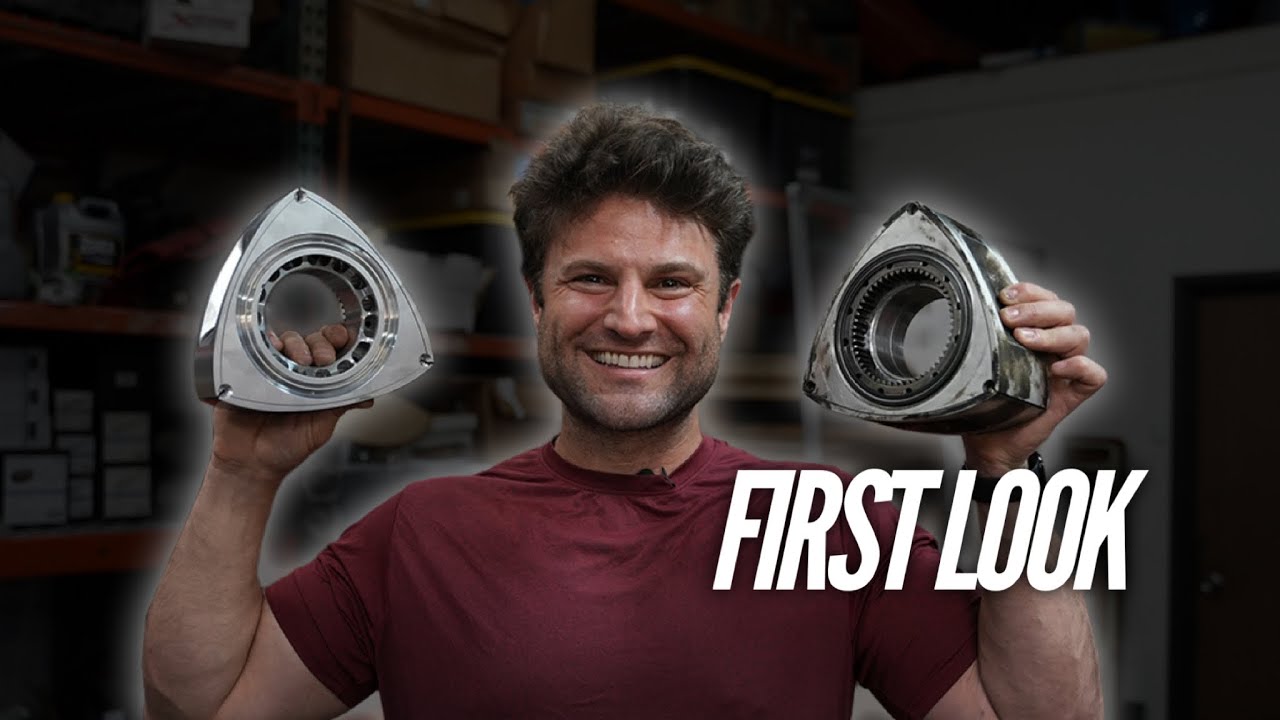
The car drove. We can't do it. Why are we How how is it not So smooth. It is so is so Oh my god. I'm just I'm so happy. — We are getting ready for the dyno of the one rotor. I'm very excited, but the thing we have is an oscillator. One of my buddies, Rene, came up with that name Rotalisco. Backwards is oscillator. And that is exactly what this car is. We're going to be doing some different testing real quick before we take it to the dyno and see can we make it sound better and not vibrate so much. So, first we're going to do is we've got just a old resonator straight through from the three rotor. And as you guys might remember from the three rotor, adding tons of resonators didn't quiet it down. It just made it smoother sound. Terry's just going to place it up to the very end of the car and see can we hear the difference with all the titanium and does this make a difference overall with the pulsing sound? Okay, pull it off. Can we put that guy on? Can I take off this? It's a vowel change where it goes from ah to uh. — It's smoother. Exactly what I was expecting. What do you guys think? I It was different. That's all I can say. It's not better per se. — Yeah, it was just — it quieted down the high pitch. So, it goes down to all the way like a low muffled sound. So, — Yeah. It still sounds better. It sounded better. So, we're going to go ahead and look at the belt and I'm going to see if we add a pulsation damper from a random engine, let's see if it makes a difference on this car. — We have a new break. The mount for the alternator and alternator are staying alive for the moment, but the actual front cover snapped off. Damn. Well, I think since we made that bracket for the rear now, Yeah, yeah. It just keeps It keeps moving. It's just moving the damage. — The weak links, yeah. I've not until just now seen how much this engine shakes while it's running. That is horrible. — That is absolutely horrible. So, we're going to be playing with a harmonic balancer, which is really just a damper, to see if that helps with that single pulse. It's not that the single pulse is as problematic as every time it hits and it gets these frequencies going, then it can shake, kind of like the girls that can sing really high and resonate and break a glass. This is resonating and breaking everything. With weighing this car, it weighs just about 2,000 lb even. It was 2050, but we pulled a little bit of extra weight out of it with the speakers, the airbags, and things that just were no longer connected. The downside is I weigh over now 10% of the car, and that poor little one rotor is going to have to work 10% harder. That is why this is my secret weapon. David protein bar is for me one of the most guilt-free, right to the point, highest protein density for the number of calories bar the way to go. Look at any other protein bar out there, and they're going to be like 300 calories. If I was going to eat 300 calories, I might as well just eat anything. I can get better protein sources than a thing with tons of other random additives. These are the most protein per calorie. It's got the highest in the entire industry. And on top of that, the blueberry pie flavor bar is just that. But I just I love blueberry. When I'm trying to keep my calorie count low, I keep my protein high, this is a perfect supplement for that. The whole last year I've been watching my glucose. And I'll tell you what, when you're a hurry, you also tend to be sitting more. And in that case, when you eat something with tons of carbs, even if it's healthy, you're going to increase your glucose spike. This is extremely friendly for getting those last minute calories in, more specifically the protein based calories in, without spiking your glucose. On top of all the benefits, David is offering you guys a special deal. If you buy four, you get the fifth one free. If you click on the link or click on the QR code, link in the description, and enjoy just like I am. I've got some really cool stuff to show you guys. It's a nerd session, but stay with me for a second. And this is a pretty popular like download. There's a brief section
Segment 2 (05:00 - 10:00)
on engine vibration. The first option they show you is one rotor single engine vibration. There's the peak amount of torque. It dies off as the engine's spinning. And then about 240° it drops to negative. This green one is RPM. This red one is the manifold pressure. And then down here is the engine's position. So, 0 through 360°. So, we're going to just pick a moment here where the engine's at about 1,000 RPM about to die. And you can actually see each one of these little accordions is one rotor face pulling a vacuum. So, that's an intake stroke. A rotor has three sides. So, on one full 360°, one side takes air in. All I care about is this full 360° and sure enough when you look down here at the engine angle it's top dead center top dead center each of the faces. So, those two line up and make sense. What you can see the RPM speed up slow down on each one of these pulses. So, we'll look right here. This one's really wild. Now, I'll zoom in and it looks less aggressive. It goes as slow as 1,100 RPM and then goes all the way up to 1,250. So, it's a 150 RPM increase just idling like do do. When we go to the lowest moment and look right when it starts to speed up it's right here and that is 50° of engine angle. So, at 50° we see that torque. Now, that torque's got to turn into rotational energy and so sure enough right after that peak amount of torque pulse the engine's responding and immediately within 10° you can see the engine's starting to respond to that. It did its thing and now it's starting to slow back down. So, there's some sort of force slowing it down aside from just running out of energy. So, we'll just kind of look at where it's peaked and it's about to come down and we're at 270° and we'll look at that document again and about 270° sure enough we've passed zero and it's beginning to draw. It's beginning to take torque to rotate the engine. So, you can see it clear as day this diagram is no joke. It is quite literally what we're seeing each time the engine is pulsing and stopping. They're going in a very interesting pattern and this has to do more with tuning and porting but you can actually see thump thump thump thump. That's partially the Haltech trying to respond to this crazy variation. It takes about that much time for an oxygen sensor and all that type of stuff to respond. And so, you actually see a whole three rotations up three rotations down three rotations up and that gives you that iconic brat. The braap isn't a single pulse. It's actually And so they're and that's where you get a semi-p braap. So, really it's actually a tuning issue when you hear a car braaping. It should be and you can tune the braap out of all those engines. But, of course we all love that loping sound and that's exactly what you can see. You can see on a one rotor it's loping, but in this case violently shaking everything to death. — This is what I get for helping Finn. I saw the correct parts for the CNC machine back there. I used those two buckets to go over there. And then as I came back, I picked a different bucket. And you [clears throat] can tell which foot I used. To be fair though, the oil did actually cushion my fall into it. It was like So, our engine mounts are actually still solid. They're on the engine and the mounts and everything. It's wild to see it shake that much. That's bolted to the very back of the engine. So, we figured let's hold it where the action is. So, Terry just hauled ass. We took one of the Pro Maz engine mounts and but we made a little assembly. It's going to be a pain in the ass to pull the mount off, but it will help hold the engine shaking this way on the front iron as well. So, we've got one more engine mount to help with that wild shaking vibration. This is our best shot. And so, the guys are currently test fitting Finn's adapter, which is way more complicated than I was going to make. make it like four holes, really long ass bolts and he made it like way fancier. And so, the guys are test fitting it to put that piece on to then put the harmonic damper on the very front of the motor. This is exactly what we're going to be using. It is from the 12 rotor and I'm sure we can figure out what it's actually designed for. You can see that is not a light piece of metal. And you can actually tell right in there, this is the part that stays still or K series shaft, and this is the part that has whatever gel or whatever the [ __ ] I don't know how the ATI ones work. Long story short, energy gets turned into
Segment 3 (10:00 - 15:00)
heat. But the idea is that A, we've got more rotational mass to speed up and slow down, and B, it's actually got a damper inside of it. So, we're going to bolt through these three holes to the piece that Finn has made. And I feel very confident this will have an effect. That's our best shot. I am very, very excited for this. We'll just go for a home run, and back it up and fire it up with both of them on there and see if the car's any different. If this works, they do sell them with ribbed uh belt. So, you can make it all one thing, uh and it's smaller. This is it. Uh Joel gets to be the front line of defense to see what happens, but I'm going to I'll be able to feel it. If I see anything fly off, I'll shut the car off. From inside, it actually feels better. But that engine mount's doing the lord's work, for sure. Shaking all of them off the Um okay, I'm going to rev it. Like just put it at a higher RPM, just to see what it does. It's definitely better. I think I am going to take a real quick lap, no boost, no nothing, and just see if the car drives slightly better. Yeah. That's definitely smoother. Okay. Okay, that was still very vibraty. It's not that much better when it's free, but as soon as you get it under load, it does feel significantly better. 3,500 rpm is worse, but everything else is just a little bit smoother. Now, the funny thing is that I actually am feeling more of the vibration because we're holding the engine more to the chassis. So, the engine itself is better off. We're going to break less things, but I'm also going to vibrate a little bit more. So, it's kind of funny. I feel more, but technically we've solved it better. — I think a heavier flywheel, getting the right size damper, I think we're going to give it as the best it's got, but it's definitely better. I love seeing that the engine's not flopping around as much as still got vibration, and we're going to continue to improve it, but solid enough for me to drive in traffic and not be worried that it's shaking itself to pieces. You can actually see the pulses are way less destructive-looking. And this is actually earlier today. The green line looks taller, and that's important because that's the rpm variation. And then just now, you can see the green line isn't as tall. bumps down here. See how they're like That's it, the car's starting. And then it's not surging and dropping off nearly as much as it was before. The damper itself is working very well because the engine's not It was speeding up and slowing down about 200 rpm. That was worth the effort. If we had the damper meant specifically for this engine, which we'd have to invent, we'd be a step further, but this is a massive step forward. — Those PSI 90 80 83, and this is corrected. Yeah. 69 67. Best worst-case scenario, the pulses are completely even on each of the faces. I do believe that this engine needs to be taken down. It fires right up, but with how much shaking is going on, something is let go, something is moved. Front counterweights not in the right spot. Some Something's off, and that further confirms what I was thinking. — From a distance away, I was asking if they had our TV the bell housing to help maybe isolate the vibration, but they're like, "No, no, that's not our TV. " And of course, on closer look, that is metal on metal gall. This bell housing was last installed in the instead of the dowels lining up, the dowels were pushed into the bell housing. Then it was tightened. So, these two were just simply riding on the bolts, not aligned with the dowels. Obviously, the shaking is the real culprit here, but once we fix that, that'll help with the galling considerably.
Segment 4 (15:00 - 20:00)
Yeah, no bearings were good. — I was just making sure Terry didn't do this. I made this. It was sitting right here. And he didn't take it off. So, that this thing got vibrated out of this spot. Yeah, that's perfect. Go it again. Do it again. Step one is taking this off. Step two is going to be taking the front cover off. It's stuck on there. There we go. Okay, let's see what's going on here. Maybe you should could leave all four bolts on it. Well, plug — looks good. So, this is aligned. You can see it. It's aligned right there. So, we definitely have to tend to that. That's clearly pain in the ass. Thrust bearing surface looks good. Chomping it right there. Interesting. So, one of the things um I was very concerned about the whole front coming on and off is exactly this, the thrust bearings have some weird anomalies with them. So, we're going to take this plate off. We're not taking this bearing off cuz it's pressed into the plate. But, this plate is bolted onto the bearing. We take these off and we can look at the bottom side as well. And I'm curious if it matches this type of wear, which is really not good. There's something Something's been pressed. We'll see what's going on with the front thrust bearings. Okay, so I want to point out that's the bottom of the motor. This is more for my own notes. And there's the spacer. Oh, man. Look at that. That's the e-shaft's taking a hit from that. Could it be over torqued somehow? Not Not this. This is wearing from uh misalignment or something. And then middle of my fingers just from moving this around and then I was rolling the bearings. I feel a little sharpness. But, again, there's nothing catastrophic. They weren't installed incorrectly or anything like that. We tested in float, as well. So, it wasn't that. So, now we know it's something with the bottom portion of the shaft that's uneven. Oh, yeah. You can see it right here. Check this out, bro. Feel that? Yeah. That's not supposed to be like that. No. I think that that's a symptom of something, not the problem. This is perfect that we tore this thing down now, cuz some of this might have been destroyed in a catastrophic dyno pull. Look at that. Catching. That stuff was definitely loose. Earlier, I went straight to cleaning it and squaring out my grinding stones, cuz I had a feeling one of the issues would have to do with something being square or flat. We're going to go ahead and use the Gatlin gun for the rear. So, this is the thing you would want to use the least. Okay. — [sighs] — Oh, wow. That's That was loose, too. Ooh, [ __ ] Oh, guys. That's what it is. We have to torque the [ __ ] out of this rear. The car drove. — 100% — We This snapped. Thank you. We don't even have to take the motor down now. It snapped the rear keyway. Now, I torqued the [ __ ] out of this because it's the taper that dictates the connection. The rear counterweight alignment snapped off. But, it was still driv- The whole car was [ __ ] driving on this. So, it snap- It had enough torque to break this. It had to be one of those launches. Yeah. the one of those 26 PSI accidental too much boost launch. — 100% Um and then the it still ran. If there was ever a commercial for Valvoline, we should have blown bearings. I've drove this thing for uh 100 mi. I've been boosting on it. I've been driving on it. And this held enough in the wrong spot. Holy [ __ ] guys. Jesus. It just snapped right in half. That's how much torque this thing had. That's so crazy. It's so crazy. These guys have been hearing me say this nonstop. I want a baseline so I know what it's supposed to sound like. Well, we snapped that transmission so early on that I was just like, well, I guess this must be what's normal. And then we'll just kind of keep cleaning it up, but there's no way if I gave you the scenario that we've given you and like, "Oh, yeah, the car drives and makes all the torque. It 100% blows the tires off. " And you said, "Well, it's probably the rear keyway snapped. " There's no way. There's 0% chance that that's the problem. Well, 0. 00001. — So, the other thing I'm noticing is that it clearly spun, which means it didn't just break and stay in one spot and then we had all that torque. That to me is the smoking gun as to why I could feel the car every once in a great while it would be fine. Cuz that first fire up it would probably shift a little bit and
Segment 5 (20:00 - 25:00)
then wedge back in place. — Obviously, we'll get both halves of the keyways out. I actually believe we don't even need to tear the motor down. If this wasn't counterweighted for a one rotor specifically, I would love to swap them, obviously cuz the rear surface would be just nice swap over, but it's too much involved to swap that at this point. So, we'll clean it the surface up and Is this what we're swapping it with? Yeah, that So, that round apart is inside of the e-shaft as we speak. — it's supposed to look. — Yeah, so And this is And you can actually see the line on this one a little bit where it's hit. Okay, mostly out. — Okay, we're good. With our powers combined, we just welded this thing up. We've had keyways snap, but not this one. I for sure thought that should lead to like no torque. One of the things that is very interesting is that I got to remember who made the e-shafts and why they were made. These were made as generator e-shafts, not car e-shafts. They're made for one rotor generators naturally aspirated. And as a result, I don't think that this taper ever was given the level of attention, including myself, on what it would take to make high power. I can see if you adjust the machine lines. It's not a proper taper. If I go up and down like this, you just hit all the lathe lines. And a real taper would not have lathe lines. It would be ground. Hindsight, I should have taken it down and checked it multiple times and all that. But for now, um I think cleaning it up, getting the high spots down, and then throwing it back together will validate so much. We should be able to survive the dyno without a problem. This is so cool. I have a moment where I can see the rear flywheel spun, and I didn't tie it together. So, these are the three boost pulls we did in one of the previous videos. This is when the wastegate fell off. Like you can see the white line here. We were supposed to make this much boost. And the second time it makes tons of boost. And I thought, "Okay, blew the tire off. " Shitty tires, open diff. This is the wheel speed sensor we just got working. And you see it's acting up a little bit cuz it we were spaced too far away. But I figured, "Okay, open diff. The other tire started spinning cuz we're going crazy on boost. I'm just not seeing it on the right rear tire. " But it still confused me. This is my G-force. So, I saw the G-force bouncing. So, that's what I thought. I thought, "Okay, tire's breaking loose. That's tied together. We're good. " But the speed at which it bounced didn't make any sense to me. I've never seen it do that. Like up back to normal speed. It normally like blows the tire off. It they don't they don't doesn't burst like this. That was the rear counterweight letting go and then metal seizing, letting go, metal seizing, metal letting go. And that was enough to prevent it from doing it the next time. There's a 2% chance that it could be the other tire burning out. But this is probably the closest uh proof we have to that rear snap finally showing its head just briefly in the logs. I've spent quite a bit of time just getting all of those small things a lot better. I should have did the three stone method for getting this surface down as flat as possible to then make sure that all of these surfaces that are stacked in a row are flat again. Every single one of them experienced some level of galling even taking it all down. You can see that everything was starting to wear against each other. So, we're going to torque the [ __ ] out of this motor. I'm aiming more towards 300 on the rear and it's going to be almost 300 on the front solely because I wanted to use the front to be able to hold the engine to do the rear counterweight. Obvious, it's going to idle so much better. So, it very much worth following my obsession with like I need to tear this down. Uh I'm glad we did. Yeah, so the very first piece. This is going to connect in. You can see pretty smooth. — So, here's other front main bearing. We're going to make sure before we put the front cover on, we're going to assemble the whole front stack, make sure that the uh clearance is all good. Assemble it without it being assembled. And then we're going to see how much end play we have. Okay, that's a good sign already. You get Can you guys hear that? That's right where I want to be. — So, we're going to go ahead and tighten this on for the first time and I'm going
Segment 6 (25:00 - 30:00)
to make sure I do it better than I did the last time. You see how this piece is sticking above the e-shaft. If the e-shaft is sticking above that, you have [ __ ] up. And the reason why is that we need when we're torquing this down, we're torquing this onto that whole stack that was bouncing around. If the e-shaft's higher, you're not going to get there. So, the weird part is you see this lip here. Thankfully, you can tell it wasn't on that lip. And it's not like when we go to tighten it, it's going to magically get much different in height, but it doesn't matter. I'm doing this before we turn it on its bottom or anything cuz that whole middle stack doesn't need to start plopping out now. Okay, that should be enough for the moment. That way we can flip it around and feel comfortable that at least that's not going anywhere. So, now it is time for the area that caused us all the problems to begin with, the butt. Terry's going to experience the 300 torque zone on the smallest engine possible. Just to point out, I oiled the surface so that way that doesn't add to the torque. So, we're going to have to use this big boy, which is already set for the four-rotor to 300. So, we're going to see I ain't clicking. Yeah, his side his side gave in a little bit. That's Terry's side popping. That's hilarious. — This is the smallest motor to do this with. Okay, yeah, go ahead. I'm still not clicking. That's hilarious. I feel like we're going to break something. I'm scared. Yeah. Okay, we're here. We'll stop for a second. Okay. Uh and then we will go down to a number. This is 200 ft lbs of torque. So, we will see if I'm at 200. Okay. Okay, so we're there. So, here's 250. We got another click in there. Okay, so we are close to the 300. We're going to do 275. Okay. Okay. Here's 300 again. We can't do it. Why are we at How how? How is it not Okay. Okay. Okay. Okay, we'll go back down. 285. Yeah. Okay. Easy. 290. Okay. Yeah, we What the What the hell is 295. And that's our limit. — Yep. Oh, we can't That's it. That's it. We did it. You guys saw it right there. Clear as day. That is 295 ft lbs of torque. Essentially measured from the rear, but also pretty much on the front cuz the way we were doing it. A win is a win. I think that this is the moment to say that is that we have not touched the inside of the motor. I feel really strongly about this. It obviously fires up immediately and then vibrates to [ __ ] We have addressed that issue. I don't want to do this anymore. — It is time to put this little one rotor back into the car. And while I was cleaning the bolts up, I noticed something really wild. You can actually see exactly which bolt the transmission, when it got loose, was sitting on and shaking on. Look at that. This is all inside of the motor and this isn't loose as in like an inch loose. This is loose as in it just started vibrating one or two threads out. And so, this was still in the motor and the bell housing was just beating the [ __ ] out of this bolt in particular. All the other bolts actually were fine. I'm going to reuse it because this isn't supposed to be doing this. This is a bolt meant to tension it this way, and these little dowels are what is supposed to locate it. That dowel somehow made it from the back of the motor into the uh bell housing. Clean up all these threads from all the extra metal that was weird in there, and we've got all the correct bolts, and use calipers to make sure we have proper length bolts, which most of them were fine. So, now we have as much bell housing mating as possible. And you asked too low. — [snorts] — God. I Terry, you see how I wouldn't have been able to do this without doing I wonder if it'll reach far enough back with the It hits the bumper like it does in the FD. — Oh, okay. Oh, we did the That's what I was [ __ ] talking about. You wouldn't say something Say something. — I just want to point out that Terry's engine mount is probably going to be our saving grace because of all the torque coming off the line, it's going to twist the chassis. —
Segment 7 (30:00 - 35:00)
— I'm not trying to get as worked up as I am about this moment because this would be truly the first moment we've ever heard the one rotor work with the correct ignition timing, the correct firing order, the uh counterweight correct, everything finally correct. Now, we don't have the harmonic balancer on there, but we do have the three engine mounts. And so, I'm going to fire it up and see what it does. So smooth. It is It is SO OH MY GOD, THAT IS I'M SO HAPPY. That's it. It sounds better. I want to grab the other exhaust and just see what it sounds like now. It sounds smooth. Yeah. It's too quiet and it calmed quite a bit. That's significantly different than when we were playing with it last time. What I'm going to do is I'm going to give it some revving now. 3500 rpm is the number that's always just shaking the [ __ ] I want to see what it does now. So smooth. Just a completely different car. Completely. Not a difference. It's not even like, oh, for YouTube. It's quite literally what the dream of now meets back on the menu. — Straight up. This is a badass high power baby motor that now that we've figured out the vibration, it's actually really got a special place in my heart. This is lateral and longitudinal G-force that the ECU is seeing. From your guys' point of view, it's only like two pixels wide. It's this. In comparison, same exact scaling, so I'm not trying to exaggerate it. That's the exact same thing idling in the same spot and the car's shaking that much more. And these are actually filtered, too. They're both scaled the exact same. So, it just shows you how much the shaking was occurring before and now not after. We got the clutch bled. We have fifth and reverse, so it's finally time to try experiencing this car in the highest or lowest gear. So, the guys are refusing to push me out, which is rude, but I respect it. I am not going to be doing high boost pulls. We're not doing that before the dyno. So, this is just get a good baseline. Yeah, so much smoother. Oh, she's so much happier. I'm happier. Better rev to nine. All that you just saw was at 1 lb of boost purposely, but I just want to do some free revs and it sounds so much better. So smooth, so stable. That right there is 1,900 RPM. I'm going to go ahead and just lower it just see what happens. So, we'll just do 1,800. That's 1,800. We're going to 1,600. Yeah, she's trying to figure it out. Okay, I'm going to go I'm going to try 1,200. Just see what this thing can do. Yeah, she can — That's 1,200 down to 800. Okay, so she doesn't like that. I'm going to do a uh first gear pull, not hard, just see if I can get the load cuz we need load, otherwise there's no reason to go to the dyno, so I'm not doing anything crazy, but we're just getting This is the most power we're going to make ever. We got up to 8,500 free revs. Okay, it
Segment 8 (35:00 - 40:00)
saw 14 lbs of boost, but I was pedaling it on purpose to not do what I normally do. This car has been jinxing us, so I wanted to at least enjoy one drive and come in and be able to have this happy moment. Yeah, it finally did a pull. It was all the way up to 8,000 RPM. She felt smooth. 13 lbs of boost on free rev, that's scary. This thing's going to scoot because you can see Look at that. I'm only at 50% throttle and it's producing that sort of boost. I don't know if it's going to be even more boosty because everything's smoother. I don't know the answer to that, but I can tell it looks ready to go. I am very happy. This is the pre-dyno first test of a fourth gear lugging pull. So, I want to see when does boost really come online. Fourth gear is one to one, meaning speed rotation in is speed rotation out, so you get the most consistently comparable number to other cars, and that will tell me how little boost, which is still be a lot, how much boost this thing will make on a dyno pull. And then we can start messing with adding boost and making more torque, but here's my bare minimum on the street. Oh, it's so much more tame. Little baby pop. Okay, I can see 18 lbs of boost. Oh, I was so close to getting a nice fourth gear pull. What a sick little car. Even though the waste gate spring is 7 PSI minimum, and first gear is 18 PSI minimum in each gear as it goes on, levels out about 14 PSI. Fourth gear will probably get up to 18 PSI as it gets towards the top end, but it's so stable and predictable. And the car's also it's one rotor, so it's very simple. Obviously, for pump gas we'd want lower, but for this, it's very, very manageable. The car was running super rich. Each of the pulls, all different gears, you can see them all coming up to right along this line here. That's the waste gate saying no more boost. And then it starts to climb, and that's boost creep coming on right there. At 5,000 RPM, you're at 14 and 1/2 PSI. Knowing that it's basically opening in the 3,000 RPM range right there. If we wanted more boost, we would close the wastegate, and I guarantee that this will skyrocket much, much higher. Dying on power because it's so rich. It's still You can see I'm in this area a lot right where the mouse is. 15 lbs of boost at 4,500 RPM so much fun. It's just so much fun. Some of these areas are lean, and that's not truly the case. Stomping the pedal to give a wide-open throttle, you can actually see those traveling vertically. I'm in second gear, and then I wham go up, and so it looks lean. If I go and tune this right now and add more fuel, that's not the solution at all. She needs to take a lot of fuel out of this area cuz I'm guaranteed wide-open throttle through all of these, and then I let off. This trace really gives you an idea of like you don't end up using all of this. You don't use all of this. This is the most vacuum the engine can produce, so you can really see the operation area of the engine. So, what's the difference to you between these two little guys? This one flows 2 and 1/2 times more than this one. They look identical. This one is a 2,600 cc per minute, and this is a 1,050 cc per minute. On this car doing those pulls, we have three injectors on that one rotor, two of these babies on each side, and then I have a 1,700, which is the halfway between these two, in the middle. We have maxed out the injectors. If we went on the dyno and go to make 25 lbs of boost, we're out of injectors. So, we're going to swap in a 2,600, but we're also at the absolute limit of that single fuel pump. It's a traditional brushed Walbro single pump. Pulls about 14 amps
Segment 9 (40:00 - 45:00)
at full tilt, and full tilt at this point gets you maybe 180 ethanol rotary horsepower. Not enough for what we're doing. So, we're going to A, put a bigger injector in, and B, go to either two pumps or a single brushless pump. We will not be able to make our peak horsepower with this current setup. This is the radium system that's installed in there and I was actually just having this pulled out to look at swapping to a Hellcat pump and I noticed the filter is completely clogged. The tank is relatively clean. Now that I know which pump this is again, I'm going to see if the math shows that the flow is correct and we're just running out of fuel because of the flow of the pump or it's clogged and of course we're going to run out of fuel that way, too. That is the iconic Walbro 450 which should produce about 450 L per hour of fuel which ends up being about 7,000 cc's per minute of fuel. We're supposed to get 7,000 plus and we're only getting 1,400 lb of flow. Now, we weren't running out of fuel. We've upgraded the main injector from 1,700 to 2,600. So, I'm going to make sure that the car is fine and then go for another pull, but I actually believe all the small little issues we've discovered, A, would have wasted 100% of our time on the dyno, but B, I think that this car is going to idle even better. Fixing the injectors cuz we actually had two of them swapped, simple miscommunication, the engine's efficiency went from 28 to 55. I was still injecting with all of them, but they were giving the wrong information. It was super lean with the previous settings. The car's so happy, I'm happy, we're all happy. We're going to go do for the big spin. It just sounds better. What a happy little car. — That is incredible. It sounds so much better. It's got even more mid-range torque. Got tons of tuning to do, but it's This is one hell of a weapon. Buckle up, you guys get to join us on the drive to the dyno and experience the one-rotor for the first time from the passenger princess's point of view. Here we go. So much smoother. Yeah, way better. Now look, power right where you want it. It's zippy for like not even getting on it. — warmed up, nothing. So I got to fix how I For some reason it idles right now at like after you start going, it idles at 3,000 rpm. It It'll come back down once it's warmed up, but I I'm still trying to fine-tune it. That's sick. That pop is that throttle doing something weird, but So I that was still like half throttle. It is a very pleasant car to drive. — Yeah. If we get that exhaust just tamed down that little bit, muffled like that. — That was 9,000 RPM. I lucked out with this turbo by far. This is so perfect. And now that we have fifth, I would almost look at doing whatever the 4. 1 rear. Just to make it like a little bit more RPM friendly. But that's not necessary as you can tell. Seems like it's supposed to be this way. Like Yeah, this feels very OEM-ish. You know what? I can't wait If we survive the dyno, I want to make sure we play with the anti-lag. Uh like diesel flames just for the fun of it. Right now my foot's not on the gas. And so it's just idling like this. I'm not used to doing all the fun like
Segment 10 (45:00 - 45:00)
polishing stuff with the cars. We always are like get up go, race. — Yeah. But then all that matters for this one. That's kind of like the best part of it is it's very drivable, but it could be even more drivable. That was half throttle. It's here. Maybe. We have arrived.