How confident are you that your qualification framework is actually helping you win more deals—not just check boxes in your CRM? In this webinar replay, you’ll see why traditional qualification methods often create a false sense of security, and how a science-backed approach can help you qualify more winnable deals and stop losing opportunities you should have won.
Using new research and real-world win-loss data, you’ll learn how to shift from “Are they qualified?” to “Is this truly winnable?” You’ll see why early indicators can look great while the deal still slips away at the end, and how to realign your qualification, sales process, and coaching with how buyers actually make decisions.
In this webinar replay, you’ll learn how to:
-Ask smarter discovery questions that reveal root causes and business impact.
-Embed your qualification framework in a science-backed sales process.
-Close the loop with win-loss analysis to refine how you qualify and coach future deals.
Chapters
00:00 – Introduction: Yankees vs. Marlins box score
03:10 – Three Steps to Qualify More Winnable Deals
06:03 – Why Problem-Minded Discovery
10:19 – The Problem Continuum
15:25 – The GOALS Framework
25:06 – Why Embed in a Science-Backed Process
29:30 – Aligning Your Process to How Buyers Make Decisions
36:57 – Why Close the Loop with Win-Loss
44:30 – The Great 8
46:32 – Conclusion: Qualification Framework Considerations
Related Resources
Chase Problems, Char Success E-book: https://corporatevisions.com/resources/acquisition/chase-problems-chart-success/
Identify Your Buyer's Problem Statement Template: https://corporatevisions.com/resources/discovery/identify-your-buyers-problem-statement/
Learn more about Corporate Visions: https://corporatevisions.com/
Host
Doug Hutton, Doug Hutton, SVP, Sales at Corporate Visions, leads the company’s enterprise sales team across the U.S. and Europe, bringing research-backed revenue growth to 200+ B2B commercial organizations annually. Across nearly a decade with the company, Doug has led customer success, consulting, and product teams, building and delivering Corporate Visions' award-winning solutions with an industry-leading NPS. Doug has authored numerous research reports, is a sought-after speaker for client and industry conferences, and is co-author of The Expansion Sale: Four Must-Win Conversations to Keep and Grow Your Customers. / douglashutton
Оглавление (10 сегментов)
Introduction: Yankees vs. Marlins box score
Thank you, Caroline. Good morning, good afternoon, and a few good evenings in the chat box here. And when we were titling today's webinar, it was admittedly just a little bit tongue-in-cheek. And what has your qualification framework done for you lately? But it's actually a really good question. And is your qualification framework today and all of your qualification related activities, is it science-backed and is it actually helping you win more deals? Or perhaps you're missing a few critical components that the research says that you absolutely need. But before we begin, if you haven't already, grab a notepad, grab a pen. You're going to take a few notes across the course of the call today. But I want to start with how your qualification framework used incorrectly might resemble the box score of a baseball game during the game. Because this past Sunday, for those of you who I have not had the pleasure of meeting, I am a die-hard New York Yankees baseball fan. This year has not been good. But this Sunday, New York Yankees were playing the Miami Marlins. And at the top of the ninth inning, for those of you not baseball fans, top of the ninth, last inning of the game. The box score has runs, hits, and errors. And at the top of the ninth inning, the Yankees were looking pretty good. They were beating the Miami Marlins 7 to 3. Had a few less hits, no errors, but the big one here, they were winning the game 7 to 3 in the top of the ninth. Now think for a moment how this box score might resemble your qualification checklist for a late-stage deal. You've got all the boxes checked, whether you're using MEDDIC, BANT, SPIN, FAINT, you name it. Boxes are checked, things are looking good. Well, I'm sorry to say in this baseball game the Yankees and Marlins had to play the ninth inning. And unfortunately, by the end of the ninth inning that box score didn't look that way anymore. That box score looked like this. The Miami Marlins ended up winning the game eight to seven. Not seven hits, they ended up with 11. And as a result, they won the game. Now, how many times has that happened with your qualification framework? Where you were a quarter, halfway, three quarters of the way through your sales process and your qualification framework said yes. I've checked all the right boxes. We know the decision maker. We know the budget. We've got exactly the paper process down that we need. But at the end of the game, sale, your team lost what was a otherwise wildly winnable opportunity. Story of the Yankee season right now. But unfortunately, it's also the story of too many sellers and too many sales organizations where your qualification framework isn't working hard enough to win you otherwise winnable deals. And so, that's exactly where I want to
Three Steps to Qualify More Winnable Deals
start. And so, the focus of today's webinar is actually going to be on exactly that statement. So again, if you've got a piece of paper, pen, write jot this down. And jot across the top of your page this very simple statement that is going to form the crux of our time together today. Qualify more winnable deals. That's going to be the sole focus of the next 55 minutes or thereabouts. But qualify more winnable deals needs to come with some very concrete actions. And there are three concrete actions that you are going to learn and you can take back to your teams coming out of this webinar. Want you to put them in boxes right below the first. The first in the first box, the first key way to qualify more winnable deals is to use problem-minded discovery. And we'll get into what that means. Use problem-minded discovery. All spelling errors are kosher on flip charts and whiteboards. That's the rule. The second. So, after you've used problem-minded discovery, use the second box. And in that box, and I don't know how I'm going to fit that now that I just put that box up there. But, I want you to write embed in a science-backed process. So, And we'll just shorten that there. And last but not least, third box, right-hand side. Want you to write down close the loop. Close the loop with win loss. Far too many losses to analyze with my New York Yankees this year, but we're going to tell you how to do that in the sales world so that you can qualify more winnable deals. And that's the key. Not qualify more opportunities, not qualify more deals, qualify more winnable deals because that's ultimately most precious resource is time. How can you qualify more winnable deals and make your qualification work best for you. So, I'm going to go back to the slides here. Give me just a moment. Oh, that box score is so painful. As I imagine your qualification frameworks are when you lose a deal you know you could have won.
Why Problem-Minded Discovery
But first, so here's where we're going first. Use problem-minded discovery. What does that mean? mean? And it simply means that problem-minded discovery means your SDRs, your AEs who are working on early-stage pipeline generation, early-stage pipeline qualification. Our research here at Corporate Visions has found that you need to have alignment between the seller and the buyer on what problem they are actually trying to solve. Not just whether they have budget, not just whether they're the right person, not just whether they have identified pain. But is it the right problem and is there agreement between seller and buyer on that problem? And the data in the aggregate shows this. Across all deals, win, loss, no decision, there is alignment between seller and buyer a touch less than 50% of the time, 45. 5%. If you open the chat box, I know some of you are there already. Thanks for chiming in with where you were from. Before I split that out between wins and losses, if you were to just analyze your team or perhaps your own deals, what percentage would you put yours at? How often do you feel in early-stage qualification and pipeline that you have alignment on the problem between you and your buyer? Just drop your average or your team's average in there. Just a guess is fine. Gives you a sense of where your peers are. Chris chiming in with 35 to 40%. Jeremy is at that 50%. 25, 33 to 45. That's very precise, Larry. I appreciate that. Precise numbers always set a better anchor for buyers. Uh but where would folks put themselves or their teams on the alignment on the problem in their teams or themselves? Michael's 45 to 50, 35. Now, I did something here. I dropped an anchor that the average was already 45. 5, and it's amazing how many of you are in that same neck of the woods. But averages in the world of sales don't tell us a lot because averages in the world of sales, my teams would be better than they are. And by teams, I mean sports teams. But here's where the difference comes. When you look at losses, there was only agreement between the seller and the buyer on the problem 23% of the time. And again, I'll point the average was 45. 5. So you can see if you aren't doing problem-minded discovery to help your qualification efforts at the very outset of a sale, you're actually off on the wrong foot before anything else happens. Compare that though to wins. In your wins, what we are seeing in the data is that 68% of the time, there is agreement on the problem statement between the seller and the buyer. So again, it's why box number one is use problem-minded discovery. You have to qualify and align on the problem your client and buyer is trying to solve. Now, this may seem wildly intuitive. For a long time in the history of sales, it's always obviously we're going to align our solution with the client's needs. Well, that would make sense, but what this is telling you is that in fact, even with that broad truism out there, that aligning the solution to needs doesn't matter if you've wildly not agreed on what the needs / problem actually are. And so what we say by that is that a successful seller in your team gets wildly clear, gets clarity on their prospect's problem. Wildly clear But if you look at the academic research as we always do here at Corporate Visions what we mean by problem, there's actually a continuum on which client problems reside. Making it harder sometimes for sellers to identify and agree on what the problem actually is.
The Problem Continuum
So on your page just write a quick continuum, write a quick continuum. It can be a circle like on your screen or a straight line. And on that problem continuum, as you can see by the dots, there are four types of problems. It sort of puts problems into four buckets that your buyer might have. The first are your buyers who don't know that there's a problem at all. That you are coming to the table with a net new problem. Probably the hardest then to drive agreement on the problem statement and qualify that earlier in the sales cycle. Other buyers have a type two problem, which is they know something's broken but they don't know what precisely they don't know why. They're like, "Something's not right. Can't yet put my finger on what it is, why it's broken. " Type three, and as you can see as you go through this continuum and as you're jotting these down, obviously you're getting more definition on the buyer side of the table. Type three problems, the buyer knows the outcome they'd like to get but they have no idea how get there. They're looking in the market for a road map. Type four problems are those buyers that know the issue. They're currently doing something about it. They're trying to fix it themselves. Don't have the right tools. Haven't identified the right solution. And so, my question for you all again, use the chat, a little bit of an opportunity to learn from each other on the call here, but when your SDRs, your AEs are calling on net new prospects for the first time, which problem type are they most likely calling into with your buyers? Which problem type, one, two, three, or four, are they most likely calling into with your buyers in your industry and for your clients? Larry and Megan are both in with type one here early on. Uh Andrew I Andrew put a question to the host here. What about a client who's in growth mode and not trouble mode? And we'll talk about that in just a little bit. Andrew, hold me accountable to answering that in about probably 10, 15 minutes or so. But most answers in the chat right now are coming in at problem types one and two, but Will comes in with three. Nick, three as well. Appreciate that. Um and make sure everybody when you chat um use that little drop down to get to everyone versus host and panelists. That way the whole group can see it. But I'm seeing overall, I'm seeing probably about uh let's go about 40% up here, about 40% here, 20% here. And Andrew, I'd say the first part to your question, what if they're in growth mode? This is probably more the growth mode in problem type number four, problem type number four. But we'll talk a little bit about why growth and expansion is slightly different than acquisition here in just a moment. But again, you want to use prob Oh, I love that uh Christopher, I'm going to Caroline, if you could copy and paste Christopher's chat into the full group for everybody. I think that's a very important point. Buyers often believe that they are type four, but they're actually closer to type one. Ain't that the truth? But it's also why traditional methods of qualification on their own fall down. Because buyers will tell you perhaps all of the right things, but if there is not agreement on the problem and you know that their problem is actually wildly different from the one that they would state, that's going to lead to a disconnect and as you could tell earlier, only 23% alignment on those deals that you lose. So, one of the things that we did here at Corporate Visions around this research topic of problem-minded discovery, we went and actually served a wide variety of recorded client and seller calls. Um using a lot of machine analytics and otherwise to take a look at what are sellers doing, what are sellers doing to drive problem-minded discovery into get to three C's, three C's. So, in problem-minded discovery and in engaging in dialogue in those discovery calls, you want to guide your teams to three C's. The first, do they actually understand client context? Second, are they actually driving to clarity on the problem statement? And third, are they then getting that correct? Context, clarity, and we'll make up a new word of correctness in what they are doing. So, as we were scraping all of these recorded calls, live seller calls, recorded calls, we found that sellers were doing five things to drive context and clarity.
The GOALS Framework
And it's around a framework this that we developed using an acronym called goals. And they were driving their questions, driving their dialogue in these discovery conversations, not in a 20 question spray and pray type approach, but in five clear areas to drive context and clarity to that problem statement alignment. Remember, in wins, 63% of wins had problem statement alignment. Only in 23% of losses was their problem statement alignment. So, here's what goals stand for in areas of discovery conversation. General, and this is I I'll be quite honest with you, folks, general is the weakest area. O stands for obstacles. What obstacles are they facing? Especially for those type one, type two problems. A stands for antecedents. What came before? What is actually driving the problem? Why does this problem exist? What's happening? L is losses. For those of you familiar with Corporate Visions work, think of this as status quo bias and the consequences of sticking with the status quo. What do they stand to lose if that problem continues? Then lastly, as you get down into those type three, type four problem statements, what solutions have they tried? What solutions are they thinking about? And so, I just want to flash up on the screen, and feel free to take a screen capture of what you see on the screen right now, just some very basic questions of how each of those five areas on the left can help your teams drive context and clarity around the problem statement. But as you're looking at these questions, as admittedly I did the first time I saw these, you're probably looking at these questions and saying, "Doug, these are service level questions that I would expect my SDRs, my AEs to be able to ask, ask confidently to drive context and clarity about the client problem. " And I'd say, "You know what? That is fair. That is fair. " But, that's where the third C comes into play. Correctness. Assessing the correctness of that problem diagnosis. Because then you got to get a layer deeper. Because then, and actually I'll just leave that one up for one more second. If anybody wants to grab a screen capture, here again you will get the recording, but helpful to grab and send along. But, assessing context and clarity, that's not enough. That's clearly not enough to drive problem statement alignment. Use problem-minded discovery as your first step to qualify more winnable deals. Because to get to correctness, you need to go one two layers deeper. If you think about obstacles, think about questions around obstacles as silent killers. Do the symptoms and causes of those problems align? Could there actually be something else lurking in the organization that the buyer hasn't yet thought of? How about antecedents? Another way to think about that is root causes. And then again, is your buyer actually articulating the root cause of their problem? Again, an SDR and AE who has hundreds of these calls every day, week, month, year, may have a better idea of what the true root cause actually is. Again, think about losses. Think about the consequence of sticking with the status quo. I love this term in your questions and in your dialogue to drive alignment on the problem statement. Can you radiate pain into their organization? Is the buyer feeling pain not just in their world, but across all of their teams? Last but not least, if they are looking at solutions, maybe in their in that type three type four problem area, but do they have the justification for the solutions that they are trying right now? Do they actually think it's going to work? And before I put up on the screen just some questions that you can provide to your teams to actually get after this correct definition of the problem. Again, drop in the chat. I'd love to hear of these four areas, silent killers, root causes, pain radiation, solution justification. Which of these four do you believe your teams are best at finding out? Are they best at helping your clients find that silent killer, what's lurking around the corner? Are they best at finding out the root cause and really digging in with the buyer? Are they best perhaps at finding out where the pain is in the organization? And man, y'all beat me to the punch based on the answers coming in so far. Sellers though, man, too many sellers just run right to here. They run right to solution justification. And figuring out they go run right to answer. But often times, the solutions that the buyers pursuing today and the solutions their buyers are trying to find are addressing the wrong root cause. They're addressing something they haven't yet seen, but your teams have. Or they're not addressing the fullness of the pain in the organization overall. So, I'm just going to put up a few questions around each. And again, you'll get the deck around these. Don't feel free Don't feel like you got to write all these questions down, but just as a few examples. Silent killers. Again, what's your goal of all of these questions? Your goal is to align on the problem statement. You and the buyer agree on the problem you're solving so that you are better qualifying more winnable deals. I love this second question. Why do you think X? X is linked to the problems and challenges you've outlined? Have you explored any other potential causes? Love those questions. Um I see a couple raised hands coming up on the screen. We're not taking live verbal questions, but I will look at the Q& A here in a bit. If you've got a question, feel free to drop it in chat and I will do my best as we go uh to answer them along the way as well. So, here are some great starter questions around silent killers, looking around the corner with your buyer to perhaps illuminate a problem that they didn't even know was there. How about the root cause? Root cause, thanks Carolyn for dropping that in the chat. I appreciate that. On the root cause, what is it that gives you confidence that you've identified the right source of the problem? I like this first one as well. A lot of companies have found Let me make sure I got a pen color that will work. A lot of companies that have found a larger cause of the issue is X using your expertise to bring to the table. Do you think that's a factor for you? Pain radiation. Again, a couple starter questions here for you. Love this. The losses you outlined earlier seem to be mostly in one area. Is it possible there are other impacts? And again, look at how this second question starts, using your knowledge, your insight from 50, 100 other calls to bring some insight to bear to your next client conversation. Last but not least, solution justification. Why you think the solution you're going after is going to work? Why it What is it that you like over this type over others? But again, you're going for the three C's in problem-minded discovery. Driving to context and clarity, but also correctness. Correctness, because remember in winning deals, there was 63% of those deals had problem statement alignment. In losses, only 23. So, if your qualification framework today is not driving alignment on what the problem statement is, you are missing a key element that is going to drive qualification of more winnable deals. Reese, that's a great question in the chat there of is there a menu of the most common problems? That's going to differ a little bit by industry. It's industry, a little bit by client base, but I will say for any one company that's out there on the webinar today, I imagine in a great brainstorming session, you could very easily find the challenges and problems that your organization is best at solving. And then mapping those challenges to how a client could expect to see results if they solve those challenges. We're actually working with several clients in that regard right now. But even though it may be custom from one company to another, it should be if you look at your existing client base and the challenges that they are solving. You should be able to identify what are those common problems that you solve best, and then how can we through questions like the ones you just went through on the screen, can you drive alignment to that? So, I'm going to stop sharing here for just a moment. Going to come back to the flip chart. So, that is number one. Use problem-minded discovery because higher problem alignment leads to greater wins. And remember to drive to the three C's: context, clarity, and correctness. I'd say correctness being the most important of the three.
Why Embed in a Science-Backed Process
But, even that exercise, even that exercise of problem-minded discovery, doesn't fully solve the Yankees box score problem. Because the Yankees looked good at the beginning of that game. They actually did a pretty good job of scoring runs, doing the thing early on that would say they were going to win the game. So, even in your sales process, your sales motion, you may be doing a good job of this, and early stage deals look pretty good. How do you take it then across the entirety of the sales process? process to ensure you are always qualifying. And doing so in a science-backed manner. So, in preparation for this webinar today, one of the things I did, uh, I went and looked at client sales processes that we here at Corporate Visions had helped our clients to develop. Because I had a hunch. I had a hunch that at the very top level, if you were to go into your CRM today, that your sales process would look at the highest level an awful lot like every other client's sales process. So, I grabbed just four of them this morning. I did this activity in about, let's call it 10-15 minutes. Four examples on the screen of client sales processes that we had helped them create. And as you can look for yourselves on the screen, at the top level, they look pretty darn similar. They all have a qualification step of some kind. Almost all of them. I think the one thing that is in almost all of them, well not all of them, three out of four have negotiation. I'm glad that almost all of them do have a closing step. That is great. But think about it this way. If this is all your sales process is today, and it's just the highest of high levels, and it's just stage 1 2 3 4 5, we move through it, and it's just a check the box exercise in your CRM. Folks, you're not going to qualify more winnable deals if this is the level that your qualification framework remains. Now, kudos to all the companies that I grabbed here, they've got a ton more detail as to how their qualification frameworks are fitting into these processes, and I'll show you that here in a moment. But just a reminder at the highest level, your sales process, your qualification framework, that's not a differentiator. In and of itself, not going to make you different, your sellers better in its own right. Because a lot of those sales processes are really just based on historical best practices, which in and of themselves are often just best guesses as to how buyers are responding and behaving to the activities your sales team is doing. Because ultimately to qualify more winnable deals and embed it in your sales process, you need to anchor that not on best practices, but on decision science. You need to anchor everything that you're doing to qualify a buyer, to move them through the sales process in decision science. Whether that's a behavioral simulation, by the way, all of that problem-minded discovery research I just shared with you was through behavioral simulations, whether that is through neuroscience studies and how content is actually consumed by your buyers, or whether or not that's actually that win-loss data, that win-loss data on how buyers actually perceive your sales process to be executed and whether or not you are doing it correctly. Ultimately, you want the research-backed insights and the decision science-backed approach to your process so you can indeed qualify with confidence. So, what do I mean by that? Your sales process and your qualification needs to be fully aligned with how the science of buyers making decisions. That was a poorly worded sentence, folks. That's what happens on a live webinar, so I'm going to try it again. Your sales process, your qualification methodology needs to be aligned with how buyers make decisions. That was much more clear. So, let me show you what I mean by that.
Aligning Your Process to How Buyers Make Decisions
Here's a process outlined based on how buyers make decisions and the decisions your buyers need to make. So, not just you qualifying them, but what buyers have to do as they go through their deciding journey. And so that's where our research comes in. The decision science shows actually that acquisition is different from expansion. And so, on the acquisition side, it may start with your qualification of some sequences, outbound cadences, SDR calling. But from there, your buyer is asking themselves questions at each point in that process. Why should they change? Why should they go with you? Why should they invest I do that now? Ultimately then, why should I pay as you think about negotiation? And ultimately at the end, why should I sign that deal? Your buyers are asking themselves those questions at each and every step of the process. And hopefully that does result, if you get your buyer over each one of those hurdles along the way, buyer successfully answers those questions in their organization, you get a closed one deal. But again, here's where the science comes in and you move to expansion. Qualifying in expansion deals a little bit different. Because our science shows that actually for an expansion deal, it starts not with why change, but it actually starts with documenting the results that your clients have seen from your current engagements, from your current product service delivery. Only after you've documented results can you then help that buyer ask why they should evolve with you or perhaps just why they should stay with you and renew. That leads then to again, they're going to continue to ask themselves why I should justify that decision, why should I do that now, why should I pay, why should I sign? And hopefully this becomes a virtuous cycle. This is what the research shows on the buyer decisions that happen from soup to nuts, from the first moment of customer acquisition all the way through expansion. Now, for those of you who may be a MEDDIC shop, you're going to get a freebie in today's webinar. Because what I'm about to show you, we just picked one, a lot of our clients use MEDDIC and it is a strong qualification tool when used properly in the context of your sales process. Because again, what does a qualification framework help you to do? It gives you a check the box of a point in time, do I know certain things? But it doesn't tell you how to get to where you're going. The box score at the top of the ninth of the Yankees game bore no indication of what the end of the game was going to look like. Here's how you can make that connection. So again, for all you MEDDIC shops out there, a little bit of a freebie for you today. Because if you take that research-based selling process and align it to MEDDIC, what you get is something like this. Yours may look a little bit different. But if in your organization you are asking your sellers to get identified pain and metrics, well, that aligns with a why change story, but it is not enough as you have seen just to identify the pain. You have to make sure that pain is aligned and you agree with the buyer on what that pain is and not only that, you have to convince that buyer why they should change from their current approach to that pain. Again, it's not enough to just know, but you do need to know it at a certain point because if you don't know it, there's no way to create a why change conversation. Look a little bit further down. If you are at the stage of your deal where you are trying to get an executive buyer to be convinced that they need to act now, you need to know, you must know, what's their decision criteria? What metrics are they using to determine if I'm going to invest or not and do so now? But again, knowing those things is only half the battle. You then need to execute on those things in your sales process in a way that helps the buyer make a decision. You could know all day every day the metrics that your buyer uses to justify the decision. But if you aren't using a research-backed framework to your why now conversation, you are going to struggle tremendously to actually move that deal ahead to the final stage. And think about that paper process, decision process, etc. as what the Yankees failed to do to close out that game. How do you get that last mile done in a way that gets the buyer to make the right decisions? And the good part about your qualification frameworks is that it doesn't have to be acquisition only. It can indeed be expansion, too. So, as you are starting in your existing customer relationship, for those of you who are selling to existing customers, and Andrew earlier in the chat, this is where your question was going. You know, what if they are in growth mode? What if we are expanding a great relationship we already have? You still need to know the metrics. who's going to be your economic buyer and your champion. And then you still have to know along the way who is the competition. Who is going to be at play in that deal as you go forward? But again, the distinction here in why qualification framework plus decision science is your best approach is that if you map those two together, you are aligning seller activity with seller knowledge with how buyers make decisions. Because ultimately, that's what selling's all about, isn't it, folks? Getting your buyer to make a decision in your favor over everybody else. And so, if you are doing problem-minded discovery, aligning on the pain, aligning on how you are defining that problem, and then using your qualification criteria, again, whether it's MEDDIC, BANT, FAINT, you name it, at the right points in the sales process to drive the right conversations. It's not just knowing it, it's how you execute on it. Putting those two things together makes a whole lot of sense. And just out of curiosity, I would love again, drop it in the chat again just so folks can see it. Um I'd love to know what qualification framework, if any, are you using today in your organization? I know I mentioned a few, but would love to just see in the chat what is common. Uh if you're not using any, or maybe you are using um a research-backed framework of your own right now. But would love to just see that in the chat as you go. Uh Barb and Michelle in quickly with BANTs as a qualification. Got MEDDIC shops in there. Uh remember everybody can use the uh chat to everyone, not just the host and panelists. Love to see it. Uh Amber in with value selling. Few others. Uh a few med pick shops. But again, that's the key. It is not just the qualification framework itself. It is pairing that qualification framework with how your teams need to execute against it to get to the next part of the process. And so again, back to the whiteboard
Why Close the Loop with Win-Loss
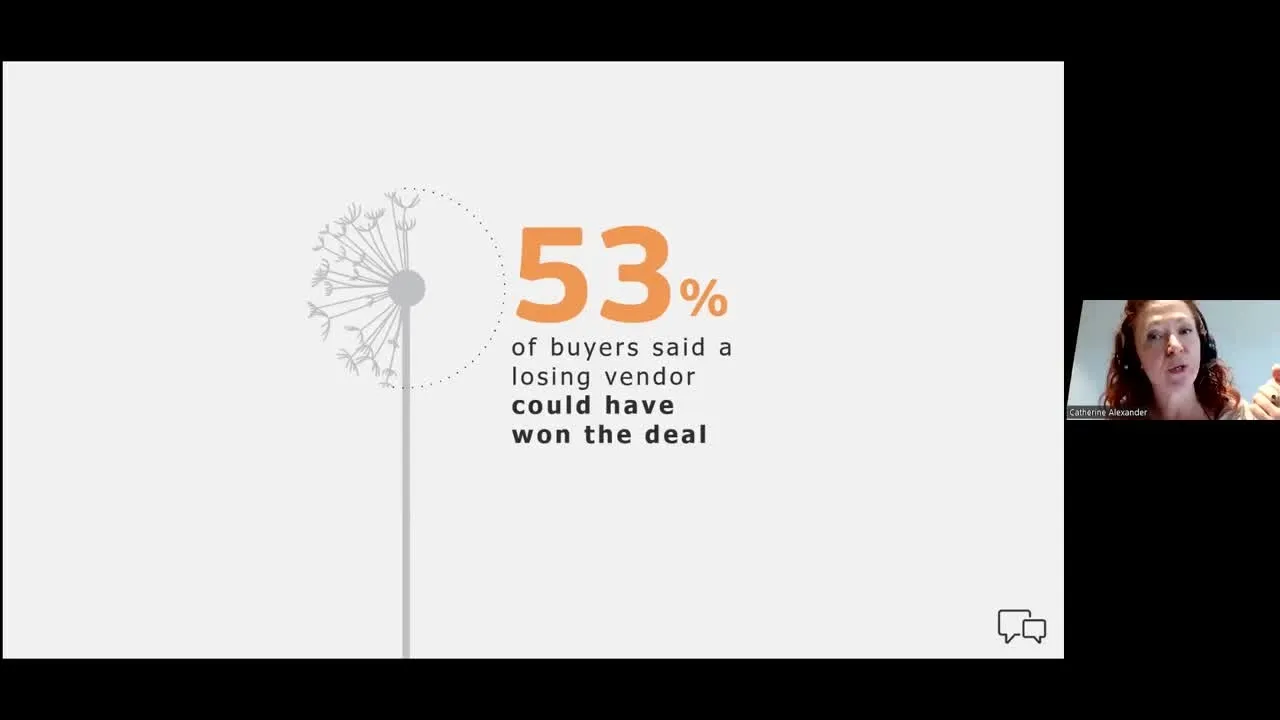
here for just a moment. So you've seen that if you want to qualify more winnable deals, and that's the key, at the very outset, you need to use problem-minded discovery. You need to get alignment on the problem statement. But that doesn't go away. That does not go away. You need to embed your qualification framework across a science-backed sales process. Because it is not the qualification itself that wins you the deal. It is the execution of that to drive buyer decisions that makes all the difference. Last but not least, and it's a critical one and one we do not see a lot of customers doing. Let's say you use problem-minded discovery. You embed in a science-based process. Even the best sales organizations, they lose sometimes. Even the best deals fall apart for factors outside of your control. But do you know why that happens so that you can do a better job with your teams of qualifying the next deal that comes through. So ultimately, the last part of qualifying more winnable deals is actually closing the loop with win-loss analysis so that you and your teams can better learn which deals I should be qualifying further up front. So me reshare my screen. And here's why that is so important. Again, I go right back to the research. stats. Because across 100,000 data points over the past 20 years, our win-loss data tells us that 53% of buyers said that a losing vendor could have won the deal. Think about what that means for a moment. Yes, there are 47% of deals where you never could have won. Maybe that was the competitor just had a better product. Maybe your pricing was just totally out of whack. Maybe there were some factors that, no matter what, you could have done, no way you were going to win. But buyers say 53% of the time, that's not true. You could have won if you executed on your sales experience differently. And maybe that was, "Hey, we actually didn't align on the right problem. " And as a result, we did not have the right alignment from solution to needs. And that's a pretty big stat. If you look at all of your losses and you say I could have won 53% of those if I did something differently in the sales experience, that could be the difference between quota or not. But here's the challenge. Here's the challenge and again, sellers that are on this call, SDRs, AEs on this call, I apologize in advance for something that is unfortunately true. And that's the fact that sometimes the reason you give why a seller wins or loses the deal, not always the reason the buyer gives. In fact, our data would say that 50% of the time, you get different responses between the seller and the buyer. Gartner's actually worse. Gartner would say, "Actually, it's 70% of the time where the reason that a seller gives for a win or a loss is different than the reason a buyer gives for a win or a loss. " And that's why you need to close the loop with win-loss data. Because the buyer they went through their process. They were the ones that made the decision. chose you or a competitor. And so, the reason that the buyer gives is a critical one to learning what should I qualify then the next time through. And so, again again, why this is so critical, if you ask a seller why you lose a deal and then a loss, oftentimes you get a lot of that feedback around pricing, around features, around uncontrollable events. And again, sometimes that is true. But if you ask a seller why they win, well, of course, it is of course the heroics of the seller, which again, sometimes is true. But if you ask buyers where the disconnects actually are and the most common missteps that buyers describe. You ask them, "What are the most common missteps that sellers take? " Well, the first This is a horrific stat, folks. 79% of buyers say that their seller when they lost presented little or no competitive difference. And what our research at Corporate Visions tells us is that when a buyer when a seller is focused on solution and product, product, buyers perceive no competitive difference. And I would venture a guess, I don't have data to back this up, but I would venture a guess that if there was no problem statement alignment and the buyer thinks they're trying to solve one problem and seller another. Seller isn't bringing differentiation that the client cares about. Second most common misstep that gets cited. And here it goes, folks. These were two different data sets, by the way. This was not the same study. Buyers say poor needs discovery and lack of solution alignment in response. So, buyer feedback on lost deals is saying the same thing that our research found on problem statement alignment at the very beginning of your discovery. Which means that buyers are looking for problem statement alignment and then proper alignment of solution response. And what that tells us, buyers are saying, "Hey, sellers in losses, they didn't spend enough time learning about me. " They didn't tailor the solution to what I thought, probably because they didn't have problem statement alignment. And that meant that presentations weren't aligned around the buyers' needs. So, you can see how all of this starts to fit together. If your teams are not doing problem-minded discovery at the very front end and aligning on how that should all come together at the front end of your process, you could always check the box on all of those qualification elements and still lose. Last but not least, what is a buyer describing? This has absolutely nothing to do with qualification, folks. It's just a simple thing that great sellers do. Buyers say, "You know what? Sometimes a lack of timely response, lack of responsiveness, that's why you lost. " Again, has nothing to do with qualification. It's just about great sales hygiene. And so, ultimately, what this means is that you need to be looking for these missteps across the sales experience and specifically around qualification. Because if you are aligned on problem-minded discovery, and you are trying to define how your qualification framework methodology fits into your sales process, there's some very specific seller skills
The Great 8
that you need to be looking out for across the entirety of that buyer's journey. We call them here at Corporate Visions the Great Eight. The Great Eight skills that buyers have said are the ones that are more likely to drive those winning deals. Provide unexpected expert insights. The second is aligning solution to needs. And that again gets right back to the research in a separate data set. These It's great when these data sets align. Aligning solution to needs is critical, but your sellers cannot do that if there is not agreement on the problem statement up front. Third, they need to demonstrate that clear differentiation, and they're not going to know how to differentiate if they don't know the problem and agreement on the problem that they are trying to solve. It makes sense they need to articulate meaningful value and help justify that business decision. Be a creative negotiation partner, deliver compelling communications, and last but not least, be responsive to that concern resolution. Again, that's not a discovery problem, folks. That's just a sales hygiene problem, but it's a critical one. Because remember all the way where we started this conversation, when there is alignment on the problem in discovery, that is perhaps the single biggest qualification framework you can do. Because the average, if you recall, was 45. 5 on all deals, but it was sub 25% for lost deals, it was greater than 60% for winning deals. And as you can tell from the win-loss data, when you get that up front, when you align solutions to needs, when you differentiate clearly, you win more often. Now, unfortunately, if you are a Yankees
fan right now, if you're a baseball fan, or if you're a whatever sport, and think about the number of times that there is not great problem statement alignment between you as a fan and the ownership of that sports club? That leads to a lot of disconnect, folks. And right now, that's where I am with my New York Yankees. I think we should fire the general manager and the manager of the ball club. Ownership doesn't believe it, and as a result, there's not going to be much winning in the future. But if you think about your qualification frameworks, and if you are your qualification frameworks actually qualifying more winnable deals? Are they using problem-minded discovery in your sales teams? Are they embedded in a science-backed sales process, and are you closing the loop with win-loss at the end of the day to determine how better to qualify future deals as you go? Chris, I know it is more likely that there are way more fans of other ball clubs than the Yankees on this one. It's just too near and dear to my heart to make it happen. But I appreciate y'all joining us here on the webinar today.