00:00 - Introduction
01:08 - Agenda
01:59 - Life considerations
15:29 - Financial considerations
24:45 - Objectives
⚡️ Join my monthly newsletter for exclusive goodies:
https://mizko.net/newsletter
---
Become a highly-demanded Product (UX/UI) designer with me:
Ultimate Figma Masterclass 2.0 (8,500+ students)
👉 https://thedesignership.com/courses/the-ultimate-figma-masterclass
Practical UX Research & Strategy Masterclass (1,200+ students)
👉 https://thedesignership.com/courses/practical-user-research-strategy-course
UX/UI Design Course (800+ students)
👉 https://www.thedesignership.com/courses/ux-ui-design-course
Shipfaster UI - Advanced Figma Design System (3,000+ designers)
👉 https://thedesignership.com/products/figma-design-system/
Outline - Figma Wireframe Kit (500+ designers)
👉 https://www.thedesignership.com/products/outline-wireframe-kit
Follow me on IG (Daily updates):
👉 https://instagram.com/themizko
---
Follow and learn with me:
Become a legendary designer: https://thedesignership.com
Personal portfolio: https://mizko.net
Instagram: https://instagram.com/themizko
LinkedIn: https://linkedin.com/in/mizko
Оглавление (5 сегментов)
Introduction
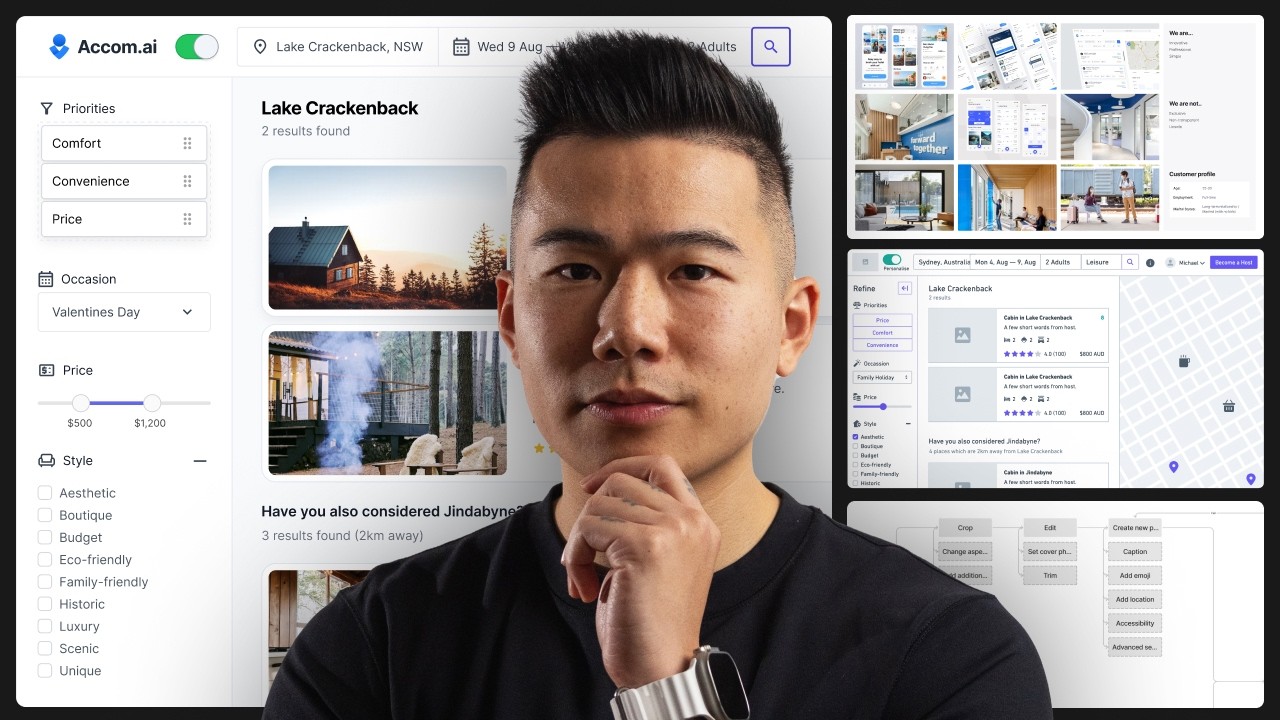
Most people would say it's insane to launch a tech startup when you're not technical, but that's exactly what I'm doing. I'm 34 and this year I decided to take the biggest risk of my life. No investors, no technical co-founder, just me starting from scratch. Now, this isn't my first business. I've built an agency. I've built an online design school. But those were around me, my time, my skills, my knowledge. This one's different. It's going to be technology first. It requires engineers, a real team. And for the first time, I can't do it alone. So, here's the plan. I'm documenting my entire journey. The wins, the failures, the lessons that most founders never share. This is episode one of what it's really like to build a tech startup as a non-technical founder. Another week and another video for you
Agenda
beautiful people. So, now that you have some context around this new series I'll be publishing on this channel, I want to dedicate the first video of this series to give you more context around the why behind I'm going down this path. So three things we'll be covering which is the life considerations that I had to make before jumping down this path and going down this path. The second thing is the financial considerations and then the third thing I want to cover are some of the business objectives of what I plan to achieve in the coming months. So, if you appreciate this video, if you like this type of content, please make sure to gently smash that like button because that's the only thing that I ask from you. All right, so with that said, let's dive right in. So, the first thing
Life considerations
we'll cover is the life considerations. So, before jumping into uh this journey and this path and this new direction for myself, I had to consider some sort of some major things. But before I jump into that, I know that there's going to be some new viewers to the channel. So, as part of this video, I actually want to give you a bit more context of the entire journey, my entire journey, because this will help you understand why I am making this sort of pivot uh I guess a little later in my life and a little bit later in my career. So to really rewind back and go back in time, I guess like growing up in a Chinese migrant family, I didn't really have much expectations on myself, ambitious sort of dreams. Now, I guess the one thing I did have was a very good work ethic. And I think I picked that up from my grandparents and also my parents. Now fast forward to 2010. I guess throughout those years I wasn't really a standout student. However, I was very lucky to actually have discovered sort of the online world at a very early age. So around 14 to 15 playing some online games. And that actually allowed me to learn more about the internet, building websites. And I was just browsing the internet and just crawling around trying to learn how to design little graphics with Adobe Photoshop back in the days. Um, learning how to design like very basic websites. But it was in 2010 as you see in these photos over here. That was when I was able to land my very first uh web design, UI, and UX design job back in 2010. And that was for a platform called freelancer. com which is now I think is probably the second largest uh freelancing platform uh right after Upwork. So at the time freelancer. com was actually I believe the unicorn of Australia. It had millions of users uh before Facebook had even become like a major platform. So having millions of users back in the days was a major thing. like no one really had this type of sort of critical mass in terms of users. So this was fundamental to my journey because even though I had learned how to design and build websites and make some money online uh before landing this job, I was surrounded by some extremely smart people, software engineers, data scientists, product managers at freelancer. com, which really broadened my horizons. It allowed me to realize that I didn't know everything. I actually knew nothing in comparison to what all these people incred incredibly smart people were able to achieve as a team. So that sort of catapulted me uh I guess further down into my career and I learned a lot working hand inhand with some of the smartest sort of and brightest minds in Australia tech talent wise. Then I was able to in 2016 after working for I think four or five years in the industry I was around 24 around this time I think I was actually invited by Adobe to attend the Adobe Max conference. So they paid for the entire trip all the accommodation. They even covered the extra leg to Hawaii. So I asked them, could you cover the leg to Hawaii because I wanted to do a stop off there and actually catch up with a friend there. So they actually covered everything including the Hawaii trip as well. So in 2016, this is where I it was my first year freelancing and I sort of felt a boost in confidence because Adobe actually wanted to collaborate with me and it was my first time attending one of these such large design conferences. But I was actually somewhat of an in influencer for the UX side of things. So for Adobe XD at the time. Here you can see I was invited to the exclus exclusive um influencers sort of table. Uh we all got together. We all met with each other and there were some really uh well-known people at this table. So including Dan Petty who's who you probably know of who's also a UX designer. I was also able to meet some of the Adobe team. And in the photo in the top right, they actually last minute impromptu asked me to uh host their live stream for Adobe. And I absolutely shat myself at that time because I had not done any uh video work before. I had not uh really spoken in front of a camera before. So I was super nervous, but I got through it. And then in the bottom right, you can see that I stopped off over at in Hawaii. And that was an absolutely beautiful trip, super relaxing. So then in 20 uh later on in that year in 2016, I actually landed a partnership with Microsoft and I was asked to collaborate with them to promote the Surface Book uh Pro, I believe it was. So this is the one where you could detach the actual screen. They invited me and collaborated with me and I was part of this massive uh advertisement that they sort of pushed online. But that once again pushed my confidence and really boosted my confidence once again because I was able to collaborate and work with these major brands that I always looked up um to. So then in 2017, this was after one year of full-time freelancing, I actually moved out uh into my very own one-bedroom apartment. I actually owned that apartment. Um, and I only just sold this apartment uh beginning of this year, but I really doubled down on freelancing. So, I really obsessed with UX design and website design. It was what I really enjoyed in my teens, just doing it for fun. Then I worked in the industry for four to five years. uh really absorbed so much especially because I had the opportunity super grateful about it but I was able to work on platforms that had millions of users so I was able to understand what type of impact my design decisions would have so that sort of like leveled me up then I freelanced full-time for one year and then by the end of the first year I actually uh moved out of my apartment in terms of like my working environment I got a co-working space and I hired my first full-time designer uh from Sydney, Thomas. He was an absolute legend and I am super grateful that he was able to uh help me out in the early days because yeah like it he actually championed um everything all the values that I believed in and he had super good work ethic and even to uh today he still does a design work but has also sort of uh taken on more marketing um and performance ad type of work now. So super smart guy. So that was my first year. I was able to hire my first full-time employee. And then fast forward a couple more years. I had sort of scaled up the agency. I moved into a larger office. Everyone was Sydney based. Super expensive if you want to hire local talent in Sydney. But we were able to sort of like level up our game. So we had a little office. Uh we had more employees. I in this video I had actually joined up with my uh good mate V. he had his own sort of software engineering team as well. So we partnered up and we moved into this beautiful well-lit office and this was my very first time in sort of leading an entire team. Now over I would say four or so years um I actually generated around I think it was like $4 million in terms of revenue through just the agency. So you can imagine that was a lot of UX and product design work. a lot of that constantly day in day out I was just strategizing then leading the team in terms of how we need to design them that was a lot of projects now this is actually two zero accounts which was my bookkeeping account I actually had another uh account called Freshbooks um that actually had another extra like I think $500 to $800,000 in revenue so in total it was around 3. 5 to four mill something around that uh around that ballpark So after spending so many years just grinding it out, I worked inhouse as a designer. I freelanced. I scaled up the agency. I had done so many product design projects, like UX design projects for other people. I just felt like I burnt out. I wasn't really doing the thing that I originally enjoyed doing, which was actually being on the tools. So, let me just rephrase that. When I was scaling up the agency, I was hiring more and more people. So, I was doing less and less work. I was less on the tools, less thinking about strategies, less thinking about problems, and less actually creating. And I was just doing my job because I was the owner. So I my job is to actually employ people, put them in in place and have them do their job and all I need to do is focus on the sales. However, deep down I was still very young. I was around 25 or 26 years old and I felt like I still really enjoyed building the actual product and I felt like I missed that. However, I didn't actually realize this was what I wanted. I thought I was just tired of running an agency. So, I um in 2021, I actually started the designership. I started this YouTube channel and I built my own online design school to teach everything that I've learned over the years. It was like 10 to 15 years worth of um experience. And this business designership scaled so quickly. We have gotten over 15,000 uh designers come through our doors who have purchased the course or even purchased one of our products. And once again, it was just millions of dollars in revenue. However, after running this for another four years, I felt like I had the same problem pop up, which was I felt like something was really missing. I felt like I wasn't doing what I've always enjoyed doing. So at the beginning of this year, I actually updated my Figma course and sort of bundled um some very updated uh knowledge and packaged that up and launched that course. But after completing that major update, I realized after reflecting on my journey, I realized at the beginning I loved building and scaling tech products. Like that's what I've always enjoyed doing in my teens, in my early 20s. And it was only when I stopped doing that and focused more on the business and doing something that was sort of similar in product design. I was doing it for other people. But then when I was scaling the agency, I wasn't doing any product work anymore. I was just thinking about the business. And then when I'm teaching product design and I'm teaching UX design, I'm also no longer solving pro problems, building and scaling tech uh products. So that's what I love. But then the service based business and the info product business which was designership didn't actually give me the opportunity to continue doing what I've loved doing. So I realized I actually miss building and scaling tech products. Like that's just what I love doing. Now once I've had that realization, I actually ended up getting married. And if you've been following the channel, I mentioned this in a previous video. Got married at the beginning of this year. So, it made my decision uh making process a little bit harder because there's a new variable in place. So, because I'm now married and we probably plan to have kids uh in the next year, 2 years or so, jumping out and just starting a new business from scratch can't be that easy. I can't make that decision as quick as I could have in my teenage years or in my early 20s because now I have some other responsibilities to think about. So that is why I always believe in your actions should always be thought done through in days but you need to be thinking and planning in decades. So, now that I've gotten married, we probably plan to have kids in the next year or so, and I'm am probably in and I'm also in my mid30s. I'm in this sort of new decade that I really need to make sure that whatever I do now needs to set me up for my 40s. So, my entire life, I've always been planning in my decades. Whatever I did in my teenage years set me up for my 20s. what I did in my 20s, which was actually party really hard and also work really hard. That set me up for my 30s. And I'll explain to you why. So now that
Financial considerations
you understand a bit more context about my life and the journey that I've taken and why I want to be building my own product um at this point in time, I need to now break down to you sort of the financial considerations of what I needed to check off before making this decision or making this major pivot. So there's five key questions that I really had to ask myself before venturing down this path. So the first one was what is the riskto-reward outcome for this decision? So if I pivot and go down the path of building a tech product as a non-technical founder, what is the risk and what is the reward and is it worth it? So for me, let's just focus on the reward first. The reward is that I get to work on something that I genuinely love doing, right? I've always enjoyed building and scaling tech products ever since I was a teenage teenager and throughout my career I went down different paths in building businesses that sort of is relevant but also is not relevant to what I actually want to be doing. So the reward is that I get to do what really motivates me and what really gets to drive me. Now the risk is well fundamentally I've really I've honestly done everything I wanted to do uh within my career. I've been an influencer. I've traveled the world. They've paid for it. I've ran an agency. I've taught thousands of designers around the world. There isn't much more that I actually want to do except build my own damn tech product. So really the the only risk is that if I go down this path and we don't make money then I won't actually have any money come through or I might not make the money that I want to make to support my future family and my partner. So the second question that I needed to ask myself was well if the risk is a financial risk how much do we so my partner and I need to spend a year and including buffers for mini miscos that if we do have in the next year or so are we able to cover them so we actually did some projections and we did some planning very basic financial planning it's very easy you just have to calculate how much do I spend, how much did my partner need to spend, and we forecast how much potential kids and babies and mini miscos are going to cost. You can calculate how much you would need every single year. So, we had a figure. So, let's just imagine it's going to be like, you know, $100,000 or $200,000. We live far below our means, so it's actually very achievable. So, now that we have we understand it's a financial risk. I understand how much I need to make every single year to support the my main responsibilities as a husband, as the uh the man of the household. Well, with my net worth invested at this point in time, can I comfortably cover or make up that difference? And the reason why I highlighted comfortably is because I don't want to I guess like I like to work with the worstc case scenario. I like to be thinking about if everything fails, are we still going to be okay? So I want to be comfortably covering everything. So after doing the calculations with all the hard work that I've done over the last 15 years, all the money saved, all the money invested in real estate in equities, yes, I can actually comfortably cover all expenses if I don't even make a single dollar. Now, this was a major realization that I had uh early this year. I had never done my finances in this way. this type of planning. I was just so geared towards working hard and just making more money. That's all I was thinking about. But after taking some time to reflect and do some financial planning, I realized I actually could support our current lifestyle. And if we were to have a kid or two, I was still able to make ends meet. So with that said, what is my bottom line? So, if I could actually make this happen and I could sort of continue doing what I'm doing with my money invested with a average return of let's just say worst case scenario it's 8% a year uh on average then yeah let's go ahead. Now the fourth question is what is my bottom line and when do I actually pull the plug? So let's say I continue this down this path and I'm going to be working on this tech product. I I've got a head of engineering and another full-time developer. When do I actually give up? And when do I say this is enough? So really, when I thought about this, it's really when I can no longer financially sustain this entire path because I'm super passionate about what we are currently building already. I am personally using our own product every single day. Um, so even if we're not making a dollar, as long as my investments can continue to fund this project, then I will continue to do it. But if I can no longer sustain this, then I'll have to pull the plug. So my education business is actually paying for the party right now. And I believe that it will continue to pay uh pay for the party because I think the education business is doing quite well. There's a lot of value that students are sort of gaining from my education and I plan to continuously teach the things that I'm doing with my students. So, it's a bit of a flywheel effect. So, really that's my underlying baseline which is if I can no longer financially sustain what we're doing then that is when I will have to pull the plug. But it would be a very slow process even if we had to because I would be able to find different means of generating more revenue uh outside of the project that I'm working on to fund this entire operation. So then the final question that I had to ask myself in terms of financial considerations was that if I have to pull the plug, what is my fallback plan? And I've had to think about this for a very long time. And I am no longer motivated to go back to freelancing or even starting an agency again. And teaching is something that I am super passionate about, but it would be a more of a secondary thing. I do have a feeling that I will potentially jump back out into the industry. Um, finding an opportunity where I would be more in sort of senior management roles. And I'm less motivated by the dollar amount in terms of my pay. I'm more motivated by a big vision, something super disruptive, and the sort of the outcome and the payout is disproportionate to my input. So, making sure that I have skin in the game, I have equity in the company, and I'm surrounded by super smart people. And I guess because I'm not motivated by, you know, a salary uh as much anymore. I just want to be learning. I want to be building and scaling products with super smart people. That is what I'm super passionate about. And that is why I'm also bootstrapping my own business and my own tech startup right now and funneling lots of money in uh every single month to make this happen because this is something that I'm super passionate about. So with that in mind, over the last I would say two years, I've been tracking my net worth. So I actually know to a dollar amount how much I'm worth in terms of a financial uh metric. So I know to the dollar how much my investments are making or how much they're worth in terms of real estate, in terms of equity, in terms of cash, all that stuff. I know how much it is. So doing the calculations and the financial uh projections, I was able to do that quite easily. And then I've also been able to do some projections on this new product that I'm building. So I never actually jump into any sort of avenue where I'm taking up a lot of risk because I do actually I actually do a lot of planning up front that gives me confidence and I have this confidence because I always plan for three scenarios which is bare base and bull. So bare case is the worst case scenario. base is just the, you know, the average case and then the bull case is if everything is going super well. I've planned all three paths out and I know that we are either going to sit in one of those three buckets and I'm okay for the worst case scenario which is why I
Objectives
have the confidence to go down this path. So now that you understand the life considerations that I had to make and also the financial considerations I had to make, I want to share with you some objectives that I've set for myself uh for the next couple of months. So months is going to be a major ramp up in terms of sort of the velocity. Now what do I mean by that? I've told my head of engineering and also my full stack uh dev that we need to operate with urgency and we're ramping up the velocity in terms of like feature uh updates and releases. I need us to be working super fast. I want to be cutting more corners because ultimately customers will only be using our product if it solves their problem. So we need to be prioritizing the most important things um for our customers to solve their problems and by doing so we have to cut some corners because if we don't work fast enough then our competitors is just going to outship us. So we have to ramp up the velocity. deadline is end of October. We'll be launching alpha for our product and I have two key objectives which is I need to be reducing the churn for a new app that I have acquired. In the next week's video, I'll be revealing who I had acquired because this app actually sits well within the app that I am currently building. So, I wanted to sort of grow the network before we even have a product. And with the product that we are going to be launching end of October, my goal is to hit a thousand paying customers because this will actually make us break even. Once the business is able to break even in terms of the revenue can sort of cover all the cost, the ongoing cost to run the business, it means we can work infinitely because I'm not in a rush to scale this business. I'm doing this because I'm genuinely passionate about it. I have a very long-term vision of what I want to be doing. I have a I've got a very long-term mindset as well. So, I'm playing the slow game. And I think slow is fast if you compound that over a long period of time. So the goal is to hit a thousand paying customers to break even. And if we can get to that point, I'll be super super happy. And finally, it's time to just lock the [ __ ] in. Like that is just something that I am super excited about. I've been doing like solid 9 to 10 11 hour days, not because I have to, but because I generally want to. So hopefully this video gave you a bit more context about this new path that I'm taking. My goal is to peel back the curtain, share more about what is actually happening behind the scenes for a non-tech technical founder building a technical company and share the wins, the losses and hopefully this inspires more people in following my path as I document this journey from start. Hopefully there's no end. hopefully we just continue building and um you know gets passed on to the next generation. So let me know in the comments below if you like this video. Make sure to uh gently smash the like button. Let me know in the comments what you would like to learn as part of this journey. And in the next video next week, I'll be revealing who we actually acquired and some more tactical design and product decisions that I made throughout the process. So, with that said, I'll see you next week.