Get Saramonic and Use FILMRIOT10 to get 10% off
https://bit.ly/3M01qLv
Follow Dan Trachtenberg:
https://www.instagram.com/dannytrs
Predator: Badlands Trailer:
https://www.youtube.com/watch?v=43R9l7EkJwE
▼ Timestamps ▼
» 0:00 - Intro
» 0:43 - Making Two Films at Once
» 6:04 - Idea Hopping/Hover Hog
» 7:22 - The Opening of the Film
» 8:24 - Saramonic
» 10:11 - How Dan Landed the Predator Franchise
» 14:59 - How Did You Face Doubting Yourself?
» 20:34 - Test Screening Horror Story
» 21:50 - Finding Courage in Doubt
» 26:08 - Predator Mask VFX
» 28:57 - Challenges of VFX
» 30:10 - Shooting on Location
» 31:34 - Spielbergian Long Takes
» 34:50 - Shooting the Falling Sequence
» 37:03 - Creating Momentum
» 39:06 - Title Sequence
» 41:04 - Shooting the Power Loader with AR
» 44:09 - Aspect Ratio and Lens Choices
» 46:23 - Storyboard and Animatics
» 50:12 - Did you Shotlist?
» 51:27 - What's Next After Predator?
#FilmRiot #predatorbadlands #Directing
-----------------------------------------------------------------
*GOODIES*
The Film Riot + Smallrig Multitool!
Multi-Tool Kit (7-in-1): https://geni.us/7in1wrench
Multi-Tool Kit (10-in-1): https://geni.us/10in1wrench
COLOR GRADING LUTs:
http://bit.ly/buyFRluts
SOUND FX:
http://bit.ly/buyFRsfx
MUSIC:
https://bit.ly/storeFRmusic
VFX ASSETS:
http://bit.ly/buyFRvfx
----------------------------------------------------------------
Оглавление (21 сегментов)
Intro
Oh my god. You know, I felt um it felt awful. It felt absolutely awful. — I can't even imagine. — Yeah. I mean, the devil on your shoulder telling you almost exactly what you're afraid of. — What does Dan Cloverfield Lane have in common with Prey, Killer of Killers, and Predator: Badlands. They're all directed by today's guest, Dan Tractenberg. Now, Dan is a friend of mine, but as you'll hear me say in our chat, Badlands is genuinely some of the most fun I've had in the theaters in a very long time. who's surprising, exciting, and so well constructed that I wanted to pick Dan's brain about all of the above. This is spoiler-free, but if you haven't seen the film, take my word for it. Go see it on the biggest, loudest screen that you can while you still can. But I'm going to stop talking here and start talking with Dan.
Making Two Films at Once
So, you just released two films in one year, and I imagine just one film is intensely daunting. So before we jump into the actual creation of the thing, I'd love to talk a little life stuff where specifically where it comes to the fact that you were making two films at the same time. Like what did that look like on a daily basis? What are those kind of work hours? There was a portion where before we went to New Zealand to prep and then shoot Badlands, we were developing them at the same time and then going into production on Killer of Killers while we were still writing the script for Badlands. Secretly, there was there's a there's something cool about being able to switch gear whenever something was feel like you're hitting a wall creatively. — Yeah. — You then have like, all right, let me just think about this one then for now. Um, and within Killer of Killers, there were like three or ultimately four movies um that were like, I can't crack the code on this in the Viking chapter. Okay, let's talk to the Feetal Japan folks, you know? Let's get in. Let's what where's that? Oh, wait. Oh, that's cool. We have some cool ideas there. Okay. Then you get stuck on that. And it's like now we have a Badlands meeting that the deal, you know, and it allows me to not let things fester and obsess or worry about certain things cuz you you're just sort of being bombarded with stuff. And I was using my instincts more than anything. But it was a lot of really a lot of late nights. Um because then you get to deadlines for any of those things and it's like okay now we this has to get thought through. — Yeah. — Then on when we went to New Zealand that was tricky cuz and everyone of course is like each thing is the most important thing to any individual or team on the project. So, the Badlands people were upset that we'd have this chunk of we couldn't do a meeting in the morning because we had a whole crazy fire happening for Killer of Killers. Um, — and vice versa. But there was a lot of us, you know, at like 6:00 or 7 a. m. driving to set — an hour away or something in New Zealand and we had uh my producer got Starlink attached to the vehicle that we were in. Probably we probably all have cancer now. Um like we were like surrounded by these like servers in the truck. Um so we could have our meetings um with our laptops and look we used this program Sync Sketch to um look at concept art or animation or whatever it was at the time and uh go over all that stuff then get to set and start going at Badlands. And there were frequently moments where I would have my cans, my headset for Badlands with one ear open like this and then an earbud connected to my producers's laptop for a Killer of Killers meeting. Um, and would be like cut full Spielberg with it. — Yeah. And then overhearing something that was like someone was misinterpreted. like whatever it was. It's like, "Oh no, I got to then like pop into that meeting and uh deal with whatever the Killer Killers thing was. " And there's a picture we posted to Instagram that had like my onset monitors. There was a day where we were doing we had second unit, I think, too. So, it was like two sets of monitors, main unit and second unit, and then a laptop open for a Killer Killers finaling shots or something, you It was like this crazy like everything was happening at one time. — That's insanity. — It got pretty gnarly. But also, — like I said, when something was you're feeling down on some creative idea here, there was always something else that was up, you know? I think the blank page is always this really daunting thing. — And I say the blank page also metaphorically in terms of like starting from zero, accelerating off of zero was really hard. But with this, everything's all the gears are cranking. Nothing got rusty. You know, each creative idea boosts the other. Um, and sometimes there's a period like of ending a project and starting a new where you kind of sometimes you're relearning some lessons. You're like, "Oh, yeah. Why am I making this mistake again? I knew that. " you know um and this didn't allow this led like oh reminded me of all the — right choices when killer killers was like coming together and really working then it allowed me to kind of carry that momentum into Badland stuff so I don't know that I would do it again but there's something very specific about working in animation that allows a lot to be virtual as much fun as it is to be in person and sometimes makes things smoother when I was doing the pilot for the boys. I also was doing this for this video game Warframe, the kind of directing the opening cinematic. — Um, and that was all virtual. Um, they were on Budapest. So, that kind of like opened the door for us to walk through with our process on killers.
Idea Hopping/Hover Hog
— Did you find like ideas hopping from one thing to the other? Like you have an idea here that's not quite sticking in Killer of Killers, but hey, that would actually fit in bad lanes. Yeah, there we had a design come in for the what we call the Zamboni in Killer of Killers that was like a hover bike with a thing on the front that pushed the bodies out of the arena. I think when it first came in, it wasn't in that much of the movie and I was like, "Oh man, this is so cool. Uh, I wonder if there's a way for this to be in Badlands. " And then we were scouting for Badlands. We scouted like Iceland, Australia, and New Zealand. And every time we would scout, especially when we were in Iceland, it' be like where the landscape is so breathtaking. It'd always be like, wouldn't it be so cool to just see like a little speck with some smoke in the horizon like it's a hover bike, you know, like what? Yeah. Look how cool this is. Wouldn't it be awesome if the you know, and and then that there was no hover bike in Badlands at all. We call him the hoverhog until we had already filmed. Um, and then we concocted some sequences. I'm lying. There was the dad, but there was no deck on a bike in the be for the opening of the movie. But all that came in, too.
The Opening of the Film
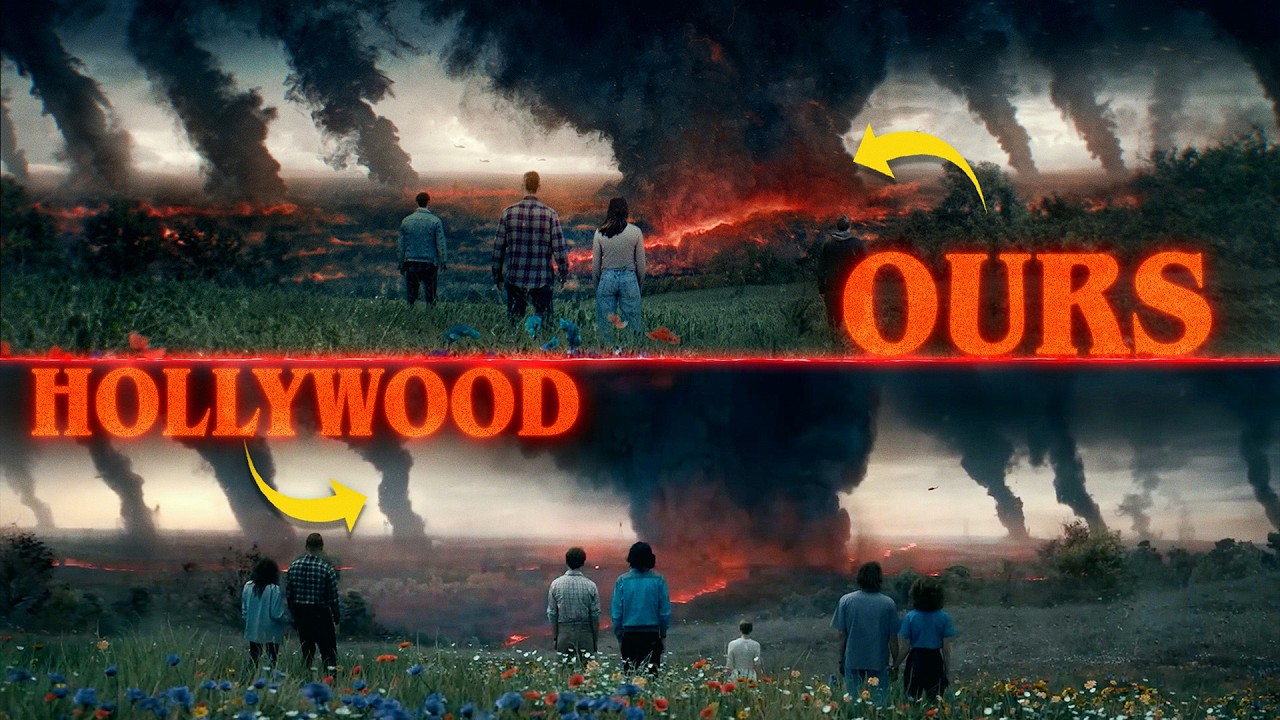
Like that was one of my favorite shots. That opening shot looking through the cave and seeing that like — that opening that shot for a long time was not pushing through a cave for that long time. It was just the static on a planet and we heard voice what is the codeex. We actually heard that as voice over and it was hearing the wind and the it was mirroring very much the prey opening that open on prey kind of opens on this like docu style like oh here's the land and nature and we were doing the same thing on an alien planet and then in one of the trailers we wanted to start with letter boxing um and then open up to make the movie feel really big. Then it became, what if the movie did that? And then it became, oh crap, wait, what if we make that cave that cave wall instead of just black bars? Um, and then it could feel like the opening shot of the searchers and which Bray had a thing similar to as
Saramonic
well. Let's pause for a minute to thank our sponsor, Cammonic. They have tons of great gear, but there's two I want to look at today. First is the Cammonic K9, a digital UHF wireless system that gives you a massive amount of clean dynamic range with twice the internal storage, less aggressive gating, and a clean signal without nasty RF spray. Because it's UHF, you get a reliable, stable signal in places where 2. 4 GHz systems start crying like crowded events, busy city streets, or convention halls. And it's one of the only digital UHF systems that can do 32-bit float internal recording and 32-bit float transmission. So, if your talent goes from whispering to full screen, you're not nuking your track. You can wirelessly record and transmit in 32-bit floats simultaneously anywhere outside the US. But in the US, you have to choose one due to a patent that will be expiring soon, so it is futurep proofed. You have two included super tiny 3mm lobs, which are amazing. They're kevlar reinforced, waterproof, dust proof with virtually no cable noise, so you can record audio or repel from helicopters with them. Another plus is the ceremonic system app. You can scan for clean frequencies and push settings to multiple units or group devices, rename them, color code, mute, sync, and manage all that from your phone. And the K9 can sync to external time code as a slave, which we can use the Cammonic TC Neo for that, a tiny wireless time code generator. The TC Neo lets you jam sync all your devices, so A Cam, Bcam, your audio recorder, and so on. It's super tiny, mounts easily on pretty much anything, and you can control and monitor over Bluetooth. You can also quickly jam multiple units keeping everything locked for long shoot days and then sync everything very quickly in post. So if you want wireless audio and time code that just quietly works, hit the link in the description for 10% off the Cmonic K9 and TC Neo.
How Dan Landed the Predator Franchise
Let's go back though like it the inception of it all like starting even with Prey because this franchise what you're doing with it I just love so much because it's not a repackaging of what's been done before. You're taking this very well-known franchise and then you're using it to make these very unique films, which you've said in other interviews, you know, things that we haven't really seen before, and people always say that, but it's true in this case, the way that you're doing these things. And that's why Badlands was so fun and exciting to me cuz I kept just leaning to my wife going, "That's I that's new. Good for like that is for me. That is the golden egg right there is for me to go like, haven't seen that, you know, that's incredible. " And to do that on such a large franchise, like just I just got to know how did this come to be? Did they come to you for a Predator film? Did you go to them? I heard little uh bits about that, but I would love to hear, you know, the inception of it all. — I think part of what was in the recipe here um that made these movies work was that it I wasn't thinking about how do I make Predator something again? Um, yeah. — Or or even what would I like Predator. What would I do? And and the studio wasn't saying, "Hey, we want to make bring Predator back. How would you do it? " You know, I really came to it very organically. And they already were making the Shane Black. They were making they were rebooting Predator in a different way. At the time that you came with this, — at the time of me coming up with Prey, Prey came from me just thinking about a movie I want to see, a movie I I want to make and really driven towards the notion of making something that would be primarily told through action. Fury f what would Fury Road on foot feel like? And so that put me in the headsp space of like a revenant or gravity, a real survival tale, just someone unexpected up against the odds. And that then brought me to someone proving themselves and sort of a Comanche going off into the woods with something to prove. And then I'd always been interested in sci-fi and period film coming together. That just is a I think that's peanut butter and chocolate. And we rarely see um that combination. And because I was in that headsp space, I think that got me to Predator, which then we had the story with the character trying to prove themsself and here's this thing looking for the most worthy. Suddenly that's that wasn't just a genre exercise. It was like, oh, that that's meaningful. um her story could become um really epic and the Predator story becomes not just something there for action but but something that was had more emotional and thematic weight to it. So um that was like holy crap this is a cool movie and it's interesting before it's a Predator movie it's already got conflict that I've and has a protagonist that we never get to see like already was a movie worth making and then the Predator aspect became even more tantalizing. Um, so I had emailed an Exact 20th and pitched the movie, but because they were making the Shane Black movie at the time, I said, "Why don't we call it Prey? " um, to not step on Predator Dumb and they dug it, but the Fox Disney merger happened and the movie went away for a few years. So, the same thing happened every time. It was then um after Prey was trying to think about what else doesn't exist in the Predator franchise. Sure. But really for me is like what about s what about all of science, you know, what about movies? What what do I want to make? So I'm not just making a sequel. I'm like making something that's also a cool movie. And a few ideas sprung to mind and two of them were Killer of Killers and Badlands. one, you know, a lot of the movie that where the Predator's protagonist or a cre take any franchise making the creature the protagonist um was a really exciting endeavor but uniquely exciting for the like notoriously ugly [ __ ] you know, um being who you're like strapped to — and the challenge of finding a way in emotionally without defanging it. And then Killer of Killers was a just telling more historical stories in animation, getting to express the violence in animated form, but also the idea of watching an anthology movie and then finding out it's not an anthology. You're actually watching one story. Um, — that all became — super tantalizing and I didn't know which would happen first and they both happened at the same time — as the universe decides. um they're so
How Did You Face Doubting Yourself?
unique. I just was there one an uphill battle to these and two how much doubt did you face through that say development process of these stories like were there a lot of times you're like this is s this sucks I suck this is a terrible idea you know and and if that did happen which I'm assuming it did because it's creative process but you know how did you find yourself pushing through those — simultaneously there was excitement from the studio uh in ways that are very surprising. But they immediately saw the merits of both ideas and were not afraid of the things that would have maybe many years ago deterred a lot of movie studios and recognized what it takes to get people off the couch is something surprising and fresh and new and all that. So on the one hand they embraced a bonkers idea in Badlands and Killer Killers, you know, we had never done animation. They never did animation. We were going to work with a company third floor that had never done a finished animated project before. We just worked with them in previs. So it was a lot of handholding, you know, um and trust. At the same time, there was a lot of doubt throughout the way. There's a lot of doubt, you know, with Killer of Killers, our desire to tell three stories and then unite them in one and have every character arc completely enough in their own story, but then in the fourth story still have more like there was a lot of temptation to like let's just make it fun, you know, like it doesn't have to all come together like let's, you know, and it would have been much easier um to do that and way harder to narratively figure that stuff out. um Badlands. I was had an insane amount of confidence going into it. I remember the same feeling in life, like even in just the idea of making movies where I on the one hand had this feeling that I was like, I'm going to work really hard. I'm going to figure it out. I'm going to I'm going to be director one day, you know, like I I'll just I'll figure I'll work hard enough to do it. And then you get older and I got married, you know, and like life, the older you get, the more mortal you feel and you realize that it's nothing set in stone and and anything can happen. Um, and I realized, oh my gosh, I could not do it's not it's not a lock, you know, like it cannot happen. And that's what motivated me to make that portal short so many years ago and really just like put it all on the line. And I had the same feeling where I was so confident in the idea of for Badlands and it was really hard to make and there was not a lot of precedent for some of the ideas and choices we were making. So there was nothing to lean on and say well that worked there so we're good. Um and there were a lot of moments uh where I turn to my producer and say what if we're making Howard the duck you know like it it occurred to me. It took a lot of effort to make Howard the duck and those suits are like really cool. Um, and they're really well realized and handcrafted by make, you know. Um, and everyone was going, — "This is a crazy movie. May it may be awesome. " You know, Star Wars was probably felt crazy to everyone. This is crazy, too. And then it turned out that movie, I mean, I actually like Howard the Duck. Um, but I'm the world did not. Um, you know, it was so crazy that it was crazy. And people were like, "That's a ridiculous movie. " And it was like we could be making a ridiculous movie for so many reasons. There were so many choices that any one of them um and there's certainly people online that would say we did make a ridiculous movie, but you know, it was really — scary and there's a funny feeling with a little bit of success and and with this with Prey working as well as it did. I always had this feeling of I feel like people are not certain about what we're doing here, but they're trusting me because of prey and then I'm like, but what if they should be correcting me right now? You know, what if I they they're just like saying yes, agreeing to something and they shouldn't be, you know, and because actually what they're I might be wrong about this one thing and we need to be, you know, and so I really was petrified. um that everyone was like you this is insane but okay we're you know we'll trust you and and they shouldn't be trusting me and the movie was hard to figure out to get to the very core of the of the thematics of everything and yeah and they're tonally we were walking a real tight rope between how how fun is the right amount of fun what what's too absurd um and especially with elements from the Alien franchise that Predator has involved a little bit of camp along the way and whereas the Alien franchise has always been dead serious and we were using some elements from that franchise in ways that were pretty bold and out there. So, um all of it was really touch and go and scary and I had many a night sleepless you know and just feeling like well this could be it for my career. This is the end. Um, and I will even say
Test Screening Horror Story
the first time that we test screened the movie, as soon as it ended, I went to the bathroom and I'm standing at a urinal, the door uh opens and two guys come in and one guy's like, "I loved Prey. Why the [ __ ] would they make that movie next? " And the other guy was like, "That was absolute dog shit. " Um, and I'm like, this is the first reaction to the movie, ju just showing a general audience, you know, and I'm just like this [ __ ] you know, watching looking down the drain at my at everything, you know. Um, and I just devastated, you know. Uh, thankfully that was not the common reaction to the movie, even at that screening that I just happened to be in a very unlucky position. — The universe humbling you for no reason. But even still, there was still was a lot there still plenty that wasn't working in that screening. And so, — oh my god, you know, I felt — um it felt awful. It felt absolutely awful. — I can't even imagine. — Yeah. I mean, really, it's like your inner, you know, the devil on your shoulder telling you, you know, almost exactly what you're afraid of. Was that I answer your question? — No, totally. I in those times
Finding Courage in Doubt
when you are feeling that immense doubt cuz this is no small thing. This is Predator. This is a massive film you know 100 plus million dollars I believe the budget was you know how — how did you push through that? Is it just pure courage to say no these ideas are good and I'm going to stick to that like where are you finding that balance of like should I shift gears? How are you holding tight? cuz there are some wild ideas here that completely pay off and are some of my favorite I which I told you already some my genuinely some of my favorite stuff I've seen at a theater in I can't think of how long everything feels so safe and this did stuff that was so wild which I don't want to spoil maybe we'll spoil a little bit later but so wild especially with Elle's character Thea and what happens toward the end and something comes and how they find her I was like giggling with delight you know not like giggling at it but giggling of like is he going to do this? Oh, he's doing this, you know, and just loving that so much. But in the theater watching it, I immediately put myself in your place and was just like, would I have had the balls to go through with this and this, you know, and on such a massive scale. So at those times when you are doubting yourself, I don't even know if you ever even doubted that specific thing. But those moments that you are doubting yourself, is it someone that's being a pillar for you or is it you just saying, "No, this works. I know it works. " And quieting that part of your brain. — It's a cycle because lucky that I have creative collaborators that I'm very in sync with that we're all attuned to the same frequency and remind us of the noble endeavor and support those ideas. But there were times where some of those folks were would doubt something and I would need to lean on myself or um another figure, you know, like it all you go through all these cycles of uhoh, you know, of people that you respect and trust, like suddenly being unsure about an idea. That that's what it feels like to be a director, frankly, is it you do your best to clearly communicate what's in your head, but there's no one with a supernatural ability. And so you're always going to encounter someone who or groups or whatever that aren't seeing things just as you see them. And the difference between something being good and bad comes down to how it will be visually realized in the end. And this is a movie where we could not see how things were going to be visually realized until the bitter end um with the amount of visual effects work and the main character um being a visual effect itself and the sidekick being a visual like everything the same thing that doesn't work if we never changed anything but just having eventually the face there and seeing Thea not with blue legs dangling but like actually as they suddenly that scene comes alive and does work and how do we mess with it, we may have ruined it or whatever. So, you really have to take in feedback constantly, but also listen um to your inner honed craft, instincts, whatever to realize when is an when is a thought, a piece of feedback um essential and when is it when do you feel like that this is going to be different? when they when this looks the way that it was intended to from an you know from our imagination to to the screen. Yeah. So having those collaborators to lean on was essential. Um and knowing how fragile it all is. You know the smallest change can make something that doesn't work and the smallest adjustment can take something that works and and break it apart. It's it's incredibly daunting and intimidating, but that always has to be kept in mind. And that the pendulum has a tendency to swing. — Too much comedy. Let's get rid of all the comedy. You know, like you think about your experience of things, there could be one any time. Just speaking of comedy, if there's a joke that does not work once in a movie, that experience, it can happen at any point in the movie and there can be a bunch of last whatever, but that one you go, "Oh, this movie com this maybe too joke, you know, like it doesn't you and it's one. All it takes is one. It's deciphering those kinds of notes. "
Predator Mask VFX
— That goes to like a lot of the decisions you're making in pre-production, too, which you mentioned something with, you know, Dex face. Wait, did you have like the full mask on the whole time and then you're just CGing that or cuz I saw some BTS stuff where that was open and you could see the actor's face. Was that just rehearsal or did you do that for performance? — No, it was an open cowl the entire time. We had a stunt mask for wide shots where we were all hoping that we could get away with a few shots here and there. I don't even think that ever came to be. I think we always judged up something. Um — but no, it was um committing to building a full prosthetic suit. Just the face was open and to kept Demetrius's eyes. Um he would wear contacts and everything else was uh visual effects. Very scary. Very scary because what we love about this franchise is the physical suit. And I think part of what gave me ease when we saw some tests, unlike some of the CG work in Prey and in um the 2018 Predator um where that was okay, the Predator CG, so it's flesh, but that's different than the suit. This time the part that was visual effects was matching the texture of the suit. Um, so instead of like improving the suit to make it look like it's actual more real, um, the way that we can in visual effects, uh, no, it was like sticking to it has the dreadlocks and all that stuff still if you can feel they have a look to them that feels like they are tubular physical pieces and there's a quality to the texture of that suit that just feels like really well done, but suit work not it's not Gollum or apes or any of that stuff. So, letting the face match that texture, I think really helped create, you know, the magic trick of the movie. — Yeah, it definitely grounded it all for sure. Did you have like uh a piece of the mask on set for like just seeing it for maybe the light or just seeing it on camera just to be like, "Okay, yeah, that looks cool. Now take it off. " You know what I mean? That sort of thing. — No, not on him. Just at the they would have on like a stick. Um they'd have for lighting reference, you know, — and because every single shot was a visual effect. — Like there was no like, all right, we got that and next thing every shot of the movie was we have that. Okay, balls and charts. Um then they do a pass with that thing. Okay, now we're going to do a clean pass and they have to do the camera move all over again. Like every single shot had — like you really made like a liveaction animation hybrid. Yeah, it was. But in a way that hopefully um it funny
Challenges of VFX
enough has its own challenges because some like even thinking of Avatar um there's a clever there in that it's all visual effect you know um for the most part other than some of those sequences with humans but um everything is made by the same thing. I remember when we were doing the bear and prey like it's harder to be immersed in reality and your eyes are accepting a reality the entire time and then something CG happens and suddenly it's a harder threshold to overcome. You know, you can smell it right away. And I really wanted it to feel as much as possible like we are in these locations that's real and we're just peppering in visual effects along the way but didn't quite process the uncanny valley aspect and like how it really slams you in the face. Um because that work can stick out. So um I think in a way I what I thought was going to make things easier ended up being harder. Um I thought oh we're shooting so much and then you have reality to match to. Um but actually um it's just a higher threshold um a higher standard um to an audience
Shooting on Location
— which actually makes me wonder how much of Badlands was location burst stage. — I want to say like 90% on location. — Nice. — Like we did most of the end infiltration on the way base at night. Then we did some pickups on the stage and I was like why do we why were we you know doing night shoots like crazy and um we could just be here. It's pretty much the same because night becomes black and so what black is now blue for us and we still brought in our ground and but actually I would do that again. Um I I'm realizing how much of a difference it makes a when you do have something to when the visual effects artists have more reality to match to there's you just you can I think you can kind of feel artifice and having there's a magic trick that happens I think when you don't know which is the real part you you're flopping back and forth between them enough um that you don't you lose track internal subconsciously ly of like when something felt added and when is something was as I normally see it in photography or in my own life, you know, um when there's too many different things in the frame, I think it helps pull off everything. So, as like the previous statement, as hard as that is, I think to finish that thought worth it.
Spielbergian Long Takes
— Yeah. — For me, the momentum of the film really sold so many things, too. Like there's such a driving forward. You mentioned um Mad Max, which is funny because I thought that when leaving this film, like there was such this driving forward story through action momentum that never led up. It just started and kept going and we're getting all of our story and character through the forward momentum of the thing. And I think the reason yours connects so well for me is, you know, it really does the thing I love so much is you're constantly putting us in the shoes of the character. He doesn't just grab something. We watch him calculate and see it and make a decision. And that so immerses, you know, me, the viewer, into those moments. It's a small moment, but one of my favorites was when Deck gets flung into a vehicle and then he looks up and sees the door and the next shot is him pulling it off. And it's just that simple one moment of him looking and seeing the door. And it's just constant. It's so consistent. You're constantly letting us, you know, do that evolution of the moments. Nothing just happens. it set up and then paid off in every tiny little way. So, I'd love to talk a little bit about that, especially because you're doing a lot of longer takes. I mean, obviously some things are CG stitched and, you know, whatnot. They're not necessarily wonders, per se, but and they're I wouldn't even call them winners. They're spilly and long takes. You know, they're these things that evolve and move and you're getting all your setups through this one, you know, now we're in our close and it's and that's the stuff that man, it's delicious. So, I I'd love to more than anything else, I would love to dive into that. You know, even not to just geek out about your movie to you, but the crash sequence. He wakes up on the floor. We get that whole crash. It's this perceived long take and then he ends up back on the floor getting up again, you know, and that book ending of that it's just so smart and so I would love to, you know, what how are you putting those together? What do you how much is instinct and how much is very calculated? Um, and it is it a lot in collaboration or are you kind of you know how are you mapping that out? Well, I love you referring to it as this the Spielberg and Long take um because that is the same terminology I use and I really um I bristle at Warner because I think sometimes it can feel like we're doing it to be look at us and I and really the impulse every time is like um no I think the moment is best told without cuts or like the one that you bring up like you just think of it as sentence structure or like how cool would it be to all in one breath, you know, you to experience this moment with him of waking up and and you feel like him when so when it finally when he crashes and it goes quiet and you're on the pl you're like you're like, "Oh my god, I'm breathing again. " And it makes that moment that much more powerful. or there's a longer take when you meet Tessa um on the prowl um coming to that same crash location that starts on her finding some predator blood and then wraps around and ends which to me that's just like that's the right sentence structure for the
Shooting the Falling Sequence
moment that freef fall sequence we had the idea to do it but really procrastinated figuring it out um and we kept on saying okay we're going to take an office chair and put on the stage and we're going to take an iPhone and figure it out. We had to put that on the schedule, you know, and it just kept on getting moved and moved and moved until um we found ourselves uh shooting it the next day or that morning or whatever. Okay, we really got to now figure it out. And we had a little miniature of the of his seat. And part of what was tricky and I had in my head the like I always loved the moment in Die Hard 2 when he's in the helicopter and all the grenades come and he ejects himself and he comes towards camera and away from camera. You really feel it in your stomach and I wanted to create that feeling again. And a lot of it, by the way, comes from the amount of shots, visual effect like, "Hey, we have too many shots for the sequence, over budget, and what, you know, um and say, okay, what if it's all one um which is a which you know, um they're on to me with that, but because we're on against blue, you can't feel the parallax of anything. " So, the whole like him going up and away from us and then down and falling, whatever. But we were horizontal on a stage and we could move the seat at a certain and put the camera so it feels like when we're behind him that'll feel like we're going down even though we're pointed up and all of that was like really hard for all of us any you know of us to figure out and feel comfortable and confident in. — Are you using any overlays in those moments? Like um I saw later uh you posted with the power loader which maybe we'll get to that later but uh how it's you know it's you had that AR iPad with a Yeah, that was we were just ahead of the we knew about that sequence and Weda was able to you know they have this powerful tool that allows us to do that. So you didn't have any of that in when you're just on this blue. It's just all — it was really like you know and suddenly with his with Demetri's performance and felt like when we're going around and he's screaming and it felt like oh this I get fans are going and it starts to come alive just enough to feel like it's going to work in terms of use
Creating Momentum
is it the momentum of everything. I also really try to prioritize keeping people in the movie and at a certain stage of the post process focusing on scene transitions and we had a lot of dips to black um in the movie and those can kind of feel like resets you know. — Yeah. commercial — and kind of moments for you to be like, — "Oh, what else is going on? " You know, mentally or whatever, you kind of get pulled out and tried as hard as we could to keep people in the movie. So see scenes just keep handing off to one another thrust you from one thing to the and ironically cut to this now that we just heard that or um and when we had dips to black we sonically solved it by hearing flashbacky things or the thing that gets us into that one is this awesome very late in the game idea of having um what you think is he's drifting back in slow motion. and Deck is drifting back in so much after seeing what happened to um his brother and we're hearing what we think is a pulse in music that then turns into the pulse of the alarm of him. You know, it's a beautiful transition. Um that's kicks off that longer take. Um and it keeps you in the in this in the emotionality of one moment and brings you to the next without it being a hard reset. So that eventually when the movie does finally stop, um, which I would argue was the title, there's this like, oh my gosh, that was all one big opening, wasn't it? You know, like you realize that before then, um, we were just kind of going really motoring. Um, so I do try to take special attention to keep people and not overly getting overly logical about stuff. It keeps you in the emotional spirit of everything. And there's plenty of things in the movie that you could kind of pull a thread on and go logically would that and you don't not even allowed to think that way.
Title Sequence
— Uh side note on a personal note, the when the title came up, I saw it with Josh too. Uh and the my version of compliments to the chef is if I see a movie with Josh is I lean forward and I just give him a look. And then if he leans forward and give me a look, we're both like, "Fuck yeah. " Like that's what that means. That just means like, "Oh shit. " That's how okay Dan you know there's just man when that came on I was like you son of a [ __ ] and even how he did the title with the 20th century below it felt like classic but now at the same time so sick — well that was in prey that was so funny and they happened the same for both like that what there was no the script never said and then we cut to title there or whatever um and I remembered in same thing in prey the title reveal is we see the spaceship in the sky but we tilt built up. Um, Space was kind of go up to the clouds and then the t the music gets crazy and the title slams on. And the same thing with 20th like old school and I watch a lot of react videos um, which is just this lovely joy that we get as filmmakers and people always freak out on that title and I didn't think it was that cool. I you know I thought I like that we did it but I didn't realize how effective it was and so with Badlands I was like oh man I don't have some cool idea for the title. Um, and then as we were putting it together, we get to that moment where he looks out at the planet in front of him and I was like the clouds, the sky, like we could put the title there, you know, and then and it was like, oh my god, it's so cool that it's so late in the movie and yeah, that's how ballsy we're going to be, you know, like so unapologetically cinematic. It's just so great and like classic. So, it just rips you back to that just like I was saying, that feeling of like, you know, that I haven't had in so long of what it felt like as a teenager. so stoked to see his movie and then it's summer and now here it is on the screen. Uh that was just one more element that just it's just another seasoning on there that's just a delicious one. We were talking
Shooting the Power Loader with AR
about the power loader and um one the fact that you got to play in the Whan world. It was just man that's the most jealous I've ever felt of a friend's work in my life. I was like damn it. Uh, but just having the power loader in there was so sick and and then your BTS on having the AR there. Like how much did you have because like you said, every shot's a visual effects shot. So, how much did you use elements like that where you're able to see a little bit, introduce a little bit um into the world while shooting to get a sense of it or were you really flying blind with imagination? That was I that was kind of the only thing that was the only toy that we had just because of the prep time and because we knew it was a weta sequence and they are so on the ball and awesome um and they have developed that tool. So that was we were able to kind of put an iPad up and really helpful especially for um the camera operator. What tends to happen having made a couple of these now like the operator is always going to go for what's the most interesting inframe in that moment. Um it's really hard. They're so trained to not like leave the negative space for the thing that will be there later. And we had the best operator in the world. like arguably one of the this guy golly Mark Golene Neck who did the studio um which was you know all wonders and all and he did Fury Road um before so he really is like an exceptional craftsman um uh physical specimen and also like one of the most attuned to the emotionality of the movie. that guy was like felt every emotion that the actors were performing and anyway but but yeah so really helpful to remind like oh and like oh we're too clo we're on its foot right now if we're there we have to be this further back and ey lines and all that stuff really um really helpful but unfortunately yeah there wasn't too many other tools like that and it would have been cool to have like play take back and then see like deck's face as a because it it does it changes everything. Um, and we all got really tied to Demetrius and connected to him in a very specific way and then you put that face on and uh and it really changed um and for the better thankfully. it like just the fact that we had that emotional performance but with that kind of face um made everything so much more surprising and like oh my god I can't believe I'm watching this from the with this kind of guy um and the jokes the the few moments where there are jokes feels was fun with Demetrius with the human face but another element when you're seeing the predator saying you know my favorite part was when I killed him and the blood was dripping down my looking at that crazy face.
Aspect Ratio and Lens Choices
— Yeah. — Sticking with like sort of directoral choices, but you know, aspect ratio is a choice uh and a story choice in my opinion. Um and I know you shot large format and you picked um specific lenses. Could you talk about what was the decision process of those uh particular things headed towards the visual you headed toward? — We shot anamorphic. So, we shot 240 um which I just is just the visual language that my imagination works in. Uh and also with my DP Jeff cutter and we've Jeff found these lenses, the Zelmus that were uh the bane of our visual effects departments. Uh they're just messed up. Um they're just so weird. A lot of crazy soft spots. Um, and you know, chromatic aberrations out the wazoo. And I what I love the most is a lens that breathes. Um, so when you rack focus, you see like it's like someone's face like grows uh and uh expands and despands or whatever, you know. So um it just remind me feel there's just certain movies that hit me as a kid that had those that quality. So it makes everything feel that much more cinematic to me. — Yeah, I agree. I think sometimes when you're shooting visual effects, the preference is to shoot with a really clean glass so that um everything's sharp and um you're able to na nail stuff and uh this felt like a more unexpected visual approach to um this kind of work and being in location and it all being a little visually messy, you know, um grounded everything, I think. So that informed the lens choice. I I don't know that I ever could shoot something not in two for row. In fact, I I've often brought up to my producing partner um shooting in three like can we make it can we go really — um really w extra wide cuz sometimes we'll see things in full frame when we're doing visual effects and like oh my god what you're so striking but uh I keep on backing out maybe one day. — Is it when you make your western sci-fi western? — Exactly. That's when you go three. What
Storyboard and Animatics
about sticking with you know directorial choices? Um and we talked a little bit about a little already with your scene construction, but um how much was visually prep before time? Like did you storyboard? Did you do animatic? I mean it is a very large VFX piece. So I imagine there was a good deal of animatics or — Yeah, we were prevising even before we had a treatment for the movie. We a started with concept art. Um, and just on the idea of the movie, we had Andre Wallen, who's a concept artist that I had admired forever and was like I couldn't believe I was like, "Oh my god, is this movie big enough where we could like ask if he'd want to, you know? " Um, and so we he was just doing like Predator in this environment, right? We didn't even know what the look of each planet would be. And one of the first piece of Kaza Darty did was the Predator in a snowy environment. And he drew these like ice spikes in a way that made me think of like, oh, I thought I didn't know it was snow. I thought maybe that was like crazy white grass. And that then became like, oh man, what if we do like razor gr, you know, I thought that's what he drew and it was like, oh no, it was snow, you know. And so then we prevised the entire what we call the razor grass sequence, him hunting the bone bison and then the tree monster which we call the Luna bug and that whole thing and meeting Bud, the first interaction Bud because that in cat that was it was not in the screenplay. Um we just kind of wrote the scene to represent all the gears of the movie. It had the fun of the back to back him and the uh the fun of seeing the predator hunting other creatures and encountering another little thing that would be competition and then have a rivalry with him. And be, you know, it just had all the elements as a as a signpost not only to the studio but also for the writer um to see like, oh, this is the tone and this is what you know. Um, so we prevised that. Um, and then as we had concepts for sequences, whether they were written or not, we just kept prevising. Um, my dream was to was especially, you know, the one of the pleasures of animation is that you previs the whole thing. Um, and I really wish we could just previs everything because it just locks people in to get what it is and not have way less wiggle room for misinterpreting um, any aspect of the movie. So, we prevised a lot of sequences and there's a lot there you'll there'll be a disc. There'll be a Blu-ray um that has um a lot of previs for deleted scenes there. The fight in the Callus Den used to be this outpost sequence um that was where the initial leg fight used to be meeting Thea. the way he met the uh um was a completely different well it's like a dangerous hot lava style sequence that then turned into in the movie it's the spike pods and then there's plenty that uh like the one that we talked about with the chair that we procrastinated that we but Jeff and I would talk about all the time but we never really like did the like what is each shot you know as best I we can we go through the script and try to touch every scene and and if we don't then we're storyboards too. There's storyboards for the spike pods, but if we don't have um previs for it, we'll try to kind of just shoot each other as reference for each shot or have in our hearts like what is the shot of the scene? The scene if the scene only had one shot to articulate it, what would that shot be? And start from there and then from that easily blossoms out the other kind of coverage that one would need, you know. — Yeah. sort of like a flag planted visually for the scene and then build from there. — Yeah, I love that. I'm gonna steal that. — Yeah. — Did you shot list a lot or were you on
Did you Shotlist?
set just discovering a lot for the non-previsit scenes? Obviously, — it would be Yeah, for whatever did not have any pre visualization component. It would be more like my AD would come in and be like, so what's like the first shot of the Actually, that's not always true. Most we would show up on set and before the actors would come I would talk through with Jeff and AD and team like this is what I think it's going to be generally this um and then actors would come and we'd block and talk through and there might be some changes to the plan or not. inevitably there's something that I feel like I have a handhold on that we can always start with and then from there while we're filming it while we're setting up and they're pushing the you know with second team or you know with the standins then you start to feel like oh I know what I need to see after this now we got to get a this and a that you know and then we'll be good with the scene. — So it's like sometimes building it out is just the process of getting started with something. — Yeah. Yes indeed. — So what's next then? Do you got another Predator movie in you? Do you have something else, you know, uh, planned that yet that you're going to try to dive into next or are you just resting at the moment? — I'm resting at the moment, but all things are true. There's definitely awesome more Predator stuff to make um
What's Next After Predator?
that very much excite me. Uh, and there's also other stories and kinds of movies that I love that I've been always been wanting to make. And the the real pressure I feel, we're all going to the movies. It's just a matter of which one are we deciding to see. Every movie has to require, you know, insist that people get up off the couch and go um spend much more money now and see to see the movie. Um, and so that affects the kind of movies that I want to make, you know, that like that I decide to do, you know, like each thing has to you're not going and you're going which one of these whatever is cool, whatever I hear is good, you know, no, no. It has to like yank you up um and into your car and out to the theater um to see it. So, um that's really informing um and h has informed and continues to inform um the choices I'm making towards, you know, what I do next. — That's smart. Well, you crushed it, man. You had two incredible films in one year. So, congratulations. This one huge success across the board. Box office critical fans, everybody is loving it. So, congratulations. And uh you know, thank you for taking the time to do this as well. — Thanks, man. Always a pleasure. Thank you. Huge thanks to Dan for taking the time to chat and for being so honest about his process. And like I said at the start, his film rules. So go see it now before it's off the big screen. And as always, if you dug the episode, like, subscribe, hit the bell to be notified when we put up new content. And until next time, don't forget to write, shoot, edit, repeat. All I — see you later tall.