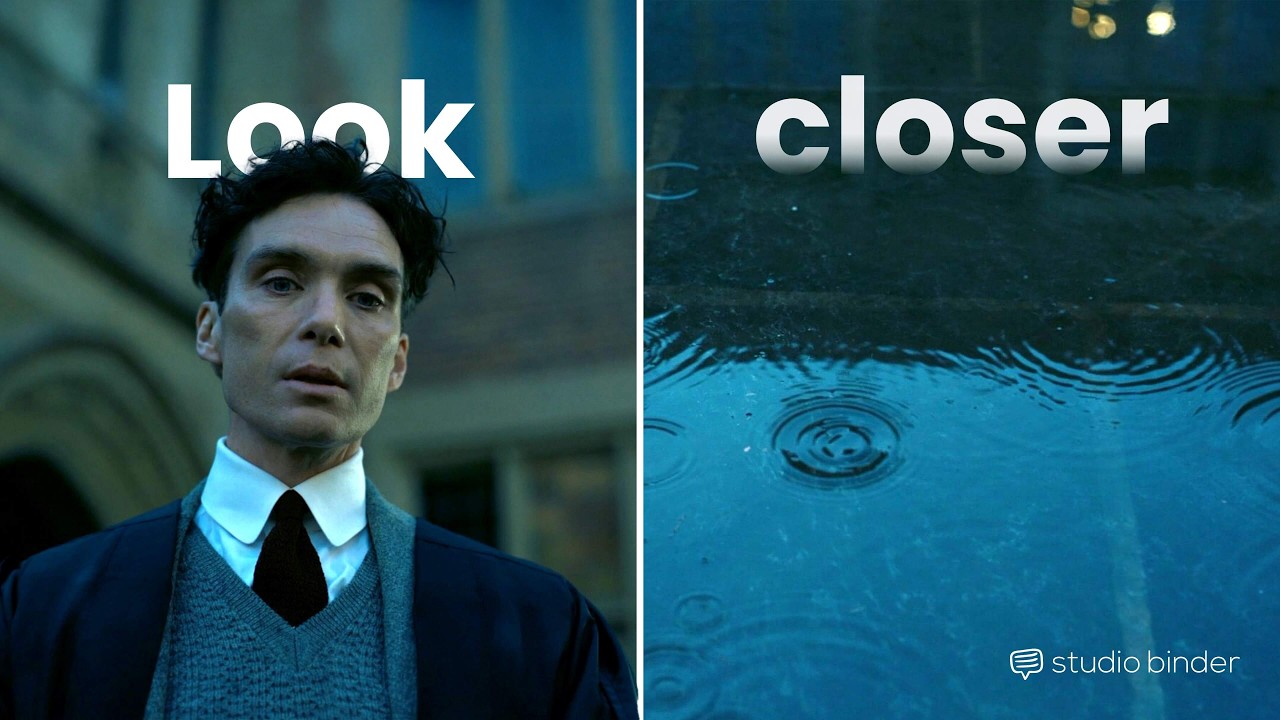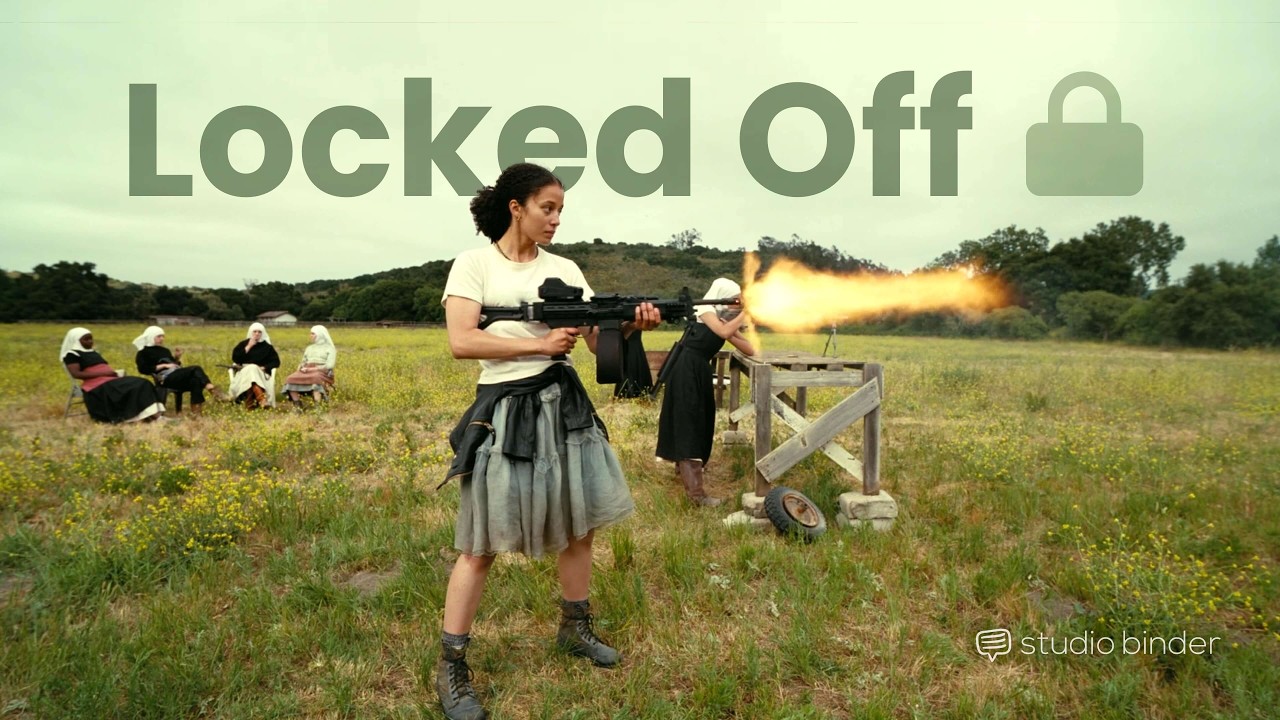
Why Great Directors Lock the Camera
11:57

Why Great Directors Lock the Camera

StudioBinder 02.03.2026 315 454 просмотров 11 675 лайков

Machine-readable: Markdown · JSON API · Site index

Поделиться Telegram VK Бот
Транскрипт Скачать .md
Анализ с AI
Описание видео
A complete guide to static shots in film — how they work, when to use them, and why locking off the camera can create stronger visual storytelling. Subscribe to StudioBinder Academy ►► https://bit.ly/sb-ad StudioBinder Blog ►► http://bit.ly/sb-bl ───────────────────── Chapters 00:00 - Introduction to the Static Shot in Film 01:03 - What is a Static Shot? 02:22 - Mise-en-Scène 04:50 - Blocking 06:29 - Shot Size 07:24 - Editing 09:10 - Creative Applications 11:12 - Takeaways ───────────────────── What is a static shot — and why do so many great directors rely on it? In this video, we break down the static shot in film: what it is, how it works, and why a locked-off camera can be more powerful than constant movement. From composition and mise-en-scène to blocking within a fixed frame, we explore how filmmakers create tension, emotion, and visual clarity without moving the camera. You’ll learn: • What defines a static (locked-off) shot • The difference between static shots and camera movement • How to use blocking to create visual dynamism • How framing and composition carry meaning • When to choose a static shot over a moving camera • How editing affects static scenes Static cinematography isn’t about doing less — it’s about doing more within the frame. When the camera doesn’t move, performance, staging, and composition become everything. The frame becomes a stage. The movement comes from actors, light, depth, and visual design. Whether you’re a filmmaker, film student, or just love film analysis, this guide will help you understand how static shots shape visual storytelling — and why sometimes the best camera move is no move at all. If you’re interested in filmmaking, cinematography, blocking, mise-en-scène, or film theory, this breakdown will give you practical techniques you can apply to your own work. Subscribe for more filmmaking breakdowns and video essays on directing, composition, and visual storytelling. #FilmTheory #VideoEssay #Filmmaking ───────────────────── ♬ SONGS USED: "I Lied to You" - Miles Caton "Night Driveway" - Max H. "The Beginning" - Nobou "Thumper Exotica" - Rhythm Scott "Velo" - Crazy Paris "Visions of Gideon" - Sufjan Stevens "Outer Limits" - Theatre of Delays "Graystar" - Out of Flux "The Journey Home" - Will Van De Crommert "All Star" - ANBR "Cistern / Old on Lens" - Mark Korven "Pei" - Hammock "For Seasons, and for Days, and Years" - Clint Mansell "Opening (Here)" - Alan Silvestri "Overflow - Mysterious" - Roie Shpigler "Musica Ricercata, II (Mesto, rigido e cerimoniale)" - Dominic Harlan "Anime" - Magiksolo Music by Artlist ► https://utm.io/umJx Music by Artgrid ► https://utm.io/umJy Music by Soundstripe ► http://bit.ly/2IXwomF Music by MusicBed ► http://bit.ly/2Fnz9Zq ───────────────────── SUBSCRIBE to StudioBinder’s YouTube channel! ►► http://bit.ly/2hksYO0 Looking for production management solution for your film? Try StudioBinder for FREE today: https://studiobinder.com/pricing — Join us on Social Media! — Instagram ►► https://www.instagram.com/studiobinder Facebook ►► https://www.facebook.com/studiobinderapp Twitter ►► https://www.twitter.com/studiobinder #FilmTheory #VideoEssay #Filmmaking
Оглавление (8 сегментов)

Introduction to the Static Shot in Film

Camera movements in films can accomplish a lot. They can direct audience attention, reveal a setting, push into a character, and much, much more. But some of the best shots in cinema have done the exact opposite. They stay completely still. Stillness is a choice that forces every other element to work harder. From production design to blocking to performance. When the camera stops moving, the shot draws attention inward. Performance becomes character. Space becomes a setting. Cuts become meaningful. Today, we're breaking down why static shots are so powerful. And how filmmakers use stillness to create tension, emotion, and momentum without ever moving the camera. This is the ultimate guide to static shots. — Action.

What is a Static Shot?

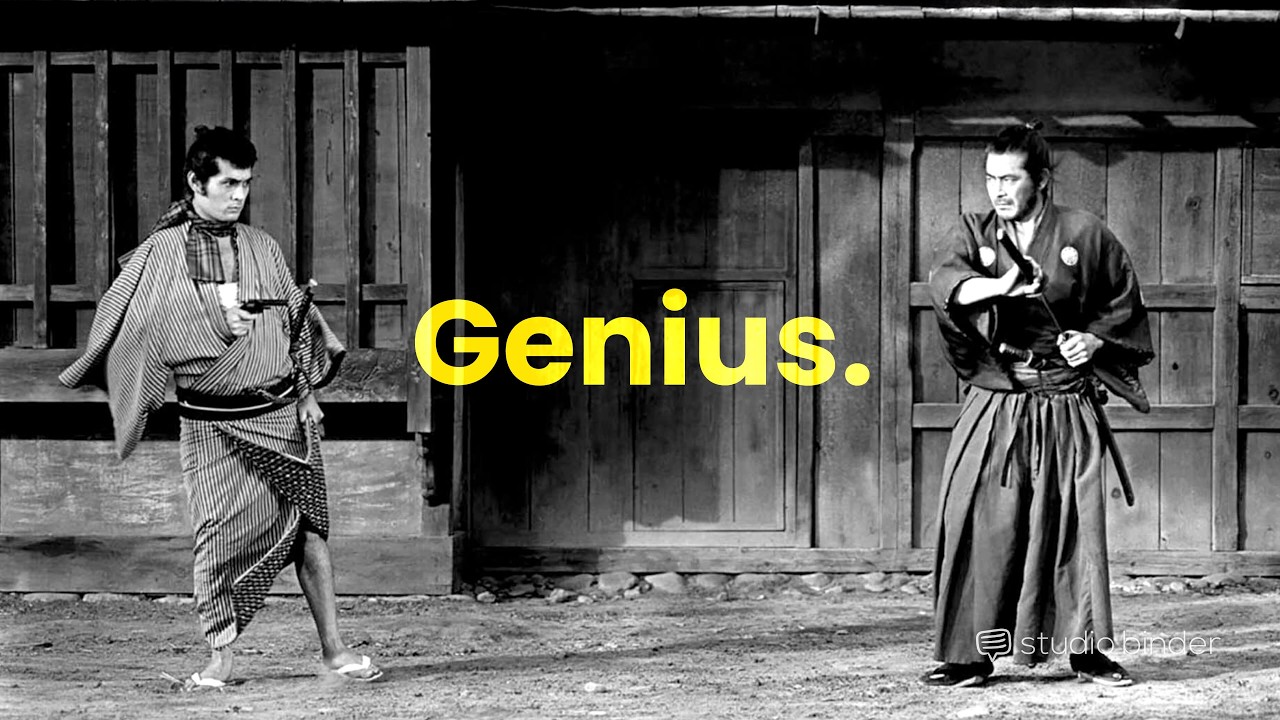
— Hello, college. — A static shot is a shot in which the camera remains locked off with no intentional movement. — Hello. — No pans, no tilts, no zooms or dolly moves. The camera is placed, the frame is established, and it remains fixed for the duration of the shot. Movement can still exist within the frame. Actors move, lighting can change, and the story can unfold. The defining characteristic is that the camera itself does not move. Different camera lenses can help keep these motionless shots visually interesting. A static shot is not defined by length. It can be brief or extended. — Make sure the prince doesn't leave this room until I come and get him. — Not to leave the room even if you come and get him. — No, no, no. I want you to stay here. I'll make sure he doesn't leave. Oh, I see. Right. By fixing the camera, the filmmaker establishes a set perspective and formal structure. That structure gives weight to everything a filmmaker chooses to place inside it. When the camera doesn't move

Mise-en-Scène

everything inside the frame suddenly matters more. This is where mison scent takes over. Composition, production, design, lighting, color, blocking, all working together. — You look lonely. — In a static shot, composition should do more than just fit all filmic elements aesthetically within the frame. It should create meaning that tells the story visually. Around the dinner table, the compositions are rigidly consistent, but the backgrounds change drastically, as if these characters are so disconnected, they each see the same space differently. The composition of a static shot can tell the audience a range of narrative information from how a character is feeling, their relationship to others, or to their environment. A static frame also allows the audience to explore the production design. Without camera movements, audiences can spend a bit more time looking at visual elements that tell a lot about a character or the story setting. For example, in Paranormal Activity 3, we have this recurring static frame. Every time we come back to these shots, we know something is going to happen, but we don't know where or when. These shots hold for a long time, allowing us to scan, predict, and anticipate suspense in a single shot. Color plays a huge role here, too. In a static shot, parts of the frame can be bathed in a specific color, creating a mood and tone. Great filmmakers combine all of these elements within a still frame to create layers of meaning. Take this shot from Syndromes in the century. What does its misison tell us? The monk's orange robe draws our eye to him. He is the subject of the scene. Meanwhile, the modern dental equipment is juxtaposed with the forest just outside the window. Building on the central themes of the film. Modernities clash with ancient rhythms. Because the camera doesn't guide us, the audience becomes more active exploring the frame, choosing where to look. And that participation makes the moment feel more real and more immersive. When the camera doesn't move, movement

Blocking

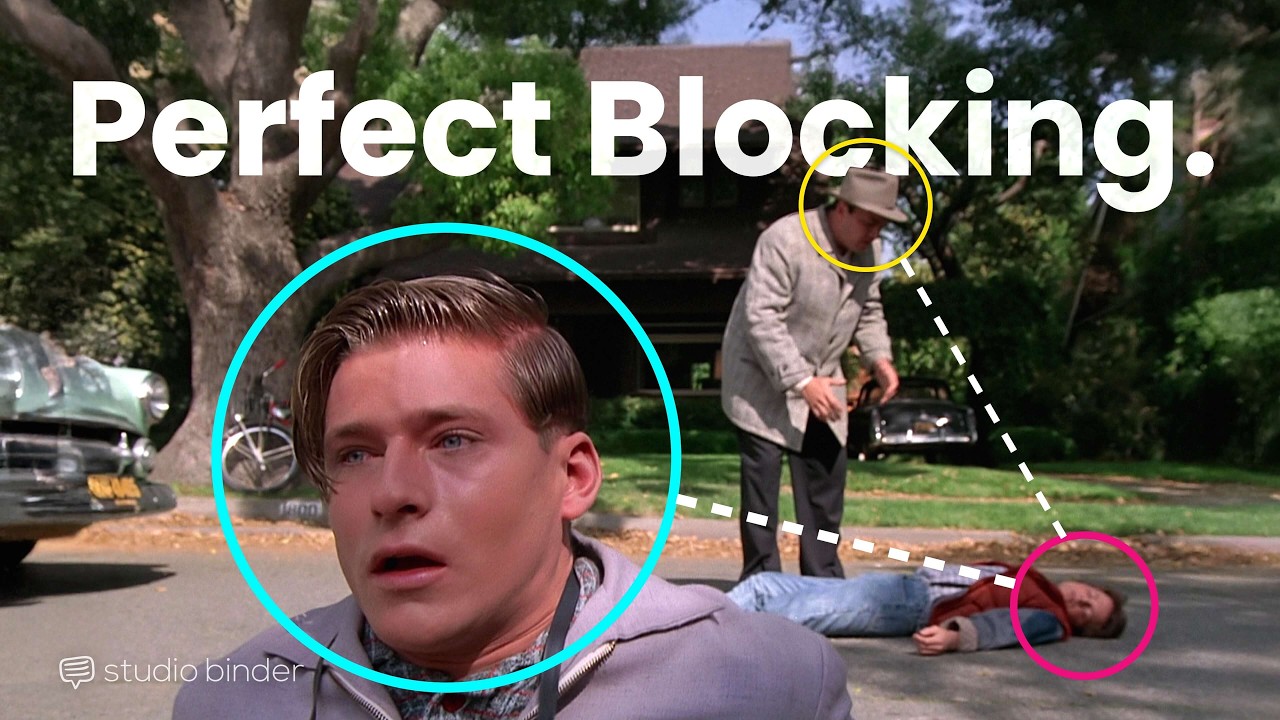
has to come from inside the frame. This movement can be created through blocking, the movement of characters within the frame. For example, Dietrich Bugamman's Stations of the Cross uses many long static takes. Characters enter and exit. They cross planes from background to foreground. They move away from some characters and closer to others. They move a lot or not at all. But every choice made within blocking reveals how a character feels in a shot and what their motives and conflicts are within a scene. Through blocking, a static frame can start one way and end completely differently without ever cutting. — Oh, I guess this isn't the bathroom, is it? — By sitting within a static shot and focusing on the blocking within the frame, filmmakers plant our perspective. Take this simple piece of blocking from Goodbye Dragon End. It begins as a wide shot on a woman. Then a man enters and the camera racks focus to him. The shot is now a close-up. The composition is balanced and a new dynamic is created. All without moving the camera. Because the camera stays still, we can feel the movement of characters more intensely. Movement feels intentional. Even small actions feel amplified. Blocking allows a static frame to evolve and tell a story.

Shot Size

Static shots can operate very differently depending on their size. A static wide shot can emphasize location. A medium shot, when trained on an actor, can allow for emotional subtleties to shine. A close-up static shot lets us focus on the details of a performance. Yasujiru Ozu is the master of this kind of static shot, locking the camera and letting the audience decipher the subtextual dynamics of a conversation. — In Columbus, Konada uses static whites to draw attention to the city's architecture. — Thought you hated architecture. Uh, — I do. But I'm interested in what moves you, particularly about a building.

Editing

— Static shots radically change how editing works. With a fixed camera, editing becomes the way an editor paces a scene, not the camera movement. — Okay, ready to go? We're waiting now. — The decision to hold or cut determines how long the audience stays with the moment. — Yeah. This has a direct impact on how audiences feel when watching a film. Holding on a static shot can build tension simply by refusing relief. Cutting between static shots can create a sense of a more objective reality. When a camera moves, we might subconsciously be aware that there is a camera operator in the space. Remove the operator and a scene can feel much more isolated, intimate, and real. — [crying] — For the zone of interest, director Jonathan Glazer installed cameras all over the house. The purpose was to create a more clinical and objective observation of this family as the atrocities being committed are juxtaposed with everyday family life. Cutting between differentiz static shots can also create the feeling of movement. These axial cuts in 2001 are jagged and cold, just like Hal's act of betrayal. Man's history of violence is captured in a rapidfire montage of static shots. — Man against creation. We murdered each other. — And when multiple static shots are edited in rhythm, static shots start to feel kinetic. Just because a camera is locked off doesn't mean a shot can't be ambitious.

Creative Applications

There are plenty of unexpected and creative applications for a static shot. City of God uses cross dissolves to create a static shot montage. foreign. Take Robert Zmechus' film here for example, which presents the entire film as a single static shot to tell a family history. — You will have an adventure. And what an adventure it has been. — In his film, The Boss of It All, director Lars Vontrier implemented [clears throat] a mechanical technique called Automa Vision. He would place the camera in a desired setup and then a computer would randomly reframe the shot. What would have been rather unassuming static shots now have off-kilter compositions which only added to the tension of this eccentric comedy. Foreign speech. Foreign speech. A static shot may seem like it's moving even when it's not. Like in this shot from Eyes Wide Shut, which looks like a steady cam shot, but is in fact Tom Cruz on a treadmill in front of a rear projection.

Takeaways

A static shot introduces clear limitations that require a filmmaker to be intentional with every other cinematic choice. But it is far from creatively limiting. From how the frame is composed to how the mison sen is designed to how characters are blocked within the space. When the camera remains still, meaning is built through precision, structure, and attention to detail. Sometimes the most powerful thing a camera can do is nothing at all.

Другие видео автора — StudioBinder

Ctrl+V

Экстракт Знаний в Telegram

Экстракты и дистилляты из лучших YouTube-каналов — сразу после публикации.

Подписаться

Дайджест Экстрактов

Лучшие методички за неделю — каждый понедельник