How Back to the Future Uses Perfect Blocking to Tell the Story
10:22

How Back to the Future Uses Perfect Blocking to Tell the Story

StudioBinder 09.02.2026 340 629 просмотров 10 872 лайков

Machine-readable: Markdown · JSON API · Site index

Поделиться Telegram VK Бот
Транскрипт Скачать .md
Анализ с AI
Описание видео
A breakdown of how Back to the Future uses blocking, camera movement, and layered staging to tell the story visually — often without cutting. Subscribe to StudioBinder Academy ►► https://bit.ly/sb-ad StudioBinder Blog ►► http://bit.ly/sb-bl ───────────────────── Chapters 00:00 - Introduction to the perfect film 00:45 - Cundy and Zemeckis' goal for the film 01:19 - Maximize the Frame 01:57 - 3-Axis Camera Moves 02:49 - Eye Trace 04:01 - Blocking on the Z axis 06:21 - Motivated Blocking 09:15 - Takeaways ───────────────────── Back to the Future is often praised for its script, performances, and iconic moments — but one of its greatest strengths is how clearly it tells the story visually. In this video, we break down how director Robert Zemeckis and cinematographer Dean Cundey use blocking, camera movement, and staging to deliver information without relying on constant cutting or dialogue. By carefully layering action in the foreground, midground, and background, Back to the Future turns simple scenes into dynamic visual storytelling. Characters enter and exit the frame with purpose, important story beats unfold simultaneously, and the camera moves only when it adds clarity. The result is a film that feels fast, fluid, and easy to follow — even when multiple storylines are happening at once. We analyze key scenes to show how blocking replaces editing, allowing moments to play out in longer takes while still guiding the audience’s attention exactly where it needs to go. From Marty navigating Hill Valley to the carefully staged interactions between characters, every movement serves the story. This breakdown explores: • How blocking creates narrative clarity • Why Zemeckis favors movement within the frame over cutting • How Dean Cundey’s camera placement enhances depth and storytelling • How layered compositions allow multiple beats to play in a single shot Whether you’re a filmmaker, student, or film lover, this video shows why Back to the Future remains a masterclass in visual storytelling, blocking, and cinematic efficiency — and what modern filmmakers can learn from it. #FilmTheory #VideoEssay #Filmmaking ───────────────────── ♬ SONGS USED: "The Power Of Love" - Huey Lewis & The News "Doc Returns" - Alan Silvestri "Time Flies" - Diamonds And Ice "A New Day Begins" - Nobou "Marty's Letter" - Alan Silvestri "'85 Lone Pine Mall" - Alan Silvestri "Tech Talk" - Rex Banner "Back To The Future" - Alan Silvestri "Earth Angel (Will You Be Mine)" - Marvin Berry, The Starlighters Music by Artlist ► https://utm.io/umJx Music by Artgrid ► https://utm.io/umJy Music by Soundstripe ► http://bit.ly/2IXwomF Music by MusicBed ► http://bit.ly/2Fnz9Zq ───────────────────── SUBSCRIBE to StudioBinder’s YouTube channel! ►► http://bit.ly/2hksYO0 Looking for production management solution for your film? Try StudioBinder for FREE today: https://studiobinder.com/pricing — Join us on Social Media! — Instagram ►► https://www.instagram.com/studiobinder Facebook ►► https://www.facebook.com/studiobinderapp Twitter ►► https://www.twitter.com/studiobinder #FilmTheory #VideoEssay #Filmmakingxxx`
Оглавление (8 сегментов)

Introduction to the perfect film

I mean, what if they say I'm no good? What if they say, "Get out of here, kid. You got no future. " — The script for Back to the Future is often cited as one of the best constructed screenplays. It is studied all the time in film school, and for good reason. But the blocking and staging are equally masterful. — It's got a time so that just he's in the center here that she's there and on the horn. Director Robert Zmechus and cinematographer Dean Kundi went above and beyond to make this high concept flick into pure cinema. As Kundi explains, there was a deliberate effort to create a more cohesive visual style. One of the things

Cundy and Zemeckis' goal for the film

that Zmechus and I always tried to do is make the camera work continuous and flowing rather than series of cuts. This way, the audience always gets engaged in the scene and the characters, but also they have a sense that they're standing and watching something unfold before their eyes. And when you watch the film, you can see exactly what he's talking about. Shots have a lot of movement within the frame and the editing is more relaxed. Let's look at the various techniques and Kundi used to create these continuous and flowing shots. The first technique is to maximize the

Maximize the Frame

amount of information in the frame. — He does this with layered compositions like this shot with Marty and Jennifer in the middle, the clock tower behind them, and the donation jar in the foreground. We include all the relevant story information in a single shot, and we avoid unnecessarily cutting between them. Same here with three layers each. One, two, three. So, why don't you make like a tree and get out of here? — 1 2 3.

3-Axis Camera Moves

When he moves the cameras, Zomechus gets even more dynamic in layered shots that access all three axes, X, Y, and Z. With Marty in the background, the camera tilts down as it crosses laterally in front of the car and booms up and pushes in to meet Doc in the middle. X Y Z. Another benefit of shots like these is eliminating the need to cut. Consider this shot. Marty and Lorraine start in the middle. He falls into the background while she whips around to the foreground. Oh my god, it's my mother. Quit. — Marty stands. — Put your fans back on. — And we catch Lorraine in the background mirror. — Four shots in one

Eye Trace

moving us seamlessly between these layers. Zamechus utilizes another technique called eye trace. — What's that thing he's on? — It's a board with wheels. — He's an absolute dream. — Reelect Mayor Goldie Wilson. — Here, the van giving us key plot info. leads us to Marty and Jennifer. I'm — never going to get a chance to play in front of anybody. — Marty, one rejection isn't the end of the world. — Nah, I just don't think I'm cut out for music. — But you're good, Marty. You're really good. And this audition tape of yours is great. You've got to — The yellow car pulls our attention to the right just as the gym girls pull Marty's attention in the same direction. — That's good advice, Marty. — All right. Okay, Jennifer. What if I send in the tape and they don't like it? I mean, what if they say I'm no good? What if they say, "Get out of here, kid. You got no future. I mean, I just don't think I can. " — We follow Marty and Jennifer to this position where the 4x4 in the background first pulls our ride to the preservation society stand with more story info before it draws Marty around into the camera. All of that in one 50-second continuous and flowing shot. — Check out that 4x4. — That is hot.

Blocking on the Z axis

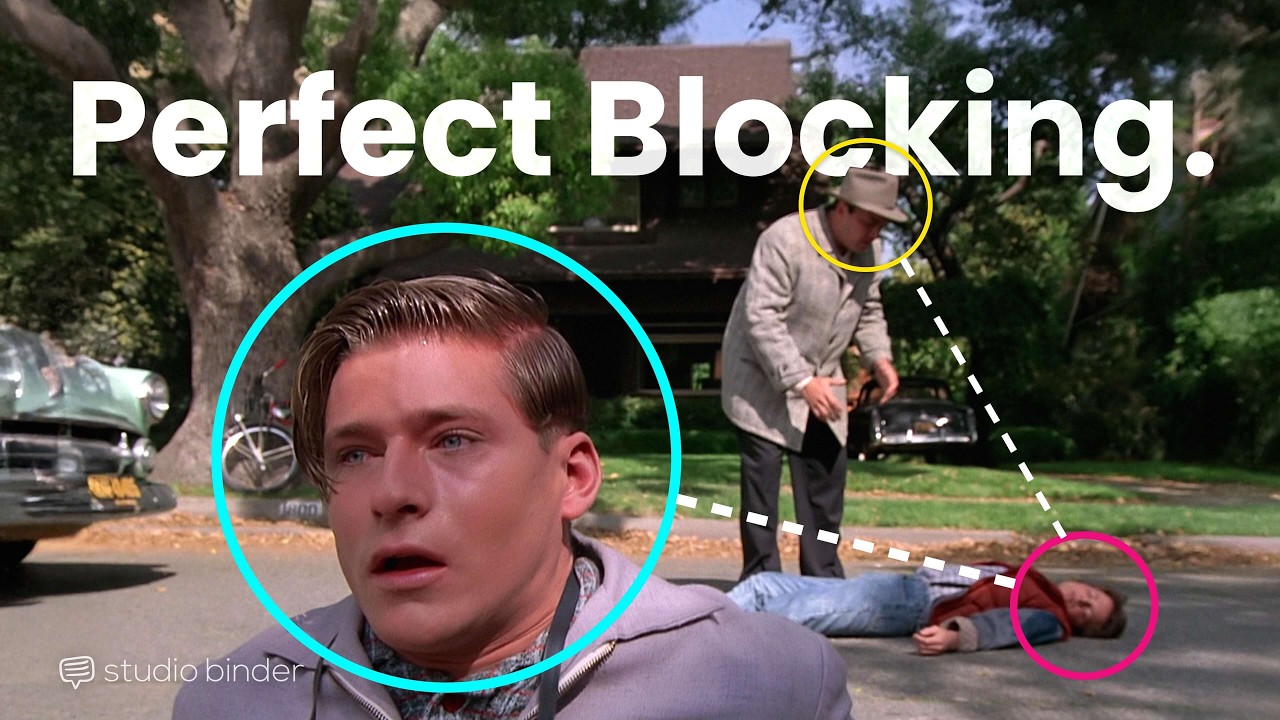
— Where Zmechus really shines is blocking along the Z-axis. Characters move toward and away from the camera, which eliminates the need of cutting between coverage and keeps longer takes more visually active and the action more continuous. This is the second longest shot in the film where the camera is stationary and it is the blocking that does the editing. And just like Kundi wanted, it feels like we're just another character watching this unfold. You know, if you put your mind to it, you can accomplish anything. — This shot lasts for a full minute and shifts between six blocking positions, all along the Z-axis. And it's not just an empty excuse for a long tape. It allows us to see Doc's hyperactive mind in action while Marty is desperately trying to keep up. Uh, are you telling me that you built a time machine out of a Delorean? — The way I see it, IF YOU'RE GOING TO BUILD A TIME MACHINE INTO A CAR, WHY NOT DO IT SOME STYLE? — But how about eight shots in one? Doc circles behind Marty. — Look at him. — This is more serious than I thought. — And then pulls him into a close-up. — Whoa. Wait a minute, Doc. Are you trying to tell me that my mother has got the hots for me? Precisely. Doc re-enters into an over- the-sh shoulder. — There's that word again. Heavy. — They do a quick walk and talk — together. So, you've got to get your father and mother to interact in some sort of social — Well, what you mean like a date, — right? — What kind OF DATE? I DON'T KNOW. WHAT DO KIDS do in the 50s? — Doc crosses behind Marty. — What are their common interests? What do they like to do together? — Spots the poster and crosses in front of him. — Nothing. Look, there's a rhythmic ceremonial ritual coming up. — Marty joins him in a twoot under the sea dance. They're supposed to go to this. That's where they kiss for the first time. — All right, kid. — Before Doc pulls him into a tighter, medium closeup. — Again, the multi-step blocking achieves this continuous and flowing experience. And it isn't without purpose. Think of it as a visual representation of their thought process. — Ideas come up. nothing look — get replaced or lead to another thought.

Motivated Blocking

— Of course. — In other words, the blocking is motivated. — We can see this idea clearly in the midpoint scene where they figure out how to send Marty home before realizing they have a new problem to solve. — How could I have been so careless? WHAT 21 GIGAWATTS? TOM, HOW AM I GOING TO GENERATE that kind of power? It can't be done, can it? Look, all we need is a little plutonium. — I'M SURE THAT IN 1985 PLUTONIUM WAS AVAILABLE in every corner drugstore, but in 1955 it's a little hard to come by. Marty, I'm sorry, but I'm afraid you're stuck here. — Whoa. I'm stuck here. I can't be stuck here. I got a wife in 1985. I got a girl. — Is she pretty? She's beautiful. She She's crazy about me. Look at this. Look what you wrote here, Doc. I mean, that says it all. — Doc, you're my only hope. — Marty, I'm sorry, but the only power source capable of generating 1. 21 gigawatts of electricity is a bolt of lightning. — What did you say? — A bolt of lightning. Unfortunately, you never know when or where it's ever going to strike. — We do. Now, — this dynamic blocking not only fits the scene, it helps the audience process and understand the mental and narrative beats better. The blocking and dialogue work together to become greater than the sum of their parts. This is it. This is the answer. It says here that a boat of light is going to strike the clock tower precisely 10:04 P. M. NEXT SATURDAY NIGHT. If we could somehow harness this lightning, channel it into the flux capacitor, it just might work. Next Saturday night, WE'RE SENDING YOU BACK TO THE FUTURE. — OKAY. All right. Saturday is good. I can spend a week in 1955. I can hang out. You can show me around. — Marty, that is completely out of the question. You must not leave this house. You must not see anybody or talk to anybody. Anything you do could have serious repercussions on future events. Do you understand? — Yeah, sure. Okay. — Marty, have you interacted with anybody else today besides me? — I'm Yeah. Well, I might have sort of bumped into them. My parents. — Great Scott. Let me see that photograph again of your brother. — Just as I thought. This proves my theory. Look at your brother. His head's gone. It's like it's been erased. — Erased from existence.

Takeaways

If it isn't clear by now, Zamechis and Kundi accomplished what they set out to do. The imagery is finally composed to maximize the storytelling in each frame. There is expertly choreographed eye trace to help us move through each shot. The blocking and staging allow for longer takes with multiple shots in one, and the audience feels more present in the scenes without the need for elaborate camera movement or rapid fire editing. The only way to pull off a film like this is with preparation. Just like Zmechus was able to plan eight shots in one, Studio Binder brought multiple features into one platform. Write your script, block your shots with storyboards, send out call sheets, and schedule your shoot. That's all for now. We would say see you down the road, but remember — roads where we're going, we don't need roads.

Другие видео автора — StudioBinder

Ctrl+V

Экстракт Знаний в Telegram

Экстракты и дистилляты из лучших YouTube-каналов — сразу после публикации.

Подписаться

Дайджест Экстрактов

Лучшие методички за неделю — каждый понедельник