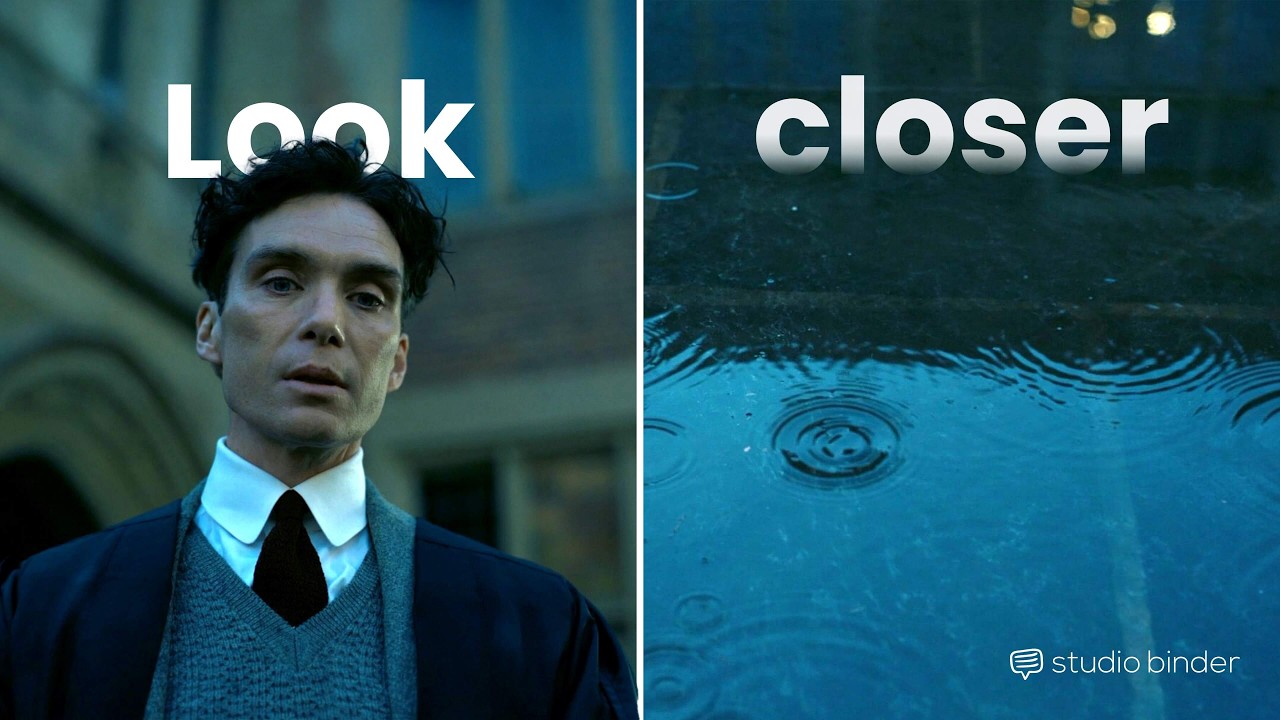
Directing Without Words: Visual Storytelling in Film
9:25

Directing Without Words: Visual Storytelling in Film

StudioBinder 02.02.2026 91 423 просмотров 4 740 лайков

Machine-readable: Markdown · JSON API · Site index

Поделиться Telegram VK Бот
Транскрипт Скачать .md
Анализ с AI
Описание видео
In this video, we break down how filmmakers tell powerful stories without relying on dialogue. Subscribe to StudioBinder Academy ►► https://bit.ly/sb-ad StudioBinder Blog ►► http://bit.ly/sb-bl ───────────────────── Chapters 00:00 - Introduction to Scenes without Dialogue 00:37 - One Battle After Another 01:07 - Performance 03:22 - Camera Placement 04:36 - Setting 05:40 - Blocking 06:56 - Editing 08:37 - Takeaways ───────────────────── In this video, we explore how filmmakers create powerful scenes without relying on dialogue — and how visual storytelling techniques can often say more than words ever could. Using iconic film examples, we break down how directors compensate for limited or absent dialogue through performance, blocking, setting, camera placement, shot choice, and editing. Even when a scene includes partial dialogue, the non-verbal storytelling is doing the heavy lifting. Films & Techniques Covered Phantom Thread — how performance and subtle physical behavior communicate inner emotion Sound of Metal — how camera placement and shot choice immerse us in a character’s experience Portrait of a Lady on Fire — how setting and environment shape meaning and emotional tension Beau Travail — how blocking and movement express character psychology and power dynamics Sabotage (1936) — how editing and rhythm create suspense and narrative clarity without exposition. In this video, you will learn: • What visual storytelling is and why it’s essential to filmmaking • How actors convey emotion and subtext without dialogue • How blocking guides the audience’s attention and reveals relationships • How camera placement and shot choice shape meaning • How editing controls pacing, tension, and emotional impact Whether you’re a filmmaker, student, or film lover, this breakdown shows how cinema communicates through image, movement, and rhythm — not just words. #FilmTheory #VideoEssay #Filmmaking ───────────────────── ♬ SONGS USED: "Fratres (Version for Cello & Piano)" - Avro Pärt "A Battle in the East" - Rhythm Scott "Father And Son - John Williams "What Floor?" - idokay "Communion" - Abraham Marder, Nicolas Becker "Sabotage" - Blair Mowat "King of Cups (Instrumental)" - Jim Swim Music by Artlist ► https://utm.io/umJx Music by Artgrid ► https://utm.io/umJy Music by Soundstripe ► http://bit.ly/2IXwomF Music by MusicBed ► http://bit.ly/2Fnz9Zq ───────────────────── SUBSCRIBE to StudioBinder’s YouTube channel! ►► http://bit.ly/2hksYO0 Looking for production management solution for your film? Try StudioBinder for FREE today: https://studiobinder.com/pricing — Join us on Social Media! — Instagram ►► https://www.instagram.com/studiobinder Facebook ►► https://www.facebook.com/studiobinderapp Twitter ►► https://www.twitter.com/studiobinder #FilmTheory #VideoEssay #Filmmaking
Оглавление (8 сегментов)

Introduction to Scenes without Dialogue

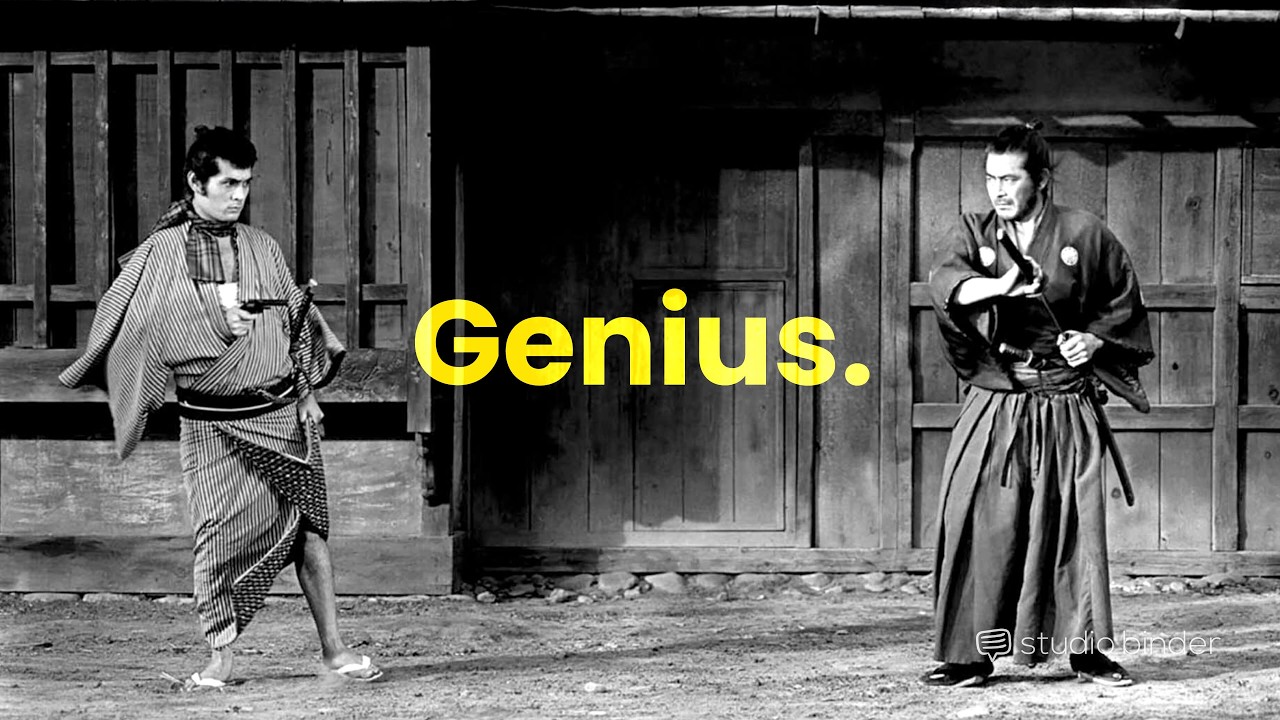
Film is a medium where the adage show don't tell is a golden rule. And yet since the advent of sound, many filmmakers have used dialogue as a crutch to tell the audience what is happening. — That spider can give superhuman strength and power like laser. This isn't necessarily bad, and there can be captivating and cinematic ways to use dialogue, but sometimes you can relay an entire conversation's worth of information with just a look, a shot, or a cut. A great scene that doesn't rely

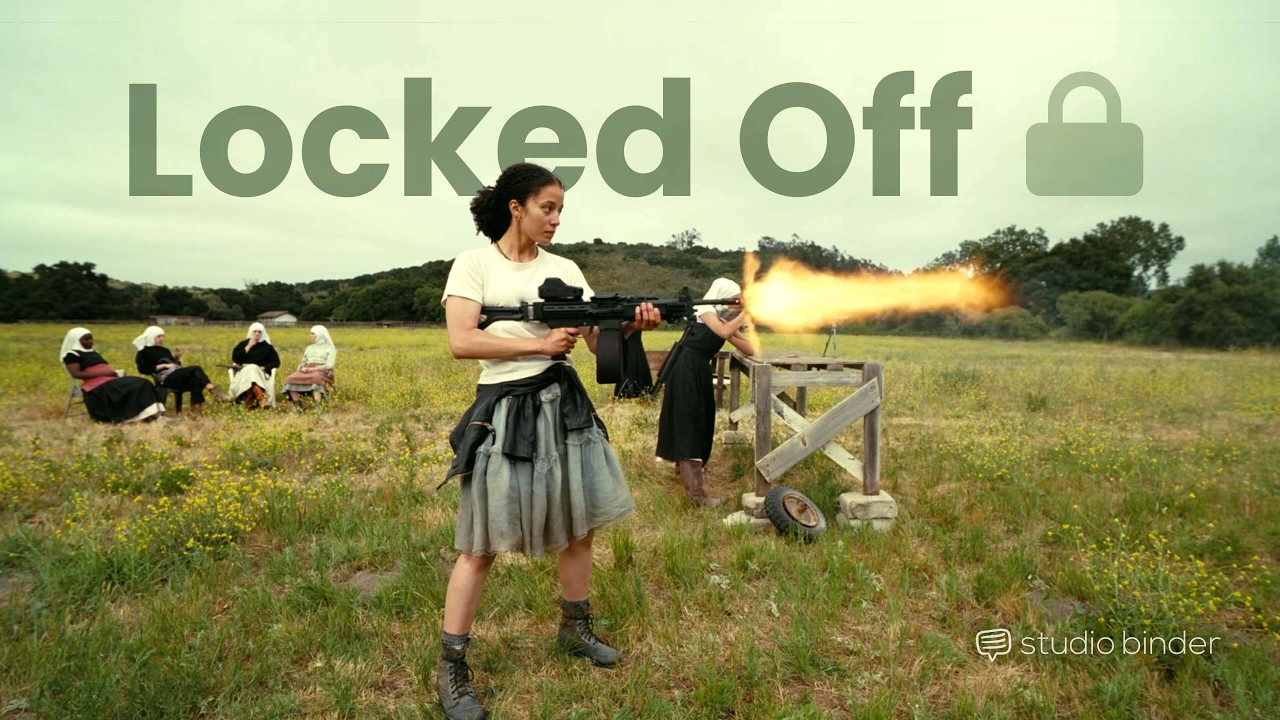
One Battle After Another

on dialogue can contain nuances, subtleties, and lightning in a bottle moments a conversation couldn't get close to. So how can a film talk without using words? — Why waste time say lot word when few word do trick? — Before we shut up. Be sure to subscribe and enable notifications to stay uptodate on all our videos. We will be spoiling the following films. Time to get quiet.

Performance

A non-verbal exchange between two characters often puts the focus on performance. In this extended silent moment between Reynolds and Elma in Phantom Thread, the audience is left to interpret what is going through the characters minds simply based on facial expressions. The games begin as Alma prepares the omelette. Reynolds watches on, curious, even a bit confused. Alma, meanwhile, seems in control. The test of wills is at hand. When they sit to eat, their expressions are playfully petulant with suppressed grins and exaggerated movements. But once Reynolds takes the bite of the omelette, which the audience knows has been poisoned, Elma's grin vanishes. Paul Thomas Anderson moves to a close-up in order to get the extreme nuances of her reaction that both the audience and Reynolds are trying to read. And in this context, a subtle tilt of the head feels enormous. As Reynolds tentatively chews, Elma explains what she wants. I want you flat on your back, helpless, tender, open. It's only me to help. And then I want you strong again. You're not going to die. You might wish you're going to die, but you're not going to. you need to settle down a little. — And it's a simple swallow that acts as an agreement to the dynamic she's laid out.

Camera Placement

Camera placement too can help guide a sequence without words. In this scene from Sound of Metal, where the camera is located creates a small emotional arc. We start in front of Reuben. He's in his own head, wanting to be left alone. When the kid behind him first bangs on the slide, Reuben is mildly amused, but still not fully giving him his attention. So, the camera stays in front of him. But when the kid hits the slide again, we get a new angle. This time behind Reuben, signaling that he is now focused on the child. The camera is also much more mobile, underscoring the burst of energy Reuben is feeling as he's able to impart his passion for drumming onto someone else. Eventually, we get a new angle on the kid, a little bit closer, and we see Reuben closer as well, strengthening the bond between these two characters. It's an intimate moment. And when we cut out to a wide shot, we are reminded of how small it is, just two people playing on a slide. But it's these small moments of joy that Reuben has to learn to appreciate.

Setting

appreciate. When characters aren't talking, setting can often take the foreground. Take this sequence from Portrait of a Lady on Fire, where the two principal characters make a big step in their forbidden relationship. Their relationship is forbidden because of the suffocating norms of the society they exist within. So, it is fitting that it progresses outdoors, far from the trappings of their buttoned up world. — The singers provide a rousing diagetic soundtrack, underscoring the rising feelings the two characters feel for each other in this moment. — The bonfire, meanwhile, acts as a symbol for their passion. Sparks are literally flying in front of Eloise. She herself is lit on fire, symbolizing the danger their feelings pose. And of course, it provides for a powerful match cut. We've moved to the next day, but the match signals to the audience that the yearning continues unabated and leads us to its culmination.

Blocking

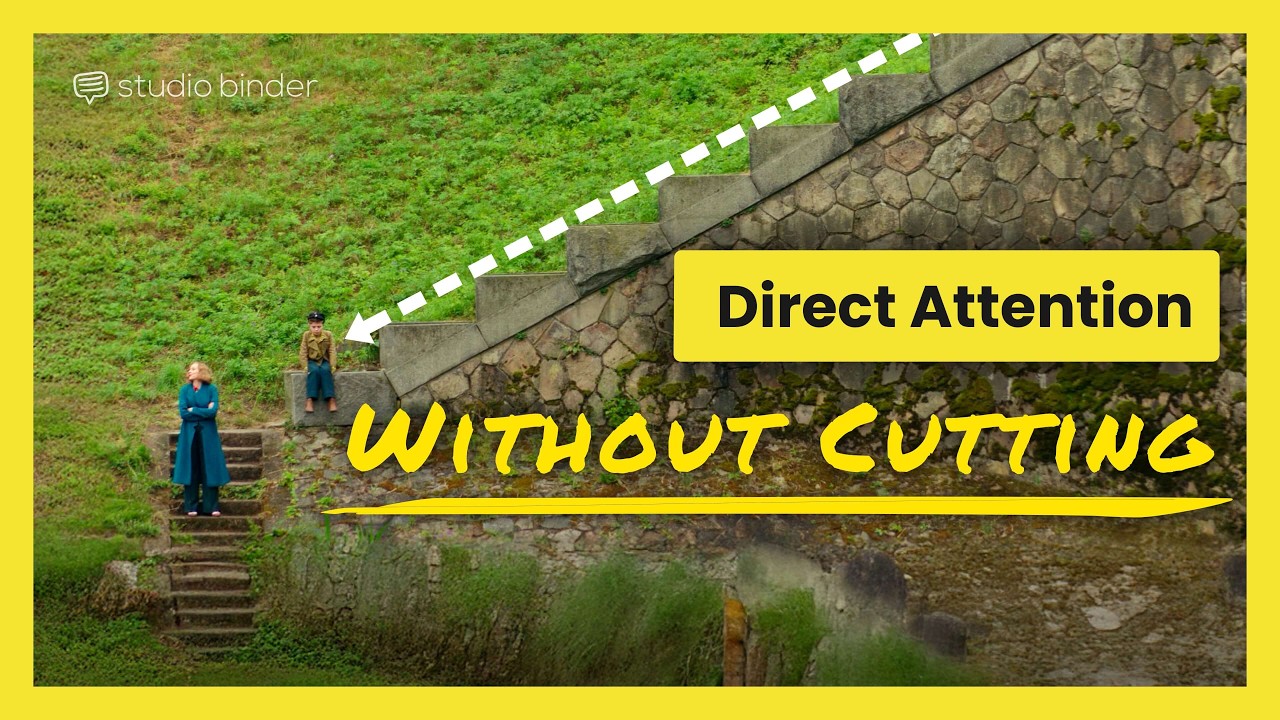
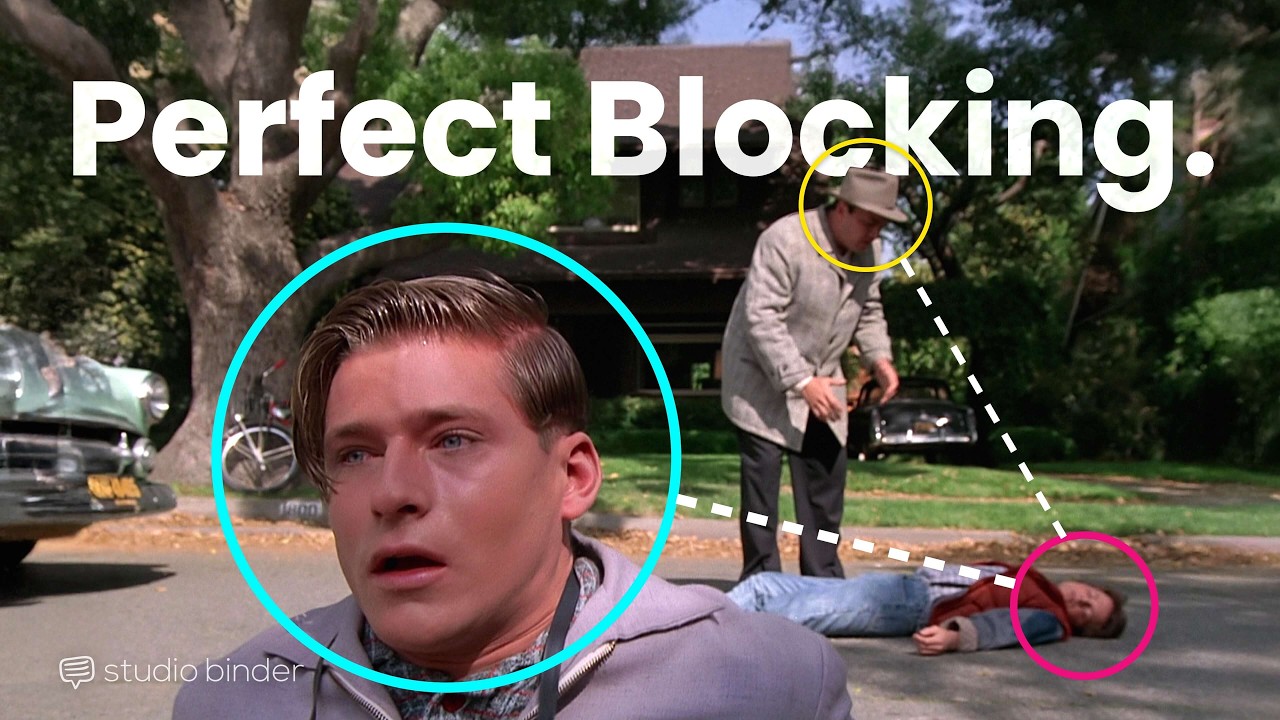
Of course, without words, how a character moves can speak multitudes. Bravi is a symphony of blocking, letting movement inform themes, relationships, and narrative. This scene between rivals Gallup and Jil is perhaps the culmination of director Clare Denise approach. The two military men circle each other like boxers in a ring, getting closer and closer. This simple movement creates compelling coverage, letting the desert spin around them and revealing subtly that they are being watched by the rest of the legionnaires. But it also speaks to their relationship as well as the themes of the film. Neither man is going to back down. But there is also something more complicated than just rivalry happening. As their faces get closer, the scene begins to feel almost erotic, prompting the audience to wonder, do these men hate each other, or are they denying something deeper inside of them. This scene also makes great use of a soundtrack. The music hears from the opera Billy Bud, based on the same novela as the film, and its bombastic crescendos help elevate the scene and its tension.

Editing

Other post-prouction choices, such as how a scene is cut, are also pivotal when creating a non-verbal conversation. This climactic scene from Alfred Hitchcock's Sabotage shows how powerful editing can be on this front. This sequence is between a husband and wife. The husband is a terrorist whose plot has resulted in the death of his wife's brother. Just before the scene, the wife learns that her husband was responsible for his death. — I didn't mean any harm to come to the boy. — When the dialogue cuts out of the scene is when the drama really kicks in. She debates whether or not to kill him. Told entirely through reaction, ey line matches, and shot reverse shots. The camera pushes in on the wife who looks offcreen. We match her gaze with a close-up on her husband. Then his stare is matched as we cut to a close-up of his wife's hands reaching for a knife. Back to him and we see that he is beginning to put the pieces together. He looks up and we cut to his wife's nervous face. After another close-up, we cut out to a medium to follow the husband as he moves closer into a tight shot. We cut to another Highline match, this time dollying in on his wife as he approaches. The tension builds in a twoot, which holds and holds until the climactic move. It's a suspenseful scene from the master of suspense. All created through cuts.

Takeaways

With performance, smart coverage choices, setting, blocking, and editing, you can tell an entire story. After [snorts] that, the dialogue is just the cherry on top. — 1 2 3. Yippee. Yay. — Ready to make your silent film? Start planning with StudioBinder pre-production software, which includes apps for shot listing, storyboarding, and more. And keep in mind, if a picture is worth a thousand words, a movie image is worth a whole lot more.

Другие видео автора — StudioBinder

Ctrl+V

Экстракт Знаний в Telegram

Экстракты и дистилляты из лучших YouTube-каналов — сразу после публикации.

Подписаться

Дайджест Экстрактов

Лучшие методички за неделю — каждый понедельник