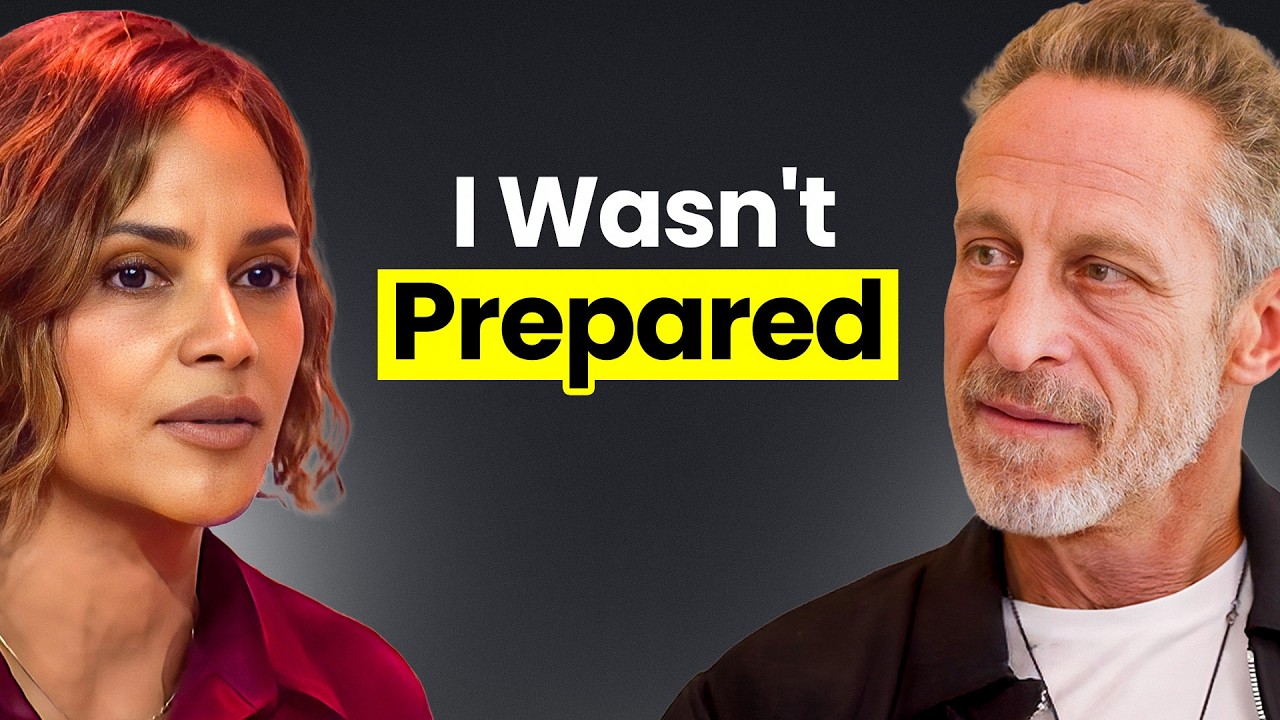
Discover how OpenAI Health and AI tools are revolutionizing medicine. Learn to take control of your biology and solve chronic illness with the latest from ChatGPT and Dr. Mark Hyman in this podcast.
Most people understand how to operate their smartphone better than their own body. In this episode, Fidji Simo (CEO of Applications at OpenAI) joins Dr. Mark Hyman to reveal how the current healthcare system's "fragmented" approach—treating the body as a collection of separate organs rather than a single network—is failing the 9 out of 10 people who cannot navigate their own health data. Simo shares her personal journey of battling "incurable" conditions like POTS and how she used AI to connect the dots between 20 different specialists who failed to see the full picture.
The solution lies in the launch of ChatGPT Health, a revolutionary initiative designed to move us from "sick care" to true preventative health. By integrating genomic data, lab results, and wearables into a personalized AI agent, individuals can now access 24/7 health coaching that provides proactive advice on sleep, exercise, and nutrition. We explore how this technology democratizes elite medical knowledge, allowing anyone to identify root causes of illness and even prevent dangerous medical errors in real-time.
From accelerating drug discovery to reducing physician burnout, AI is shifting the paradigm of medicine from the outside in. Whether you are struggling with a chronic condition or simply want to optimize your longevity, this conversation provides the roadmap for becoming the CEO of your own health using the world's most powerful intelligence tools.
View Show Notes From This Episode
https://drhyman.com/blogs/content/podcast-ep1113
Get Free Weekly Health Tips from Dr. Hyman
https://drhyman.com/pages/picks?utm_campaign=shownotes&utm_medium=banner&utm_source=podcast
Sign Up for Dr. Hyman’s Weekly Longevity Journal
https://drhyman.com/pages/longevity?utm_campaign=shownotes&utm_medium=banner&utm_source=podcast
Join the 10-Day Detox to Reset Your Health
https://drhyman.com/pages/10-day-detox
Join the Hyman Hive for Expert Support and Real Results
https://drhyman.com/pages/hyman-hive
This episode is brought to you by Sunlighten, Paleovalley, PerfectAmino, Seed, Made In Cookware and Fatty15.
Visit https://sunlighten.com and use code HYMAN to save up to $1400.
Head to https://paleovalley.com and use code HYMAN20 for 20% off your first order.
Go to https://bodyhealth.com and use code HYMAN20 to get 20% off your first order.
Go to https://seed.com/hyman and use code 20HYMAN to get 20% off your first month.
Head to https://madeincookware.com and use the code DRHYMAN for 10% off your order.
Visit https://fatty15.com/hyman and use code HYMAN to save an extra 15% on a 90-day subscription.
(0:00) Introduction: Guest Fidji Simo and healthcare challenges
(1:46) Engaging with the podcast community
(2:06) Fidji Simo's insights on AI and healthcare at OpenAI
(5:04) Chronic illness: Diagnosis, symptoms, and personal journeys
(7:50) AI's potential and health data integration in medicine
(12:09) AI in healthcare: Practical applications and real-life examples
(17:06) Genetic data and AI in complex condition treatment
(20:27) OpenAI's health initiatives and functional health data usage
(23:02) Prevention in medicine and nutritional partnerships
(28:16) Cultural food integration and personalized health apps
(31:21) Advancing medical science with AI
(34:50) Healthcare democratization and accessibility
(43:14) Consumer choices and accessing GPT Health
(44:16) Chronicle Bio's mission and infrastructure building
(47:25) Gender disparities and the importance of biological terrain
(53:30) Trust in health technology and reducing physician burnout
(57:02) Future of ChatGPT Health and personal data integration
(1:01:13) Closing thoughts and appreciation gut health
Related video - https://youtu.be/c7xxZlRSFLM
Оглавление (18 сегментов)
Introduction: Guest Fidji Simo and healthcare challenges
Most people know better how to operate their phone or their car than they know how to operate their body. Nine out of 10 people don't know how to navigate their own health information and even most doctors probably don't. And so we have this moment in history where we're in right now is going to allow us to really unlock this. DJ Simo is CEO of applications at OpenAI where she leads products like Chad CHPT and oversees the company's global operations. Big job. She's a veteran tech leader and a former CEO of Instacart. And she brings deep experience building and scaling some of the world's most influential consumer platforms. — I was hospitalized. I developed an infection and the nurse arrives and she's like, I need to administer an antibiotic. I put the name of the antibiotic in GPT. And so it immediately told me, hey, this antibiotic is standard, but in your case, it might reactivate a really serious infection that I had a couple years prior. So I said that to the resident. And the resident was actually totally relieved because she told me, "I have 5 minutes to make the rounds. I cannot look at someone else's records 5 years from ago. " And I'm really glad that she picked that up. One of the most important decisions of my life would have been kind of messed up if it wasn't for AI helping connect the dots. I had seen 20 doctors, but not a single one of them had looked at the whole picture and was able to analyze all of these data and give me patterns that you can only detect when you see that full picture. that confronted me to the health care system in a big way and realize all of the shortcomings of being able to treat chronic illness. — There's a specialty for every part of your body and there's literally a doctor for every inch of you. And I think what most doctors miss is the body's one network and networks are hard to understand. And now with AI and with chat health and with function health, we're able to start to gather our own data in ways we never could before. Hey, it's Dr. Heyman. I'm so excited to
Engaging with the podcast community
share this episode with you today. But before we dive in, I want to get your help. Please take a minute to hit that subscribe button. Whether you're watching here on YouTube or listening on your favorite podcast platform. It truly means the world to me and it helps my team and I bring you this podcast every single week. Plus, I don't want you to miss a thing. So, thanks so much for being part of this community and I'm glad you're here. Uh, welcome feed you
Fidji Simo's insights on AI and healthcare at OpenAI
the podcast. It's so good to have you. — Great to be here. Thanks for having me. Well, everybody uh who's listening is probably wondering why I'm having you on the podcast about health, but as it turns out, you've just taken on the role of CEO of applications at OpenAI, otherwise known as Chat GPT for most people. And you are launching as your first initiative the health focus of Chhat GPT was CHP Health. To me, that's so exciting because you could have done a million things, but you're focusing on this really revolutionary approach to helping people understand their own health. You know, most people know better how to operate their phone or iPhone or their Android phone or their car than they know how to operate their body. And, you know, we were just chitchatting a little before. We said nine out of 10 people don't know how to navigate their own health information. And even most doctors probably don't. You know, honestly, it's hard when you're sick to figure everything out. And so we have this moment in history where we're in right now is going to allow us to really unlock this and your efforts are really are accelerating this. And before we get into kind of what the potential is for AI and health and people to understand their health better to end suffering that's that we now have the answers to but they're not getting. I want to kind of talk a little bit about your suffering and my suffering. Uh because we both kind of have a similar history of having a condition that's poorly understood, that's poorly diagnosed, that's poorly treated, that causes a lot of pain and suffering, that's not in our head, but is a real phenomena that happens that we haven't been able to help. you know, maybe you could start out by sharing a little bit about your health journey and how you got into all this and why this is so important to you because you've not just, you know, not just leading this from a from within AI, but you also have another company that's helping to sort of unlock the mysteries of chronic illness, which I got so excited about when I saw. — Absolutely. So, yeah, to share a little bit about my own health journey, I was very healthy until I got pregnant in 2015. I had a pretty rough pregnancy and then after the pregnancy, uh I started having all kinds of weird symptoms. I started fainting a lot, being very shaky, exceptionally tired. And as you can imagine, doctors at the time told me, "You're just a tired mom. You're deconditioned. It's okay. " Like, you know, uh nothing wrong with you. And I kind of miraculously recovered, you know, nine months later, but after the pregnancy, but uh a couple years later, I had the surgery for endometriosis. And after that surgery, the same symptoms recurred. I started fainting a lot, started being very dizzy. My heart would go like uh super high as soon as I would stand. A constellation of like mystery symptoms. And that's when I was uh diagnosed with a neuroimmune condition called postural orthostatic tachicardia syndrome which is a mouthful that then evolved into chronic fatigue syndrome
Chronic illness: Diagnosis, symptoms, and personal journeys
and uh it's pretty debilitating like you know I am still dealing with the symptom and that means that you know I can't stand for long periods of time uh without fainting uh I end up you know having um you know fatigue much faster than normal people and so you know that confronted me to the health care system in a big way and realize all of the shortcomings of being able to treat chronic illness. — That's very frustrating as a as someone who's got access to anything, anybody anywhere on the planet and feel not to be able to get answers because we're looking at things through the wrong lens. And you know, I think you know, in reading some of the work you've done, I encourage everybody to read your um Substack article on Chipd Health, which really lays this whole problem out. And you talk about how you went to different doctors for different symptoms, but you're one body and uh and everything is connected and there are root causes and there are fundamental biological systems. And I also when I was younger first got into all this because I ended up having chronic fatigue syndrome. I went from riding my bike 100 miles a day and you know being able to remember 30 patients charts without taking any notes all day to not being able to walk up the stairs or know where I was at the end of a sentence. It turned out I had mercury poisoning from living in China. And that's a whole long story. But my whole system just collapsed from one day to the next. I went to doctor after doctor. I went to Columbia. I went to Harvard. I'm sure as you did. And no answers, you know. Oh, you're stressed. Oh, take some Xanax. Oh, take some prozac. You know, like, you know, and I knew I wasn't crazy. Um, and I was highly motivated, highly engaged person. And all of a sudden, I could barely function. And it took me a long time to dig out of that. And I think you know what it what I discovered was that the body is this incredibly complex network. As an individual doctor, it's very hard to understand that the massive complexity that's a human body. We've got 40 trillion cells. We've got, you know, billions of chemical reactions, billions of trillions of chemical reactions happening every second in the cell in the body. There's so much scientific literature and no one person can put that all together. There is an operating system that's we call network medicine or systems medicine that's preventive, proactive, predictive, participatory, you know, as you've written about and it's so good at helping people understand these complex chronic illnesses. But traditional medicine is just so slow to change. You know, as a doctor, I know that, you know, it took 50 years from the time semile discovered we should wash our hands before surgery till doctors believe that surgery, right? So, it it's kind of like that. And now with AI and with chat GPD health and with function health, we're able to start to gather our own data. We're start to make sense of our own data in ways we never could before. So, it's super exciting and I think
AI's potential and health data integration in medicine
super it's super exciting and I think you you've struggled even as a person who you know who's had access to figure this out. And I feel bad because that that's really what I get up every day because I want to have people be empowered to end needless suffering and to get help whatever they can from the world's you know incredible scientific knowledge that we most of us don't have the ability to sort through understand and make sense of. But now we start we're starting to be able to do that with AI and health which is pretty exciting. And I'll tell you, I mean, your what you're saying resonates so much. I saw 20 specialists, everyone looking at just like one particular symptoms. And if you look at my disease, it's a mix of immune dysregulation, nervous system dysregulation. So that impacts the entire body. But meanwhile, you have the GI doctor that's just focused on your GI symptoms. And so cardiologist who's just thinking that your heart rate is fast, but not really connecting that with the fact that it's a neurological symptom. When I got diagnosed, it was interesting because I had this very naive idea that there were, you know, plenty of doctors behind the scenes who are all working to make sure that this condition would get cured. And I realized, oh, actually, there isn't that much happening that can actually advance scientific discovery. So, I ended up hiring a teaching assistant at Stanford to teach me genetics and like basically the whole body system. But I'm like, that's crazy. like who has the resources and the time to do that? And that's what made me so passionate about making sure that everyone can understand their own health, level the playing field with doctors because ultimately it's your life. Uh and really desilo the healthcare system which is not working as is. And especially when you look at like the burden of chronic illness in the country right now about like 85% of healthcare cost is coming from like these complex chronic disorders. All of these multi-system they are not focused on one organ. So you have a hemat system that's very organ focused and meanwhile sick people who are falling apart from head to toe and are struck with figuring out uh how to get out of that. So you know I'm really thinking about how AI can help but also how we can like reform the healthare system to adapt to what people are going to need in the future. — Well I think that's exactly right. I mean, you know, it is is two-pronged really. One is helping individuals understand their own health in a way that was never possible before from their lab data. Function allows people to do that from imaging and function allows you to do that through wearables which integrate now into function through any lab that you've ever had done. You can upload into health vault and get all that information. And also you can access all the scientific literature in the world and all the knowledge expert training and all the genetics and your microbiome and your metabolism and toxin levels and measuring things that we never could measure before and now we're doing it at radically deflationary prices and at great scale. No no individual doctor can make sense of that and but it but it's going to tell a story about what's going on with you that might otherwise think about. And the narrative you said was really important. There's a specialty for every part of your body and there's literally a doctor for every inch of you. I mean, it's so subsp specialcialized now. And I think what most doctors miss is the body's one network and networks are hard to understand. They're complex. I mean, you've got biology, you've got chemistry, you've got physics, you've got all of it together in the body. And it it's just impossibly be reductionist about it. And that's what medicine's been. But now with our ability to sort of source the whole world's knowledge sort of like the like a gigantic library of Alexandria in a way we can suddenly actually have insights about things and learn things. So not just for individuals but we can also accelerate science and change the paradigm and I think that's what's exciting to me. So I think medicine is going to be shifted from the outside you know just like many other industries were shifted by you know like phones were disrupted by Apple or music by iTunes you know Spotify these are these didn't come from within the industry and I think this is what's so exciting to me cuz you know like you said doctors try their best the healthare system does it best but it's sort of stuck in this antiquated model I really want to hear how you use AI for yourself because you you've tried to figure this out as an individual like what's wrong with me why do I feel like this what are the causes what do I do like what is my doctor not telling How have you used it for yourself?
AI in healthcare: Practical applications and real-life examples
— The main thing is uh exactly what you said. It's connecting all of the data about me in one place so that it can be analyzed and like the first time it happened and I connected my health records, my Apple health data, all of my you know past labs, my medical history all in one place in Chad GPT and just as Chad GPT like hey are there patterns that you're detecting that would be interesting. I also uploaded my whole genome in there. I was blown away because there had been, you know, again, I had seen 20 doctors, but not a single one of them had looked at the whole picture and was able to analyze all of these data and give me patterns that you can only detect when you see that full picture. So that has been really helpful in like finding new avenues to explore, getting new ideas, uh not having to read all of the, you know, studies coming out because like who was the time? Like I get a summary every morning on like new studies on my condition. I get a summary from like new treatments that people on Reddit are trying out because we spend so much time when we're sick on forums trying to figure it out. Nacha GPT does that for me. So that has simplified my life in a very big way and in a even more concrete way to give you a real story. Um last year I was having um a kidney stone. I was having surgery and I was hospitalized. I developed an infection and the nurse arrives and she's like hey uh I need to administer an antibiotic for uh your urine test came back you know with an infection. And I was like hey like I'm totally fine with that but can you wait a minute? I just want to check something. And I put the name of the antibiotic in child GPT and um — already had all of my health records, right? And so it immediately told me, hey, this antibiotic is standard for a UTI, but in your case, it might reactivate a really serious infection that I had a couple years prior, CDF, and he like straight said like you really shouldn't use that one. There's a better one to use that will do the job, but without risking, you know, messing up with your microbiome. And so I said that to the resident and I was expecting push back and in fact the resident was actually totally relieved because she told me she's like I have five minutes to make the rounds. I cannot look at like someone else health records five years ago and I'm really glad that you picked that up because that could have been really bad. So I'm glad that I can now give you the right antibiotic. And that made me realize, wow, like again, one of the most important decisions of my life. Um, would have been kind of messed up if it wasn't for AI helping connect the dots fundamentally. — That's such an important story. And you're right, doctors are relieved. It's like you got five minutes, you got 40 patients, you're running around like crazy. You don't have time to research everything. You know, even with AI, it's still hard. What did you learn Fiji about your health that was novel or new that helped you when you started to put all your records into JIGBT? My whole genome was really interesting because um it's not that I had like genes that were like very clearly pathological but because of certain comp started telling me some potential drugs that doctors hadn't thought about that because of my genome could be interesting and they ended up really helping. So that was really helpful. Uh it also detected that you know I needed like B vitamins that were metilated and like things that doctors hadn't dug into and you know that was really interesting because years ago there was this promise of genetics like changing the whole medical world and the reality is that it doesn't happen right it does happen in cancer but like for your day-to-day care for a regular chronic illness your doctor is not analyzing your whole genome and telling you to change your nutrition based on your genome right But all of this data is available and actionable and could help patients really improve. And so to me like that combination really helped. And then combining that with Apple Health and really being able to see like oh actually your HRV is way better when you go to bed a little bit earlier uh and like you have a better symptom day after you do that. just correlating all of these data sources was really magical and that's what we're hoping to do with uh you know CH GPT health and making sure that you can have all of the right input so that your personalized health agent gets to know you better than anyone else and can really do true personalized advice which was the promise of personalized medicine but again we didn't get there — I think you're right you know I think that a couple important points here one is according to some recent data 93% of your health outcomes s of longevity are not determined by your genetics are determined by what we call your exposome what your genes are exposed to and how they get expressed depending on that and you mentioned you know something quickly which involves you need a different form of B vitamins we're not
Genetic data and AI in complex condition treatment
looking for mutations particularly in your genome we're looking for variations in your genetics that affect how your body functions and you need a particular form of B vitamin that bypasses a step that's kind of sluggish it's not like a pathology per se but it's just a little bit of a quirk and you For example, one-third of our DNA codes for enzymes. Enzymes run all the chemical reactions in our body. Every enzyme needs a helper. Each helper is a vitamin or mineral. And so there's a huge variation in the nutrient needs in a population. Never is looked at by doctors. They don't even probably know about half of them know about this. I mean, some of them might know about this gene MTHFR that I think you have. But, you know, it's not that hard. and now we went from a billion-dollar genome when it was first decoded to a $300 genome. So, it's really accessible for almost everybody and only have to do it once in your life. And so, now you're right, you can say, "Hey, what should I be thinking about that I didn't know and how could I be helped? " And I wonder if there were any other things that it suggested to you from a causal perspective or any kind of things that your doctors hadn't suggested besides like what vitamins to take or what drugs to take. Yeah, I think it was mostly like um the the challenge with chronic illness as you know is that you rarely collect one diagnosis. when you have one you start collecting a lot of problems which also points to the fact that traditional medicines put labels on conditions but doesn't understand biology and so what was actually have GPT tell me like hey yes you have like you know five different diagnosis but fundamentally it's only one thing you have like this disregulation of the nervous system and these are even some lifestyle you know changes you can make activating the vagus nerve and like things like that could potentially calm your system down. And so again, it's like finding pattern across like a variety a constellation of symptoms and diagnostic etc. uh trying to solve them one by one and trying to solve the underlying uh problem which has been just really helpful. — Well, it's amazing. I mean without being a doctor or a healthcare person you're a tech person you're a business person you sort of stumbled upon what is the future of medicine which is understanding the body as an entire ecosystem that's a network that has root causes that there's fundamental systems that affect everything and you know in my first book uh you know over 20 years ago I had a chapter that was called if you know the name of your disease you don't know what's wrong with you right it's just the name of the disease it doesn't tell you the why it tells to the what and I think you know saying you have POTS is just a name of a syndrome is just a fancy medical word for saying when you stand up you get dizzy and your heart rate goes up that's what it means in English but it's a fancy word you know posture orthostatic tic cardio syndrome blah blah and I think you know we make all these fancy sounding things when we don't know what we're doing and the truth is there are root causes there are reasons this is happening there is a way to understand how to treat the system and I think with the advent of AI applied to our personal health data set which we've never really had the ability to do before. We're going to be able to really accelerate uh discovery in medicine, you know, accelerate people leaving all kinds of chronic illnesses. You know, I was able to cure my chronic fatigue syndrome, which you know, most people would say is incurable, just like people
OpenAI's health initiatives and functional health data usage
say POTS is incurable, but it's not. and I I'll help you if you want figure it out. But it's so I I'm wondering why OpenAI and you in particular head of apps decided to start with health. Was it because of your health condition or the fact that 230 million pe people a week asked chat GBT about their health? — Definitely the leading uh cause was we saw that this behavior was already happening like you know the some of the best stories that I hear about CH GPT are about like you know helping people with their health. It's 230 million weekly. It's 40 million people daily. It's billions of conversations uh a week. It's 5% of total conversation. So that gives you a sense like of the scale that this is already operating at. So when we saw that and we hadn't really done anything um you know super specific for healthcare on the product side. We had done a lot on the model side to answer a question in the right uh accurate factual way. But on the product side, we realize actually there is a lot to do to build upon this use case. And if we could get people to connect to their health records in a much easier way, which right now is very hard, if we could get them to connect to function health and pull in their data from their from Apple Health like now the models are powerful enough that they can extract insights out of these data in a way that no one else can. And so uh that was the impetus behind CH GBT health and my own experience certainly uh influenced that because I was already really primed to think about how we remove silos and how like the defragmentation of information could lead to much better insights. The other thing that was interesting in my mind is like you know as you know better than anyone healthcare is really sick care. It's like you go there when you're sick. Whereas really what we need is preventative health. But preventative health when doctors only have 15 minutes for you is not going to happen that way. Whereas with CH GPT, you can have literally a health coach like in you know in relationship with you every day telling you like okay this is how you slept yesterday based on the data on your wearing. Today you should do this kind of exercise. is you should eat this kind of food and then tomorrow we'll reassess again. And like having that kind of assistant uh to really help you with your health every day, not just when you're sick, seeing the doctor. That's really what gives me hope that we could get to the root of chronic illness because so much of it is lifestyle related.
Prevention in medicine and nutritional partnerships
— Yeah. And I think you hit on something super important is that most of medicine is focused on disease and on treating disease and yes there is prevention which is you know mammogs and colonoscopies and checking your cholesterol and PSA and getting a bone density and that's all important. That's how we typically think of prevention in medicine. You know take your statin, take your aspirin and that's okay but that's not true prevention. that maybe be early detection and also um it's not about creating health and so what I think for the first time we're really beginning to understand is what is health I mean I never got a class in medical school that said here's how to create health creating health 101 for doctors like they didn't exist you know no clue if you go to your doctor say doc you know I'm okay I don't have a disease but I want to be like really healthy like what do I do they go well eat better exercise get enough sleep don't be too stressed like it's very platitudinous and not very specific and it's not personalized. — But now we're having, you know, precision health, precision nutrition, precision medicine in a way that we've never had before. And it really allows us through depersonalization, which can only be done through something like AI and through understanding the science of health, not just what is the science of disease, but health? What is a healthy human? Even defining that, we haven't never defined that. It's crazy, you know, like you put your car into the computer at the at the auto shop and it reads a thousand different metrics and tells you what's a little bit off here, you know, I mean, if your HRV goes down by 10 points one night, it's not a disease, but it's giving you a clue that you're not exactly where you should be, right? — So, so that's what's so exciting to me is we're going to be able to help people understand not just to treat disease or prevent disease, but how do we actually create health? And that's where this becomes really exciting for me. I'm wondering like how you see chatb health working along partners like function and coll collaborating inte integrating with them. — Well, I think partners are absolutely critical because the whole point as I was saying was like having one place where all of these different parts of your house can be connected into so that we can see the full picture. And right now, you know, we like rely on partners to be able to do that because everyone has kind of a different lens. like you go to Apple Health and you're going to get a lot of the you know lifestyle data. You go to function and you're going to get a lot of like the biomarkers, health records are going to tell you different stories. So to me it's really about like how can we partner with as many players as possible so that the end user has a full picture of their health across many different sensors, many different biomarkers and that way we can do the best job possible at helping them personalize everything for you know uh their lifestyle. So that's super important for us. And then there's also a type of partner that's more about being able to take action. And you know we're in partnership with Instacart and I was the CEO of Instacart before coming to OpenAI and that's a good example of like you know nutrition is at so much at the heart of health. Uh you know it's funny that I'm telling you that you're the you're the utmost expert at it but it's really hard for people to take action on nutrition advice. Usually, even if you go to a nutritionist, which very few people have the the resources to do, you end up with like a piece of paper, you put it in the drawer, you never look at it again. Uh, and what is like, can we make it actionable? So, with a partner like Instacart, you can go from, okay, this is what you should be eating to like in one tap, order that and it's at your door in an hour. And like that's a magical closing of the loop where you really start with to your point what is else and how do we help you get there and then all the way to actions that you can take uh in like as easy a way as possible to be able to stick to this new routine. — I think that's so important, you know, like you're right. I mean in getting people all the way down the pathway not just understanding what's going on but just having an assessment of what their disturbances are in their health or simple things they can do but how do you take it into action and how do you kind of close the loop and you know I know Instacart is working on medically tailored meals for example and you know food is medicine initiatives which is amazing right but it's it most people would know how to do that I mean we could tell through function health you have diabetes but then it would say you know we want you to eat a diet that's low glycemic higher good quality fats, lots of fiber, good quality protein, and then what? Like then they go turn that into a menu plan for a week and then go to Instacart and go shopping for me and deliver to my door and like show me the recipes on how to make them by video and like all that's coming really soon or if it's not already possible. — The Instacart app in Chad GPT already allows you to do that. It's really magical like you can literally just say I have a family of three. this is our health condition. Develop a menu plan for us and then buy all the ingredients in one tap. And to me, like that was always my dream of removing friction as much as possible so that being healthy isn't also overwhelming. It just feels easy. And I think when we finally have the tools to get there
Cultural food integration and personalized health apps
— yeah, it's pretty exciting. I'm like thrilled about it. And I think that the food is medicine part is important. You know, you grew up in a little village in France. You said you need a passport to get to the next village because it was so remote and isolated. And it's this little fishing village in the south of France. And food is such a part of uh French culture. And you know the freshness of it, the realness of it, the deliciousness of it. It's not just a convenience. It's also centered around connection and family and friends and social connections. And you know, it's all the things we've lost in America. And I just see, you know, all this shifting as people start to understand the relationships between their health and food. And, you know, I mean, you know, when you go to the doctor, they don't tell you to do anything about nutrition. You know, I've been, you know, trying to work on changing medical education by getting nutrition exams, questions that have a nutrition focus that's based on chronic disease. Um, and yeah, so doctors are really challenged and this makes it easy. less than 20 hours of medical school spent on nutrition, which is crazy when you realize that like I think something like 80% of chronic illness as a diet component. It's like it just crazy. So yeah, I totally agree and yes, growing up in France, you know, food was sacred like it was at the center of everything. And here I think it's more considered like sustenance, right? And uh and I think reestablishing the relationship that people have with food is really important. — You know, at function we kind of help you sort through the mass amounts of data. I think the function app within that's integrated into chat will help people understand their data in a broad level and help guide them on action plans. I've been playing with it. It's pretty amazing. uh and integrating that with like all the tools to be able to kind of execute on the recommendations whether it's what supplement to buy or what food to eat or what things going to help you, what drug could help you. It's going to be pretty profound. It's a really important advance and it hadn't existed before and I'm really glad to see you started there because it is like you said something people are using every day. I mean people are I don't Google a billion searches on health every day and and now Chad GPT in some ways is replacing Google. I don't know if I last time I used Google honestly. So I hate to admit that cuz my friend is one of the founders of that but um it's it's a really exciting moment. I'm very curious to hear your vision of uh if you had a crystal ball where you see you know this movement between AI and health intersection going in like 1 year 3 years 5 years because even in the couple years that we've had Chad GBT and AI that's accessible as a consumerf facing product which I learned was not even meant to really succeed at all. It just took off you know as an accident. It was kind of like a side thing. Where do you see, you know, this going? Cuz it it's just even in the few years that it's been happening, it's accelerated so fast. And I wonder from the perspective of health care, from individual self-care, from research, like what are the areas you see us being able to really accelerate human evolution?
Advancing medical science with AI
— We've talked a lot about like what's going to happen on the consumer side, and I think ultimately it's really about empowerment. We're going to empower people with health information. They're going to be able to make better decisions about their health. um and just have a lot more data to optimize their health. So I think this is going to be reflected directly into health outcomes. We haven't talked as much about the provider side but we're also really invested here. We just launched OpenAI for healthcare uh with a ton of great institutions like UCSF, Boston Children, Sense for Children, HCA uh where these institutions are deploying CH GPT world to wall uh for their doctors to be able to assist them in uh clinical decision making to be able to reduce administrative load and so we're really thinking of it as like equipping both sides so that doctors can be more informed because your point they cannot read the thousands of studies that come out every week. They can be more informed they can make better uh decisions because they can look at the full picture of the patient and then when they meet with the patient is also better informed about their health and that creates a much better dialogue between a doctor and patient. So that's really the end state. And then beyond that, I think the thing that gets me very excited is that I think we're finally getting at a level of intelligence of our models that can really find novel insights and novel science. So when I look at um you know all of the diseases that have not yet been cured, I hate calling them incurable uh because I believe that it's just a matter of time. Um I really think that um the models are getting smart enough that the time frame from kind of identifying a condition all the way to having a drug ready for it. All of these steps are going to be reduced by AI. We're going to identify drug targets way faster. We're going to develop these drugs get them through regulatory approval, which as you know takes forever right now, much faster. Um and by using AI at every level. And so that that's why, you know, I think when a couple of years ago we were talking about curing all diseases in our lifetime, that sounded a little bit like science fiction. I actually think that we're closer than ever. Um, as long as we can, you know, uh, update all of our uh, pretty outdated uh, processes and regulatory uh, framework to this new world that would allow us to massively accelerate the pace at which scientific discovery happens. — I think you're so right about that. I think it's going to accelerate the development of of drugs and of discovery in so many ways and but I also think it's going to do something else and I don't know if you've thought about this but I'm hoping you have because you know your company Chronicle Bio which is really to help people solve these quote incurable diseases like chronic fatigue and POT syndrome and you know many other conditions that are chronic and often intractable. I think what's going to happen is going to be acceleration of medical understanding not just about how to develop better drugs but about root causes about mechanisms about novel therapeutics that involve food as medicine that involve uh other therapies that are kind of outside traditional medicine that could accelerate healing that are being applied across different things like you know novel therapies for example like plasma feresis that's being used for autoimmunity long COVID that's you know that is still sort of on the margins it's part of traditional medicine but hasn't been used for that. So there's a lot
Healthcare democratization and accessibility
of things that I think are going to happen that are both accelerating the way we do medicine already faster and better which is important but also to kind of emerge a new paradigm of medicine where we can actually understand the body as a network where you know even if you get better at each specialty the body still isn't organized like a bunch of parts it's a system and that that's what's so exciting to me about the use of this technology and AI to help understand these massive data sets, look at patterns, discover things they never were seen before, understand this. And I know this doing this for 30 years, like I collect massive data sets on people compared to the average doctor. I mean, I look at everything you possibly think of looking at. And I sort that through my own little, you know, brain here, which can only hold so much. But I know I've seen patterns in the data that nobody has ever described before. For example, I know when someone comes in, they have a heavy metal toxicity. First of all, most doctors don't look for it, but when they do, I see they have methylation problems. They have low glutathione. They have low zinc. They have lots of oxidative stress. They have low amino acids. They have a whole series of patterns that I've never seen written up in a book or a paper before. And I'm like, "Oh, this is interesting. " You know, and I and I, you know, I see this with autistic kids, too. There's all these genetic variables and all these different metabolic changes, and they're not being described widely because doctors aren't looking for them. And uh there's a joke I often tell when I'm giving lectures about this guy who drops his keys on the street and his friend comes by and he sees him looking under this lamp post and he's like, "What are you doing? " He said, "I'm looking for my keys. " He said, "Well, where did you lose them? " He said, "Well, I lost them down the street. " He said, "Why are you looking over here? " He says, "Well, the light's better over here. " So, we tend to look where we can find things easily, but not where the problem is. And I think the root cause approach to medicine, the systems approach, uh people like Leroy Hood who was doing the phenome health project, they're thinking like this. They're thinking about this new paradigm. And I think that's where there's going to be a whole acceleration because yes, we want to do all things to get better drugs and better discovery and so forth. But I think the biggest flip is going to be real really changing the actual medicine we're doing and helping people create health and dealing with these chronic conditions that are in quote incurable. In fact, uh it's funny you said that because I I'm launching a new feature on my podcast called The Incurables. And it's for people like you who've been through the healthare system, who've tried everything, who've done everything, and who were told there's nothing to do except take this drug, maybe it'll help your symptoms, but you're going to have to live with it forever. And the truth is you don't. If you understand how to solve the puzzle, you can actually help people get better. And that's that's the beauty of this. I think the problem we have right is that because we don't have the data we are not able to subsegment like the people with these conditions so that we can find the exact thing that works for them. You mentioned my company chronical bio like that was the impetus behind it. We realize we're not going to find cures for long COVID overall because long COVID is 20 probably 20 biological processes under that or a cure for so what we decided to do was actually create a company that partners with clinics to get biological data from patients and analyze everything on those samples genetics multiomics proteome metabolum etc so that we can actually subsegment those population and I think that's really the promise of big data plus AI that's going to allow us to find those subsegments of population and be able to do better by them. I'll tell you a story like we at some point dur throughout my journey of trying to fix the problem. I opened up a clinic for these conditions and we were running clinical trials and uh we were running a particular drug uh for long COVID and we had people that went from completely bedridden to completely functional and uh but the clinical trial failed in absolute and the reason is there wasn't enough like segmentation of the patients to realize okay on those it's going to be miraculous and on all of those it's not going to work and so they killed the program and Now we had patients in tears saying like this drug would save my life and it's not available and to me that's the greater strategy. So if we can have the right data so we identify the right population of patients the right treatments for them and then that can accelerate clinical trial approvals for these sub conditions I think that's the holy grail and that's where AI is going to really shine — 100%. That's why I said earlier about in my first book where I said you know just because you know the name of your disease it doesn't mean you know what's wrong with you. It's just a label and that label could represent 10 or 15 different problems. And you know, autism isn't one thing. Alzheimer's isn't one thing. You know, POTS isn't one thing. Chronic fatigue isn't one thing. It could be caused by Lyme disease or by mold toxicity or by mercury or by some type of microbiome issue or by uh some other weird infection that you don't know of or long COVID and all these things. But you have to be able to just figure that out. and given our current way of seeing things and thinking about things, we have a thinking problem in medicine. And that's really where we're going to be able to think differently with the use of these tools in a way that we never did before. And it's not going to come I don't think it's going to come from inside healthcare. I outside healthcare. And basically companies like OpenAI are going to be driving change from the outside in. And companies like function in where we're I mean think about it like where could you get massive data sets on your human biology before — without spending a fortune without having to go through your insurance company like function has unlocked that there's just people are desperate because they're not getting the answers from the healthare system. I'm very excited about this for individual empowerment. We say you know our goal is to help you be the CEO of your own health right we uh we also say you know we want people to help people live a 100 healthy years. I would also add to that we want people to feel 100%. You know, living 100 healthy years is great, but if you feel crappy now, like you know, we want people to get there faster. — And also like I just think this is um a moment in time where access is going to change dramatically. I mean, you function is a way to give access at a low price point to things that were reserved for the elite before. Chad GPT does something similar of giving you access to great medical information. And one thing that was striking for me that seven out of 10 of the queries else queries in CH GPT are actually happening after hours. And so that tells you know like there is demand to have answers about your health at times where the healthare system isn't even available to you at all. We are also seeing a lot of demand in rural areas where you know the hospital like many miles out and so there is like this um you know direct access to health information that I think is going to really democratize u just you know health knowledge in general. I think you're right and I think you know as we understand the science of creating health you know we're going to be able to help people even without health care because most of health doesn't happen in the doctor's office and so we able to guide people in ways where we we can make it much more accessible affordable and I'm thinking about function in a way that is going to help people all around the world by the things that it learns and if you're in Syria alone somewhere and you have some condition you're going to benefit from all the insights so that somebody who maybe can't get a lab tests, we can infer what's going on from the patterns in the data that they're sharing. And it it's kind of an exciting thing because all of a sudden it's going to democratize healthcare, decentralize health care, uh make it, you know, really affordable or often free for people, you know, and I think there's a free version of Chat GPT, right? — Absolutely. Is there? Yeah. — Yeah. Okay. So that that's what I'm imagining like that people will be able to query their data and learn from the world's sort of best knowledge um sources and insights from the best doctors — and GPT health which we've been talking about is available in the free tier. So the goal is really to make it as accessible to everyone as possible. — Oh that's amazing. What if the greatest threat to your health wasn't bad choices but bad design? In America chronic disease isn't accidental. It's the predictable outcome of a food system built for profit, not people. A web of corporations, lobbyists, and policy makers, all feeding off your plate. They
Consumer choices and accessing GPT Health
call it choice, but your options were engineered. From the grocery aisle to the school cafeteria, big food, big egg, and big pharma wrote the rules together. The food pyramid distorted, the science bought, the front of package health labels designed to deceive. This isn't a broken system. It's a perfectly functioning machine producing disease, dependency, and distraction, exactly as intended. Food Fix Uncensored pulls back the curtain on the collusion shaping your health, your choices, and your future. Because once you see how it works, you can never unsee it. Food Fix Uncensored. The truth they never meant for you to read. I want to ask you how I get off the wait list email. I'll get you — I I click I want to get off the wait list. I want to try it more. But I I tried the integration with function which is very cool and I was like well this is amazing. Uh and it gives you a lot of deep insights. I want to ask you
Chronicle Bio's mission and infrastructure building
a little bit more about Chronicle Bio because this is a passion project. It's not like you know you're not busy. You you're at Open AAI you know CEO of Instacar. you're on the, you know, chairman of the board of Instacart. You were Facebook for a decade. You, you know, had another nonprofit or something company. You have, you know, now you started another company like I don't know what you do. How do you do if you sleep? I know you have a daughter and a family, but um h what I know why you started it. Tell us more about how you're thinking about it and you mentioned a little bit about the data sets you're collecting, but h who's guiding you? How are you under thinking about these conditions and what are you hoping to kind of discover? I think for me it was really seeing this moment in time where the models were becoming so much more powerful but the data sets weren't fully there yet right like on these conditions like long covid MCF spots which are still considered somewhat mysterious uh if you look at what has been done a lot of studies are like with a 100 patients and maybe just looking at genetics another 60 patients somewhere else looking at you know maybe gut microbiome But no one was creating what I call almost the infrastructure of the disease which is really like looking at tens of thousands of really having the full data set on all of them and that's you know that's because that requires some funding uh and that requires infrastructure partnering with all the clinics making sure they collect data consistently I mean it's a real engine that we're building but I once we have that we're going to be able to get to cure so much faster because when I got sick, I went and I talked to a lot of my biotech and pharma CEO friends because I was telling them like it's not as if these conditions that I have are rare. Like we're talking hundreds of millions of patients all combined. And so I was like it's a huge market. Why are you not developing like cures for these conditions? And uh I mean we don't even have any cures in the pipeline like you know they're not being like really prioritized. And the answer was simple. Like the CEOs were saying like we don't understand these diseases. We don't understand the different subtypes. We don't understand like biologically how they function. So it's still too risky for us to invest in these conditions until someone has really established what are the subgroups, how do these disease work, what are the real drug targets. And so I think we're really at the moment where if thanks to Chronicle Bio, we get all of these data combined with all of the great models coming out of OpenAI and labs like that, we're going to be able to all of a sudden find totally novel insights and we're already seeing it. You know, we had uh some publications around findings like tens of genes that correlate with your likelihood of developing these conditions, which in the past you couldn't really do. You could do just kind of uh one gene directly responsible but gene combinations was still very complicated to establish. Now we can figure that out. We are planning on overlaying that with like uh why viruses are a big trigger for these conditions.
Gender disparities and the importance of biological terrain
What happens to your immune system during these moments that lead to you not recovering? Also why are these conditions affecting 80% uh like 80% of patients are women and only 20% are men. We should have an answer to that. That seems pretty extreme like we should know why women are more affected and the reality is that we don't have answers to this question because again the healthcare system has looked at the symptoms and putting band-aid on the symptoms instead of the root biology and I think the only way is to do the hard work of collecting that data that true biological data and then using AI to find novel insights on top of it. I think you're right and I think you know that that's going to accelerate discovery not just around those things but even things like autoimmune diseases and even chronic diseases in general because they're all sort of the same and you know there aren't that many causes for disease there's many diseases and each disease might have multiple causes and need multiple treatments and I think you know the promise of network medicine is understanding the multicausal nature of disease and the need for multimmodal treatments meaning it's not just one thing. It's not like a single drug for a single disease, you know, like we learned with Louis Ptor and the bacteria that cause the pneumonia that treat with penicellin. We followed that paradigm for the last hundred plus years. And it's great for infectious disease sometimes, not always. So, it's not just the bacteria or the virus, it's the host that matters, too. uh and and actually it was Claude Bernard, another Frenchman who uh who had an argument with Pastor saying it's the biological terrain that matters, not the bacteria, not the pathogen. And Pastor on his deathbed goes, "Yeah, I think you're kind of right. " You know, so I think the biological terrain matters a lot. And I think when I said what is health? Uh it's really about understanding how to create a healthy soil. know traditional medicines like industrial agriculture we pour chemicals on the plants and the soil to try to make it do stuff uh which is like using pharma which can be helpful but it's it's rather than asking how do we create a healthy soil where disease can't grow and how do you create health and when you do that disease often goes away as a side effect when you remove the impediments to health and you add in the ingredients for health the body often knows what to do to repair and that's a lot of I think where the solutions are going to coming from that you're looking for is not just one thing or one drug or one pathway but really understand the complexity which only can be done through big data and AI and understanding things through this new lens and you know if I were to say to you like what are the laws of biology you know you might say well maybe evolution but there wouldn't be you a set of laws that you could say here's the laws of human biology and human disease we don't have that we have that for physics you could say I know the laws of physics thermodynamics and gravity and this and that and the other Um, I mean, I learned that, you know, in college. I forget a lot, but I know they exist. Uh, but biology, we haven't actually described them. It doesn't mean they're not there. You know, what's the nature of nature? That's really the question we're asking. And we're going to unlock that now with AI and in systems, network, functional medicine, whatever you want to call it. That's what we've done is really tried to understand what are the fundamental systems in the body that can explain everything. And you know we talked about the microbiome, the immune system, the mitochondria energy system, the detoxification system, your circulatory transport system, your communication system, which is hormones, neurotransmitters, peptides, cytoines, everything. And your structural system and how those are influenced by external factors, you know, genetics and toxins and allergens and microbes and your microbiome and stress and diet and then all the things you need to thrive, you know, the right food and nutrients. Like you said, you need special forms of nutrients for you, Fiji, that somebody else doesn't necessarily need. You know, what's the right amount of exercise and sleep and and light and clean water and connection and love and meaning, purpose. These are all the ingredients for health. So when we understand this paradigm, we have the equations so to speak, the laws of nature on how to solve this. I mean, the French actually were pretty good like Pier Lelas, another French guy, he also said the same thing. And he said, you know, we can explain an enormous number of observable phenomena by a small number of general laws. And we have 155,000 diseases in our ICD10 classification of disease system that we have in medicine. It's crazy. Like we don't have 155,000 diseases. We have a few simple laws that explain all of them, right? And inflammation is a big thing. The microbiome You know, uh the role of toxins is a big thing. The role of microbes is a big thing. So we can start to understand things through a new set of lenses and see different things like when you you know like um uh I was at this party this weekend in South Africa at a wedding and they had astronomers and they had this incredible telescope that looked at the Orion Nebula and it was like taking these pictures every like 4 seconds or something and it was like you get to see stuff or I could see Jupiter and the rings on Jupiter and the moon. So all of a sudden you know you look with a certain set of lenses you can only see certain things. You look with another set of lenses you can see something else. So what's happening now with technology and AI and what you're doing with chat uh GBD health and function is actually going to put on a different set of lenses and see what we need to see and chronicle bio I I'd love to offline talk to you more about this because I have a lot of thoughts about it and I think you know it could be it' be really interesting to have a conversation at some point — and you know I can so relate to what you're saying for example in my case I have both endometriosis which is considered a reproductive problem and — it's also autoimmune — neurological but apparent ly you're seven times more likely to develop endometriosis when you have POTS and vice versa. And so in the medical current medical language, these are two totally different diseases. You look at the statistics, it's like clearly there's a correlation that's probably inflammation, that's probably immune related, but we haven't gotten to this level of understanding. So that's the thing that I think is going to be really magical in the next few years. It's getting to those root causes.
Trust in health technology and reducing physician burnout
— That that's what I spend my whole life doing. So, as we sort of think about what's important to get right and as we're thinking about, you know, the intersection of health and technology and how people live their lives going forward, like what is what keeps you up at night? What are the things we have to get right as we go forward in this new era of health and technology? — First off, you touched on it, but trust is really important. like if users uh develop trust in the technology and know that the technology has their back and is helping them lead a better life. I think that's already a big part of the problem and that's why we uh focus so much on you know privacy encryption all of the things that we put in place because if you don't have that at the start and users don't trust that technology is going to do what the right thing for them you can't do anything else so I think it's like step number one and then from there it's like how do you add utility and I think um the advantage of a tool like chpt that's so uh general is that it helps you with every part of your life. So you naturally reach for it when you have a health question. A lot of people don't think of it as a health tool. They just an assistant and then they ask the health question and they realize, oh wow, that's like really helpful. I'm going to put a lot of my health information there so that I can get more out of it. And so really like demonstrating utility both for patients and for doctors is going to be really important. And then I also think you know there is a like general uh perception which we need to address. I think uh I think AI is going to be incredibly helpful for doctors and you see some doctors really embracing AI in a big way. You also see some resistance and some tension being like o is that going to like get in the way of the doctor patient relationship etc. And so if we can really show like the healthcare system what they have to gain from being ahead on embracing technology and having that as a big differentiator to improve patient care and also to improve burnout for doctors because we shouldn't forget that there's a massive burnout epidemic of doctors and if like we can give them the tools so they can give even better patient care with less burnout less administrative burden we're going to lift the entire system up. So my hope is actually that like you know people on all sides embrace technology as an ally and that the responsibility is on us technology builder to build it in a way that is responsible to really address their needs. — It's going to solve a lot of problems. The the position burnout thing is real. I mean I know I do a different kind of medicine and it takes me 2 or 3 hours to properly prepare the data from a medical history from their previous results from their lab data and organize it so that I can be ready to look at it to make a decision about it and then I can think about it and I can use my license and my 40 years of medical training and experience to actually think as opposed to be just organizing like a paper pusher. And it's kind of it's made my life so much easier as a practicing physician, which which is just so easy. And I think it allows it's going to allow better patient care, better connection, more streamlike efficiencies. But more importantly, I think it's going to shift the paradigm to where we're really going to, you know, unlock a lot of understanding of human biology and end so much suffering for people like you and for people like me. Had to deal with stuff that didn't have answers. You know, I've had so many things. I even had C diff like you which was no fun though.
Future of ChatGPT Health and personal data integration
— Yeah. — No, it's no fun. So going forward a year from now where do you hope uh Chad GBT health will be? — I think uh we will likely be even more of a connector between all of the different aspects of your health and be able to help you take action on your health even uh in a more easy way. I'm very excited to have Chad GPT helps also become proactive. So like right now you go to chat GPT you have to be the one kind of typing a question and getting an answer. I think once we have all of this knowledge about you we can proactively tell you every morning like hey this is what you should do to optimize your house and that level of uh proactivity I think will really enlighten a lot of people who want to like do more for their house but don't know where to start. So having that as a proactive agent that has your back that knows everything about all of the aspects of your health and help you take action in the real world will be very helpful. And then if the same happen on the kind of health care side, you can imagine these tools really coming together and like the future appointment between a patient and a doctor being both more efficient but also much more focused on the right issues because everyone will have been griefed ahead of time, have the right data and the conversation can really focus on how to make that person better instead of a doctor staring at the screen typing away administrative stuff for the you know 14 out 15 minutes at there with a patient. So we really hope that uh he can really help improve that relationship as well. — So it sounds like three big areas you know let's say health consumer patient empowerment around their own health information data helping streamline health care itself and how uh healthcare providers interact with people and accelerating research. And I think I think there's one area I think that it's worth doubling down on, which is individual empowerment and how that requires your own personal health data set. You know, I've had the rare privilege of working in environments where I could collect large data sets on everybody. I could do their whole genome sequence. microbiome. I could do their toxin levels. I could do all the hormones, nutrition, all the stuff I said and spend three hours with them and talk about it all and understand it all. That's still sort of rare for people. But now with function, we're able to begin to help you collect your own data set because the the output of uh Chachip Health is only going to be as good as the data it has on you as an individual like you Fiji put in all your stuff from everywhere into Chachu, right? Yeah, — but it was hard to get all that information and the healthare system, — you know, isn't so great at helping you figure these things out. Like, why do you want to do this test? like you know like why do you want to do that test or oh the insurance isn't going to pay for this or but imagine if the individual now can bypass that collect their own data sets from everywhere from their wearables from OMIX from their microbiome from lab data from imaging from their medical records and all that goes into the system then it becomes so much more valuable and that's why I love the integration with function health and chatb health because it's it's unlocking something that was never before possible in human history. Yeah, I totally agree and I agree with like the better the sources of information, the better the advice we're going to be able to give. Um I totally agree with your point on tests. Like one of the recommendations from Chad GPT was actually looking at my health records and saying, "Hey, you're still missing these two or three tests that would paint a complete picture. " And I asked my doctor and she was like, "Oh, yeah, actually we should order that. " And so um I think having that complete picture is going to be super important and any company that can help us uh you know aggregate that will be very uh helpful. — Well I'm excited uh excited for this and excited for our integration and working together and thinking about how to really end all the suffering that people are struggling with that honestly given our knowledge that we have in the world now around how to create health most people don't have to suffer from that and that that's kind of my mission in life is end needless suffering for billions of people. I shall hope.
Closing thoughts and appreciation gut health
— Yeah, I think you do. Obviously, with Chronicle Bio is clearly something you're not just talking about. You're doing in addition to the work you're doing at Open. I just hope you take care of yourself and uh and and make sure you stay in good health because we need you. — Thanks, Mark. I will. Thank you so much for having me. This was great. — My pleasure. Maybe one day we have octopus pie in your town of day in France. But I can tell you if everyone was eating everything from my hometown, the health outcomes would be fantastic. — That's true. Well, thank you so much and thanks for your work you do and uh we'll see you soon. — Thank you for having me. Bye. — If you love that last video, you're going to love the next one. Check it out here.