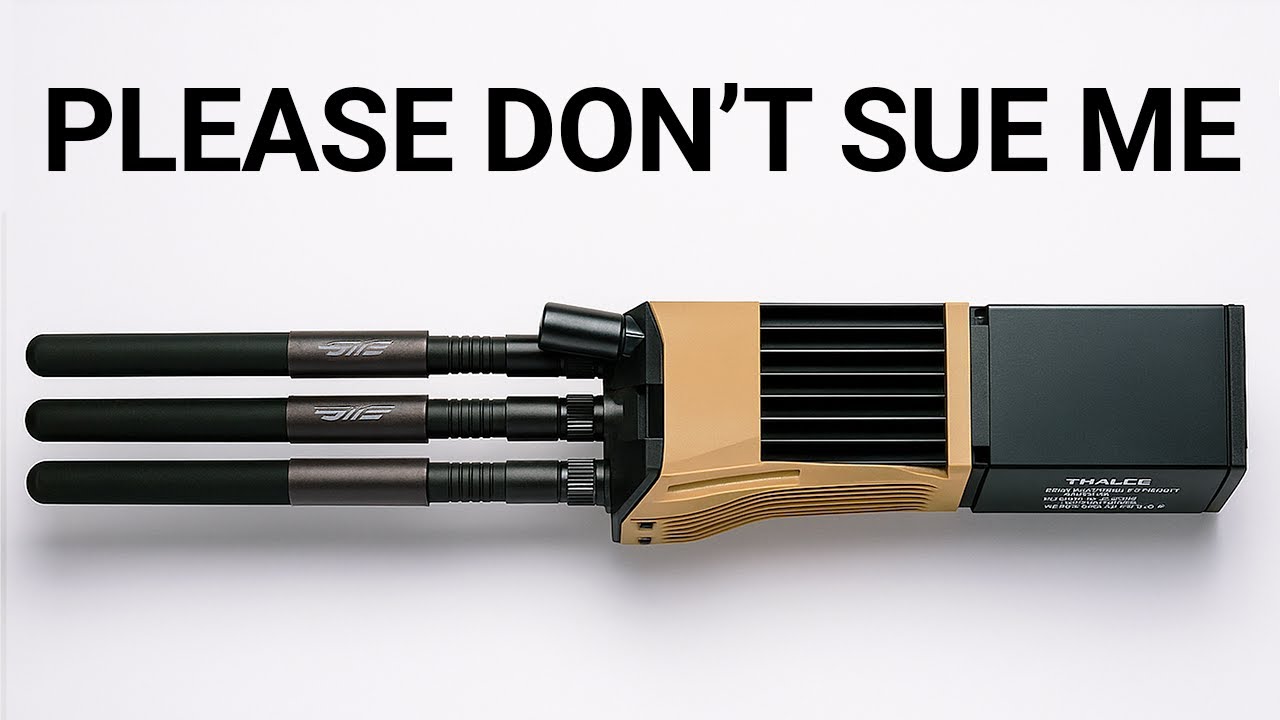
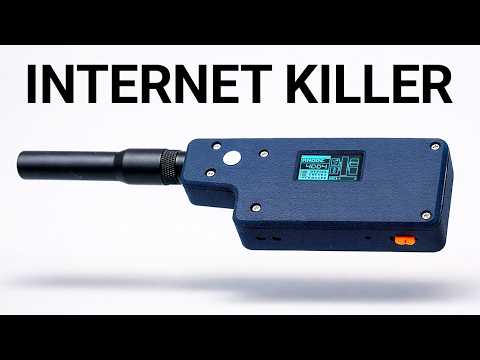
This build breaks just about every rule that the hardware industry has lived by for the last 30 years, and I couldn't be happier about it. If you've ever wondered what freedom looks like in hardware form, I'm going to say this is it. But what is it? Well, it's an open wireless router. One that manages to do things your home network gear still can't. It supports subahertz Wi-Fi, which travels further and penetrates obstacles better than 2. 4 or 5 GHz. connections can reach several kilometers using the same band as projects like Laura and Meshtastic, except this one runs full IP networking under the hood, which basically means all online apps will just work. It also relies on a different modulation technique that pushes bandwidth into the 10 megabits per second symmetric link territory, which is already faster than your airline or hotel is going to give you. And the best part, unlike militarygrade radios like the MP5 or Sylvvis, this doesn't require a special license to operate. It runs on the same unlicensed ISM band as Laura. So anyone can build, deploy, and link nodes anywhere in the world. And instead of a locked down proprietary mesh system like on Eero or Ubiquiti, it runs 802. 11s and Batman, both open standards for self-healing, peer-to-peer, and multi-layer mesh networking. It doesn't need a wall outlet either. It runs on two 21700 batteries, giving you about 8 hours of uptime wherever your adventures take you. Most Home Lab gear needs a climate controlled rack, a UPS, and a spaghetti pile of Ethernet just to survive. But this fits in your backpack, and it still runs a full mesh network. It's hardened, adaptable, portable, and mountable. And the entire build, from the Raspberry Pi to the antennas, costs just under a few hundred. And that's a fraction of what the military spends on encrypted radios. But this isn't just a product. It's actually more of an idea. And in my opinion, it's an idea whose time has come. I may have contributed to that idea, but I don't own it. It's built entirely from open-source tools. No blackbox firmware, no middlemen, and definitely no monthly subscriptions, no corporations standing between you, your tech, and your data. And that's not just theoretical, it's actually deeply practical because we just watched Apple get forced by the UK to turn off end-to-end encryption for its users. Turns out privacy is just a feature a corporation can revoke. But that's the beauty of decentralized open tech like Haven, a truly zero trust system, immune to state coercion. But none of that matters if you don't understand security to begin with. Years ago, I got one of the most expensive wakeup calls of my life. I woke up to dozens of virtual machines burning through expensive GPUs on my Google Cloud account, literally draining my wallet by the minute. I'd been hacked, and it definitely didn't feel good. Which is why I'm now such a huge believer in safeguarding your digital life. But real security isn't just using an encrypted email or a VPN. It's actually understanding the mindset of an attacker. Because once you start thinking like one, you see the cracks before they do. That's where this video's sponsor comes in. Try Hackme. It's a hands-on browser-based cyber security training platform that lets you safely practice real world attacks and defenses all in a sandboxed environment running in the browser. You get guided rooms and learning paths all based on real world exploits. You also get Echko, your AI tutor, which helps you learn faster. Here I am in the offensive security room where we're essentially simulating hacking an online bank. Ethically, of course. Try hackme spins up a virtual machine where I can run a command line tool called Go Buster, which finds hidden pages on the site by brute forcing a word list and checking status codes. And here we go. It found a custom internal transfer page intended only for bankers. And if you want to see if we can make an actual bank transfer on that page, then go ahead and continue the course. That's how you learn to think like an attacker, by doing. In my opinion, investments along these lines will always pay dividends. You can even showcase awards and certification on your LinkedIn profile, helping you level up both personally and professionally. If you want to try this yourself, jump in to try HackMe with the link in the description below. Start with the offensive security room and see how far you get. — Many of the rooms are free to play and if you use my code specifically Slayer, you'll get 25% off the annual plan if you want full access. But beyond security, Haven has it all because it's also completely modular. Don't want to use the Halo chip from Seed Studio? Cool. Swap it out for an Alpha or a Sillex board. We tested both and they
Segment 2 (05:00 - 10:00)
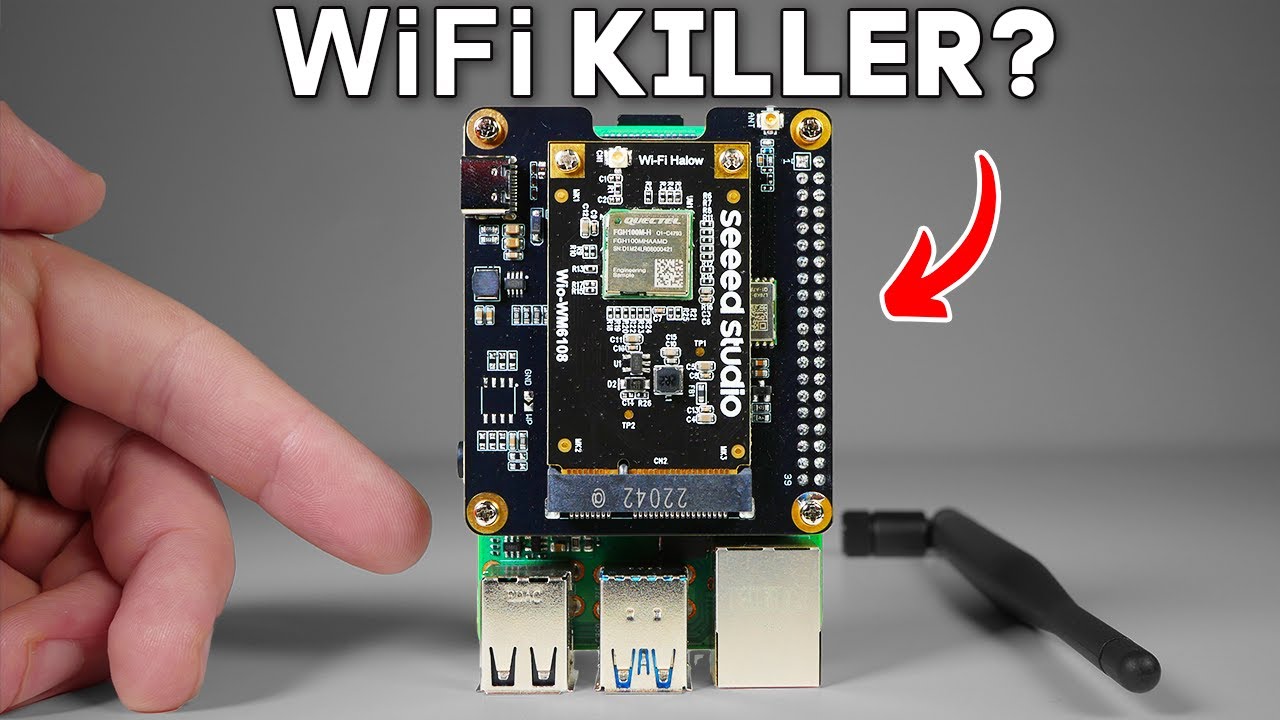
work. Prefer something other than a Raspberry Pi? Grab a Rock Chip or whatever board you trust more. Don't want to drop 40 bucks on a milspec antenna? You don't have to. Any sub gigahertz antenna will do. That's the point. You can customize every layer of this build from the hardware, the firmware, and the form factor until it fits you. And that freedom, it means you can do things your ISP would probably rather you didn't, like FaceTiming without internet. So, what's interesting is even though uh Amelia's phone doesn't have any cellular or uh uplink at all, so it has no internet and I have no internet and we're both connected over 2. 4 to our respective Haven nodes, we're able to do things like FaceTime. And um it's actually pretty neat that Apple uh doesn't rely on routing traffic through their proprietary cloud servers cuz I kind of thought that would be a prerequisite, but it looks like it's sophisticated enough to be used with mesh networks, 802. 11s networks, and uh leverage Wi-Fi direct, which is pretty cool. Now, I admire good engineering in pretty much any form it takes. And I even really like some of the gear on the market. My Starlink Dishy, for example, has brought me online at times where nothing else could. And my Ubiquiti gear has brought my home network into the 21st century with nifty features like guest networks and channel optimization. But the fact remains that they are highly proprietary. The moment you SSH into them, you're probably voiding the warranty. And the reality is their priority isn't you. It's more like maximizing this quarter's profits from vendor lockin keeping you dependent to monthly subscriptions and blackbox firmware. And I just don't think that model is the future. Personally, I think the future is decentralized open tech that you actually own. And the opportunity isn't in gatekeeping users out. It's helping people set it up, understand it, and build with it. And I've staked my channel on that thesis. They may tell you open source is dead, but then why is half the internet still built on it? Why are indie projects like Meshtastic dominating tech subreddits? And why is the Department of Defense sliding into my DMs? That's why I gravitate towards companies like Raspberry Pi. Cheap open hardware that you actually own. No DRM, no middleman, just boards you can run, mod, fix, and recycle for as long as you want. And that's where Haven comes in. And quick heads up, there's a free giveaway tied to this build, and I'll tell you how to grab it at the end of the video. This is a router that you build, control, and manage on your own using cheap, inexpensive, open- source parts that still invoke some of the most cuttingedge tech you've seen. It can be modded, tampered with in any way you see fit. It can be upcycled when new chips inevitably come along, which keeps plastic out of the landfills. Let's step through the anatomy of this thing. At the heart is a Raspberry Pi 4, which we use specifically because it supports the Seed Studio Wi-Fi Halo card, which relies on a Morse Micro Halo chip. Now, similar devices like the militaryrade MPU 5 ship with just 2 GB of RAM. And the cost? Well, you'll have to do the whole song and dance with a sales rep just to get a quote, which is interesting that I can't get a solid price for something that my tax money is already paying for. But suffice to say, it isn't cheap. Meanwhile, the Haven packs 8 GB of RAM, open access to the full stack, and a bill of materials anyone can inspect. Four times the memory, and a thousand times the transparency. So, I'll let you do the math on that. And just last week, I spoke with a network engineer who was able to get this Halo chip working with a Raspberry Pi 5 by modifying the device overlay tree, which is pretty exciting because the Riy 5 is substantially more performant than the 4. So, I'm going to share those details with you as I get them. Next is the mini PCIe hat from Seed Studio, which lets us mount the Seed Studio Mini PCIe Halo card, which sports our Morse Micro radio. And just a month ago, Morse Micro raised $70 million in funding. So, you can expect some growth there soon to come. Now, to power this thing both at home and on the move, we've got a Wave Share Pogo pin hat that allows us to mount two 21700 batteries, each with 5,000 milliampour capacities, putting the full battery of this thing at 10,000 milliamp hours, which supported me running a mumble pushto talk server with two clients for 7 hours on a single charge. Once installed, the batteries can stay mounted since to charge, all we have to do is plug in a USBC cable. Now, the Raspberry Pi has an onboard Wi-Fi module, but the catch is it can't currently be used in parallel with the Halo Wi-Fi radio. So, what we do is we
Segment 3 (10:00 - 15:00)
add a USB Wi-Fi dongle that brings us a separate 2. 4 band Wi-Fi radio because there's really no need to overengineer that part. Now, staying legal depends on where you live. So, definitely fact check your local regulation. Here in the states, the sub gigahertz ISM bands is limited to a maximum transit power of 1 watt or about 30 dBm and a total ERP of 4 watt, which equals 36 dBm once you factor in antenna gain. Most Laura and Halo radios stay well below that, typically around 22 dBm, but that's actually starting to change. Heltech's new V4 board, for example, bumped the Laura output up to 27 dBm, which might not sound like much, but since the scale is logarithmic, that's actually about a four times increase in power. And on the Halo side, you'll see a similar trend. The Helletech HTH7608 module runs around 21 dBm while the newer HTO1 pushes closer to 27 dBm plus or minus one depending on calibration. Now, notably, these higher power levels don't boost bandwidth because that's governed by the 802. 11 ah modulation itself, but they do help extend range and improve link stability. The seed WEO WM6180 module I'm using was originally capped at 22 dBm, but the Open Manet project actually refactored some of the code to unlock 27 dBm, which is one of the several upgrades it brings to bear on the Haven project. Now, total ERP is just transmit power plus antenna gain. That brings my setup to about 27 dBm transmit plus 4 dBi gain, which is 31 dBm total EIRP, which is well under the legal limit. As for antennas, there's tons of flexibility. Most Smashtastic antennas will work fine since they're designed for the same sub gigahertz bands. Halo operates roughly between 880 MHz and 930 MHz. So, an antenna tuned near 915 is ideal. I've been testing this MeshTac gooseeneck antenna from Rockland with a 4dBi gain flexible SMA male connector tuned for 915 megahertz and it's been performing solidly so far. Admittedly, I'm still new to learning about antenna optimization. So, if you have any experience testing or improving signal strength, drop your comments below or hit me up in the Discord. I'd love to chat. Okay, now all that brings us to this new case. So, I managed to convince my favorite tech designer to cook up something special for us. And Trey, the guy behind Mororrow's XIP mesh radios, graciously designed this STL in Fusion 360, and he just absolutely nailed it. The case is fully printable, but if you want it to feel like that military hardware, Trey recommends using Fiberon PA6 CF20, a carbon fiber reinforced nylon 6 filament. It's about 20% carbon fiber, giving it that dense matte rigidity you'd expect from industrial composits. We're talking tensil strength over 100 MPa, heat resistance above 200° C, and almost zero warping even on large prints. It's total overkill for a router, which is what makes it perfect for this router. In fact, it's one of the few cases in this entire space that's 100% sterile and unattributable. No logos, no serals, nothing that ties it back to a brand. It's ventilated, the ports are exposed, and our Halo SMA connector can perfectly fit the most rugged antennas on the market. And real quick, um, I sent this design over to, uh, my partners at JLC, and I used a new material they have called, uh, PA1HP, which is a type of nylon, but it's their most, uh, heat resistant. I think the tensil strength is the highest, uh, of all their nylons. This is the result of that. Uh, it looks like industrial grade. looks super nice. Um, this is 100% infill, so this is like a rock. Like, I would not This is heavy. I would not want this to be uh thrown at me or anything like that. Um, but uh they kind of nailed it. That design is just uh Yeah. So, just don't feel like you have to print this at home. You can remote print it. That's actually what I do. And um the results are pretty good. Once built, it doesn't need to be reopened since the batteries can be charged straight from one of the USBC ports on the side. And with this carbon fiber filament, it's the same material of the Moro X IP mesh radio that I ran
Segment 4 (15:00 - 17:00)
over with my car, which was about the equivalent of a half ton of pressure, and it just kept working. And speaking of Mororrow's X, Trey has actually been working on a new generation of radios that take this even further, adding battery lock and release mechanisms, physical pushto talk integration for Peltor Comptac headsets, and full ATAC VX voice plug-in support. Every time I talk to him on the phone, he's telling me how he reverse engineered a lock down antenna or pricey battery latch and produced something that works just as well for a fraction of the cost. And that's the kind of nononsense maker spirit that I want on this channel. If you're into that kind of high-end field gear, but for civilians, definitely reach out to him over at Moros X. He's building some seriously advanced stuff. Now, one of the things about the Haven is that it's not meant to sit around a boardroom. It's built to go with you into the field. So, I wanted it to support multiple mounting options, whatever the situation calls for. And there's tons of rugged gear out there that uses multistrap systems, especially from Juggernaut, but that stuff gets expensive fast and it kind of breaks our cheap and open ethos. So, I started looking around my office and I realized I already had a pile of GoPro mounts all built around the same 1/4in thread. So, we added that to the case and now the Haven mounts to just about anything in the GoPro ecosystem. And those mounts are pretty rugged, pretty tested, and cost next to nothing. From tripods to glass suction mounts to clips and straps, finding a good vantage point for Haven and temporarily mounting should be a breeze. And if you want to build a Haven yourself, I've put together a detailed Haven build guide that walks you through every part, command, and setup step. You can find that in the description below. But there's one rule left to break here, cuz normally this is where a company would try to sell you something like this. But I'm going in a different direction. In fact, I just put the entire haven. stl schematic up on printables for free. And I'm not just open- sourcing it. I'm putting it under public domain, which is literally the most permissive license I can use. So that you can print it at home, you can share it, you can remix it. Heck, you can even sell it. This is my gift to you. And in the immortal words of Morpheus, I can only show you the door. You're the one that has to walk through it. If you're ready, click