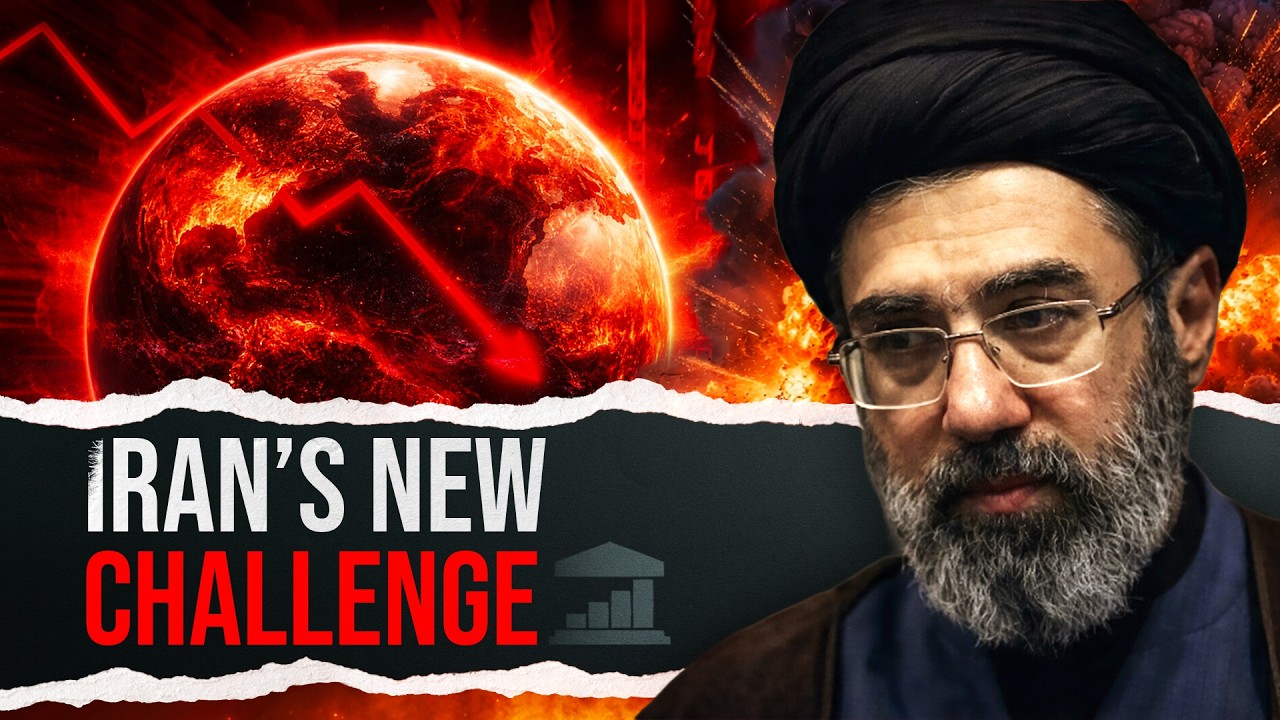
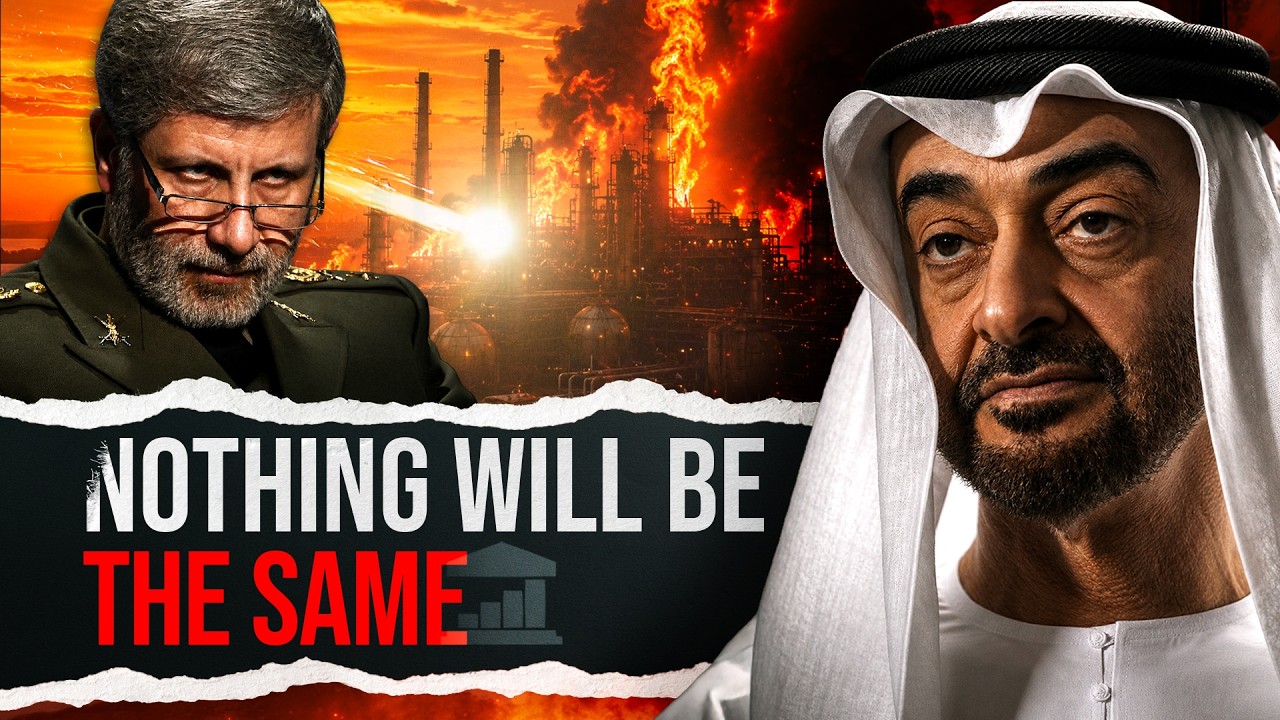
Iran has a new supreme leader. The price of oil has skyrocketed above $117. International stock markets are plummeting and all the alarm bells are ringing. Basically, due to the fact that the safety margin for global energy supplies is running out. What is going on? In this video, we're going to tell you everything that is happening. Prepare yourselves. There's a bumpy road ahead. A certain deescalation was expected, but this has not happened. Rather, what we've seen has been quite the opposite. In recent hours, we've seen Donald Trump and major political allies of the president, such as Senator Lindsey Graham, raise the tone even further. Best money ever spent. Was it worth to America to take down a religious Nazi regime, who's trying to build a nuclear weapon to deliver to America? That's a really good investment. They're going to fall. — We've seen Israel begin to launch missiles against Iran's energy infrastructure, covering the entire capital, Tran, in a thick toxic cloud. The Revolutionary Guard responded by directly threatening the energy facilities of all its neighboring countries. And no sooner said than done, they attempted to attack the Sheaar oil field in Saudi Arabia with waves of drones. This is one of the world's main oil extraction areas, producing nearly 1 million barrels per day. They weren't successful, but once again, it's the intention and the real threat that something could happen that counts. Where they have been more successful, it seems, is at a refinery in Bahrain. Also, we've witnessed how both sides have fired on the most critical infrastructure of all, which if necessary would mark a point of no return, the water supply and one of the driest lands in the world. And finally, we now know who Iran's new supreme leader is. None other than Ayatollah Kami's second son. His name was on the short list, although his state of health following the attacks was unclear. And what's more, the United States, Trump himself, in fact, had described his election as the crossing of a red line. While the assembly of experts has ignored the White House's threats and chosen precisely the son of the now considered Imam E Shahid Kami, that is the holy martyr Kami. This does not seem like a way to call the conflict. Be that as it may, as you can see, there have been many developments in recent hours and days. This ended up triggering moments of panic and that caused oil prices to exceed $117 which led the United States and the G7 countries to rush to agree to simultaneously release a record amount of their strategic oil reserves in an attempt to buy time. Something that just a week ago Trump ruled out having to do. But now, as you can see, here we are. A rockolid plan to say the least. The fact is that there's talk of releasing between 25 and 30% of all Western emergency reserves. This is an enormous amount of crude oil, which could be equivalent to more than 20 days of lost exports. Keep in mind that the United States and Japan alone have more than 700 million barrels in storage. Well, the announcement of this intention caused the price to correct quickly, although it's still trading at very high prices. Crazy levels if we consider that many forecasts pointed to the price of Brent crude being below $60 per barrel at this point in the year. So, is that it? Is everything sorted? Is releasing strategic reserves enough to get us through the energy crisis even if the straight of Hormuz doesn't reopen yet? Well, no. You see, in the short term, yes, there are many crude oil reserves in the world. The major economies have been maintaining large stocks of crude oil for decades in case something happens. For example, it's estimated that while the US and Japan combined have about 700 million barrels in storage, China has between 1. 1 and 1. 4 billion, enough to last almost 5 months. The problem is that despite all of this, it might not be enough to completely calm the situation because let's see, releasing massive amounts of oil stored for emergencies could prevent shortages, avoid the worst case scenario, and there are indeed a lot of reserves. But if it comes to that, it might not fix the supply problems, and that's why the price of oil has skyrocketed. Why do I say it might not be enough? Well, this is where we come to the Damocles sword hanging over this whole mess. The fact is that time is running out for the world. And no, I'm not exaggerating. Consider this figure. 300 million barrels of crude oil. That is the maximum storage capacity that the Persian Gulf countries had available at the start of the war. But of course, with all the oil stranded, this storage capacity is rapidly running out. So, what's the problem? Well, once the reserves are full, if things haven't been remedied and the crude oil isn't flowing again, then they would have to shut down production wells. And the problem is that wells are not like taps. They cannot be opened and closed at will. If you close a well, the field may be permanently affected. Recoverable reserves may be substantially reduced. And on top of that, returning to operations may take time. In other words, if they're forced to shut down capacity, we would be faced with a measure that could not be corrected overnight. The global supply of crude oil would be reduced for many months. The maximum time to bring that storage online, 2 weeks. But there's a catch. Of this available storage, Saudi Arabia has the most space. Other countries have much less capacity, both in absolute and relative terms. In fact, Iraq and Kuwait
Segment 2 (05:00 - 10:00)
have already had to take action. — Kuwait declares force majour cuts crude oil output due to Middle East conflict. Iraq reduces oil output. More cuts to come if Hormuz's disruptions persist. — Let me stress this could limit the supply of crude oil for many months with a substantial economic impact. And keep in mind that this is not rumor. This is exactly the scenario we're facing. Qatar's energy minister Sad Alabi was very clear in the Financial Times a few days ago. Qatar warns war will force Gulf to stop energy exports within days. This will bring down the economies of the world. If this war continues for a few weeks, GDP growth around the world will be impacted. Everybody's energy price is going to go higher. There will be shortages of some products and there will be a chain reaction of factories that cannot supply. How long will this last? I already told you 2 weeks or rather probably less than 2 weeks. Time is running out for everybody. And what do Trump and his administration say about all this? Well, that it's little more than a temporary inconvenience that when it's all over, oil prices will quickly fall again. Truth, social trump. Short-term oil prices, which will drop rapidly when the destruction of the Iranian nuclear threat is over, are a very small price to pay for the USA and world safety and peace. Only fools would think differently. — The problem, whether foolish or not, it may indeed be so. But it's also perfectly possible that it's not. If the Gulf countries had to start halting production, the time to restore it would not be measured in days, but probably in months. And that's assuming Iran doesn't decide to attack and successfully hit some critical energy infrastructure in the area. Because if it did, then the supply disruption could last much longer. And that's not to mention what might happen to Iranian oil itself. So for all these reasons, international emergency reserves will help prevent shortages, but they will not bring prices back to where they started. The result, there's a risk that things will not last as short a time as Trump is saying, and then that increase in energy prices could lead half the world back into recession. But even so, the worst thing is not even oil. With gas, the situation is even more complicated. Existing reserves are much smaller. This is particularly true in Asian countries such as South Korea and Taiwan, which desperately need gas to fuel their industrial economies. Qatar, the world's second largest producer of LG, has already been forced to declare force Majure and halt its activities after Iranian drone struck the Raslafan plant, one of the most important in the world. And don't forget, Qatar is not just any supplier. It's one of the three major pillars of the global supply of this raw material. The result, prices are skyrocketing. Gas destined for Europe is already trading at 100% above its pre-war level. And pay attention because it doesn't stop at LG. 33% of all global fertilizer trade which is absolutely crucial at this time of year with the arrival of spring also depends on the straight of hormuz without going any further Iran and Qatar are two very important global producers and now their factories are closed and that's not all in general nitrogen fertilizers even those manufactured at their destination depend heavily on supplies from the Persian Gulf and natural gas prices. What does this mean? It means that the planting season in many developing economies now looks very bleak and we're likely to see much higher food inflation. This in turn could end up causing even more unrest around the world. And take note because the sectors affected are numerous. Even the South Korean chip industry could be at risk. Yes, you heard correctly. The lithography process used to create stable vacuum environments for advanced chips requires a compound, helium. And who is South Korea's largest supplier of helium? That's right, Katar. Companies say they have sufficient reserves, but naturally this does not exactly inspire confidence. Added to all this is the impact of the markets themselves. Keep this in mind. The US economy is hanging by a thread. The latest employment figures for February were disastrous and most of the country is already in recession. Now the current crisis, rising inflation, higher energy costs and the stock market correction could slow consumption and fear could paralyze new investment. The outcome, there's a real and not insignificant risk that all this will bring the US economy to a screeching halt. Although clearly the United States would not be the country most affected. After all, it's a net exporter of oil and natural gas. So, it is partially insulated or at least more insulated than the countries of the European Union and Asia. South Korea, Taiwan, Germany, Italy, India, Japan, China, among many others, will be hit harder than the United States. But of course, in the end, we cannot ignore the fact that despite Trump's tariffs, the global economy is made up of communicating parts. And that means that the problems of some could end up spreading to the rest. If the shock is short-lived, the global economy can recover quickly. If oil remains at these levels for several weeks, it will be a major headwind globally. So far, markets have underestimated the risks related to the conflict in Iran. — As we all know, no one has a crystal ball, but this is the situation as it stands. The storm may pass in a few days, but the chances that it will not, although not the majority, are not exactly small. And the problem is that
Segment 3 (10:00 - 15:00)
the consequences would then be very severe. The result, panic spreads, along with numerous losses on global stock markets and anxiety among many governments as they see their energy supplies at risk. Of course, the fact that for the first time, the United States has ordered the immediate departure of all non-critical employees from its embassy in Saudi Arabia does not help to calm nerves. Added to all this is the election of the new leader. It's now a fact. Iran's military and political figures have sworn allegiance to MJ Jaba Kamei, the country's new supreme leader. Both the United States and Israel have already made it brutally clear that they want him gone. — I think it's only a matter of time before he meets the same fate as his father. — But it doesn't matter for now. All the political, military, and security bodies of the Iranian regime have expressed their full support for the new leader. The president, the parliament, the revolutionary guard, the armed forces, the besiege, the supreme national security council all have placed themselves at his command. And so the question is clear. Who exactly is Kami Jr.? Apart from being the second son of the former Supreme Leader, what can we expect from him? What is known about his political orientation and how he might influence the war? Well, many things are unknown, but there is one thing we do know for sure. His election is clearly a challenge in itself. Trump had drawn a red line, which the Iranians have ignored, making it very clear to him that he has no say whatsoever in the election, not only of their political leader, but also of their religious leader, which by the way, if you think about it, is crazy. To suggest that Trump could try to interfere in a decision like this to choose not only a political leader, but also a religious one is nonsense. It's hardly surprising that it raises many concerns about whether or not there is actually someone at the wheel because let's see what's going to be the next thing that crosses his mind. Participating in the election of the next leader of Alqaaida. Come on. Like I said, it sounds crazy. Whatever the case, it's clearly a challenge. It means that despite all the blows they've suffered, the Iranians are not backing down for now. In fact, if there were analysts who thought the regime would wait until the end of the war, that has not been the case. And this is clearly the first message that this election leaves us with. — This valuable election is a manifestation of the Islamic nation's will to consolidate national unity. A unity that like a solid barrier has made the Iranian nation resistant to the conspiracies of its enemies. But let's return to the question from earlier. Who is this new Kami? Or rather, how does he think? Well, let's see. It's not easy to answer this question because this guy is largely unknown. He's never run for office, never been subject to a public vote, never given lectures or political speeches. What is known is that he was very influential within his father's circle. In fact, the Wikileaks archives described him as the power behind the robes. And perhaps most concerningly, as well as possibly seeking revenge, not only for the killing of his father, but also his mother and wife. He has deep ties to the Revolutionary Guard, of which, incidentally, he was a veteran in the war with Iraq in the 1980s. The fact is that due to these ties, which are apparently quite solid, it is taken for granted that he's part of the hardline wing of the regime. The same wing that is arguing that no agreement should be sought, that resistance must be maintained until economic pressure forces Israel and above all the United States to stop. Iran does not have to defeat the US military. It just has to defeat the market. The idea is that a severe recession in the bond market would force the United States to withdraw. What's more, even though he has not given any political speeches, the reformists and moderates within the regime have accused him of intervening to make the besieges repression of opponents even harsher. In other words, he's understood to be a hardliner. He's also very young, barely 56 years old. Under normal circumstances, he would have many years of supreme authority ahead of him. He adopts his father's positions on the United States and Israel. So, we expect a confrontational leader. We do not expect any moderation. And that is why Israel and the United States have already said they want his head. His election seems to have come as an unwelcome surprise. And in this, the mere fact that they're actively seeking his head gives rise to two additional risks that could cause the damage of this war to expand even further. First, there is Hog Island, the enclave we've told you about several times here on Visual Politic. Located 25 km off the Iranian coast, this island is absolutely crucial because most of Iran's coastline is too shallow for super tankers to operate. 90% of Iranian crude oil is exported from here. If there were a problem at this facility, the international repercussions would be brutal because this infrastructure is absolutely fundamental for Iran, but it's also crucial for the rest of the world. The United States has said it will not touch it. The problem is that many in Israel do want to do so in order to put an end once and for all to the regime's main source of foreign currency. That way, whatever happens with the new supreme leader and the resistance of the Ayatollas, the country
Segment 4 (15:00 - 18:00)
could be left without money for a very long time. And without money and resources, logically, the threat is much less. And keep in mind, this is not just anyone asking for this. This is what Y laid, the leader of the opposition is saying. Israel needs to destroy all of Iran's oil fields and energy industry on Carg Island. That will crush the Iranian economy and overthrow the regime. This war must end when the Iranian regime has fallen, the nuclear facilities have been destroyed, the entire ballistic missile industry has been destroyed, and Hezbollah has been wiped out in Lebanon. What's more, if there came a time when the regime was completely overwhelmed, it could even consider an operation of its own. Because if they see that they're going to lose power, that could be a great revenge. or if there were a major internal conflict, it could be a way to take money out of the equation and focus primarily on the role of religion, which obviously would exponentially exacerbate everything we've seen in this video. Well, this is the first additional risk that exists, but which is not yet being discounted. And the second has to do with water. This is an absolutely critical element, even more so than what happens with the energy market. I'm talking specifically about desalination plants. Eight of the 10 largest in the world are located on the Arabian Peninsula. 100 million people drink from these facilities and they have no substitute. Q8 obtains 90% of its drinking water from desalination. Oman 86%, Saudi Arabia 70%, United Arab Emirates 42%. And there are no alternatives here. There are no reservoirs or rivers from which to obtain water. If these plants were attacked and left out of service for months, the economies of these countries would collapse. Even oil extraction requires a lot of water, it would be a huge problem, a last resort perhaps. And yes, they are well protected with patriot systems, no less. But if something were to fail, anyway, that said, the question is, how is it all going to end? Visual politic, if the Iranians don't give in, if the new supreme leader insists on resisting, there would only be two options. Either Trump does a taco, as he's already done with ICE in Minneapolis with mass deportations, which he now says he doesn't want, with Greenland with liberation day tariffs, and that means easing the pressure to seek some kind of deescalation after wiping out the Ayatollah's military capabilities. Or he ups the ante with crazy bombings, naval escorts, and even a troop landing in southern Iran to protect the straight of Hormuz. Something that still seems like science fiction in Washington because it would be tremendously unpopular. In any case, this second option is likely to end badly with more inflation, systematically higher energy prices, food problems, and the Fed unable to lower interest rates. In short, this is how things stand in the second week of the war. The question now is, how far do you think this conflict will spread? Will the new Supreme Leader be more willing to seek an understanding? Tell us in the comments how you see this war. And if you want to understand what's really happening in the markets and learn how to manage your money with more confidence, join the Visual Factory Club. It's completely free and the link is in the description. Every week we send out free content focused on essential financial education, the ABC of what everyone should know to understand the stock market, financial markets in general, investment platforms, how to assess investment opportunities, and which markets may have more or less potential. It will take you just a second to sign up. And if you found this video interesting, don't forget to like it and subscribe if you haven't already. Take care. I'll see you soon.