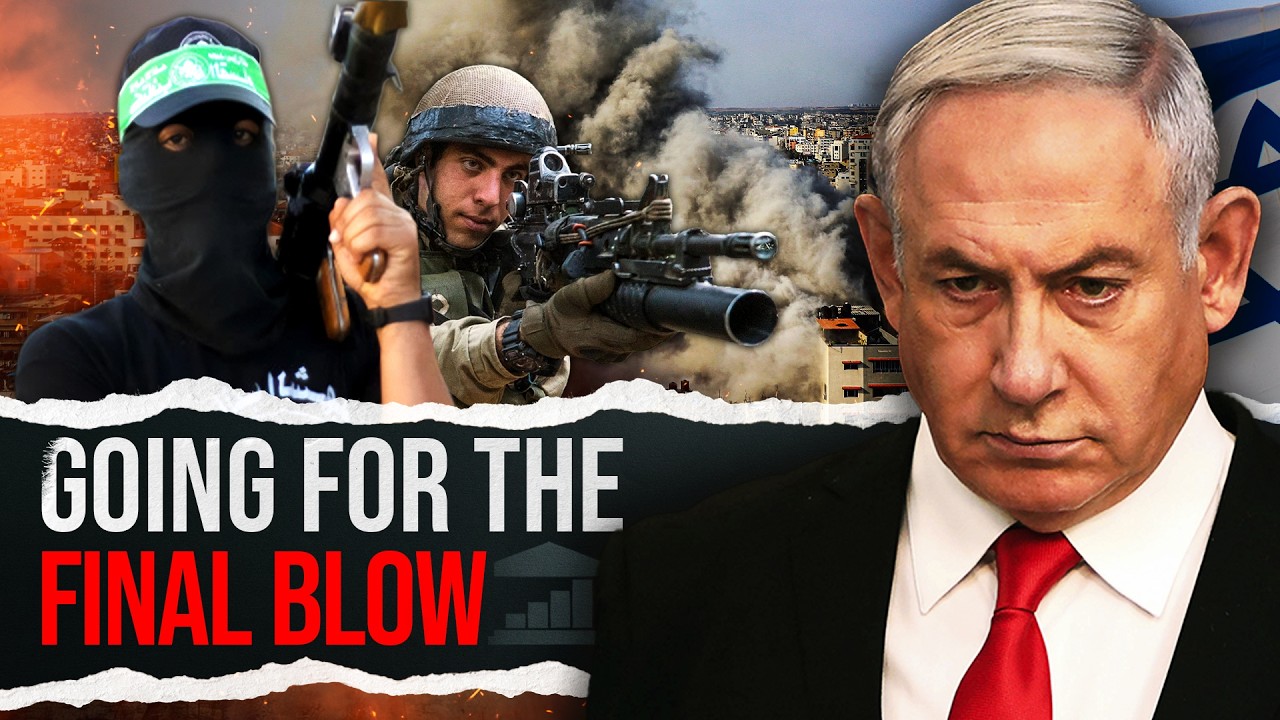
While continuing to subject Iran to truly intense fire, the Israelis are not stopping. The Israeli Defense Forces have also just launched an offensive in southern Lebanon. visual politic community. In recent years, Israel has become a veritable Sparta. They don't stop. They now even dare to engage in several simultaneous theaters of war. And take note, because this new action is not a limited operation designed to last two afternoons. No, Israel is bombing targets in Beirut again, is planning a new ground invasion of southern Lebanon, and has also made it very clear the new head of Hezbollah, Naim Kasm, is officially a target of the IDF. He's in the crosshairs to be neutralized once and for all. It all started after Hezbollah launched several attacks in retaliation for the death of Iran's Supreme Leader Ali Kami. One of these is believed to be the drone that attacked Acroi, the UK air base in Cyprus. At 12:03 midnight, a Shahed type drone approached the military installations inside the British base in Acroi causing minor damages. I want to be clear, our country is not participating in any way and does not intend to be part of any military operation. — Two more drones were intercepted. We're talking about the first direct attack on the territory of a European Union member state in this latest escalation of the conflict in the Middle East. So what was the British response? To authorize Washington to use its air bases as support for the offensive in Iran. Because yes, some other European countries had denied Washington the possibility of using its bases in their respective countries, which is not surprising after all we've seen with tariffs, threats, and the whole Greenland route. What's more, the offensive in Iran was not coordinated or agreed upon with Europe. It was not even communicated. And this despite the fact that the European economy may be one of the most affected by the interruption of energy transit. In fact, due to this military action, the old continent is now paying much, much more for gas from the United States. On top of that, it's also Europe that stands to suffer most from a possible jihadist offensive. So, at the very least, there is debate there as to whether Washington has done the right thing. But let's not get sidetracked. That's another story. The point is that in response to Kane's death, Hezbollah has also launched missiles and drones at an Israeli military base in Hifur for the first time in over a year. So, Netanyahu made the decision to open up a new front in the war. The citizens of Beiru started the week with the sound of a dozen explosions at 3:00 in the morning when Israel attacked three different targets in the south of the Lebanese capital. What were these targets? Hezbollah's communications and intelligence infrastructure in Beirut, which was allegedly camouflaged as civilian use. But the actions are by no means limited to the capital. So far in southern Lebanon, Israel claims to have hit more than 70 facilities. Weapons depots, launch sites, command centers, missile launchers, everything is in the crosshairs. And as happened in Tehran, Israeli intelligence made it possible for one of the intelligence chiefs of this military organization to be killed in the first attacks. Hussein Maked, one of the most wanted men. And as the hours pass, this new offensive has grown in significance. Israel has already issued evacuation orders in 55 Lebanese towns. As I said before, they seem to be preparing a new ground invasion into the south of the country to create a security buffer zone. This is something they also did in Gaza and in Syria. Israeli troops enter Lebanon for first time since 2024 troops. — This is a new step after deploying some 100,000 reserveists on the border with Lebanon last Sunday. We've already told you Netanyahu wants to score all the points in terms of security. On that fateful day of the 7th of October 2023 when Hamas and Palestinian Islamic Jihad forces carried out a massive massacre in southern Israel, Benjamin Netanyahu's government made a decision. This time they would not limit themselves to a response. This time they would start a war to wipe out all the forces threatening Israel. And since then they haven't stopped. Jerusalem is taking advantage of every single window of opportunity that has opened up for it to annihilate all its enemies. They have been falling one after another. It's a different kind of war. A kind of intermittent war dominated above all by the air force, intelligence services, and special operations. An intermittent but constant war. In fact, we now know that the offensive in Iran was mainly Israel's doing. And remember, these are not rumors or conspiracies. This has been confirmed by both Secretary of State Marco Rubio and Secretary of Defense Pete Higse. Take a look. So, the president made the very wise decision. He we knew that there was going to be an Israeli action. We knew that would precipitate an attack against American forces. Obviously, we were aware of Israeli intentions and
Segment 2 (05:00 - 10:00)
understood what that would mean for us and we had to be prepared to act as a result of it. — We didn't start this war, but under President Trump, we are finishing it. And now it's Lebanon's turn again. — The Lebanese government and Lebanese armed forces have been warned numerous times to disarm Hezbollah recently. They did not act and so we know how to defend ourselves with our own means. The IDF will not conclude the campaign before the threat from Lebanon is eliminated. The Middle East is red-hot right now. Meanwhile, Iran is still making moves, or rather drones and missiles. And we've already seen the first warning strikes on energy infrastructure. And let's see, for now, the attacks are still not particularly destructive in material terms. But take note, because the mere threat from Tran is causing energy flows to be disrupted. For example, some oil and gas companies in the Gulf are halting many operations for safety reasons. And above all, traffic in the Straight of Hormuz has plummeted, basically because Iran's mere threat to sink passing tankers has caused insurance companies to cancel policies or multiple premiums while shipping companies decide not to take risks. The result, new stories like this. Iraq starts huge oil cuts as Hormuz blockage fills storage. — Logically, if you cannot sell the oil you produce and your storage facilities are filling up, you have no choice but to cut production. And this is causing moments of real financial panic. The price of oil has skyrocketed at times exceeding $84 per barrel of Brent. To give you an idea, it started the year at $60. And let's not even talk about liqufied natural gas. So far this week, its price has shot up by almost 80%. Naturally, this has consequences. For example, we're seeing wild declines. For example, the Cosby index of the Korean stock market has plummeted a wild 20% in just 2 days. We give you many more details in our latest visual economic video. Don't miss it to better understand everything that is happening. The point is that this is forcing the White House to make a move. — Trump orders oil tanker insurance support. Says Navy could escort ships in Gulf. But of course, that doesn't make the supply risk go away. And it's also setting off some alarm bells about possible stagflation if the conflict drags on. Watch out for this. We would be talking about a new crisis with high inflation and economic growth in the doldrums. One of the worst possible combinations. Take a look. Iran war oil shock threatens to unleash wave of global inflation. Sustained high oil prices would boost inflation and slow growth, putting central banks in a tough spot. — Honestly, I still think it's too early for this, but the fear has already been unleashed. And no wonder Saudi Arabia's largest oil refinery is shut down. Qatar has halted the world's largest liqufied natural gas plant. The straight of Hormuz is virtually paralyzed and US Treasury bond yields have risen as traders reduce their bets on further interest rate cuts if inflation rebounds. And all the while, as I said, Iran continues to shoot like a headless chicken. While Netanyahu and Israel's defense minister have given the order, get this, to eliminate any new Ayatollah who is appointed Supreme Leader. Any leader appointed by the Iranian terrorist regime to continue leading the plan to destroy Israel, threaten the United States, the free world, and the countries of the region, and oppress the Iranian people will be an unequivocal target for elimination. It does not matter what his name is or where he hides. — But let's get back to Lebanon. The threat of renewed war with Israel has prompted the local government to ban all armed activity by Hezbollah in the country. Lebanese PM bans Hezbollah's military activities after attack on Israel. This of course would be in a pitched battle in the streets of Lebanon itself. Be that as it may, all this has caused us to ask a few questions. What role could the current Hezbollah really play in all this? What is Israel really trying to achieve by launching a new offensive in the midst of a war that is already causing panic around the world? Well, let's take a look. — A strategic earthquake. — What if I told you that Israel had been waiting for this moment for months, even before this new phase of the conflict with Iran broke out? Israel had already laid the groundwork for a major new offensive against Hezbollah. According to Israeli sources, Netanyahu's government is convinced that the ceasefire agreement reached was worthless, that the group was regaining strength after the November 2024 ceasefire, and that sooner or later they would be ready to attack again, or at least to pose a real threat. But Israel needed Hezbollah to fire first. It could not unilaterally break the ceasefire agreements again and launch a major military offensive against Lebanon. Admittedly, for more than a year, Israel has been bombing southern and eastern Lebanon on an almost daily basis. despite the ceasefire being in force. But during that time, Hezbollah, in a radical shift in its approach, did not take any action. So, Israel had no excuse to escalate its response until this past Monday. At 1:00 a. m., tan's allied group fired rockets and launched drones toward northern Israel in retaliation for the assassination of Ali Kami. The truth, it
Segment 3 (10:00 - 14:00)
was a symbolic action. It caused no damage, and in fact, most of the rockets fell directly into the sea. And remember during the bombing of Iran in June last year, Hezbollah did not intervene, did not respond in any way. And now with the fall of the Ayatollah, they wanted to take action that was more political than military. But no matter, it was enough. Netanyahu clearly was not going to miss this opportunity. And that's exactly what he's doing. But what danger does this paramilitary organization, which was once the most powerful non-state army in the world, really pose? Well, it's true that some Israeli and US analysts argue that Hezbollah has recovered quickly since the 2024 ceasefire, thanks precisely to hundreds of millions of dollars in cash generated by Iran. According to the US State Department, we're talking about a boost of around $1 billion in 2025 alone. No joke. And that's despite the fact that the Iranian economy was in dire straits. Well, with all this funding, the group is rebuilding itself, acquiring new rockets, and reactivating fighters who had been inactive for over a year. But in any case, the reality is that they remain extremely weakened. The punishment this organization received in 2024 was brutal. And in 2025, as I said earlier, they have continued to take blows every other minute. Let's see. The organization has not disappeared. It still has between 40,000 and 50,000 fighters, according to estimates by the US Congress. But it's clear that it's no longer the same as before. In 2024, Israel destroyed much of its military arsenal, practically its entire leadership, including its historic leader, Hassan Nazallah, and many of its most experienced troops. To make matters worse, the fall of Bashar al-Assad in Syria, left them much more isolated. This is because Syria was the logistical corridor that linked them to Iran, through which weapons and all support supplies flowed. This is something we've already discussed several times here on Visual Politic. And well, as we saw before, although they are still a large organization in Lebanon, they are no longer as feared as they once were. So, the government now dares to point the finger at them openly. And it's at this point that we come to one of the keys to this whole story. The launching of rockets from southern Lebanon is an irresponsible and suspicious act. It endangers Lebanon's security and stability and gives Israel a pretext to continue its aggression against us. We will not allow the country to be drawn into further adventures and we will take all necessary measures to apprehend those responsible and protect the Lebanese people. Visual politic for decades Hezbollah was basically the real power in Lebanon. Its military capacity was even greater than that of the Lebanese army. Now that is changing. We have even seen how the Lebanese army has tried to keep Hezbollah's elite Radwan commandos at bay. Something that Israel has publicly appreciated. Even so, things have progressed much more slowly than Netanyahu would have liked. Want an example? Well, take a look. The 2024 ceasefire agreement established the creation of a buffer zone south of the Litani River and the gradual disarmament of the group. However, despite everything, the Lebanese government never managed to move forward with the surrender of weapons. But of course, now everything is changing again. Iran is going to come out of this conflict very badly. Kamayi and the leadership of the Revolutionary Guard have been wiped out. And that means it's highly likely that Hezbollah will be left even more isolated, at least for a while. And that has made Israel unwilling to let the opportunity pass, which may even be necessary. In previous videos, we told you how Iran could seek revenge by resorting to hybrid warfare and terrorism. Well, Hezbollah would logically be a perfect platform for that mission. Don't forget that they consider themselves an organization subordinate to the Ayatollas. This is what they said in their first manifestos back in the early 1980s. The Iranian regime is the vanguard and the new core of the world's leading Islamic State. We promise to obey the orders of the Iranian Supreme Leader Ayatollah Raola Kmeni. — In fact, their leaders swear allegiance to Iran's Supreme Leader. So, Israel is clear about this. Now is the perfect opportunity to finish the job. And it's also advisable to do so in order to ward off the threat in the long term. And not only that, with their action, they also want to force the Lebanese government to move much faster to prevent war from taking over the country again. They're looking for the icing on the cake. As I said, Hezbollah is not a significant threat today, but Jerusalem does not want it to become one again for many, many years to come. The truth, if there's anyone here playing chess in multiple dimensions, it's the Israelis. And what can I say? Lately, it seems this little Sparta always gets its way. But having said that, the question is, how far do you think the war with Iran will go? What's your take on everything that is happening? Leave us your thoughts in the comments. And if you want to understand what's really happening in the markets and learn how to manage your money with more confidence, join the Visual Factory Club. It's completely free and the link is in the description. If you found this video interesting, don't forget to like it and subscribe if you haven't already. Take care. I'll see you next time.