FREE Expanded Course — Join Voltage Creator Community:
https://www.skool.com/conversion-games-3073/about
Enjoy this free, 1-hour course on becoming a full-time creator in 2026!
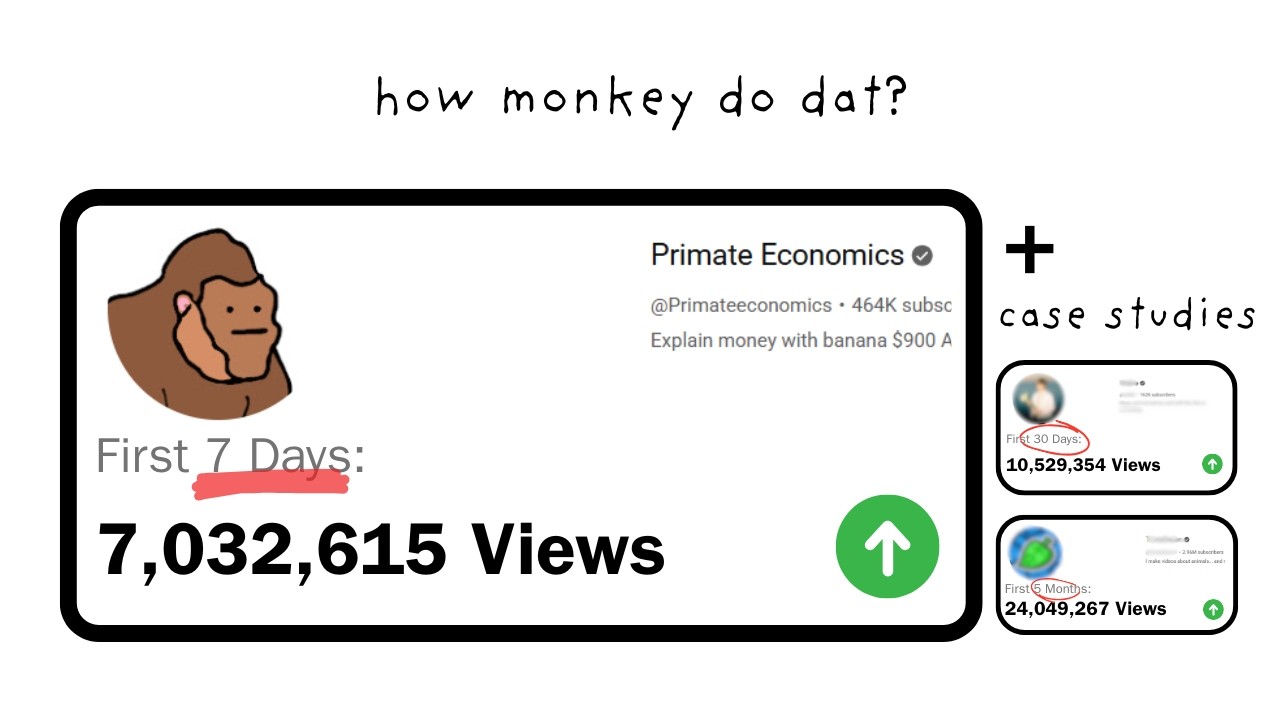
I wanted to make something that breaks down, with absolutely clarity, exactly how I'd create a channel from scratch in the 2026 creator economy. I fully believe that ANYONE is capable of joining YouTube, and becoming a full-time creator WITHOUT wasting years of their lives. I open up 3 awesome case studies of creators who JUMPED to multiple MILLIONS of views in very short time periods, and I break down how and why they worked. This is exactly what FAST growing channels are doing right now. Point blank. DO NOT MISS THIS!
I'm ALSO revealing the depth of my monetization knowledge in this video. Nobody can go full-time as a creator without truly understanding WHY anyone would pay them to create content. That's why this knowledge is SO valuable. If you or anyone you know is interested in going full-time as a creator, let them know about this free, 1-hour course.
Time Stamps:
0:00 Welcome In, Who Am I?
3:00 The One Thing Creators Need...
5:20 Is Content Creation Too Saturated?
7:10 Strategy Piece 1 - Understand the Algorithm
14:20 Strategy Piece 2 - Force Multiplier: Authenticity
20:39 Strategy Piece 3 - Monetization Mastery
27:11 Strategy Piece 4 - Parasocial Bonding / Subscribers
31:28 Three Core Audiences
35:42 Strategy Piece 5 - Viral Signal Theory
45:07 Examples: Case Studies
59:09 Don't Give Up So Easily...
Here's the resources I mention in the video:
“Strategy” Defined by Alex Hormozi:
https://www.youtube.com/watch?v=XwzU4RikbGs&t
YouTube Platform Size And User Statistics:
https://thesocialshepherd.com/blog/youtube-statistics?utm_source=chatgpt.com
https://www.comparitech.com/tv-streaming/youtube-statistics/?utm_source=chatgpt.com
https://www.awesomecreatoracademy.com/blog/how-many-youtube-channels-have-1-million-subscribers?utm_source=chatgpt.com
Authenticity / Self-Discovery Resources:
IkigaiGPT: Let AI Quiz You to Discover Your Ikigai
https://chatgpt.com/g/g-kaNVjduOL-ikigai-gpt
Strengths Finder GPT - By Synthesizer Academy:
https://chatgpt.com/g/g-674e2595e06081918a28a74b7cac2f60-synthesizer-superpower
How The Algorithm Works:
MrBeast: https://www.youtube.com/watch?v=09wcDevb1q4&t=271s
Paddy Galloway: https://www.youtube.com/watch?v=HEiAiPGatwc&t
YT Employee: https://www.youtube.com/watch?v=C1jDk_2Yeno
YT CEO: https://www.youtube.com/watch?v=qlqzMKemF0U&t=88s
Viral Signal Example Videos:
Ex 1: https://www.youtube.com/shorts/ne0MlVZQasE
Ex 2: https://www.youtube.com/shorts/Kt5lIxnKom8
Ex 3: https://www.youtube.com/watch?v=Tsqw78IgEmA
Оглавление (11 сегментов)
Welcome In, Who Am I?
Okay, welcome. Um, this was supposed to be a short video. I don't know that it will be. I just want to give you guys clarity on becoming a full-time creator in 2026. Um, I think that there is a speedrunning method that exists that people are already using, and I'm going to give you examples later in the video, but I just want to kind of lay everything out for you on what you should probably be doing in 2026 to become a full-time creator in a relatively, you know, quick manner, right? So, this is a slide um that's just showing you what we're going over today. Um, you can pause if you want, but really quickly, what I think you're going to notice is that you don't know who I am. I don't have a lot of subscribers and views. So, why should you listen to me? Okay, that's a good question. Thank you for asking. Um, I have been studying content for around six years now. Um, I have worked as an advertiser and as a copywriter in a freelance capacity um, for around five years. Okay. And so I have been inside the ad accounts of other businesses who are creating and creating ads for those businesses helping them to find the right audiences for their products. So I have a little bit of kind of specialized knowledge when it comes to helping you find monetization capabilities and my interest in content creation. um is really just about how and why people decide to watch the videos that they decide to watch and thus why certain videos go viral and which ones don't. Okay? So, I haven't created my own viral channel yet. But that doesn't mean that anything that I'm saying in this presentation is not true because it is what I have found by researching channels, right? I just haven't created it yet. If you don't like that, that's fine. Um, you're going to miss out on something that I think is really important here. Um, the other thing is that no channel that you can point to that has had success, okay, is not going to have these things. I'm calling them like functional common factors. Every channel that you can point to and say this is a successful channel. Okay? Everything in this presentation is going to point to successful channels having those things. So, you can't point to any channel that doesn't have these. All right. So, if you're going to start a successful channel in 2026, what's the one thing that you think you need? One thing. Okay. What I would say is that you need an algorithm, not the algorithm, your own algorithm of
The One Thing Creators Need...
for choice for what you are going to do and what you're not going to do. Right? And the word for that is strategy. And I'm using the definition of strategy by um Alex Hormosi. Okay? Um and that it's what he says is how you choose what you're going to do and what you're not going to do. That is the simple clear definition of strategy. And it makes perfect sense, right? Because you can do a million different things. You can want to create a channel and do a million different things that are not related to getting your channel off the ground. You have to do some things specifically and you have to avoid some things specifically, right? And that is called your strategy. Okay? And the reason I'm saying this is because I see all the time creators who are saying, "I hope my channel gets views. I worked really hard on this video. I hope people watch it. I sure hope so. " And that's good. We should be I think we should be optimistic and um you know, excited and motivated about our creative work. But hope is also not a strategy. Okay? By outsourcing your strategy to just saying, "I hope I get views. " You're saying that you don't know what videos you're going to make, you don't know who your audience is. You don't know why advertisers send ads to those audiences. You don't know what audiences actually like in your niche. don't like in your niche. And so having a strategy is really just about knowing these things is your do and do not list. Do know what you need to make and why it. And that's kind of the simple reason we have strategy. And I see so many people complaining about not getting views when they don't have a do and do not list that they seem to be operating on. And that's okay. If you don't know, you don't know. But now you know. Okay. And I also want to quickly address content saturation. Okay.
Is Content Creation Too Saturated?
Yeah, there's a lot of people on YouTube. Okay. That does not mean that you can't succeed on YouTube. Here's why. I'm just going to throw out these are general statistics. Um, there are 122 million daily active users who spend their time watching lots of videos. Some estimates say that's around 5 billion videos per day that are watched. Now, how many total channels are serving those 5 billion views? Well, there's a lot, but monetized channels, there are only 3 million monetized channels out of 5 billion daily views. Do you think that there's room for your channel to eat out of that pie, the 5 billion view pie? Yeah, of course. I don't think there is saturation. I think there seems like saturation um because of information bubbles and whatnot, but in reality, the number of channels that are getting views and getting monetized for those views is really small. Okay? So, I'm going to get into the strategies that I think you should be using, your yes and no list. Um, the rest of this video is about just clarifying the specific points of strategy that I think you need to grow a channel quickly. Okay. And I've got my notes here. Sorry. Um, so meat and potatoes, right? The first piece of strategy is knowing how the algorithm works. And I'll be the
Strategy Piece 1 - Understand the Algorithm
first to admit that nobody knows how the algorithm works. Okay. um strictly because it is locked up in a vault under the tab Krabby Patty formula. Nobody knows the Krabby Patty formula, right? Because I we don't work at Google. We're not writing the code at Google. The only people who know the algorithm are the people who are writing the code in Google. Okay? But we have a lot of evidence for how the algorithm works. And I'm going to show you what I think is good enough proof that this is how the algorithm works. And I'm going to show you what I think the algorithm is doing. And why should you know, right? Because if you want to become full-time as a creator, then it's your job to know how and why certain videos do better and do not do better or do worse, you know. Um the two key points of the algorithm, okay, the first one is the financial responsibility of the platform. And by the way, this works on um I think that this works on every platform, right? So platforms make money by selling ads and ads get run on content and creators make the content. So there's a general split, most people know this, there's a general split in the ad revenue of creators and the platform, right? So in order for the platform to make more money, they need more watch time, more time on platform and more people actually making purchases from the ads that they run, right? Because otherwise advertisers wouldn't spend money with them if they weren't actually getting purchases. Okay? And this there's kind of two camps for this. It is the high engagement or high volume camps, right? You can have less viewers that are more engaged and still make purchases or you can have more viewers who are less engaged and still make purchases. There's just kind of the two camps there. Okay. The reason you need to know that is because you can rely on the platform to send views to videos if they increase watch time. Okay? And other metrics. and I'm going to show you that. Okay. So, the second thing that kind of goes into that is how the algorithm chooses to send videos. Okay, I'll do an example. If on Monday you spend two hours watching cat videos, respect, I'm not judging you, right? I like cat videos. Okay. and you close out the app and you go to bed and you wake up on Tuesday morning and you open the app based on what we just said. What should the algorithm do? What videos should I show you? I'm the algorithm. What should I give you? You just watched two hours of cat videos yesterday. Yeah, I'm going to send you some more cat videos. Now, that's the basic version, but there are millions of cat videos on YouTube. So, how do I know which cat video to show you as the algorithm? The algorithm. Now, by the way, the algorithm has a beard. Um, [snorts] and it's based on overall engagement metrics. Engagement is watch time. Engagement is comments, likes, and subscribes and shares. All of you know in aggregate, right? because that represents someone who watched a video, who enjoyed the video, and who was engaged in the video. And that is worth more money to an advertiser than someone who casually viewed a little bit and scrolled. Um, I can we'll do a little test here. Which of these cat videos should the algorithm send to more viewers based on the financial responsibility of the platform? Capital A is 5 minutes long, but the average view duration is only 1 minute. Okay. And the engagement rate is. 5%. That's kind of low. Cat video B is only 3 minutes long, but most people watched the whole thing. and the engagement rate is higher. So based on what I'm I think based on how I believe the algorithm works, which I'm going to show you why I think that the in theory cap video B gets sent. Okay. The reason I think that this is how the algorithm works because these four people have gone on record to say that this is how the algorithm works. Mr. Beast has said it multiple times. Patty Galloway, if you don't know who Patty Galloway is, he is a YouTube growth consultant who works with YouTubers like Mr. Beast and like Jesser and like Arak. A lot of big YouTubers have worked with Patty Galloway. A literal YouTube employee has said and um I forget his name, but he works on the YouTube recommended feed at YouTube. Okay. and he said that basically this is kind of how videos are split. And then the YouTube CEO there there's videos of him kind of saying the same thing as well. So that's why I think that that's how the YouTube works. The algorithm works and I think you should know how the algorithm works because if you want it to be your full-time job as a creator, it is your responsibility to know that. Period. Period. With a T. Period. Okay. So, you need to work on getting better metrics than other videos in your niche, similar videos. You want to be cat video B, right? not cat video A. Okay? And YouTube has a financial responsibility to send viewers to your video. You want to align with advertising incentives. So, moving on. The next thing that you need to think about based on my theory and what I think is real and happening right now on YouTube. How can you make authentic content? Stuff that is authentic to you, that is unique based on your unique creativity. Now, authenticity is a word that can be kind of hard to understand. What I mean is alignment. Authenticity is alignment with your thoughts, your words, and your actions. And on YouTube
Strategy Piece 2 - Force Multiplier: Authenticity
in terms of creativity, it's usually in alignment also with your passions. So, I'm going to prove to you that this I think I'm going to do a good job at proving to you that authenticity is one of the largest factors of any growth for any channel. I'm going to show you that. But first, I just want you to think about what would you do if you weren't getting paid for it. Yes, I want you to get paid for it, but it's going to be easier if you're making content from a place of authenticity. And I'm going to show you that authenticity is also a force multiplier for views as well. Um, but the way that you find it is by thinking about what you would do if you weren't getting paid for it. Okay, here's why I think this. Habituation is a term that describes why we like chocolate cake at the first bite, but we hate hundth bite. Okay, habituation is a an a scientific term that just means we get used to things. things we've already seen and therefore we place less value on those things. Okay. So, authenticity breaks through habituation by the sheer fact that nobody knows who you are and that you are a unique individual and therefore your presence is by definition novel to new viewers. You get the force multiplier of novelty just by being yourself. Okay? And you break through habituation is, "Oh, I know who this is. I've seen this before. " Okay. [snorts] Now, authenticity also fights against what everyone struggles against on the internet, which is deception detection. Everyone has I will venture to say that everyone has had an experience with a human being in their life that they had a gut reaction to saying that this person was not trustworthy. You might be having that experience with me right now. I don't know. I like to think that I'm a trustworthy person, but I can't be the judge. I'm biased, right? I think I'm trustworthy. Anyway, [gasps] so as a survival mechanism, our brains have evolved to detect deception. And most of the time, we're pretty good at doing that. You know, when there's very clear deception, when someone is clearly lying to us, we're usually pretty good about detecting that. All right? And this, you can think about this in terms of like performative generosity. Like, you know, there's a lot of channels that have gathered a lot of hate because they are clearly only doing generous acts of altruism as performative acts for their channels. And you know, that's here nor there. It's a weird thing to do, but people have done it. But the point is people, we recognize the deception, okay? And we have a built-in survival mechanism for doing that is we know when we're being lied to. For the most part, some people are good at lying. You know, perceived authenticity is also by definition an extra trust factor. Right? If I think you're being authentic, then I have no reason not to trust what you're saying. If I think you're being more authentic, then I'm going to give you a little bit more trust immediately. And that is a force multiplier for your content because the more someone trusts you, the more engaging your content is, the longer they're going to stay to watch, and the more likely they are to share, comment, subscribe. Yeah. The other reason that authenticity is a force multiplier is just the sheer fact that when you have alignment with your thoughts, words, actions, passions, and creativity, full alignment, I'm being authentic to myself, you you're not going to burn out as fast. Like you're going to have more energy to do what you want to do because you're doing what you align with. So, it's really just a strategy against burnout at the end of the day as well. Um, this is a concept you probably have seen. It's um a what is referred to as a Japanese concept. Um the blend that somewhere in the world is in alignment with your passion, what you love to do, what you're good at doing, what the world needs more of, and what you can get paid to do. And it's an interesting framework. I think everyone should look at it at least. you may not find it useful for finding your passion and your channel concept, but it's something to look at. And I'm also going to be adding in the description some other resources for like finding your strength and your passions because I know that like I just turned I just turn I just turned 31. Okay, two days ago I turned 31 and I spent a lot of my 20s as other people do. wondering what my passions are. And so I understand that like it's kind of a hard thing. It's kind of hard to know what your passions are and what your authenticity is sometimes. Sometimes you know it immediately, right? Um but it can be hard to discover. So I'm going to leave dis uh resources in the description for to help with that. Okay. So strategy piece number two is authenticity. Be authentic. Be real. Okay. Um because authenticity is a force multiplier for your content and it because it's going to help you keep you consistent with your content and because it's actually going to boost your self-confidence over time that you are working in a capacity that you are being authentic with yourself all the time. Right? So now if you're a full-time creator, you need to know what to do and what not
Strategy Piece 3 - Monetization Mastery
to do in terms of monetization. How are you going to get paid? If you don't know how you're going to get paid, then what how do you think you're going to be a full-time creator? Because full-time, when I say full-time creator, I mean that you're getting paid enough to pay your bills and then some. Okay? You need some leftover for play, right? Everyone needs play money. So, how are we going to get paid? And I think a lot of people really have a pretty good grasp of how YouTube pays its creators and other platforms pay their creators, but I want to look at it again in more depth. So most people already know YouTube partner program, you get paid for ads on your videos. Okay? You can also get paid for sponsorships on your videos where you sponsor with a brand or business andor and they're pay you a certain amount to sponsor their product or service. All right? And a lot of you probably already know that different niches or different markets or different groups of people or different buyers have different RPMs. RPM is revenue per mill. Um, I don't know why mill means 1,000, but it does. So, that's per thousand views, how much money do you make? And different niches have different basically amounts of money that they make per thousand views. The reason why that is, right? If you're a full-time creator, you need to know why that is. And it's because the buyer on the end on the buying end of the advertisement is worth more money to the advertiser to the business. Okay, this is I just I said this um businesses are buying ads because they need customers. They need they want more sales. And their incentive is I hope that I make more money from the sales that I make from the advertisement than I do spending on the advertisement. And YouTube has those buyers. It has people who would be interested in the product if they knew that the product existed or service. And they want to align that with um ad purchases. [snorts] So somewhere along the line, someone is making a purchase off of your content and that's how you make money. And at the end of the day, that is how you're going to make money. No matter what your monetization strategy is, somebody somewhere along the line is making a purchase. Okay? The reason RPMs are worth more based on niche is because some audiences have a high alignment with the product or service that they also have with the type of content. So for example, advertisers pay to get your audience. Okay? If you make dog training videos, any business related to dog training could advertise on your video and you would be a likely buyer because you're watching a video on how to train dogs. That's a high purchase intent, right? So, dog training equipment is a really good business to put in front of dog training videos because most of those people are looking for information and equipment already. And so it's a good idea to put ads for that, right? And you can do other products as well. Other businesses would might do well on uh a dog training video like uh recovery supplements, nutrition, sometimes geriatric care for kines. That's probably a big market. I don't know. But on the flip side, like it's hard to sell products to gamers because they're not really in a buying mindset. They're just watching for fun, right? And so gaming usually has a lower RPM, but you know, there's still some things you can sell. Like most people watching a Minecraft video probably already have Minecraft and they're watching because they like Minecraft. I mean, there's, you know, like Gamer Fuel or like gaming chairs, you know, there's businesses that make it work and there's people who buy from gaming channels, um, but it's not as much. So, becoming a full-time creator 2026, you need to know how you're going to get paid. Okay? Um, this is just I' I mentioned this. Um, some businesses advertise to volume, some to quality, right? You can look at that if you want. The main takeaway here is who is your buyer and what businesses are already advertising to those buyers. And that's based on your content, your niche, your passion, your alignment with your authenticity. So, here's different ways that you can think about the variations of monetization, right? Reverse engineer who your end buyer is, okay? And yes, if you make just entertaining content, that's fine. You can make content that just teaches people certain things or inspires people or is just joyful creativity at work, at play. Um, but at the end of the day, if your audience, if you do painting videos, you're just like, "Here's my paint. This is my art. I'm just sharing my art. " Okay, guess what? The people who watch your videos might want to buy art products. And it's good. It's okay to know that. It's okay to you don't have to sell anything unless you really I mean I think if you really like a product there's nothing wrong with saying hey by the way I really like this product and I use it every single time and you can buy it right here and then you get a cut for it and then that makes you closer to doing what you love to do and getting paid for it. Yeah, right. I was hoping this video would be short. It's already 30 minutes. Um, but basically know how the algorithm works. Be authentic in your channel concept and your creativity and what you make, what kind of videos you make, and know how that aligns with buyers. Okay, we're okay. I thought I All right.
Number four, the fourth piece of strategy that you should or should not do. Okay, this is understanding how to build a fan base. Okay, and the term is parasocial bonding. I'm going to explain what that means in just a second, but think about this. Your subscribers as a full-time creator are your lifeblood of your business. As a creator, it's a business. Okay, subscribers mean more repeat viewers, means higher engagement, more interest. The people who are subscribed to you trust you more. Okay? And overall, that just means that you're going to get more revenue. There's a little guy rolling a snowball. Why would I put Mr. Snowball there? because it's a cumulative effect, right? He's rolling because the snowball accumulates growth over time. And that's how I want you to think about your subscribers because at the end of the day, your subscribers are going to kind of pay your bills. It's what you're working towards as a creator is the growth of the channel. The relationships you make as a channel in mass are the value of the channel. Okay. So why do people subscribe in the first place? Okay, back to parasocial bonding. Okay, a subscription. When somebody presses subscribe, it is fundamentally a clear indication. Someone is pressing a button saying, "I would like to see you again. " It's the same as going on a first date, making a great first impression, and getting a second date. They liked you. They want to see you again. That's what every individual subscriber is. If you think about subscribers as just a number, you're being weird. Those are real people. [snorts] I mean, those are real people on the other end. And they said, "I'd like to see you again. I that was good. I want to see I do. We can do it again. " You know, and believe it or not, the reason I'm using the word parasocial bonding is because when you create a bond with another human being, you get a release of oxytocin. Okay, that's the neurohysiological component of the felt experience of I like this person. I am highly confident that this person likes me as well and I'd like to see them again. We have formed a bond, a relationship. This is something that actually does happen on YouTube, right? Even though Mr. Beast doesn't know who I am, I still like Mr. Beast. I have a parasocial bond with Mr. Beast. And that's the definition of parasocial bond. It is the one-way relationship between a content creator and the viewer. The viewer pretty much knows you better than you know them. It is a one-way relationship. But no less is it any less of a real bond because there is real oxytocin involved. People actually you do actually love your favorite creators. You actually love them because you release oxytocin. Oxytocin is the us versus them hormone. Neurotransmitter hormone. Okay. So as a content creator you are your goal is to build a trusted audience over time with parasocial bonding. Okay. But now what? Okay. Just because you know that people make bonds. Well, okay. How do I make more bonds with more people and get more subscribers? How do I do that? I have an answer for you. I have a method. I'm going to now share that method with you. I'm sorry. Here's
Three Core Audiences
how you do it. Uh, this is all messed up. Okay. Just look at the top here. Um, so think about theoretically, okay? There exists a theoretical number which is directly related to a real number, a population size of people who would like to watch your videos but don't know your videos exist. There's a theoretical number. And in business, this is called the total addressable market. And it is sometimes referred to as TAM. [gasps] This is the theoretical size of your market. This is if you were to reach every single person on YouTube who likes your content, how big would that number be? Okay. So, your goal is always to make videos that attract that total addressable market because it is the extent of your market. So every video and or every series on your channel is going to attract different types of viewers. And this is a method described by Patty Galloway who I mentioned earlier. He's a growth strategist for many of the biggest channels. Patty Galloway says that there are three core audiences you should pay attention to. Those are I can't believe this is all messed up. Um, these are your new viewers. I can't I messed this up. New viewers, casual viewers, and core viewers. The new viewers are your widest audience. It is your first impression audience. These are people who have never seen your content before and need a reason to continue to watch your audience to watch your videos. Okay. The next one is pretend that there's a button here, casual. Let's do this. Cool. It's such a big marker. Okay. Casual viewers. Um, casual viewers are people who generally already like your type of content but don't know who you are. And they can also be people who have seen your content before and don't have a strong connection with you yet. but they generally will stick around to watch one of your videos through recognition. Okay, the closer you get to the bottom of this funnel, the video is the funnel or excuse me, videos and channels as a funnel. The closer you get to the bottom, the closer you get to your core fan base. And you can think of these as your your biggest fans and they're your subscribers as well. And these are the people who are going to absolutely without doubt always watch your new videos every single time that you launch a video because they love you. They have a strong parasocial bond. So you can think of creating videos as slowly over time funneling your total addressable market down to a core fan base. and that snowballs over time as long as you continue to create videos that are authentic and that align with the algorithm. I'm going to explain more about that, so stay with me. Okay, so ideally you do both methods, right? You can actually write a script in a way where the opening is for your new viewers, the middle, the content is for your casual viewers, and the ending or kind of the further content down the line is for your core viewers. Or you can make individual videos for each audience. Both methods work, and I actually recommend using both methods. So, build a trusted audience over time. Snowball effect. Bring your TAM to your core audience. Use parasocial bonding. Okay, that's strategy number four. We're all done with that. All done. Strategy piece number five. This is the last one. I'm almost done. And I'm
Strategy Piece 5 - Viral Signal Theory
really hoping my camera has enough uh data to not mess this up. I don't think anyone should create this. Is this goes this is the culmination of everything we talked about. How do you make videos that align with everything we just said and are still unique videos? So, do not create without data. What kind of data am I talking about? Well, right, you exist. You're a creator and your niche exists. It already exists without you. Independent of you, there is a niche. Okay? And inside that niche, there are small videos. There are medium-sized videos, right? by number of views and there are large videos and think about this in terms of your niche in over the course of a given time period. Let's just say a year you want to add to your niche. Okay? Don't tell me it's saturated. It's not saturated. You just haven't created something new enough that people are interested in enough that your TAM would be interested in becoming your core audience for. It just hasn't been done yet. It's not saturated. That's my belief. I'll explain more about that. But if you look at your niche and you know that there are small, medium, and large size videos in your niche that exist already that people already like, what kind of data would be the most useful for you to look at knowing that [snorts] this is a leading question. I think that you know what answer you think that I think that you want to that I want you to think there are videos I'm not saying that okay there are videos that have high views in your niche that already that exist and those high view videos have lots of views for a reason it is because they successfully solve the problem of tam to core audience And they did so by what I'm going to explain here in a second. They solved the issue of core casual and new viewers and they got lots of views. So you know that those video the data that I'm talking about that you shall not create without is knowing why something works. Not just that something works because you can't just steal a video. And I understand that plenty of creators make some money by stealing videos. I know that happens. First of all, that's lazy. It's plagiarism. You become known as a copycat artist. Okay. I don't think you want a reputation as a copycat. I don't. Right. The other problem is that it is subject to always this the copycat is always subject to habituation. Okay. The first person to create a banger video will always get 10 times around generally speaking two to 10 times more viewers than the copycat. Why? Because they are second to the market. They did not do it first. It is not new. It is not interesting. It is slightly habituated even if you're in second place. Okay? So, you're never going to get as much as you possibly could by stealing, by outright stealing. Okay. So again, what data are we looking at? This is where I'm introducing what I think is the most important framework um for creating videos that I've come across. Okay? And I am calling it this is my theory. It is not a formal theory by any means. It is arbitrarily named. It is randomly named and it's just kind of a general framework, but I want you to think about this because it's based on neurohysiology. Okay, I'm introducing in this video viral signal theory. Viral signal theory is the theory that there is a sum total for every that I'm talking about videos that did well, right? Videos that already performed well within a given time period. There is a sum total of all the high recognition, high relatability, previously rewarded elements in a video that trigger value in the viewer's mind to the point that it builds and breaks a value threshold that must be broken in order for a viewer to stay and watch. This is a work in progress theory. I'm going to keep explaining it. So necessarily when you encounter a new video, okay, tam to new audience, the viewer is experiencing a value calculation, a rapid value calculation. The way that the calculation works in their minds to value the video, to determine if they want to watch it, to decide is by referencing their long-term memory. Okay? So, when we're exposed to a new video, a new stimulus, we are referencing our long-term memory and checking our long-term memory for the value signals related to what we know we're seeing. We only know what we're seeing because of long-term memory. We have experienced certain things before. We have not experienced other certain things before. So, do we know what it is? Do we not And what are the value signals assigned to those things? Okay. So, we check the long-term memory for the stimulus that we're experiencing. Okay. But also at the same time, there are other things in the visual in the attentive in the field of attention, right? There are other videos present. There are other possibilities present. There are things outside of your phone, the TV, your watch, right? your spouse, your friends, your family, right? There's other things that you could be paying attention to and those are all drawing being evaluated for your attention there. You're constantly making value assessments about what you should be attending to in your environment and on YouTube especially. Okay? But because there's so much information, the brain actually operates not in a what's the most valuable fashion, but more so what do I know is not valuable fashion. This is inhibition. This is called active inhibition. Okay? If we could pay attention to everything that interested us at all times, we would decide on nothing. There would be too much over stimulation. Okay? And also important to note we are constantly kind of at odds with metabolic cost constraints. That means our body uses energy and we want to efficiently use energy by not wasting energy. So what are all the things in our given attentional field that we know will waste our energy and we can very quickly and automatically filter those out. Okay. So, we're actively discarding what is deemed to be irrelevant. And when we're on YouTube, we're scrolling on YouTube, we are actively discarding things that are not on our phone, things that we've seen before that look boring. Okay? This is why people say nobody cares about your content. It's not that nobody cares. It's that you're immediately being deemed irrelevant. Right? And that is because of a metabolic cost constraint. The brain uses energy. If I'm paying attention to something, I have to use energy to do that. And I also necessarily am always going to filter out the things that I think are wasting my time, right? And that's based on subjective value. So to make good content, right, we have to pay attention to what I call viral signals. Viral signals are things that bypass inhibition. We're constantly deselecting things. By the way, yeah, this is why novelty is the most one of the most powerful principles. Seeing something new or a new twist on something known is almost always going to perform well because it quickly bypasses inhibition. I haven't seen that before. I don't know what that is. Should I know what this is? That's a viral signal. But it's actually an inhibition of inhibition. I'm inhibiting my inhibition response and therefore double negative cancels out. It's a positive. It's a viral signal, right? I'm inhibiting the inhibition. That's how it kind of actually works. Value based inhibition. Okay. Now, I'm going to show you what I'm talking about. What are viral signals that we should look at? How should we find viral? How can you find a viral signal? What is a viral signal? I'm gonna show you. Calm down.
Examples: Case Studies
show you. Relax. I have examples. Chill out. Okay. All right. I have examples. Okay. So, I don't know if you've seen this before. This is one of my favorite case studies. Okay. Primate Economics, the first video on their channel did 7 million views in less than a week. That's pretty good. You did 7 million on your first video in one week. 7 million views. That's pretty good. Okay. Um, sorry. So, I'm going to show you the first the opening here. If monkeys have one banana, banana rare, banana valuable. But if monkeys grow warm bananas, banana become common. Banana not as valuable. Demand pole inflation. If — okay, what stands out? Crap. Okay, this is not a normal YouTube video. There is some element of novelty just in the animation itself because it is intentionally quote unquote bad animation, right? So that is already a small novelty signal. It's a little bit different. Okay, that is all and also it is a trigger of authenticity, right? Because if I were uh a professional manga artist, right, and I was able to really draw an incredible animation here, that would signal high value production and it is less relatable. But this is intentionally bad drawings. Maybe they're not intent, maybe it's the best they can do. I don't know. But I, you know, but what that tells me is that this person is on the same level as me. They're au they're drawing this themselves. I can tell I can tell you drew it yourself, you know? And so that's kind of I think it's an authenticity signal, right? This person is not taking themselves too seriously. this person is addressing a point with simplicity and also it's kind of easy for us to predict that this video is supposed to be entertaining because the emphasis is not placed on the art. So just from the art alone I think there are a lot of signals given very quickly that might break inhibition. Okay. And now the opening if monkey have one banana right there's an inherent story being set up. Okay we're going to understand the reason this channel is so beautiful is because they're doing a meta thing where they're explaining the thing as the thing. Right? This is how in a cartoonish way we think monkeys talk. you know, like cavemen and its simplicity and it's also breaking down a logical concept into its most like five-year-old understanding. So, there's something about the scripting style itself, the way that he's talking that signals this is going to be very simple to understand. From the very beginning, I know that this is going to be not difficult, which is not going to overload my cognition, which would be an inhibition signal. Right? If it's too hard to understand, I actually, you know what? I don't care. You know what? I'm not interested. I'm going to have to work for it. I don't want want to watch stupid monkey video. Right? So, it breaks inhibition by signaling low cognitive load. Neat. Fun. The other two reasons that this breaks inhibition that it has viral signals, one is the high awareness topic. This came out in April when more people in the United States were talking about specifically about inflation. And inflation is a highly emotionally charged topic because inflation means I have to spend more money. I get less money for myself and to some people they can't do that. that means I can't buy my groceries because of inflation. So, it's also a it's a genuine education. He actually tells you exactly what demand pool inflation really means. And it's something that people don't actually know what it is. So, it has educational value, it has entertainment value, and it has like humor value and it's on an emotionally charged topic. So for all those reasons, it breaks the inhibition and says, "You know what? I actually I should watch this. " Okay, it's pretty funny. Those are what I think the viral signals are for this video. Okay, so our brains are rapidly encoding value in different types of value, too. You can think of value as the entertainment value, the educational value, and the social value. And there are more values. There's all kinds of values, but those are good examples. And what this is doing is preventing us from inhibiting. It is inhibiting the inhibition. It is rapid value assignment versus value-based inhibition deselection. Another example, right? So, I'm gonna let you watch. I love this video. I'm going to let you watch it. — This one is either lime flavor or grass. — Check this one out. It's either tutti frutti or stinky sharks. — Well, what is it? What' you get? — Tutti Frutti. — Yay. — Hey guys. Hey guys, check this out. This one's either butter popcorn. [crying] What flavor is it? — Uh, it says that it's either chocolate or death. — What flavor did you get? — It's not chocolate. — It actually doesn't taste like anything. It doesn't feel like anything. It just is, you know. I think I'm going to head out. — [gasps] — Right. Okay. So, it's a silly video. It's a silly cartoon. It's a silly animation. Um, it's really funny, but it also did 10 million views in less than a month. And I randomly found this video. It came up on my feed. When I found it, this person's channel had like 20,000 subs. None of the videos prior to this video were doing well and this one popped off because it was different from anything he'd ever done, which is very interesting. But the point is this exploded his channel really fast. Here's why I think it worked. Okay, first of all, the the inhibition signal that was inhibited by a nostalgia signal, right? The so the viral signal was nostalgia and it's nostalgia that comes from the animation style itself reminiscent of old timey animations old timey kids animations. I don't even have to say the name of the animation. Most of the people in the comments said exactly the same thing which was that this is like what show does this remind you of? If you're like Gen Z or Gen Alpha, you might not know, okay, but Charlie Brown, all of many, many of the comments said, "This reminds me of Charlie Brown. " So, it is a nostalgic animation and the sound style and the story concept itself. Okay? Because we have memories of our past of eating jelly beans and tasting them with our friends and saying, "Ew, that was gross. " or you know playing jelly bean roulette. So it's a highly relatable story wrapped in nostalgia for the style of creation and also the wholesomeness of the situation is a setup to quickly reverse into this like very absurd unhinged [snorts] punchline which it gets it's so funny. Um, it's such a funny bit. I think it's a I think it's hilarious, but it's so unhinged as well. Um, it sets up the punch line really nice. So, there's a huge payoff at the end, which helps engagement. Um, having a really strong payoff helps engagement a lot, but the the storytelling itself was retention scripting. And I can't get into it right now, but the up down, you know, the first jelly bean was nasty, the second jelly bean was good, the third jelly bean was nasty. What's the fourth jelly bean tastes like? Is it good or bad? Right? And he varied up the dialogue for each character. So it is habituation avoidance. He didn't just say, "Oh, I ate a jelly bean. Oh, bean. " No, he there were different characters having different experiences, which is retention storytelling. Okay. Now, this is a third example. This channel got to 3 million subs in one year. Nice. Nice. Right. And it's a very simple concept, but um they did really well. This video did uh 23 million views in 5 months. It's a more it's a an hour and a half long. It's a long form video. a very long form video that ex So don't tell me shorts are all you can do right why this worked the viral signals of this one is I think really there's some level of disgust people have a weird relationship with disgust you know you I think all throughout my life I've met people who have that like oh that's so gross show me more kind of attitude about disgusting things people or like we're still disgusted by it, but we're also kind of drawn to it in a way. Weird, but it's a thing, right? And so there's some level of disgust. And I think there's a juxtaposition issue, like a combining of ideas issue here where my best pets of 2025, and then he's showing like he's showing a couple different things. The snakes and the spiders and the blood worms are all disgusting just at face value, right? Most people are disgusted by them, but he's calling them pets. He kept them these disgusting animals as pets. So, there's this weird curiosity gap that opens up that becomes a viral signal. And also the axelottle because axelottles um you know, they had a big moment after Minecraft. Extremely popular for younger generations is just axelottles in general. Right. But it's a really quick opening of curiosity like this guy, it's almost like we can immediately assume we're going to see some really interesting footage of these animals and he delivers on that or this creator delivers on that. So when I'm talking about thou shalt not create without data, I'm talking about looking at your niche as a whole, finding what the most successful videos are, not stealing them, but breaking them down to their viral signals. Okay? Once you have a collection of viral signals that work in your niche, guess what? You can use them however you want. Oh, and I think the success of the video examples that I just showed you are fully based on that, right? The common factors, functional common factors of high performing, fast growing channels. The speedrun method. That's what I'm naming this video for for views. The speedrun meth. That's my viral signal, right? because I'm immediately trying to display value in that you can grow a YouTube channel fast and you can. Those channels moved extremely fast, very big channels, very quick growth. And there's a ton of videos like this or excuse me, there's a ton of channels like this, right, that grow extremely fast. It can happen. You can do it. And this is the type of so for strategy piece number five, this is the type of data that I'm talking about is unique value and viral signals on your authentic videos that you can apply to your niche that is not stealing but reworking. Okay, the popular phrase is steal like an artist. And how you steal like an artist is by stealing particular interesting elements. Not a whole concept, interesting elements. viral signals. Potato, tomato, tomato. There is a banana in my kitchen that is brown. You didn't need to know that. Okay. And so, to finish this off, cuz now I originally wanted to make a 10-minute video, and this is where we're at. Okay. When I hear new creators
Don't Give Up So Easily...
talking, I hear them say, "But Johnny, I can't monetize my passion. Nobody cares about my crap. My audience is so small. My audience is overly saturated. I love fitness in general. That's oversaturated. I can't win there. " And everyone has already taken all the good ideas. What do you think I'm gonna say to these? say? I'm gonna say no. No, I don't believe any of that is true. Okay. Uh the referred to earlier that's the statistics I showed you, the giant massive opportunity that YouTube actually is. There's a very small percentage of monetized channels that you can jump into just by knowing how the algorithm works, right? Being authentic because it's a force multiplier for views and for yourself as a creator. By knowing how you're going to monetize so that you can go full-time. put all of your energy towards this because you're actually getting paid to do it. Right. Number four was what was number four? I forgot number four. — Uh yeah, totally. Uh parasocial bonding. Yes, you're going to snowball your success over time with parasocial bonding because you're going to generate real bonds with real people. And you're going to do that by creating new and interesting content that you're going to work on as having viral signals in your content. You're going to inhibit inhibition. Okay? So, if you want to become a full-time creator, [snorts] it is necessarily your job to overcome these things. If no one has laid it out for you like that before, if you think that YouTube is just an easy route to riches, to becoming a millionaire overnight, okay, the people who told you that are rude and weird people. They're very strange people. Okay, this is necessarily a difficult thing to do. And guess what? That's good. If it were easy, everyone would do it. And if it was easy and everyone did it, it wouldn't be valuable, right? If not, everyone is and okay, how many creators full-time creators do you know in your life? I don't know. Maybe one, right? Because it's not easy. And if it's not easy, it must be hard. If it's hard, it is therefore rare. And if it is rare, it is therefore valuable. That's why you get paid to do it because it's hard, rare, and valuable. Okay, I guess that's the end. I guess that's where I stopped making slides. Um, so what should we do? What where should we go from here? I think that you as a creator, if you stayed and watched this whole thing, that you're brilliant and amazing and you are actually um really motivated and optimistic about creating a channel. And I think that's uh really cool. I think you're pretty cool. Um I'm going to be putting all of this into a free, completely free, listen to me, it's free course that goes into more detail and more depth on everything. I'm still building that, but you can join it. It'll be in the description. Remember that I put a bunch of resources in the description and you can go watch these videos, uh, the video examples that I showed you. Those are going to be in the description as well. Um, if you have questions about this presentation, do not hesitate to ask me those questions. I'm going to get back to you on that as quick as I can. As soon as I see See, oh, somebody asked question. I'm going to text you back. I'm gonna comment right back as fast as I can. Unless I'm asleep and you're on the other side of the world and I'm asleeping when you text me. Then I'll wake up and somebody text me, I'm gonna respond. Okay. [sighs] All right. If you have questions, ask me. Thank you for watching. I hope this was helpful. I think it's very helpful. Um, let me know. Peace.