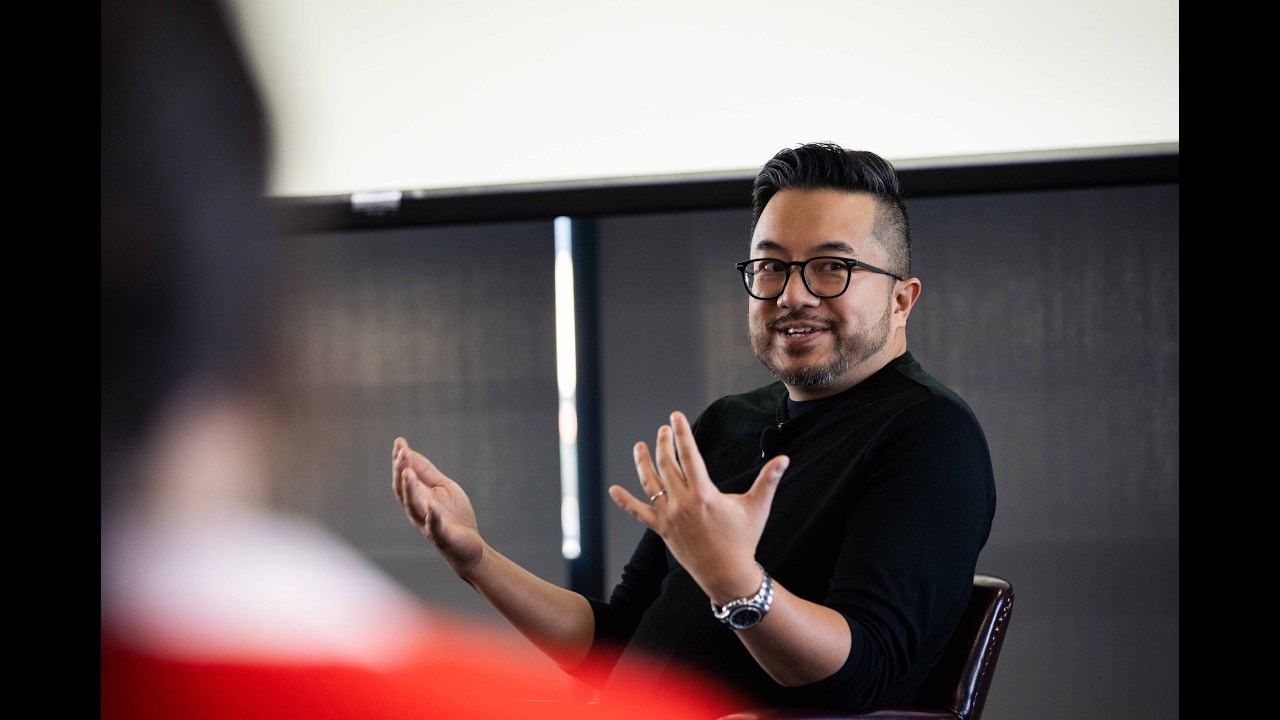
Elizabeth Weil is the founder and general partner at Scribble Ventures, the seed fund where builders from OpenAI, Meta, Twitter, Instagram, and a16z channel their operator DNA into backing the next generation of AI‑native companies. In this conversation with Adjunct Lecturer Emily Ma, Weil shares the life lessons she’s learned over her career as an operator and investor, emphasizing the importance of connecting with others and planning activities for yourself outside of work.
Entrepreneurial Thought Leaders is produced by the Stanford Technology Ventures Program (STVP), the entrepreneurship center at the Stanford School of Engineering, and published on eCorner by STVP. STVP empowers aspiring entrepreneurs to become global citizens who create and scale responsible innovations.
CONNECT WITH US
YouTube: https://www.youtube.com/user/ecorner
X: https://x.com/ECorner
LinkedIn: https://www.linkedin.com/company/stanfordtechnologyventuresprogram/
Bluesky: https://bsky.app/profile/stanfordstvp.bsky.social
Facebook: https://www.facebook.com/StanfordTechnologyVenturesProgram
Instagram: https://www.instagram.com/stanford_stvp
LEARN MORE
STVP: https://stvp.stanford.edu/
eCorner by STVP: https://stvp.stanford.edu/ecorner
Support our mission of providing students and educators around the world with free access to Stanford University’s network of entrepreneurial thought leaders: https://stvp.stanford.edu/giving-to-stvp/.
Оглавление (10 сегментов)
Segment 1 (00:00 - 05:00)
My name is Emily Ma. I am an adjunct lecturer for the Stanford Technology Ventures program and your professor for the entrepreneur thought leaders series. And I am just so thrilled to be able to sit up here with my classmate from 20ome years ago. We'll just round down to 20. How about that? — Elizabeth Wheel. She is the first speaker we're going to have who is both an operator and a venture capitalist. And I'm going to read your formal bio as an intro and then we're going to dive into a bit of a fireside chat. — Where did this come from? Chad GBT. — Uh your assistant. I I can't tell if it's artificial or human. Uh but this is what we were uh shared uh with your bio. So Elizabeth Wheel is the founder and GP at Scribble Ventures, the seed fund where builders from OpenAI, Meta, Twitter, Instagram, and A16Z, I'm Canadian, channel their operator DNA back backing the next generation of AI native companies. Founded in 2020 during the pandemic. Wow. Scribble has backed startups such as whatn not stoke basentin base 10 sorry uh periodic labs and applied compute among others. Elizabeth is an early Twitter executives as the company scaled from 50 to 3,000 people. So Twitter is now known as X. She was a just in case um uh she was a partner in Jason Horowitz as the firm was scaling and was most recently a managing director at 137 Ventures. Elizabeth is a Stanford alum, my class right, of Mayfield Fellows 2003. And I am just so thrilled she can give you a 360deree view as an operator, as an entrepreneur, as a venture capitalist, and now running her own fund. So, uh, huge round of applause for Elizabeth Wheel. Um those are I can still remember actually we just looked at the photograph. — We painted a wall at Old Union as part of our Mayfield Fellows class uh in 2020 or 20 2003 I guess it was the summer of 2003 and you have had such an amazing career since then. I've admired you from afar. But you chose to actually start I believe at IVP right? You graduated and you chose — kind of. — Oh, kind of. Well, you did have your Mayfield Fellows summer internship. — I had my Mayfield Fellows summer internship, which was at a company called Auction Drop. So cool. — You drop it off. We sell it on eBay. Coolest idea. I had so much fun. Grew from eighth employee to 130 and back down to negative. Um, awesome startup ride. And then I went to a second Mayfield company, Xfire. — Oh, I Oh my goodness. — This was back when there were no chat clients. And I was I'm not a big gamer, but there were no chat clients in like World of Warfare. And — that's right. — Uh so we were sold to MTV Viacom and then I went and got my first real people job and that was at Memo Ventures. So that's it. — Before I crossed the parking lot to — Oh my goodness. Okay. So see there's like all these details I have already missed because you were so incredibly like active in just shaping your own career and your own professional journey. Maybe tell us a little bit more about that. like how did you make those decisions as a 21 22 year old? — Yeah. And it's kind of formed over time too. But uh so when I look back now so my I I've now it all has come down to three things for me and so my first hop for was to Menllo Ventures and I remember actually getting an email to the Mayfield Fellows alumni list and it said Menllo Ventures is hiring and it gave the job description and I was like this sounds kind of interesting and at that point I was thinking do I go to a big company like a Google or Yahoo? Yahoo was cool then too. uh or do I go to a startup or this thing called venture that I didn't know much about. And I read that description, I was like that sounds awesome. So I went in and this was very rare, but it was just weird. I interviewed with three partners on one Monday, came back and interviewed with three more on the next Monday and then had an offer with the last three partners the third Monday. — And I was like, — well, this sounds kind of awesome. But I really didn't know like I didn't I it was just a crapshoot at that point of would I like venture? Is it a good place to start or do you go to a startup first and it turned out to be a wildly wonderful training ground I like from you can't go wrong but from that way I got you know big cat bird seat of I was essentially dialing for dollars and talking to startups out there every single day and uh learning you know what patterns to actually pick up but the core three things that I've always oriented my work career and life decisions life decisions overall I would say number one is the people so who are you
Segment 2 (05:00 - 10:00)
working with number Two for me is location. And that's I think everyone can put that in a weird different spot, but for me, life's too short to either have a long commute or to not be able to cram in the other interests in your life into your day with work. And number three is, am I learning? — Yeah. — And anytime those have gotten out of whack, that's when I voted with my feet and moved. And I now joke with, you know, running Scribble Ventures, uh, six years in and currently investing out of our third fund. Like, it's my fault if I mess that up. So, I'll never have to get another job because choosing the people I'm work with. My office is a quarter mile from my house and I'm a big runner, swimmer, I have three little kids. Uh, and then am I learning? And I get to learn absolutely every single day. And I think especially this climate we're in now, uh, it's such a fun spot to be learning and growing and building. So you really valued finding people who could give you a leg up, right? You I think you have a spiny sense for that as you kind of gone from auction drop to Xfire to Menllo to Andre and Hor like you just kind of found the right people. So could you maybe tell us a little bit more about how you developed that spiny sense? — Yeah. And I don't look at it as finding the people that could like help you get up. It was more I've just always been interested in people. — And I always joke that in a female career, there's two times where you can totally ignore your email. And one is on your honeymoon and two is on maternity leave. — And when I looked at those two times in my life, I'm like, what was I doing? I was connecting people. I was introducing startups to other folks. Oh, you should meet this person. You're interested in X, Y, or Z. And that's just so natural to what I love to do. Um, I grew up in a tiny town near uh near Sacramento called Orange Veil. And my mom was a second grade teacher at my neighborhood school down the street. My parents were divorced. Uh, but my mom like just made she's still alive, 84 years old, still running marathons and swimming every day. And little kids still bring over flat frogs and reptiles to our doorstep. and she knows the sandwich maker at the, you know, at the deli and her coffee shop people and our postman. And it was always this, I think, craving of mine to make a big world feel small. — And I've tried to do that. I did that over Stanford. I knew like the great salad maker at Treser and like you just collect all these people and you know it makes everyone take and it's like there's something interesting about everyone and I think that's I've just been curious and then the more people you connect then they go on to connect beyond you and more interesting things happen and I think that's why this is absolutely the perfect job for me too but I would say especially as uh as you start to grow your career here. I was thinking about this today and my time at Twitter. I mean 50 to 3,000 people over four years was a wild ride. Like you were too busy every day, you know, or and you don't have a gap in your calendar. And it is mission critical what you're working on. But after a few years into Twitter, I made a rule for myself like always at least once a week have a coffee, a lunch with some interesting other people person that doesn't work at Twitter. And those are the people that you're going to find your next job from, those are the people that are going to plant a seed in your head about a new area that's growing. Uh, and I think that the more you apply that to just meet somebody new and they'll brain expand you and if nothing else, it's a wasted hour and that's okay. So, and you still learn something. Do you in these cases would you recommend our students just write to these folks or you know find a way to chat with like how do you land a coffee chat like that because it's not like it's not necessarily easy. It might be easy to you but maybe not easy to everyone — a lot. No, it is very organic. But even the people that you're meeting in classes that you just don't know like they have something interesting about them or they might be interested in longevity and health tech and then you have this other friend that's interested in aging and you put you know the so you just keeping an open mind but also I think you'd be so shocked at how willing especially the Stanford alumni group is willing to return an email, hop on a Zoom, take a walk, have a meal, grab a coffee like we've all been there and I think something so unique and why I do not think universities are dead even with uh with AI especially universities like Stanford. Uh I think there's just this shared mafia feeling that you'll always be a part of this crew for the rest of your life. — And uh — so start there but then that'll expand beyond. — Yeah. So interesting to sort of round the loop for our students here. If you remember in week two we had Brendan
Segment 3 (10:00 - 15:00)
Foody come and he dropped out of school. Georgetown at the end of sophomore year and he talked about how it wasn't necessarily the academic experience that was most important to him literally building a billion dollar company in 18 months but it was the community right so you live within a community so tap into that incredible community and I really liked how you described it as kind of a little bit of a mafia right it does come with that and you know make the most of that you're part of this family — and I do just look at life like this giant scavenger hunt and I think that's what's so fun about starting today and yeah putting the pieces together. — Okay, let's reflect a little bit actually operator and then VC experiences before we come back to scribble. So you've been an operator I mean 50 to 3,000 at Twitter. You I mean you saw that kind of growth you I mean obviously you were also in a couple of other companies. What were some key lessons you learned as an operator that you still hold true in your heart today? uh when you're building something, you know, you have that skip in your step and that's what I want every person here to find. When I was at Twitter, like every day was so energizing and you were working with the best pe like best people in my career, but on again coming back to the people side. Um so I ran acquisitions BD at the time, sold the first Twitter ad like it was the wild west then. was everything kind of non-enge and it morphed and grew and then I was focused on culture for a bit and did our new hire orientation every Monday like it was just a it was a fun time but what I learned early from the Twitter experience and this is no credit to me but the early founding team and the people that went before me is everybody there was interesting in something else in addition to their day job — and it just made for this really robust enriched culture where you'd sit at a table and you'd be yes with a world class engineer but then they're also the world champion of the Rubik's Cube — and or a you know tennis player that had been to the Olympics once and it was just it made such a rich environment and it almost uh created this sense of assume everybody is here for a reason and it gave you this benefit of the doubt. So, we just operated really well together as a team and it's something that I've always tried to put in to teams as I go for of like assume everyone's here for a reason and give the benefit of the doubt and it just yeah can really build awesome communities that way too. — You know, I want to take a slight sidebar now since we just spoke about everybody is more than their professional role. Like I mean you and I uh I've known about your letter press work for the last 30 years. you know, you are ultra marathoner who's amazing. Why are these — how what role do they play in you being a fulfilled person? I suspect it's really important to do all these things that don't necessarily, you know, make money or advance our careers, but can we take a moment to talk about these things? — Yeah. Uh, and it especially as you get married, have kids, grow a family, have a home, all the other pieces. Uh, you don't do it perfectly. Uh, something my mom feels still wildly guilty about that every morning, she was runner and swimmer, like I mentioned, every morning at 4:00, she woke up, she left at 4:30 to go swim masters down the street from my house. and she'd leave out my breakfast and my vitamins and my orange juice, but she still feels wildly guilty that every morning I woke up to a house alone and I got my clothes on. She honked the horn when it was time to go to school. It made me a wildly like independent kiddo, which I now I look back on. This is the same torture I do to my three children now, too. And I have applied it more as I need one and I think everybody in this room needs one non-negotiable every single day. And I don't care if that's athletics, meditation, writing, whatever. Mine is my morning run. And I when I had my I have 11-year-old now and nine-year-old twins. when I had the twins especially and my first I suppose you feel so guilty running out the front door when that little person needs you and they're always going to need you and I had to make it the practice that that's my non-negotiable that makes me a happier healthier employee, mom, friend, wife, everything and I've applied that uh to every single day. So I cram those things in. Also um you I do I have scarred my kids that way. I wake up at 5:20. I put out breakfast for my three children. They make it, eat it, pack their lunches, and set Alexa for when they get on their bikes to go to school. I am not involved in that equation. And I've had to give up of like they are not dressed perfectly, 50/50 of hairs
Segment 4 (15:00 - 20:00)
brushed, but they make it to school, they're safe, they're happy, and they know that mom's morning run makes me a better person. Uh, and then also, I think having the ability to intertwine a lot of parts of your life. That's something I'm comfortable with. Some people want to keep business in state totally or church and state and business in life totally separate. I feel like it's super enriching when some of you might know my children, my husband been to my house, left for my driveway to go for a walk and my office is a quarter mile down the street. So my, you know, at 3:00 my children bomb my whatever zoom I'm in to, you know, steal from my candy jar and ride their bikes home. and it feel like it's messy but it's fun and — it makes you a more real person too I think. Uh so it's just a way that I've like made it all work because it doesn't all work and it's very messy. you know, at the end of the day, if I reflect on everything that you said, at the end of we're humans first, right? You know, we might work for organizations large and small, right? But we're humans first and we can honor each other as full fully complete human beings, right? Inside and outside of work. We can make it through the hard times, right? We can problem solve together more effectively. Who knows, right? you know, you never know that some of these like hidden skills that people have or hidden passions people have might actually be relevant to the job. And so, um, let me come back to Scribble. Uh, you started it at a really interesting time, the pandmic, I well interesting, but I prefer to call it as interesting, right? You know, there were a lot of emerging funds. It was like literally first time worldwide pandemic. Um, you had also worked at a number of other, you know, VC firms. like what sparked your desire to start your own fund and specifically preede? — Yes. Uh and I think it was ultimately being stubborn. So uh the funny story is so I'd finished uh at 137 — and I was for the first time thinking like what do I want to do? And I hated selling Girl Scout cookies. So I never wanted to raise a fund. ask a single person for money. It was like the last thing I was going to do. So, as I had, you know, I was kind of boopping around. I had a few I was like, "Well, I can't just be an angel investor. That sounds lame. " And then, you know, you get some random offers to join a larger fund. I had a group actually say like, "What if we're your single LP and you run a seed experiment? we don't want to start an incubator or a seed program, but we'd love that uh — you know, a look at that part of the market. — And I thought, well, man, there's no such thing as a free lunch. This sounds pretty good, though. — And that started December of 2019. — Wow. — And I was investing. We had the model out. I was investing my own name, so it was like very clean. I'm like, man, that this is too good to be true. Um I could go to the office if I wanted to, but I didn't have to if I didn't. So I invested December, January, February, and that first week of March, got an email, came was Monday morning, and they're like, "Let's just pause. " — Wow. — And I was like, "Pause? We're like at an inflection point in the universe right now, going into a global pandemic. Like everything's going to change, even if it's, you know, it's going to move markets one way or the other, but why do you want to miss uh, you know, all of that? " And the pause was another week, let's just pause. And I think there was the gotcha. It's like there was the no such thing as a free lunch. — And I ultimately wasn't the decision maker to do that. So at that being stubborn, if I wanted to build a world-class venture firm and invest in preede and seed opportunities at that point in time, I needed to raise capital. I needed to do it fast. I had uh one-year-old twins and a three-year-old that were being told to do Zoom school, you know, on, you know, remotely. Doesn't work so well when you can't read. U so life was really messy and it was the worst time. And I walked miles and miles in Portol Valley where I live, — dialing for dollars essentially, but really starting to learn LPs. Um, a lot of just my existing network of the people that put me in business were executives, operators, other people that just took a bet and now um have about nearly 300 million under management in six years. So, we're growing. — Wow. — And this is your third fund. — God. — And two breakout funds. — You're amazing. Okay. For our students um who are curious, what is preede? Right. There's seed, there's series A, B, C, D, E, F, G, ABC, you know, what is preede and how did you think about like fund size, check size, who you were looking for? Like talk through, you know, like maybe some of the basics of what this is. — Uh, so one of the things I've always
Segment 5 (20:00 - 25:00)
been able to do in my venture career is invest collaboratively. I've either been in a role that allowed that or a fund that a size that allowed that and I really wanted that for Scribble. Um, sharp elbowed is not my style. I think you can build a more robust cap table when you have others on it with you that are helping with different superpowers. So, Scribble One was a $50 million fund focused on preede and seed. Uh, writing, you know, now we write roughly 750k to a million half dollar initial check. So, right there to be next to another grade on the cap table that looks similar to us. Um, preede is often a couple of founders, maybe a light PowerPoint, an idea starting to grow and build. Uh, you're putting in, you know, maybe the round is 1 to two million seeds have graduated so much larger now, especially in this day and age, but it's really a lot more hands-on with that founder. Often, you know, we're when we're in preede opportunities, we're in introducing them to, you know, their banker. there. We're helping them meet with a real estate person to get some square feet in San Francisco. Uh so you're helping all over the place, let alone strategy seed. It's a little bit uh a little bit bigger, a little bit baked uh in larger rounds now. But I just think so much of the scribble model is backing I say top 1% founders that are doing wild swings and the people that you want to be in business with no matter what. at preede and seed there's still a huge likelihood to shift pivot change wind down uh but the people you want to be in business with over and over again and that's what I really try to strike high for with scribble at the precedenc levels — what makes for a 1% top 1% founder or founding team — oh you can feel it uh today I wanted to like when like the intro was right the idea was right And I just was like, uh, like it's just like not those people that you wanted to go meet and brainstorm with and whiteboard. I want to have that feeling that you're going to run through walls. And then that guttural desire of why you this person on the planet to build this company. And sometimes that comes back and down to you know h what your mom did or where you grew up or some formative life experience like I met somebody in a fintech space and he had to go knock door to door doing collections when he was younger for something — and — wow — like that shaped why he needed to build this and you know and when you just have that guttural desire that I'm going to make this happen this is my life's work — like when it hits that then you really feel like You know, I've picked up on a theme here. There's something about dialing for dollars, going door todoor. There's something about, you know, as engineers, I think I'm very introverted. I was very introverted, but I learned how to show up. persist. I learned how to take, you know, 90 nos to get one. Yes. Right. Can we pause for a second and talk about that because it sounds like this is like a theme, right? You know, you've done it. founders who can have the grit to persist through a lot of nos. — And a lot of people say that the best job, even if it's not what you think you want to go into, is sales and learning how to — do sales. Uh I that always terrified me. I didn't want to have a bounty on my head because it would show a number of like was I not performing. I bet a lot of people in this audience would kill it at sales. Soon as you get a number that you're trying to hit plus, you know, — an add-on or a commission or something, I bet a lot of people would realize you like it. And I never did do that because it terrified me. But you have to grow that skill somehow. And raising a fund, I definitely had to build that skill. — How did you get over your terror? — Oh, you know, some people say, and I don't really subscribe to it. Some people say like, look at it like you're doing them a favor. You're allowing them the opportunity to invest in Scribble. — I think that's not totally my style. Um I wish I could think that way. Uh I think I again look at it like a scavenger hunt. Like one of my LPs I walked with today. Uh you know it's a big multif family office or uh single family office but they have some stakes in like Annheiser Bush bottling facilities in San Paulo and like sports teams in Switzerland and just weird things. I one LP that I met uh the largest pistachio farmer — and you're like kind of cool and so you look at it as like everybody has a story. Somebody else I met today her mom started United Colors of Beniton. I don't even know if that exists anymore, but you know, you just like there's always some weird story. — And so I just look at it more as a
Segment 6 (25:00 - 30:00)
journey of getting to know people and then um — yeah, making the ask and really crafting my own cap table that I enjoy and that's my goal. — You know, you have the most amazing collection of interesting people — for real. — I like that. — Yeah. I you know if it would be literally the United Colors event right like all these colors — and that was just today that was — that was one day my god that's so crazy um tell me a little bit more about some of the um domains that you're excited about right now I think you know as students are looking for you know to join organizations or do their own startups like what verticals or what domains or even horizontals are like of interest to you like that are sort of important for this moment in And I do think AI like we don't even have to say AI now because I think that has underpinnings in absolutely everything going forward. Uh so take that on I think everything we do touches that. — Uh and you know we do touch a lot of things like fintech dev tools we love some of those just the you know very traditional cool things to invest in. Uh we've been doing AI since the start of the fund six years ago. Uh my husband recently uh spent the last two years at OpenAI um and before had been at Planet Labs in the space side of the world had co-founded Libra, Facebook's crypto stuff. So we have weird investments across crypto space, deep tech, AI. Uh and one like one of the big categories right now that we've been looking into, uh there's a lot going on in the longevity and health side, drug discovery and AI. We have a material science company. — Uh we invested in our first peptide company. Uh and this is so there's so much happening all over the space and I like some of those other I think education is I think we are all going to have a tutor in our pockets and that's still taking we haven't seen the big form factor there. Uh also I think each and every one of us will be able to outlast ourselves — and what I mean by that is I think my children will be able to query my brain — and they might be able to say like where was your favorite childhood experience? Uh or — I know you had high blood pressure, what medication worked for you? — And so I think there will be this weird how are we living beyond ourselves? uh so many of the old archaic industries are being changed with grid AI tools and that's something that we deeply invest in but some of these bigger swings we've done a lot in defense tech recently um — and then some of we just did our first data centers in space investment so we take some of these really huge swings too so I think why I like the portfolio strategy is you have some of these real nuts and bolts that you're going to see you'll sell the enterprises go the traditional way and then the big thinking ideas of what else is going to exist. And I think each and every one of us will be shocked that two of you are taking the same prescription drug. I think we will all have customized medicine, you know, in a matter of years. And I think we'll be shocked at some of the things that just so quickly uh can change and improve for the better. — Amazing. Okay. Uh I'm gonna ask two more questions. The first one is quite important. You have, you know, you are a power couple. you and Kevin, Elizabeth and Kevin Meal, power couple, probably the first power couple who have both individually actually spoken at ETL. Um, how — he got asked first. — That was a mistake on our part. — He's a pretty good guy though. — We love you, Kevin. Um, tell us how maybe if how do you make that work, right? Because at the end of the day, you're a team as well. — That is true. Uh, do the people thread of who you choose. Choose who you marry. Well, if you do, Mary, that is a number one. Don't mess it up. No, I So, Kevin and I actually met at Stanford on the triathlon team — and I was wildly younger than I thought. I never I hadn't dated anyone, you know, seriously through that. He was in he'd done his unfortunately his undergrad at Harvard and came out for his uh PhD in theoretical particle physics at Stamford. So, there was no way I was going to overlap with that guy in any of my classes. Uh, but we met on the triathlon team and you know it was very odd like when you know you know. I thought I was gonna be marrying a physics professor that was gonna like take me to Ohio or something. and he started seeing that I was in venture and like I you know venture was you're meeting different people and you're talking to companies and he started getting interested in this like startup thing — and he took he joined uh some classmates from Harvard that were working on a MUN Wi-Fi thing and he started to get the bug and then I came home from institutional venture partners — and I said hey we need somebody to start
Segment 7 (30:00 - 35:00)
the analytics team at Twitter we' made the investment in Twitter and he's like I can do that. I have no idea why he thought he could go take an engineering job at Twitter, but he was hired as the 30th employee on the spot by Ebon Biz. And then he was having so much fun. That's what ultimately got me over to Twitter. — And in the early days, we were scaling so quickly, most people didn't know we were married. We're married um we bought our house in Porto Valley actually before we were married, before we left Stanford. And so we've been very used to working in the same area. Some people are like totally polarized by, oh, a couple that's working together because he's part of Scribble as well. It's not his day job. He's a day-to-day operator, but all of our We don't do any personal angel investing anymore. It all comes through Scribble. So, we like keeping him as an operator. He has great own networks. — Uh, but it's always just worked. Uh it's fun being included in dinners where often people seat us at different ends of the table and we're like no we actually that would be a date night like we want to be seated together because the hard part is two people going in extremely different directions too. We just don't overlap that much. Uh raising independent kids has been one of the hacks. It's not, you know, kids still need lots of time and love, so it's not the only hack. But, uh, — we say no to a lot of things. So, we, you know, don't do very much on weekends that isn't kids, sports, family related because there's just not enough hours in the day. — But, I think he makes me better as an investor and an operator and a person. And I think the ability to have that shared language and talk things through, it actually makes for a really fun and interesting life. — Uh I also think it allows us to have this shared language that we can use with the kids like the kids see what we do too and instead of trying to hide our work uh they are in it as well. So it it's extremely messy. We're out of time. We're often snappy and you know I would not it's not perfect but we are so driven by the work we do — that it's less the uh feeling of oh you're going out to do this work dinner or you have to go take this meeting. It's kind of this shared language that what we do is important to us. We love it. We're in it and it means you had a lot of shared friends too that we've just like been able to make it all work and overlap into our networks. So — so beautiful. Okay, final question. Uh, as you know, as you know Tina very well, so Tina Celig was the founder of the entrepreneurial salary series over 25 years ago, I believe. Uh, she wrote a book called What I Wish I Knew When I Was 20. So, if you can, you know, take a time machine back to when you were 20, MSN, I believe, student. — Oh, man. What is one one sentence you would tell yourself about what's to come? Gave away a lot of my secrets. One thread was would have been the people like make time to be interested in others and take that coffee even when you're like really busy on a problem set or studying for a midterm or something. Um, I think I would have to bring it back to choose one non-negotiable for yourself — that you are going to prioritize and that will make you a happier, healthier human forever going forward. And you're allowed to choose. There's 24 hours in every day. You're allowed to choose one for yourself. And I think the quicker you can do that, the better. Um, so I wish I'd known I didn't have to put in my time until I got to choose. — Nice. — But get to choose up front. — Nice. — Own it up front. — Okay, we're going to go start Q& A if you could advance the slide. — Hi, thank you for being here. Um, I'm Isa and I'm really curious about the wellness space. What are some trends you're seeing? And you talked a little about the peptides. Can you like expand on that? And if you could like build one thing out of that, what would that be? — Oh, that's what we're letting our founders do. I'm just thinking of the big area. I This the longevity space really does interest me. And I think um so much comes down to personalized medicine. Some of the drug discovery and AI companies that we're doing are able to, you know, slice and dice things. We even have one that is able to engineer drugs that will go in and essentially like be able to prevent some surgeries. So doing some of the things be via um via medication format. Um
Segment 8 (35:00 - 40:00)
on the peptide specifically, I think this is an area that's evolving. I am not, you know, the poster child for it yet because there's a lot to discover. But everybody is wanting to be on this, not everybody, but many people are wanting to be on this planet longer and now we have the technology and the deep science to advance that. So, uh, I think we're investors in a bridge. There's so much more even in the technology layer of what's going on within hospitals to help absolutely push medicine forward down to the drugs. If I had to go into something, I think I would pair up with somebody and go into a unique AI drug discovery company right now. — Thank you. — I love that space. — Thank you. I also love meeting a lot of interesting and quirky people. One of them is like a peptide dealer that I met recently. Uh — oh. Oh — yeah. And I was wondering since you are a VC and you meet a lot of these people. Um I'm sure there's so many that you've already met as well. So how do you keep in touch and be selective about who to deepen relationships with your limited time? — Oh, that's a good question. Uh so I do a lot of walks. people that'll walk with me and get more of my time. You know, sometimes it's just that vibe of I have like my few close besties and then keeping just like a good rotation. And I think something that I do pretty well is pick right back up with people. So, I've never had that um relationship mentality of, oh, you're dead to me. Like, I haven't seen you in a year. I like picking right back up. So I think people that just make an effort and you know it's always like be beneficial to each other. So reach out and you have a tip or a book or I know you like this or I saw this and thought of you. So you know just kind of those like normal being human ways but that's a good question. — I do not have a CRM that's like built and telling me who to go on a walk with. — That could be done. — Um thank you for your talk. It was quite uh inspiring. Uh I think uh I have a rather selfish ask. Yeah. — So right now I am uh in that stage where I'm still in the minus1 to zero phase where I'm like trying to talk to as many people and you know go on those coffee charts and I'm doing this thing where every you know great VC that I find I take a selfie with them. — Wa — and I save that with your email and someday you know when I do start towards the later uh half of the year um I will send you a picture with that selfie and maybe we can go on a coffee. — You're allowed to go. Good. I'll do it. Okay. Yeah. Yes, go ahead. This is going to be a first for ETL. It's going to be pretty. — Cool. That's right. We're going to demonstrate how to get someone's email. So, the funny thing about this is I you know, when I'm dialing for dollars or I'm trying to meet LPS, there are a few conferences that I go to that you just don't remember all of the people. — And that's actually the way I do cuz I, you know, I'm just kind of gutsy and I'm like selfie. And, you know, I'm kind of a little off on guard. You can tell. So, selfie this. I'm usually wearing something bright. Send them a text right there with it. And then it's the best way to remember who that person was because that I do you do meet a lot of people who don't have very great memory. So, yes. — Speaking of which, rather than emails, you text them. So, — that's another tip, right? To get onto people's radar. Sometimes a plain old call on the phone or a text actually works better. — Yep. Then you can always move it to email, but yeah. Can I go for one more? I don't know. — Yeah, you got you got a little bit of time. Go for it. One more. — One of the things is okay, when I want an investment, um I can probably extend my network and figure out a way to get that, you know, the VC, but it has to like extend my warm network. And in a way, you know, that's the truest test. Can you figure out a way to get a warm intro? — That is the way. I will not respond to something if it's totally blind. it at least like puts some ounce of energy into a warm connection. — But for me, you know, it's like I can do that effort, but some VCs are like super direct and they're like, "Okay, you know what? A cold DM works. " And some my thought process is like, "Hey, I will figure out a way to get a warm intro to you, but if I had to do a cold outreach just to cover a large surface area, what's the right way to do it? " — Huh. H Okay. So if you have to because I think given this day and age like you can find somebody that knows somebody knows somebody. We have LinkedIn for heaven's sake even if it's bad. — Uh I have responded to the very cold that didn't have it come via a person if they dig up something so random about me like somebody found out that I was the first pole vaultting female at my school in high school. We're like where the heck did you find that? Somebody else found out I was a Rube Goldberg device
Segment 9 (40:00 - 45:00)
champion in eighth grade. — Uh, gold medal. — And like when so Science Olympiad nerd, but when somebody like find something now like go do Yeah. something random where you're like that's just weird and I like it. — Yeah. Wow. Be crafty. — Nice. — That's very cool. Come on up. — Hi. I'm Pratik. Uh so uh like I think uh Bay Area is blessed as in like uh this area has this great uh ecosystem right of innovations of venture capitalist and university. So I want to know like uh what are some of the events that you look forward to like some annual events or you know or maybe it could be something that happens once in five years. — Huh. That's a good question. Um, selfishly, we do Camp Scribble in our backyard every year and that's like our founders, some of our investors, our extended network. Uh, so that's kind of the one I get to craft. — Uh, I really like smaller events. Typically, we host maybe 12 to 14 scribble dinners every year or lunches or, you know, picnic hikes and pick theme, pick a founder lens, pick a, you know, interest area. And I really like that like 15 to 20 person small network get to know someone can swap stories. So those are that's probably uh not a specific thing but just size of what I try to put out. Conferences are tricky. Uh go to them in the early years because that's where you build people and interest. Often I feel like the uh the agenda on paper looks like you have to be in that room all day long. sounds so amazing, but really it's the ones that have the right people community that I prioritize and spend time going to. So, I would say craft what is interesting to you. Find some interest areas, but then um I think the people in the room is always the most important part. So, that's not a very specific answer, but um what go what you're interested. — Yeah, — even here being on campus. Yeah, I definitely used to walk into classrooms I had no business walking into like Greek classics or something. Who knows? You'll find, you know, something that you might be interested in uh by just walking into Have you ever walked into some other classroom that you have no business walking into? Okay. Yeah, it's actually worth an experience — and sometimes do you know I if you get invited to something at the computer history museum, you're like you're at least going to — to you know see something else new or different networks. You know, often some of these ones are just trying to get reach. So maybe it's the Irish Innovators group coming out and they did something on St. Patrick's Day and I was like, "What the heck? " — Like I'm a little bit Irish. Could be fun. So yeah. More collecting random people. — Okay. What was the last one follow-up question on that? big conference you went to that you enjoyed? — Oh, I um this was and it's a newish one. It was very uh weird and odd. — Two weeks ago, I had to speak at a longevity summit. — Oh. — Right before Jane Fonda of all people. — What? — Who is 88 and still alive? — Jesus. — Um it looks like she's like 58. Uh — that was bizarre because it was so out of my normal. Normally it's VCs and things. So that was I think it's fun to go to things that have a different slice of humanity. — Yeah. — And that was a definite different slice of humanity. It was called the Longevity Conference. — It was longevity summit in San Francisco. Wow. Okay. Last question. Final question. — This one's a little off topic. I'm Leo. I'm a track athlete here. And I — Yes. — I I'm guessing that with everything you're doing, you're getting to go to a lot of cool places. So, I'm really curious what the coolest places that you've run are like the nicest. — Oh, okay. And what track event? — 1500. But I have to run the 10k fast. Oh, good. Okay. So I did the Himalaya 100 mile mil mileer in the Himalaya in India. That was crazy. — Um one foot in Nepal, one foot in India. So it's like right on the border there. That was wild but awesome. Uh Kevin and I do usually plan our vacations where we go and wear ourselves out somewhere and then we lay on a beach for two days. Uh, I would say don't be scared as you start to travel to do some of these, but then lean on other runners in the community. We've we did um we created a long run in Vietnam, a stage like a stage race of our own again like meeting different people uh and finding a way to do that. So, we try to go in all different terrains. Uh Switzerland, we've run it. I mean, I run everywhere I go. uh but really trying to like push you out of the ordinary and exploring trails. Kevin's amazing. We were in uh in
Segment 10 (45:00 - 46:00)
We were in uh Australia last September speaking at a conference and then we asked the coordinators where would be an amazing place to go and run and they sent us on a two-day place out in the mountains. Most epic run um I've ever been on. So again, just like kind of that scavenger hunt of weird places, but that is very that's like kind of our type of vacation. — That's fantastic. — Oh, I'll give you a rundown. — There you go. I expect you to be running in the Himalayas soon. So — yeah, I hope so. That'd be great. — All right, keep it up. Yeah, we do have to bring this to a close. Quick note for everyone. Next week we have Ellen Aua who was the director for Johnson Space Center for NASA come and talk to us about not only being an astronaut but also running NASA which is you know I think I'm very excited to hear from her about Artemis 2. — Am I allowed to come back? — You're allowed to come back anytime. Oh my goodness. But with that I want to give a huge round of applause and thank you to Elizabeth Wheel. Thank you so much for coming here. Thank you.
![Elizabeth Weil (Scribble Ventures) - A People-Centered Journey [Entire Talk]](https://i.ytimg.com/vi/mHYO5Vj7pBw/maxresdefault.jpg)
![Brendan Foody (Mercor) - Agentic Data and the Future of AI [Entire Talk]](/thumbnail/NUNyK6P6q8s.jpg)
![Tracy Chou (Block Party) - Founding a Mission-Driven Startup [Entire Talk]](/thumbnail/AzIvPB1c8lg.jpg)
![Kit Rodgers, Ben Jun, and Paul Kocher (Cryptography Research, Inc.) [Entire Talk]](/thumbnail/4lH6fwDBODY.jpg)
![Harry Tannenbaum (Mill) - Setting the Goal at Delight [Entire Talk]](/thumbnail/SyLEXYKdqc0.jpg)
![Jane Chen (Embrace Global) - Doing the Inner Work [Entire Talk]](/thumbnail/r4nRLflRSVw.jpg)