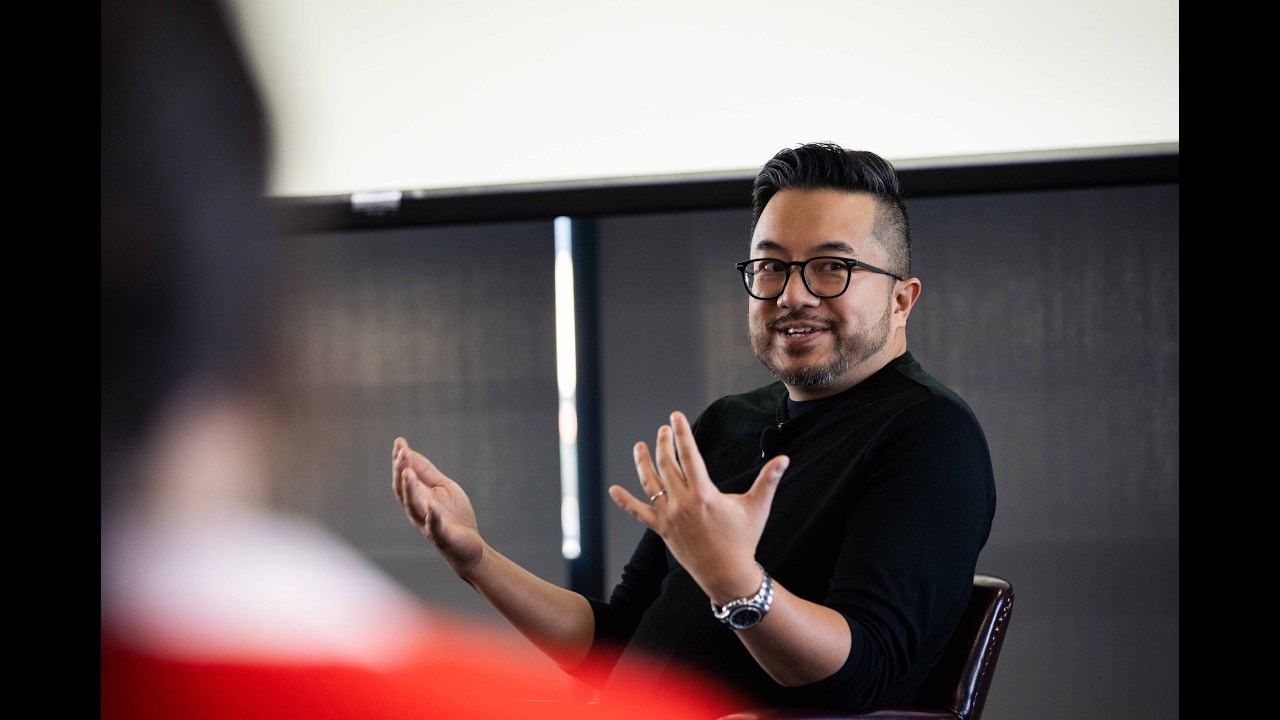
Harry Tannenbaum is the co-founder and president of Mill, a technology company combining hardware and AI to reduce waste and recover value from everyday materials, starting with food. Mill’s residential food recycler is now in tens of thousands of homes, creating the foundation for Mill Commercial, which pre-processes and analyzes food waste streams on-site, helping organizations reduce waste, gain operational efficiencies, and unlock new value from what was once discarded. In this conversation with Adjunct Lecturer Emily Ma, Tannenbaum explains his approach to creating products that customers rave about and companies that scale to the point of changing entire systems.
Entrepreneurial Thought Leaders is produced by the Stanford Technology Ventures Program (STVP), the entrepreneurship center at the Stanford School of Engineering, and published on eCorner by STVP. STVP empowers aspiring entrepreneurs to become global citizens who create and scale responsible innovations.
CONNECT WITH US
YouTube: https://www.youtube.com/user/ecorner
X: https://x.com/ECorner
LinkedIn: https://www.linkedin.com/company/stanfordtechnologyventuresprogram/
Bluesky: https://bsky.app/profile/stanfordstvp.bsky.social
Facebook: https://www.facebook.com/StanfordTechnologyVenturesProgram
Instagram: https://www.instagram.com/stanford_stvp
LEARN MORE
STVP: https://stvp.stanford.edu/
eCorner by STVP: https://stvp.stanford.edu/ecorner
Support our mission of providing students and educators around the world with free access to Stanford University’s network of entrepreneurial thought leaders: https://stvp.stanford.edu/giving-to-stvp/.
Оглавление (10 сегментов)
Segment 1 (00:00 - 05:00)
My name is Emily Ma and I welcome you all back to the Stanford Technology Ventures Programs Entrepreneurial Thought Leader Series co-hosted by the Business Association for Stanford entrepreneurial students and the management science and engineering department at Stanford. Today we are joined by a very special guest, Harry Tannenbomb, who is the co-founder and president of Mill, a technology company combining hardware to a and AI to reduce waste and recover value from everyday materials. Starting with food, Mills residential food recycler is now in tens of thousands of homes, including mine, creating the foundation for mill commercial, which pre-processes and analyzes food waste streams on site, helping organizations reduce waste, gain operational efficiencies, and unlock new value from what was once discarded. Prior to Mill, Harry led the centralized analytics group and e-commerce business at Nest, which launched the first learning thermostat and became the leading brand for the connected home. During his time at Nest, Harry helped to scale the business to more than 1 billion in annual revenue. Following Nest's acquisition by Google, he was a director in Google's hardware organization focused on e-commerce and subscription offerings. He received his bachelor's in economics from UCLA and he's a surfer and was raised in San Francisco. So, welcome home to San Francisco Bay Area and all the work that you do and you and I are very passionate about food waste. But what is this thing about food waste that we want to talk about? So, I'm going to hand the clicker to you because we're going to have you sort of walk us through why you're so passionate about this topic. — Well, I'm really happy to be here. Can you all hear me? Um uh it's an honor to be here. where I was signing the uh wall of speakers and um I just want you to know that this isn't like a revenge fever dream for me. I didn't get into Stanford so this isn't like the moment where I'm like take that admissions department. Um I mean there's a little bit of that. Uh, but it's just such a great feeling to be back on campus and to be brought into a class and do an opportunity to talk really broadly um about what I'm working on right now about the problem of food waste and hopefully answer some good questions and impart a bit of advice. I Yeah, I can talk a little bit about this. Um, this is a crazy thing. So, I kind of fell into the problem of food waste. Is it okay if I stand? — Yeah, you can do whatever you want. It's an academic institution. — Yeah. So, um these are bonkers numbers. So, 40% of all the food we grow on the planet goes to waste. — It's like one a. 5% of GDP. So, out of every $100 on the planet, $1. 5 of that on an annual basis is represented by food that is grown and not eaten. And it's the single largest type of stuff in the landfill. Like my entry to the waste problem, and we can talk about a little bit more later, was like, "Okay, I got to go work on plastics because we're eating like a credit card worth of plastics every week, and that has to be the biggest problem in waste. " But you crack the landfill open, it's freaking food in there. So, this problem is a really interesting problem to unwind and unravel because it's not economically beneficial to waste food. It's not a rational act. Nobody's like for food waste. there's no like pro- food waste group, but it's this huge drag on efficiency. Um, so that was like a really interesting thing to start thinking about and sort of the way we got rolling and we'll go back in time. Can we go back in time? — You can do Yes, please. — The way we kind of got rolling on how we thought about solving the problem um was through a realization that 80% of food is water. — Yeah. It's like 25% of the landfill is food. 20% water inside food. — Yeah. — So any landfill bound garbage truck you see on the planet is 20% full of water inside food. And that didn't seem particularly efficient. Um we have a background our team of making stuff. Um so harkening back to the days of iPods and iPhones at Apple and then thermostats and smoke alarms and cameras at Nest. And I would say like the secret about building things with kind of the Apple mindset is you're not necessarily inventing new technologies. You're getting really good at integrating existing technologies. And so what we built is a machine we call mil food recycler. And basically, I know it kind of looks like what happens if you get a bunch of apple people
Segment 2 (05:00 - 10:00)
together and make a trash can. That there's more than that in here. This thing has as much torque as a Harley-Davidson. — Yeah. — Um, but what it does is overnight it eats food and it dries it out and it measures it along the way. And there have been some very, very cool things we've seen out of the like sort of 20 million device days worth of data that have been born out of these being deployed in kitchens around the world. Um, dehydration is really awesome as a process and when you take the water out of food, actually it stays as food. And I just mentioned that a little bit because just in my journeys and musings of this problem. There's a really crazy thing that happens with food waste. Like you're eating food. You all have done that, right? And you have a plate and you're putting the food into your mouth. It's delicious. and you bring it to a sink and you put it in the sink and in like a millisecond it's turned into food waste and you don't want to like wash that dish because it's gross. Like that's a really weird behavioral loop that occurs that we believe is really closely tied to why so much food ends up in the landfill because people stop thinking about it as food. They start food waste. — Anyway, more on that later. We dry it out. We turn it into this material we call food grounds that basically looks like coffee grounds and smells like spices and it has values. Am I doing okay? — You're doing awesome. — Thanks, Emily. — Okay, cool. The food grounds that come out of the average American household, which by the way, like the average American household throws away $3,000 worth of food a year on average 19% protein. Burns at a higher BTU than wood pellets. You can use it as fertilizer. You can make compost out of it. You can even feed animals. And like, yeah, this is a whole thing that's really interesting about transforming something that typically goes to waste because it's wet, heavy, putressible. That is a good Scrabble word, folks. Uh, for anyone that plays, um, when you take the water out of food, it doesn't rot. The number one question I've gotten since starting the company is like, "This is cool, Harry. Um, when are you going to make a big one? " And we'll talk about this a little bit today and talk about our approach and go to market and how we develop breakthrough technology. Um, but the answer to that question is we're going to make a big one when we have the right partner. Um, and we've recently announced who that partner is and that's Whole Foods and Amazon. Uh, so starting in 2027, we're going to deploy these larger scale mills across every single Whole Foods store. Amazon invested in the company. There's all sorts of interesting learnings around thinking about starting commercialization, building a brand in a household with a consumer product and then scaling that up. Analoges to Nest as well as we started with a direct to consumer business and then turned that into a business where we sold through utility companies. Um it's a neato thing. Um if there are questions if we go there we can talk a lot about the theory of the circular economy. The cool thing about loops when you build them is they're more efficient. And this is kind of the loop we're building with Whole Foods and others. Food scraps from the back of a store go into a mill. Dry stuff comes out. It's easier to transport. It's not a waste product. You can actually sell that back into farms, make eggs. And there's also a little loop on the inside around data and insights. And something neato we're doing with our larger scale mills, which is kind of like a new kind of infrastructure we're building because we're putting cameras inside things. And you know, this is where the newest LLMs are really helpful because as we can identify everything that's being thrown away, then we can take action on it. And it's great to not have food end up in the landfill. It's great to turn it into chicken feed, but it's even better not to freaking waste it in the first place. Okay, home stretch. The cool thing about this is it's like a winwin win. the team we've assembled, everybody cares a lot about the environment and cares about the planet and cares about climate. And I would say if I were to describe the company we're building, it's a systems change company. — Yeah. — But the only way you change systems is if you make new systems that are better, faster, and cheaper. Like please heed this advice. You can have an idea that makes all the sense for the planet, but the only way it's going to scale up massively is if it makes economic sense. These two things need to be true. So, in building this product, in building this business, we're thinking about how do we make this a money machine as well as a planet saving machine. And if you can nail the environmental benefit and the economic benefit and do the right thing for employees and have chickens be the unlikely heroes of this whole story, like that's an awesome combination. So yeah, I don't really I don't want to like give away more, — you know? I want to stop now with kind of the preamble, but um yeah, I'm very happy to be here. My name's Harry.
Segment 3 (10:00 - 15:00)
I am a surfer. I played Scrabble competitively. Um, I'm I'm excited to talk about whatever Emily wants to talk about and yeah, I'm excited for you all to dive into the dumpster with me. — So, the secret here is Harry and I met in 2020 when you were just getting going. — Yes. — And I do want to share a little bit of a sort of insight. I remember you and Matt uh and I chatting and you talking about just smelliness and how getting rid of smelliness in our houses would be the thing. And I was so taken by that because it was the same sort of just stubbornness and passion about making a great user experience that came from your Nest days that were like also coming from the Apple days, right? And getting that right was the game changer. So I kind of want to take one step back to prior from your mill days — about where that just like super focus on like the user experience came from and then maybe some other lessons that you've learned uh along the way in that part of your journey that has informed now what you do for Mill and with Mill. Yeah, I mean I think there are a lot of ways in um to building a business or thinking about starting a company or um you could start from a tech technology view. — Okay, we have this technology. What can we do with the technology? You could start with a business case. Um great story. Um, you could start with, um, thinking about some advantage you might have in manufacturing or, you know, inside information, whatever it is. And like all of those things swirl together, but like ultimately what matters the most is the story that you're telling the customer and the user. And there's an there's a really interesting exercise actually that um we do at Mill that came from Nest uh and and came from companies before that where before we do stuff we write a press release. I'm looking at Sarah who's on our comm's team who pushes us to do this. It's a really interesting exercise. I don't know if anybody here's like read a press release in detail but the thing about a press release is it can't be very long like a page and a half max and you can really only talk about a few things in the press release and like it's a really interesting exercise to try to figure out how you're going to communicate externally about what you're building and if you can distill it into something very simple that is memorable and I think there's a mindset there where you sort of start thinking about what's the story we're going to tell. What is this going to mean to people that are using our product? And it's a really interesting and helpful northstar. — Then of course like Apple DNA, Google DNA. We can talk about the difference between Apple and Google. This is totally different. — But like you care a lot about the user. — The customer is at the center of everything. And it's an easy trap you can fall into like oh the investor is at the center of everything or the technology is at the center of everything. It can't be that. So I think something that's deep in our DNA is really thinking about how we can make delightful experiences. And like the word thermostat and delight didn't typically go together. And like food waste and delight aren't words that are glombmed together in the English language historically. But that's what we drive towards which is okay, how can we look at the world and look at things that are kind of unloved — and look there were MP3 players before iPod, right? and look really closely and say how can we make this feel magical and then you get into like okay let's define magic or let's define delight okay if it smells that's not going to work it can't make noise I'm talking about mail now can't make any noise it has to be able to eat anything it can't smell it should take forever to freaking fill up — you know and you set those as goals And that's kind of what you strive towards. And where we ended up is something like we empty our mail, my wife and I, like once a month. — Yeah. — And like you could put mango pits, avocado pits, two whole turkey carcasses. People email us like, "Oh my god, this saved my marriage. " Like there's all this good stuff that comes from setting these audacious goals and setting the goal at delight. Whereas if you start to set the goal that okay well here's what we think is feasible you know on this timeline this budget what exists you're not
Segment 4 (15:00 - 20:00)
necessarily going to move things forward and it's that tapping into delight and frictionlessness that makes people one rave about your product but two it's what changes behavior and I think um a similar line between what we're doing at Mill and what we did at Nest is we're making distributed infrastructure that changes behavior and I I'm I know I'm rambling on. Is this going okay still? By the way, — you're too shy. Keep going. — So if you think about like the energy sector over the last 50 years, what really happened in the energy sector is we moved from centralized infrastructure to decentralized infrastructure. It used to be that if you needed power, you built a power plant. And like over the last 50 years, solar, batteries, wind, thermostats on the wall, all sorts of different technologies that allowed the grid to decentralize. And there's all sorts of goodness that comes from that. In the example of a thermostat on the wall, you can actually control energy demand at the point of generation, consumption. And like a crazy thing with thermostats that we saw is like thermostat is responsible for like 50% of your energy bill or something like that, but only 20% of thermostats are programmed. Not rational, — but the thinking was, okay, can we make something really delightful, make something easy, maybe even have the right nudges? Like you email someone and say, hey, do you know your neighbors wasting like 4% less electricity because they programmed their thermostat? people freaking run to their thermostat and program it after that. So, there are opportunities to intercede in ways that weren't previously possible with decentralized infra infrastructure. And it's a ditto thing with Mill — where you make this beautiful delightful thing, you put it in someone's kitchen, you put it inside a grocery store, you can change behavior and that's actually the unlock that's required. — Can I tell you when it unlocked for me in earnestness? It was actually in 2022 when I actually was able to smell and feel the food grounds. Right. You mentioned it was a little bit spicy. It actually smells good and it was delightful to me. You didn't let me actually taste it because that's actually not good. But like I mean it was phenomenal. Just the 180, right? And I was in disbelief when I smelled the food grounds. So you're you created the mill team created some magic there. — We have this test that's like called the stink bomb test where we have small conference rooms at our office um and we make this mixture of like squid, manego cheese, um anchovies, citrus, kimchi, eggs, — what — you know to test the odor system of the device. We sit working in small rooms where we're, you know, processing this kind of material and it's like you smell that once it's dried and it actually smells kind of lovely. — I know. — So, and that's a trip, you know, to be able to use technology to take like the ickiest thing and make it into something that's pleasant. — It's alchemy. Truly alchemy. Okay, let's double down a little bit. I'm actually curious what has been hard along the way because you're like you did with Nest. You and Matt and the team, you changed people's behavior, — right? And that wasn't like overnight, right? You're actually working to change behavior here. And I know it's been a journey already for the past five years. So, what has been hard? And I know there's a number of you here who want to start climate tech companies, food and ad tech companies. Well, I'm curious if you had advice for folks, especially in fields like this, how to go about it. — I mean, I'll just speak for myself as like a person and an American, like I'm fundamentally lazy. — Yes. — And I'm like pretty set in my ways and kind of stubborn. — So like, you know, you throw around words like behavior change. We're going to change behavior. Like that's freaking hard. — Uhhuh. Cuz like the individual actors whose behavior you're trying to change, like it takes a fair amount to get me to do something differently, — like charging my AirPods like that. You know, I can't do it. I just can't figure out how to do it. So then I get another set and then you have two then they both ran out of batteries. So I think like something that's very very hard on behavior change is you need to really create a frictionless experience. I've talked about this. I've come back to it, but there's that. The second thing that's quite hard about what we're doing is we're truly making a new kind of infrastructure. Nest was very cool. We saved enough electricity to power the whole US
Segment 5 (20:00 - 25:00)
electrical grid for, you know, many months with just little thermostats. We made a connected thermostat. Thermostats existed before the connected thermostat. Now at Mill, we're making this like new kind of infrastructure. Food recyclers don't really exist. There aren't really cameras on garbage cans in grocery stores. There aren't pathways to get the dehydrated material, which is a great chicken feed, back to chicken farms. There aren't regulatory frameworks that understand how these devices should be considered, what the compliance metrics are, case studies of lots and lots of companies using them before. So you're truly starting at zero and you're entering a space that's actually really efficient. — Yes. — Okay. The waste industry hasn't changed that much over the last h 100red years, but it's really good at picking up material at the curb and bringing it to a landfill. — So it's not like you're going against a market failure that hasn't been looked at by industries or that there aren't systems and infrastructure around it. So to go against that, you have a lot of work you have to do on education. You have to nail execution. You can't stumble because there's not a lot of precedence behind it. And you have to figure out how to make it cool. Otherwise, you're not going to be able to get the best people in the world to come work on it with you. — I think what's important to draw from what you said is the interdisciplinary nature of the systems work that you're doing. Right. This is a systems change. You know, there's other food recyclers out there, but I think Mill's the only one that I'm aware of that's looking at not just the hardware and the product for the end user, but also the system in which the product that I'm so familiar with sits in and you're pulling together all the pieces. — Yeah. I mean, there's like kind of a blessing though, you know, in coming at a problem like this like knowing nothing about garbage or the waste industry — cuz like there are a good amount of entrepreneurs that start companies in industries that they've spent like 20, 30 years working in. And there's something really freeing about looking at a problem probably kind of dumbly, you know, from folks that are, you know, in the biz or have been working on this because you sort of look at it with eyes unclouded by what is going to be terrifyingly difficult. — Yeah. — It's like, okay, well, that makes sense. There's food over there and it a chicken could eat it. We should try to like get it to the chickens and maybe we got to dehydrate it on the way and that's a good loop and we should go do that. There's it's so hard. — Yeah. — When you get in there, but it's a blessing not to know how hard it is — because it allows you to think really freely and openly in a first principal sense. — And you were willing to, as you said, dive into the dumpster like I did. — Totally. You just start reading books. — It's kind of fun actually like, okay, there's like 20 books on garbage. I'm going to read them, — you know. And then when we started the company, it was right at the beginning of the pandemic — and it was like no one could hide from us. be like I'm on vacation. It's like no, you're at home. So you just start emailing professors and experts and it's amazing how many people actually email you back. — Yeah. — It's like hey I'm this entrepreneur. I've done this other stuff. I kind of want to talk to you about the thing you've spent your whole life working on. People are generally down to get on the phone with you. — Yeah. — Just don't say like I want to pick your brain. I think like pick your brain for some reason is just like not the right — just I want you to help me. — I'd like your advice. — Picking a brain feels kind of violent. — No. Yeah. I don't answer those emails either. Um okay. So I have two more questions and I want to open it up to the students because I think they have a lot of questions for you on Earth Day. Um this the what are you excited about next? I mean, you gave a flavor of um what you're doing with Whole Foods and Amazon and a few other big partners with the big version, right? And um what else is coming that is sort of fueling you and motivating you and your team? — So, my favorite roles inside companies, and there's a really good piece written by First Round Capital called Give Away Your Legos. Um and what the piece talks about um and what you'll all find if you have the opportunity to work in a high growth company is you very quickly get the opportunity to like build a Lego tower. You know, there's all sorts of things that are scaling up. There's new opportunities to add structure, metrics, automate things, figure out business lines, drive revenue, whatever the heck it is. And you build the Lego tower and you're very proud of it. And Molly Graham, who wrote the piece, said like you need to be fast to give that Lego tower away — and go build another one. And like there's a mindset you can have where it's like the second something's kind of
Segment 6 (25:00 - 30:00)
been figured out, I'm going to go on and build onto the next thing. And that's a kind of work that's been really addictive for me. It's not about like org building or nation building inside a company. It's about figuring out what the bleeding edge of the new things we can figure out are, how we can boot things up and then kind of move on to the next thing. — And I don't I mean, you probably have some amazing stories about this at Google, but you can't actually really scale with the company if you're still trying to hold on to the thing you were doing two years ago. You have to like sort of let it slip through your hands a little bit. So yeah, what's been really exciting for me right now is building this commercial business and I find myself like in the galleys of cruise ships and on chicken farms and you know talking to chefs and you know getting to just learn so much every day but also as a founder be the integration point of this customer feedback and like I think that's like a really powerful thing about building in this era of AI and being able to move really fast is you have the I have the ability we have the ability to hear something from a customer, get that back to our product and engineering teams, work that into a prototype and turn that around in like 48 hours. That's not necessarily hardware, — but like that to me is so fulfilling and so exciting and being able to just approach every day like can I end the day a little bit more intelligent — I think because that's what's been most exciting to me. — So beautiful. Well, so let's dive into the people side of things because clearly it's not just delighting your customers, but delighting — your teammates and finding meaning in the work and delegating. And you co-founded this company with Matt and one of the questions that our students are asking is am I going to be a singular founder on my own or am I going to do it with someone else? And then how am I going to grow this company and you know instill it with a certain set of values? Can you talk a little bit about that and how you went about building — Mill? — I think the first thing I'd say is the founder role is terribly lonely. M — and it's that it seems like that wouldn't be the case because there are all these people around you and there are so many people that are tuned into you wanting to help move the mission forward etc. But there's no one that's really holding the weight the way that you are of expectation, responsibility, promises made, all of the things that the team can't figure out or solve without help. And it's really nice to have another person in that seat with you. my I deeply love my co-founder Matt and um he was one of the founders at Nest and kind of we didn't talk about this but you know I came into Nest I after uh school um I was an investment banker and I was like a really I wasn't very good investment banker I wasn't like corrupt but I just like it didn't just like didn't love it And um I got a job at Nest and was one of the first employees there at like 23. I was like the first analysts at the company just figuring it out. And credit to Matt and Tony, the founders at Nest. I just kept knocking stuff down and they kept just giving me more responsibility, giving me more responsibility. all of a sudden like run in the e-commerce business, you know, have hiring all these people that are way smarter than I am and way more experienced than I am, but just like keep doing stuff, keep learning. And after I Nest was acquired by Google and after I left Google, and we could talk about that too, um the pandemic hit and that's what really got me thinking about garbage cans because I think we were just living in our own filth a little bit. And I called Matt with this little idea really thinking he well, you know, he's this amazing engineer and roboticist and and leader in so many different ways. Thinking like he would have one of his like acolytes, apostles, some someone in his, you know, his codory of, you know, engineering radness, someone he could pair me up with. I remember he called me back like two hours after we talked. I told him about this idea. He was like, "Dude, I want to come do this with you. " — Wow. — And
Segment 7 (30:00 - 35:00)
— wow. — It's it's a partnership like any long-term partnership. I It's akin to a marriage. So, like with your co-founder, you're going to have amazing days. really hard get into perfect rhythm working with each other and complete each other's sentences. And there will also be moments where you're on each other's nerves in a crazy way. — And but what underpins it, I think, for us and makes us really successful as a pair is that we know that like by default there are miles of trust in our relationship. And ultimately like everything we do, we care about the company. You know, we care about our users, we care about each other. And that gives us room to really disagree when we have to disagree, debate debate, you know, say hard things when we have to say hard things. So I do think like the choosing the co-founder thing, there are solar founders out there that do amazing things. There are companies with just one person that do amazing things. But in my experience, like a team is really, really helpful. And I think it's an incredibly consequential decision. And I think you want to really think about someone who one, yeah, you gel with and are down to spend a ton of time with, but someone that you have fun with, too. You may be stuck in an airport in Guadalajara for a bunch of hours, you know, and like that's a key consideration. Well, since we're reflecting on really important lessons learned, uh, we're going to close out with the question we ask all our speakers, which is from the founder of this thought leaders series, Tina Seelg. She wrote a book called What I Wish I Knew When I Was 20. So Harry Tannon, what do you wish you knew when you were 20? I think um I'm not like into the whole energy of like these are the best years of your life cuz you know I think the hope is like all the years of your life are the best years of your life. Like I don't think that's the right way to think about it. But what I remember about being 20 and what actually kind of comes back to me being on campus, putting it in that frame, I remember there were times where I was like, man, I just wish I was like a little bit older, you know? I more progressed. I wish people would like take me a little bit seriously. I wish I could get through some of the stuff to get to that other stuff. I also remember moments of immense freedom and curiosity that were kind of unbridled by commitments to others or wait even something as simple as choosing courses for the next quarter. Like there was just incredible openness and I think um if I could go back I would say two things. So, I would say don't rush it. You know, I would really lean into the moments that are passing by in front of you and try to extend them as much as possible. As weird as it sounds as I'm saying this, I kind of have like a moment of longing for like an allnighter preparing for an economics exam because like that was like such a finite thing. sitting at the dining room table with my roommate just like ripping through yellow pads and like there was a little bit where it was like we were pushing hard because we liked it. — So I would say like I'm not saying enjoy every moment but I'm saying appreciate every moment. — Try when possible not to fast forward through them. And then I would say like lean as hard as you possibly can into the things that are fun and feel energizing — because I really think like you end up doing your best work when you're working on things that are charging you up — and you're on rails and the rails will bend and move as they sort of go. Um, and as much as you can surround yourself with people that are energizing to you and help you learn things, help you have, you know, great experiences and fun without being burdened by like what does this mean for the ultimate destination. I think these are ingredients that lead to radness. — For me, what I heard was savoring every moment, even if it's hard, if it's joyful, if it's difficult. I think life has a lot to give us and we're, you know, very full human beings if we can see the world through those lenses. — Totally. And like I don't even know how old I am now, but like I still feel like
Segment 8 (35:00 - 40:00)
there there's the possibility for things to blossom out in a million different directions, but like in the tree of potential outcomes of your life at 20, there's so much breath that's possible. I think you want to be careful to scan the horizon and try different things and really be attuned to, you know, what your gut is telling you is exciting because I think there's a lot of wisdom in that feeling. — Okay, we have about 13 minutes for questions. So, if you want to come up and ask Harry a question, please do. So, my question is around customer acquisition and how you approach that. Um, from what I've heard is like meta ads are getting more and more expensive. So, what is like your split there? — Okay. And everybody could hear the question, right? — Oh, no. Okay. So, so we let's get this mic ripping, but the question was around customer acquisition. How do we think about customer acquisition? How do you approach that? The word on the street is that meta ads are getting more expensive. How do you think about mix there? — Um, cool. Did I do that? Okay. — Yes. — Okay. So, um I actually we have a direct to consumer business. We started with business because that's a fast way to get to market and we did a similar thing with Nest where we started direct to consumer with Nest. Um but like ultimately the way we got into tens of millions of households with Nest was through partnerships with utility companies. And I think like you can get to a certain point DTOC running your own ads, acquiring people directly, but ultimately the way you get to mega scale is figuring out the right distribution channels. And the thing is at Nest, and we tried this, if you walk into a utility company on day one with your slide deck around a connected thermostat you're going to build, they laugh you out of the freaking room. And even when you go back after you've sold a couple, they're like, "Go pound sand. " And then at some point they're like, "Oh my god, we need you. " — Y. — So I think the way we think about using our DTOC business long term is less about, okay, we're going to scale this to the moon and it's more about how can this be a catalyst for other channels, whether that's retail, incumbents that are running the grids, etc. on meta specifically. It's a total changing tide. And I don't think you ever want to be dependent on a single channel. Even if it's working well, you got to force yourself to diversify on marketing channels. Try different things. Don't get pot committed to one thing because one day something weird can happen over there and then you're in a tough spot. — Thank you so much. — Thank you. — Hi Harry. Thank you so much. I'm Bailey. Is this on? Okay. — There we go. Okay. I'm Bailey. I'm studying environmental communications and so I'm really interested in how similar to the kind of customer acquisition question of how you guys really communicate the urgency of like food waste and the food recovery issue and how you get your customers to just care and what the best communication strategies have you found so far. — I think um it's a great question. Could people hear that? No, still not. — Okay. Hold on. You might want to hold it right up to your — Okay, I can try to rephrase it. Yes, hold it up. Right. Okay. Bailey's question was as we think about communication um especially as someone who's studying environmental communications, like how do we think about the hierarchy of messages that are going out? How do you get a climate focused message to resonate with customers and drive urgency? And this is important because like urgent action matters. When food ends up in the landfill, it makes methane 80 times more potent than CO2 as a greenhouse gas over a 20-year period. Like, we got to figure out how to like solve this problem before we fry ourselves. Climate messaging is not a winner. — No. — And I actually think environmental messaging is generally not a winner either. Like even if you think about a brand like Patagonia, which I see some folks in here repping and you know, like people buy Patagonia equipment because it is great equipment. — Yeah. — That happens to be made by a company that cares about the planet. And I think there is a small subset of consumers that will respond to, hey, buy this because it's better for the earth. There is a much larger subset of consumers that will buy something because it is better, faster, cheaper. — Yes, — electric vehicles great for the planet. Teslas not particularly sold as like the environmentally optimal thing first, even though they are kind of sold like we got an iPad in there, you know, or it's just a really good car. So I actually think my answer to the question is
Segment 9 (40:00 - 45:00)
you can talk about it and talk about in some subsets. You can talk about it with your employees. You can think about it as a reason for being as a business. But if we're trying to have maximal impact, we need maximal adoption. And in that way like the focus really needs to be on building something better. — Yeah. — Thank you. — Hi, I'm Justin. Hi Justin. — Yes. Um, seems like you've done a lot of exploration, especially in college. You've done economics, hosted some concerts at UCLA, — and been a corrupt investment baker as — not corrupt. Just in effect. — Yeah. Yeah. Um, now you're honed in onto climate tech and I was wondering once you are honed in onto something, how do you keep yourself open-minded to maybe new fields or opportunities that you can get excited about? And also once you do um how do you know at what point you should drop it and like realize oh this is not energizing to me. Um I think it'll be helpful for our explorations as Stanford students. — Great question. — That's a great question. Um there's a mathematician I think he's still there Terrence Tao at UCLA um who's like as smart as they come fields medal winner at like 18 or something like that. Um uh Terry said that like um eliminating wrong answers is often one of the best ways to solve really hard problems. So I actually think the exploration bit is really important. I actually I don't regret my time investment banking at all. You know, I didn't do it for very long. It was actually a very useful exercise to cross that off the list of something that like I wanted to devote decades to. So I think um you don't necessarily want to just be focused focused in as you said because you can kind of get trapped at like a local max potentially. Um focus and creativity are always intention inside startups. You have finite people, finite time, finite cash to burn before you're profitable. So, you can't always be in idea idea mode. I think um the key is I'm going to use a business framing for it and then maybe I'll come back on something. At some point, you have to decide what the main thing is and that has to stay the main thing. That can't pivot a bunch of different times or else the team's going to get whiplashed. you're going to be moving into a bunch of different places. Food waste is the thing. We're doing it through pre-processing infrastructure. We're doing it with these specs. That's what we're doing. That being said, every single day, every single week, you can meet different people on the periphery. And like, as an example, we didn't know on day one that we were going to make material that was going to go feed chickens. And like that's now what's going to happen, you know, at the scale of feeding many millions of birds. And that idea came from like a conversation over dinner with someone. So I think there are like meaningful shifts that it can occur in a business that can come from happen stance or come from surrounding yourself with the right people. in terms of like do I want to be a concert producer or banker? Do I want to be someone making um you know a garbage can that eats food waste and turns into chicken feed? I don't think there's a good algorithm for that, — you know. I think you really have to trust your gut, you know. And I'll go back to what I said before where I think if you're questioning the pull and attachment to something, you know, when you don't feel rooted there, I think there's probably some truth in that, — you know, and I think where I found I've done my best work is when I feel really invested and attached in the to the problem, to the people, to the mission, etc. I actually didn't always think that. I was like, "Oh, I you know, I maybe I'm not like mission driven. Maybe I'm just like hard problems. Maybe I want to be okay working at a blueberry farm, figuring out how we can stack the blueberries better. " And like there were times in my career where I realized like no, I've actually like lost that pull. — But I guess my like little nugget of advice is like when you find it, you're going to feel it. — Yeah. — You know, and if you can feel local maxes of it, keep chasing that. — Yeah. — Thank you. Okay. Last question. I guess you find the local max. Keep chasing the global max. — Thank you so much. Uh I am the lucky F2. — So that's why I'm here. — Okay. Got it. Yeah. Okay. So you are not here by choice. — But I do have some questions. — Okay. System works. — Yeah. Of course. So one my question is
Segment 10 (45:00 - 49:00)
because I had a background in civil environmental engineering especially in sustainable design. So my question is from a perspective of uh consumer research, design perspectives and sustainability especially the climate change what's your idea about how AI is changing this entire relationship with the customers with the research and how would that be impact to uh the future goals? — Um great question AI is very cool. there are jobs that AI is very well suited to do. You know, I think an interesting lens obviously there's like productivity gains in every part of the company that can be aided by it. There's ways we can learn about customers. process information. But I think with AI from an entrepreneurial standpoint, it's helpful to think about like what are the tasks that this technology is really well suited to be a force multiplier for. And like for us, one of those that jumped out was computer vision. — And I'll get back to the customer research side in a second, — but like to go back to Nest, we made doorbells and cameras for the homes. We had products called Nest Cams. And uh for the doorbell camera, we had a feature that we were making like back in 201 12 13 called package detection. — And this was the day in the days of when we called it machine learning. Mhm. — Um, and like in those days to have a feature like package detection on a connected camera, you would need to have like eight engineers work on tuning an algorithm for like eight months. — Yep. — And spend real money labeling data. This is a box. This is a cat. Like shadow. You know, it used to be that like to tell a robot to go like sit in that chair, you'd have to teach it what a chair was. — Yeah. — And now in like the world of LLMs and where AI is now, like the models just like know stuff. And so like I think from like a technologist standpoint, you want to kind of sit back a little bit and say, "Okay, I'm working on this problem versus just like throwing AI at the whole problem. What are the right parts of the problem to throw a at? Does this driving with you? — Yes. — And for us it's like okay like the way food waste is talked about globally is like how many tons did a grocery store produce? Not like how many apples? — That's right. — Or how many watermelon rind or actually is it an inch of flesh on the rind or a quarter rind. And these are like new ways where proprietary data or information can be generated by infrastructure that wouldn't have been freaking possible before AI. That's right. — So, I think that's like my technologist take. I think from like a hey, I'm just starting out. I want to learn a lot about consumers. Like, I think there's really cool stuff you can do with AI basically like generating users for your website, you know, to AB test things versus actually having to wait for a test to break one way or another. There's ways to get mass amounts of information in front of you. I do think though you have to like be careful one of like the synopantic nature of AI which is just going to like encourage you down your path — and like secondly that you're checking in with real people, real businesses, real action there. I mean, I'm a devout user of AI every single day, but it is also the case that like if you ask Opus 4. 7 like should I walk or drive to the car wash? It's like you should walk there. It's 50 meters away. And it's like so I think there are points where you have to make sure you're harnessing really carefully and prompting really carefully so you don't get led astray. I don't know. Emily knows a lot about this too. Well, today's not about me. It's about you. And we're at time. So, I'm going to thank Harry. If we can give him a huge round of applause. — Harry, you are such a gift. Mill is such a gift. Thank you for being here on Earth Day and celebrating climate tech and solving food waste for the world. We'll see you next week. Tracy Chow is the founder and CEO of Block Party and we're going to talk a little bit about a media company. All right, see you next week. Thank you.
![Harry Tannenbaum (Mill) - Setting the Goal at Delight [Entire Talk]](https://i.ytimg.com/vi/SyLEXYKdqc0/maxresdefault.jpg)
![Brendan Foody (Mercor) - Agentic Data and the Future of AI [Entire Talk]](/thumbnail/NUNyK6P6q8s.jpg)
![Tracy Chou (Block Party) - Founding a Mission-Driven Startup [Entire Talk]](/thumbnail/AzIvPB1c8lg.jpg)
![Kit Rodgers, Ben Jun, and Paul Kocher (Cryptography Research, Inc.) [Entire Talk]](/thumbnail/4lH6fwDBODY.jpg)
![Elizabeth Weil (Scribble Ventures) - A People-Centered Journey [Entire Talk]](/thumbnail/mHYO5Vj7pBw.jpg)
![Jane Chen (Embrace Global) - Doing the Inner Work [Entire Talk]](/thumbnail/r4nRLflRSVw.jpg)