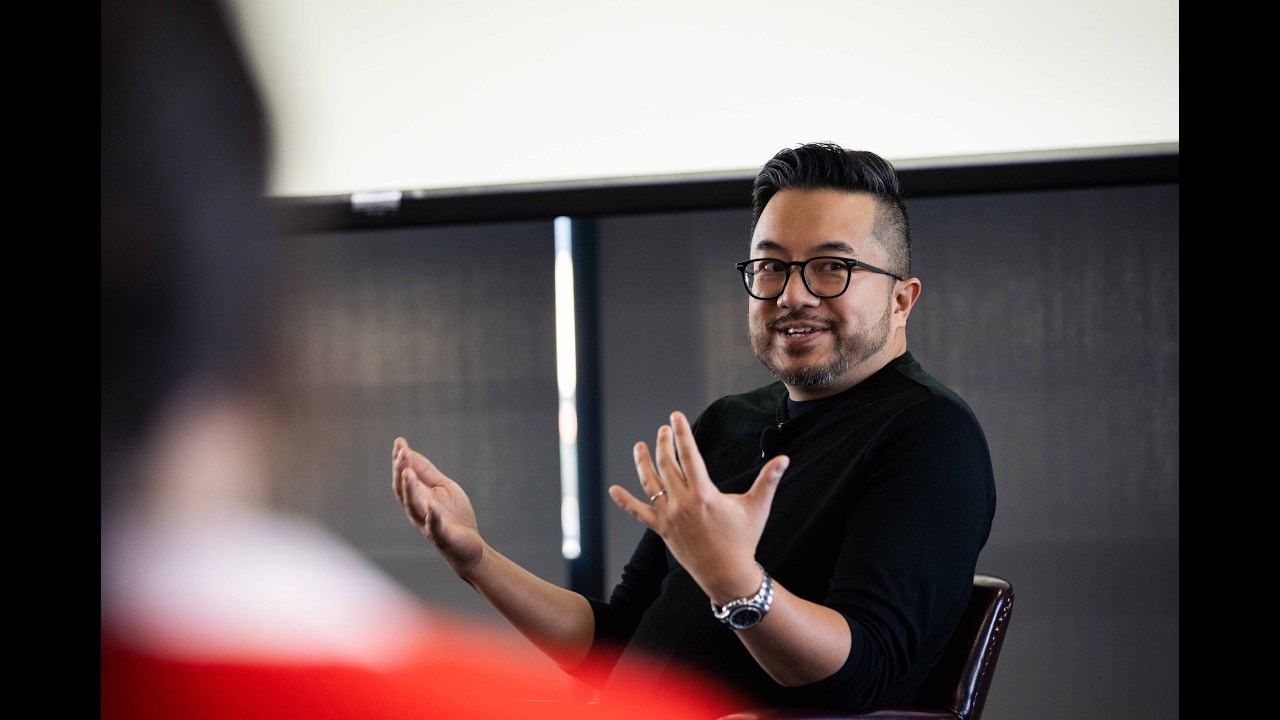
Tracy Chou is a product-minded engineering leader and exited founder with more than 15 years of experience building and scaling consumer and enterprise products. She is best known for her work advocating for diversity and inclusion in tech, and for being founder and CEO of Block Party, a platform for online safety, privacy, and anti-harassment, which was recently acquired by DeleteMe. In this conversation with Adjunct Lecturer Emily Ma, Chou explains how her early experiences working at tech startups inspired her to found a mission-driven company and how Block Party balanced mission and profitability.
Оглавление (10 сегментов)
Segment 1 (00:00 - 05:00)
[EMILY MA] Hello, everyone. My name is Emily Ma. I am an adjunct lecturer for the Stanford Technology Ventures Program, and today it is my pleasure and honor to welcome Tracy Chou back to Stanford. [TRACY CHOU] Yes. [EMILY MA] So, a quick intro. Tracy is a product-minded engineering leader and exited founder with 15 years building and scaling consumer and enterprise products. She is best known for her work advocating for diversity and inclusion in tech and being a founder and CEO of Block Party, a platform for online safety, privacy, and anti-harassment. It was recently acquired by DeleteMe. Very big deal. Congratulations. She was an early engineer at Pinterest, Quora, and the US Digital Service. For her advocacy and activism work, Tracy has appeared on the covers of The Atlantic magazine, Wired, and MIT Technology Review, and has been honored as one of Time's Women of the Year. Tracy graduated from Stanford with an MS in computer science and a BS in electrical engineering, where she was a Terman Scholar and Mayfield Fellow, and elected to Phi Beta Kappa and Tau Beta Pi. Throughout her career, Chou has been recognized as a leading voice on diversity and inclusion issues in technology, culminating in her selection as one of Time magazine's 12 Women of the Year in 2022. Welcome, Tracy. Please give her a warm welcome. So first questions first. I know a lot of our students are thinking, I gotta get a startup right out of the gate when I graduate, right? That's a big deal. It's a lot, a lot of pressure to do that. You chose a slightly different route. You chose to be employee number four at Quora. You then spent some time at Pinterest, and then you... Started your journey as a founder. Could you maybe talk about that decision a little bit? [TRACY CHOU] I don't know that it was that well considered- beyond that I didn't think I knew what I was doing, and it made more sense to me to go work somewhere else and learn from other people who knew slightly better what they were doing. And it was fantastic to go work at a company and just, like, focus on what I was doing, which is engineering, but then get to learn everything else that was happening. I think for those of you who are interested in working at startups, working at a startup first is very good practice. You get to see what other people are doing. Learn about different functions as well. I think one of the best things for me for my career was being at Pinterest when we grew from 10 people to 1,000 people. So getting to see that scaling, getting to meet all the different people in different functions who are amazing at what they did, whether it was legal or press and PR or, like, engineering product design. Just getting to know amazing people across all these different functions was really helpful to me. And then that set me up later for when I actually did wanna do a startup. Like, I kind of knew what good looked like. I think that's one of the dangers when you've never worked in a functional, high-performing company, you may not know what good looks like. And even if you don't- Necessarily know how to do each of these different jobs. Like, it really served me in doing Block Party. Like, I knew what somebody who was good at design would- Mm, would be able to produce, somebody who's good at go-to-market would be able to do certain things. Mm, um, so it just helped set my calibration- Mm, for being able to do a startup later. Um, but honestly, like I think when I was in school, I just had no clue what was going on. So I think it would've been a disaster to go do a startup then. [EMILY MA] How did you land your first job? I mean, how did you figure out that Quora? I think Quora was— [TRACY CHOU] yeah, [EMILY MA] your first, right? How did you find your way there? [TRACY CHOU] It was sort of coincidence. I had interned at Facebook back in 2008, back when it was still a startup. There were 15 of us in that intern class. I think 500 people total at the company. [EMILY MA] Wow. [TRACY CHOU] Yeah, I know, I know. It's crazy. Back then, the controversy about Facebook was, like, whether or not, uh— High school students could be on as long as you can do it, like colleges. Anyways, ancient history. Um, so the founders of Quora, um, were ex-Facebook, and I'd actually run into them on Stanford campus. I think they were in the Gates building, like flyering, 'cause they were just starting to look to hire people, and I ran into them. I was like, "What are you guys doing here? " Like, none of you are Stanford alums. " Uh, they were like, "Oh, you know, we're starting to hire, so we just like wanna put up flyers. " And, um, I was like, "Well, I can, I can help you forward to like the different mailing lists and stuff. " [EMILY MA] Mm. [TRACY CHOU] Um, I did not think that I would be a good candidate for them 'cause I did not think of myself as an engineer I was like, "I'm not good enough for you guys, but I can help you distribute on the different lists. " And they kind of... I don't—I guess I didn't realize what they were doing, but they're like, "You should come by the office. Like, can we give you a codebase demo? Can we tell you more about Quora? " And I guess eventually I ended up taking a job there. [EMILY MA] Can you tell me a little bit more about what your
Segment 2 (05:00 - 10:00)
first job or jobs were at Quora as number four? [TRACY CHOU] Yeah. So, um— When I talked to them, I asked them if they had any non-engineering roles, because again, I did not think of myself as an engineer. And they were like, "No, because we are four people right now. " So the only thing we need to do right now is build a product. And they were like, "You can write code, right? " I'm like, "I don't, I mean, maybe. " So they convinced me I should be an engineer. So that was my role when I was there. But because we had nobody else for a lot of different functions, I did a ton of recruiting. I think I did like 10 career fairs in that first year, a lot of tech talks. There's no community manager, so like that was me de facto. So I was on the side like diffusing fights between community members about Policies around China and how we should refer to China, the People's Rep- anyways, those sorts of crazy things. People getting mad at each other, abuse policies. Just like all the things that have to get done. I wrote on the platform a lot too, because, you know, question and answer site, we needed content, so as a sort of like second job for all of us, we were writing as much content as we could. Write a bunch of code and then write about, going to Stanford, being a CS student. Anything I could write about. I think there was one question that was like, "Where is the best place to get soup in Palo Alto? " And I was like, "All right, I can answer this. " Been to all the places, I can write about soup. So it was like all the things. Pretty fun for the early stage. [EMILY MA] So then when did you know it was time to? Leave Quora and take another role? [TRACY CHOU] I was not very confident in this. I think a theme will be that I never quite knew what I was doing and just kind of like stumbled into a lot of things. I was not sure that it was the best fit for me. Yeah. But I also didn't know if that was unusual or if all jobs feel a little off. Yeah. Like, maybe it's just not fun to be an adult and working. But I knew the Pinterest folks from just hanging out in Palo Alto, like the sort of like startup networks. And... I don't think I would recommend this generally to startups, but maybe it makes sense in the early days. Pinterest actually did not interview me. They were like, "We've heard that you have a good reputation, so here's an offer. Do you wanna come work here? " I was like, "Oh, is that a good way to hire? Like, you didn't test me at all. " But I really liked the product. I liked the people, and so I ended up making the jump. [EMILY MA] Oh, that's wild. I still remember being demoed. What early Pinterest looked like by Ben at a party in Palo Alto. [TRACY CHOU] Yeah, yeah. So that checks out. [EMILY MA] That checks out from many, many years ago. Uh, let's talk about Block Party. Yeah, tell me a little bit more about what it is and why you built it. [TRACY CHOU] Yeah. So to give a bit of the backstory, um, I was an engineer. I worked at, like, social media companies so I kind of understood what things get prioritized and not prioritized. Actually, the first project I had at Quora was building the block button because- Oh, somebody was harassing me. We had, like, 2,000 users and somebody was harassing me. And I was very irritated that this annoying person could, like, blow up all my notifications. Just by being on the site that I was building. So I asked if we could build a block button, and my colleagues were like, "Sure, if you want to do it, you can go ahead and do it. " So yeah, that was the first thing I did. It was very gratifying to me. Let me think through every— Wow, every part of the product where I want to be able to block this person from reaching me, like notifications, inbox, upvotes, downvotes, comments. Anywhere you could think of. It was a very fun exercise for me. So that's my experience there. Alongside doing all the engineering stuff, I ended up being an accidental activist around diversity and inclusion in tech. So I had a blog post that went viral that was calling on Silicon Valley to release its diversity data, so have more transparency around what our workforces actually look like. If we're such a metrics-driven industry, how do we have no data on what our companies look like? So I had a side career doing activism work, where I ended up building more of a profile online, mostly on Twitter, but it spills over to different platforms. And in doing this work, I ended up getting a bunch of harassment again. And I was like, "Oh, this is a kind of familiar from the earliest days. " Yeah. And so that inspired me to work on Block Party, where I was just frustrated that there weren't better solutions. And when I would sometimes complain to people about this harassment I was getting, the response would be, "Well, why didn't you just delete your account? " Or like, I mean, if I have 100,000 followers on a platform, why would I just give up my platform? And it also felt a little bit like if I were to say I'm on the street and like I get street harassment, if somebody were to just say, "Why don't you just stay at home and like never go out into the world again? " Being online is part of life now. And I found a lot of value in being on the platforms, for activism work, getting message out. But beyond that, just connecting with interesting people and learning. So I found it quite frustrating that there were not better solutions.
Segment 3 (10:00 - 15:00)
And having been a part of building the platforms, I also felt it was maybe a little bit like doing penance. It's like, \"Oh, we built these platforms to allow people to abuse each other. Maybe I can do some work to try to clean that up. [EMILY MA] That's amazing. So I really like how you decided to give people agency back in their lives, right? [TRACY CHOU] Yeah. [EMILY MA] Because the online sphere can be quite scary sometimes, right? [TRACY CHOU] Yeah. And that whole concept of agency, it really came up for me. I hadn't thought about it so explicitly in these terms, until I was dealing with a- Like physical stalking incident. And I actually was talking to private security about what I should do. And this firm that I talked to, which was way too expensive for me to hire, they were like, "Oh, a minimum retainer is like $3,000 a month. " I was like, "That's more than my rent. Like, I cannot afford you guys. " But they did give me some good advice, which is like, it can feel very overwhelming. And that was exactly how I always feel. Like this crazy person is trying to find me, and now like my whole life is upturned. I'm afraid to even step outside my apartment. Like, this feels so helpless. Like, I'm not in control of my life. And the security person said, "You can flip that around and think about what are the things that you can do. " Like, if this person is targeting you, what information might they be able to find from your different profiles? Or just think about all the places, basically like OPSEC. Like, what can you lock down to protect yourself? And even if it can't be 100%. You can be doing something. Like, you can exert your agency, and that's what they'd seen with many other clients was like that's maybe the most important thing is to not feel that you are helpless. Like, you can do something. And once you have that feeling of control back, it all becomes a lot easier. [EMILY MA] 100%. [TRACY CHOU] So I took it to an extreme. Instead of just locking down my own accounts, I was like, well, why don't I build a company to make this better and try to help everybody? Yeah. We can try this. [EMILY MA] I love that backstory, all the way going back to Quora when you had that first block button. [TRACY CHOU] Yeah, [EMILY MA] it's a great history. Thank you for sharing that openly. Let's talk a little bit more about Block Party and how... So last week was Earth Day. We had a really wonderful founder, Harry Tannenbaum, come talk about his efforts in climate activism, so a different kind of activism, and how his company is very mission-driven, but he's an economist. I remember one of you was up at the whiteboard until, like, 5:45 drawing economics charts on there. And so for him, economics was just as important alongside a mission-driven company, and I know you've thought a lot about this. what this means for various things, from hiring to what you do in terms of building the product. Could you maybe dive into that a little bit? [TRACY CHOU] Yeah. So in kind of prep for this conversation, I asked on Twitter or X and Bluesky, like— [EMILY MA] Mm-hmm. [TRACY CHOU] What are some of the trade-offs in trying to build a mission-driven startup? And one of the responses I got was, "What startup isn't mission-driven? " [EMILY MA] Mm-hmm. [TRACY CHOU] I was like, "Hmm, that's actually, I mean, that's a good question. " [EMILY MA] Yeah. It is. [TRACY CHOU] Every company ends up picking some mission. But I think the difference is that there are c— Companies that are profit-driven, which is like most companies you need to sustain. Profit-driven, but with the mission that kind of explains like how you're going to make the money, or get there. And then there are organizations and companies that are more mission-driven and then make sure that there is enough money to support doing the mission. Yeah. Um, and you can clearly see that there are some companies that are not really mission-driven because they hard pivot into different things. Mm-hmm. Um, and that's totally fine. Like, Slack was originally a gaming company, and they were like, "Oh, this thing is actually better. " And like- We won't even talk about Allbirds right now. Yeah. Shoes to, like, AI. Yeah. I don't know. I mean, great for them. They're not that mission-driven about whatever they were doing, but, like, maybe they're gonna be a successful business if they can ride this AI wave. Um, and there's like... there are people who are just purely trying to identify where is a market need and, like, where can I make a bunch of money, and, like, that's great that we live in capitalism. Um, but- I would say that Block Party was much more mission-driven. Like, I set out to do this because I really wanted to solve the problem. And I identified this form factor of a startup vehicle as the one that would be most likely to achieve the impact that I wanted to, but it was much more mission-driven than just, "Ah, here's a market opportunity. " But it does come with a lot of trade-offs. [EMILY MA] Yes. [TRACY CHOU] One of the best analogies I heard from somebody who's like an impact investor, so kind of looks at straddling making money and doing good was—it's sort of the difference between being single, independent, doing whatever you want and being married. [EMILY MA] Ooh. [TRACY CHOU] Where if you are married, if there's somebody else you are in partnership with, you always have to consider that other person. And it's not worse, but you do have a different constraint. And I— I think with being mission-driven and trying
Segment 4 (15:00 - 20:00)
to also build a company that was making money, there's always— those two things are always in tango with each other, in tandem. So it does come through in everything. I think on the product and business side, there are very clearly trade-offs. There are companies in a space similar to Block Party that identified this space as one that they could make money in, but did not necessarily care about actually solving problems around privacy and safety. And so they'd be willing to do things for growth such as... [TRACY CHOU] Building a doxing engine where you can put in anybody's phone number and get a bunch of information about them. And that scares people into saying, "Oh, I need to lock down my privacy because look at all this information that's exposed. " So you can see why that would drive growth and installs and purchases, but is not actually solving a problem of privacy when you build this engine that allows anybody to dox somebody else. And that's something that we were not willing to do, obviously. But in more subtle ways, too, around product development, for us specifically, we are trying to work on giving people more ownership of their data and their privacy. If you think about building a product and a growth engine, but trying to respect privacy, it's pretty difficult because the more information you have about your customers, like where they're coming from, the more you can target them, and the channels that they're hanging out, try to convert them, the more that, um You can personalize the experience for them, but there is that tension between how do I target these people that I want to buy my product and then give them a very personalized experience, but also uphold their privacy and their rights. That's right. And so we had to do very intentional things around data collection. Very common. I mean, every company does lots of tracking around the metrics. And the standard libraries you would install track everything. They slurp up as much data as possible. We had to go against the defaults in a bunch of cases where I— Instead of collecting everything by default, where you can then exclude a few parameters, we went the approach of only defining which things we wanted to collect and everything else was excluded by default. But it was more work for us to do that for tracking IP addresses, which is pretty standard. We didn't want to track IPs, because it just felt like too much granularity and not information that we needed. [EMILY MA] Mm-hmm. [TRACY CHOU] So we only collected geographic information at the level of time zones. [EMILY MA] Hmm. [TRACY CHOU] So it still gives you some information, but not as much. So there's a lot of extra work you have to do to go against the grain, but we thought it was important for the product that we were building. [EMILY MA] Did that have an appreciable impact on your brand? How did you convert those very hard decisions that you made to protect your users into reputational value? [TRACY CHOU] Yeah. That's a good way to frame it. That's not how we thought about it. I think we were just, like, very mission-driven. I think one of the big benefits of being very mission-driven is that you can get press more easily— Mm-hmm. And get more people to pay attention to what you're doing because you're doing something that's not just try to make money, which a lot of people do. So that was a benefit to us that, like, I think we punch above our weight in terms of, like, the brand recognition because people knew what we were trying to do, and, like, it felt very genuine. And if people dug into the details and heard my story, they're like, "Oh, this is, this is real. " Um, some of the first customers we had who were Journalists or people in spaces where they were targeted with harassment as well were quite skeptical of Silicon Valley companies generally. They're like, "Ah, here's another tech tool. It's just Silicon Valley bros trying to steal our data. " And when they understood better what Block Party was about and what my background was. They had the feeling of relief, like, oh, this is somebody who actually cares about what you're doing. Like, I can trust you because I know that you're doing this for a good reason, not just to make money off of us. [EMILY MA] How does that then relate to fundraising success and hiring success? [TRACY CHOU] Yeah, I'll talk about hiring first. I think it was a big benefit to us in hiring to be so mission-driven, to be out there, so I think having that extra press meant that more people who could be a good fit just knew to come to us. [EMILY MA] Yes. [TRACY CHOU] And that's a big challenge for startups. Like, how do people even know about you who could be a good fit? How do they know about you to come to you and apply for a job? So I was quite lucky to have that extra visibility, and it also meant that we could recruit people- Who we might not have been able to get otherwise for like the amount of salary we were offering. Like, these are people who are very qualified, could get two, three X's of salary at bigger companies, but they cared about what they were doing. They didn't just want to make a bunch of money. They cared that the way they were spending their time was in line with their values, and that was like a big plus. There's some downsides as well, I'll just briefly touch on them. Around hiring, there are people who care a lot about the mission and Then think that because they care about the mission, they are sort of entitled to a job to work with you. It's like, "Well, how could you not want me? " Like, I care so much for the same mission as you. "
Segment 5 (20:00 - 25:00)
But, you know, there's still jobs to be done, like people still be able to get the actual thing done. And sometimes that entitlement comes through in different ways, too. Like, maybe they are very good at their job, but they also feel like they have strong opinions about how things should be done, and that carries through, and there's, like, some resistance in, you know, we need to make trade-offs about how we grow or how we build a product, and then there's, like, some tension around, uh. Some of these questions around the privacy and the tracking are like, how privacy-respecting do we want to be if it curtails some of our growth opportunity? But people who are die-hard for a mission may carry through that strength of their feeling towards the way that everything gets done. So there's a lot more of that trying to align people that can be more challenging. [EMILY MA] How do you filter for that? Because I've seen that as well in a number of efforts that I've been part of. And you know, people are so driven, and for me, it's always been hard to assess upfront when somebody has The ability to sort of understand the nuance versus just die-hard, like, you know, it's yes or no. [TRACY CHOU] Yeah, and it's never a binary case. [EMILY MA] Like, when you're really trying to pursue mission-driven work, you still have to make hard decisions of— [TRACY CHOU] Yeah, what to do and what not to do. No easy answers, but I did try to test this in interviews to try to understand, like, how do they think about nuanced, hard problems? Because, like, that is the space that we work in, especially, like, on platforms like trust and safety sort of stuff. Like, it's all hard trade-offs. But when you're doing mission-driven work in a profit setup, like a for-profit startup, you're going to have to make tough decisions. And so, testing people's ability to, like, sit with that sort of discomfort around There's trade-offs we have to make. It doesn't mean that we don't care about the mission, but like it's not good for us if we can't make money. And then we're dead. Then we can't help anybody. That's right. So just like talking through some of these hard decisions with people, trying to get their gauge on other tough decisions that they may have been a part of before. It's sort of testing for like a reasonableness. Yeah, 100%. But no easy answers. [EMILY MA] Similar to that, you said, you know, you actually took on VC money as a decision, right? And I think you have some really good thoughts around VC versus philanthropy and then everything in between. There's concessionary capital out there that you could raise if you're running a mission-driven company. I would love for you to share what your thoughts on why you chose the VC route. [TRACY CHOU] Yeah. Um, I- I wanted to build a primarily software company, which requires certain expenses in paying for salaries for highly compensated tech professionals. And I felt like the problem that we're working on, which is at consumer web scale, required us building consumer-grade software. And the fastest way to raise that capital was the VC. But also, I think another very necessary point was I felt like we could build a Very good business out of this. Like, this is something that affects a lot of people. The TAM is very big, and so, like, there was something that quite aligned there, where I felt like if we built a product successfully, helping people to maintain their agency, and, like, their experience online, that's like everybody. On the planet who was on the internet. I was like, "There's a huge market here," and if we align to helping people and we make money by helping people, everything is lined up. " So that actually feels consistent to me. So VC money was also more familiar to me, having been in the startup space. It felt like it all made sense. It was just very fast to raise money that way. But some of the things I did run into were that nobody wants to hear about how you want to do good. So if I ever, this is in the earliest days when I would pitch investors, I'd talk about how we really help women and minorities who get targeted much more with abuse online. Did not resonate. They were like, "Oh, like you don't wanna make money. You just wanna help people. " Mm-hmm. Like, we... So if my job is to return money to my investors, I just care about ROI, I don't wanna hear about how you wanna do good. So a lot of people, if they heard there's any whiff of like you're trying to do good, they would be uninterested. They're like, "Ah, you don't wanna make money. " So I had to completely change the pitch to like, "We're gonna make lots of money. " And they're like, "Oh, cool. That sounds good. " But even then, sometimes we're like, "Mm, I know that you care about doing good, so even though your pitch is all about making money, I don't buy it. Like, I think you care too much about doing good, so I don't wanna invest in you. " Which is a little frustrating, and it's like, why can't you- Do good and do well at the same time? But no, like, there's a lot of that thinking of, like, if you're trying to help people, then you are not profit-driven enough for us. [EMILY MA] You know, I heard it stated, there was a really interesting 2010 working paper out of the business school here that said nonprofits are seen as warm but incompetent. [TRACY CHOU] Yeah. [EMILY MA] And for-profits are seen as cold and competent. [TRACY CHOU] Yes. [EMILY MA] And so there's this fine line between the two to balance. [TRACY CHOU] Yeah, yeah. Then lots of people told me, like, "Oh, why don't you go to philanthropies? ""
Segment 6 (25:00 - 30:00)
Like, "Look at their mission. It's exactly the same as yours. " Like, they want to support responsible technology and empowering people to exert their agency. " I was like, "Great. " So I went to try to talk to philanthropies. Complete waste of time. All sorts of reasons why it didn't work out. But there's a number of philanthropies that would just say, like... Well, we just cannot give money to a for-profit. It's in our bylaws, and we cannot give money to you unless you're a 501(c)(3). So it was like a complete waste of time there. Others were like, it was not a hard bylaw requirement, but they would say, "Oh, we don't want to give money to anybody building software because software is expensive to maintain. So we just don't support software products. " And I was like, "If you're trying to solve problems in technology, how can you not be looking at software? " But it just, it made no sense. And then even the ones that were sort of interested, it was slow and meandering. I think this is a point. VC could be super fast. Like, I think the first, who was the second investor I talked to, we had a five-minute phone call and he was like, "I'm ready to, like, send you a term sheet. " The philanthropists were like, "Somebody in this other org might be the right person for you to talk to. " And after chasing through three or four, they'd be like, "Oh, no, we can't invest. You're not quite within whatever. " So months later, they'd be like, "Oh, it's not a fit. " So it takes a long time. It's just not the right setup. So despite feeling like there should be a good match here, we're trying to solve the same problems. It really didn't pan out very well. [EMILY MA] Fascinating. Well, let's talk about where you're at now. You had an incredibly successful exit recently, and this is actually very common amongst many of our founders. They eventually find a way to figure out what the next chapter is. I'm actually curious what your experience has been so far. Firstly, congratulations. [TRACY CHOU] Thank you. Yes. [EMILY MA] Huge win. [TRACY CHOU] Very happy. Huge win. [EMILY MA] Yes. And I'm curious what it's like, what that was like to exit, and then how you're approaching this sort of period of transition. [TRACY CHOU] Yeah. Um— Well, just on the sort of exit side, it was a sort of like hard thing to get over. Like, this is this thing that I've been building for years. But then once I made the decision, like it made more sense to go the M& A route, it actually felt really good to find a good acquirer that was so aligned, and like they can scale it so much faster than I can. Um, this may be a little bit too honest, like I'm not a great salesperson, and the last couple of years I was like primarily a salesperson. Mm. Um, and finding an acquirer where like they have the go-to-market figured out, and we could just plug into that. I was like, "This is so much better. " I don't know, maybe I'm not the best founder because salesperson, but it's okay. I know me. And this was a much better outcome for, I think, even trying to help all the people we want to help, that we plug into this bigger distribution engine. But the timing also lined up to major changes in the software industry. November, December of last year when the Claude code started working and new Codex, it was like, oh, software engineers actually don't have to write code by hand anymore. It felt like this complete sea change in the industry. So it was also very good timing for me to start looking at what else is out there. I don't know exactly what I want to do next, but in sort of thinking through the... Through line of my career, generally it has been trying to make sure that technology serves people and is useful and not bad. I think there's a lot of optimism still baked in there. Like, I think technology can be a very good thing, and, like- I think there's been a lot of power to the social media platforms that have been built, like the connectivity that they create. And generally, software has done a lot of really cool things, but it can also be used in bad ways and to hurt people. So I want to be a part of steering technology and the technology industry towards helping people. Clearly, this next frontier is AI, like that is the big new thing, and there's AI safety, which is not the same as trust and safety in the more traditional sense. But kind of like similar themes around how do we make sure this actually is like- Serving humanity. And so that is where I'm trying to put my attention now to figure out where I would plug in best. [EMILY MA] I want to take a sidestep from our professional lives and maybe, if you're open to it, talking about your personal life as well, because you welcomed a human, just like Ash did in recent days. And what do you hope for your child in their lifetimes? [TRACY CHOU] I hope that. Oh, this is maybe a little bit negative. I'm thinking about all the downsides of potential AI. But I hope that he can be a fully human and experiencing human, all the best of humanity. Yeah, despite all the technology and the AI that is happening. [EMILY MA] That's lovely. Okay, with that, the final question we always ask our speakers is from Tina Seelig
Segment 7 (30:00 - 35:00)
who started this class. Of course, you were a Mayfield Fellow, so you would know. She wrote a book called What I Wish I Knew When I Was 20, and she actually just published, everybody, a book called What I Wish I Knew About Luck last Tuesday, and it's the follow-on sequel to What I Wish I Knew When I Was 20. So maybe I could pose that question to you. If you could go back and ask, you know, tell yourself Tracy Chou at the age of 20 as an electrical engineering student in these seats, what would you have told her? [TRACY CHOU] I think I would tell her, "You don't need to wait for other people to believe in you before you believe in yourself. " And I was thinking back on this. I actually probably should tell this to myself now. Like Tina's book, when it came out, I think a lot of people were saying like, "This is not just for people who are 20. It's also for 30, 40, 50. " That's right. Yes. Like, this is just like life advice. Yes. I kind of feel that way too. Like, when you really think about this life advice, it's not just for when you're 20. That's right. Um, the specific piece of advice I would give to my younger self- I have a lot of imposter syndrome still. All these very critical moments for me in my career were other people telling me that they believed in me. The first class I TA'd at Stanford was CS107. When Jerry Cain reached out to me to TA, I think my response was like, "Are you sure you meant to message me? " Because my last name is, like, kind of a generic Asian-sounding name. Like, maybe you meant for somebody else? Right. And he was like, "No, no, no. " Like, "I remember who you are. " Like, "I want you to teach. " I was like, "But I almost failed your class. " He was like, "You did not fail my class. You got an A in my class. " I was like, "Oh, I mean, it felt like I failed. " He's like, "I don't know. " Um, and I had internships at Google and Facebook. But I didn't actually try to apply to those companies. Um, I was just wandering around the career fair, and they had free stuff, and, like, I had to give them my resume to get the free stuff. Yeah. And then they were like, "Do you want to come interview? " I was like, "I don't know. " I don't think I can. But they pulled me in for the interviews. I passed them. They gave me the offers. I was like, "I guess I have to go, even though I feel like I just slipped through the cracks here. " Even my job at Quora, they were like, "You should come work here. " I was like, "I'm not an engineer. Like, I don't know if I can do this. " Um- But turns out that it was all fine. I ended up being able to do those jobs okay. Actually, even for this speaking here, when Ash reached out, I was like, "Do you want to speak? " I was like, "I don't think— I mean, I don't think I'm qualified to speak at ETL. " If you want somebody who's like, Closer to the level of the students, and, like, not successful. Like, maybe I'll be more relatable. But, yes, I'm still trying to work on this. Like, I need to believe in myself and that I can do things. Thanks. [EMILY MA] Well, last week you won an award. I want you to talk about that. [TRACY CHOU] Oh, yes. This also, when they reached out to me about the award, I was like, 'I don't know if I can accept this award. Like, I don't think I deserve this. ' It was the Susan Wojcicki Impact in Tech Award. So, I mean, obviously Susan was Like one of the greats in the software industry, but also a big advocate for women in tech. And this was part of the Global Leadership Awards put on by Vital Voices and really focusing on women, empowering women leaders. Yeah, I mean, I didn't think I deserved the award, but very grateful that they gave it to me for my work in diversity and with Block Party trying to push the technology industry towards being a little better. Yeah. [EMILY MA] I can't imagine a better person. We lost Susan, I think, last year. She was the CEO of YouTube, and actually Larry and Sergey, I think started Google in her garage or something like that. [TRACY CHOU] Yeah, she rented that space to them. [EMILY MA] And so I can't think of a better person to represent that spirit. So with that— [TRACY CHOU] It's really kind of you to say that. [EMILY MA] Absolutely. So with that, I want to give Tracy a huge round of applause, and then we'll open up for a few minutes. [STUDENT 1] I've been interested in political polarization for a while because my mom's very liberal and my dad's very conservative. And the first part to my question is: Do you think it's possible to have a large online community that avoids being divisive while not being an echo chamber? And the second part to that is, in this era of maybe gloom and doom and rage-inducing algorithms- What have you found to be great methods to detox and regain faith? [TRACY CHOU] Thank you. Two good questions. The first one: Is it possible to have community spaces that don't end up becoming very divisive? I think it is possible, but Requires good moderation or like good. Maybe it's not like moderation in the sense of like a human is like looking at what is acceptable or not. But you need like strong norms and enforcement of those norms. And I think the platforms that are purely just trying to drive engagement will create more divisiveness.
Segment 8 (35:00 - 40:00)
But it doesn't mean that it's impossible to design a platform that doesn't do that. I just don't know about the incentives. I think like it is possible that somebody will figure out a way to do this in a way that's not just trying to like provoke divisiveness. Because if it is possible to create one of these platforms where people can really commune and like that elevates the discourse and actually makes society better, that seems to be of great value. I just think we haven't quite figured that out. Um, sorry, remind me of the second question. [STUDENT 1] Ways to detox. [TRACY CHOU] Detox. Um, I mean, literally touching grass is pretty great. [STUDENT 1] Yes. [TRACY CHOU] Um, sorry, I don't have anything, like, more clever. I've started trying to put my phone in a different room and, like, treat it more like, um, like the old-school phones, like landlines are plugged in where you can't roam around with them. Like, I try to do that at home where I keep it in one spot. If I'm using my phone, try to stay tethered there. Um, I'm not very successful. Like, my screen time per day is like eight hours. But, um, I think just being a little bit more intentional about, uh- Not being on the screen all the time and trying to read, like, physical books and be, like, immersed and have things that rebuild attention has been pretty good for me. Yeah, I started walking to work, and that's made a huge difference. So I try to listen to... What I'm hearing. So whether it's bird sound or bird song or airplanes or I guess even like a lawnmower, right? I think that's really helped to sort of focus on what's happening right now, sort of in my senses. [EMILY MA] Yeah. Mm-hmm. [TRACY CHOU] And related to that, I try to go on walks without listening to music or, yes, podcasts. I know a lot of people walking, like when I go out, I kind of like am paying attention to how many people are listening to things in their ears. I think some people find it difficult to have that silence and like be with their own thoughts. I actually like going for long walks without anything in my ears. [EMILY MA] I find that helpful too. Yeah. 100%. [STUDENT] Thank you so much for being here. I know you mentioned you were number four at Quora, number 10 at Pinterest. Do you have any advice for what helped you position yourself to get those roles? And then second fun question is where do you think is the best soup place in Palo Alto? [TRACY CHOU] Oh. Okay. Um, let's see. First question on positioning for those, like, early startup roles. I don't have great advice. I feel like I was very lucky, although all of you are lucky to be here at Stanford. I think a lot of it was like right place, right time, and having some of the useful skill sets. Like I was an engineer. Maybe engineering is not as useful anymore since Claude Code can write it all for you. But I think generally being curious about not just that specific role, but the whole company was helpful. So I think for the companies I joined very early, like Quora and Pinterest, I was a user of their products before I joined. So when I went in... I think when I joined Pinterest, I had a list of at least 50 bugs that I wanted to- [EMILY MA] Oh, wow. [TRACY CHOU] It was like, "Oh," there were typos here, bugs here. So I think being very curious about the whole thing was helpful. That you're not just coming in to be a mercenary to take this job because you- You think you can do the specific thing and you think you'll make money? I was like, I actually really like the whole product, and I see what the future is, and I had opinions about how it could eventually make money, or what the vision could be beyond what it is right now. I don't know. I'd have to go ask, like, the hiring managers that, like, what did they like? But I think those things matter. And as a hiring manager... For Block Party and other companies I've worked at, that is generally stuff I've looked for. So I have more the holistic interest. Um, I can't really answer the soup question about Palo Alto anymore because I haven't been here for a while. However, I think there's a... Oh my gosh, I'm blanking on the name. Is it called Taste? There's a place that has, like, beef noodle soup. I always like beef noodle soup. So I'll vote for that even not having tried a lot of other things recently. [STUDENT] Cool. Thank you so much. [TRACY CHOU] Great question. Thank you. [STUDENT] Thank you for being here. So you talked about having to do a lot of sales. What did that look like? And what was your go-to-market strategy for Block Party? [TRACY CHOU] Yeah. Okay, so sales. Whew, this was fun. So Block Party, we have a browser extension that'll help you scan through your different social and online accounts to find security and privacy issues, and then help you automate the fixes for those. So we realized that the- The most expedient go-to-market path was not through consumer. It was through enterprises where you can do a little bit more scaled sales. So instead of trying to sell one by one to people, we just sell to the security team at these companies that cared about protecting their staff. So we were talking to enterprises generally in tech and media, where we had more of the connections to start, and we'd be going to the security teams talking about how— Now the security perimeter is not just the technical part.
Segment 9 (40:00 - 45:00)
It's not just, like, securing the computers and the networks, but the humans. Most of the attacks now are, like, social engineering. The successful attacks are through social engineering, like 90% of those. And phishing attacks that are hyper-personalized, like the spear phishing attacks, are also on the rise. Ever since ChatGPT came out and other sort of LLMs allow you to personalize these attacks at scale. It's been a lot easier to gather up all this data from people's social media accounts or all this information that can construct a very realistic sort of attacks, and then, like, do them at scale. So it was mostly selling to these security teams. And the other approach, which we were just on the cusp of doing, like, when I sold the company, was also B2B2C, but selling to the bigger bundlers and distributors. So think like the Norton LifeLock type of companies that... Have millions of customers on the consumer and enterprise side, so going through that, like, middle B. So we were basically doing a B2B to C sales motion instead of the direct consumer. But yeah, the process of doing enterprise sales, like this is not revelatory to anybody who's spent some time in sales, but it was new to me as an engineer. I was like, it was a lot of just mapping out the organizations that you're trying to talk to, figuring out your ICP, the ideal customer profile, and then figuring out who the buyer is and what their budget looks like. When they're making these decisions, how they think about this in relation to other services and packages that they're buying. And so there's a lot of like outreach on LinkedIn to people who had the right titles, and then getting those connections. If it wasn't the right person at the company, then asking them to refer us to the right people to get in with. Eventually, our ICP was like people on the security team, and then just lots of email follow-up. Never been ghosted so much as doing enterprise sales. But you know, it's fun to like eventually get the sales. Like, oh, you find the people who are excited about your product. But then actually closing the sales, again new to me. Because I come from the product engineering world. Like going through legal reviews, security reviews, filled out so many security questionnaires about all the things that we do to make sure that all the data is safe, going through contract red lines. Man, spending money on lawyers who review contracts. They bill by the six minutes. Yeah, it was a lot of that. So very different sort of like iteration cycles. So coming especially from engineering where I'm used to fast iteration cycles, like you build code, you can test it. Especially like front end code, which is like the fastest. But, you know, any sort of thing, like in software it feels like the iteration cycles are much faster than sales, where like the longest deal for us to close took like 18 months from the initial contact to actually signing everything. [STUDENT] Mm. [TRACY CHOU] Yeah. [STUDENT] Thank you so much. [EMILY MA] Thank you for sharing that story. I think we'll take one more question, but I did wanna just mention. You know, enterprise sales. So, you know, we're in an era where we can build things really quickly, right? All of the tools that we have make it so easy to build things. But in order to be successful as an entrepreneur, you still have to sell. [TRACY CHOU] Right. [EMILY MA] As much as we don't like it or like it, right? [TRACY CHOU] Right. [EMILY MA] We have to figure out a way to close the deal. And the one thing that is maybe not as clear sometimes is enterprise sales cycles are much longer than selling to consumers. But there's benefits to it, right? Because you lock somebody in, sometimes it's multi-year agreements. It's a ton of work up front, but when it closes- [TRACY CHOU] Yeah, [EMILY MA] it's actually quite meaningful. [TRACY CHOU] Right. It's also, like, if this process takes this long for them for any new vendors- [EMILY MA] Yes, [TRACY CHOU] once they've gotten you in, they're like, "We don't wanna go through this with somebody else. " [EMILY MA] Right, [TRACY CHOU] that's just going through the vendor process, um- So it's very easy to get those multi-year deals and then renew them. Once they add you in, it's less likely that they want to take you out. [EMILY MA] Oh, that's right. Yeah. Okay, would you like to ask the last question? Come on up. [STUDENT] So one kind of quick, sort of silly one is someone who, like- I guess has done engineering work but doesn't think of themselves as an engineer. What kind of job were you hoping for at Quora that wasn't engineering? And then maybe more seriously, if there's time, like who was your first employee for Block Party? Like, was it a partner? Did someone kind of jump ship after you, with you? Like, how did you find kind of your first, I don't know, one person, three people? Who was that? [TRACY CHOU] Yeah. I thought I was gonna do data science, which is not as hardcore as engineering, but still sort of technical. But yes, Quora was like, "We have no data to analyze 'cause we have no product yet, so you need to be a part of building the product first, and then maybe you could do data science later. " By that point, when we had enough data, I was not interested in data science anymore. In terms of the first hires at Block Party, so this is something that we can get into even more detail around— Yeah, how difficult it can be to hire. I found it really challenging to
Segment 10 (45:00 - 46:00)
draw from my networks, actually. Um— Because we are very mission-driven, there are a lot of people I talk to who are like, "Oh, that's not really a mission that resonates with me. " So, all the best to you, but I don't feel like I connect as well. " Like, there's some people I talk to who are like, "I'm a white man. Like, I just don't really feel this problem. And so I don't think I'm a good hire for you. " And maybe the less PC answer as well is, a good number of people I worked with in the past, um. Maybe we were a little bit, like, sexist or maybe not the best partners. Uh, maybe they didn't respect me or I... We were not gonna work well together. Um, so just having, like, worked with a lot of people did not necessarily mean there was a large pool of people to draw from. Um, so the people I hired were actually people I met in this line of work. Like, they were drawn by the mission. Um, and I met with them, figured out we were compatible, brought them on. So I don't think I hired really anybody that I worked with previously. It was all, like, new people who were drawn to what we were doing. Wow. [EMILY MA] That's a lovely place to end. You never know where you're going to find your compatriots to pursue a really, really big challenge and mission. Let's give Tracy one final huge round of applause. (applause) [EMILY MA] And next week, we look forward to welcoming Elizabeth Weil. She is the founding partner of Scribble Ventures. She was early at Twitter, early investor in Slack, right, and SpaceX, which are like polar opposite companies. And she's a classmate of mine, so really excited to have her in class. Thank you again. We'll see you next week.
![Tracy Chou (Block Party) - Founding a Mission-Driven Startup [Entire Talk]](https://i.ytimg.com/vi/AzIvPB1c8lg/maxresdefault.jpg)
![Brendan Foody (Mercor) - Agentic Data and the Future of AI [Entire Talk]](/thumbnail/NUNyK6P6q8s.jpg)
![Kit Rodgers, Ben Jun, and Paul Kocher (Cryptography Research, Inc.) [Entire Talk]](/thumbnail/4lH6fwDBODY.jpg)
![Harry Tannenbaum (Mill) - Setting the Goal at Delight [Entire Talk]](/thumbnail/SyLEXYKdqc0.jpg)
![Elizabeth Weil (Scribble Ventures) - A People-Centered Journey [Entire Talk]](/thumbnail/mHYO5Vj7pBw.jpg)
![Jane Chen (Embrace Global) - Doing the Inner Work [Entire Talk]](/thumbnail/r4nRLflRSVw.jpg)