ATR 72 Incident: Three Mysteries That Raise Serious Questions
12:12

ATR 72 Incident: Three Mysteries That Raise Serious Questions

Fly with Magnar 27.05.2026 4 440 просмотров 271 лайков

Machine-readable: Markdown · JSON API · Site index

Поделиться Telegram VK Бот
Транскрипт Скачать .md
Анализ с AI
Описание видео
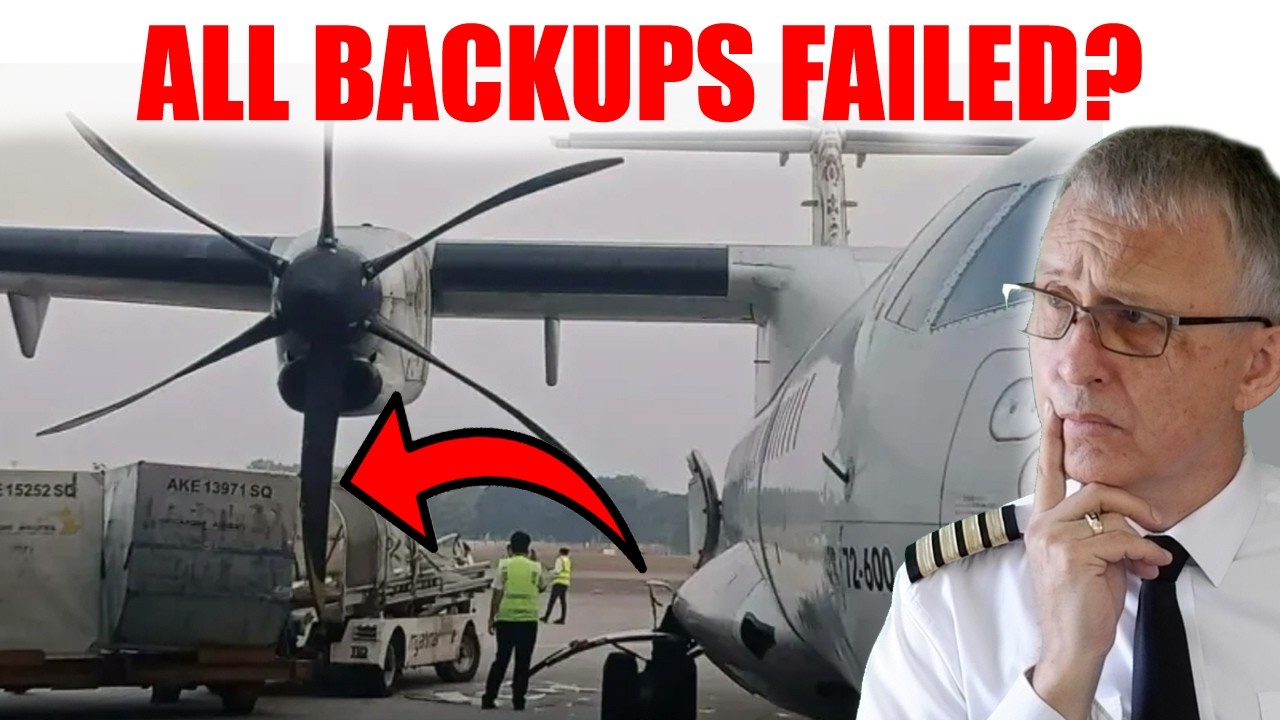
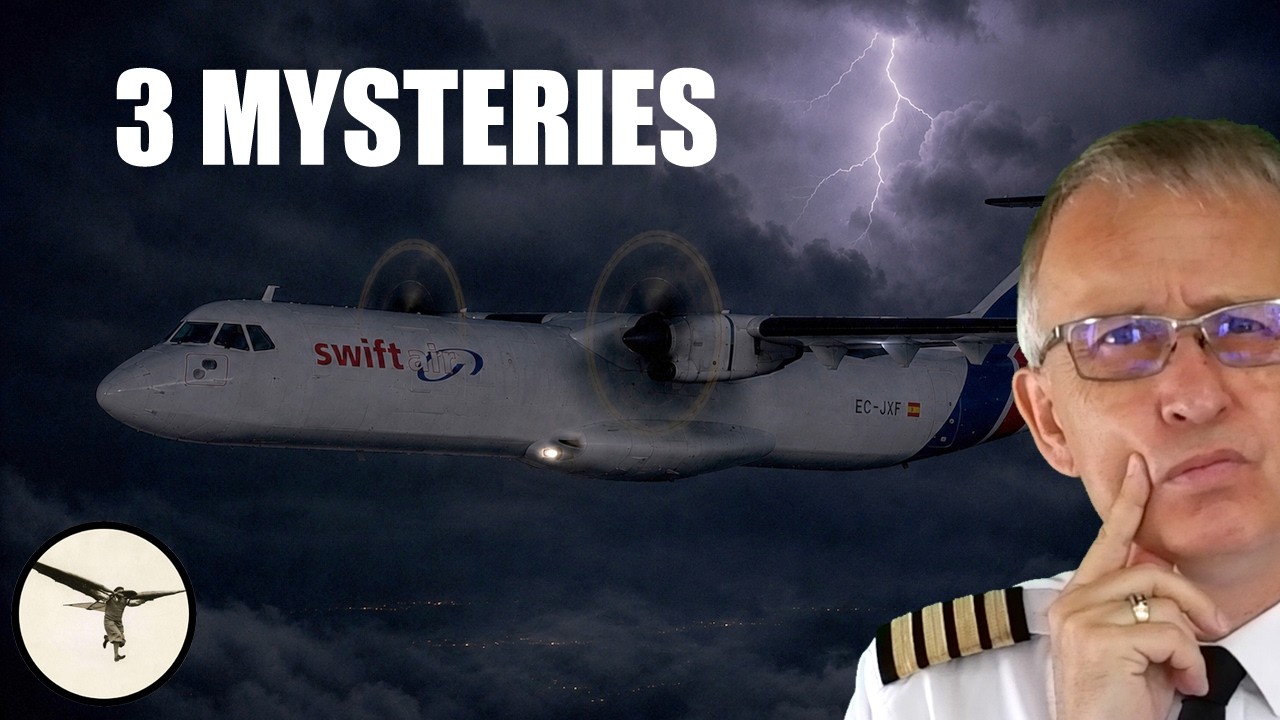
Welcome aboard aviators! On a dark and stormy night, an ATR 72 freighter departed Marseille carrying overnight cargo bound for Paris. Shortly after takeoff, things started going wrong. The Automatic Performance Monitoring (APM) system failed. The autopilot disconnected. The crew reported unusually heavy flight controls. Soon after, a PAN-PAN was declared and the aircraft returned safely to Marseille. But the deeper we investigate this incident, the stranger it becomes. As I reviewed the official report, multiple questions began to emerge. Was the aircraft type correctly identified? Could conflicting air data explain both the APM fault and autopilot disconnect? Why did the controls suddenly feel heavier than normal? And perhaps most importantly—what are we missing? In this video I break down the incident from the perspective of an ATR instructor and retired captain, examining aircraft history, system behavior, operational decision-making, and the unanswered questions still surrounding this event. Sometimes aviation investigations provide answers. Sometimes they create even more mysteries. ✈️ Topics covered: • ATR 72 systems • APM failure analysis • Autopilot disconnect logic • Heavy flight control explanation • PAN-PAN decision making • Aviation safety lessons • Pilot perspective and analysis If you enjoy aviation investigations, technical analysis, and pilot insight, subscribe and join the channel. What do YOU think caused these events? Leave your theory in the comments below. Social Links 🔗 https://www.instagram.com/flywithmagnar/ https://www.facebook.com/groups/flywithmagnar https://www.linkedin.com/in/magnar-nordal/ https://www.youtube.com/@FlywithMagnar "New Moon" 🎵 🎼 Created and produced by Miho Terachi. 🎷 Performed by Miho Terachi (sax) and Marie Takeda (piano). 🎙️ Recorded at Sparkling Studio, Japan. https://www.youtube.com/@TerachiMiho #ATR72 #Aviation #Pilot #FlightSafety #AviationMystery #AirlineIncident #ATR

Оглавление (3 сегментов)

Segment 1 (00:00 - 05:00)

It was a dark, rainy night. An ATR 72 freighter loaded with overnight parcels departed Marseille Provence Airport. Shortly after takeoff, engulfed in complete darkness and tossed around by turbulent clouds, problems began to emerge. The automatic performance monitoring system failed. The autopilot disconnected. And the pilot noticed the controls felt heavier than normal. An urgent pan-pan call was declared. The aircraft stopped its climb at 4,000 ft and turned back to Marseille, landing safely about 25 minutes after departure. But something doesn't quite add up here. Ladies and gentlemen, we have a mystery. Mhm. No, two mysteries. No, three mysteries. Hello aviators. How are you today? My name is Magnus Oddal, and I'm an ATR instructor and retired captain. Today, we are taking a closer look at an incident report from France, one that seems to raise more questions than it answers. As we dig deeper, you will see that every answer uncovered appears to lead to another mystery. Let's begin with the aircraft involved. According to the report, it was an ATR 72-211F, serial number 150, registration Echo Charlie Juliet X-ray Foxtrot. But there's a problem. The details don't seem to line up. Let me explain. The ATR 72 entered service in 1989 with the Dash 100 and Dash 200 series. The two versions were essentially identical, except that the Dash 100 had a lower maximum takeoff weight. Since very few 100s were built, we can focus on the 200 family. The 200 itself come in two variants. The Dash 201 and the Dash 202. The distinction is simple. Aircraft with a variant number ending with one has two cabin doors, while those ending in two feature one rear cabin door and a forward cargo door. Then, in 1992, ATR introduced the upgraded 210 series with more powerful engines. Again, there were two variants, the 211 with two cabin doors and the 212 with a rear cabin door and forward cargo door. Now, here is where the things become interesting. The report identifies the aircraft involved as an ATR 72-211 with serial number 150. According to Aviation Safety Network, the aircraft was manufactured in 1990. Yet, airfleets. net lists its first flight as February 1989. 7 months before the ATR 72 itself was even certified. Even if I accept the 1990 manufacturing date, there is still a problem. It would place the aircraft 2 years before the introduction or certification of the 211 and 212 variants. Looking at ATR's own fleet status document from 2024 adds another piece to the puzzle. Serial number 150 is listed not as a 211, but as an ATR 72-201. ATR's production records make the timeline even clearer. The first aircraft of the ATR 72-210 series was serial number 320, a dash 212 which first flew in July 1992. So, why do so many aviation databases identify Echo Charlie Juliet X-ray Foxtrot as a 72-211? One fact seems clear. Serial number 150 left the factory as a 72-201. When it was built, the more powerful 211 variant simply did not exist. The most likely explanation is that the aircraft was later upgraded to 211 standard. Such a conversion will involve replacing the original PW124 engines with PW127 engines and incorporating other refinements. We know the aircraft began its life as a passenger airliner before being converted into a freighter around 2005 or 2006. That conversion included installation of the large cargo door. And it's certainly plausible that more powerful engines were installed at the same time. Still, I have to admit, except for prototypes built by ATR, I have never

Segment 2 (05:00 - 10:00)

heard about an ATR 72 receiving this kind of engine upgrade. And that only adds another layer to the mystery. According to the report, the flight crew experienced three separate issues with the aircraft. First, automatic performance monitoring system failed. The APM system was introduced in 2006 and is designed to warn the crew and ice accumulation creates excessive aerodynamic drag that affects aircraft performance. Since this aircraft has been converted into a freighter, I assume the system was installed as part of that upgrade. According to the aircraft manual, the APM fault indication is triggered either by an internal system malfunction or by invalid aircraft parameter inputs. The second issue was that the autopilot disconnected. At first glance, this appears unrelated to the APM failure. The autopilot is designed to disengage automatically whenever it detects conflicting information from critical systems. For example, if the two air data computers provide disagreeing airspeed data, the autopilot will disconnect as a protective measure. Such a scenario could also explain the APM failure. Since the APM relies on accurate airspeed information to calculate aircraft performance degradation, faulty or inconsistent air data could affect both systems simultaneously. However, if an air data computer had actually failed, one pilot would also have lost a significant portion of the flight instruments. Had that occurred, I would expect it to have been reported as well, since it would represent a serious issue. For now, that possibility remains a mystery. Hopefully, the investigation will reveal exactly what happened. The third issue reported by the crew was perhaps the most intriguing. The pilot flying reported that the flight controls felt unusually stiff. On ATR, the primary flight controls are mechanically operated. So, the question becomes, what will make them suddenly feel heavier? Unless there was some form of physical restriction, such as a foreign object interfering with the control system, I can think on one likely explanation, increasing airspeed. This particular aircraft is an old ATR-72, and on earlier versions, the ailerons naturally become heavier as speed increases. On later aircraft, ATR introduced spring tabs attached to the ailerons. This helped reduce pilot effort and maintain more consistent control forces across the speed range. Could an unexpected increase in airspeed have caused the controls to feel unusually heavy? It's certainly one possibility. But once again, we are left in more questions than answers. For now, we have to wait for the investigation. The flight data recorder might provide valuable clues, since it records the forces applied to the flight controls. That data could tell us whether the controls merely felt heavy, or whether something physically changed in the aircraft's handling characteristics. After experiencing these issues, was the crew justified to declaring a pan-pan, the international radio call used to indicate an urgent situation? In my view, absolutely yes. Consider the situation they were facing: a nighttime departure, poor weather, turbulence, an autopilot failure, and reports of abnormal flight control behavior. Individually, some of these issues might be manageable. Combined, they create a very different picture, one where the overall threat level rises quickly. Declaring a pan-pan ensures priority handling from air traffic control, and gives the crew immediate access to any assistance they might require. In situations like these, reducing workload and securing support is simply good airmanship. History has shown that accidents have occurred because crews hesitated to declare an urgent or emergency situation. Sometimes, pilots delay making the call because they hope the issue will resolve itself or because they feel the situation is not yet serious enough. But when there is uncertainty, the safest option is usually the right one. And with that, we have reached the end of this video. A big thank you, as always, to the members who support this

Segment 3 (10:00 - 12:00)

channel. Your support is greatly appreciated. And see you again next time. Thank you for watching. Have a wonderful day and happy landing. — 500 Approaching minimums. 100 50 40 30 20 10

Другие видео автора — Fly with Magnar

Ctrl+V

Экстракт Знаний в Telegram

Экстракты и дистилляты из лучших YouTube-каналов — сразу после публикации.

Подписаться

Дайджест Экстрактов

Лучшие методички за неделю — каждый понедельник