How Could an ATR 72 Lose Brakes AND Steering?
15:48

How Could an ATR 72 Lose Brakes AND Steering?

Fly with Magnar 05.05.2026 6 867 просмотров 284 лайков

Machine-readable: Markdown · JSON API · Site index

Поделиться Telegram VK Бот
Транскрипт Скачать .md
Анализ с AI
Описание видео
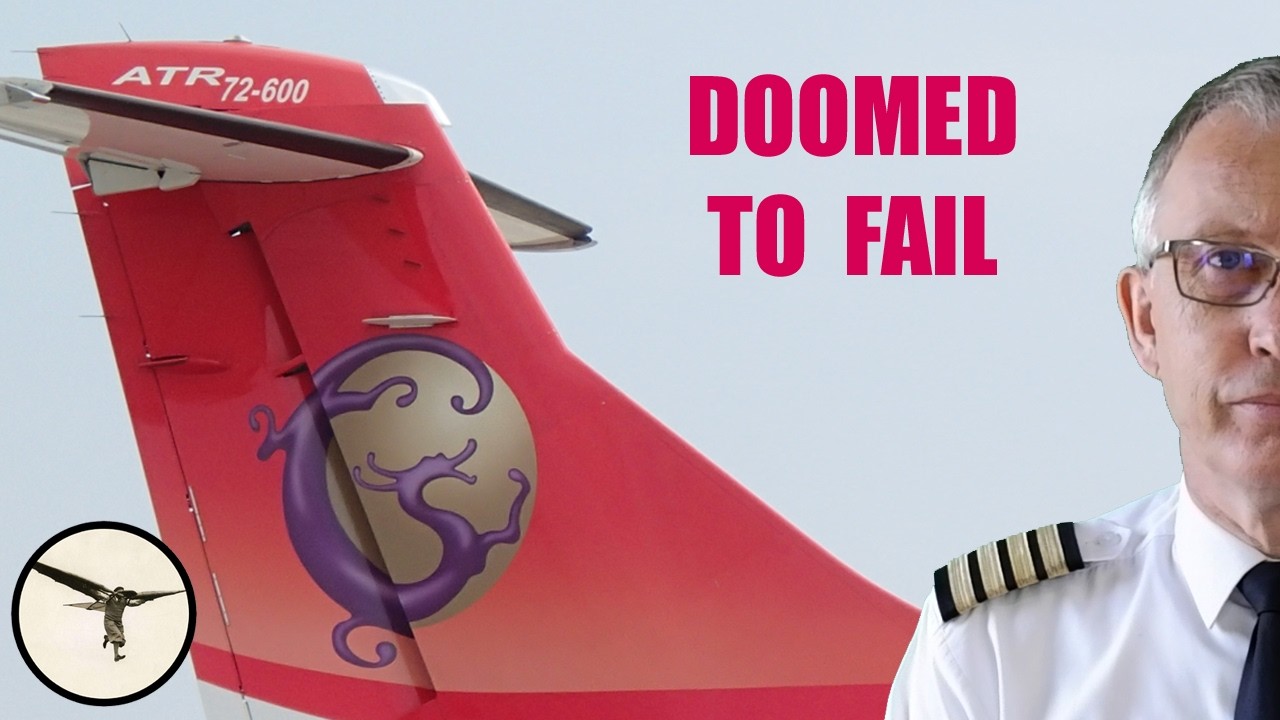
On 20 April 2026, a Myanmar National Airlines ATR 72-600 reportedly suffered a brake and steering failure while taxiing at Yangon International Airport. The aircraft collided with a parked Airbus A319, struck ground equipment, and finally came to a stop among container dollies. In this video, ATR instructor and retired captain Magnar Nordal analyses the incident using available video footage and post-accident photographs. We examine the ATR 72 braking systems, hydraulic systems, nose wheel steering, emergency braking capability, and the unique ATR “Hotel Mode” operation. Why didn’t the aircraft stop? Why didn’t the crew steer away from the parked aircraft? And how could multiple backup systems apparently fail at the same time? Using the Swiss Cheese model of aviation safety, this video explores how a chain of small failures may have aligned to create a rare and serious ground incident. Topics covered: ATR 72 brake systems explained Emergency braking procedures Nose wheel steering operation Hydraulic system redundancy Propeller brake and Hotel Mode Pushback and taxi procedures Analysis of the viral tower video This is not an official accident report, but an educational analysis based on publicly available information. Subscribe for more professional aviation system breakdowns and accident analyses. Social Links 🔗 https://www.instagram.com/flywithmagnar/ https://www.facebook.com/groups/flywithmagnar https://www.linkedin.com/in/magnar-nordal/ https://www.youtube.com/@FlywithMagnar "New Moon" 🎵 🎼 Created and produced by Miho Terachi. 🎷 Performed by Miho Terachi (sax) and Marie Takeda (piano). 🎙️ Recorded at Sparkling Studio, Japan. https://www.youtube.com/@TerachiMiho #ATR72 #Aviation #PilotAnalysis #AircraftSystems #FlightSafety #MyanmarNationalAirlines ATR 72 brake failure analysis, ATR 72 Yangon incident, Myanmar National Airlines accident, ATR 72 taxi accident explained, ATR 72 steering failure, ATR 72 emergency brakes, aviation accident investigation, aircraft hydraulic failure, airline safety analysis, pilot explains aviation accident, ATR hotel mode explained, aviation systems breakdown, Airbus A319 collision, apron accident analysis, aviation education channel, turboprop aircraft systems, Swiss cheese aviation model, ATR instructor analysis, aircraft incident explained, flight safety investigation
Оглавление (3 сегментов)

Segment 1 (00:00 - 05:00)

On 24th April, 2026, an ATR 72-600, registered X-ray Yankee Alpha Mike Lima, and operated by Myanmar National Airlines, reportedly suffered a brake system failure while taxiing at Yangon International Airport. The aircraft collided with the tail section of a parked Airbus A319. After initial impact, the ATR veered to the right, struck ground equipment, and eventually came to a stop. Both the aircraft and some airport ground equipment sustained damage. No injuries were reported among passengers, crew, or airport staff. — Hello aviators, how are you today? My name is Magnus Nordal, and I am an ATR instructor and a retired captain. A few days ago, this video went viral on social media. An ATR 72-600 had just completed pushback and began taxiing when its brakes and steering apparently failed. The recording captured from the control tower includes a female air traffic controller urgently calling over the radio for the aircraft to stop. Say say. The aircraft continued toward a row of parked airplanes, and its right wing tip struck the tail section of an Airbus A319. It then turned to the right, collided with several container dollies, and finally came to a stop. Let's take a closer look at the photos taken after the incident. The first image shows the aircraft surrounded by several container dollies, with a container resting against the left side of the nose. Although the picture is grainy, it appears that the angle of attack sensor may be damaged or missing. The propeller blades appear to be undamaged. Another image shows dents and scratches on the nose section. The pitot tube is bent upward. The emergency exit light is illuminated, indicating the crew did not disarm it before they left the aircraft. An unusual detail is that access door for the external power receptacle is open. It should have been closed before the aircraft began to taxi. This picture shows damage to the right-hand wing tip and aileron after aircraft struck the Airbus. However, this photo is the most interesting. We see debris scattered on the ground along with damaged ground equipment. A container is displaced. But what really caught my attention is the propeller blades. They do not appear to be damaged, suggesting the propeller was not turning when the aircraft made contact with the ground equipment and containers. But look at the downward-facing propeller blade. It has a different angle from the others, indicating it was likely twisted out of alignment by the impact force. So, what exactly happened here? — I am sure you have heard about the Swiss cheese model when discussing flight safety. Airliners are operated with multiple layers of protection. This begin with aircraft design, where critical systems are duplicated or even triplicated to provide redundancy. Then come operating procedures, along with checklists, to ensure those procedures have been properly followed. On top of that, flight crews undergo regular training and proficiency checks. The final layers of defense are the company safety culture and the mindset of the pilots themselves. Together, these systems create several barriers against failures and human errors. However, no barrier is perfect. Each has its own weaknesses, its own holes. And there's always a possibility that an error can pass through every layer. In this incident, that appears to have happened. It is also important to remember that an accident rarely happens because of a single factor or mistake. More often, it is the result of a chain of events that against all odds aligned perfectly, passing through the holes in each layer of the Swiss cheese model. — The key questions for the investigators are, what went wrong and why? Answering that requires careful detective work. Investigators will interview the people involved, inspect the technical condition of the aircraft systems, particularly the brakes, nose wheel

Segment 2 (05:00 - 10:00)

steering, and hydraulic system, and analyze the flight data recorder and cockpit voice recorder. They will also review the company's operating procedures and training records of the flight crew. While we wait for the official report, I will explain the aircraft systems involved and the relevant procedures. Finally, I will analyze the video and discuss whether we can draw any conclusions from what we have seen so far. — The ATR 72 has two brake systems that operate independently of each other. They are supplied by hydraulic power from two hydraulic systems, called blue and green. The primary brake system is supplied by the green hydraulic system. The brakes are operated by pressing down the top of the rudder pedals. The brake pressure is 3,000 PSI, and the brakes are equipped with an anti-skid system. As a backup, we have a combined parking and emergency brake. It is powered by an accumulator that is charged by the blue hydraulic system. It is operated by this handle, which has three positions: off, emergency, and parking. The emergency position provides a brake pressure of 500 PSI, while the parking position provides 3,000 PSI. The accumulator, when charged, allows for the use of the emergency brake even when both hydraulic systems are not energized. — The hydraulic pumps are powered by AC power supplied by generators attached to the propeller gearbox. The generators supply AC power when propeller RPM is 66% or higher. During taxi, the RPM is 71%. The blue hydraulic system also has an auxiliary pump, which is operated when the main hydraulic pumps are not running. That allows for the flight crew, when necessary, to charge the parking and emergency brake accumulator. — ATR aircraft do not have an auxiliary power unit, APU, that provides electrical power and pressurized air for the air conditioning system. Instead, the propeller gearbox on the right side engine has a brake, a propeller brake. When engaged, the propeller brake is locked in position, and the engine can be run, providing electrical power and pressurized air for the air conditioning This is called hotel mode. If you want to learn more about the systems on the aircraft, I have posted more than 60 videos about the subject. There's a link in the description below and on the end screen. — There are several possible sequences for how the engines are started. In this case, the aircraft was pushed back from the gate by a truck. Initially, the aircraft is connected to a ground power unit, GPU, which provides electrical power. When they are ready to start, the normal procedure is to start the right-hand engine with the propeller brake engaged. Then, the GPU is removed. When the pushback is underway, they will start the other engine. Once the pushback is completed, the parking brake is set and the tow bar disconnected. It is normal for the ground crew to use a headset to communicate with the captain during the engine start and pushback. The connection point for the headset is next to the receptacle for the GPU. When the captain tells the ground crew to disconnect the headset, the ground crew will do so, close the access door, walk a safe distance, and give the thumbs up. At this point, both engines should be running normally with both AC generators operating, powering the hydraulic pumps. However, this appears not to have happened here. As is on this picture, the propeller blades were not damaged by the impact with the containers and ground equipment. Otherwise, they would have looked like this. And since the downward-facing propeller blade is twisted, I suspect the engine was running in hotel mode with the propeller brake engaged. That is not the normal procedure. There are three ways to stop the aircraft. First, we have the normal brake. If it doesn't work, we have the emergency brake. The accumulator allows at least applications with emergency brake even when the blue hydraulic pump

Segment 3 (10:00 - 15:00)

has failed. Finally, if all braking is lost, we can use reverse propeller thrust to stop the aircraft. This is achieved by moving the propellers into the reverse area. — The nose is steering is operated with hydraulic power from the blue system. The nose is steering must be selected off during pushback, which is normal procedure at Yangon Airport. If the nose is steering is inoperative, asymmetric braking or reverse thrust can be used to steer the aircraft. As you can see, both the brakes and nose is steering have two backup systems and or procedures. It is extraordinary that all of them fail at the same time. — ATR has specified procedures and checklists for all phases of flight. Most of them are performed before the aircraft takes off. So, let's take a look at them. Before the first flight of the day and before the walk around, the first officer activates the auxiliary hydraulic pump and checks the operation of the hydraulic crossfeed valve. During the walk around, the captain checks the pressure in the parking brake accumulator. When the condition of the aircraft has been checked, the crew performs the final cockpit preparation checklist. The first item is to check that the parking brake is set and the pressure in the parking brake accumulator. Before pushback, the captain selects the nose is steering off. When pushback is completed, the parking brake is selected on. When the tow bar has been disconnected, the nose is steering is selected on. Next, they read the before taxi checklist. The last item on the checklist is to verify the nose is steering is selected on. When starting to taxi, the crew checks the brakes. Those actions are confirmed when reading the taxi checklist. As you can see, the parking brake accumulator, the normal brakes, and the nose is steering are checked and rechecked several times. And still, this incident happened. When the video begins, the ATR 72 is positioned behind an Airbus. The tow truck is positioned clear of the ATR and the ground crew is standing beside it. I am not sure what the black dot is. At first, I thought it might be a dirt on the control tower window, but it clearly isn't stationary. Could it be a bird? It's difficult to say. As the aircraft starts moving forward, it turns slightly to the right to avoid the Airbus. Then, it continues accelerating across the ramp. This acceleration suggests that at least one propeller is producing thrust. It was likely the left engine since the propeller brake on the right engine appears to have been engaged when the aircraft struck the containers and ground equipment. Notice the tow truck is moving parallel with the aircraft like the driver knows something is not right. So, why didn't the aircraft stop? And why didn't it turn left to avoid the parked aircraft on apron? The situation could have ended much worse. Thankfully, no one was injured. This is going to be an interesting report. And that is all for this time. As always, a big thank you to the members of this channel. They make this content possible. Thank you for watching. Have a wonderful day — and happy taxi.

Другие видео автора — Fly with Magnar

Ctrl+V

Экстракт Знаний в Telegram

Экстракты и дистилляты из лучших YouTube-каналов — сразу после публикации.

Подписаться

Дайджест Экстрактов

Лучшие методички за неделю — каждый понедельник