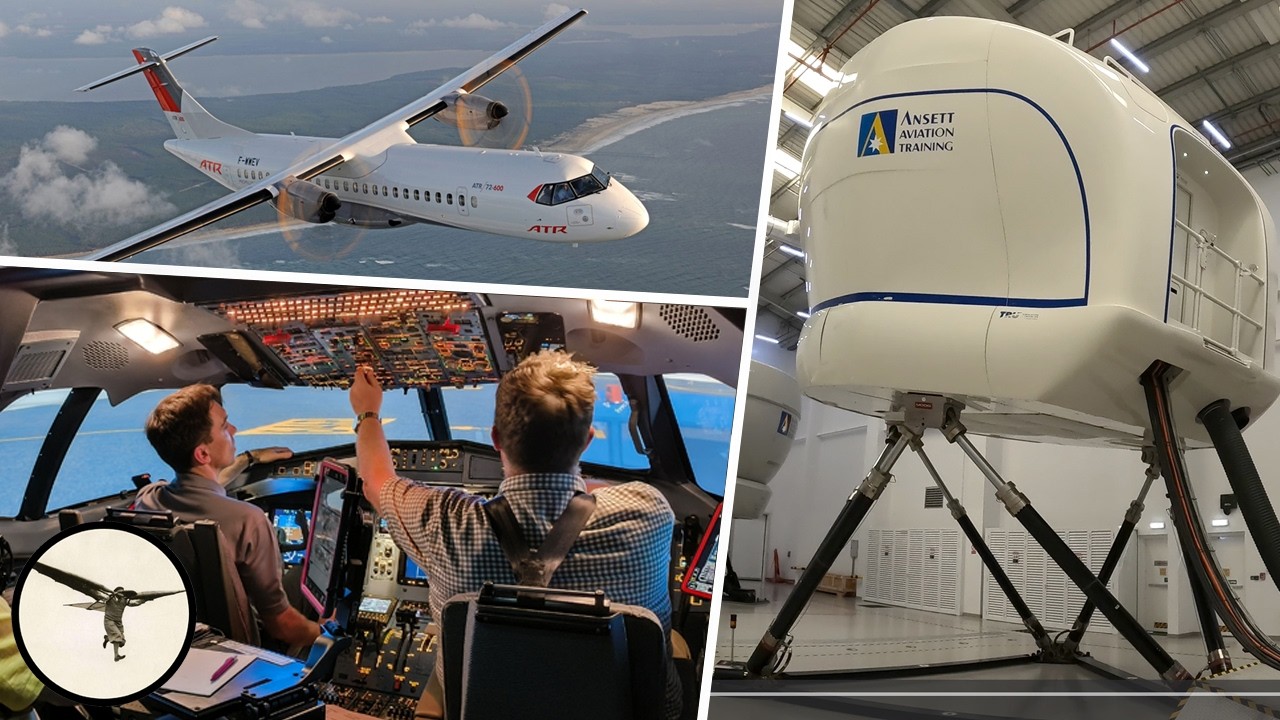
Hello aviators. How are you today? My name is Magnar Nordal. I am an ATR instructor. I have flown this aircraft for about 25 years, and I'm still learning. Today I will talk about landing in crosswind. This... in all aircraft, crosswind requires a special technique, and for the ATR, the technique is to fly with crab on final, and during the flare, you decrab, which means you apply rudder to align the centerline of the aircraft parallel with the runway centerline, and you try to get as close as possible to the centerline. And then you use the ailerons to produce a bank to prevent you from drifting away. You touch down on the main wheel on the (up)wind side with a low wing. And then, the other main wheel will touch down. And after that, the nose wheel. Don't hold the nose up; just let it settle down immediately after landing because with the nose wheel on the ground, you have better directional control. ATR 72 has a max demonstrated crosswind component of 35 knots. The ATR 42 has 45 for takeoff, and 44 for landing, flaps 35. The reason the ATR 42 has more crosswind is because of the shorter arm, which means there is less moment from the wind pushing on the tail fin. That said, those values are demonstrated in stable wind conditions by a test pilot. So, therefore, if you experience a gusty wind, for example, maybe 25 gust 35, that means it will vary a lot, and that requires more attention from the pilot. Many companies also put limitations on the first officer, maybe max 15 knots. And these numbers are valid for a dry runway. For a wet runway, it's reduced. For ATR 72, 28 knots. And then with contaminated runway; standing water, slush, snow, ice, it goes all the way down to 10 for the ATR 72. Okay, that's the theory. I want to highlight the force of the wind pushing on the tail fin, because the force increases with the square of the velocity of the wind. So, five squared is 25. And you double the wind to 10, you get 100. You increase to 15, now we get 225. And you increase to 20, you get 400. That's four times as much as for 10 knots. 25 knots, 625. And 30, it's 900. That's four times stronger than for 15. 35, 1225. And 40, 1600. And for 45 knots, it's 2025. So we're talking about a strong increase of the force and the moment here. As I said, the technique is to fly with a crab into the wind. So at about 35 knots (crosswind), you will have roughly 20° crab to stay on the centerline. And as you start the flare, you also start to decrab. And you apply, in this case, wind is from the right. So, you apply left rudder to rotate the nose so it's parallel with the center line. And you apply bank so you can control (the drift). Lot of bank, you move right. Little bank, and you move to the left. So you can control your position. And during the flare and landing, your speed change, and the wind can change closer to the ground. So you have to make continuous corrections all the way. And here is something quite interesting; because the localizer antenna is in the tailfin
Segment 2 (05:00 - 10:00)
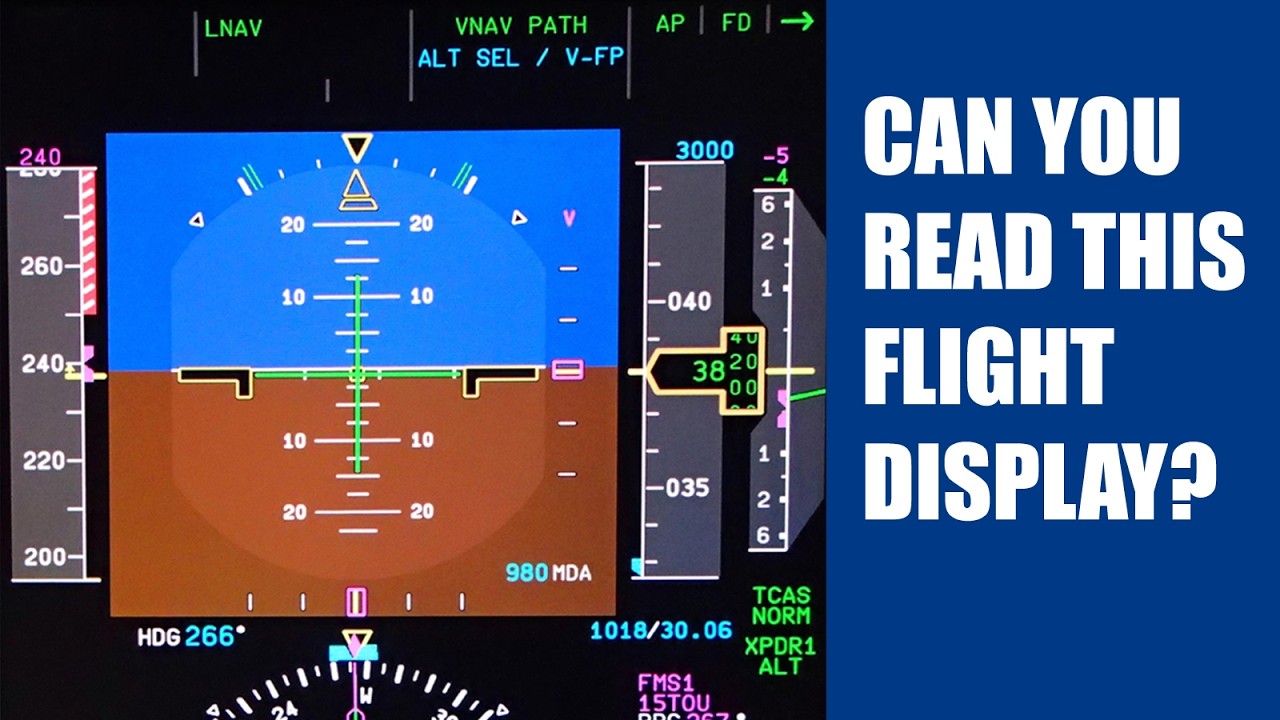
the center of gravity is here, and you are sitting here in the front of the aircraft. So when you're flying in a strong crosswind, with an ILS localizer, the localizer will align the tailfin with the centerline of the runway, while you are seated on the side of the centerline. You agree about that? Yes. And when you push the rudder, the aircraft rotates around here. So now your nose swings towards the left. And if you already (had) put the cockpit over the center line on final, and push the rudder, you're suddenly way off. And you don't want to land on the lee side of the runway because the runway is not flat. It's slanted sideways to allow for water drainage. I exaggerate it here. It's between one and two degrees sideways. So, it's always the best to land on the centerline. Never land on the lee side. If you land on the upwind side, it's okay. You will naturally get a one degree bank on the ground, which may make direction control a little more easy. And after touchdown, directional control with your feet only, going to ground idle. And ailerons, as your speed increases, you have to apply more and more aileron into the wind. And you have to keep it (there) down to 40 knots. Okay, that's the theory. Let's go into the simulator and have a look. But now, I will not decrab. I will just continue. A little high there. I just started flaring. Oh, that was a bad landing. And this is caused by poor technique. No decrab. Yaw damper is off. That's very important for crosswind. Continue. Little high on glideslope. Not much. Start decrab. Align with the runway, and we touch down on the right main wheel, then the left, and then the nose wheel. Okay, we are on final with 35 knots crosswind. And here is a hack. You see that magenta diamond? It shows the ground track. And on the HSI, I have the course selector, CDI for the approach: 195 (degrees). So if the diamond is also 195, I will be exactly parallel with the runway. Now I'm centered on the localizer. So that means I'm on the localizer as well. Little low here. Correcting back. Stabilized.
Segment 3 (10:00 - 11:00)
Starting flare. Banking into the wind. Touchdown. This simulator behaves a bit different from the aircraft. The important thing is to keep your ailerons steady into the wind because if you sit like driving a car, then the ailerons go up and down, the spoiler goes up and down, and that never works. You have to be consistent and apply pressure. As the speed decreases, you need more and more. Okay, that's the simulator. Okay, that's all for this time. I hope you enjoy the video and a big thank go to all the supporters of this channel. They helped me produce this. So, thank you for watching. Have a wonderful day and happy landing.