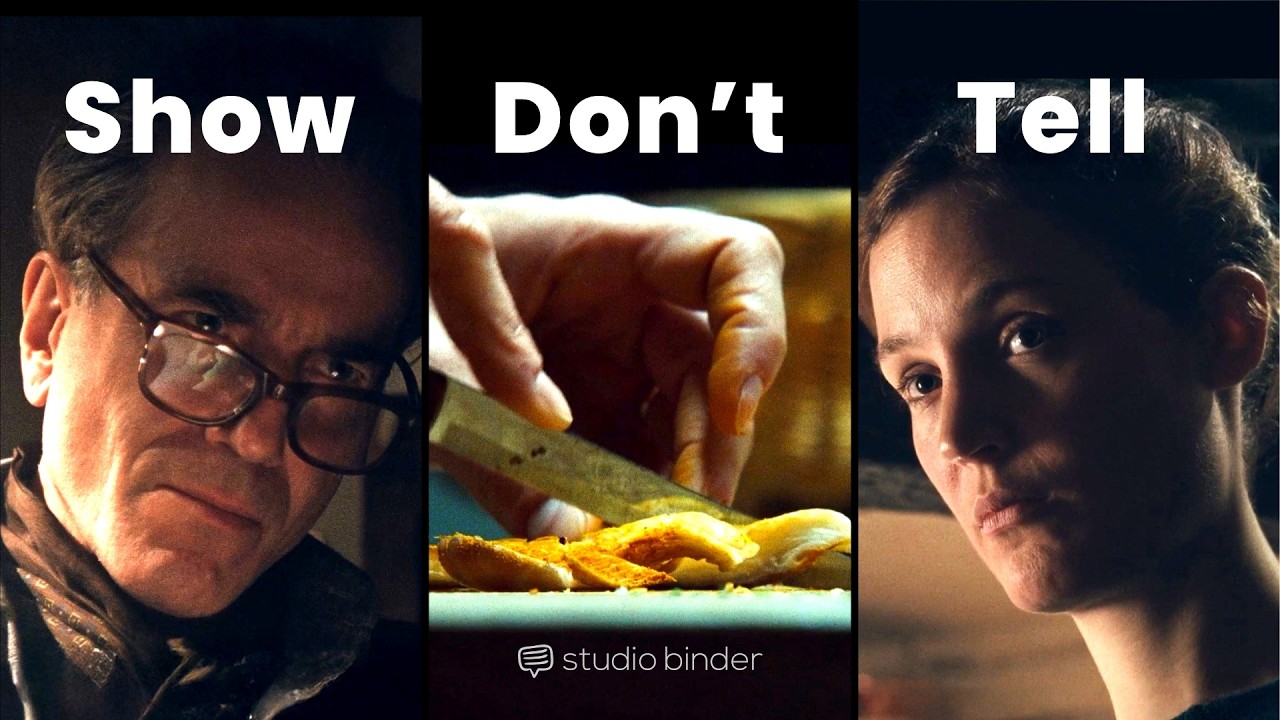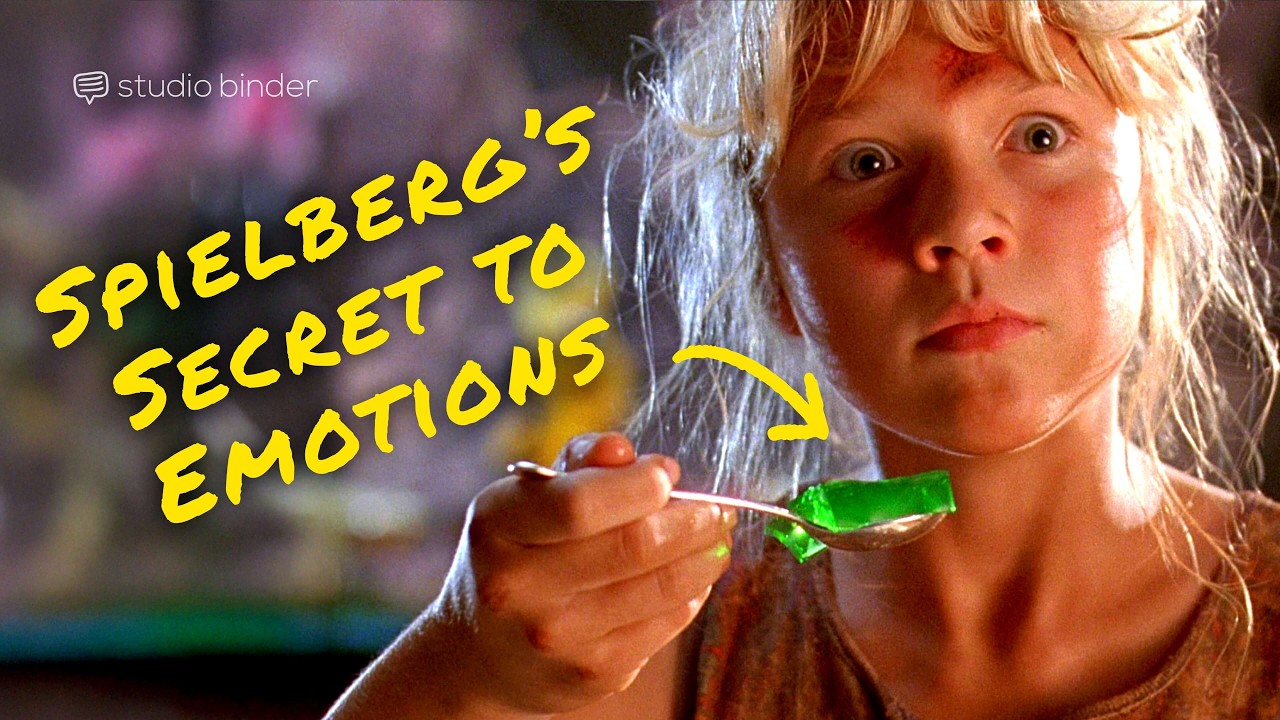
The Trick Spielberg Uses to Create Emotion
11:02

The Trick Spielberg Uses to Create Emotion

StudioBinder 05.01.2026 60 892 просмотров 2 699 лайков

Machine-readable: Markdown · JSON API · Site index

Поделиться Telegram VK Бот
Транскрипт Скачать .md
Анализ с AI
Описание видео
Steven Spielberg Directing Style — We take a look at the legendary director's approach to shooting dinner scenes. Subscribe to StudioBinder Academy ►► https://bit.ly/sb-ad StudioBinder Blog ►► http://bit.ly/sb-bl ───────────────────── Chapters 00:00 - Introduction to Spielberg & Emotion 00:51 - Significance of the Dinner Table 01:45 - Setting 03:00 - Blocking 06:04 - Coverage 08:35 - Camera Movement 10:08 - Takeaways ───────────────────── STEVEN SPIELBERG DINNER SCENES Jaws. The Fabelmans. Close Encounters of the Third Kind. Jurassic Park. The Color Purple. ET. What do all of these vastly different movies have in common other than of course being directed by Steven Spielberg? They all have iconic meal scenes. When we think of Spielberg, we often focus on the spectacle, the fantastical worlds and larger-than-life situations that everyday characters get thrust into. But these worlds only work because they are grounded— and Spielberg is the master at quickly introducing emotions, character dynamics, and interior lives. One way he does this, again and again, is through the dinner scene. STEVEN SPIELBERG DIRECTING Spielberg’s blocking in dinner scenes emphasizes hierarchy and emotional alignment. Character positions subtly encode power dynamics or psychological separation. He often places characters so that eye lines cross unevenly or are obstructed by table settings, food, or furniture, creating a visual metaphor for emotional barriers. Movement within the scene is purposeful but restrained— someone standing to refill a drink or leaning forward to speak can become a disruption of the table’s equilibrium. GENIUS OF STEVEN SPIELBERG CAMERA PLACEMENT Spielberg favors camera heights that keep the audience at eye level with the characters, creating intimacy without artificial dramatization. The camera is often positioned just outside the table’s perimeter, maintaining a clear sense of geography while still feeling embedded in the conversation. His shot choices are used less for coverage and more to anchor perspective, who we align with emotionally at any given moment. STEVEN SPIELBERG MAKING MOVIES Movement in Spielberg’s dinner scenes is always motivated by character behavior rather than spectacle. Slow push-ins accompany moments of realization or emotional shift, while lateral moves trace the flow of conversation around the table. Instead of cutting for emphasis, Spielberg often lets the camera drift or reframe within a shot, allowing tension to build organically. We can learn so much for Spielberg that it can feel overwhelming. Focus on these contained scenes, and you'll find an entire film school's worth of information. #FilmTheory #VideoEssay #Filmmaking ───────────────────── ♬ SONGS USED: "Opening Theme (Jurassic Park)" - John Williams "The Magic Of Halloween" - John Williams "Upward Motion" - Rex Banner "Tech Talk" - Rex Banner "Suburban Living" - Adam Dib "Father And Son" - John Williams "Remembering Petticoat Lane" - John Williams "Jim's New Life" - John Williams "The Return To The City" - John Williams "Bonding" - John Williams "Time Flies" - Diamonds And Ice "False Alarm" - John Williams "Nettie's Letters" - Quincy Jones "E.T.'s New Home" - John Williams "Hide and Seek" - John Williams "I'm Here" - Quincy Jones "Catch Me If You Can" - John Williams "Theme from Schindler's List (Reprise)" - John Williams "Moving Moon" - Luke Atencio "Incident At Isla Nublar" - John Williams "The Labyrinth" - DaniHaDani "Stranger to None" - Hans Johnson "Prologue (War of the Worlds)" - John Williams "Dust It Off" - Stanley Gurvich Music by Artlist ► https://utm.io/umJx Music by Artgrid ► https://utm.io/umJy Music by Soundstripe ► http://bit.ly/2IXwomF Music by MusicBed ► http://bit.ly/2Fnz9Zq ───────────────────── SUBSCRIBE to StudioBinder’s YouTube channel! ►► http://bit.ly/2hksYO0 Looking for production management solution for your film? Try StudioBinder for FREE today: https://studiobinder.com/pricing — Join us on Social Media! — Instagram ►► https://www.instagram.com/studiobinder Facebook ►► https://www.facebook.com/studiobinderapp Twitter ►► https://www.twitter.com/studiobinder #FilmTheory #VideoEssay #Filmmaking
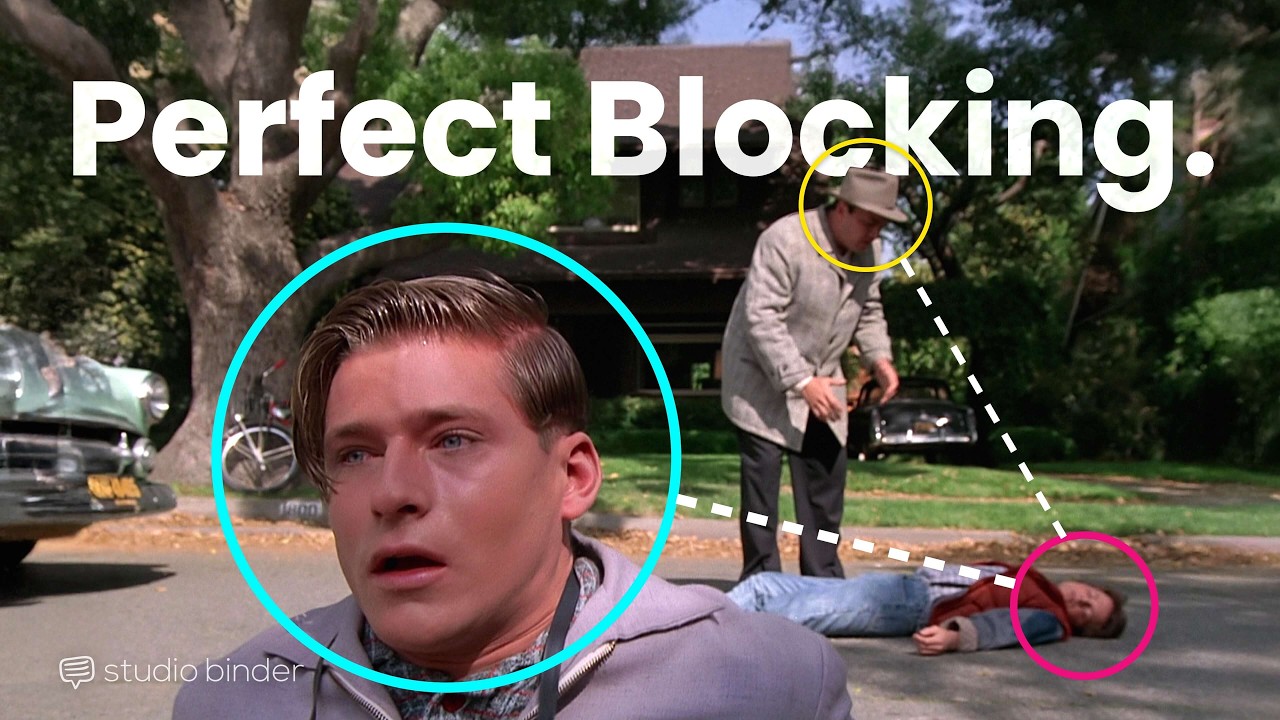
Оглавление (7 сегментов)

Introduction to Spielberg & Emotion

You're going to need a bigger boat. — When we think of Steven Spielberg, we often think of his ability to capture spectacle. From spacecrafts to dinosaurs to boulders. But the lasting power of Spielberg's films, what makes them stand apart from other blockbusters is their grounded emotionality. And nowhere is this more present than in a favorite type of scene that recurs throughout many Spielberg movies, the dinner table. By dissecting how Spielberg approaches these sequences, we can understand how the legendary director establishes characters, emotions, and relationships simply through careful blocking and coverage. — Frank, would you like to say grace?

Significance of the Dinner Table

Spielberg creates emotional resonance through his characters by showing them as relatable people. And one of the most direct ways of doing this is by having them share meals. — How was your day? — Eating together establishes emotional bonds between characters and between characters in the audience. These are scenes where small moments can breathe and where Spielberg uses the full vocabulary of film language to underscore emotional beats. Notably, one of Spielberg's go-to techniques for creating an emotional wallup is often absent from his meal scenes. There is no big John Williams score. So Spielberg has to rely on misansen blocking and camera placement to convey feeling.

Setting

The Spielberg dining scene often feels familiar. It takes place in a homey setting over a homey meal. These settings aren't incidental. They are crucial to the Spielberg recipe, making characters relatable and grounded before they are thrust into unrelatable and extraordinary circumstances. Any alterations to this formula are informative. — Is anyone eating this? — No. — Only one meal on the table signals dinner is long over. Dinner in front of a TV signals a father who is in over his head as a parent. An expensive looking meal in a space like this underscores a cold, unnatural feeling. The difference in how meals are presented in the same film can also be telling. The buffet in the beginning of Empire of the Sun has a drastically different feeling to Jaime eating alone later. His whole world has changed. There are three meals shared by the assassins in Munich. Each one is shot with harsher lighting and shadows as the morality of their actions weighs upon their souls.

Blocking

— Blocking is equally telling in a Spielberg dinner scene. Dinner scenes are inherently sedentary, but where characters sit and when they do move can tell an audience volumes about relationships and emotions. In the Fableman's, Sammy sits directly between his two parents, highlighting visually that they are arguing over him, and he's stuck in the middle. — Uh, what's wrong with your Bolex? — You could afford to be a little encouraging — about what? — This is a favorite technique of Spielberg himself, a child of divorce. — Yourself. — In Close Encounters of the Third Kind, the parents are on opposite ends of the table. Ray's obsession after his runin with a UFO has made distance grow between them and the kids again are caught in the middle. A similar device is used in The Color Purple. The two characters are talking about Sely and so she looms in between them. — Sely is coming with us. — Say what? to Memphis with us. — Over my dead body. — You satisfied? That's what you want? Now what wrong with you? — Blocking can also signal to us where our attention should be directed. — The seating arrangement along with the triangular table in this scene from ET puts the focus on Elliot. He is driving the scene with his insistence that he's seen an alien and ends up being the source of conflict. — It's not that we don't believe you, honey. — Well, it was real. I swear. In AI, the kids sit at one end of the table while the parents sit at the other. This lets the conflict between David and Martin escalate before their mom and dad even notice, continuing a running theme that the parents are ignorant to Martin's treatment of David, a robot child his mom procured when he was in a coma. [snorts] — Today in the office, — you will break. — Oh, that is ridiculous. — Exactly. work has just become so — in such stationary scenes any character movement can feel dramatic. — You're not getting one penny of my money. NOT ONE THIN DIME. — D I ASKED YOU FOR ANYTHING. — When Celely stands, the emotion of the scene escalates drastically and she visually seems more powerful towering over the rest of the table. When Albert then rises, the power in the scene shifts to him. The camera is now at a low angle in his coverage and a higher angle for everyone else. In Jaws, Ellen's standing gives intimacy to the moment between Brody and their son after a hard day while she watches on. Her movement to get the door bifurcates the scene, transitioning from the tender familiar interaction and returning to the harsh reality of the killer shark. Spielberg further emphasizes this transition by jumping the 180° line.

Coverage

— These blocking decisions work in concert with Spielberg's coverage. Where the camera is placed, its framing, and its movement are all crucial to understanding the emotional tides of his dinner scenes. — Absolutely. On its surface, Spielberg's coverage of dinner conversations can feel relatively straightforward. He often starts with an establishing shot and works his way in as the scene's emotions escalate. But the small decisions he makes in addition to this approach add several layers to what's going on. Crucially, Spielberg's coverage isn't based around dialogue. It's around emotion. Ellen and Hooper talk at the door, but we stay on Brody. — Your husband's home? — Yes. — I'd really like to talk to him. — This scene is about him finding new resolve to move forward. In AI, the parents are the ones talking, but the camera focuses on David and Martin. This scene is about their confrontation. Spielberg typically uses camera placement to establish perspective. In ET, for example, characters coverage are nearly all from Elliot's vantage point, and his head takes up a large part of the frame. In Close Encounters, the focus of the scene is Roy, but his coverage is mostly shot from a lower angle, simulating the perspective of his children. It emphasizes the key takeaway of this scene. His actions are hurting his family. Well, I guess you've noticed something that's a little strange with Dad. [snorts] — Spielberg also uses unique twoots to establish relationships and themes. This angle puts Malcolm and Donald in the same frame, juxtaposing their two opinions about the park and literally making Donald smaller, like he's a fly buzzing in Malcolm's ear. It's hard to appropriate to start hurling generalizations, if I may. — This shot places Celely and Arnold right on top of one another, even though they're sitting far apart. It lets us see how each character is reacting to the other in real time. Sely being much closer, however, puts the audience in her shoes. A similar shot here employs a split diopter to show both Royy's anguish and his sons, which makes the moment exponentially more powerful.

Camera Movement

Like with blocking, camera movement in a dinner scene is always notable since for the most part it stays relatively stationary. — I don't want to jump to any conclusions, but look, — Spielberg is always one for using camera movement to underscore emotion. This can be a simple pushin like when Allan speaks for the first time in the meal. Because the rest of the shots in this scene have been nearly motionless, this move gives Allen's monologue additional weight. — [snorts] — Two species separated by 65 million years of evolution have just been suddenly thrown back into the mix together. How can we possibly have the slightest idea of what to expect? A pan, meanwhile, can show how overwhelmed the character is. We see Sami's family talking about him and land on his panicked face. A tilt, on the other hand, can break a character out of his days. Of course, this is Spielberg, so camera moves can be even more showy. — Where is Robbie? — You went out. — Out where? — What starts as a twoot in War of the Worlds becomes a dramatic circling single, signaling that the light small talk has taken a turn. The dolly pan here is used for dramatic effect, but it also links David and his mother. What started as a referendum on his relationship with his brother has become one on his relationship with his mother.

Takeaways

Spielberg's dinner scenes show us what makes him not just a great blockbuster filmmaker, but a great dramatist. Someone with a deaf field for subtext and emotional nuance. setting, blocking, and coverage can turn a meal we all have every day into an examination of family, conflict, and above all, character. Ready to build your own dinner scene? Plan your next shoot with Studio Binder pre-production software, where you can script, storyboard, and schedule all at one table. That's all for now. Bonapetit. — Everybody say grace. — Bless this O LORD. — GRACE. ALL MY FAVORITE NEVER.

Другие видео автора — StudioBinder

Ctrl+V

Экстракт Знаний в Telegram

Экстракты и дистилляты из лучших YouTube-каналов — сразу после публикации.

Подписаться

Дайджест Экстрактов

Лучшие методички за неделю — каждый понедельник